In Concert – Leila Josefowicz & John Novacek @ Wigmore Hall: Debussy, Szymanowski, Bray & Stravinsky

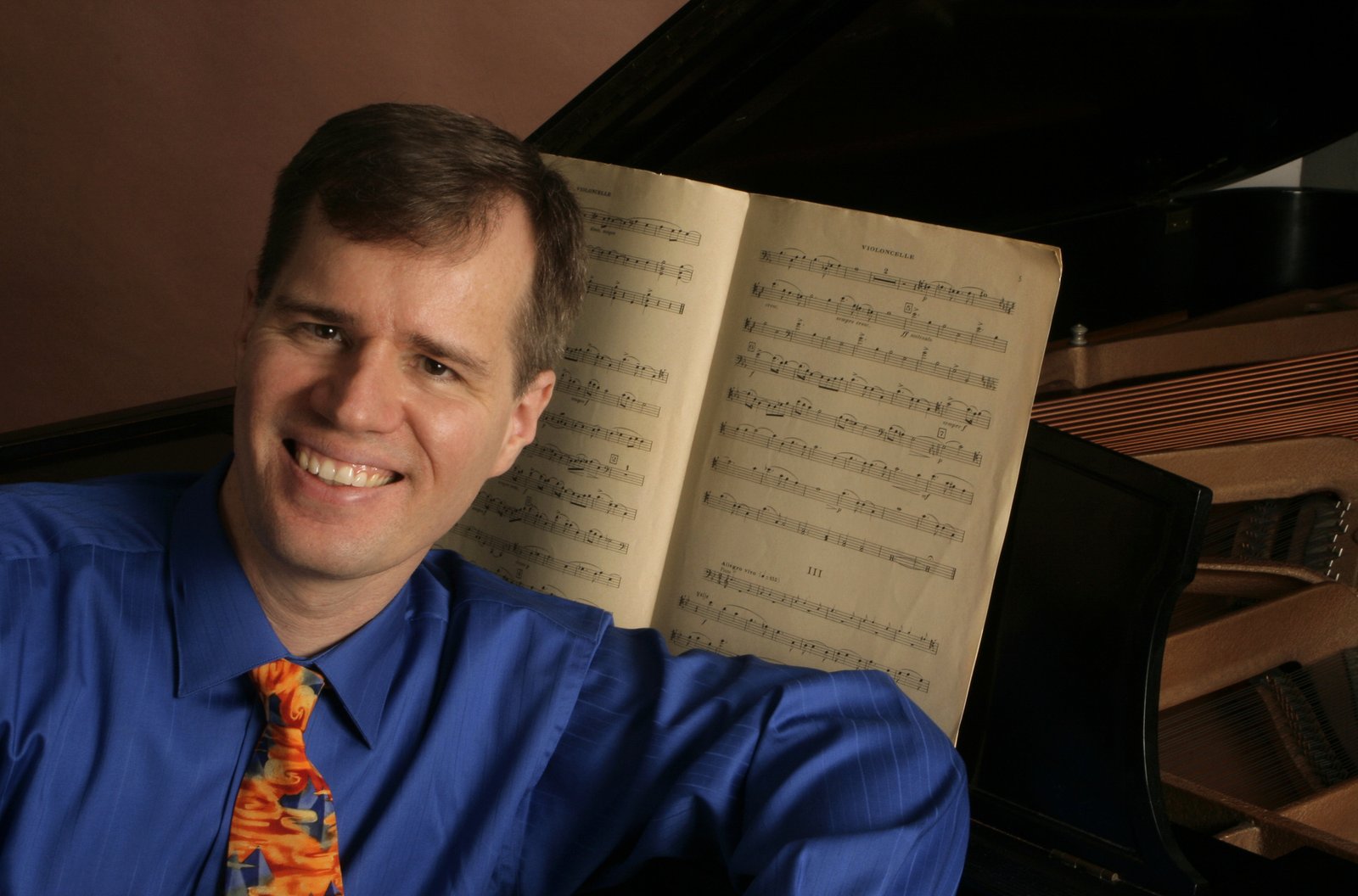
Leila Josefowicz (violin, above), John Novacek (piano, below)

Debussy Violin Sonata in G minor L140 (1916-17)
Szymanowski 3 Myths Op.30 (1915)
Bray Mriya (2023) [Wigmore Hall commission: World premiere]
Stravinsky Divertimento from Le Baiser de la fée (1928, arr. 1934, rev. 1949)

Wigmore Hall, London
Saturday 21 September 2024

Reviewed by Richard Whitehouse

Long among the more adventurous violinists from her generation, this latest Wigmore recital found Leila Josefowicz focussing on music traversing the boundary between Impressionism and neo-Classicism, together with a recent piece such as conveyed a meaningful relevance.

It might not be such a good idea to launch a recital with Debussy’s Violin Sonata, as this last and conceptually most fluid of its composer’s late chamber works is essentially a culmination rather than starting-point. Having rather harried its opening Allegro, Josefowicz brought keen imagination to its Intermède which none the less lacked that fantasy and lightness intended. Most convincing was its finale, the headlong succession of ideas deftly propelled to a payoff not merely decisive but of all-round conclusiveness – whatever Debussy may have intended.

Whereas this piece was admired but initially found relatively few exponents, Szymanowski’s Myths was early recognized as a milestone in its medium and has latterly regained that initial eminence. Josefowicz duly recognized these innovative qualities with an impulsive yet never wayward take on La fontaine d’Arethuse, its capriciousness finding an ideal complement in the simmering emotion and alluring poise of Narcisse – self-aware rather self-regarding as to expression – or increasingly recalcitrant playfulness of Dryades et Pan with its teasingly delayed – even almost avoided – close. Just occasionally, Josefowicz’s snatching at a rhythmic gesture denied the music its high-flown eloquence but, overall, this proved a perceptive and involving account where her interaction with John Novacek’s attentive pianism was absolute.
Those who hear the Szymanowski as a ‘sonata malgré-lui’ might feel likewise about Mriya by Charlotte Bray, which tonight had its first hearing. Its Ukrainian title variously implying ‘dream, vision, ambition and vow’, this four-movement work charted a course of terror but also resolve. The first of these infused its disparate while distinctive ideas with a momentum as merged directly into the feline capering of its successor; after which, a slower movement offered a measure of sustained if hardly serene calm, before the finale once again marshalled its disjunct gestures towards a culmination which was pointedly withheld. A symbol, perhaps, of the Ukrainian people’s struggle as is far from reaching closure let alone victory? Whatever the case, this is absorbing and deeply felt music that received a suitably committed response.

From here to Stravinsky’s Divertimento from The Fairy’s Kiss was some conceptual leap. One of several such adaptations its composer made during its career as a duo-recitalist with Samuel Dushkin, this takes in most of the ballet’s initial two-thirds – the Sinfonia by turns pensive and restive, while the rumbustious Danses suisses was irresistibly despatched. The Scherzo exuded a capering charm and the Pas de Deux moved effortlessly from its soulful Adagio, via nimble Variation, to an initially dextrous then increasingly uproarious Coda.

This recital ended in a wholly different aesthetic world from which it began, but Josefowicz’s acuity could not be gainsaid. ‘Uproarious’ was also the watchword of the encore – Novacek’s Intoxication Rag, arranged by Itzhak Perlman no less and rendered with appropriate abandon.

For more on the Autumn season visit the Wigmore Hall website – and for more on the artists, click on the names Leila Josefowicz and John Novacek

Published post no.2,309 – Sunday 22 September 2024

Online Concert: Esther Yoo & Jae Hong Park @ Wigmore Hall – Debussy, Grieg, Rachmaninoff & Vieuxtemps

Esther Yoo (violin), Jae Hong Park (piano)

Debussy Violin Sonata in G minor (1916-7)
Grieg Violin Sonata no.3 in C minor Op. 45 (1886-7)
Rachmaninoff Vocalise Op. 34 no. 14 (1915)
Vieuxtemps Souvenir d’Amérique on ‘Yankee Doodle’ Op.17 (pub. c1845)

Wigmore Hall, Monday 6 November 2023 1pm

by Ben Hogwood

This was the first recital given in the UK by the relatively new team of violinist Esther Yoo and pianist Jae Hong Park – but on this evidence, many more will follow. Yoo has been a regular concert giver for ten years now, having joined the BBC Radio 3 New Generation Artist scheme in 2014, so it is easy to forget she is still just 29. Park, meanwhile, took first prize at the Busoni-Mahler Foundation Competition in 2021 and, at the age of 24, looks set for a fine future as soloist and chamber pianist.

The duo began with a fresh take on Debussy’s oft-heard Violin Sonata, his final completed work. The first movement has meaningful if short melodic cells and quickly changing moods, which both performers characterised to great effect, with Yoo’s intonation and phrasing particularly impressive. The second movement was lighter, before the Finale set off at quite a lick, Yoo’s commanding and very impressive virtuosity giving the music a great deal of energy. This was Debussy with a fresh coat of glossy paint, but with a great deal of feeling and understanding too.

Following the Debussy with Grieg’s third essay in the genre was a particularly smart move, as the two composers have closer parallels than one might think. The Violin Sonata no.3 in C minor is a particularly fine work, closely adhering to sonata principles while allowing the performers plenty of room for flights of fancy and characterisation. Both clearly love this work, for the crisp attack of the first movement was immediately gripping, the turbulent passages given the requisite drama. Yoo was fully invested in the fantastical aspects of Grieg’s writing, the violin dreamily floating at some points while swooping with full tone at others. Park ensured the forthright piano writing was delivered at just the right level, too, offering substantial support when needed. The slow movement had an appealing singing style, responding to Grieg’s marking of Allegretto espressivo alla Romanza, while the harmonic twists and turns of the third movement were high on red-blooded drama.

The pair followed with a set of extended encore pieces, beginning with a tasteful account of Rachmaninoff’s versatile Vocalise, which works particularly well in the Michel Press & Josef Gingold arrangement used here. Yoo’s long phrases were nicely floated, but in the following Souvenir d’Amérique on ‘Yankee Doodle’ by Belgian composer Henri Vieuxtemps she took the opportunity to go for broke. This is a great audience piece, with a brilliant send-up of the familiar theme, allowing for portamento, spiky snaps, quickfire left hand pizzicato and much more. In these hands it was a proper showstopper!

Then we heard a Korean folksong, the poignant Milyang Arirang – which, with its pentatonic melody, was not too far removed from the language of the Rachmaninov. A passionate central section and a free, rhapsodic coda were delightful – as was an extra bonus, an affectionate account of Elgar’s Chanson de matin.

For more livestreamed concerts from the Wigmore Hall, click here

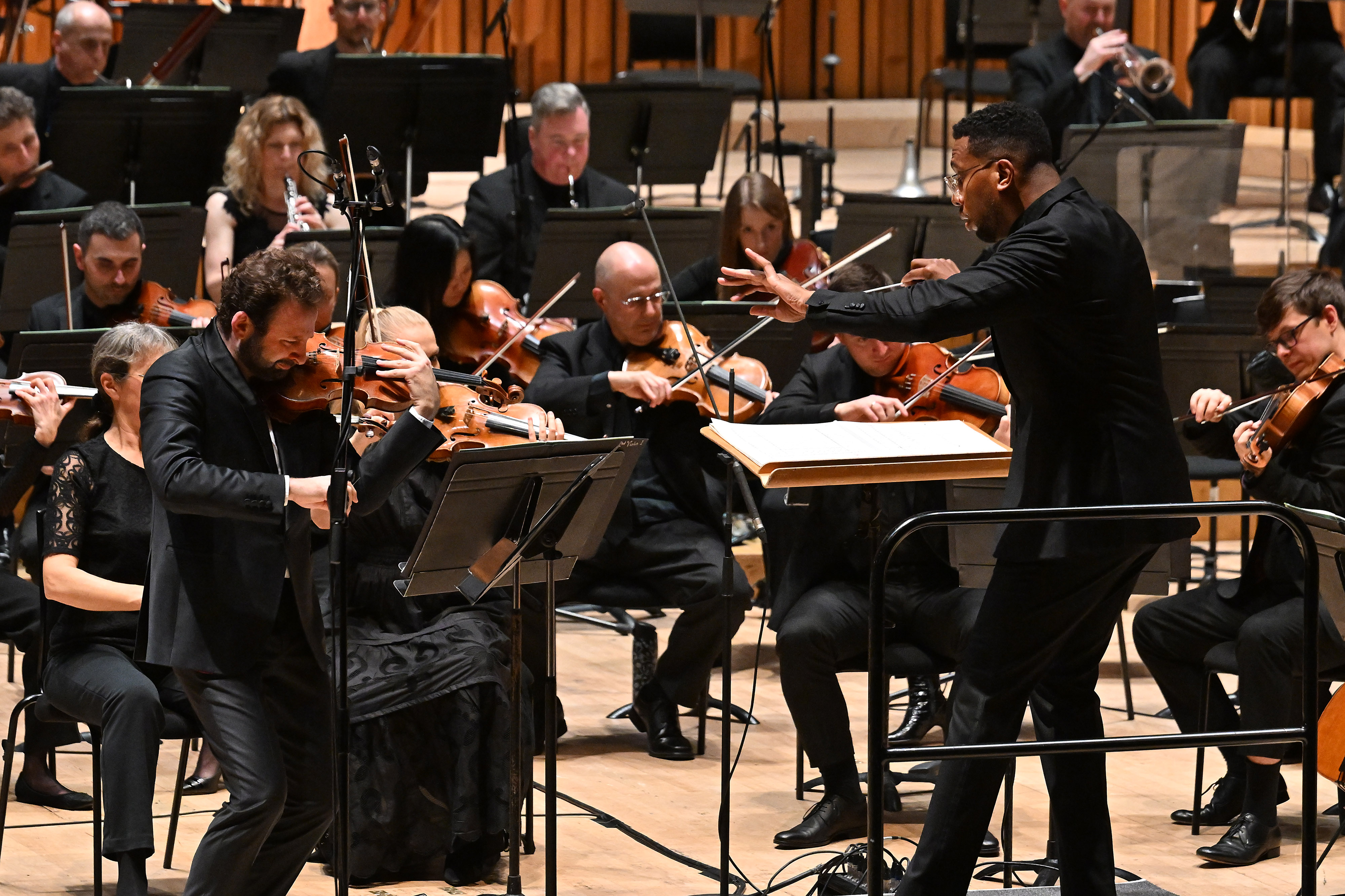
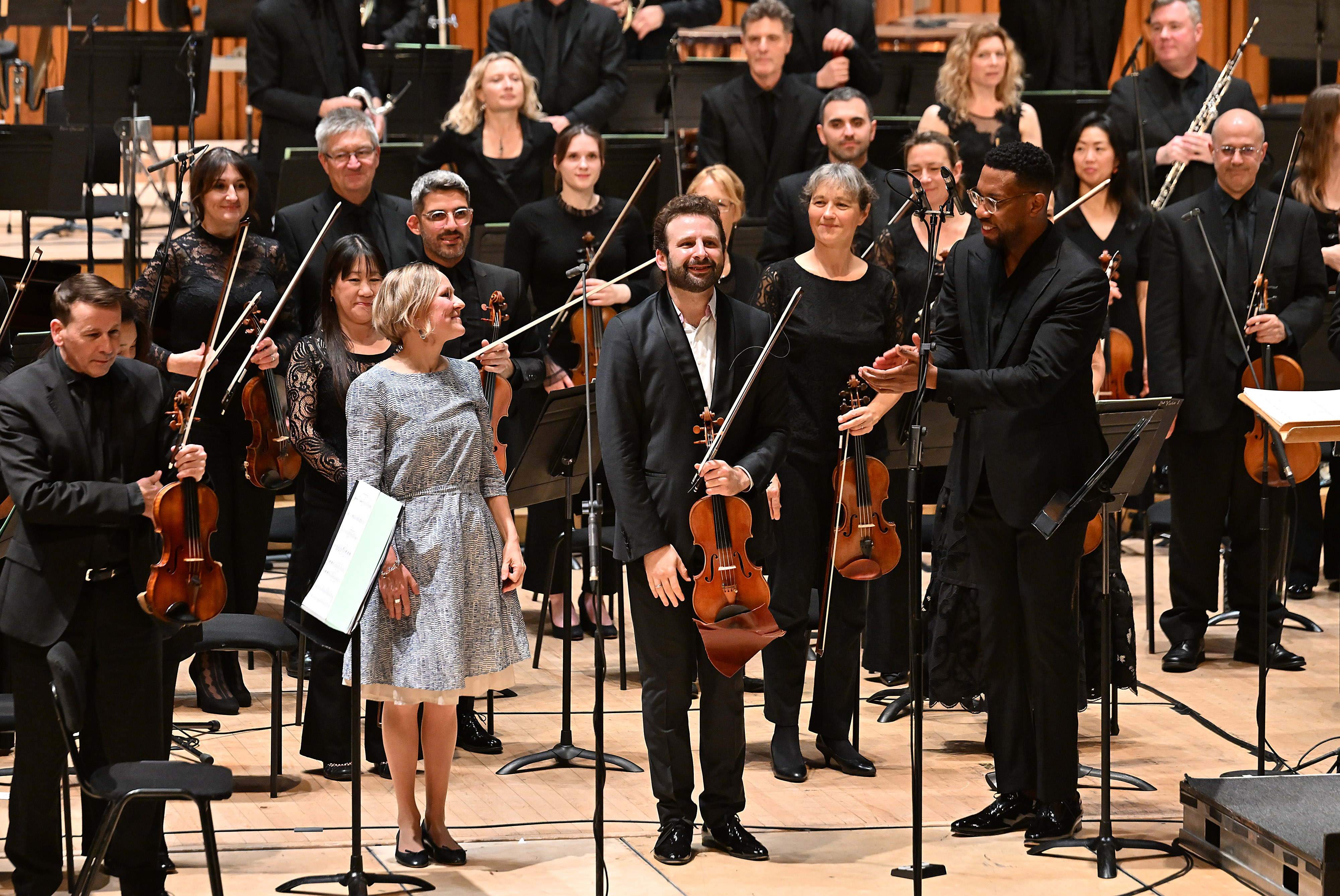
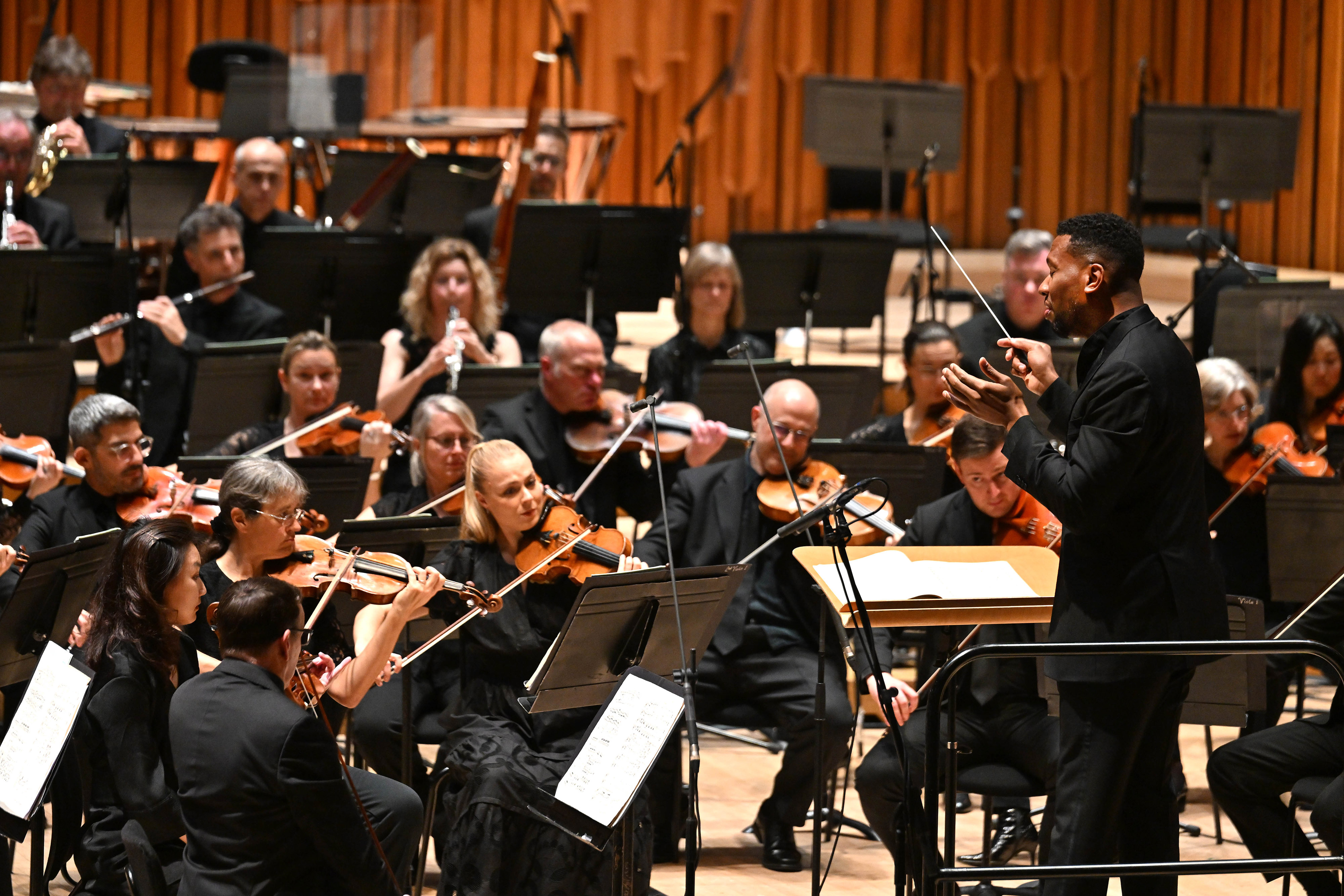
In concert – Ilya Gringolts, BBC Symphony Orchestra / Roderick Cox: Debussy, Wennäkoski, Lyatoshinksky & Stravinsky

Ilya Gringolts (violin), BBC Symphony Orchestra / Roderick Cox

Debussy Prélude à l’après-midi d’un faune (1891-4)
Wennäkoski Prosoidia (BBC co-commission: world premiere)
Lyatoshinsky Grazhyna
Stravinsky The Firebird – suite (1919)

Barbican Hall, London
Friday 3 November 2023

Reviewed by Ben Hogwood. Pictures courtesy of BBC/Mark Allan

If the number of concertgoers whistling the Finale of Stravinsky’s Firebird down Silk Street to the tube was anything to go by, this typically creative BBC Symphony Orchestra program had made its mark.

This was in spite of a late change of conductor, Roderick Cox replacing the indisposed Eva Ollikainen – yet the transition was seamless, Cox an alert and subtly commanding presence who clearly enjoyed making music with his new charges. All those qualities were evident in a hazy, sensuous account of Debussy’s Prélude à l’après-midi d’un faune, the temperature raised in spite of the autumnal weather outside. This is, as Paul Griffiths observed in the booklet notes, where Debussy’s ‘music begins here afresh. So does modern music generally.’ Daniel Pailthorpe’s flute solo set the tone, the BBC Symphony Orchestra revelling in alluring wind melodies and hazy, soft-focus strings. The sense of the new – even 120 years after completion – was tangible throughout.

Lotta Wennäkoski’s Prosoidia was also new – still drying on the page in fact, as this was the world premiere of a co-commission from the BBC SO, Lahti SO and Norrlands Opera for violin and orchestra. Though not billed in the title as a violin concerto it assumed that function, though Ilya Gringolts (above) moved between his own solo statements and conversations as part of the orchestra. Throughout he showed impeccable technique and great expression. The orchestra’s role was headed by percussion and harp, with some exquisite shading especially in the quiet music. How refreshing to hear a composer confidently writing music that the audience strained to hear, the resultant effect all the more powerful for this restraint. Here Wennäkoski was reflecting linguistic instructions inspired by ‘prosody’ – the word referring to the musical properties of speech: rhythm, pitch, stress and pauses. Her focus gave the work a moving humanity, a concerto where wordless instrumental voices spoke with great intensity.

The second movement, Word Stress, had a primal savagery, the orchestral voices clamouring to be heard and on occasion drowning the violin. Here the influence of Bartók was palpable, Wennäkoski drawing perhaps on her studies in Budapest. A moving third movement followed, inspired by Ingmar Bergman’s film Cries and Whispers – and in particular a scene where the voices are replaced by the Sarabande from Bach’s Cello Suite no.5. Written in memory of the recently departed Kaija Saariaho, Wennäkoski’s teacher, it was an intimate discourse, recalling the equivalent passage in Berg’s Violin Concerto where the composer also quotes from Bach. Here the approach was less explicit but formed an engaging tableau, where the dynamic dimmed and textures became spare at the thoughtful close. A concerto with an appealing economy and frank musical language, Prosoidia deserves a regular place in the repertoire.

After the interval we heard music from Boris Lyatoshinsky, described in Martin Anderson’s composer profile as ‘the first explicitly Ukrainian composer of the modern age’. Grazhyna, a symphonic poem about a fictitious 15th century female Lithuanian chieftain, cast its eyes back to Liszt and Saint-Saëns in its orchestral narrative, but the modern harmonic language of 1955 spoke more of Myaskovsky and Shostakovich’s music for the stage, not to mention the lasting influence of Lyatoshinsky’s teacher Glière. Roderick Cox presided over a convincing interpretation, impressively grasping the piece in spite of what was surely limited preparation. From the brooding violas portraying the River Neman, we heard a plangent cor anglais lament from Max Spiers, then a high voltage tutti as the battle scene raged. Though short on distinctive melodies, Grazhyna was dramatic to the last as the river music returned, capping an atmospheric and compelling account.

This was also the case for Stravinsky’s 1919 suite from The Firebird, fashioned by the composer into a crowd-pleasing five movements, and creeping in stealthily on the lowest strings. This was an assured interpretation, Cox cajoling the well-drilled BBC SO through a thrilling Infernal Dance, having enjoyed the vivid colours of The Princesses’ Round Dance. The bassoon of Andrea de Flammineis excelled in the Berceuse, where Stravinsky’s ‘sweet and sour’ melodies were in evidence, before the bold as brass Finale that sent the audience home whistling. This was an impressive concert all round, showing the strength in depth the BBC Symphony Orchestra possess these days. Their ensemble, a winning combination of experience and raw talent, is enjoying a purple patch.

You can listen to this concert on BBC Sounds – and read all about the 2023/24 season and book tickets at the BBC Symphony Orchestra website. Click on the artist names for more on violinist Ilya Gringolts and conductor Roderick Cox, and for more on composer Lotta Wennäkoski

Published post no.1,999 – Saturday 4 November 2023

BBC Proms 2023 – María Dueñas, BBC Symphony Orchestra / Josep Pons – Falla, Lalo, Debussy & Ravel

Prom 8 – María Dueñas (violin), BBC Symphony Orchestra / Josep Pons

De Falla La vida breve (1904-05) – Interlude and Dance
Lalo Symphonie espagnole, Op. 21 (1874)
Debussy Ibéria (1905-08)
Ravel Boléro (1928)

Royal Albert Hall, London
Thursday 20 July 2023

by Richard Whitehouse photos by Chris Christodoulou / BBC

The Proms went to town on Spanish music just over two decades ago, and if tonight’s concert featured only one piece by a Spanish composer, an aura of ‘Spanish-ness’ fairly pervaded this programme which likewise found the BBC Symphony Orchestra in excellent form throughout.

The piece in question was Interlude and Dance from de Falla’s opera La vida breve, once a regular fixture at these concerts and one which makes for an ideal encore or (as here) curtain-raiser according to context. Josep Pons duly brought out the drama of its initial pages, before heading into a rendition of the main section such as (rightly) predicated suavity over rhetoric, while not lacking for impetus as this music reached its effervescent close. Lasting little more than an hour, the opera ought to enjoy more frequent revival as part of a judicious double-bill.

Édouard Lalo is himself a composer worth revival, his Symphonie espagnole having regained something of its familiarity from half a century ago. Her tonal warmth and incisiveness made María Dueñas an ideal exponent, while her rapport with the orchestra accordingly underlined its concertante-like ingenuity. There was no lack of energy or pathos in the opening Allegro, the capering elegance of the Scherzando duly complementing the forcefulness of the ensuing Intermezzo before the Andante brought a finespun eloquence, itself offset by the final Rondo with its indelible main theme and never wanton virtuosity. Evidently a first-rate accompanist, Pons drew as subtle a response from the BBCSO here as in a rapt arrangement for violin and strings of Fauré’s song Après un Rêve which Dueñas offered as the entirely apposite encore.

Debussy allegedly spent just one day over the Spanish border, but his feel for that country’s musical essence in Ibéria could not be gainsaid. The unwieldly trilogy that is the orchestral Images often makes performance of this in itself a stand-alone triptych preferable, and Pons had its measure from the outset of Along the Streets and Pathways, with its characteristic alternation of decisiveness and hesitancy. Nor was there any lack of ecstatic languor in The Perfumes of the Night whose soulfulness only gradually became apparent – Pons making a rhythmically seamless transition into The Morning of a Festive Day with its vivid evoking of castanets and guitars, along with a folk-inflected élan as carried through to the headlong closing bars. Highlighting of detail never risked cohesiveness in this scintillating account.

Ravel’s Rhapsodie espagnole would have been an ideal work to conclude this concert, though few in the audience would surely have begrudged hearing Boléro in its place and Pons did not disappoint. At just over 15 minutes it was appreciably faster than the inexorable unfolding its composer most likely envisaged, but the combination of textural definition and astute placing of detail ensured this traversal enticed over the short term as keenly as it compelled across the whole. In what is a ‘concerto for orchestra’ without equal, it would seem invidious to single out individual contributions, but Alex Neal was unerring in his articulation of the side-drum ostinato, while Antoine Bedewi’s timpani steered those climactic stages through to a forceful but not overbearing denouement. If not the ultimate Boléro, this was certainly one to savour.

For more on the 2023 BBC Proms, visit the festival’s website at the BBC. Click on the names for more information on the BBC Symphony Orchestra, Josep Pons and María Dueñas

In Concert – Martin Fröst, Roland Pöntinen & Sébastien Dubé @ Wigmore Hall: Night Passages – A Musical Mosaic

Martin Fröst (clarinet), Roland Pöntinen (piano), Sébastien Dubé (double bass)

Debussy Première rhapsodie (1909-10)
Chausson Andante and Allegro (1881)
Poulenc Sonata for clarinet and piano (1962)
Night Passages – A musical mosaic (with arrangements by the performers)
Domenico Scarlatti Sonata in D minor Kk32
Chick Corea Children’s Song no.15 (1978)
Rameau Les Indes galantes: Air pour les Sauvages (1735-6)
Purcell Incidental music for Oedipus, King of Thebes Z583: Music for a while (1692)
J.S. Bach Sinfonia no15 in B minor BWV801 (c1720)
Chick Corea Armando’s Rumba (1976)
Purcell Hornpipe in E minor Z685
Handel Menuet in G minor (1733)
Traditional Polska från Dorotea
Göran Fröst Klezmer Dance no.2 (2011)

Wigmore Hall, London
Wednesday 21 December 2022

Reviewed by Ben Hogwood

In 2019, Arcana was at the Wigmore Hall to see Martin Fröst and Roland Pöntinen give a concert of largely French music for clarinet and piano. Their encore hinted at an intriguing sequence of arrangements exploring connections between classical music and jazz. Three years on, that sequence has grown in stature, realised in recorded form as the Sony Classical album Night Passages, and given meaningful content by personal and world events.

Through lockdown, Fröst experienced intense bouts of Ménière’s disease, whose symptoms include unexpectedly severe bouts of vertigo and tinnitus. The clarinettist experienced one such bout while driving his car, which he thankfully negotiated without injury, but which bred a number of accompanying fever dreams. Expressed in the program notes, they lent a vivid written complement to the music.

Since 2019 the double bass of Sébastien Dubé has been added to the instrumental thinking, an essential musical component taking the arrangement style towards Jacques Loussier without ever resorting to parody. Unexpectedly, the group’s colourful arrangements did not always include the piano, allowing Fröst and Dubé the chance to explore the rewarding combination of clarinet and double bass through imaginative techniques and compelling improvisation.

The course of Night Passages led from a solemn sonata by Domenico Scarlatti to a Klezmer dance from Fröst’s brother Göran, by way of arrangements exploring the versatility of Baroque music. These were matched by jazz-inflected work from Chick Corea, with Armando’s Rumba presenting some vibrant syncopations, along with a celebration of the Swedish polska.

Frost’s artistry was almost beyond criticism, the clarinettist able to make even the most demanding technical passages appear nothing more than a walk in the park, airily improvising or running through sharply edged cadenzas. Dubé was no less impressive, and a remarkably wide range of colours issued from the double bass, whether bowed or plucked. His chemistry with Fröst was compelling, and the occasional use of vocals added to the mix. Roland Pöntinen also made the most of his chances to shine, providing the rhythmic verve to the dances but also a welcome, cleansing clarity which ran through the Baroque arrangements, tastefully and affectionately realised.

Prior to the interval we heard three short pieces by French composers for clarinet and piano. Debussy’s Première rhapsodie tells its story through a set of contrasting thoughts, initially set out in a humid atmosphere but becoming more outward facing as it gains in confidence. Fröst and Pöntinen had its many twists and turns instinctively under their fingers, finishing each other’s sentences as they did in the romantic, lyrical writing of Chausson’s Andante and Allegro, played with evident affection.

Yet it was Poulenc’s Sonata for clarinet and piano, completed in the year before his death, that made the most lasting impression. What a profound work this is, paying tribute to his friend and fellow composer Arthur Honegger. The slow movement holds the emotional centre of the work, with melancholy on occasion spilling over into outright sadness. Fröst’s quieter asides encouraged the audience to lean closer to the music, but these intimate thoughts were swept away by the exuberant finale, throwing caution to the winds. Fröst and Pöntinen played with great feeling throughout, typifying the approach of a concert that may not have been generous in length but which amply compensated through musical quality.