Earlier this week we learned of the sad news of the death of Amelia Freedman. In a post on their website, the Nash Ensemble describe Amelia as their “creator and guiding light”, with “an extraordinary gift for creative programming that was appealing as well as broadening musical horizons”. In their obituary of Amelia, the Daily Telegraph described her as “the most influential British classical music impresario of the late 20th century”.
Her work bore fruit both in the concert hall, through the Nash Ensemble’s long relationship with Wigmore Hall that began in 1967, and a long recording career that is noted for its inventiveness and high performing standards.
The discography below is just a hint of what the Nash Ensemble have achieved on record, including a work by Amelia’s good friend, the late Sir Harrison Birtwistle, as well as the String Trio by David Matthews, which he dedicated to Freedman. Also included are a recent recording of Debussy’s Sonata for Flute, Viola and Harp, a pioneering recording of the attractive Nonet by Sir Arnold Bax, and the vibrant Piano Quartet in B flat major by Saint-Saëns:
Mozart Piano Sonata no.13 in B flat major K333 (1783-4) Debussy Images Set 1: Reflets dans l’eau (1901-5); Suite Bergamasque: Clair de lune (c1890, rev. 1905) Dupont Les heures dolentes: Après-midi de Dimanche (1905) Hahn Le Rossignol éperdu: Hivernale; Le banc songeur (1902-10) Koechlin Paysages et marines Op.63: Chant de pêcheurs (1915-6) Schmitt Musiques intimes Book 2 Op.29: Glas (1889-1904)
Wigmore Hall, London Monday 28 April 2025 (1pm)
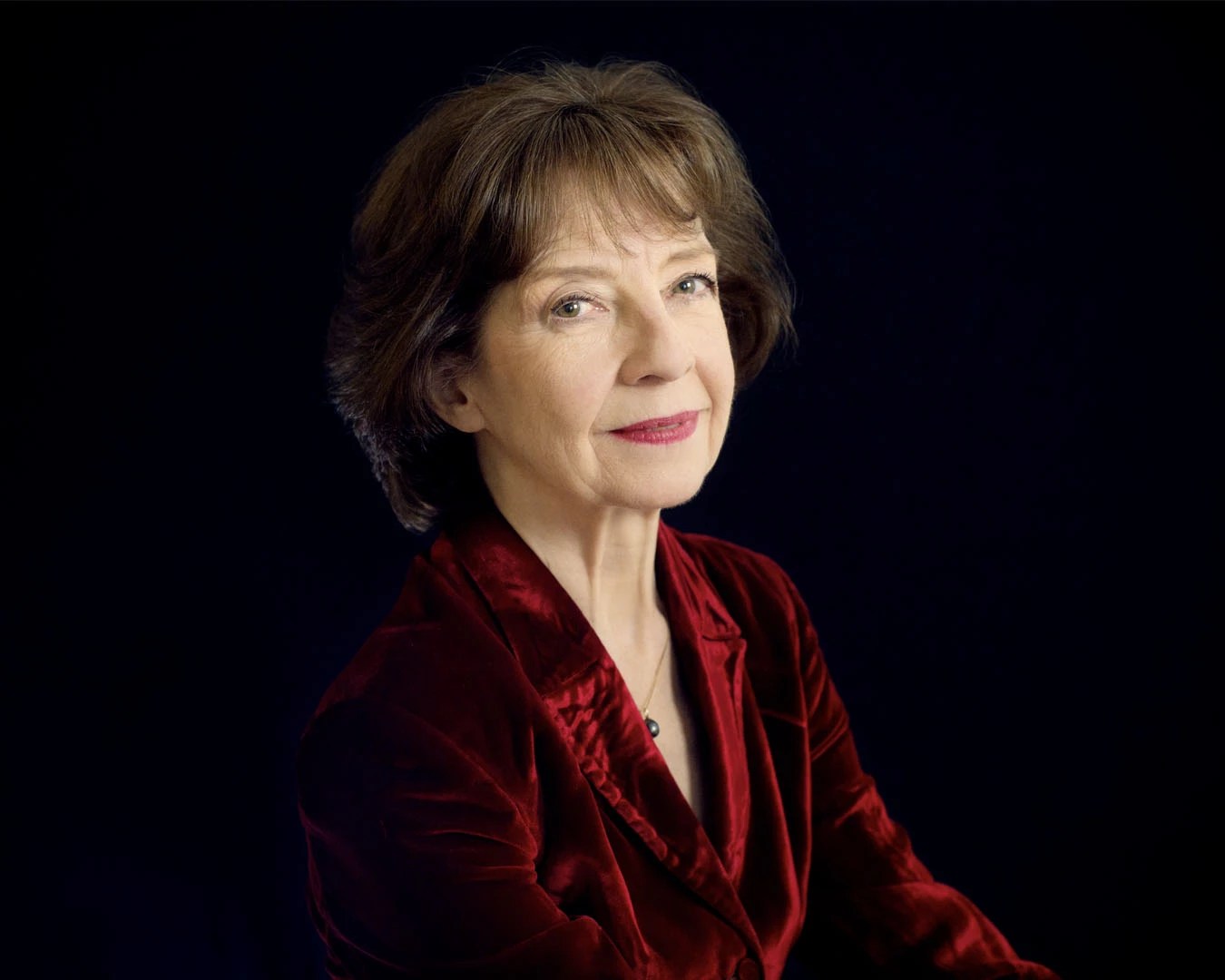
by Ben Hogwood picture of Anne Queffélec (c) Jean-Baptiste Millot
The celebrated French pianist Anne Queffélec is elegantly moving through her eighth decade, and her musical inspiration is as fresh as ever. The temptation for this recital may have been to play anniversary composer Ravel, but instead she chose to look beneath the surface, emerging with a captivating sequence of lesser-known French piano gems from the Belle Époque, successfully debuted on CD in 2013 and described by the pianist herself as “a walk in the musical garden à la Française.”
Before the guided tour, we had Mozart at this most inquisitive and chromatic. The Piano Sonata no.13 in B flat major, K.333, was written in transit between Salzburg and Vienna, and the restlessness of travel runs through its syncopation and wandering melodic lines. Queffélec phrased these stylishly, giving a little more emphasis to the left hand in order to bring out Mozart’s imaginative counterpoint. She enjoyed the ornamental flourishes of the first movement, the singing right hand following Mozart’s Andante cantabile marking for the second movement, and the attractive earworm theme of the finale, developed in virtuosic keystrokes while making perfect sense formally.
The sequence of French piano music began with two of Debussy’s best known evocations. An expansive take on the first of Debussy’s Images Book 1, Reflets dans l’eau led directly into an enchanting account Clair de Lune, magically held in suspense and not played too loud at its climactic point, heightening the emotional impact.
The move to the music of the seldom heard and short lived Gabriel Dupont was surprisingly smooth, his evocative Après-midi de Dimanche given as a reverie punctuated by more urgent bells. Hahn’s Hivernale was a mysterious counterpart, its modal tune evoking memories long past that looked far beyond the hall. Le banc songeur floated softly, its watery profile evident in the outwardly rippling piano lines. The music of Charles Koechlin is all too rarely heard these days, yet the brief Le Chant des Pêcheur left a mark, its folksy melody remarkably similar to that heard in the second (Fêtes) of Debussy’s orchestral Nocturnes.
Yet the most striking of these piano pieces was left until last, Florent Schmitt’s Glas including unusual and rather haunting overtones to the ringing of the bells in the right hand. Queffélec’s playing was descriptive and exquisitely balanced in the quieter passages, so much so that the largely restless Wigmore Hall audience was rapt, fully in the moment. Even the persistent hammering of the neighbouring builders, a threat to concert halls London-wide, at last fell silent.
Queffélec had an encore to add to her expertly curated playlist, a French dance by way of Germany and England. Handel’s Minuet in G minor, arranged by Wilhelm Kempff, was appropriately bittersweet and played with rare beauty, completing a memorable hour of music from one of the finest pianists alive today.
Listen
You can listen to this concert as the first hour of BBC Radio 3’s Classical Live, which can be found on BBC Sounds. The Spotify playlist below has collected Anne Queffélec’s available recordings of the repertoire played:
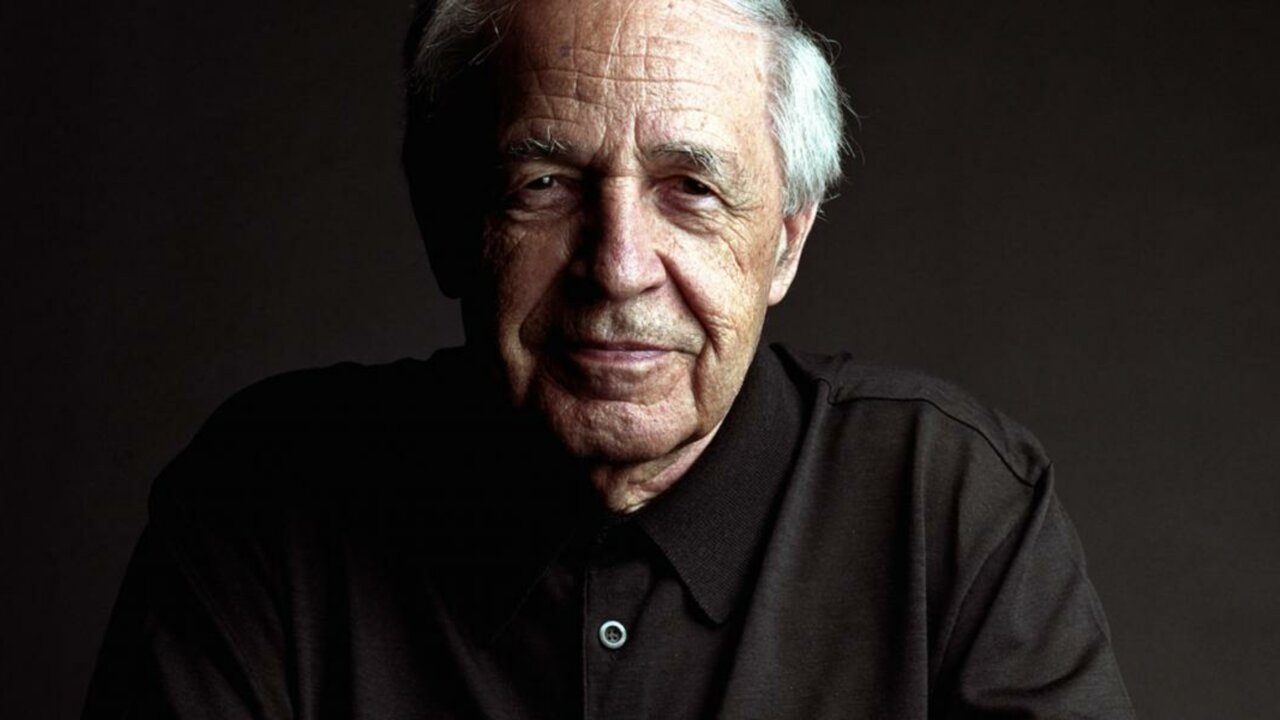
Today marks the centenary of the birth of composer and conductor Pierre Boulez, a towering figure in 20th century classical music.
There are so many recordings conducted by Boulez that I thought it best to share a playlist centred on memories of concerts I saw him conduct, largely from the 1990s and 2000s.
My first encounter with him was a rare appearance with the City of Birmingham Symphony Orchestra at the Royal Festival Hall. There he conducted Bartók’s Piano Concerto no.1 with customary clarity, soloist Krystian Zimerman delivering a memorable performance of percussive drive as he does here. On the second half of the concert was Stravinsky’s Petrushka, well-represented here by Boulez’s recording for DG in Cleveland.
Another South Bank visit in the 1990s brought an unusual appearance for Schoenberg’s monodrama Erwartung, sung memorably by soprano Jessye Norman. I remember vividly several visits to the Barbican to see Boulez conduct the London Symphony Orchestra in the 1990s, and one performance that particularly stands in the memory was that of Ravel’s Valses nobles et sentimentales, a colourful yet brisk performance that danced with a glint in its eye.
One other eyeopener, which I will never forget, was Boulez conducting Prokofiev’s Scythian Suite at the Barbican – a work he never recorded. Simultaneously on the bill was Szymanowski’s Violin Concerto no.1. Here was a composer Boulez seemingly re-evaluated later in his life, recording the concerto with violinist Christian Tetzlaff for DG.
From the recorded side I have included Maurizio Pollini’s pioneering account of Boulez’s own Piano Sonata no.2, a challenging piece that I must admit I have not yet conquered – but whose importance is clear.
To finish, my favourite Boulez recording, which finds him back in Cleveland conducting Debussy’s Nocturnes, a recording notable for its ideal pacing, beautiful colouring and immaculate rhythmic direction.
You can listen to this selection on Tidal by clicking on the playlist link below:
Ravel Miroirs (1905) Despax Sounds of Music – Concert Paraphrase on The Sound of Music by Richard Rodgers and Oscar Hammerstein (unknown) Fauré arr. Despax Après un rêve Op.7/1 (1877) Debussy Clair de lune (1905) Ravel Gaspard de la nuit (1908)
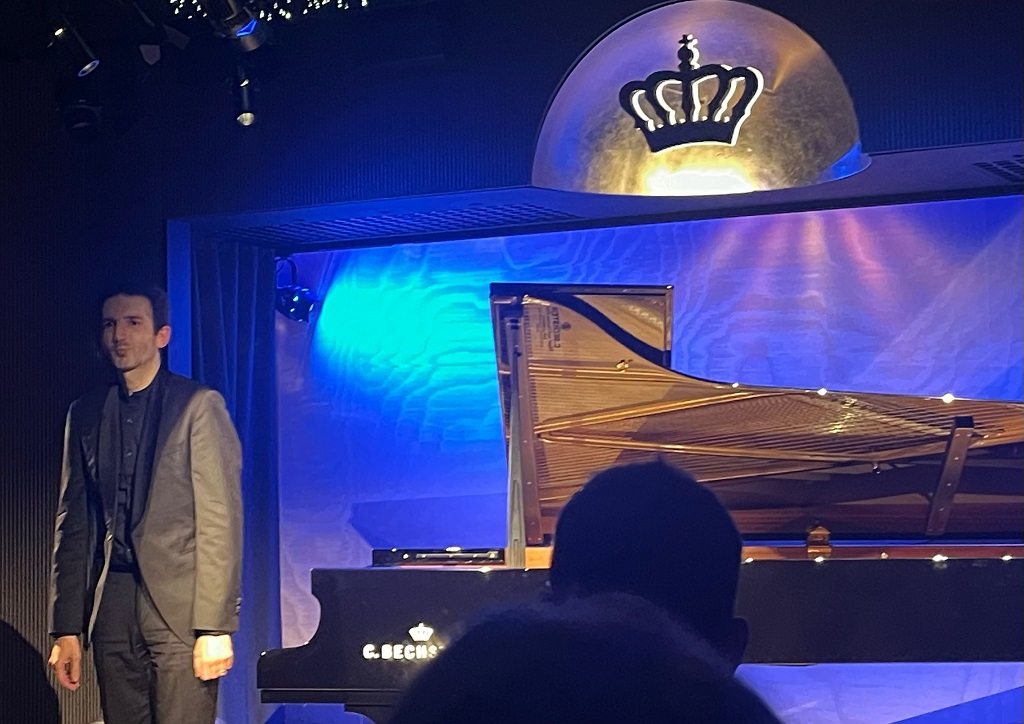
Bechstein Hall, London, 7 March 2025
by John Earls. Photo credit (c) John Earls
The most recognised piece of music by French composer Maurice Ravel is his 1928 large orchestral work Boléro, famously used in the film 10 and by Torvill and Dean when ice dancing their way to a 1984 Winter Olympics gold medal.
But there is also a magnificent repertoire of piano music including for solo piano and this provided the main feature of this recital by Emmanuel Despax, marking the 150th anniversary of Ravel’s birth.
The first set opened with Miroirs (Mirrors), a suite of five short movements Ravel dedicated to his fellow members of the French avant-garde artist group Les Apaches.
Noctuelles (Night Moths) had twinkling moments of calm surfacing through its dark undertones, contemplative birdsong is evoked in Oiseaux tristes (Sad Birds), Une barque sur l’océan (A Boat on the Ocean) captured both the flow and ripple of the waves, Alborada del gracioso (The Jester’s Aubade) had a jittery, Spanish aspect, and the bells of La vallée des cloches (The Valley of Bells) are not peals so much as melancholic, dark flashes.
The set ended with Despax’s Sounds of Music, a ‘Concert Paraphrase’ on Rodgers and Hammerstein’s The Sound of Music. I enjoyed its dark humour and nods to other classical piano composers – “If you hear something you recognise it’s not plagiarism, it’s on purpose” Despax forewarned us.
The second set opened with Despax’s arrangement of Faure’s Après un rêve(After a Dream) which was serious and majestic followed by Debussy’s Clair de lune(Moonlight) which whilst thoughtful and considered was also beautifully delicate and expressive.
But the evening was Ravel’s and it concluded with his epic three part masterpiece Gaspard de la nuit(Gaspard of the Night) derived from the prose poems by Aloysius Bertrand. Described by Despax as a “symphonic work for solo piano” it is notoriously difficult to play.
Ondine’s hypnotic trills are shaken by a short powerful blast towards the end and Despax displayed his virtuosity throughout. Le Gibet presents bells of a different kind to those featured in the earlier set, more disturbing and ominous as the repeating tolls maintained throughout evoke the lone hanged man of its inspiration. The way Despax leaned into his keyboard in rapt concentration reminded me of jazz pianist Brad Mehldau at his most intense. The final piece, Scarbo, depicts a mischievous goblin and was spritely before its dramatic long pause towards the end and a forceful energetic finish. It was as captivating to watch as it was to listen to.
What was clear from this performance is the attachment and affinity that Emmanuel Despax has for the music of Maurice Ravel. This was confirmed by an encore of Pavane pour une infante défunte (Pavane for a Dead Princess) which provided a moving and tender conclusion to the evening.
John Earls is Director of Research at Unite the Union. He posts on Bluesky and tweets / updates his ‘X’ content at @john_earls
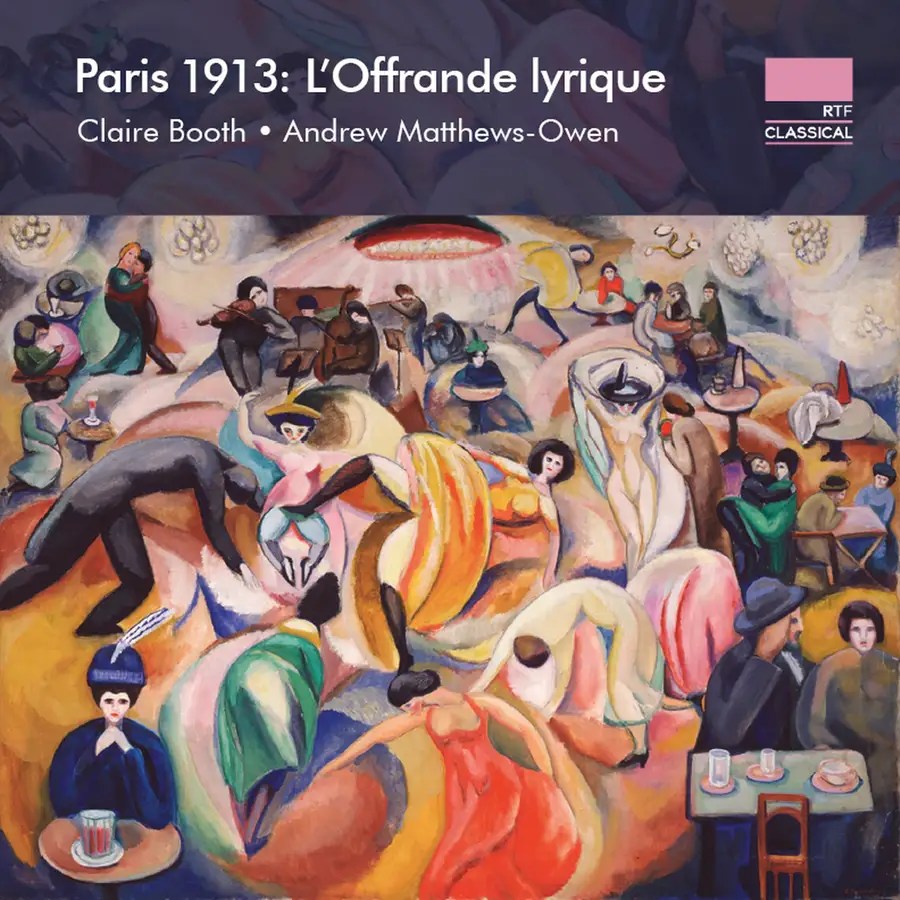
Caplet En regardant ces belles fleurs Milhaud L’innocence Op. 10/3 Hahn À Chloris Ravel arr. Stravinsky Trois poèmes de Stéphane Mallarmé M64 Auric Trois Interludes: Le pouf. Ropartz La Route Durey L’Offrande lyrique Op. 4 Saint-Saëns Petit main Op.146/9 Fauré Il m’est cher, Amour, le bandeau, Op. 106/7 Chaminade Je voudrais être une fleur Debussy Trois poèmes de Stéphane Mallarmé L127 Satie ed. Dearden Trois Poèmes d’Amour Lili Boulanger Clairières dans le Ciel: Vous m’avez regardé avec votre âme Grovlez Guitares et mandolines
Claire Booth (soprano), Andrew Matthews-Owen (piano)
Nimbus RTF Classical NI6455 [66’23”] French texts included Producer & Engineer Raphaël Mouterde
Recorded 11/12 March, 4-6 September 2023 at Wyastone Concert Hall, Monmouth
Reviewed by Richard Whitehouse
What’s the story?
Another enterprising song recital from Claire Booth and Andrew Matthews-Owen, this one focussing on songs that were either conceived, composed or premiered in Paris during 1913 and resulting in an absorbing collection best heard as a diverse while unpredictable totality.
What’s the music like?
Interleaving standalone songs and song-cycles, this recital opens with André Caplet’s take on Charles d’Orléans, its limpid modality highly appealing, then continues with an early song by Darius Milhaud as already demonstrates his distinctive and amusing approach to word-setting, while that by Reynaldo Hahn typifies the teasing charm familiar from his vocal music overall. Maurice Ravel’s triptych to texts by Mallarmé is performed in a version by Stravinsky with its accompanying nonet reduced to piano which, in preserving and maybe even accentuating the music’s questing introspection, represents no mean fete of transcription. Still relatively little known, this certainly deserves to be heard as at least an occasional alternative to the original.
Remembered best as a prolific writer of film scores, Georges Auric had shown a precocious talent for song as is evident in his sensuous setting of René Chalupt. A composer who often wrote on a symphonic scale, Guy Ropartz is heard in a setting of his own verse that amounts to a ‘scena’ in its wide expressive ambit. Interest understandably centres on the eponymous cycle by Louis Durey, a member of Les Six whose increasingly far-left conviction tended to marginalize his creativity yet, as these lucid and empathetic settings of Rabindranath Tagore (as translated by André Gide) confirm, had emerged as a protean talent by his mid-twenties. Hopefully these artists will be encouraged to investigate other of his songs from this period. By contrast, a late song by Camille Saint-Saëns exudes a touching poignancy, while that by Gabriel Fauré typifies the elusiveness of those in his last decade. As is evident here, Cécile Chaminade was a songwriter of style and elegance, then the Mallarmé triptych by Debussy (its first two texts identical to those of Ravel) finds this composer probing the inscrutability of these poems while drawing back from any more explicit intervention. The inscrutability conveyed by Erik Satie’s aphoristic settings (edited by Nathan James Dearden) of his own texts is altogether more playful – after which, the recital continues with a pensive offering by Lili Boulanger, with Gabriel Grovlez’s sultrily evocative setting of Saint-Saëns to finish.
Does it all work?
Yes, given the fascination of this collection taken as a whole and, moreover, the quality of these renditions. Booth is not a singer willing to take the easy option in her interpretations, and so it proves here with singing as fastidious as it is refined, while Matthews-Owen duly instils often deceptively spare accompaniments with understated insight. They contribute a succinctly informative note, but the booklet includes only the French texts with the English translations available at https://rtfn.eu/paris1913/: might it have best the other way round?
Is it recommended?
Very much so. There is much to fascinate even those who consider themselves afficionados of the ‘chanson’, and those who are unfamiliar with much of this repertoire could not have a better means of acquainting themselves with certain of its treasures – hidden or otherwise.