
Wigmore Mondays – Marnis Petersen & Camillo Radicke: Anderswelt (The Otherworld)

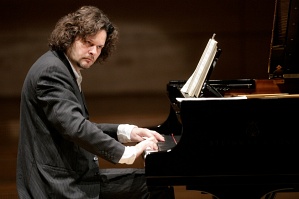
Marnis Petersen (soprano, above), Camillo Radicke (piano, below)

Wigmore Hall, Monday 23 September 2019 (lunchtime)

You can listen to this concert on the BBC Sounds app here

Review and guide by Ben Hogwood

A song recital that was truly out of this world.

German coloratura soprano Marnis Petersen and pianist Camillo Radicke brought the concept of their most recent recording, Dimensionen: Anderswelt, to the Wigmore Hall for an hour of 20 songs by no fewer than 18 composers.

The description ‘coloratura soprano’ depicts a singer that specialises in an operatic style, often high in the register – and that fits the music in this extraordinary collection. Most of the songs – and a couple of the composers – will surely have been new even to the most devoted Wigmore Hall attendee, and as Petersen and Radicke threaded the links cleverly through sections entitled The Otherworld, Elves, Mermaids and Mermen and Northern Lights, they plotted a course from deepest Germany to northern Iceland.

To begin Petersen read a short passage before the first group of five songs. Hans Pfitzner’s Lockung (Temptation) (2:25), with its twinkling piano and entreating mermaids, beckoned us in to the first of the Elves sections. Here we found Reger depicting a ‘pert and wanton’ elf, to a suitably heady vocal from Petersen, then the first of three settings of Eichendorff’s Elfe poem from Bruno Walter (7:28).

Camillo Radicke was superb here, with the insistent trills high up in the piano’s register, over which Petersen floated beautifully. Julius Weismann’s setting of the same text (9:43) again opted for the high register, this time in an attractive triple time dance. Though written in the same year as the Walter, it felt considerably older – and transitioned nicely to Brahms, setting Heine’s seductive water nymph in Sommerabend (Summer evening) (11:21), which found Petersen’s vocal control in very fine shape.
The Mermaids and Mermen section, again five songs in length, had an intriguing juxtaposition of composers. Hans Sommer’s Lore im Nachen (Lore in the skiff) found Radicke catching the ‘shimmer in the evening gold’ on a tranquil lake, as Petersen again soared high in the register. Grieg’s Med en Vandlilje (With a water lily) (18:09) introduced a wary atmosphere with the lurking water sprite (18:09) before Carl Loewe, heard to such great effect in Benjamin Appl and Kristian Bezuidenhout’s recital the previous week, was at it again with the boldly descriptive Der Nöck (The nix) (20:46). The nix (Petersen) and its harp (Radicke) were both strikingly portrayed, and Petersen’s vocal was superb. Sinding’s Ich fürcht’ nit Gespenster (I fear no ghosts) (29:18) was also a striking song, appropriately ghoulish in its coda from Radicke after Petersen had confidently confronted her spectres. Finally we heard a pupil of Hindemith, Harald Genzmer, and the agitated Stimmen im Strom (Voices in the river) (31:32)

To another quintet of songs on Elves, beginning with the cheeky Elfenlied, Wolf’s subject humourously caught by Petersen, who sang into the piano as her subject staggered about having banged his head. Friedrich Gulda’s setting of Elfe – the third of the concert – was a collector’s item (37:34), the 16-year old intriguingly matching the other two in the high treble area for an impish setting. Carl Loewe’s second appearance was with the operatic Die Sylphide (39:20), Petersen’s voice again reaching sparkling heights. Franz Schreker’s Spuk (Spook) (41:42) felt like some of the most modern music here, flitting about with uncertainty and tension, while in a rare outing for the music of conductor-composer Hermann Zumpe, Liederseelen (Song-Souls) (43:58) was affectionately sung.

Petersen and Radicke saved the most adventurous part of their concert until last, with four songs from Scandinavia and Iceland. Ariels Sang (48:06) was a rapturous contribution from Nielsen, boldly delivered, before Sinding reappeared with Majnat (May night) (50:26), a more thoughtful affair. Swedish composer Stenhammar’s Fylgia (53:25) was fulsome and florid in its praise of the spirit, but Sigvaldi KaldalónsHamraborgin (Castle crags) (55:46) painted its subject with uncanny atmosphere, depicting the rarefied atmosphere of the Northern Lights. Petersen capped her vocal performance here with a stunning top ‘B’ at the end.

It was a great way to finish – though after Radio 3 had departed there was another gem in store courtesy of the Finnish composer Yrjö Kilpinen, and an encore of his song Berggeist.

This was a recital of great imagination and technical brilliance. As an introduction to the classical song it would present some challenges to the casual listener, but with the enchantment offered by Petersen and Radicke’s partnership it would prove difficult to resist. Those familiar with the world – or otherworld in this case – should dive right in, as there will definitely be something new!

Repertoire

Marnis Petersen and Camillo Radicke performed the following songs (with timings on the BBC Sounds broadcast in brackets):

The Otherworld

Pfitzner Lockung Op.7/4 (1888-9) (2:25)

Elves I

Reger Maiennacht Op.76/15 (1903-4) (5:23)
Walter Elfe (1910) (7:28)
Weismann Elfe Op.43/4 (1909-10) (9:43)
Brahms Sommerabend Op.85/1 (1878) (11:21)

Mermaids and Mermen

Sommer Lore im Nachen Op.13/1 (publ. 1891) (15:25)
Grieg Med en Vandlilje Op.25/4 (1876) (18:09)
Loewe Der Nöck Op.129/2 (1857) (20:46)
Sinding Ich fürcht’ nit Gespenster (1885) (25:42)
Genzmer Stimmen im Strom (1941) (31:32)

Elves II

Wolf Elfenlied (1888) (35:24)
Gulda Elfe (1946) (37:34)
Loewe Die Sylphide Op.9 (1837) (39:20)
Schreker Spuk Op.7/4 (1898-1900) (41:42)
Zumpe Liederseelen (publ. 1895) (43:58)

Northern Lights

Nielsen Ariels Sang (1916) (48:06)
Sinding Majnat Op.22/3 (1893) (50:26)
Stenhammar Fylgia Op.16/4 (1893-7) (53:25)
Kaldalóns Hamraborgin (c. 1910) (55:46)

Encore – Kilpinen Berggeist Op.99/3

Further listening

All the songs in this concert can be heard from Petersen and Radicke’s recording on the Spotify playlist below:

One of many possible further steps is Wings In The Night, a collection of Swedish songs from mezzo-soprano Anne Sofie von Otter and pianist Bengt Forsberg:

There are so many songs by Carl Loewe that it is difficult to know where you could start. Given his artistry, tenor Christoph Prégardien would seem to be a good bet, this album of songs recorded with pianist Cord Graben:


On record: Mark Bebbington, RPO / Jan Latham-Koenig – Grieg & Delius: Piano Concertos (Somm)

Mark Bebbington (piano), Irene Loh (piano duet), Royal Philharmonic Orchestra / Jan Latham-Koenig

Delius
Piano Concerto in C minor (final version) (1907)
3 Preludes (1921)
On Hearing the First Cuckoo in Spring (arr. by Peter Warlock for two pianos, 1913)
Grieg
Piano Concerto in A minor Op.16 (1869)
Sketches for Piano Concerto no.2 in B minor (1881) (edited / orchestrated Robert Matthew-Walker

Avie SOMMCD269 [74’59”]

Recorded 1-2 August 2017 (Grieg) and 22 October (Delius)

Producers Siva Oke (Grieg), Paul Arden-Taylor (Delius)

Reviewed by Richard Whitehouse

What’s the story?

Mark Bebbington continues his recording schedule for Somm with this enterprising coupling of concertos by Grieg and Delius, heard alongside shorter pieces and an unexpected novelty.

What’s the music like?

The novelty is the extant sketches for a ‘second piano concerto’ on which Grieg worked in the early 1880s, and which amount to some 150 bars. Robert Matthew-Walker has put these into performable shape, but it cannot be pretended the outcome is of more than passing interest. Bebbington also renders the sketches as a solo item and this might prove viable in terms of a recital addition or encore.

There are good things in his account of the A minor Concerto, the limpid interplay between soloist and orchestra in the central Adagio or raptness of response to the finale’s central episode with its ineffable flute melody, but the first movement is for the most part earthbound and the work’s apotheosis not free from bathos. Bebbington plays with scrupulous regard for dynamic nuance and timbral subtlety though, as in his recent account of the Gershwin concerto (SOMM260), the performance feels conscientious rather than inspired.

Fortunately. the remainder of this disc is far more persuasive. Heard here in its final version, Delius‘s Piano Concerto is a three-movements-in-one design whose occasional awkwardness of transition and tendency to rhetorical overkill is more than outweighed by the resourceful evolution of its ideas and the allure of its melodic contours. Bebbington duly responds with playing of sensitivity and panache, reinforcing the not inconsiderable claims of this work to a place in the standard repertoire.

Also featured here are the Three Preludes, their rhythmic vitality and improvisatory freedom more than usually in evidence, and a duet transcription by the teenage Peter Warlock (aka Philip Helseltine) of On Hearing the First Cuckoo in Spring that is alone worth the price of the disc: its ruminative vistas deftly and unerringly uncovered.

Does it all work?

For the most part. Bebbington is up against several decades of stiff competition in the Grieg, and his reading does not offer any great revelations. The Delius, however, is arguably a front runner for this final version, while the fill-ups are of similarly high quality.

Is it recommended?

With reservations. The playing of the Royal Philharmonic Orchestra under Jan Latham-Koenig is never less than responsive, with Irene Loh an able partner in the Delius. Sound is spacious if a little too resonant in tutti passages, and Matthew-Walker’s notes are a model of informed insight.

Further listening

You can listen to this new release on Spotify:

Further reading

You can read more about the release on the Somm Recordings website

Live review – City of Birmingham Symphony Orchestra / Mirga Gražinytė-Tyla: Grieg Peer Gynt; Sibelius, Rautavaara & Salonen

Klara Ek (soprano), CBSO Youth Chorus, CBSO Chorus, City of Birmingham Symphony Orchestra / Mirga Gražinytė-Tyla

Symphony Hall, Birmingham
Thursday 14 February 2019

Salonen Dona nobis pacem (2010)
Rautavaara Cantus Arcticus (1972)
Sibelius Rakastava Op.14 (1893/8)
Sibelius En Saga Op.9 (1892/1902)
Grieg Peer Gynt – incidental music (selection), Op.23 (1875)

Written by Richard Whitehouse

You can listen to the concert as broadcast on BBC Radio 3 by clicking on this link

It may not have been a typical Valentine’s Day concert, but this evening’s programme from the City of Birmingham Symphony Orchestra certainly had an abundance of rapture and wonder.

Not least in its welcome revival of Cantus Arcticus, the ‘Concerto for Birds and Orchestra’ with which Einojuhani Rautavaara had confirmed a decisive turning away from the twelve-note procedures of the previous decade. Its utilizing his recordings of birdsong from the Finnish marshland may be nearer conceptually to Respighi’s Pini di Roma than Messiaen’s Oiseaux éxotiques, but the interplay with orchestra is deftly and poetically carried through – from the stark backdrop of The Bog, through the searching poise of Melancholy then to the gradual build-up of Swans Migrating, its hymnic apotheosis duly becoming a Rautavaara hallmark.

Mirga Gražinytė-Tyla secured a warm and euphonious response from the CBSO, which was no less attuned to the emergent drama of Sibelius’s En Saga. After an atmospheric opening, the ensuing episodes unfolded a little sectionally for momentum to be gauged consistently, though the magical passage with solo strings before the climactic section was spellbindingly delivered – then, after a suitably fraught culmination, the closing pages affectingly mingled poignancy and resignation; qualities evident not least in the clarinet playing of Oliver Janes.

Prefacing each of these works were short but pertinent a-cappella choral pieces. The upward striving of Esa-Pekka Salonen’s Dona nobis pacem gave the CBSO Youth Chorus its chance to shine, while a rare hearing for Sibelius’s The Lover brought the CBSO Chorus to the fore for a melting account of three settings from the Kanteletar – their tales of yearning, encounter then farewell between lover and beloved eloquently rendered with no trace of false sentiment. Maybe Gražinytė-Tyla will tackle the almost as seldom heard version for strings before long?

After the interval, Grieg’s incidental music for Ibsen’s Peer Gynt. What to include became far less straightforward after publication of the complete score, but tonight’s selection centred on the familiar two suites and three additional items. Gražinytė-Tyla secured a lively response in the Overture, then brought out the pathos of ‘Ingrid’s Lament’ and encroaching menace of In the Hall of the Mountain King. The influence upon Sibelius of The Death of Åse was no less evident than that of Morning on Debussy, while the Arabian Dance had nonchalance to spare and Anitra’s Dance an alluring poise. Peer Gynt’s Homecoming sounded suitably windswept, and inclusion of the soulful Whitsun Hymn gave the CBSO Chorus its moment in the spotlight. Klara Ek was soloist in Solveig’s Song and Solveig’s Cradle Song, both of which she sang simply and affectingly, avoiding the operatic overkill often encountered. A pity the grotesquely comical Dance of the Mountain King’s Daughter was not included, but what remained was a more than plausible overview – skilfully and evocatively rendered.

It more than set the seal on this well planned and rewarding concert, some of whose relative unfamiliarity was outweighed by its undoubted appeal. The Peer Gynt selection can be heard again on Saturday on BBC Radio 3, alongside the UK premiere of tone poem The Sea by Mikalojus Čiurlionis.

Further listening

Here is a Spotify playlist of music from the concert, including the whole incidental music to Peer Gynt (with the exception of the Salonen, which has not yet been recorded):

Further information on this concert can be found here

Wigmore Mondays: Tai Murray & Silke Avenhaus play Grieg, Philip Glass & Saint-Saëns

Tai Murray (violin, above); Silke Avenhaus (piano, below)

Grieg Violin Sonata no.2 in G major Op.13 (1867)
Glass Pendulum (2010)
Saint-Saëns Violin Sonata no.1 in D minor Op.75 (1885)

Wigmore Hall, London; Monday 26 November 2018

You can listen to the BBC Radio 3 broadcast by clicking here

Written by Ben Hogwood

This was an imaginative and invigorating recital from two instrumentalists at the very top of their game. It also brought forward two of the lesser lights in the violin and piano repertoire, giving exposure to composers for whom melody came naturally.

Edvard Grieg’s three sonatas for violin and piano are consistently rewarding. Three weeks previously at the Wigmore Hall we heard Aleksey Semenenko and Inna Firsova in the Violin Sonata no.3; now Murray and Avenhaus gave a passionate performance of its predecessor.

Of a largely sunny disposition, the Violin Sonata no.2 in G major is one of the first works to introduce home-grown folksong into the Norwegian composer’s output. Tai Murray seized the opportunity for drama with an assertive introduction, countering Silke Avenhaus’s thoughtful opening in the minor key (1:49). From 3:17 they moved to the first movement proper, enjoying the attractive, dance-like melodies in a bright exchange, though this was countered by a more reflective, minor-key theme (heard again at 8:19).

Grieg used this key for the slow movement, which began in dreamy, reflective mood (11:09). Soon however the violin was soaring higher and faster, before subsiding to a beautiful, airy second theme, back in the major key (12:47). The third movement once again suggested the outdoors with the piano drone (16:55) and another folksy melody, the violin stepping in exuberantly – and another dreamy episode from 19:02. After a recapitulation of the drone material at 20:18 Murray and Avenhaus led us to a grand coda, a passionate finish in a similar vein to the soon to be published Piano Concerto.

Philip Glass’s Pendulum, originally written for piano trio, appeared here in a duo version sanctioned by the composer. Even when Glass is at his most delicate, great demands are placed on the performers, especially when set the kind of athletic arpeggio figures Murray and Avenhaus had here (from 24:30). They responded with an energetic performance but also took great care with the subtleties of Glass’s writing at the start of the piece, with a steady tread on the lower notes of the piano. The nervous energy was never far from the surface, growing as the oscillations became ever wider, leading to a sweeping finish at 31:47.

The mystery that Saint-SaënsViolin Sonata no.1 is not more often performed is solved by its fiendishly difficult but utterly exhilarating finale. Until then, the work – completed in 1885 – had already made a strong impact, thanks to the composer’s clever grouping of the four movements into pairs of two, and the irregular but strangely effective phrasing of the melodies.

From the start of the first movement (34:02) Murray and Avenhaus set a tense, nervy atmosphere, the violin and piano shadowboxing each other. The second theme (35:37) was equally nervy, despite the flowing piano’s suggestions of the Organ symphony. The recapitulation in this dramatic movement reached a climax at 39:55 with some concerto-esque playing from the piano before the flowing theme returned, Saint-Saëns moving us seamlessly into the second movement (from 43:25)

This respite, a rather beautiful reverie, was broken by the third movement Scherzo (from 48:00), a throwback to the composer’s Danse macabre, with irregular phrases and the instruments mirroring each other again. There was a flowing trio section (from 49:58) but before long we were back to the Scherzo (50:58). Another seamless transition set up the finale (from 52:05), scampering out of the blocks with some remarkable playing from both players, responding to the technical demands with apparent ease and bringing back the second theme from the first movement in a beautiful passage of playing from 56:08. Then the music built for the final time, surging into the major key where a cascade of bells rang out from the piano (57:03), before the emphatic finish.

A terrific concert, this, with no need for an encore. At its best Saint-Saëns’ music can be breathtaking, and this was one such wholly enjoyable occasion!

Further listening

Tai Murray has yet to record any of the music played in this concert, but the playlist below contains some of the best available versions:

If you particularly enjoyed the Grieg, I wholeheartedly recommend a disc bringing together all three of the composer’s sonatas for violin and piano, played by Augustin Dumay and Maria-João Pires:

It remains a mystery as to why the Saint-Saëns sonatas are not performed more often. If you listen to the collection below you will find some persuasive accounts of the Second Violin Sonata, the Cello Sonatas and works for clarinet, oboe and bassoon:

Wigmore Mondays: Aleksey Semenenko & Inna Firsova – Grieg, Ysaÿe, Debussy, Tchaikovsky & Paganini

Aleksey Semenenko (violin), Inna Firsova (piano)

Grieg Violin Sonata no.3 in C minor Op.45 (1886-7) (1:40-23:34)
Ysaÿe Violin Sonata in D minor Op.27/3 ‘George Enescu’ (1923) (25:34-32:13)
Debussy La plus que lente (1910) (34:17-38:16)
Tchaikovsky Valse-scherzo in C major Op. 34 (1877) (38:55-45:06)
Paganini, arr.Kreisler La Campanella (1826) (46:30-54:16)

Wigmore Hall, London; Monday 5 November 2018

You can listen to the BBC Radio 3 broadcast by clicking here

Written by Ben Hogwood

There were fireworks at the Wigmore Hall rather earlier than planned on this particular November 5th. The reason for this was the inflammatory partnership of violinist Aleksey Semenenko and pianist Inna Firsova, whose high voltage program of Grieg, Ysaÿe, Tchaikovsky and Paganini really got the heart rates fluttering.

The duo began with one of Grieg’s finest chamber works, the Violin Sonata no.3. While his first two works in the violin sonata are dressed in relatively sunny clothing, this third one has a lot more grit and determination in the notes. This was evident right from the start (1:40 on the broadcast, marked Allegro molto ed appassionato), a memorable theme given authoritative treatment by Semenenko and Firsova. The music drew back for some more intimate thoughts, but soon, as the main theme gets developed, a deeply passionate dialogue between violin and piano played out.

The second movement, a Romance (10:13), began with a clear and delicate melody from Firsova, a beautifully poised response to the first movement. Soon however a more agitated section started (12:18), led by the violin, but soon the glassy, soft-hearted music returned. The third movement Allegro moderato (16:06) began with a melody that feels like a folk tune, especially with the rustic piano accompaniment, and we were back into the urgent mood of the first movement. At 18:53 a rich second theme could heard, played by Sememenko with a very full, gorgeous sound, if just occasionally over-reaching on his tuning.

The Ysaÿe Sonata is for solo violin, directly inspired by the music for violin of J.S. Bach – but with considerably more display factored in. It is third of a set of six he completed in a short space of time and published as Op.27 in 1923. That said, the Belgian composer still writes with a keen sense of form, and this compact sonata, dedicated to fellow violinist / composer George Enescu, packs a lot into its six and a half minutes. So too did Semenenko, whose dazzling virtuosity (from 25:34) added to a beautiful tone gave it the best possible platform. Some of his bowing was razor sharp, especially in the fast music, but the attack was always impressively clean.

Semenenko and Firsova followed these fireworks with a pair of waltzes. Debussy’s example (34:17), originally for solo piano, is a sugar-sweet but elusive piece of work, beautifully harmonized by Firsova in this version. Tchaikovsky’s (38:55) is another story, a swaggering dance piece that both performers relished, swaying in and out of time with the familiarity of seasoned partners. It was all instinctive and brilliantly done, with Semenenko’s bow acting like a pond skater over the strings at times! An earlier performance of this work from the pair can be seen below:

One of the ultimate violin showpieces is La Campanella, written by Paganini in 1826 as the third and final movement for his Violin Concerto no.2, but arranged here for violin and piano by Fritz Kreisler – like Paganini a virtuoso of incredibly high standing.

Gravity is surely defied in this version, right from the main theme (46:30) to a series of contrasting sections, each of eye-watering difficulty – try from 52:00 on the broadcast to get some incredible dexterity between plucking (pizzicato) and bowing.

Great credit should go to Irina Firsova, too, for her mastery of what is effectively an orchestral score compressed for piano. The lightness of touch meant this was never a heavy account, despite the number of notes, and Semenenko’s agility fair won the day.

A spectacular recital indeed, which I would urge you to hear from the start. The pair weren’t quite finished, though, and complemented their fireworks with a little sparkler, Tchaikovsky’s Valse sentimentale in F minor Op.51/6 (56:12-58:21)

Further listening

As a good companion to this playlist, Aleksey Semenenko and Inna Firsova have recorded a disc of similar themes, taking a Grieg sonata and virtuoso showpieces from Tchaikovsky, Paganini and Castelnuovo-Tedesco, ending with an intense account of Schubert’s Fantasy in C major:

If that isn’t enough, and to whet the appetite for more French music for violin and piano from the Wigmore Hall in a couple of weeks’ time, here is another Semenenko and Firsova double act in music by Poulenc, Chausson, Debussy and Saint-Saëns: