

Javier Perianes (piano, above)
Chopin Prelude in C Op.28/1 (1839) (1:44-2:25 on the broadcast link below)
Debussy Danseuses de Delphes (Préludes Book 1) (1909) (2:30-5:45)
Chopin Berceuse (1843-4) (5:50-10:38)
Debussy Clair de lune (Suite Bergamasque) (1890) (10:39-15:44)
Debussy Les sons et les parfums tournent dans l’air du soir (Préludes, Book 1) (1910) (15:57-19:36)
Chopin Ballade No 4 (1842-3) (19:44-30:51)
Debussy La puerta del vino (Préludes Book 2) (1913) (32:47-36:15); La sérénade interrompue (Préludes Book 1) (1910) (36:18-39:02)
Falla Fantasia baetica (1919) 39:05-51:16
Wigmore Hall, London; Monday 9 April 2018
You can listen to the BBC Radio 3 broadcast by clicking here
Written by Ben Hogwood
The Debussy centenary has brought out some imaginative programmes from performers, and the inspiration for this BBC Radio 3 Lunchtime Concert from the Wigmore Hall lay in one of Javier Perianes‘ earlier recital discs. He played much of the music in an unbroken stream, giving a lovely continuity to the music making while linking the composers too.
Debussy loved Chopin, describing him as ‘the greatest of us all, for through the piano alone he discovered everything’. Comparing the first published preludes by the composers was intriguing, the urgency of the Chopin (1:44 on the broadcast link above) countered by the sultry, easily paced Danseuses de Delphes (2:30). Chopin’s Berceuse (5:50) and the famous Clair de Lune from Debussy’s Suite Bergamasque (10:39) share the same key of D flat major, and here the join between the two was exquisitely close. In the Berceuse the boat, having initially started out on a millpond, ran into some pretty gusty weather, while the dance of the moonlight on the water in the Debussy was allowed to take its time to ripple.
The following Les sons et les parfums tournent dans l’air du soir (15:57) was deeply atmospheric, shot through with mystery – but then Perianes turned to a powerful and very fluid account of the Ballade no.4, (19:44) passionately played and emphatically signing off the concert’s first sequence.
The second sequence was more noticeably modern, its musical language shifting forwards. La puerta del vino (32:47) crackled with tension, an insistent Habanera rhythm becoming the lynchpin for a rich vein of improvisatory work up top, while the humour of La sérénade interrompue (36:18) was brilliantly caught, with its stop-start gait and Spanish flair.
The latter quality was fully in evidence for an assertive and exciting Fantasia baetica (39:05), Manuel de Falla‘s biggest work for solo piano. This was packed with big dance crossrhythms, powerful musical statements and substantial added note harmonies. There were some very striking moments such as the big, bell-like melody from 49:13, which seems to be an attempt on the part of the piano to imitate the guitar, and Perianes swept all before him to an all-encompassing finish.
For the encore Perianes turned our glances sideways to another of Debussy’s close if less likely influences, the composer Edvard Grieg, whose piano music is still massively underrated. The Notturno (52:21) chosen by today’s pianist was beautifully judged and vividly pictorial.
Further listening
You can listen to the music played in this concert on the Spotify playlist below:
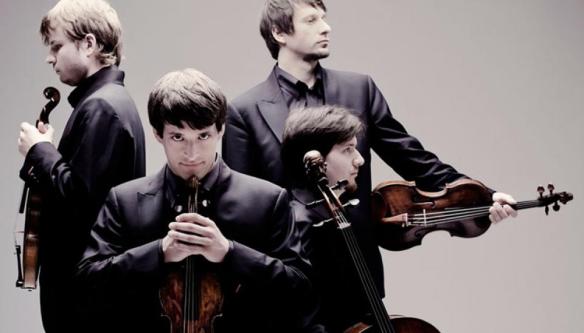

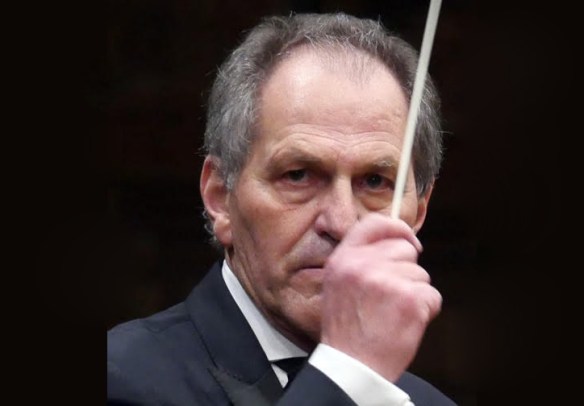 Both these works benefitted from the stylish and attentive accompaniment as secured, from a Royal Philharmonic Orchestra on excellent form, by Cristian Mandeal – assuredly the leading Romanian conductor of his generation. He began proceedings with Enescu’s First Romanian Rhapsody – a piece that, however much its composer might have deplored the fact, continues to represent his music to the public at large. If just a shade hesitant in the initial section, this account audibly hit its stride in a coruscating take on the breathless dance-music that follows.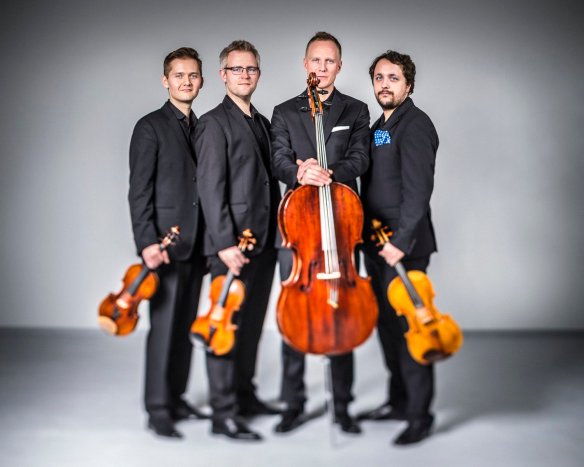


 The Germanic second half began in more restrained mood with Schumann’s Cello Concerto. Rarely performed for decades (and more often in the transcription for violin), this deceptively genial piece is among its composer’s most ingenious in terms of form and motivic continuity. Alban Gerhardt (above) maintained a determined while never merely inflexible course across its three continuous movements, the BBC Philharmonic providing support as attentive yet unobtrusive as the music required. Interesting to hear that the soloist thought the finale musically the least successful, as this emerged as arguably the most successful part – not least with its engaging dialogue kept on its toes and with no sense of dourness or grittiness as regarded the orchestral texture. Overall, a perceptive and convincing account of a work still too easily overlooked.
 Storgårds then rounded-off the programme with a taut and tensile reading of the symphony that Hindemith derived from his opera Mathis der Maler. This retelling of cultural meltdown and social antagonism during the Thirty Years War proved too ‘contemporary’ for the Nazi regime to stomach, and it was no surprise that the premiere of the complete opera took place in Zurich. Storgårds had the measure of the Angelic Concert with its austere chorales and angular though never impersonal polyphony. The Entombment of Christ was affecting for all its brevity, while the climactic Temptation of St Anthony built surely and impulsively from its stark introduction, through a central interlude of tangible pathos, to a culmination such as blazed forth in affirmation. All credit to Storgårds for ensuring so cathartic an impact.
 Arcana.fm