News – Bertrand Chamayou residence @ Wigmore Hall, including Ravel’s complete piano music on Sunday 7 December

published by Ben Hogwood from the original press release

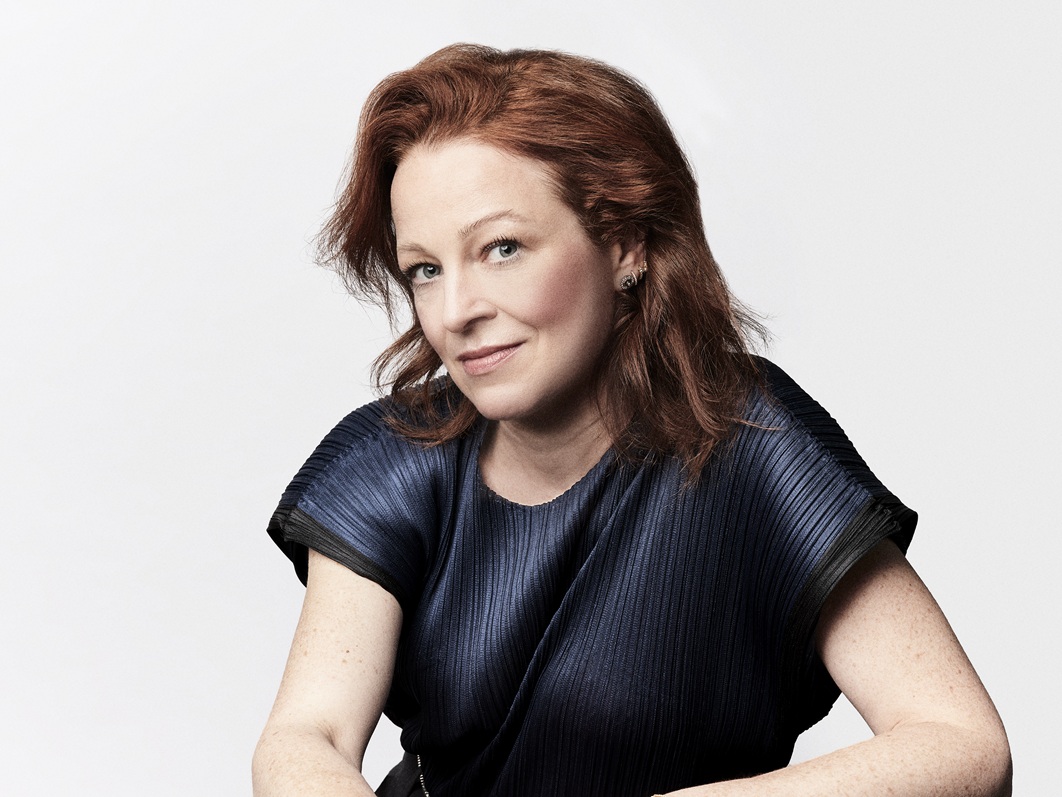
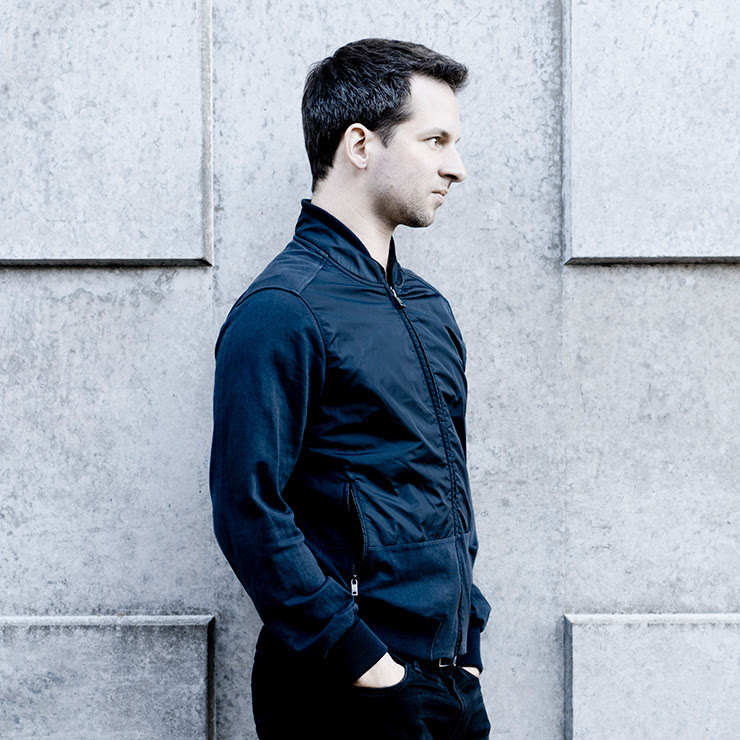
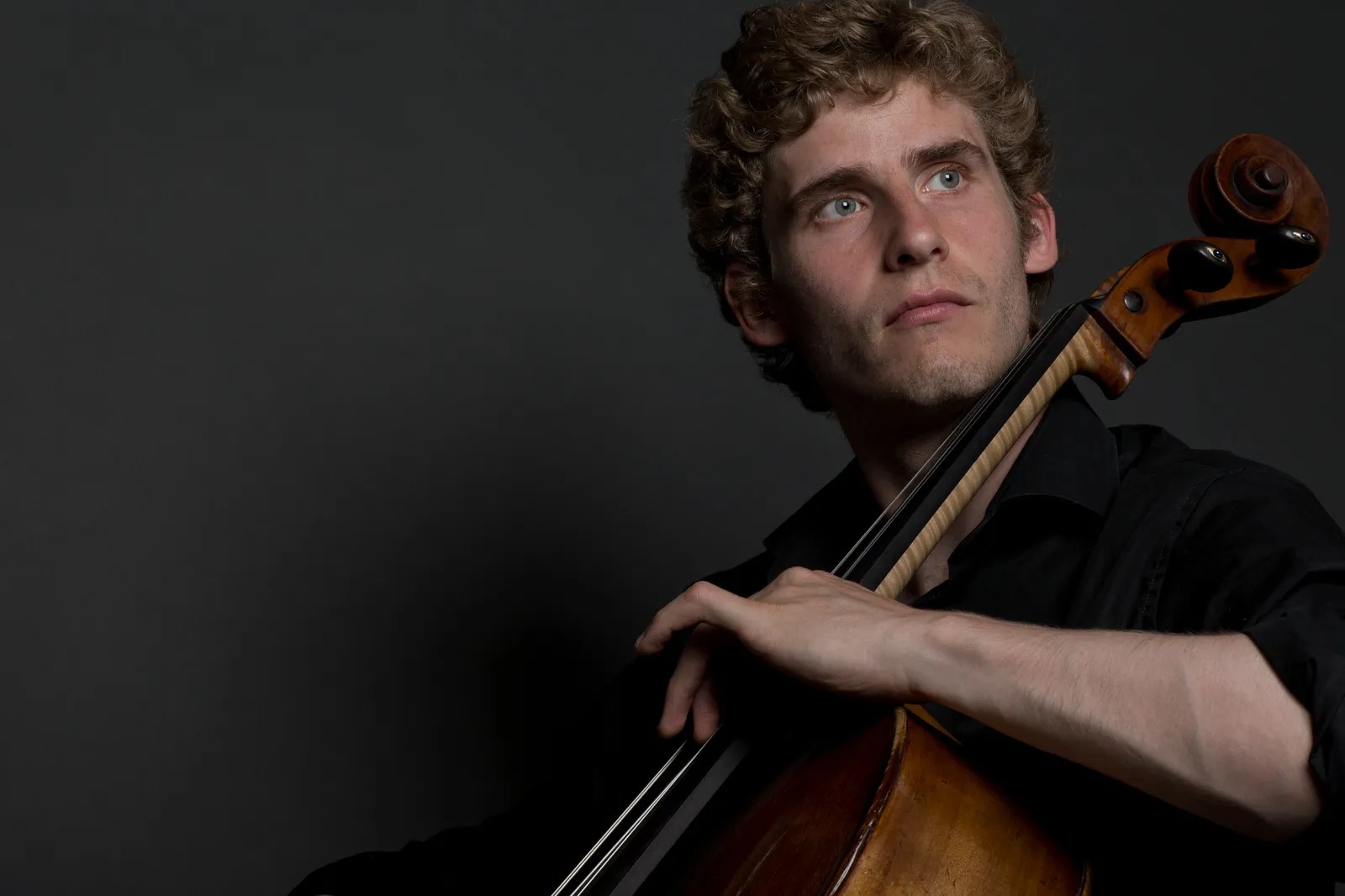
This December, Wigmore Hall focus in on a pianist famed for winning the prestigious Victoires de la Musique Classique award on five separate occasions, most recently in 2022. Described by the Guardian as ‘a remarkable musician, no question’, Chamayou caps off his short residency with an unmissable evening of the complete Ravel pianos works. Before that, the pianist joins forces with the thrilling Belcea Quartet and accompanies soprano Barbara Hannigan for her Wigmore Hall debut.

The programme with the Belcea Quartet on Thursday 4 December is of extra interest, for in addition to Chamayou’s appearance in the rarely-heard Piano Quintet in E major of Erich Korngold, the quartet will mark the 80th anniversary of the world première of Britten’s Second String Quartet at Wigmore Hall.

Chamayou’s programme with soprano Barbara Hannigan is typically adventurous, the pair reaffirming their Messiaen credentials with a performance of the Chants de terre et de ciel, before Chamayou looks at late Scriabin in the form of the Poème-nocturne Op. 61 and Vers la flamme Op. 72, before the two take on John Zorn’s song cycle Jumalattaret, written for Hannigan herself.

Chamayou’s third appearance will see him perform the complete works for solo piano by Maurice Ravel, whose birth in 1875 is being marked with 150th anniversary celebrations this year. The concert begins at 7pm, with the programme as follows:

1875-1937
Prélude
Miroirs
Menuet in C sharp minor
Sonatine
A la manière de Borodine
Gaspard de la nuit

Interval

A la manière de Chabrier
Valses nobles et sentimentales
Menuet sur le nom d’Haydn
Sérénade grotesque
Jeux d’eau
Menuet antique
Pavane pour une infante défunte
Le tombeau de Couperin

For more information on all the Wigmore Hall concerts, click on the links highlighted above.

Published post no.2,730 – Wednesday 26 November 2025

In concert – Johan Dalene, Andreas Brantelid & Christian Ihle Hadland @ Wigmore Hall: Korngold & Ravel

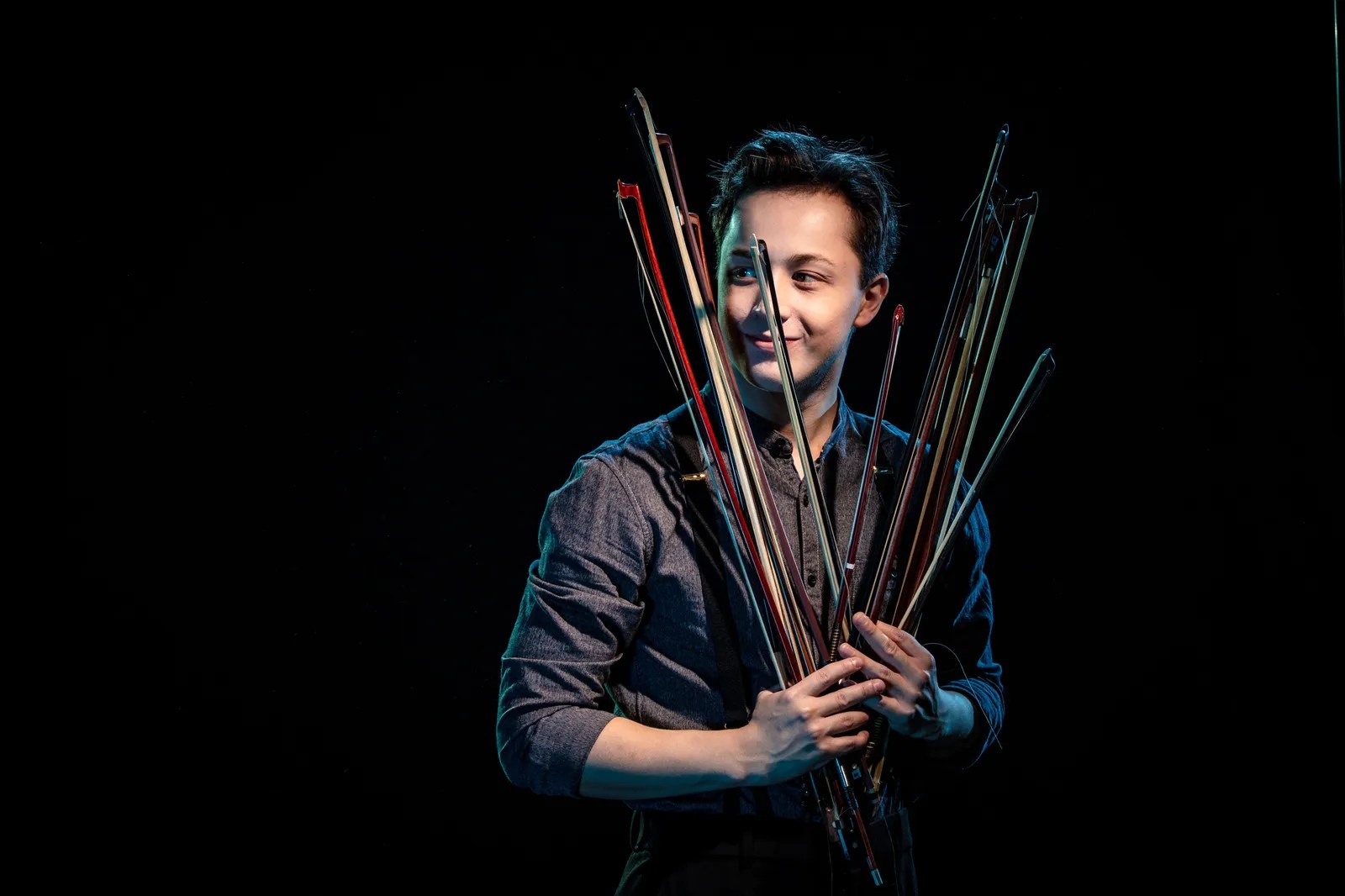
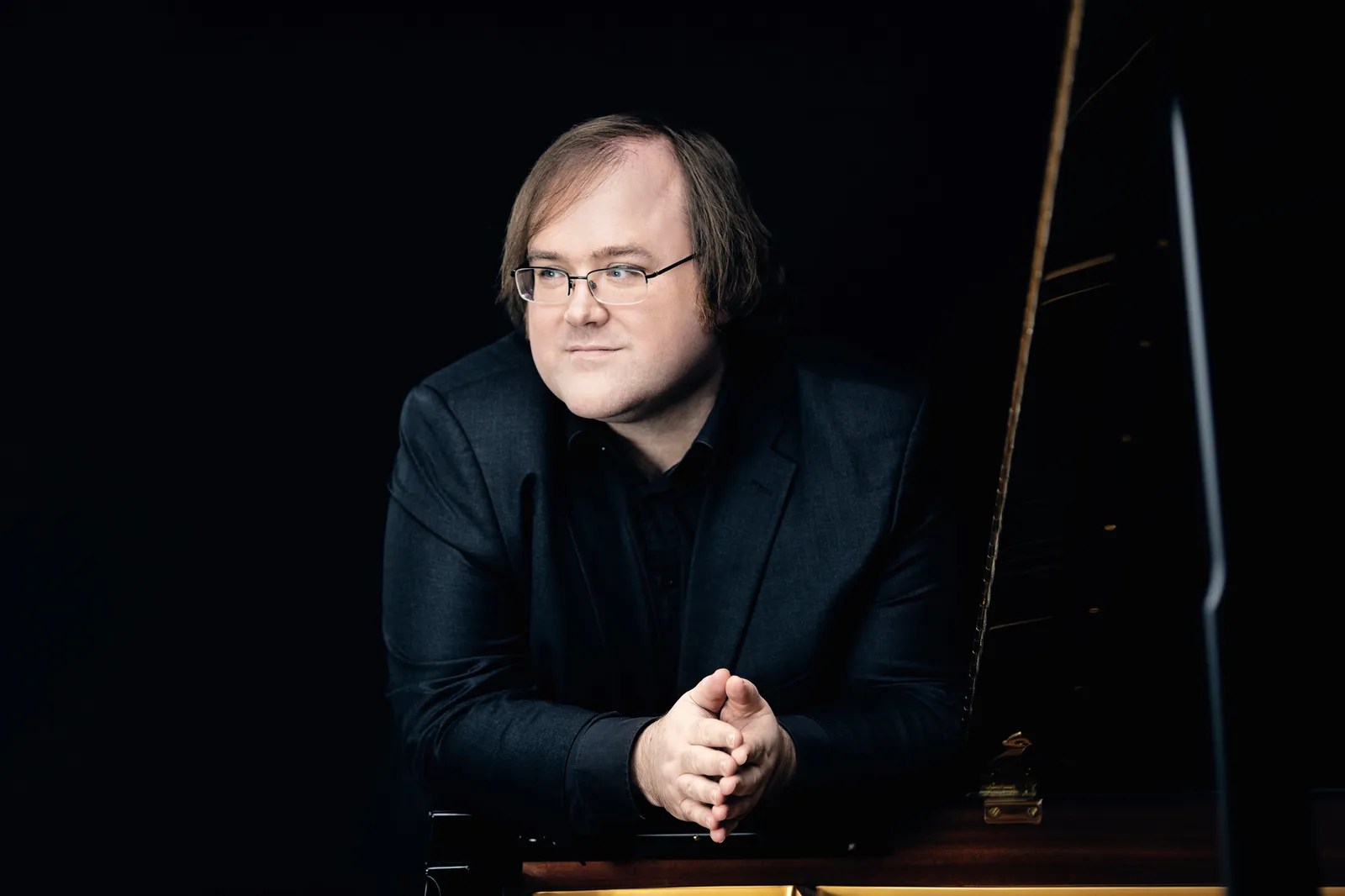
Johan Dalene (violin, above), Andreas Brantelid (cello, bottom), Christian Ihle Hadland (piano, middle)

Korngold Piano Trio in D major Op.1 (1909-10)
Ravel Piano Trio in A minor (1914)

Wigmore Hall, London
Monday 7 July 2025 (1pm)

by Ben Hogwood

With the BBC New Generation Artists scheme reaching its quarter century earlier this year, we had a timely reminder of its legacy in the shape of this high-powered BBC Radio 3 Lunchtime Concert at the Wigmore Hall. All three artists record for the BIS label, and on this evidence it is to be hoped the three will form a lasting trio, for they have an obvious and enduring musical chemistry.

The concert began with the first published work of Erich Wolfgang Korngold, a child prodigy in the same line as Mozart and Mendelssohn before him. While his Piano Trio in D major Op.1 is dedicated to his father Julius, who was a forceful influence on his son’s writing at this point, to have written such an accomplished work is simply remarkable. The work’s rich harmonies and searching melodies explore new possibilities while revering past traditions, a Viennese work written through the eyes of a young composer showing off his agility and expressive potential.

The trio can be elusive on occasion, with a lot packed into its four movements. On occasion the young composer appears to be trying out variants of a modern Viennese style, which comes to him naturally along with an awareness of developments in France. Fauré is a notable influence; so too Brahms and Richard Strauss; and these, mixed with youthful passion, make a heady concoction.

That this performance succeeded owed much to the dexterity and balance of pianist Christian Ihle Hadland, bringing clarity to the second movement Scherzo where Korngold’s thoughts are not always finished before moving onto the next melody. Johan Dalene gave room to the fervent Larghetto, bringing out its thoughtful side with a pure tone in the higher violin register. Meanwhile the strength of the finale was bolstered by its longer sentences, adhering clearly to the energico of its marking but with Dalene and cellist Andreas Brantelid finding perfect melodic unison. All three players enjoyed Korngold’s oblique approach to the final cadence, signing off with some panache.

Ravel’s Piano Trio in A minor was in his mind for some time before writing, though once composition began it did so with great urgency, the composer aware that the First World War was imminent. Hadland was superb throughout this interpretation, the crystalline quality given to the piano’s chords setting the tone for the whole work. Dalene responded with a sweet melancholy to the second theme, while the trio’s white-hot energy and virtuosity in the fast ensemble passages was something to behold.

They also relished the cross rhythms of the Pantoum, given with some exotic colours as Ravel’s mind became distracted by thoughts and the musical language of the Far East. Those were even more apparent in the language of the Passacaille, the threat of war now prescient in the hollow left-hand line of the piano, picked up by Brantelid as though intoning a Gregorian chant. This thoughtfulness and relative darkness gave way to a brilliant burst of light in the harmonics opening the finale, where again the trio reached energetic highs amid bold and clear ensemble statements. Hadland’s mixture of precision and power proved ideal for Ravel, helped by a similar approach from both string players, all three sweeping all before them in the convincing closing bars.

These were performances to cherish, while thought provoking in their proximity to the War where Korngold raised money as a regimental band leader and composer while Ravel approached the front line as a munitions lorry driver.

Listen

You can listen to this concert as the first hour of BBC Radio 3’s Classical Live, which can be found on BBC Sounds until Wednesday 6 August.

Published post no.2,589 – Tuesday 8 July 2025

On this day…four contrasting premieres by Lyadov, Ravel, Korngold and Britten

by Ben Hogwood

Here are four very contrasting first performances from 12 December across history for you to enjoy. In 1909, the first performance of Lyadov’s Kikimora in St Petersburg:

In 1920 the first performance of Ravel’s La Valse at a Lamoureux Concert in Paris…

…and on the same day the first performance of Korngold’s Die tote stadt, in Hamburg and Cologne. Here is Marietta’s Lied, sung by Renée Fleming:

…and finally, on the same day in 1932, Leon Goossens and the International String Quartet gave the first performance of the teenage Benjamin Britten’s Phantasy Quartet Op.2, in London:

Published post no.2,391 – Thursday 12 December 2024

In concert – Fenella Humphreys, ESO Youth Symphony Orchestra / James Topp: Walton, Heathfield & Korngold

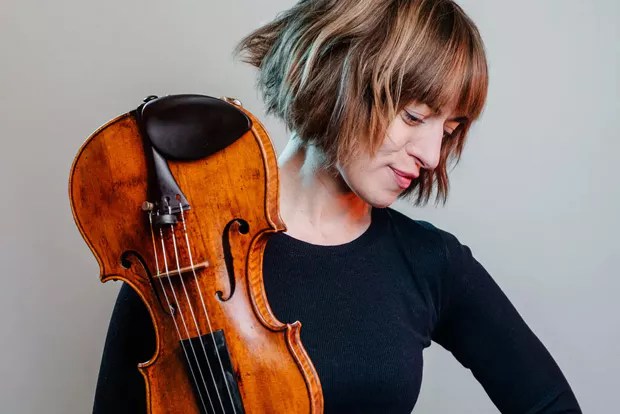
Fenella Humphreys (violin, below), ESO Youth Symphony Orchestra / James Topp

Walton Prelude and Fugue ‘The Spitfire’ (1942)
Korngold Violin Concerto in D, Op. 35 (1945)
Heathfield JAZZ HORSE (2024) [World Premiere]
Korngold arr. Russ The Sea Hawk – Suite (1940)
Walton arr. Matheson/ed. Lloyd-Jones Henry V – Suite (1944, arr. 1963)

The Bradshaw Hall, Royal Birmingham Conservatoire, Birmingham
Friday 23 August 2024

Reviewed by Richard Whitehouse

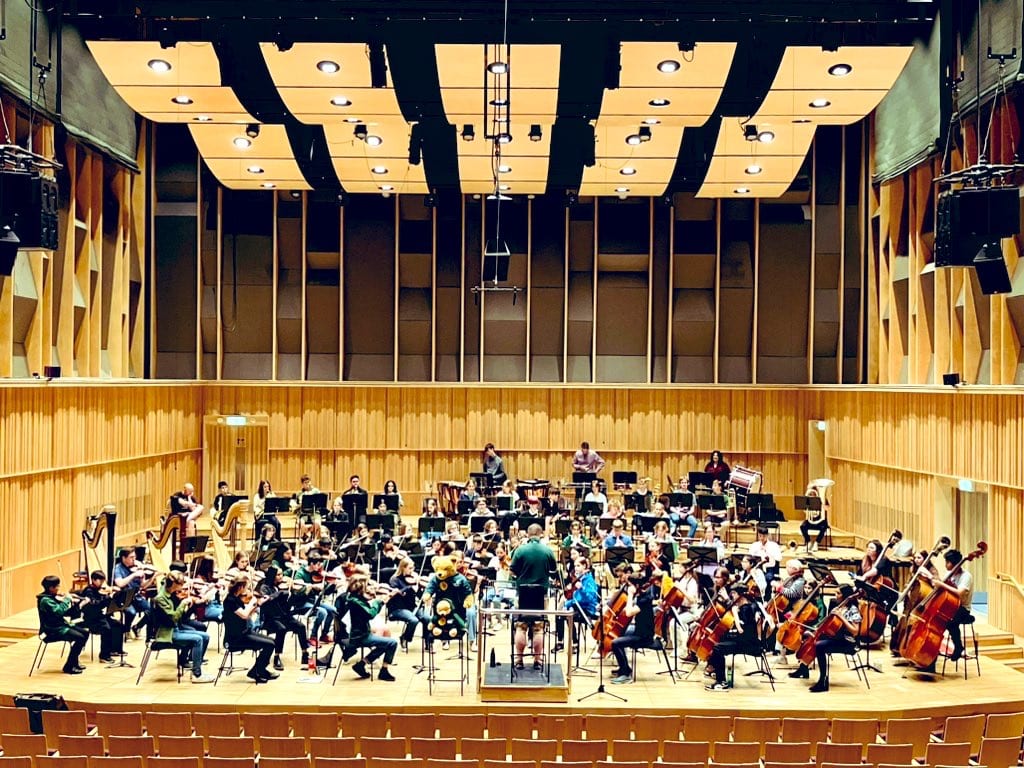
The English Symphony Orchestra’s annual Summer Course reached its climax this evening with a concert by its Youth Symphony Orchestra as ranged across film music from the mid-20th century, and in various guises from straightforward adaptation to wholesale reworking.

Whether or not those films for which he provided music have stood the test of time, Walton’s is a significant contribution to the cinema. As adapted from The First of the Few, his ‘Spitfire’ Prelude and Fugue remains one of his most characteristic such pieces and this performance did full justice to the prelude’s martial tread as to the fugue’s driving impetus, though James Topp was mindful to ensure the pastoral interlude (just before the return of the main theme) yielded an intimacy as underlined the essentially personal nature of this now underrated film.

Whereas Walton’s metier was in wartime or theatrical subjects, that of Korngold centred on Hollywood ‘blockbusters’ which required scores of suitably emotional opulence. Several of these found an equally appropriate home in the Violin Concerto completed at the end of the Second World War, whose formal cohesion prevents any risk of its expressive power losing focus. This was certainly the impression as conveyed by Fenella Humphreys – notably the ardency of her take on the opening Moderato, with a central Romance as ingenious in its trajectory as it was eloquent in content. Nor was there any lack of energy in a final Allegro with repartee between soloist and orchestra at its most engaging and not least in its closing stages, when a resplendent version of the main theme is outflanked by the uproarious coda.

After the interval, a sinisterly attired Finn Heathfield put members of the orchestra through their collective paces with JAZZ HORSE, described as ‘‘a collection of improvisations and performance exercise rooted by the rhythm section’s bass motif (thus F-Ab-Bb-Eb). It duly provided a telling foil to the suite (here arranged by Patrick Russ) from Korngold’s score to The Sea Hawk; a sequence capturing this film’s overall panache as surely as its resourceful writing for percussion and a reminder of a composer who should never be underestimated.

The programme concluded with more Walton and the suite from his score to Henry V – now remembered as a star-vehicle for Laurence Olivier, but which at the time played a necessary role in the British war-effort. Muir Matheson’s adaptation features most of the highlights and, as edited by the late David Lloyd-Jones, takes in more from the Overture in its evoking The Globe Playhouse via Elizabethan stylizations these players audibly relished. The sombreness of The Death of Falstaff and calm ecstasy of Touch Her Soft Lips and Part were rendered with no less insight, while the Charge and Battle placed between them brought a frisson of excitement set in relief by a poetic evocation of the Baïlerò at the close. Building intently to its joyous close, the Agincourt Song provided a rousing end to the suite and to this concert.

Another Summer Course Concert completed – its success not, as Topp indicated, to be taken for granted given the logistical and financial obstacles in bringing 91 musicians to this level of attainment. Hopefully such considerations will not become insurmountable in the future.

For details on the artists, click on the names to read more about Fenella Humphreys, James Topp, the ESO Youth Orchestra and the English Symphony Orchestra – and for more on composer Finn Heathfield

Published post no.2,282 – Monday 26 August 2024

In concert: Pavel Haas Quartet at Wigmore Hall – Suk, Martinů & Korngold

Pavel Haas Quartet [Veronika Jarůšková, Marek Zwiebel (violins), Šimon Truszka (viola), Peter Jarůšek (cello)]

Suk Meditation on an old Bohemian Chorale (St Wenceslas) Op.35a (1914)
Martinů String Quartet no.2 (1925)
Korngold String Quartet no.3 in D major Op.34 (1944-45)

Wigmore Hall
Monday 12 June 2023 1pm

by Ben Hogwood

An unusual and intriguing program from the Pavel Haas Quartet contained music by two fellow Czech composers (Suk and Martinů) and one (Korngold) born in Moravia before moving to America.

The quartet began with a moving piece by Suk, his Meditation on an old Bohemian Chorale (St Wenceslas). This poignant pre-war utterance carried an air of deep profundity right from the first phrase of Simon Truszka’s viola, its elegiac tone enhanced by relative lack of vibrato. The air of solemnity carried throughout, though there was considerable strength in depth as the music grew in stature.

Though a Czech composer, Martinů spent a good deal of time overseas – largely out of necessity. By his early 30s he was in Paris, studying with Roussel, bringing a neoclassical language and tidiness to his music. The String Quartet no.2, though, is a curiously lopsided work, very front heavy with its first movement a combination of substantial slow introduction and quick section. There were close links to the St Wenceslas Chorale here, too, found in the solemn intonations of the Andante. This was the spiritual heart of the piece, dark and uncertain at times and contrasting greatly with the thoughtful but lightly coloured manner in which the quartet began. A resolute first movement found a mood that Martinů reprised in the closing Allegro, a propulsive dance number with a spring in its step. There was an undeniable French flavour to the music here, which the Pavel Haas Quartet brought forward, its elegance at odds on occasion with the rustic dance tunes.

There was tension in the final work, too, though this was undeniably the making of a mature composer. The String Quartet no.3 was Erich Korngold’s last published chamber piece, adjacent in publication to the Violin Concerto, with which it shares the same key of D major. The Pavel Haas Quartet gave a superb account of the piece, exploring its unusual musical language through music that would have presented considerable technical challenges.

The awkward but compelling violin melody in the first movement was brilliantly negotiated by Veronika Jaruskova, who conveyed its uncertainties through sweet tones and phrases. In spite of a convincing and full bodied outburst from all four players, the movement was dominated by this figure, which left a question in the mind. The Scherzo went some way to answering this, a black and white film scene easy to conjure up in the mind as the furtive darting of the main theme ensued. Again this was brilliantly played, as was the heart melting trio, its big tune (from the recently completed score to Between Two Worlds) full of tender longing and given appropriate glissando for expression.

The silvery slow movement flickered in the half light like a candle burning low, but with the flame essentially undimmed. The quartet’s sense of purpose was key here, with burnished lower string tones as viola and cello often combined, a notable cushion on which the searching violin melodies (using material from The Sea Wolf) could rest. Romance was in the air but although some of the music was borne of Hollywood, its intimate confines gave the music a deeply personal air. The atmosphere was heightened as a thundercloud hovered over the Wigmore Hall.

The motorised finale brought conviction and a strong sense of homecoming, not dissimilar to its equivalent movement in the Violin Concerto. Although emphatic in its resolution there were moments where the quartet moved into a different tempo or unexpectedly distant harmonies, Korngold momentarily distracted by edgier thoughts until his focus returned.

The Korngold string quartets have had something of a renaissance of late, with several new recorded versions and a marked increase in performance. On this very cultured evidence it would be no surprise if the Pavel Haas Quartet committed their version to disc soon – but it is to be hoped the other works will join it, for this was a fine concert indeed.

For more livestreamed concerts from the Wigmore Hall, click here