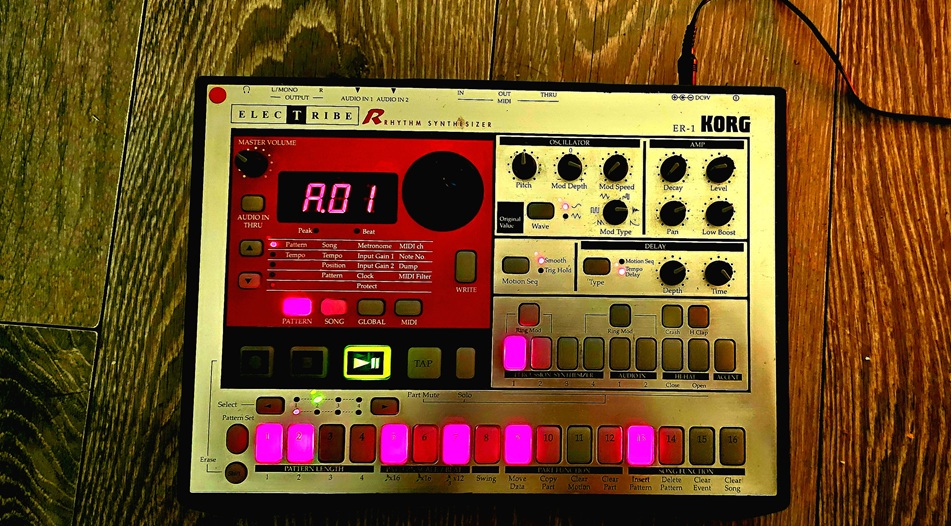
Today is known as Blue Monday, the day where New Year’s resolutions have traditionally worn off…and people have had enough of January. It happens also to be the name of one of the best electronic music songs ever made…so it seems right to make it the launch day for Our Friends Electric!
This will be Arcana’s celebration of electronic music in all its forms, where I will be listening to and writing about electronic music across the spectrum. It will be an expedition from early ventures in the 1920s to the most recent tracks from present day technology. Along the way there will be interviews, playlists, thoughts and music – so much music.
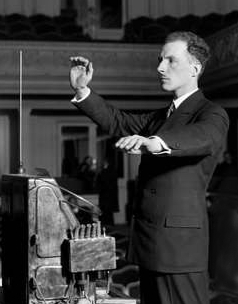
Lev Termen demonstrating the theremin, December 1927 by Bettmann, Corbis
It would be great to think we could cover all the electronic music there is, but that’s clearly impossible – so the focus will be on key works and albums, listening chronologically from early on in the 20th century. We will move from Varèse to Kraftwerk, from Delia Derbyshire to Kelly Lee Owens, taking in classical and pop pioneers side by side. We will also moving off-piste here and there, to take in all manner of successful – and failed – experiments with early computer music. There will be interviews, too!
To start, I plan to take a look at the music of Erik Satie and his influence, a composer who opened his mind to using mechanics and technology in music, and who looked to embrace new inventions. I will try to do the same.
My perspective is a Western one, so viewpoints from across the globe will be especially welcome. Please do contribute as much as you would like, from listening along on the playlists provided, to commenting on the findings and sharing in the delights we uncover. It promises to be a huge amount of fun.
So let’s switch on, power up and get listening!
Ben Hogwood, editor Arcana.fm
P.S.…for those of you following the Beethoven project – thank you! – I can promise you it hasn’t been cancelled but will resume in the composer’s ‘other’ anniversary year, 2027.
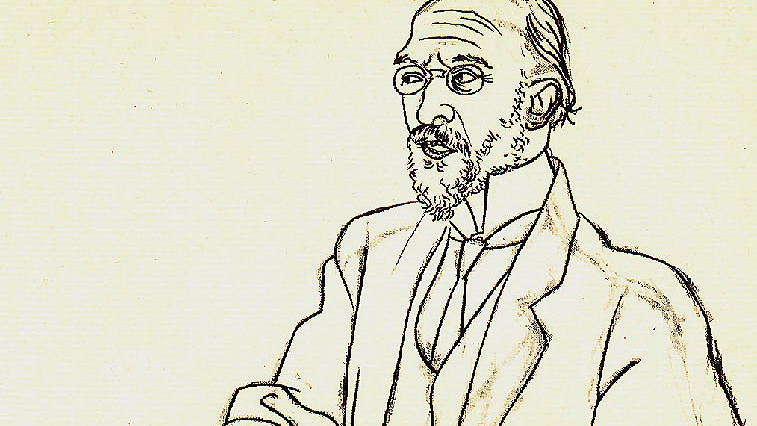
by Ben Hogwood Picture: Erik Satie, by Pablo Picasso
Today marks the death of one of the most innovative 20th century composers, Erik Satie.
Satie was well ahead of his time…to the extent that even now, one hundred years on, some of his music gives the appearance of being fresh off the page. And indeed, there is some ‘new’ music to enjoy from his pen, as pianist Alexandre Tharaud has recently collated an album of Satie Discoveries, to be reviewed shortly on this site.
Satie’s music has proved incredibly versatile, and his most popular pieces are heard every day – not just on classical music radio, but as part of relaxing playlists and TV soundtracks. It is certainly fair to say that if you enjoy the music of Einaudi, Nils Frahm, Olafur Arnalds and the like, each of them would credit Satie as a lasting influence.
Here are some of his best-known pieces, with the Gymnopédies and Gnossiennes for piano proving some of his most minimal yet most memorable compositions. To counter those, it helps to have something of the more modern Satie – the Three Pieces in the Shape of a Pear, and two orchestral ballets – Relâche and Parade. Listen carefully to the latter and you will hear a tune that sounds remarkably like the theme to Postman Pat! You can access the playlist on Tidal here:
Caplet En regardant ces belles fleurs Milhaud L’innocence Op. 10/3 Hahn À Chloris Ravel arr. Stravinsky Trois poèmes de Stéphane Mallarmé M64 Auric Trois Interludes: Le pouf. Ropartz La Route Durey L’Offrande lyrique Op. 4 Saint-Saëns Petit main Op.146/9 Fauré Il m’est cher, Amour, le bandeau, Op. 106/7 Chaminade Je voudrais être une fleur Debussy Trois poèmes de Stéphane Mallarmé L127 Satie ed. Dearden Trois Poèmes d’Amour Lili Boulanger Clairières dans le Ciel: Vous m’avez regardé avec votre âme Grovlez Guitares et mandolines
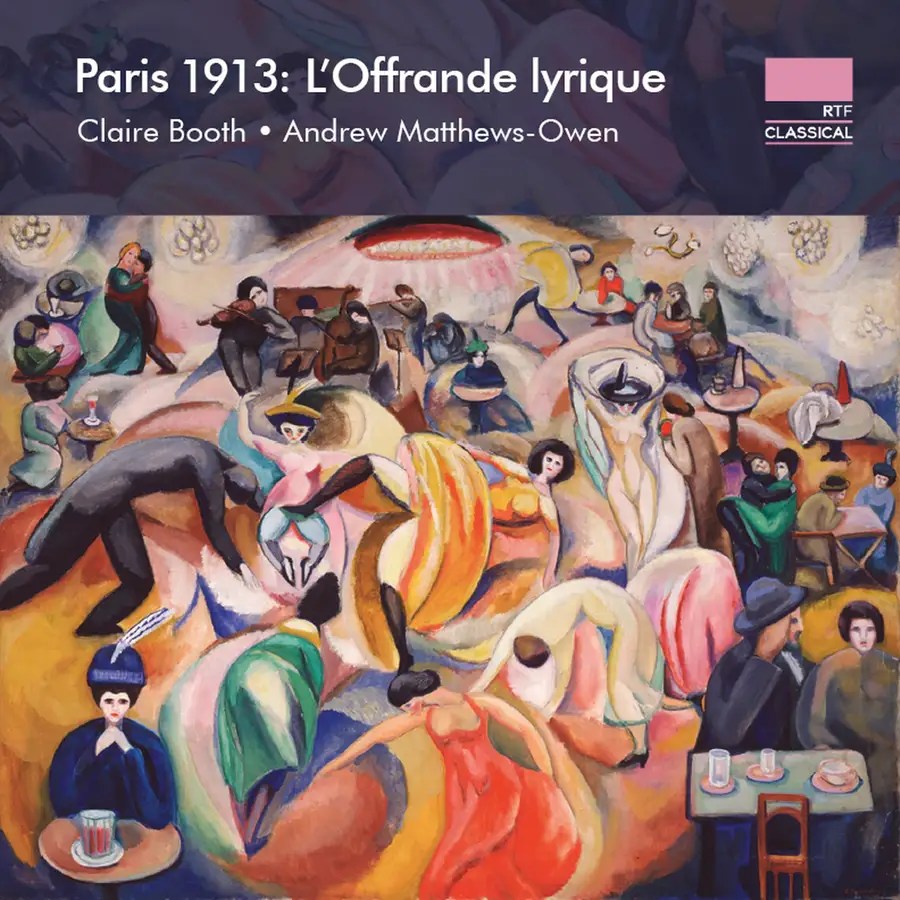
Claire Booth (soprano), Andrew Matthews-Owen (piano)
Nimbus RTF Classical NI6455 [66’23”] French texts included Producer & Engineer Raphaël Mouterde
Recorded 11/12 March, 4-6 September 2023 at Wyastone Concert Hall, Monmouth
Reviewed by Richard Whitehouse
What’s the story?
Another enterprising song recital from Claire Booth and Andrew Matthews-Owen, this one focussing on songs that were either conceived, composed or premiered in Paris during 1913 and resulting in an absorbing collection best heard as a diverse while unpredictable totality.
What’s the music like?
Interleaving standalone songs and song-cycles, this recital opens with André Caplet’s take on Charles d’Orléans, its limpid modality highly appealing, then continues with an early song by Darius Milhaud as already demonstrates his distinctive and amusing approach to word-setting, while that by Reynaldo Hahn typifies the teasing charm familiar from his vocal music overall. Maurice Ravel’s triptych to texts by Mallarmé is performed in a version by Stravinsky with its accompanying nonet reduced to piano which, in preserving and maybe even accentuating the music’s questing introspection, represents no mean fete of transcription. Still relatively little known, this certainly deserves to be heard as at least an occasional alternative to the original.
Remembered best as a prolific writer of film scores, Georges Auric had shown a precocious talent for song as is evident in his sensuous setting of René Chalupt. A composer who often wrote on a symphonic scale, Guy Ropartz is heard in a setting of his own verse that amounts to a ‘scena’ in its wide expressive ambit. Interest understandably centres on the eponymous cycle by Louis Durey, a member of Les Six whose increasingly far-left conviction tended to marginalize his creativity yet, as these lucid and empathetic settings of Rabindranath Tagore (as translated by André Gide) confirm, had emerged as a protean talent by his mid-twenties. Hopefully these artists will be encouraged to investigate other of his songs from this period. By contrast, a late song by Camille Saint-Saëns exudes a touching poignancy, while that by Gabriel Fauré typifies the elusiveness of those in his last decade. As is evident here, Cécile Chaminade was a songwriter of style and elegance, then the Mallarmé triptych by Debussy (its first two texts identical to those of Ravel) finds this composer probing the inscrutability of these poems while drawing back from any more explicit intervention. The inscrutability conveyed by Erik Satie’s aphoristic settings (edited by Nathan James Dearden) of his own texts is altogether more playful – after which, the recital continues with a pensive offering by Lili Boulanger, with Gabriel Grovlez’s sultrily evocative setting of Saint-Saëns to finish.
Does it all work?
Yes, given the fascination of this collection taken as a whole and, moreover, the quality of these renditions. Booth is not a singer willing to take the easy option in her interpretations, and so it proves here with singing as fastidious as it is refined, while Matthews-Owen duly instils often deceptively spare accompaniments with understated insight. They contribute a succinctly informative note, but the booklet includes only the French texts with the English translations available at https://rtfn.eu/paris1913/: might it have best the other way round?
Is it recommended?
Very much so. There is much to fascinate even those who consider themselves afficionados of the ‘chanson’, and those who are unfamiliar with much of this repertoire could not have a better means of acquainting themselves with certain of its treasures – hidden or otherwise.
Barber (arr. Dickinson) Canzonetta Op. 48 (1977-8)* Berkeley Andante Op.23/6 (1945) Cage In a Landscape (1948) Dickinson Blue Rose (1978); Freda’s Blues (2016); Lockdown Blues (2020) Ellington (arr. Dickinson) Twelve Melodies (1932-43)* Gershwin Three-Quarter Blues (c1925); Who Cares? (1931) Goossens Lament for a Departed Doll Op.18/10 (1917) Lambert Elegiac Blues (1927) MacDowell To a Wild Rose Op.51/1 (1896) Poulenc Pastourelle IFP69 (1927); Bal fantôme IFP64/4 (c1934) Satie Trois Gymnopédies IES26 (1888); Trois Gnossiennes IES24 Nos.1-3 (1889-90)
Peter Dickinson (piano)
SOMM Recordings SOMMCD0644 [68’24”]
Producer & Engineer Peter Newble
Recorded 16 and 17 April 2021 at Potton Hall, Westleton, Suffolk. * indicates first recordings
Written by Richard Whitehouse
What’s the story?
Peter Dickinson here turns the third phase of lockdown to his – and our – advantage with this collection of piano music touching on the blues and jazz which have long been a mainstay of his careers as performer and composer, and which also includes two notable first recordings.
What’s the music like?
The programme commences with the pensive sadness of Dickinson’s Freda’s Blues, written in memory of the widow of Lennox Berkeley, continuing with a poised and refreshingly non-mawkish take on MacDowell’s perennial To a Wild Rose – its blues and rag idioms made the basis of Dickinson’s Blue Rose. The empathetic feel of Lambert’s Elegiac Blues in memory of singer Florence Mills is affectingly caught, while Dickinson’s marrying of blues and Bach in Lockdown Blues recalls George Shearing’s pioneering such fusions. After the drollery of Poulenc’s Bal fantôme, Dickinson’s reworking of the Canzonetta which Barber intended for his unrealized Oboe Concerto proves a focal-point in its searching pathos. Such a quality is also to the fore in Berkeley’s limpid Andante, as is the alluring charm of Gershwin’s Three-Quarter Blues – and to which the whimsy of Poulenc’s Pastourelle provides a pertinent foil.
Whether as solo pianist or in recital with his sister Meriel, Dickinson has been unstinting in his advocacy of Satie and his reading of the original Gnossiennes (not those three published decades after the composer’s death) lacks for nothing in perception. Such is equally the case when, after the insinuating charm of Gershwin’s Who Cares? then the wistful eloquence of Goossens’s Lament for a Departed Doll, he renders Satie’s evergreen Gymnopédies with an objectivity that not unreasonably plays down the mystical aura often attributed to this music.
Perhaps the highlight here is Twelve Melodies that Dickinson has arranged from Ellington’s big-band numbers in what proved a veritable ‘golden age’ for such music and not previously recorded in this guise. Picking out a selection might hardly seem necessary, but the yearning of Solitude, eloquence of Lost in Meditation, questing emotions of Azure then the expressive warmth of Mood Indigo stand out in a sequence which concludes with the phlegmatic charm of Day-Dream then haunting atmosphere of Prelude to a Kiss. Moreover, Dickinson has one final trick up his sleeve with an elegant rendering of Cage’s In a Landscape – music in which this most recalcitrant of composers comes closest to his beloved Satie with its ineffable grace.
Does it all work?
Very much so, thanks not merely to the range of music covered but also through Dickinson’s insight. Into his 87th year when these recordings were made, his technique remains as fluent as his understanding and enjoyment are audible. Long able to accommodate the populist and the experimental within his own music, such inclusiveness extends to the idiomatic aspect of his interpretation and the deftness of his touch. Surely nothing can now prevent the Ellington set being taken up by pianists everywhere, with the numerous shorter pieces ideal as encores.
Is it recommended?
Indeed. The piano sound has a naturalness and clarity ideal for this music, while few writers other than Dickinson would be equally aware of technical details and chart standings. Here is looking forward to further releases by this always resourceful pianist in his ‘Indian summer’.
Listen & Buy
You can discover more about this release and listen to clips at the SOMM Recordings website, where you can also purchase the recording. For more information on Peter Dickinson, click here.
Meriel Dickinson (mezzo-soprano / reader), Peter Dickinson (piano / reader)
Heritage Records HTGCD171 [68’09”] French texts included
Producer Antony Hodgson
Engineer Tony Faulkner
Recorded 6 October 1975 at All Saints’ Church, Petersham (Unicorn LP only) Remastered by Peter Newble
Reviewed by Richard Whitehouse
What’s the story?
The Heritage label continues its worthwhile excavation of overlooked ‘deep catalogue’ with this selection of Erik Satie’s piano pieces, songs and prose as performed by Meriel and Peter Dickinson, whose recitals were a notable fixture of the UK music-scene over several decades.
What’s the music like?
After the lively and rumbustious march Le Piccadilly (1904), Trois melodies (1887) show the composer’s poignant take on domestic song-writing from the period. The haunting Deuxième Gnossienne (1893) is followed by the hieratic plangency of Hymne: ‘Salut Drapeau!’ (1891), while the Deuxième Pièce froide (1897) anticipates the quirky humour to come. Tendrement (1902) ranks among Satie’s most disarming songs, as does the amiable Proudre d’or (1900/1) within his piano music. Two winsome songs from incidental music for the play Geneviève de Brabant (1899/1900) precede two piano pieces – the mystically aloof Première Gymnopédie (1888) and the demurely anarchic Vexations (1893) – which, between them, outline the extent of Satie’s creative thinking. Similarly, the gently facetious humour of Trois melodies (1916) affords pointed contrast with the introspective mystery of the early Chanson (1887) then the considered evocation which is Chanson medieval (1906); further reminders that demarcation between this composer’s seemingly serious and humorous sides cannot be taken as absolute.
An undoubted bonus of the added live material is the Dickinsons’ readings from Satie’s own writings. Thus, there is Peter’s deadpan rendering of Satie’s Self-Portrait as provided for his publisher, its barbed whimsy duly complemented by brief piano interludes from his comedy Le Piège de Méduse (1913), while those gnomic expressions that are Quatres petites melodies (1920) inhabit similarly elliptical domain. Peter reads from the composer’s fanciful outline of his ‘routine for living’ in A Musician’s Diary, while Meriel tells of his ironic attitude towards Beethoven in Satie’s Fakes; between them, she sings the compact confessionals that are Trois Poèmes d’amour (1914). The gnomic song-cycle Ludions (1923), among Satie’s final works, makes a suitably telling foil to Peter’s reading of the archetypal Satie text In Praise of Critics. The selection concludes with a brace of songs – the blithely sardonic La Diva de l’Empire (1904) then the quintessentially Satie confection Je te veux (1897), its deftest interplay of charm and guile with a knowing sentimentality evidently to the pleasure of those listening.
Does it all work?
Very much so, given that Meriel and Peter are so attuned to the facets of Satie’s inimitable genius. At the time of this LP and its attendant recitals, its sheer extent had still to be fully assessed, which does not lessen the significance of the Dickinsons’ efforts (as with Satie’s younger contemporary and English counterpart Lord Berners) in championing this music at the highest artistic level. Both the transfer of the original Unicorn disc and the live extracts (mono) have been capably done – revealing few, if any, limitations in the source-material.
Is it recommended?
It is, not least as an informed and appealing introduction to this music by artists for whom its advocacy was clearly a labour of love. A pity that English translations of the song-texts were not included, though these are mostly accessible online, and their omission is a minor caveat.
For further information on this release, and to purchase, visit the Heritage Recordswebsite, and for more on Meriel and Peter Dickinson click here




 Arcana.fm