In concert – Wednesday 12 November: English Symphony Orchestra to bring Roaring Twenties to life in opening concert of 2025-26 Malvern Residency

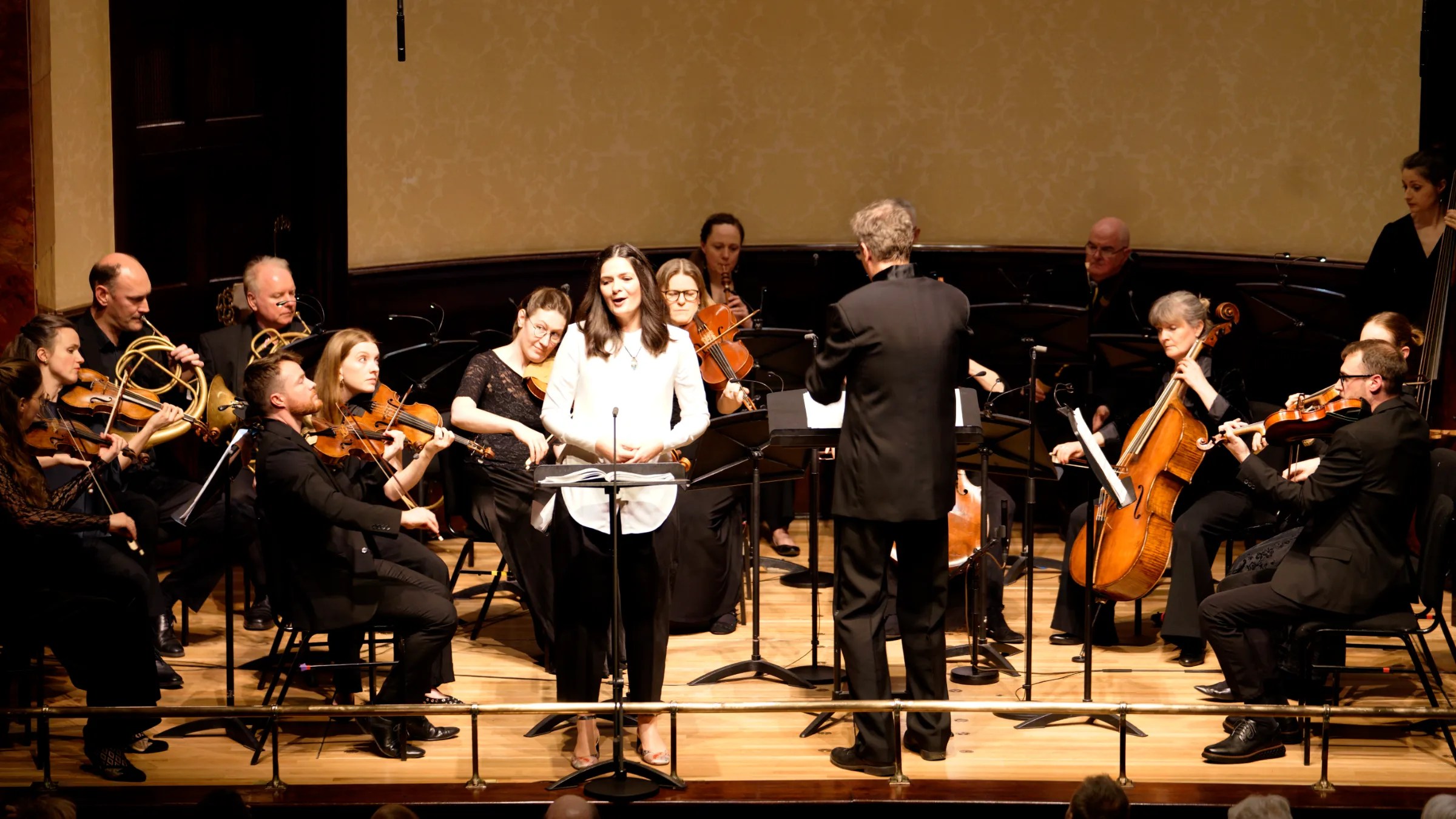
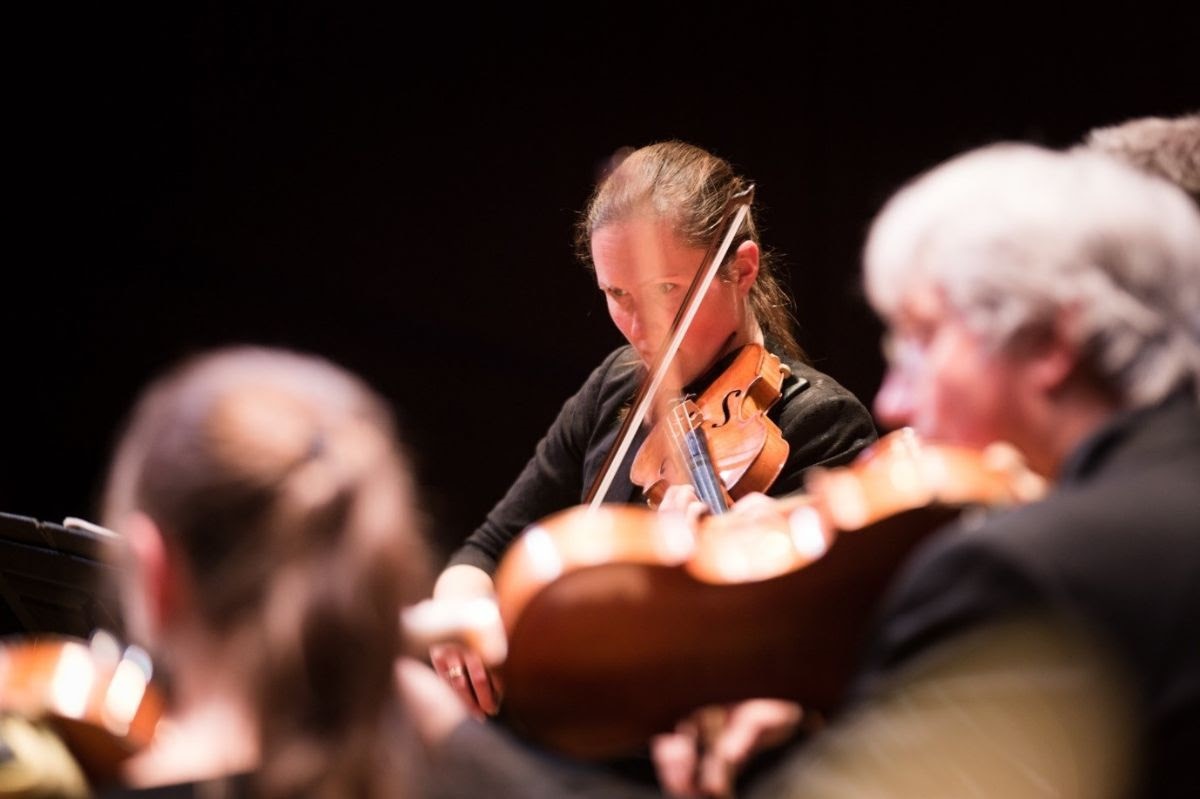
reposted by Ben Hogwood Photo Zoe Beyers leading the English Symphony Orchestra (c) Michael Whitefoot

The renowned English Symphony Orchestra (ESO), under their principal conductor Kenneth Woods, is to make a highly anticipated return to Malvern Theatres, Worcestershire on Wednesday 12 November at 7:30pm with a programme celebrating the adventurous spirit and playful energy of the 1920s, as part of their Autumn-Winter Residency.

LIVELY SPIRIT OF THE ROARING TWENTIES

The evening will feature works by composers who captured the era’s lively spirit, including Erwin Schulhoff’s Suite for Chamber OrchestraDarius Milhaud’s The Ox on the Roof’ and Kurt Weill’s raucous cabaret songs, to be performed by the ESO’s first affiliate artist, soprano April Fredrick. The programme opens with the music of Joseph Haydn and a performance of his Symphony No. 60 entitled The Absent-Minded Gentleman, delighting in the composer’s celebrated wit and humour.
 
Kenneth Woods, Artistic Director and Principal Conductor of the ESO, introduces the programme: “Erwin Schulhoff’s suave Suite for Chamber Orchestra takes listeners on a guided tour of 20s dance crazes, from the shimmy to the tango. Milhaud’s zany ballet score The Ox on the Roof was inspired by the comedy of Charlie Chaplin and the dance music of Brazil, while Kurt Weill’s songs reflect life in and around the cabaret scene in all its humour and sensuality. The programme opens with Haydn’s Symphony No.60, The Absent-Minded Gentleman, quite possibly the funniest and most surreal symphony ever composed.”

ENGLISH SYMPHONY ORCHESTRA – MALVERN RESIDENCY

Wednesday 12 November 2025, 7.30pm
Malvern Theatres Grange Road, Malvern, Worcs. WR14 3HB
English Symphony Orchestra: The Joker’s Wild – Mischief in Music
Haydn Symphony No. 60 (‘Il Distratto’) in C
Weill Cabaret Songs
Schulhoff Suite for Chamber Orchestra
Milhaud The Ox on the Roof

April Fredrick (soprano), English Symphony Orchestra / Kenneth Woods

For more information visit the Malvern Theatres website

Published post no.2,708 – Tuesday 4 November 2025

In concert – Kleio Quartet @ Wigmore Hall: Elgar, Webern & Haydn

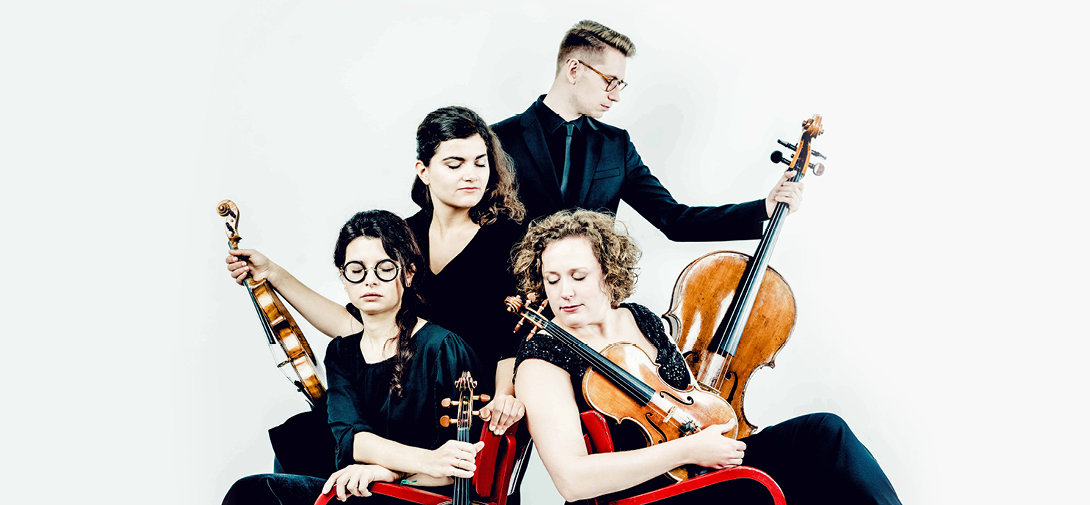
Kleio Quartet [Juliette Roos, Katherine Yoon (violins), Yume Fujise (viola), Eliza Millett (cello)]

Elgar String Quartet in E minor Op.83 (1918)
Webern 5 Movements for String Quartet Op.5 (1909)
Haydn String Quartet in D major Op.50/6 ‘Frog’ (1787)

Wigmore Hall, London
Monday 6 October 2025 (1pm)

On the evidence of this BBC Radio 3 Lunchtime Concert, the Kleio Quartet – members of the station’s New Generation Artists scheme – are ones to watch. Not least for their programming, for it was refreshing to see a Haydn string quartet given top billing at a concert rather than making up the numbers.

The concert began with an account of Sir Edward Elgar’s sole String Quartet notable for its poise, elegance and understated emotion. Elgar’s ‘late’ works are best experienced in concert at this autumnal time of year, though the dappled sunlight evoked here was compromised by a subtle yet lasting foreboding. For the youthful Kleio Quartet to capture the thoughts of a man in his early 60s with such clarity was impressive indeed. They did so through a first movement taking the ‘moderato’ of Elgar’s tempo marking to hand – deliberate but never plodding. The dense, Brahmsian counterpoint was deftly unpicked, while the nostalgic elements of the second movement gave the feeling of an ensemble performing in an adjacent room, the listener asked to imagine an elegant salon setting. The purposeful finale snapped us out of this reverie with vigorous exchanges, though there was time for affection in its second theme. Ultimately the music revelled in the Sussex outdoors enjoyed by Elgar and wife Alice, though the Autumnal chill remained present.

Memories of a very different kind coursed through Webern’s 5 Movements for String Quartet, written in the wake of his mother’s death. These remarkable compositions illustrate an unparalleled gift for intense, compressed expression. None of the movements last longer than two minutes, yet so much concentrated feeling is loaded into their short phrases, pushing against tonality with oblique melodies and rich yet desolate harmonies.

The Kleio Quartet found those qualities and more in a deeply impressive account, with the alternate moods of the first movement, argumentative and then delicate, and the forthright third. Countering these moods were the soul searching second and the sparse, eerie fourth, where the ticking motif of Yume Fujise’s viola suggested a period of insomnia. The bare bones of Webern’s anguish were made clear in the final movement, in the high, inconsolable violin of Juliette Roos and the empty closing chords.

Following this with one of Haydn’s most amiable quartets was an inspired move, the Wigmore Hall audience smiling feely as the composer’s humour was repeatedly revealed. The so-called ‘Frog’ quartet, named for the croaking repeated notes of the finale’s main theme, shows Haydn completing his Op.50 set of six quartets with a panache that would surely have delighted their beneficiary, Frederick William II of Prussia.

The Kleio had fun with the unpredictable first movement, spirited yet restless, and the harmonic twists and turns of the Poco adagio, led by expressive flourishes from Roos. The quirky Menuetto revelled in melodic inflections and cheeky asides, with the pregnant pauses of the trio section adding to the irregular rhythms within the triple time meter. All of which set up the fun and frolics of the finale, where the occasional slip of ensemble tuning could be easily forgiven in the spirit of the Kleio’s performance, Haydn charming his audience to the very end.

Listen

You can listen to this concert as the first hour of BBC Radio 3’s Classical Live, which can be found on BBC Sounds until Tuesday 4 November.

Published post no.2,680 – Tuesday 7 October 2025

In concert – Heath Quartet @ London Chamber Music Society, St John’s Church Waterloo – Haydn, Bacewicz, Locke & Beethoven

Heath Quartet [Maja Horvat & Sara Wolstenholme (violins), Gary Pomeroy (viola), Christopher Murray (cello)]

Haydn String Quartet in G major Op.33/5 ‘How Do You Do?’ (1781)
Bacewicz String Quartet no.6 (1960)
Locke Suite III in F (c1660)
Beethoven String Quartet no.16 in F major Op.135 (1826)

St John’s Church, Waterloo, London
Sunday 28 September 2025, 6pm

Reviewed by Richard Whitehouse

This early evening concert marked not just the start of London Chamber Music Society’s new season but also that of its first at St John’s Waterloo, following some 17 seasons in residence at King’s Place. The actual programme, however, could not have been more typically LCMS.

What better than to start with a Haydn quartet? His Op. 33 abounds in ‘less is more’ writing, not least the fifth in this set whose buoyant opening Vivace features a cadential figure which provides the nickname, then a Largo whose keening melody for first violin and cadenza-like passage betrays likely operatic origin. The Heath Quartet was equally inside the Scherzo with its amiable impulsiveness, while the final Allegretto had a genial humour that carried through to its good-natured payoff. A piece deserving of greater prominence within the Haydn canon.

As does the Sixth Quartet in Grażyna Bacewicz’s output. Evidently a breakthrough in terms of her writing for strings, its stealthy yet never brazen Modernism is clear from the opening movement in its subtle overhaul of sonata design, then the Vivace with its intensive rhythmic interplay. A ‘song without words’ centred on cello, the slow movement is a soulful interlude prior to a final Allegro as makes inventive play with rondo design – the widening expressive gulf between its stable refrain and its unpredictable episodes deftly sidestepped at the close.

Purcell’s music for consort might be the most directly acknowledged precursor of the string quartet, but that by Matthew Locke is hardly less significant and preceded it by almost two decades. This third of his six four-part suites is no exception – the substantial and teasingly discursive Fantasia being followed with an elegant Courante and a soulful Ayre then a (surprisingly?) trenchant Saraband. Throughout, the Heath’s seamless interplay was such as to relativize any distinction between a consort of viols and the ensemble of strings it became.

An ensemble taken to a peak of perfection on the cusp of the Romantic era with Beethoven’s last string quartet. Here the Heath judged the equable poise of its opening Allegretto then the quixotic humour of its scherzo to perfection. Neither was there any lack of feeling in a slow movement whose pathos becomes the greater for its understatement; the ‘difficult decision’ that informs the finale duly rendered with a sure sense of this music’s venturing towards its playful conclusion. Beethoven was rarely so profound as when he was being this disarming. A persuasive start to a new season and a new chapter in the illustrious history of the LCMS. A wide range of recitals is scheduled between now and June, while those unfamiliar with St John’s need have no doubt as to the excellence of its acoustic or attractiveness of its setting.

Click on the links for more information on the Heath String Quartet, the London Chamber Music Society and events at St. John’s Church, Waterloo. You can also click for more on composer Grażyna Bacewicz

Published post no.2,676 – Friday 3 October 2025

On this day – two Haydn premieres

This day marks the anniversary of the premieres of two Haydn symphonies, from the group of 14 known as the ‘London’ symphonies.

The two works in question are the Symphony no.97 in C major, and the last of Haydn’s symphonies, the one known as the ‘London’ symphony – no.104. Both can be heard below:

Published post no.2,522 – Sunday 4 May 2025

On this day – two Haydn premieres

This day marks the anniversary of the premieres of two Haydn symphonies, from the group of 14 known as the ‘London’ symphonies.

While many Haydn symphonies are labelled with nicknames, their unnamed counterparts are far from inferior! That is certainly the case for Symphony no.98 in B flat major, premiered at the Hanover Square Rooms in London on this day in 1792 with Haydn directing from the keyboard and the violinist Johann Peter Salomon, who commissioned the symphonies, leading the orchestra:

Haydn’s penultimate published symphony is no.103, the Drumroll – which was also given its first performance in London, on this day in 1795. It was given in the King’s Theatre, again with Haydn at the fortepiano and the famed violinist, Giovanni Battista Viotti, leading the orchestra.

The symphony is scored for a larger orchestra, with a fulsome wind and brass section – plus the timpani, responsible for the drum roll that opens the work:

Published post no.2,460 – Sunday 2 March 2025