Music by Ludwig van Beethoven Libretto by Joseph Sonnleithner and Georg Friedrich Treitschke, after Jean-Nicolas Bouilly Sung in German with English surtitles
Leonore, disguised as Fidelio – Sally Matthews (soprano), Florestan, her imprisoned husband – Robert Murray (tenor), Don Pizzarro, prison governor – Musa Ngqungwana (bass-baritone), Rocco, gaoler – Jonathan Lemalu (bass-baritone), Marzelline, his daughter – Isabelle Peters (soprano), Jacquino, prison warder – Oliver Johnston (tenor), Don Fernando, king’s minister – Richard Burkhard (baritone), First Prisoner – Alfred Mitchell (tenor), Second Prisoner – Wonsick Oh (bass)
John Cox (original director), Jamie Manton (revival director), Gary McCann (designer), Ben Pickersgill (lighting)
Garsington Opera Chorus, The English Concert / Douglas Boyd
Garsington Opera, Wormsley Friday 27 June 2025
review by Richard Whitehouse Photos by (c) Julian Guidera
Few operas have been subject to matters of time and place as has Fidelio. Beethoven’s sole opera, by his own admission, caused him the greatest difficulty among all his works to ‘get right’ and, even today, it can all too easily emerge as a compromise between what had been intended and what (conceptually at least) was feasible. All credit, then, to Garsington Opera for this revival which not only avoided the likely pitfalls first time around but has improved with age – in short, a production that amply conveys the essence of this flawed masterpiece.
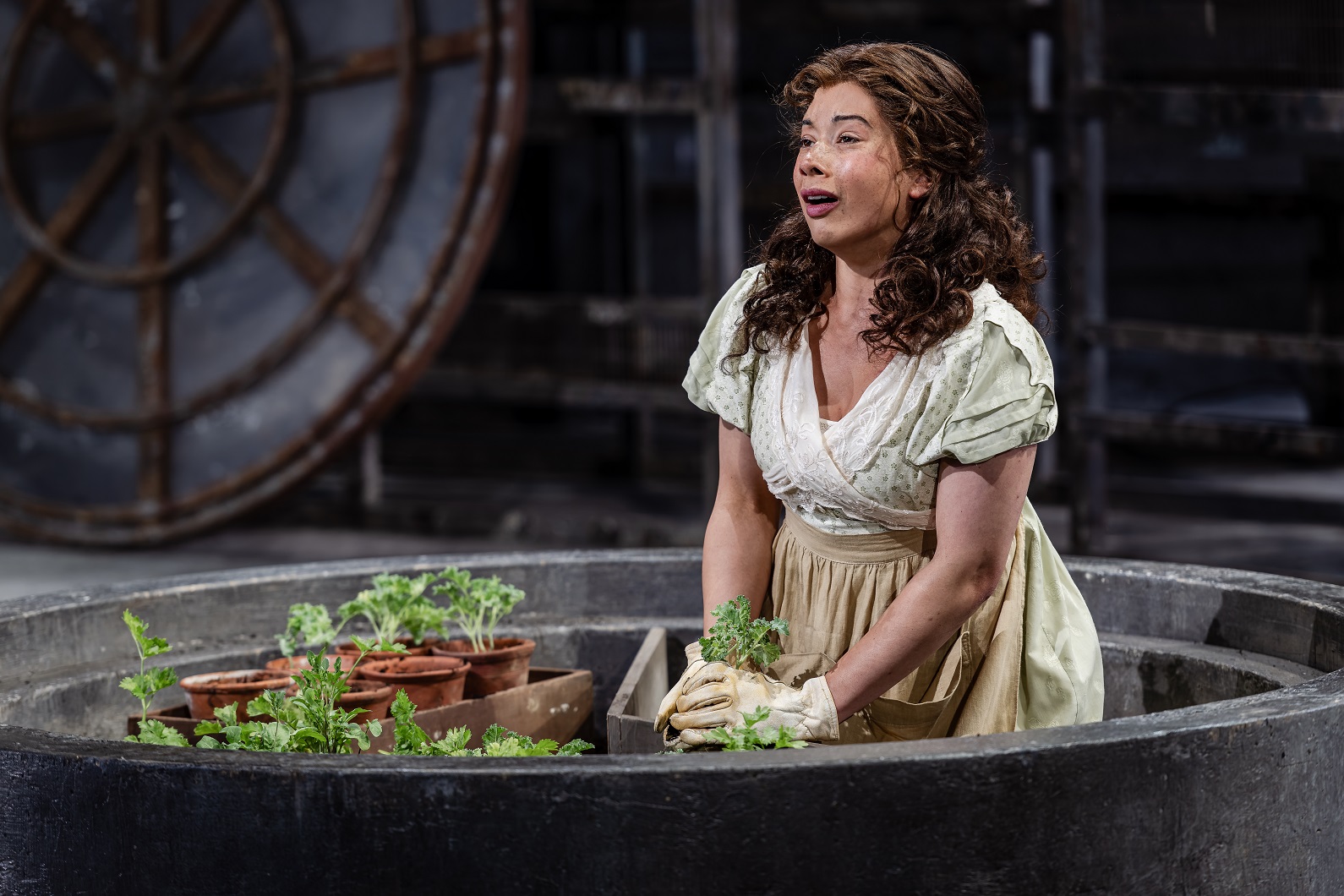
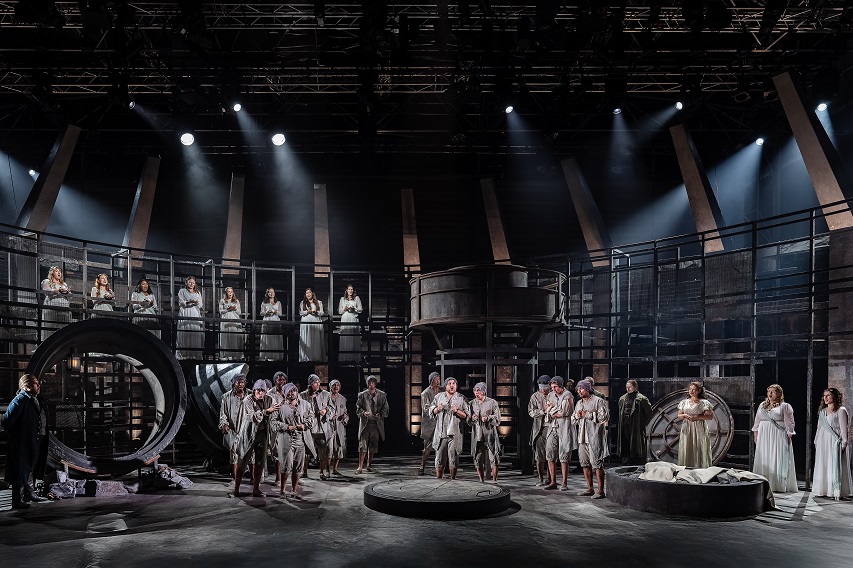
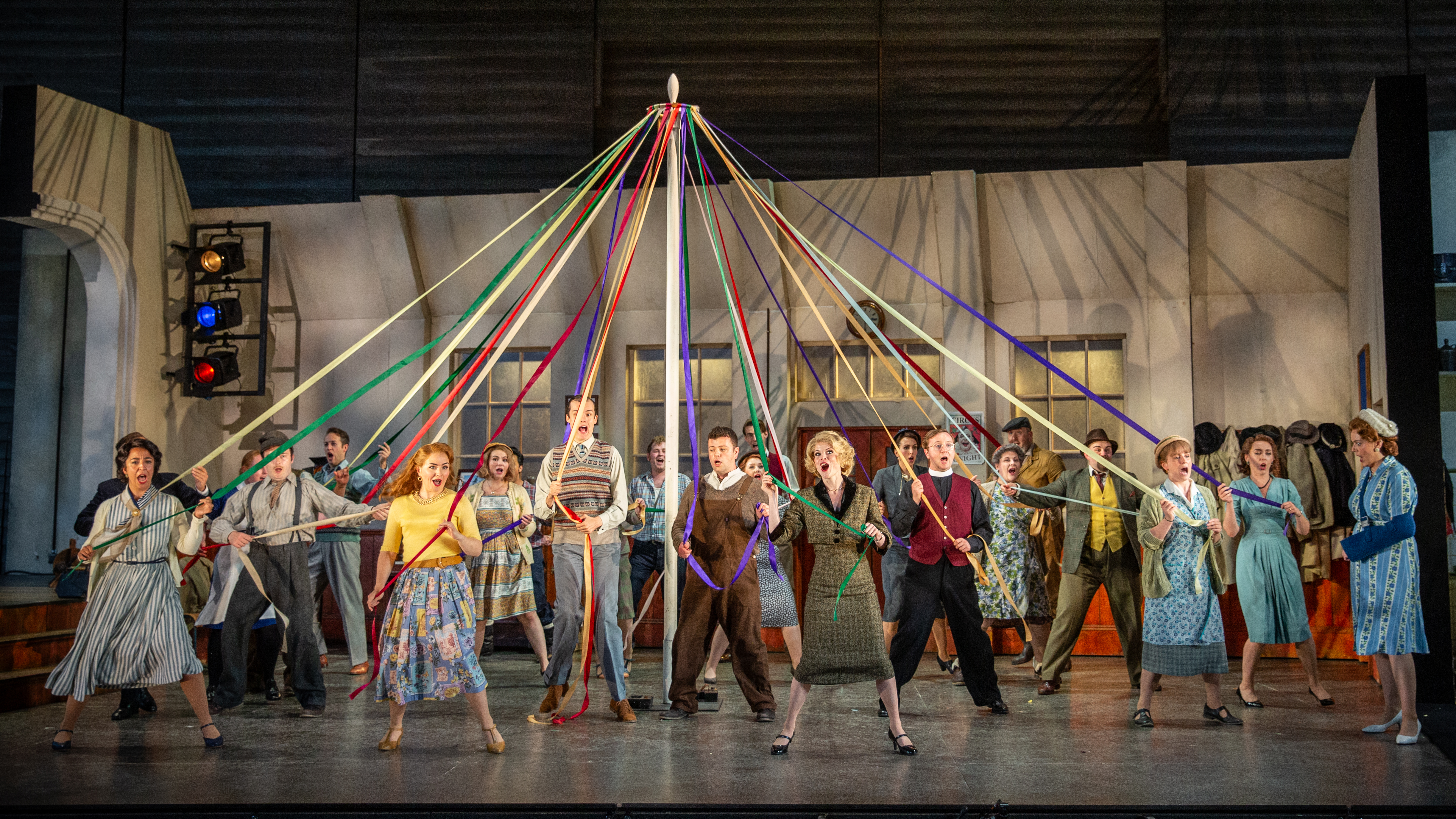
That original staging had been directed by John Cox, whose productions are rarely less than durable and with such as his 1973 Capriccio or his 1975 The Rake’s Progress being close to definitive. For this second revival, Jamie Manton has streamlined the basic concept such that everything which takes place can be envisaged from the outset and hence ensures consistency across the production as a whole. He is abetted by Gary McCann’s designs, their monochrome stylings imparting a grim uniformity which could not be more fitting given that this drama is played out around and inside a prison. In particular, the hole front-of-stage from out of which the prisoners emerge and into which Florestan is to be committed is a device made elemental merely by its presence, while the final scene avoids the agitprop from an earlier era in favour of a straightforward tying-up of narrative loose-ends the more affecting for its understatement. Effective without being intrusive, Ben Pickersgill’s lighting enhances the changing moods of an opera which takes in domestic comedy and visceral drama prior to its heroic denouement.
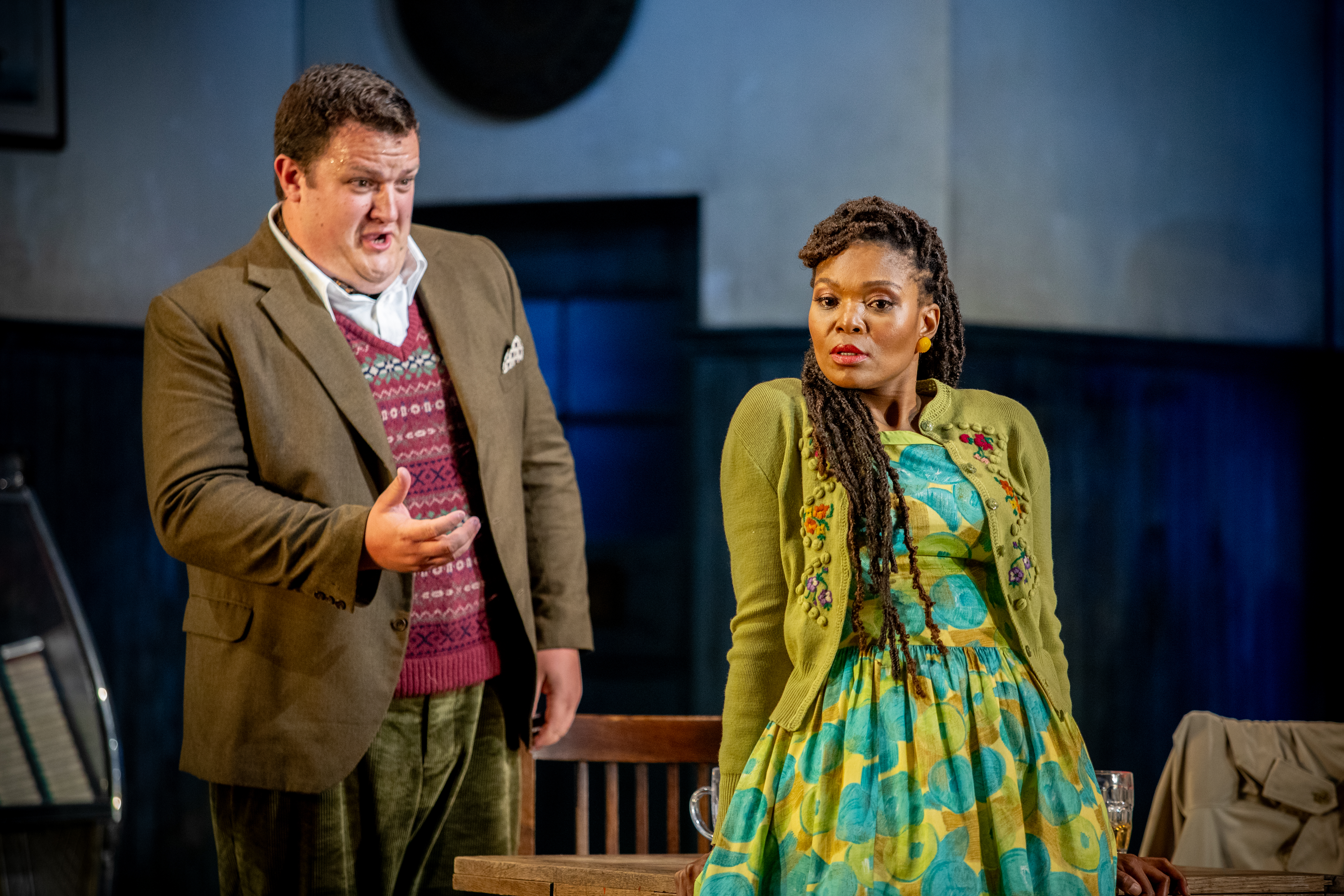
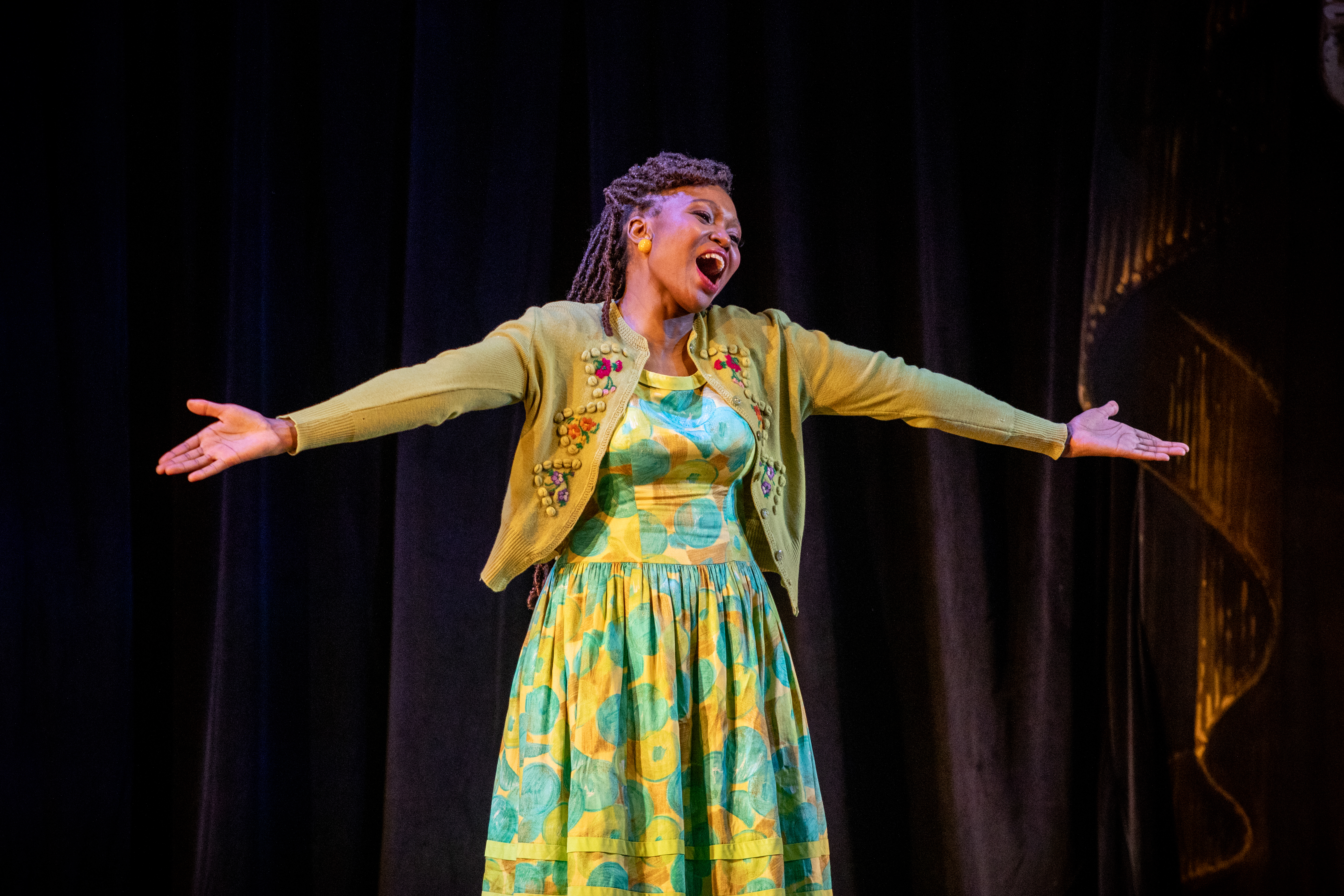
Vocally the opening night was a little uneven without there any real disappointments. If Sally Matthews initially sounded a little inhibited in the title-role, this most probably reflected its ambivalent nature rather than any lack of expressive focus; certainly, her commitment in the ‘Abscheulicher…Komm Hoffnung’ aria such as defines her emotional persona was absolute, as was her seizing hold of that climactic quartet to which the entire drama has been heading. Sounding as well as looking his part, Robert Murray avoided the rhetorical overkill that too often mars portrayals of Florestan – his mingled vulnerability and fatalism maintained right through to the duet ‘O namenlose Freude’ whose eliding of elation and doubt intensified its emotive force whatever its actual length, though without pre-empting what is still to come.
As Don Pizarro, Musa Ngqungwana was imposing in presence and thoughtful in approach – his lack of histrionics preferable in a role which too often descends into caricature. That said, he was upstaged in their duet ‘Jetzt, Alter, jetzt hat es Eile!’ by Jonathan Lemalu who was in his element as Rocco; materialist aspiration outweighed by the humanity invested into a role where comedy rapidly gives way to pathos. Marzelline and Jaquino may have but little to do after the first scene, but Isabelle Peters was eloquence itself in her aria ‘O war ich schon mit dir vereint’ while Oliver Johnston veered engagingly between eagerness and consternation. Richard Burkhard made for an authoritative if never portentous Don Fernando, while Alfred Mitchell and Wonsick Oh afforded touching cameos during a memorable ‘Prisoners’ chorus’.
Nor was the Garsington Opera Chorus to be found wanting as a whole in its contribution to the finales of each act – the first as moving in its pallor, infused with radiance, as the second was in the unfettered joyousness which offset any risk of that final scene becoming merely a celebratory tableau. The English Concert sounded rarely less then characterful, even though humid conditions likely explained some occasionally approximate intonation – happily not in Rachel Chaplin’s scintillating oboe obligato which shadows Florestan’s aria ‘In des Lebens Frühlingstagen’ as if an extension of his character. Douglas Boyd directed with assurance an opera with which he has long been familiar, his tempos unexceptionally right and always at the service of the opera. The author Michael Oliver was surely correct in his observation that the Leonore original is superior in theatrical terms to the Fidelio revision, yet this latter was nothing if not cohesive through Boyd’s astute dovetailing of individual numbers, as between speech and music, so that any seeming discontinuities were made more apparent than real.
Some 211 years after the successful launch of its final version and Fidelio remains an opera acutely sensitive to political context and polemical intent. Beethoven himself was, of course, partly responsible for this but subsequent generations have sought, often recklessly, to foist their own preoccupations onto his music so as to distort or even negate its essence. There was no risk of that happening here thanks to the balanced objectivity of this production but also to its conviction that the composer’s guiding vision is, and always will be, its own justification.
Fidelio runs until 22 July 2025 – and for further information and performances, visit the Garsington Opera website
Melodramma giocoso in Two Acts – music by Giuseppe Verdi; Libretto by Felice Romani (revised by the composer)
Sung in Italian with English surtitles
Il Cavaliere di Belfiore – Joshua Hopkins (baritone), Il Barone di Kelbar – Henry Waddington (bass-baritone), La Marchesa del Poggio – Christine Rice (mezzo-soprano), Giulietta di Kelbar – Maddison Leonard (soprano), Edoardo di Sanval – Oliver Sewell (tenor), La Rocca – Grant Doyle (baritone), Il Conte Ivrea – Robert Murray (tenor), Delmonte – James Micklethwaite (tenor), Servant – Daniel Vening (bass)
Christopher Alden (director), Charles Edwards (sets), Sue Willmington (costumes), Ben Pickersgill (lighting), Illuminos (Matt and Rob Vale) (video), Tim Claydon (choreographer)
Garsington Opera Chorus, Philharmonia Orchestra / Chris Hopkins
Garsington Opera, Wormsley Monday 1 July 2024
review by Richard Whitehouse Photos by (c) Julian Guidera and Richard Hubert Smith (as marked)
Garsington Opera has a laudable track-record in presenting rarities or supposed ‘also-rans’ to best advantage, with this new production of Un giorno di regno no exception. Verdi’s second opera fell flat on its premiere at La Scala in September 1840, though the death of his wife and both of his children over the previous two years meant his heart was simply not in the writing of a comic opera: one of several extenuating circumstances that included a dearth of suitable singers for the main roles plus the demonstrably backward-looking nature of the work itself.
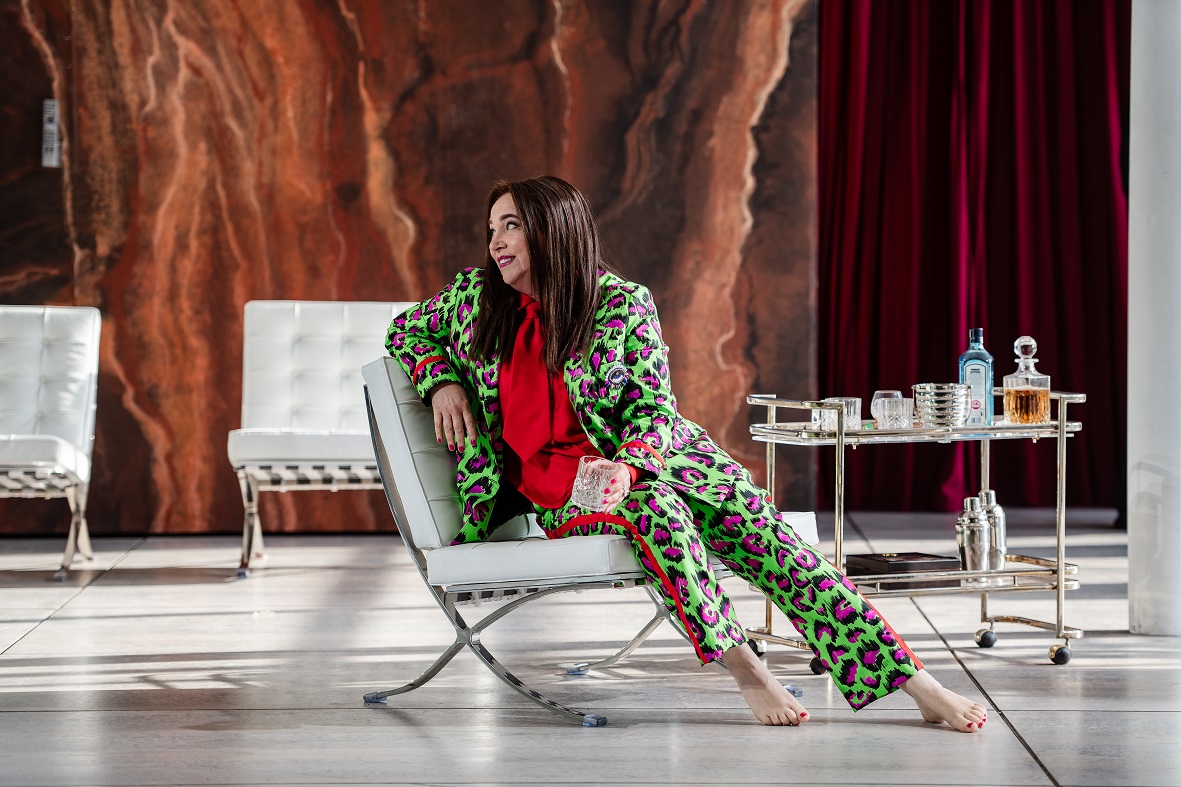
All credit to Christopher Alden for creating a production which, whatever its modishness of appearance, is rarely less then relevant and always entertaining. Verdi’s hurried refashioning of a 22-year-old libretto – concerning real-life impersonation of King Stanislaus prior to his briefly regaining the Polish crown in 1733 – was never likely to thrill the Milanese audience, but it does provide a lively context for this sequence of increasingly inane goings-on such as respond well to being situated in an authoritarian state swamped by ‘fake news’ and political one-upmanship. Just occasionally the deluge of video imagery threatens to overwhelm what is being enacted on stage but, overall, what can seem a needlessly involved and diffuse plot is, if not simplified, thrown into sharper focus so as to maintain the interest of those present.
In so doing, Alden is abetted by the faux-stylishness of Charles Edwards’s sets and the no less eye-catching costumes of Sue Willmington – their combined effect enhanced by the dextrous lighting of Ben Pickersgill and a video component from the Illuminos duo that adds greatly to the effect of immersive decadence. Nor is the choreography of Tim Claydon found wanting in its physicality and convincing use of all available stage-space, not least those gangways in the auditorium that function briefly if vividly as its extension for certain highpoints of the action.
Madison Leonard in Un giorno di regno Garsington Opera
opens Garsington 29.06.24
photo credit: Richard Hubert Smith
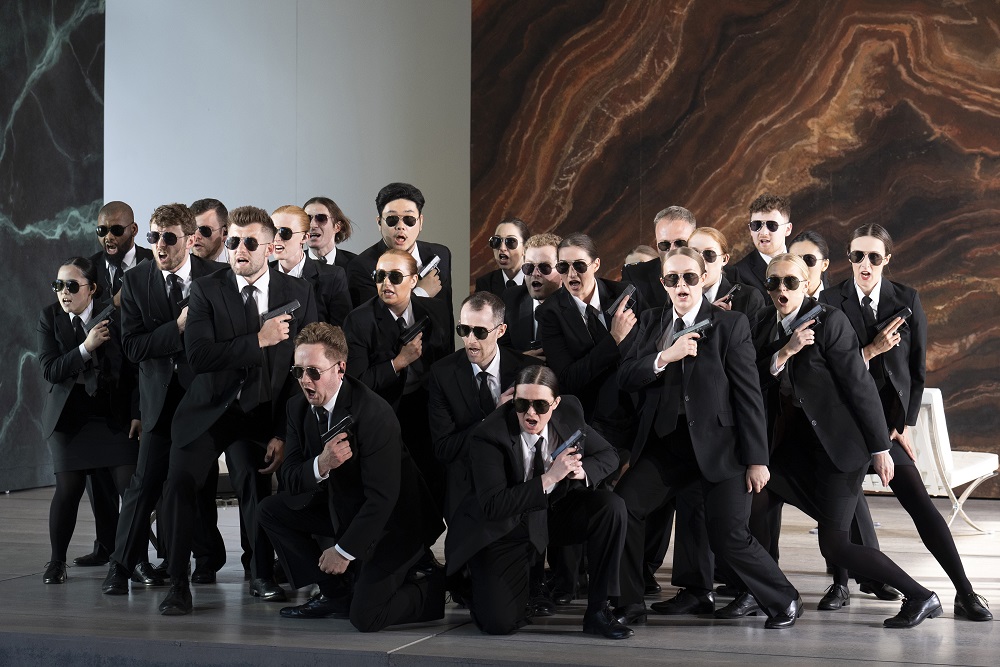
An opera production is arguably only as good as its singers, and the present cast could hardly be bettered. As the false king Belfiore, Joshua Hopkins brings style and suavity to a role that could easily become insipid – and with his ‘Freddie Mercury’ cameo carried off to perfection. Teasing out the cowardliness behind his thuggery, Henry Waddington is ideally cast as Kelbar and Grant Doyle hardly less so as the scheming La Rocca – his ‘sparring partner’ made literal during their uproarious breakfast confrontation. Oliver Sewell overcame initial unsteadiness to deliver an Edoardo of resolve and eloquence, with Robert Murray the stealthily insinuating Ivrea. Neither female role leaves anything to be desired – Madison Leonard vulnerable for all her minx-like persona; Christine Rice stealing the show as the Marchesa whose solo spots are the opera’s likely highlights. James Micklethwaite and Daniel Vening both acquit themselves ably, while Garsington Opera Chorus evidently enjoys its collective function as those ‘people in black’ who variously comment on the action then intervene often forcibly when necessary.
Stepping in at the eleventh hour (for an indisposed Tobias Ringborg), Chris Hopkins directed with verve and real sense of musical continuity – not least when Verdi (seemingly for the only time in his career) made recourse to ‘recitativo secco’ which here furthers the action without impeding its progress. Otherwise, the Philharmonia Orchestra despatches with relish a score which, for all that this lacks the sophistication and urbanity of Rossini’s or Donizetti’s mature comedies, crackles with energy along with an engaging personality for which it has not yet had its due.
Members of the Garsington Opera chorus in Un giorno di regno – opens Garsington 29.06.24
photo credit: Richard Hubert Smith
Although a lesser opera in the Verdi canon, Un giorno di regno met with modest success even in his lifetime and its later revivals were well received. Thanks to this Garsington production, his ‘King for a Day’ finds itself more than able to enjoy a timely 15 minutes in the spotlight.
The conductor talks to Ben Hogwood about his forthcoming debut at Garsington Opera, where he will conduct Rameau‘s Platée – a work in which he has also sung the title role. Agnew talks about Rameau but also Handel, considering why now is a good time for British audiences to embrace the music of the French Baroque.
On a dark, dank winter’s day there is something incredibly heartening in having a discussion about the prospect of a summer opera season. Arcana has teamed up with conductor (and former tenor) Paul Agnew to do exactly that, and he is in optimistic mood. “It will arrive quickly, with the spring and the daffodils, and then we’ll find ourselves in Garsington!” he says. It will be his first visit to Wormsley Park, and to the festival. “I’m really looking forward to it. It’s one of those very original places, and it isn’t a dark theatre. It has windows, and so each production has to take into account that you’re going to have a part of that show in the light. I’ve never done that sort of thing, and the team is very nice. We had the model showing so we’ve seen the set, and the concepts, and it looks great. It will be a lot of fun, which it should be – but with that hint of tragedy, which is always lurking in Platée.”
He is talking about Rameau’s comic-tragic opera, which he will lead with a new team of soloists and The English Concert. It is the first excursion for Garsington into the world of French Baroque opera, but Agnew is returning to a piece he knows well. Indeed, he first encountered Platée as a singer. “I didn’t sing Platée – I sang Thespis in the Prologue. I was quite a young thing, and it was a production with the Opera de Paris. It’s a really hard role, extremely high – and obviously you go on at the top of the show. It’s a bit nervy. Then almost immediately I took on the role of Platée in that same production in Japan. That was released on DVD, which had a lot of success.”
He explains why. “Laurent Pelly did a genius job – and they found just the right balance in order that when we get to the end, where the audience have been cheerleading with the rest of the chorus and these horrible characters, and they find themselves in fact implicated in this terrible humiliation. I think he just found the right click. There was a gasp from the audience when they understood quite what a terrible thing this is. I wouldn’t want to exaggerate, but there is something political about it, and within the operas of Rameau – Les Indes galantes and certainly Les Boréades. They tend to have slightly monarchical reflections, and there’s a sense – if you know the film Ridicule – about how close you can get to the king but then you know you made a mistake, you didn’t use the right wig and so on, and you get sent straight back to the back of the queue. There’s a sense of that in Platée and the ridicule, as you would expect Jupiter – who essentially is Louis XIV – to be the hero. In fact, he’s the villain! It’s not exactly dangerous, but not politic either – Louis XV by then.”
Agnew has enjoyed a close affinity with Rameau throughout his career. “The very first thing I did in France, with William Christie and Les Arts Florissants, was record the Rameau Grands Motets. They’re relatively youthful pieces compared with the operas, which he didn’t start until he was about 50 years old. I love Les Grands Motets, partly because it’s surprising to find such incredibly sensual music for the church. They just seemed to suit my voice, and in fact it was one of the very first French Baroque things I did at all. You know you have those lucky things in in a long career where you ‘meet’ a music and you think, “Oh, my goodness, I’m really made for this!” I love the sentimentality of it, in the best sense of the term, I love the melody and I love the sensuality of the harmonies. That leads you through the line and tells you where you’re going constantly, so you can make the music into such a strong experience.”
Things moved quickly. “Almost immediately we started on the operas in the Opera de Paris, so we did Hippolyte et Aricie, then various roles in Les Indes galantes, and then we did Platée, which was with Marc Minkowski and Les Musiciens du Louvre. Then we did Les Boréades, the last opera, which was never staged in his lifetime – he was 80 when he wrote it. It’s amazing to think he lived to 80, but happily he did! It’s an astonishing journey, very much like Platée but in a much more heroic way – he’s a real prince. So I did all those operas, and I’ve sung others – Castor et Pollux for instance – in concert. I’ve done a lot of the ballets, too. I’m a big fan, as you would expect! It’s the most extreme the Baroque gets, even more complicated in some ways than Bach. He was an amazing technician, and he’s stating things relatively clearly, whereas there’s a complexity of emotions in Rameau which really predate going into Gluck and then early Mozart. He didn’t die until 1764, so Mozart has already composed his first piece before Rameau dies. There is a big influence on Gluck, and everything that he says about the reform operas is what Rameau has been trying to do for years.”
Performing the operas as both a singer and a conductor has given Agnew a unique perspective. “It’s very helpful”, he agrees, “for the singers too. I’m naturally a singer’s conductor, as I want them to be able to breathe and recover and so on, because that’s the best for us. I’m not going to push them into a tempo which they can’t do, so we want to find the right tempo for the singer. If you’re a singer you understand that more clearly. It’s a good place to have been, whatever the music – I’ve sung a lot of Handel and Purcell, and now I conduct a lot of Handel and Purcell too. Having sung Platée itself, it makes me smile and I’m not in the least bit jealous about being on stage. I wouldn’t want to sing it again or go through that experience. It’s a long evening, and you’re on stage a lot. There’s a lot to sing, it’s quite hard, and it’s quite physical because it’s a comedy. There’s a lot of running around, and jumping – if you’re a frog! – and I’m happy to leave that to other people. I still absolutely love the piece, and to have that long association is very useful.”
Visitors to Platée’s page on the Garsington Opera website are presented with the image of a flamingo and a beachball (above), an immediately appealing prospect in the depths of winter. “I think it’s going to be a lot of fun. I really like the way it’s being approached. We’re quite used to women playing men – that’s been around in Handel‘s Rinaldo, for instance, but the other way round is very much rarer. The only way in which the piece works is if she’s just a woman, you just get over it. I think Rameau’s idea was to define the strangeness to that person. It’s not about sexual politics, but not a woman as the gods would know – maybe asexual thing rather than being particularly transvestite or drag. I think we’re in the right direction in this production, where we just need to forget that the singer is a man, and just accept that this is a strange woman. She’s a nymph from the marshlands – we don’t know really what she is, a creature from the blue lagoon.”
It is the first time Agnew has encountered the work of director Louisa Miller and designer Christopher Oram. “I’m not sure they’ve done much Baroque before, so I wouldn’t have encountered them as that’s more or less my world. I like them very much. It’s not a very easy piece to approach dry – just to get your head around what Rameau could possibly be thinking about is quite hard. Right from the very first meetings we were clearly on the same page, and Louisa clearly knows the piece, which is very reassuring. As a singer you often get to the first rehearsal and find out the director doesn’t really know the piece very well, and you find yourself having to subtly guide the director through towards a good solution. That’s definitely not the case here! Chris’s designs are very good, it’s funny and relevant and they work throughout the piece. Sometimes at a first rehearsal you think, “This will work great in Act One, and Act Three, but Acts Two and Four will be a disaster because it just simply won’t work in this concept. This concept will work the whole way through, so I’m really encouraged. We’ve got a lovely cast, and also decided at the beginning we would take a cast where nobody had sung it before. Nobody arrives with preconceptions about how their role is, or how they would like to play it.”
There is a sense of great excitement that this is Garsington’s first foray into Rameau’s output. “Yes, and they’ve chosen well!” he says enthusiastically. “We’ve got a great band in the English Concert. I sang with them in my 20s, with Trevor Pinnock, and what an honour it is to direct them.” He expands on the repertoire at hand. “I’ve done French Baroque music with English bands before, and it is quite tricky. They’re technically such fantastic players, but it has a tricky accent, and you can’t get it just by reading the books. Again, it’s useful to be a singer in those situations because you can sing the sensuality of the line much more easily than you can describe it. I always end up singing quite a lot of rehearsals because it’s a visceral, physical reaction to what you hear, which makes it much easier. It will be a challenge for the band to get that accent right, but they’re eminently capable, and I’m massively looking forward to working with them.”
They are complemented by a strong team of soloists, who have equivalent challenges. “Equally, the singers are all English, so we need to get that right – and that’s not just question of pronunciation. There are all sorts of things about how the phrases are constructed, and how the ornamentation helps the grammar of the music. We will have time and we have a good cast, so that doesn’t worry me. You have to go quite deep into these pieces, especially doing this repertoire for the very first time in an opera house. It’s very rare to hear Rameau at all in the UK. I think Platée is the only piece that has been properly staged in the past, and that was a long time ago with the Royal Opera House. It’s very exciting, and there is a lot of interest from the public in French baroque music, so I look forward to that encounter! It is very complicated to put on, you need a ballet, an orchestra that knows their beans, and a cast willing to take risks with the ornamentation. It’s a courageous choice, but not an impossible one.”
Is the boundless supply of great music by Handel (below) in some ways to blame for the relative lack of French baroque music in the UK? Agnew smiles. “Handel’s an interesting one, because he would say, “You do get French Baroque – because if you look at the dances in Alcina, the overtures – you’re not missing out, I’ve written it myself!” In some ways, yes – but you could never say Handel’s at fault, because a house without Handel would be a disaster. You have to think as well that if Purcell had lived longer than the whole history of English music would have been very different. He died in 1695, and then they had a few abortive attempts to create English opera. Then there was an extraordinary moment where Handel arrives, and he creates this strange bastard form of Italian opera for English people, written by a German! You think it’s never going to work but he has this immense success, at least until the early 1740s.”
He goes into more detail behind Handel’s successful formula. “He is much more straightforward, he has the advantage – and I don’t mean to be disrespectful – that what you see on the page is what you get. Twenty to thirty years earlier, the ‘affect’ is everything. Once you start an aria you stay in that in that emotion until the end of the aria, and then a recitative will tell you what kind of emotion you’re going to go to in the next one. With Rameau it’s much, much more fluid than that, because things are changing very fast, and he goes towards complications where the likes of Pergolesi go towards simplicity. You get that break that comes around the time of French Revolution, a time of an immense social and cultural change. Handel is a chancer, isn’t he?! He’s in Italy, and then he knows that George of Hanover is going to be the next king of England, so he immediately goes up and gets a job in Hanover. The first thing the Hanoverians say is go to England, as a sort of spy-come-diplomat or equerry.”
The rest – as they say – is history, and Agnew relishes recounting the events. “And then, of course, George I turns up and it’s all set up for him to have this contact with the nobility, and the prestigious arrival of the king at his operas and so on. He’s bright, and gets it sorted right at the start! The other thing is he turns up in Italy, and produces these works that are effectively for the Catholic nobility and cardinals, and he is a straight, up and up Protestant Lutheran. And yet – business is business, you do what you want! He produces something for a public that don’t know anything about anything. Rameau can produce something much more technically difficult and also psychologically complex, because he’s simply joining the train. We’ve had Lully, Charpentier, Campra, and all the rest – and Handel arrives and takes all that on board, that melange between the original French style – which wasn’t French anyway, because Lully wasn’t French – and then he puts this new Italian virtuosity in. He’s joining this great movement, and dominates England completely!”
We move on from Agnew’s fascinating dissection of Handel and Rameau to talk about one of his mentors and accomplices, conductor William Christie (above). “He’s a theatre man, he wants to pick up the music and shake it and I love that. When you’re a singer, you absolutely want that because you don’t want someone saying, “Careful with the D sharp”, you want someone saying, “Come on, tell me the story!” I always much prefer those people – and John Eliot Gardiner as well – who pick up the music and shake it, and have enough courage to say this music needs interpreters. The composer wants you to take it and make a show of it. That’s what Bill does, and absolutely what I try to do now as a conductor. You should take risks with it! These people were pragmatists, so if you’ve got someone who can sing this note but not that one, go with it. If you look at the history of Handel’s operas, or Messiah – there’s no definitive Messiah. He changed all the time, because he wanted to get the best out of who he had. It wasn’t saying, “This is my definitive work of art, have some respect and do it correctly”, it was, “Today it’s going to be like this, tomorrow it’s going to be different again, because I need to get the best that you have! I need to get great performance out of you. And that’s why it changes constantly. We don’t quite have that variance, but nonetheless you still have to have that attitude that you have to make a show. That goes straight through to Mozart – he is a show man. You want to start Cosi fan tutte with the overture thinking that you are making a show, not a homage. It’s an entertainment. You should laugh and cry and be frightened and happy, and all those things!”
Turning to Rameau again, he considers the composer’s standing. “He can be very funny, in the likes of Les indes galantes – and Platée is genuinely funny too. Rameau is always known as a surly bugger, when you read about him he is not at all a nice person – but he is really genuinely funny. To do comedy, as everyone knows, it’s much harder than just telling a joke – you have to have that special talent. He has that. It doesn’t mean that Boreades or Hippolyte aren’t amazing pieces, but when he wants to be funny he can be very funny.”
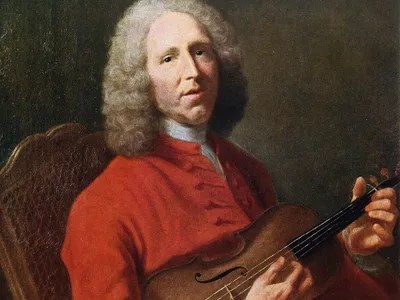
Rameau (above) is a colourful composer, too. “Everything is about colour”, agrees Agnew, “and he’s the first to really properly orchestrate, not just saying to the flutes to play the same as the violins. This is music just for flutes, just for the oboe, and then we’re just going to hear the strings coming in when when we need harmony. And then of course we’ll have a big string moment. It’s the beginning of colour in its best sense, not only harmonic colour but audible colour. The players suddenly find themselves pretty exposed in Rameau, particularly the bassoon parts. He’s a genius of the bassoon writing, and you get these incredible melodies, in Dardanus for example, with these sombre, reedy, mournful qualities. Some amazing colours.”
There is more, too. “And then he’s a great dancer! I think he has to be the best dance composer before Stravinsky. He has this incredible variety, within the ‘stock’ dances. Everyone knows straight away if it’s a Galliard or a Bourree, but they are so incredibly different. It’s a joy when the band understand it, too. I did Platée with the Dresden Staatskapelle, and a more serious orchestra you could not find – but once they got the idea that you could have fun and you could play out and take risks, they really went for it and it ended up great fun. There was a sort of trigger moment where we were doing a dance, and I kept on trying to get them to bow shorter, because they do hugely long bows, with fabulous, resonant instruments – nothing like the English Concert will play in Platée. I was trying to get them to play shorter and closer to the bridge, get a slightly sharper sound out of it. The shorter they got with the bow, the more they understood it and wanted to play out. It took off! Legato is a kind of aberration in this opera, everything else is short – so we charmed them out of certain – very good – habits.”
We bid farewell with one thing clear – Platée is in very good hands and a highly entertaining night is in prospect. “The main thing to say is that it’s a fun evening. You don’t need to worry if you don’t know much about French, or Baroque, or history. Just come and have a ball, it’s a fun evening, a fun piece with some very sharp twists!”
You can read more about the forthcoming production, and book tickets, at the Garsington Opera website
The Bartered Bride (Prodaná nevěsta) (1866) Comic opera in Three Acts – music by Bedřich Smetana; Libretto by Karel Sabina Sung in Czech with English surtitles.
Mařenka – Pumeza Matshikiza (soprano), Jeník – Oliver Johnston (tenor), Kecal – David Ireland (bass), Vašek – John Findon (tenor), Ludmila – Yvonne Howard (soprano), Krušina – William Dazeley (baritone), Mícha – John Savournin (bass), Háta – Louise Winter (mezzo-soprano), Ringmaster – Jeffrey Lloyd-Roberts (tenor), Esmeralda – Isabelle Peters (soprano)
Rosie Purdie (director), Kevin Knight (designer), Howard Hudson (lighting), Darren Royston (choreographer)
Circus Troupe, Garsington OperaChorus, Philharmonia Orchestra / Jac van Steen
Garsington Opera, Wormsley Friday 30 June 2023
review by Richard Whitehouse Photos by (c) Alice Pennefather
Smetana may have played down its status in the context of his output, but The Bartered Bride remains the foundation of Czech opera and is much the most performed work stemming from that tradition, making this revival of Garsington Opera’s 2019 production the more welcome.
Rosie Purdie’s direction accorded wholly with Paul Curran’s original conception, transferring the scenario to a 1950s Britain where class restrictions and petty-mindedness were as much a given as in Bohemia a century before, yet the socio-political facet seemed as astutely handled as the cultural trappings of that first teenage generation were underlined without detriment to what was played out on stage. Kevin Knight’s designs clarified this setting most effectively, and Howard Hudson’s lighting was vivid without ever being garish. Most especially, Darren Royston’s choreography afforded communal togetherness during the crowd scenes while also ensuring that the circus troupe’s routines at the beginning of the third act came alive without any sense of their being a mere ‘add on’ to this production, and hence of the opera as a whole.
The casting could hardly have been bettered. Among the most wide-ranging role of any 19th-century opera, Mařenka was superbly taken by Pumeza Matshikiza (above) who conveyed pathos and real integrity of character to substantialize those comic capers unfolding on stage in what was an assumption to savour. Not comparable musically, that of Jeník is a notable role that Oliver Johnston rendered with verve and audible eloquence – such that his ostensibly hard-headed decisions could only be the outcome of an essentially sincere as well as selfless motivation.
Notwithstanding that the secondary roles provide relatively little in terms of characterization, John Findon drew a degree of sympathy for the hapless Vašek, William Dazeley and Yvonne Howard were well matched as the warmly uncomprehending Kružina and Lumilla, while the scheming couple of Mícha and Háta saw a suitable response from John Savournin and Louise Winter, abetted in this respect by David Ireland’s roguish Kecal. Jeffrey Lloyd-Roberts was magnetic as the Ringmaster, and Isabelle Peters provided an entrancing cameo as Esmerelda.
The latter characters are part of a Circus Troupe that, fronted by Jennifer Robinson, brought the stage to life just after the dinner interval. Elsewhere, the hard-working Garsington Opera Chorus offered a reminder this is an opera second to none in terms of its choral contribution, while the Philharmonia sounded in its collective element under the assured direction of Jac van Steen, familiar in the UK through his extensive work with the BBC National Orchestra of Wales and Ulster Orchestra. In particular, the overture and set-pieces in each act had the requisite vigour and effervescence as has made them at least as familiar in the concert hall, and it remains a testament both to Smetana’s immersion in and understanding of his native music that only the ‘Furiant’ at the start of the second act derives from a traditional source.
The Bartered Bride has enjoyed numerous UK productions during recent decades – among which, this Garsington revival can rank with the finest in terms of musical immediacy and visual allure. Those not able to see it four years ago should certainly do so this time around.
Garsington Opera has had a brilliant summer. With stellar reviews for its productions of Orfeo, Così fan tutte, Rusalka and The Turn of the Screw, the festival has further cemented its status as an unmissable part of the British classical music calendar. And yet there is one more ace up the sleeve in the form of Dalia, a community cricket opera from composer Roxanna Panufnik and librettist Jessica Duchen about a Syrian girl who triumphs over adversity to follow her dream. The opera engages local participants of all ages from diverse backgrounds, including choirs from Syria and Palestine.
The parallels between opera and the most English of sports are surprisingly logical. Test cricket, it could be argued, becomes a four act drama – one for each innings – while the relatively recent phenomenon of 20-20 cricket pivots effortlessly to a pacey, two-act thriller. For some reason composers have tended to shy away from the stumps in creating works with bat and ball, but under Panufnik’s guidance Dalia strides confidently out to bat. As the composer arrives at the batting crease to receive an over of questions from Arcana (enough cricketing puns! – Ed) she takes up the story of what is by all accounts an amazing project.
“Thank you”, she says modestly, “and without wanting to sound too egotistical, I agree! It’s grown so much, beyond what we could have imagined with this involvement from with the choirs from Syria and Palestine. It’s just been extraordinary. We never dreamed it would reach the parts that is already has.”
This is not the first time Panufnik and Duchen have worked together on the Garsington stage and pit. “These are always large affairs”, says the composer, “and for the last one we did, Silver Birch, there were 180 people on stage! It was always going to be big, because if you’re going to do something that’s all inclusive, then it’s got to be inclusive for all. That’s the principle behind it.”
The issues at the heart of Dalia (above) could hardly be more relevant to today’s world. “When it was commissioned, and the concept evolved two years ago, there was a refugee crisis but now it has been hugely magnified, with Afghanistan and Ukraine. It just seems even more relevant.”
The collaboration with Jessica Duchen was a natural fit. “Jess and I are old, old friends, possibly reaching 30 years!” she says warmly. “We’ve done lots together. She’s not just my opera librettist, I can count on her for translations of poetic text too. She is very much my writing partner, although she has done other operas for Garsington. This is only my second but she has a fourth on the way I think. That’s another thing that’s mushroomed!”
Rehearsing with the choirs began on Zoom. “I wasn’t involved with the early rehearsals, they were led by our director Karen Gillingham”, she explains. “I haven’t been directly involved in rehearsing them, but the initial contact with the Amwaj Choir in Palestine came from a friend of mine who runs the Bethlehem Culture Festival, which has just had its second season in London. She was saying that I must hear this choir, and was there anything they could do? It couldn’t be more perfect, and I had an arrangement of Dalia’s main song, which I distilled for them. In the opera it is spread out over various parts, but they performed it absolutely beautifully! They were rehearsed by their music directors in Palestine, and they sent me an edit, but other than commenting on balance my input was minimal. It’s really wonderful what they came up with.”
The musical language of Dalia’s Song is striking and moving, an indication of the composer’s aim to bring forward the positive identifying aspects of faith and culture. “The principle behind a lot of the multi-faith and multicultural work that I’ve done over the last 20 years or so has been that whenever we hear about these other cultures or these faiths it’s usually in the context of conflict, especially on the news and in social media. I’ve really been on a mission to show that there are such beautiful aspects of these cultures and faiths and so much that we have in common. I think it’s really, really important to keep reminding people of that.”
As a lighter aside, could this be the first ever opera we about cricket? “Well, as my husband says, and he is a cricket lover – cricket is an opera!” She reveals several first-hand inspirations from the England touring party. “I have had fantastic help and support from a couple of members of the Barmy Army, including Billy the trumpeter. He let me use his mariachi motif in the cricket song and dance number. The pianist Anna Tillbrook is also a Barmy Army member, and she has been brilliant – and another person who has been a key consultant is the BBC cricket commentator Eleanor Oldroyd. She was very involved in the libretto with Jess. She lives near me, and we became great friends a few years ago. She has been very involved in making sure we have all the right terminology and that the cricket action scenes make sense and are all correct.”
Roxanna relished the challenges of writing for the assembled forces. “Every commission that I fulfill, whether it’s for people that are 100% professional and very experienced or if it’s for amateurs, is absolutely tailor made for the people that I’m writing it for. I’ve done an opera for Garsington before, and so I had an idea of the community and youth elements here. Throughout the piece, and I do this with every commission, I send sketches and MIDI files to the people I’m writing for, for constant input and collaboration. That way there are no nasty surprises at the end, and everybody knows that they’re getting something that they are not going to be struggling with.”
Panufnik was not beyond stretching her performers, however. “Having said that, it is a little bit challenging for our community chorus, but when I did that for Silver Birch they rose magnificently to the challenge. We also have these incredible people training them, fantastic coaches who are so talented. It’s a great position to be in. Lea Cornthwaite, who’s coaching the chorus made MIDI files of all the parts, so everybody had stuff to listen to and learn before they actually come to rehearsal.
The effect on the performers is clear from the video. “It is, and it has been emotional for me too. Sometimes I think, “What am I doing with my career; am I doing anything remotely useful? It feels like navel gazing, but when you see the effect on people who are either moved by it or who gain confidence through doing this it’s really gratifying. I’m really grateful to be able to do that. I also hope it will give the performers confidence to try other things they wouldn’t normally do. They might say, “I didn’t know anything about opera, but I went for it and succeeded. So let’s have a go at this!”
It was important for Panufnik to integrate Syrian modes into her musical language. “Dalia’s Song is actually a very well known Syrian folk song, Hal Asmar Ellon. Most of the people in the Palestinian and Syrian choirs knew that tune, and it immediately gave them something to sit between this completely new musical experience and what they know. That mode really influenced the rest of the piece. It was the first song I wrote in the opera, and everything grew out of that.”
Roxanna herself has had a varied musical upbringing, well beyond that handed down to her as daughter of the Polish composer Sir Andrezj Panufnik, who took up British citizenship in the 1950s. “I’ve always loved Middle Eastern music, South Asian music and African music”, she explains. “I did one of those ancestral DNA tests, and discovered that I am actually 1% Egyptian, which explains my love of that kind of music. The test also said I had 1.8% from the Levant region, which is probably through my mother’s Jewish heritage. I also love Balkan music, and I have Balkan DNA as well. I’m a bit of a musical nomad!”
It is gratifying to see her channelling this unique DNA and those influences into a stage work. “The thing about this opera and the people is that I think it’s a good reflection of the cultural mix in the UK today. I think it’s really important that we mirror that.” The opera addresses racism, too. “There is no shying away from that.”
With the current plight of Ukraine, it feels valuable to have such a vivid reminder of the plight of Afghanistan and Syria too. “I am very worried”, she confesses. “It was amazing, the outpouring of sympathy for Afghans fleeing Afghanistan last August, and for Ukraine now, but I worry that people are forgetting that there are still something like 11,500 Afghans here still waiting to be housed, and languishing as one family to one hotel room. I would really want that to be visible still.”
Panufnik is a busy composer. “I’m very excited that having written so much in the last 20 years for Christian worship, I’m just finishing off a commission for the Liberal Jewish synagogue, a piece for their Yom Kippur service in October, so that’s my first Jewish liturgical commission. I’m also writing a piano piece which will take its inspiration from Iraqi Jewish music, for the pianist Margaret Fingerhut. The Jewish stuff is coming up quite a bit. Although I’m a practising Catholic, because my mother is Jewish I am technically Jewish, and feel those roots very strongly. I’m really excited about that.”
How refreshing it is to have a positive discussion about religion. “It’s great to be talking about religion, like you say, in a celebratory way rather than talking about conflicts. I’m sure one of the biggest things about religion is being mindful of other people’s beliefs, isn’t it? It’s just nice to be thinking about that, and also being aware of all the things we have in common. During Lent, I remember some lovely nun friends who suggested taking something up rather than stopping anything. Thanks to their inspiration I took up reading scriptures from other faiths. Last year I read the Quran, and this Lent I’ve read the Hindu scriptures, the Bhagavad Gita. It’s so exciting to see how much there is in common with our faith, in the moral principles especially. I find it incredibly uplifting, and I want other people to be aware of that, which is why I try and put it in my work.”
Panufnik’s eclecticism as a composer is illustrated by her recent projects, including a commission from the City of Birmingham Symphony Orchestra and Youth Chorus. “I took a piece of my father’s, the Five Polish Peasant Songs, for unison upper voices and a few wind instruments, and I orchestrated it with some new translations of the words. They’re funny folk tales, with little twists, all based on Polish folk songs. Then just recently I have had the premiere of a new work (God’s Mirror) in Bath Abbey, which they commissioned for the 25th anniversary of their Girls Choir. Then there is the premiere of the new piece I wrote for Margaret Fingerhut, Babylonia, at Ryedale Festival on 20 July.“ After that, of course, the baton – or should we say, cricket ball – passes to Dalia.
Dalia looks set to be a wonderfully uplifting and thought provoking work for Garsington, not to mention an important milestone in the careers of its performers. More details on the work and its performances, which take place at 7.30pm on 28, 30 and 31 July (which includes a 3pm matinee), can be found at the Garsington Opera website, while to book directly click here











 Arcana.fm