In concert – Strings of the CBSO / Eugene Tzikindelean: Four Seasons

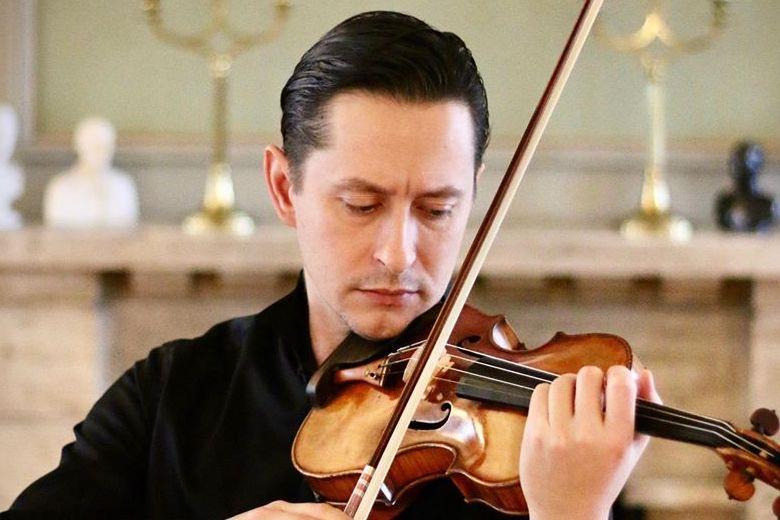
Strings of the City of Birmingham Symphony Orchestra / Eugene Tzikindelean (above)

Schubert arr. Mahler String Quartet no.14 in D minor D810 ‘Der Tod und das Mädchen’ (1824, arr. 1896)
Vivaldi Le quattro Stagioni Op.8 nos. 1-4 (1718-20)
Piazzolla arr. Desyatnikov Cuatro Estaciones Porteñas (1965-9, arr. 1996-8)

Town Hall, Birmingham
Saturday 22 April 2023

Reviewed by Richard Whitehouse

Acoustically transformed following its refurbishment some 15 years ago, a commendably full Town Hall proved to be the ideal venue for this judiciously balanced programme featuring the strings of the City of Birmingham Symphony Orchestra with its leader Eugene Tzikindelean.

Mahler never fully completed his arrangement of Schubert’s Death and the Maiden quartet, but this has enjoyed not a few hearings since its realization by David Matthews with Donald Mitchell four decades ago. Tzikindelean presided over a brisk, incisive opening Allegro (its exposition-repeat not unreasonably omitted), and if the 30-strong ensemble had not quite the tonal depth or dynamic range that Mahler likely envisaged, there was no lack of immediacy – at least until momentum faltered slightly in the later stages of the reprise then into the coda.

No such uncertainty affected the Andante (the only movement elaborated by Mahler), whose variations on Schubert’s earlier song exuded a cumulative intensity up to the theme’s soulful reappearance toward the close. Nor did the Scherzo lack for truculence over its brief yet vital course, assuaged by the trio’s wistful elegance, while the final Presto unfolded as a tarantella as agile as it was malevolent. Tzikindelean kept his players on a tight if never inflexible rein through to a coda that brought this (for the most part) powerful reading to its decisive close.

Tzikindelean having vacated the leader’s chair for centre-stage, the second half consisted of Vivaldi’s The Four Seasons interspersed with Astor Piazzolla’s take on the seasons from the perspective of Buenos Aires. Brought together a quarter-century ago (at the behest of Gidon Kremer for his group Kremerata Baltica) by Leonid Desyatnikov, with numerous references to the Baroque master, the outcome is a provocative amalgam between ‘ancient’ and ‘modern’ which the CBSO strings rendered with alacrity. Among the highlights from the Vivaldi might be mentioned the plaintive eloquence of the Largo from Spring, the coursing impetus of the Presto from Summer, alternation of the robust and poetic in the initial Allegro of Autumn, or that discreetly alluring interplay of legato and pizzicato writing in the Largo from Winter.

Heard in the sequence ‘Summer-Autumn-Winter-Spring’, the tangos by Piazzolla offer any number of anticipations whether melodic or textural. A significant feature of Desyatnikov’s arrangement is the prominence accorded to the leaders from each section which were seized upon gratefully – not least by cellist Eduardo Vassallo, whose Piazzolla recordings with his ensemble El Ultimo Tango are a masterclass in performance from the chamber perspective. While each of the present pieces is more than the sum of its parts, surely the most arresting instance is that towards the close of ‘Spring’ when the harpsichord (ably taken by Masumi Yamamoto) emerges with an allusion to Vivaldi’s opening theme – a coup de théâtre that is seldom less than spellbinding, and duly worked its magic as part of tonight’s performance.

An impressive showing, then, for the CBSO strings and Tzikindelean – who will hopefully be making further appearances both as soloist and director in the coming season. Certainly, the repertoire for string orchestra is one whose exploration should prove well worthwhile.

You can read all about the 2022/23 season and book tickets at the CBSO website. You can read more about Eugene Tzikindelean here, and more about El Ultimo Tango here

In concert – CBSO / Gergely Madaras: Mahler Symphony no.1

Mahler Blumine (1884)
Larcher Symphony no.3 ‘A Line above the Sky’ (2018-19) [CBSO Centenary Commission: UK Premiere]
Mahler Symphony no.1 in D major (1887-88. rev. 1898)

City of Birmingham Symphony Orchestra / Gergely Madaras

Symphony Hall, Birmingham
Thursday 12 January 2023

Reviewed by Richard Whitehouse Pictures below (c) Hannah Fathers

Following on its customary Viennese New Year concert, the City of Birmingham Symphony Orchestra continued 2023 with this coupling of Austrian symphonies – Mahler’s first such effort being juxtaposed with one of the most substantial among the orchestra’s Centenary Commissions.

Chamber and vocal pieces having established his name, Thomas Larcher has since tackled the symphonic genre with a vengeance – his Third Symphony, inspired by the ultimately tragic exploits of mountaineer Tom Ballard, considering notions of the elevated and sublime across two (more or less) continuous movements as articulated by an orchestra awash with untuned percussion plus an arresting ‘keyboard’ section of piano, celesta, cimbalom and accordion. The timbral and textural range was accordingly wide, though the tendency to veer between passages of amorphous pitch and those where an insipid modality too often failed to afford resolution or fulfilment – whether in those abrupt contrasts of the initial movement or more cumulative unfolding of its successor – meant the whole felt less than the sum of its parts.

Not in doubt was the excellence of the performance, the CBSO audibly attuned to the many expressive nuances of Larcher’s writing with Gergely Madaras (above) securing a traversal which endowed the piece with a logic and cohesion as might otherwise have been more apparent than real. Already performed in Brno, Bregenz, Amsterdam and Valladolid, this marks a further intriguing stage in its composer’s symphonic odyssey and certainly asks the right questions even if the answers seem, at least on a first hearing, to be less than convincing.

Much the same was doubtless levelled at Mahler’s ‘Symphonic Poem in Two Parts’ on its Budapest premiere in 1889 and while what had become his First Symphony almost a decade later does away with even a vestigial programme, it remains a difficult piece to make cohere. Madaras succeeded admirably for the most part – adroitly negotiating the first movement’s quirky unfolding from shimmering miasma, via folk-like geniality, to ecstatic arrival; then imbuing the scherzo with an appealing rusticity, though not even such subtle inflections of phrasing could make the trio sound less mundane than it is. As so often, the highlight was a ‘funeral march’ whose gaunt double-bass melody (eloquently rendered by Anthony Alcock) launched a movement whose intermingled irony and pathos was judiciously characterized.

Madaras duly had the measure of an infernal finale whose martial opening stage brought a visceral response from the CBSO (above), its strings heard to enticing effect in the languorous (but not too cloying) melody that follows. The central climax was finely prepared, and if more might have been made of that otherworldly passage where the main motifs are recalled as though through the ether, the approach to the peroration was vividly sustained – standing horns and trombones adding to the impact of the closing pages in their unabashed overkill.

It was astute programming to open with Blumine, salvaged by Mahler from earlier incidental music as second movement in early hearings of this symphony only to be excised thereafter. With trumpeter Jason Lewis heard to enticing effect, it here made for an atmospheric entrée.

You can read all about the 2022/23 season and book tickets at the CBSO website. Click on the artist names for more on conductor Gergely Madaras and composer Thomas Larcher

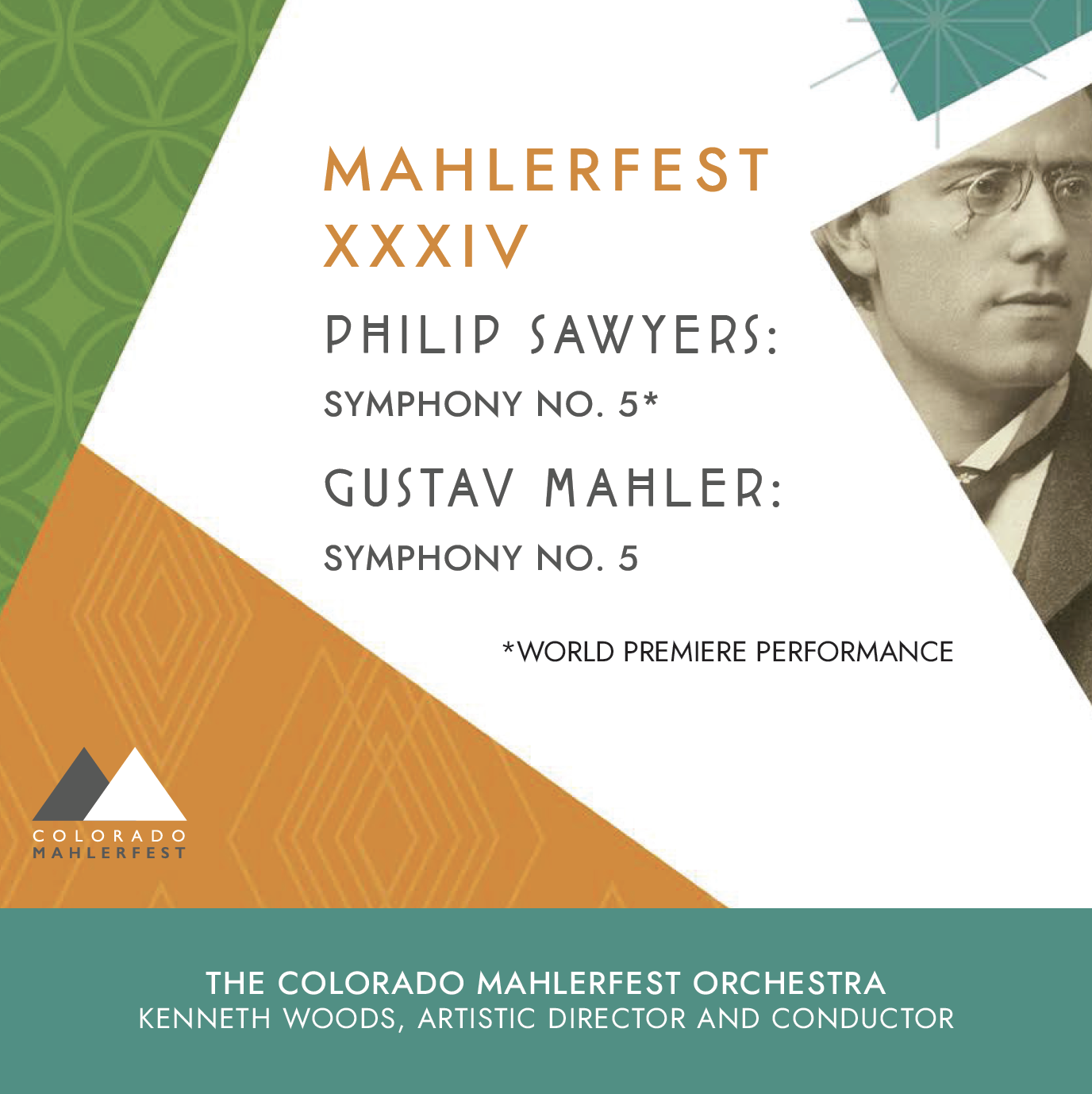
On Record: Colorado MahlerFest Orchestra / Kenneth Woods – MahlerFest XXXIV: Sawyers & Mahler: Fifth Symphonies (Colorado MahlerFest)

Sawyers Symphony no.5 (2021) [World premiere]
Mahler Symphony no.5 in C# minor (1901-02)

Colorado MahlerFest Orchestra / Kenneth Woods

Colorado MahlerFest 195269164287 [two discs, 111’45”]

Recorded Live performances at Macky Auditorium, Boulder, Colorado, 28 August 2021

reviewed by Richard Whitehouse

What’s the story?

Two five-movement Fifths brought the 34th Colorado MahlerFest to an impressive ending. Mahler’s cycle is often seen as ‘end of the line’ for the symphony, yet its further evolution is not hard to discern, and Kenneth Woods is rightly making this a crucial aspect of his tenure.

What’s the music like?

Philip SawyersFifth Symphony pursues a stylistic path comparable to those two before it. Its predecessor ended with an expansive Adagio, and this work continues from such inward seriousness in a Moderato that overrides clear-cut sonata procedures for a gradual unfolding whose thoughtful initial theme takes on greater emotional intensity as it builds to an ominous climax, before closing in a mood of no mean ambivalence. The writing, for an orchestra with fifth horn and harp though no percussion other than timpani, is never less than resourceful.

From here an Allegro increases the tempo to capering and, in its middle stages, wistful effect. The central Lento pursues a sustained course over cumulative paragraphs, the latter climaxing with the work’s most anguished music, before an affecting coda. The ensuing Presto affords greater expressive contrast between impulsive outer sections and a chorale-like trio of musing poise. The final Allegro is the most orthodox movement in its energetic and reflective themes, taking in an intensive development and subtly modified reprise prior to a decisive apotheosis.

Pacing is crucial in Mahler’s symphonies, his Fifth being no exception. The opening Funeral March is ideally judged – its development not too histrionic, then a coda whose eruptive force subsides into numbed uncertainty. Proceeding without pause, its successor steers securely to a climactic yet ill-fated chorale, and if the final return of its initial music lacks vehemence, the pulsating expectancy of the closing bars is tangibly rendered. Woods’ handling of the central Scherzo contrasts a rustically evocative trio with the ländler-infused coyness and contrapuntal contrivance either side, the coda wrapping up this overlong movement with real decisiveness.

The remaining two movements are finely realized, the Adagietto taken at a flowing if flexible pace that enables its inherent rapture to emerge without any risk of indulgence. The deftest of transitions duly prepares for a finale whose elaborate interplay of rondo and sonata elements is replete with a cumulative impetus here carried through to a fervent peroration, the chorale blazing forth during a close in which affirmation and nonchalance are irresistibly combined.

Does it all work?

Almost always. Sawyers’ Fifth symphony is a cohesive and absorbing piece – less arresting in overall content than either of its predecessors, though with an unfailing formal logic and expressive eloquence that are not to be gainsaid. Interesting, moreover, that this Fifth marks something of a rapprochement with ‘classical’ tonality, whereas Mahler’s Fifth sets in motion a fractious discourse which informs almost all this composer’s subsequent symphonic works.

Is it recommended?

Certainly. The playing of the Colorado MahlerFest Orchestra is of a high standard, testifying to the excellence of these musicians in their collective responsiveness to Woods’ technical acumen and interpretive insight. To hear this work so authoritatively realized and within the context of a major new symphonic statement says much for the significance of MahlerFest.

Listen & Buy

Playlist – Semyon Bychkov

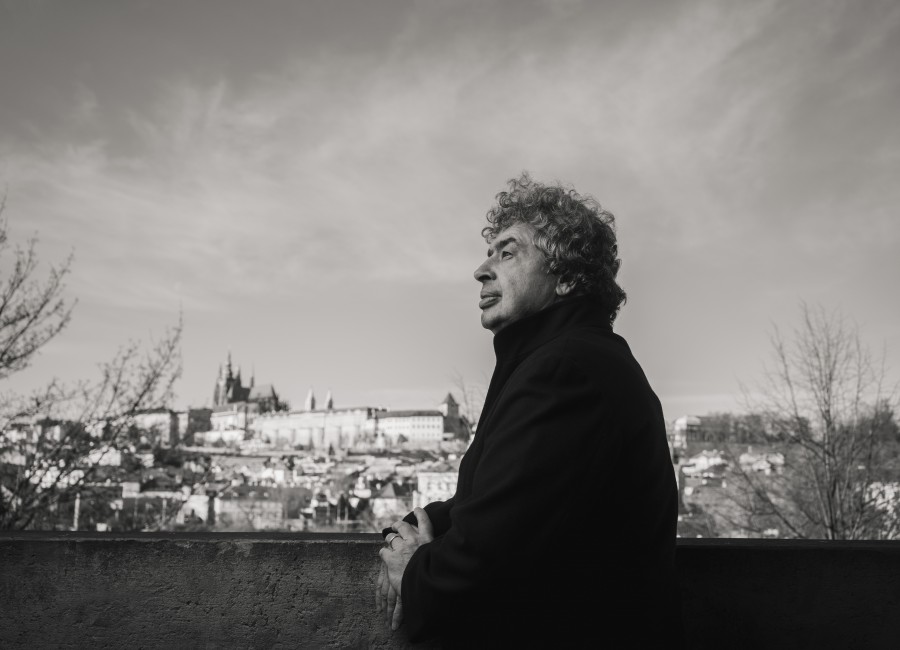
by Ben Hogwood (photo (c) Marco Borggreve)

Semyon Bychkov turns 70 today…and in recognition of one of our finest living conductors, here is a link to watch this most erudite musician conducting the WDR-Sinfonieorchester Köln in William Walton’s First Symphony:

Here too is a playlist gathering together some of his finest recordings, from the early days with Philips to his most recent release, an account of Mahler’s Symphony no.5 with the Czech Philharmonic Orchestra for Pentatone. Along the way we hear excerpts or complete works by Tchaikovsky, Prokofiev, Mendelssohn, Dutilleux and Rachmaninoff. It is a wonderful listen, I’m sure you’ll agree!

From closed doors to a heavenly host: The completion of a Mahler symphony cycle

by John Earls pictures (c) Andy Paradise

Two years ago, in the midst of the pandemic, I wrote a piece for Arcana FM on ‘Mahler’s Eighth and coming out of COVID-19’. I concluded by saying that I wouldn’t get to see a performance of this epic ‘Symphony of a Thousand’ – and complete my personal Mahler live symphony cycle – any time soon, but that when I did it would have a very particular significance.

I certainly didn’t know that the performance would be by the Royal Philharmonic Orchestra conducted by Vasily Petrenko at the Royal Albert Hall on a Sunday afternoon in late October 2022, a concert that was itself rescheduled due to the pandemic.

And what a performance it was. The Royal Albert Hall could be said to be purpose built for this work, accommodating not just an expanded orchestra (including seven off-stage brass players in the gods) but three choirs, two boys’ choirs, eight soloists and a huge concert organ (the Royal Albert Hall’s was once the largest instrument in the world).

You get the full blast of the organ from the off with the tumultuous opening of Part 1’s Veni Creator Spiritus. It’s quite a ride from there on in, and Petrenko and the RPO handled it superbly all the way through to the powerful finale of Part 2’s setting of the end of Goethe’s Faust. This was not just about the big sections, the delicate moments were deftly done too.

But this work is really all about the singing, and the assembled choirs of the Philharmonia and Bournemouth Symphony Choruses and City of London Choir, as well as the Tiffin Boys’ Choir and Schola Cantorum of the Cardinal Vaughan Memorial School were magnificent.

And it wasn’t just the massed voices, as glorious as they were. The soloists – and let’s name them (above): Sarah Wegener (Magna Peccatrix), Jacquelyn Wagner (Gretchen), Regula Mühlemann (Mater Gloriosa), Jennifer Johnston (Mulier Samaritana), Claudia Huckle (Mary of Egypt), Vincent Wolfsteiner (Doctor Marianus), Benedict Nelson (Pater Ecstaticus) and James Platt (Pater Profundus) – were excellent too.

I made the point in my earlier piece that there is something about the combination of the mass assembled forces performing together and being joined by an audience in an even bigger collective. I think the standing ovation from the near sell-out crowd at the end was testimony to this.

Mahler’s Eighth is definitely one of those pieces that you need to see performed live. I’m so glad that I finally did.

John Earls is Director of Research at Unite the Union and tweets at @john_earls