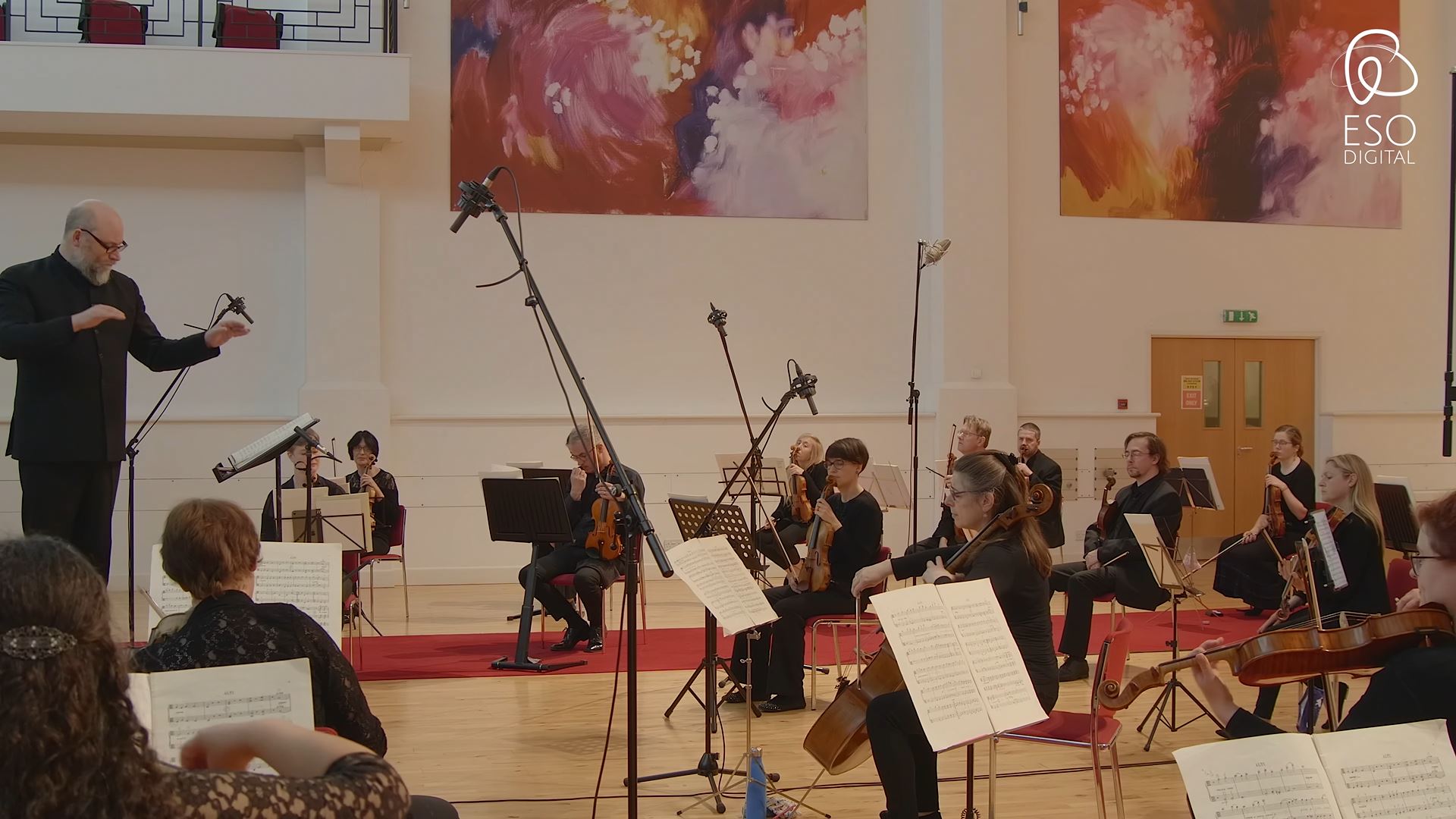
Musicians of the English Symphony Orchestra / Kenneth Woods
Doolittle Woodwings (2018, arr. 2021) Gál Divertimento for Wind Octet, Op. 22 (1924) Dvořák Serenade in D minor, B77 (1878)
Henry Sandon Hall @ Royal Porcelain Works, Worcester Saturday 14 October 2023 (4pm)
Reviewed by Richard Whitehouse
Entitled Music for Humans, the coming season from the English Symphony Orchestra promises a wide array of pieces such as focus on what can be achieved through the art of communication and, conversely, what can result when that communication breaks down. This afternoon’s concert enabled the ESO woodwind (along with some of its brass and a couple of its strings) to come into its own with a varied programme as featured music from a regular ESO collaborator, one whom the orchestra has often championed and one who ranks among the greatest of any era.
It may have originated as a wind quintet, but Woodwings by Emily Doolittle (from Halifax, Nova Scotia and now based in Glasgow) proved no less effective when recast for 10-strong wind ensemble (with cello and double-bass) – songs and calls of nine Canadian birds heard over five characterful movements. These range from the playfully assertive Bobolink, via the inwardly plaintive Hermit Thrush and the quizzically engaging Winter Wren, to the cumulatively arresting Snow Goose then a Night Owls finale whose freeform evolution makes for an intriguing and enticing pay-off. First played by the ESO in Kidderminster just over two years ago, it once again provided an appealing concert-opener and certainly bodes well for the 2024-25 season, when Doolittle becomes the ESO’s Composer-in-Association.
The success of his Divertimento was a notable marker for the burgeoning career which Hans Gál enjoyed during the earlier inter-war period, and it remains among the most personable of his chamber works. ‘Intrata’ affords a keen indication of what is to come with its juxtaposing of the martial, hilarious and confiding, proceeded by the capricious exchanges of Pagliazza (inspired by the eponymous tower in Florence?) then the wistful interplay of Cavatina with Gál’s handling of wind sonority at its most beguiling. The mood turns towards the whimsical in the by no means genteel humour of Intermezzo grazioso, before the piece is rounded off with those varied character-portrayals of Pifferari – its title alluding to a group of itinerant musicians playing upon a variety of pipes, and thereby bringing matters to a diverting close.
Although less often performed than its earlier counterpart for strings, Dvořák’s Serenade for Winds (plus cello and double-bass) is arguably more indicative of where his genius lay. The martial theme of its opening Moderato is leavened by a ruminative poise that comes into its own with the minuet-like successor, its felicitous contours duly finding contrast through the animated gaiety of its Presto trio-section. The ensuing Andante is undoubtedly this work’s emotional heart – its eloquence redolent of Mozart in its understatement but also intimation of more ambivalent emotion in the ominous central stage or bittersweet fatalism at its close. From here the final Allegro steers an impulsive but also lilting course through to a climactic restatement of the march theme, then on to a coda that ends the work in exhilarating fashion.
In this judiciously balanced selection, ESO woodwind was heard at its most stylish in music whose appeal belies its technical challenges for individuals and ensemble alike. Next month the orchestra heads to Malvern for an imposing double-bill of Tchaikovsky and Shostakovich.
Just a decade after he became conductor of the English Symphony Orchestra, Kenneth Woods looks back on his varied career in the US and UK, then considers what might be coming next.
interview by Richard Whitehouse
Autumn customarily sees the start of a new concert season for UK orchestras – except when, of course, the requisite financial support is not forthcoming. That could easily have been the case for the English Symphony Orchestra were it not for its ambitious schedule, as detailed in the document Music for Humans, which reflects the convictions and the vision of several persons who work for and as part of this ensemble – notably its chief executive officer Seb Lovell-Huckle and, above all, its principal conductor and artistic director Kenneth Woods.
With his extensive discography and frequent appearances online or on radio, Woods is not exactly a ‘best kept secret’ among British or – given he hails from the USA – British-based musicians, but his contribution to British musical life during the past two decades is a very substantial one and worth reflecting on for any consideration of music-making in the UK during that period. Speaking to him recently in Worcester, where the ESO has its HQ and gives many of its concerts, brought some of these achievements into closer perspective.
A native of Madison (capital of the state of Wisconsin and which, situated adjacent to five lakes with various historic landmarks including several buildings designed by Frank Lloyd Wright, surely ranks among the most visually striking cities of America’s upper mid-west), Woods did his early academic training here and at Indiana University before doctoral studies at the University of Cincinnati. Here he studied conducting at the College-Conservatory of Music and assisted Jesús López Cobos, music director of the Cincinnati Symphony Orchestra.
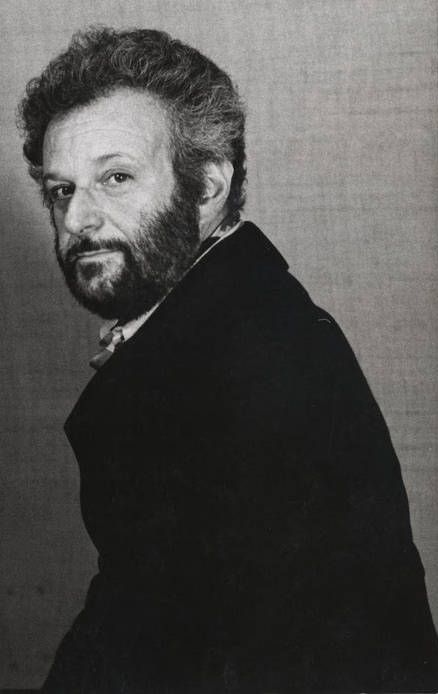
Subsequent mentors included Leonard Slatkin, David Zinman and Jorma Panula, but the most decisive influence was Gerhard Samuel (above) who, in 21 seasons with the Cincinnati Philharmonia, programmed a wide range of unfamiliar and contemporary works. Those who were present are unlikely to forget their London visit in 1989 featuring the UK premiere of the Symphony by Hans Rott, while his later recordings include Larry Austin’s realization of Ives’s Universe Symphony and the entertaining ‘Symphony of 1825’ allegedly by Schubert but now known to be a publisher’s concoction – on both of which, Woods features in the cello section. Also a composer, with a distinctly though never inflexibly contemporary idiom, Samuel remains a totemic musical figure whose undoubted significance Woods continues to acknowledge.
‘‘Working with Gerhard was important not just in terms of honing my conducting technique, but also in helping me to understand that the responsibility of a conductor give audiences a chance to hear works from outside the canon, whether new works or lost works of the past. His long experience of bringing to life pieces such as Hans Rott’s Symphony and Mahler’s orchestration of Beethoven’s Ninth showed me the positive impact a conductor can make simply by giving an unknown work a chance to be heard rather than simply written about.”
The latter was a challenge Woods took on with directorships of the Grande Ronde Symphony and Oregon East Symphony orchestras at the end of the last century then into the new one. During the 2000’s he also maintained an active collaboration as Principal Guest Conductor with the Rose City Chamber Orchestra in Portland. Guest engagements included the BBC National Orchestra of Wales, Northern Sinfonia and the State of Mexico Symphony (a 2004 account of the first movement from Prokofiev’s Fifth Symphony can be heard on YouTube below). He continued (and continues) to appear as a cellist, notably as part of the string trio Ensemble Epomeo with whom he worked widely in the decade from 2008 and made several recordings.
‘‘Playing with Epomeo was a great opportunity to explore a repertoire which is much more extensive than often imagined, and to extend that repertoire through timely revivals and new commissions. It also enabled us to approach the issue of music education a slightly different way, the Auricolae album bringing new music to younger listeners via the retelling of often familiar stories and commissioning composers whose music they’ll more than likely enjoy when they’ve heard it. Any regret at disbanding was tempered by the knowledge of what we achieved over that decade, and what we all learned from that intensity of collaboration with one another. I’d hope we can be proud of what we’ve contributed to the string trio medium’’.
Having relocated to the UK in the mid-2000s and pursued a varied freelance career, Woods’s major break came when he was appointed principal guest conductor of the Orchestra of the Swan in 2009. The following four years brought several notable projects, most significantly a first recorded cycle of the symphonies by Hans Gál. Although he lived out his long life as a respected pedagogue in Edinburgh, Gál never regained the eminence he enjoyed in Germany and Austria prior to the Third Reich. Both as cellist and conductor, Woods has done as much as any musician to bring about fuller reassessment of a composer who not merely continued the Austro-German lineage but took this in often unexpected and intriguing directions. Even the cycle of symphonies had come about through an unlikely succession of circumstances.
‘‘Having conducted the first recordings of Gál’s orchestral music [Violin Concerto, Violin Concertino and Triptych for Orchestra] with the Northern Sinfonia, our producer Simon Fox-Gál [grandson of the composer] and I were excited to do the symphonies together. Thomas Zehetmair and the Northern Sinfonia had already recorded the first two for Avie, so Simon thought it would be diplomatic for me to start with the Third and Fourth to avoid any direct competition. It was my dear friend Melanne Mueller [Managing Director of Avie] and her husband Simon Foster [Avie’s co-founder] who suggested before we’d recorded a note that we announce this project as a complete cycle. It was a big risk as we didn’t have funding in place, but things don’t happen in this business unless you decide to make them happen. I was keen from the start to couple each of these symphonies with one by Schumann, as this gave a relevant context for listeners to approach Gál while allowing me to record interpretations of works that I’d often conducted and about which I felt I had something worthwhile to say’’.
The critical and popular reaction to these releases certainly justified the confidence placed in Woods by label and producer. The resulting cycle, part of the Avie label’s extensive coverage of Gál’s output, was later reissued as a standalone double-set but the originals remain of value for underlining the continuity of thinking across centuries between these composers and their aesthetic connections. Was Woods at all surprised that these recordings failed to translate into public performances of the Gál symphonies, or that other conductors failed to take them up?
‘‘More disappointed than surprised. Much unfamiliar music remains so, not through its lack of appeal for players or listeners but because orchestra managers and promoters simply won’t take any risk – preferring to schedule what they know will attract an audience, without any real thought as to expanding a repertoire that has become more restricted in terms of Baroque or Classical music through notions of authenticity, and in contemporary music because of the failure to commission more substantial pieces as might occupy the second half of a concert’’.
It was just such thinking that Woods was able to put into practice with the English Symphony Orchestra. Founded by William Boughton in 1978 as the English String Orchestra and based in Malvern, it enjoyed a successful spell in the concert hall and recording studio – promoting a wide range of music with an emphasis on British music of the early and mid-20th century. Having stood down in 2006, Boughton was replaced by a sadly ailing Vernon Handley – his death two years later leaving the orchestra in a period of uncertainty until 2013, when Woods became director of its Malvern concert series – becoming principal conductor the following year and its artistic director in 2016. From the outset, he was keen to make commissioning and recording of new pieces central to the ESO’s activities. Its first such undertaking was the 2014 violin concerto Wall of Water by Deborah Pritchard, which also saw the orchestra renew its long-term association with the Nimbus label, but Woods was already thinking in terms of a more ambitious strategy which duly resulted in the ESO’s 21st Century Symphony Project.
‘‘Three events led me to conceive of this project. First, early on in my conducting studies, my experience of learning Brahms’s First Symphony when I found myself imagining the amazing feeling those present at the premiere in 1876 must have had in witnessing a seminal addition to the repertoire. Why shouldn’t it be possible to enjoy a similar experience today? Second, performing Philip Sawyers’s Second Symphony with ’the Swan in 2013 when the musicians, listeners and I all experienced something akin to those at the premiere of the Brahms. Third, having commissioned Philip’s Third Symphony when I joined ESO, I realised that it needn’t be a one-off. My new post with the ESO was the catalyst so here we are over a decade later – the project having come through a pandemic and associated lockdowns, with six symphonies commissioned and premiered, and more to follow as we start on this project’s second phase’’.
Indeed, what started out as the commissioning, performing and recording of nine symphonies in as many years has evolved into a process featuring composers new to and already involved with the project. Following on from Sawyers’s Third, it has seen the premieres and recordings of David Matthews’s Ninth, Matthew Taylor’s Fifth, Steve Elcock’s Eighth, Adrian Williams’s First and Robert Saxton’s Scenes from the Epic of Gilgamesh. Six very different works from six very different composers, all confirming the validity of the symphony in the present day.
Alongside this project, Woods revived the ESO’s Composer-in-Association chair – beginning with John McCabe then, after his untimely death in 2015, the post was re-named in McCabe’s memory and has since been occupied by Philip Sawyers (now Composer Laureate), Adrian Williams, David Matthews and Steve Elcock. Again, the exact nature of this role depends on the incumbent but Woods is keen these composers represent who the ESO is and what it does.
‘‘It’s not just a matter of commissioning then premiering their new works, but of having their active involvement at the time of composition and rehearsal; of reviving some of their earlier pieces, and maybe getting their input as to how we might schedule their music in the context of an overall concert. Hopefully it also gives audiences the chance to become more familiar with the composer as a ‘real person’ instead of merely a name in the programme. I feel sure that the quality of what these composers have been writing for us is its own justification’’.
In addition to overseeing the ESO’s educational and social activities (not least the ESO Youth Academy with its extensive schedule of courses at beginner, intermediate or advanced levels, performances by ESO musicians at residential care-homes and ‘relaxed’ concerts of a more informal nature), Woods has a longstanding blog A View from the Podium that tackles issues pertinent to the music-world from a wholly non-partisan angle; unafraid to stir controversy on topics of wider relevance than is often evident from their coverage in the mainstream media.
Since 2018 Woods has been in charge of the Elgar Festival – a two-day series of concerts and recitals with related events held on the weekend nearest to the composer’s birthday (June 2nd), while making full use of the various places and venues associated with Elgar’s home county.
‘‘Given the region in which most of our concerts take place, it made sense to revive the Elgar Festival and perform his music at venues associated with his life and work in the region. It’s also been a welcome opportunity to include music by recent and contemporary composers who come audibly within the Elgar lineage, and I’m aiming with next year’s festival to try a reordering of the conventional concert programme to feature familiar pieces by Elgar next to others that might spring a few surprises, but which I hope the audience will enjoy hearing’’.
It would be remiss not to mention the Colorado MaherFest which Woods took over from long -serving founder Robert Olson in 2016, and whose remit he has successfully expanded while remaining true to the spirit of an event endorsed by the International Gustav Mahler Society.
‘‘Taking on directorship of MahlerFest after Robert was a daunting prospect given how many years he had been at its helm and the performance tradition he’d established during that time. Of course, I have my own convictions as to Mahler interpretation, and our performances have been able to utilize recent developments in scholarship such as the new critical edition of the First Symphony [published by Breitkopf and Härtel] we gave in 2019. Here again, I was keen to expand the context in which this music was performed – both in terms of medium, Mahler having left little else apart from symphonies or songs, and in other composers heard here. We think of programming in terms of celebrating Mahler’s influences such as Beethoven, Wagner and Schumann. Also we explore his artistic and creative ties to contemporaries in a variety of media – whether artists like Klimt and Roller, writers, philosophers or, of course, composers. We’ve performed contemporaries like Robert Kahn and Zemlinsky, and last year there was Alfredo Casella [the First Cello Sonata], who was an active supporter of Mahler’s music in Italy when it was all but unknown there.”
The festival also aims to look forward. “Finally, we try hard to raise awareness of the music of composers who were influenced by Mahler. This includes modernists such as Schoenberg, Berg and Webern, together with more tonal composers such as Krenek, Schulhoff and Weill. This opens the door to the music of those composers who were either murdered or forced into exile by the Nazis such as Krása, Gál or Ullmann; not to mention such as Korngold, Waxman and Steiner, who founded the art of film scoring as we understand it today. This can only lead to a wider appreciation of Mahler’s legacy and hopefully encourage others to seek out music they would otherwise not have performed or heard, thereby enriching their own experience’’.
A more recent move has been making the final concerts of MahlerFest available on CD or for download, enhancing a discography that makes Woods among the most recorded of present-day conductors. Along with releases for the Avie, Nimbus, Signum, Somm and Toccata labels, plans are well advanced for the ESO’s own label – drawing on a wealth of material recorded at the Wyastone studios in Herefordshire during the pandemic and its aftermath, besides such as the complete symphonies of Sibelius. Nos. 5, 6 and Tapiola are planned as the first release.
There may be lots to be proud of in terms of achievement, but Woods is hardly one to rest on his laurels, not least because the future of those projects here outlined – indeed, even the very future of the ESO is not something that could, or should, be taken for granted. A full schedule of events is now in place until next spring, with much in the pipeline after that as long as the finances are there to make it happen. Given that his negotiating skills are no less adept than his conducting skills, Woods is quietly optimistic that things will come together as intended.
‘‘It’s not always been an easy process in securing funds to make possible what we’ve wanted to commission and perform, but then nobody working in this field in the UK expects to have it easy, so I’m just pleased that we’ve accomplished as much as we have so far. There’s much more that I want to achieve with the ESO, so we’ll have to keep finding ways to make things happen. What I do know is that there are composers who have much to give an audience, and that these listeners are more than willing to give this music a try given the right conditions’’.
Such things are vital, not least at a time when the value of what might reasonably be called the Western Cultural Tradition is being questioned as never before. This being the case, and while accepting that ‘the situation’ is likely to get worse before getting better, can one look forward to a further 10 years of the English Symphony Orchestra with Woods at the helm? ‘‘It might be best to ask me that in 10 years’ time, but I’d hope the answer would be ‘yes’’’.
We asked her for a blend of her current listening and one piece inspired by the Variations album – and I think you’ll agree she has come up with something rather special in the form of Edmund Rubbra’s rare but strikingly original orchestration of Brahms’ Variations on a theme of Handel. Here it is in the only available current recording, conducted by Neeme Järvi:
As to her current listening, Sarah gives us a trio of very fine chamber works from the 19th century, Beethoven and Schubert to be precise, and the music of Hans Gál, finally emerging into the public consciousness – his very fine Cello Concerto:
We end with peerless jazz, the Oscar Peterson Trio and their wonderful Night Train
Our grateful thanks to Sarah – do have a listen on the Spotify link below:
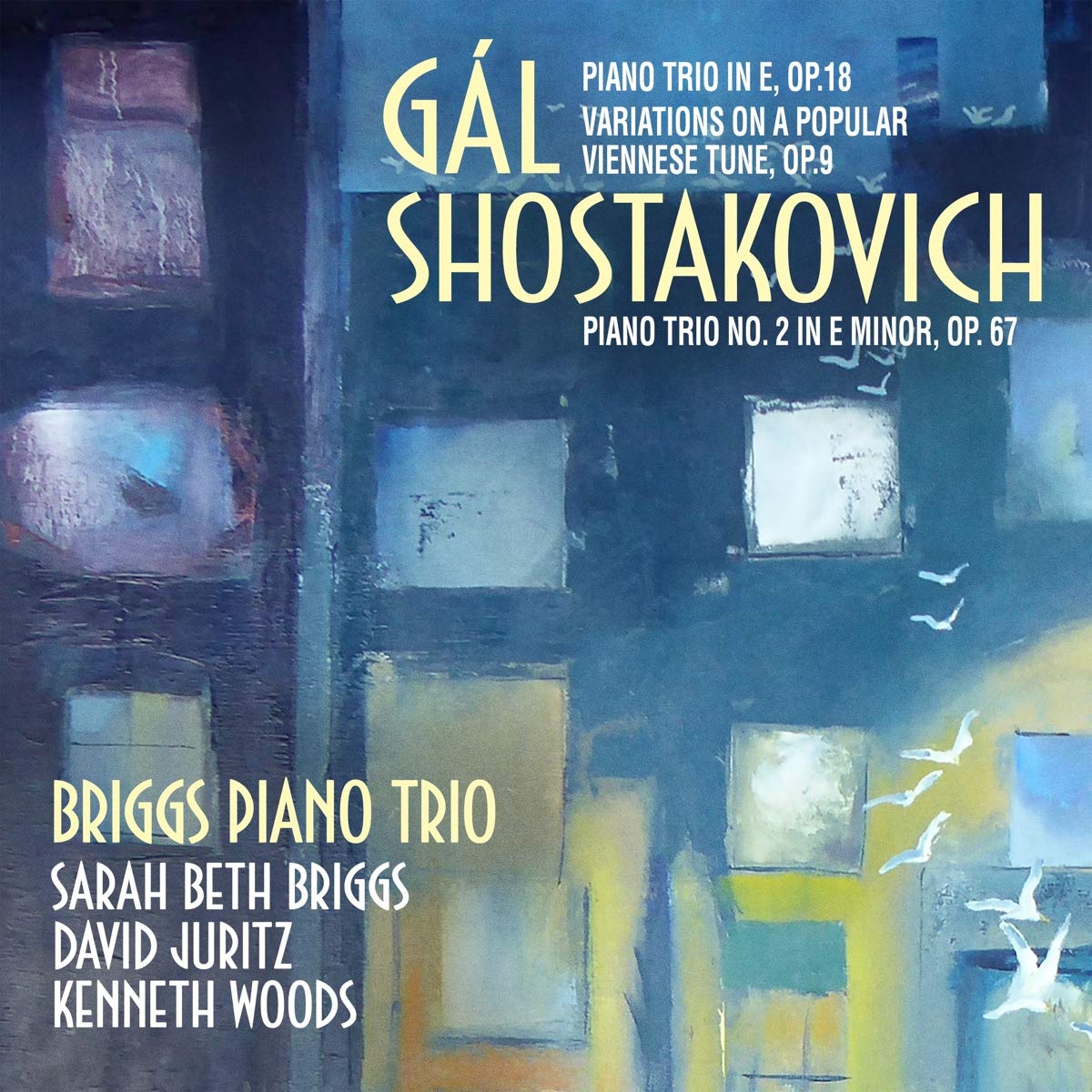
Briggs Piano Trio [David Juritz (violin), Kenneth Woods (cello), Sarah Beth Briggs (piano)]
Gál
Piano Trio in E major Op.18 (1923)
Variations über eine Wiener Heurigenmelodie Op.9 (1914) Shostakovich
Piano Trio no. 2 in E minor Op.67 (1943)
Avie AV2390 [63’05”]
Recorded 11-13 March 2018 at Wyastone Leys, Monmouth
Producer/Engineer Simon Fox
Reviewed by Richard Whitehouse
What’s the story?
The reappraisal of Hans Gál (1890-1987) continues with his music for piano trio, performed by musicians who have been consistent advocates of the Austrian-born Scottish composer.
What’s the music like?
Both of Gal’s contributions emerged relatively early in his career, when he fast establishing a reputation in his native Vienna as composer and teacher. The Piano Trio is typical in terms of the subtle ingenuity Gál brings to this deceptively orthodox structure. Thus, the Tranquillo opening of the first movement alternates with faster material such that its underlying sonata design becomes cumulative in its formal cohesion. There follows a propulsive scherzo, itself contrasted with an insinuating trio, then a finale whose eloquent theme initiates a series of variations which deftly extends the music’s expressive range on the way to a headlong coda.
Lighter in tone, the Variations on a Viennese ‘Heurigen’ Melody itself wrests a surprisingly varied sequence from a ‘street tune’ whose evidently unprintable text is wittily evoked here.
It was almost inevitable, even so, that Gál’s works should be outfaced by the Second Piano Trio of Shostakovich. Inscribed to the memory of the composer’s friend and confidante Ivan Sollertinsky and inspired by reports of atrocities committed during the Nazi invasion, this may also have been influenced by his recent friendship with Mieczysław Weinberg in its drawing on Jewish folk inflections – particularly in a finale whose ‘dance of death’ material creates an inexorable momentum that is powerfully in evidence here. Nor is there any lack of conviction in the first movement’s gradual intensifying of motion, the scherzo’s sardonic gaiety then the Largo’s simmering pathos in this most direct of Shostakovich passacaglias. The work’s closing bars, too, are all of a piece with what before in their fateful resignation.
Does it all work?
Indeed. The Briggs Piano Trio is an excellent ensemble, and as at home with the methodical elaboration of the Gal as it is with the more intuitive unfolding of the Shostakovich. Earlier recordings of the former are outclassed by this new version, while that of the latter can rank among the finest of recent years. It helps that the sound has a combination of spaciousness and immediacy ideal for this difficult medium, with Kenneth Woods‘s own notes providing a succinct though informed overview to help set these pieces within their rightful context.
Is it recommended?
Very much so. If neither Gál work represents his earlier music at its finest (for which turn to his first two string quartets or the Second Symphony) they offer rewards aplenty, while the Shostakovich is a version to reckon with. Further releases by this group are keenly awaited.
Further listening
You can listen to this new release on Spotify:
Further reading
You can read more about the release on the Avie website, while the video below gives a preview of the disc:
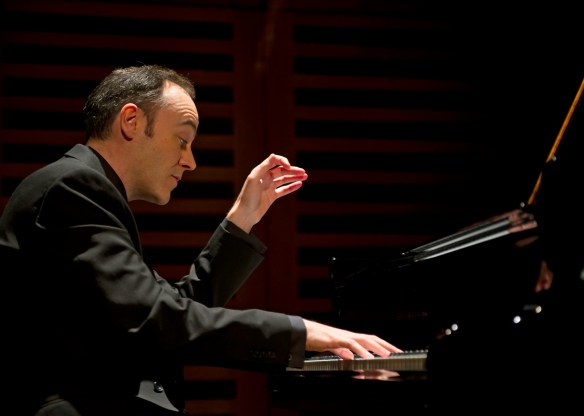
Leon McCawley (piano, above – photo credit Clive Barta)
Haydn Piano Sonata in C minor, HXVI:20 (1771) (1:41 on the broadcast link – 18:08)
Hans Gál Three Preludes, Op 65 (1944) (19:34 – 28:12)
Chopin 2 Nocturnes, Op 37 (1838-9) (29:32-42:07)
Beethoven 32 Variations on an Original Theme in C minor, WoO 80 (1806) (44:07 – 53:49)
Wigmore Hall, London; Monday 5 March 2018
You can listen to the BBC Radio 3 broadcast by clicking here
Written by Ben Hogwood
Leon McCawley is an enterprising pianist who looks to play both the familiar and the unfamiliar, as his intriguing discography for the Somm and Avie labels shows. This concert, carefully planned, distilled this approach into an engrossing hour’s music of darkness and light.
The darkness was present in the works of the program inhabiting minor keys, especially those by Haydn, the first by Chopin, and the towering Variations of Beethoven.
Haydn first (from 1:41 on the broadcast) – one of his many Sonatas for piano that helped revolutionise the instrument’s reach and capacity. This particular example had a first movement (from 1:41, marked Moderato) that was surprisingly reserved and doleful for its composer, as though he had something on his mind.
McCawley moved into an equally serious Andante con moto (from 8:53), but as this settled a more lyrical approach took hold, rather like an aria. Brightening as the movement progressed, its elegance was countered by the finale (marked Allegro, from 13:46), which was detached in its delivery from McCawley, becoming more worked up as the themes were developed before a darker end at 18:08.
The Hans Gál pieces were undoubtedly the curiosity of the program. Gál’s renaissance of recent years has unearthed some very interesting music. A Jewish composer, he had to flee the Nazi regiment in the 1930s for the UK. Tragedy took hold there also, in the form of his elder sister and one of his sons taking their own lives, before the family were able to settle more in Edinburgh, where he worked for Donald Tovey at the university.
Due to the prominence of tonal writing in his music, and the unfashionable stance of this approach at the time, his music was more or less forgotten – until recently, where the conductor Kenneth Woods has revived the four symphonies, Matthew Sharp the music for cello and McCawley the piano music.
This was essentially a taster of freeform pieces, the Three Preludes beginning with something of a whirlwind at 19:34. They descended into a mid-range cluster of notes before the busy-ness returned. The second prelude (22:13) had more private thoughts, and was more romantic, while the third (26:10) was playful and elusive.
McCawley then moved on to thoughtful Chopin, the first of the 2 Nocturnes Op.37 (29:32) darkly shaded and very sombre. It was a nice touch moving from G minor to G major (36:30) for a more carefree, triple time piece, subtly charming.
These served as the ideal lead-up to some tempestuous Beethoven. When the composer is operating in the key of C minor you can usually expect fireworks – the Symphony no.5, the Pathétique piano sonata and the Piano Concerto no.3 are just three examples of the brimstone we hear in this key. The 32 Variations (from 44:07) are close in date to the Fifth, and have similar qualities – though here Beethoven takes a small chord progression cell and works his magic with it.
From the start McCawley powered through some impressive pianistic feats, using a really strong sense of phrasing to give the music space when needed. From 47:01 the music effectively moved into a slow ‘movement’ in C major, but it soon returned with extra vigour to the home key.
This was a brilliant performance, capped by an inspired encore of the same composer’s Bagatelle in C major Op.33/2 (54:47) – McCawley careful to choose an appropriate key. This was enjoyably mischievous, Beethoven playing around with both pianist and listener.
Further listening
You can listen to the music played in this concert on the Spotify playlist below – which includes McCawley’s own recordings of the Haydn and Gál:
McCawley is the only pianist to date who has recorded the complete piano works of Hans Gál, and the album is also on Spotify:




 Leon McCawley (piano, above – photo credit Clive Barta)
 Arcana.fm