This week we learned the very sad news of the death of talented cellist David Watkin, at the age of 60. Watkin had to stop playing cello 11 years ago due to scleroderma, but as this moving tribute from fellow Scottish Chamber Orchestra cellist Su-a Lee shows, he was a much-loved character whose influence continued to be an overwhelmingly positive one.
I had the good fortune to witness David in action for the Scottish Chamber Orchestra, and his charismatic playing – with good humour clear to see – left a lasting mark. I am sure that in addition to the Scottish Chamber Orchestra the members of The Academy of Ancient Music, The King’s Consort and the Orchestre Révolutionnaire Et Romantique – to name just three ensembles Watkin played with – would concur.
Watkin made relatively few commercial recordings, but it is very much a case of quality over quantity. His collection of VivaldiCello Sonatas for Hyperion is proof of that:
Even more deserving of praise is his cycle of BachCello Suites, made for Resonus and carrying remarkable poise and personality, which these two excerpts illustrate:
On Sunday we learned of the sad news that Matthew Best, the British conductor and bass singer, had sadly passed away at the age of 68.
To many collectors, Best will be known for a series of very fine recordings made with two ensembles that he founded, the Corydon Singers and Orchestra, for Hyperion in the 1980s and 1990s. These discs became cornerstones of the label’s choral repertoire. Here is the text of an obituary shared by Matthew’s artist management team at Intermusica:
“It is with deep sadness that we inform you of the death of renowned British conductor and bass, Matthew Best. Matthew passed away today, 11 May 2025, surrounded by his loving family.
Matthew’s long career was defined by his extraordinary versatility earning him a distinguished reputation worldwide. An opera singer for over thirty-five years with over one hundred bass, bass-baritone and baritone roles in his repertoire, he also worked extensively as a choral and orchestral conductor across the UK and Europe, at various stages during his career as a composer, arranger and editor.
Julia Maynard, Director, Vocal & Opera, said:
“Matthew was one of the finest basses of his generation and an intuitive musician and interpreter of many of the major roles in the bass repertoire. He was a warm, funny, utterly engaging artist, teacher, friend, and a much loved parent, grandfather and husband. Our thoughts are with his most treasured family”
As a singer, Matthew was a regular guest artist for all the major UK opera houses, singing extensively the roles of Wotan in the complete Wagner Ring Cycle, The Flying Dutchman, King Mark, Amfortas, Kurwenal, King Heinrich, Scarpia and Jochanaan, and premiering new works by Jonathan Harvey, Julian Anderson and Kaija Saariaho. Matthew’s extensive concert career made his a familiar face across the country and in Europe and the USA, working with many distinguished conductors including Muti, Haitink, Colin Davis, Andrew Davis, Mehta, Nelsons, Salonen, Mackerras, Marriner, Runnicles, Gardiner and Hickox.
As an active composer and arranger, Matthew conducted the premiere of his operetta Alice (based on Lewis Carroll’s Alice in Wonderland) in Cambridge in February 1979, directed by Nicholas Hytner; with further performances as part of the 1979 Aldeburgh Festival, with a guest appearance by Sir Peter Pears. Matthew produced performing editions for a number of works, including of a rare Bruckner manuscript for inclusion in his Bruckner cycle for Hyperion Records.
Matthew was equally well known as a conductor specialising in choral, vocal and orchestral music, in 1973 Matthew founded the Corydon Singers and later, in 1991, Corydon Orchestra and went on to make over thirty highly-regarded recordings for the Hyperion label. His extended conducting career took him to many of the orchestras and festivals of the UK and Europe, where he was regular guest conductor with, amongst many others, the English Chamber Orchestra, London Mozart Players, Northern Sinfonia, City of London Sinfonia and BBC Singers. For the 1998/99 season he was Principal Conductor of the Hanover Band, and in 2017, Matthew became Music Director of the Academy Choir Wimbledon and Academy Baroque Players. In his final performance with the Academy Choir on 8 March 2025, he conducted the London Mozart Players in a performance of Brahms Requiem and Strauss Metamorphosen for Strings.
Since 2015, Matthew had been a highly regarded teacher at the Royal Northern College of Music, shaping the careers of many students, several of whom have gone on to have active professional careers. In April 2025, Matthew was awarded a Fellowship of the Royal Northern College of Music in acknowledgement of his remarkable career, an award he was able to collect in person from Head of Vocal Studies and Opera, Professor Lynne Dawson.
Our thoughts are with Matthew’s wife Roz and family at this incredibly sad time.”
The below link will take you to a Tidal playlist collecting a number of Matthew’s recordings as a singer, but principally those made with the Corydon Singers. My own personal favourites include those selections from albums of Vaughan Williams, Rachmaninov, Beethoven and Bruckner, finishing with a terrific performance of Vaughan Williams’ Dona nobis pacem.
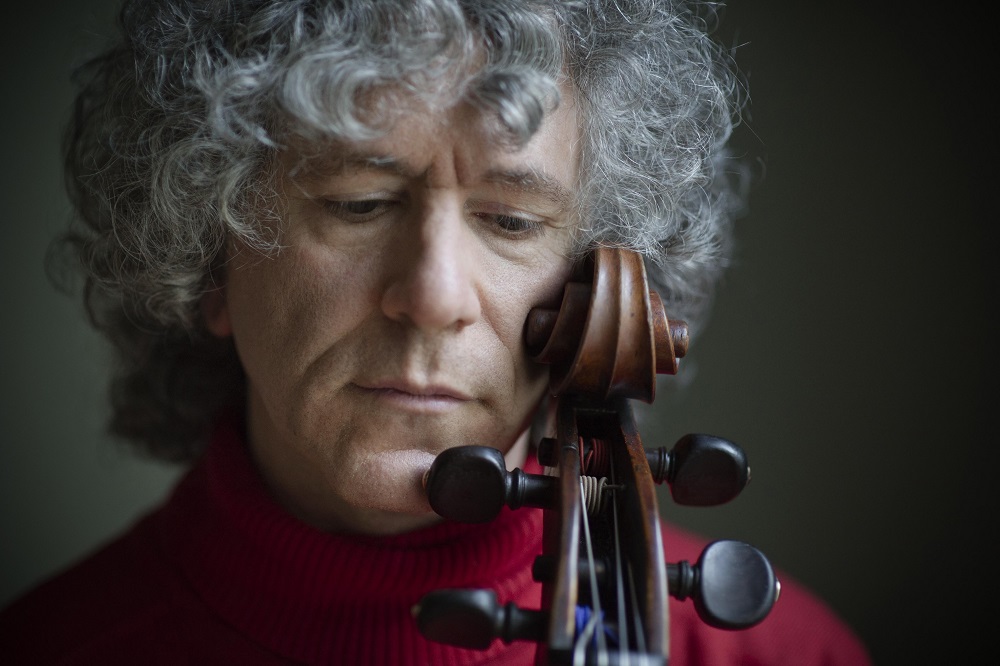
The cellist talks to The cellist talks to Ben Hogwood about his Wigmore Hall residency, celebrating the music of Fauré, and his new Boccherini album Music of the Angels.
For cellist Steven Isserlis, November 2024 is all about two composers. From the first day of the month he is taking up residence at London’s Wigmore Hall for a five-day exploration of the late chamber music of Gabriel Fauré, who died on 4 November 1924. He has given a valuable insight into his thoughts on the composer in an article just published for the Guardian newspaper, but was generous to spend some time answering specific questions about Fauré’s late music for Arcana.
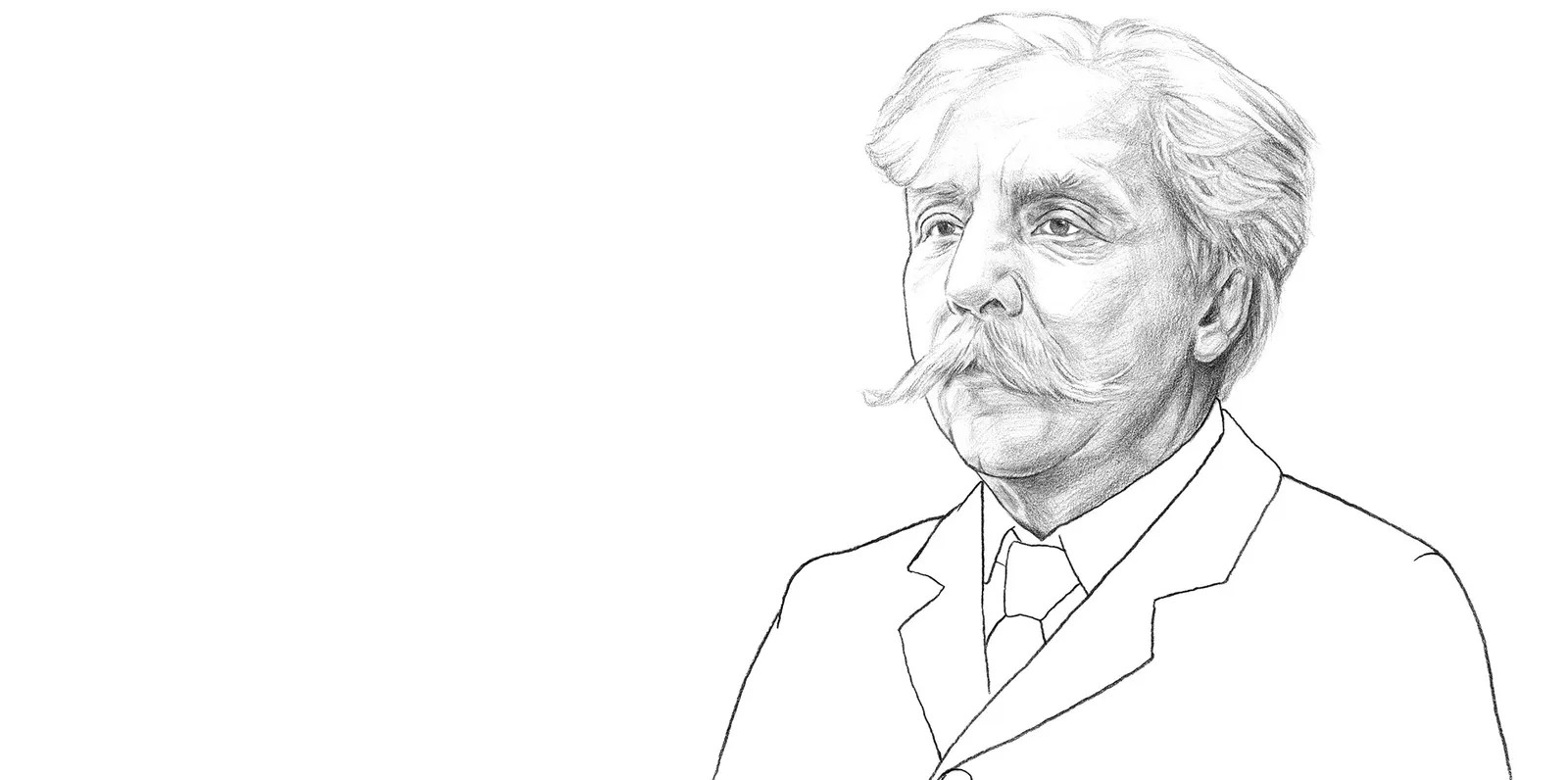
Arcana: The Wigmore Hall concerts put Fauré (above) in context with his contemporaries – how did you plan them? It’s especially good to see the music of Nadia Boulanger, Saint-Saëns and Koechlin included.
Steven: Well, first came the idea of doing the complete (major) chamber music of Fauré for the centenary; then everything else had to be worked out around that. It took some time for the programmes to fall into place – and then I was amazed that the Wigmore said yes to all five of them!
How does Fauré’s writing for the cello develop through his works?
I don’t think of his cello writing as such developing – it’s more the musical content. His first work for cello was the Élégie, which is of course wonderful; but if you compare it to the most similar subsequent piece of his, the slow movement of the second sonata, you see how much more profound his music has become. Which is not to put down the Élégie – any more than saying that Beethoven’s last piano sonata in C minor, op 111, is on a higher level than the Pathétique sonata op 13, also in C minor, is a criticism of the Pathétique.
What are the challenges and ‘do nots’ of performing his music in an ensemble such as a piano quartet or quintet?
We just have to agree on our approach – but we do! I call our team – Joshua Bell, Irène Duval, Blythe Teh Engstroem, myself, Jeremy Denk, Connie Shih – Team Fauré. We’re all in love with his music!
Fauré’s late period has some similarities with that of Brahms. Would you say there is anything in common between their approach, late in life?
I suppose, in that there is a ‘new simplicity’; but I think there’s much more in common between late Fauré and late Beethoven. And not just because both men were profoundly deaf!
There is something very special about Fauré’s melodic writing, and the chromatic harmonies he uses. It must be a joy to play!
It is! So long as one understands the chromatic harmonies – one has to be absolutely sensitive to each change of tonal colour.
Would you say Fauré is a composer where repeated listening brings ever greater rewards?
Well – yes, of course; but I’d say that of any great composer! But perhaps with Fauré’s late works in particular, familiarity with the style is especially helpful.
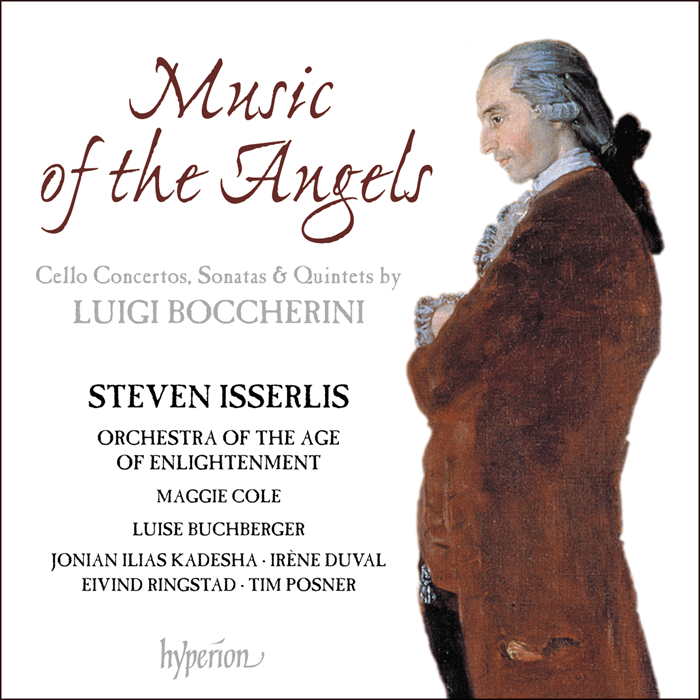
The other composer occupying Steven’s uppermost thoughts in the next month is Luigi Boccherini, with Hyperion releasing Music of the Angels, a generous anthology of the composer’s works for cello with members of the Orchestra of the Age of Enlightenment and harpsichordist Maggie Cole. The album explores the very different forms of Cello Concerto, Cello Sonata and String Quintet – where the composer adds an extra cello to the traditional string quartet line-up. Boccherini is a lesser-known light from the 18th century, and his cause has been close to Steven’s heart right through his recording career.
It’s great to see your Boccherini album. Was it most important for you to present the different types of work – concerto, quintet, sonata – in context?
Thank you! Again, the programme just worked out that way; but yes, I was happy to show different facets of Boccherini’s unique world.
You’ve been playing and recording the music of Boccherini for a good while – what was it that first attracted you to his music?
Well, my teacher Jane Cowan was a great Boccherini fan, which I’m sure influenced me. (She was also a great Fauré fan!) But I’ve always loved his elegance, the otherworldly beauty of his music, his gentle, kind musical soul.
At a guess, I think it might have been the Orchestra of the Age of Enlightenment’s first exposure to Boccherini. Did they enjoy it as much as you?
I think they MIGHT have done some of the symphonies; but I’m not sure. They were certainly lovely to work with – committed, enthusiastic and supportive.
You talk in your notes about the virtuosity Boccherini requires from his soloist – he must have been quite a player. Is it quite intimidating using such a high register of the cello to start with?
Yes! He’s among the most demanding composers for cello, because there’s nowhere one can hide. One can’t just add mounds of vibrato to mask the intonation, for instance. And one has to be able to shape the delicate curves of the music in a way that is naturally graceful; a challenge indeed.
Would you say his music is an ideal ‘next step’ for lovers of Haydn and Mozart?
I think that he’s very different from either Mozart or Haydn – roughly contemporaneous, yes, but another personality entirely. In a way, I think he’s more analogous to Domenico Scarlatti – not because they’re that similar, but because they were both Italians who spent much of their lives in Spain where, relatively cut off from the centre of European musical life, they created their entirely individual compositional worlds.
How does Boccherini’s cello writing contrast with that of Haydn?
Very different! Both can make the cello sing, true; but Haydn uses virtuosity for purposes of excitement, whereas Boccherini uses it much more subtly – usually for lightness and delicacy, frequently evoking birdsong.
With your Boccherini album set for release, are you inclined to record the Fauré trio, quartets and quintets?
Actually, yes; we were originally set to record straight after the festival; but we decided that that would be just too much. So nowthe plan is to record at least the late chamber works (which is the Fauré most in need of advocacy, I feel) next summer in the US. We hope…”
You can book the last remaining tickets for Steven Isserlis and friends’ Fauré residency at the Wigmore Hall website, and explore purchase options for the new Boccherini album Music of the Angels at the Hyperion website. The Wigmore Hall are streaming the Fauré concerts live from their YouTube site
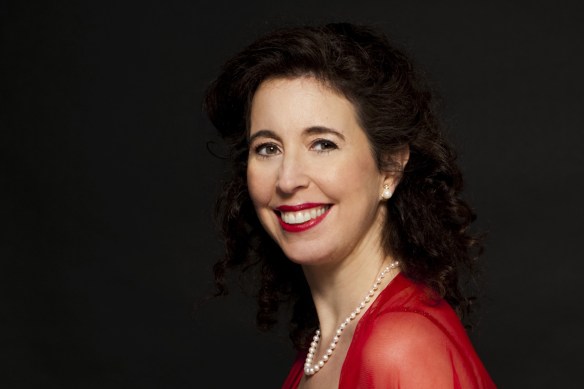
When Arcana spoke with Angela Hewitt, we were just a few weeks into lockdown. Since then, she has been able to complete her recorded cycle of all 32 Beethoven Piano Sonatas for Hyperion, concluding with two of the titans – the Hammerklavier, Op.106, and the final sonata, Op.111, both of which are due for release next year. She gave generously of her time so that we could discuss Beethoven’s works for piano.
For her recordings, Angela wrote all the notes accompanying the sonatas. “I put a lot of time and effort into those”, she says. “I enjoy it, and it’s important for me to know all those things, and there are so many interesting details. I try to make them notes that everyone can read, so that they’re not too technical. With so many notes that you read they can be boring, and you have no idea what people are talking about. I like to situate it within the life of the composer, what’s going on and how the music relates to it.”
The Hyperion cycle was carefully planned, placing a well-known sonata such as the Moonlight alongside others equally deserving, to give them more exposure. “I did that for two reasons”, she says. “One was because I thought it was more interesting than doing the groups together, like the three Op.10s or the three Op.31s and the last three, like everybody else has done, and because when I started the project there were some sonatas I had to learn. In the earlier records I put the ones I had played a lot, in my youth or up until then anyway. That’s partly why it worked out that way, but each record makes for a very interesting recital.”
When recording a new set of sonatas, does the pianist have to some extent ignore the recorded history around the pieces, and go with what they feel themselves musically? “Yes – very, very, very much so!” she says emphatically. “Especially with the famous sonatas but also with the others, there is so much taken for granted ‘because that’s how it goes’. When you look at the score it’s not at all how it goes, and not at all what Beethoven wrote. There are so many examples you could take, but one that comes to mind is the beginning of Op.10/3, with absolutely no crescendo before you get up to the ‘A’. That’s just one tiny thing, you really have to look at the score. I really enjoyed that aspect of it, and I am also determined to learn the Hammerklavier without going to listen to how every Tom, Dick or Harry plays it, because actually I don’t know the piece that well. It will be rather exciting to learn such a piece just looking at the score and learning it from what Beethoven left us.”
She was influenced in this way of thinking by other performances she had seen. “When I heard the early music people like Roger Norrington, and his Beethoven cycle back in 1987-88 at the Queen Elizabeth Hall, I remember all those concerts vividly to this day. It completely changed my way of looking at Beethoven. Up until then of course I enjoyed it, but I didn’t quite get it. You hear a lot of the interpretations, and I was living in France up until 1985, and people used to say ‘Oh, C’est Olympien’ – it’s Olympian when anybody played it, you know, and I just thought it was incredibly boring!”
The orchestral concerts turned Hewitt’s thinking around. “I never really got it, but then I heard Norrington and John Eliot Gardiner do it and I thought ‘Wow, that’s what it’s about!’, with the excitement in it and not dragging those slow tempos. It was just an eyeopener and I remember going home after those concerts, going to the Beethoven sonatas that I already played, and applying that and thinking, ‘Now I realise what I have to do here. Not just with Beethoven but Mozart as well, but Beethoven especially. That was a huge stimulus to me and one where I took the best of what I heard and applied it to how I felt. It really gave me a different way of looking at them.”
I share my own experiences of ‘getting’ a composer, which can often begin with a quest to try and understand the music, waiting for the penny to drop. “I also think it’s very important when you approach Beethoven to go from Baroque training rather than when you go back to him from being a Romantic pianist specialising in Chopin, Liszt or Rachmaninov. That’s totally the wrong direction. When you look at his music as coming out of the Baroque and early Classical it completely makes sense. You have all the training in counterpoint and harmony, and his own love of Bach, having played The Well Tempered Clavier. When you look at his music horizontally like that and clean it up, you pay attention to articulation and get the fingering to match that. Beethoven was the first to use the pedal, and use it to great effect, but not just to apply it systematically. If you get that right it really makes a big difference.”
We agree about the importance of silence in Beethoven’s music, too. “You hear that in Op.7, in that slow movement – that’s one of the best examples of how expressive a silence could be. My music teacher said he was very good at that, and used to circle the rests on the score as expressive, you know? That’s something that is very hard to teach, because either a student feels it or they don’t, really. You can fill that silence with expression but it’s not an easy thing to do unless you feel it. Beethoven was a master of that, and yes, that Op.7 is a beautiful example.”
She notes the physical demands of playing Beethoven’s music. “After Bach I find him the most demanding of composers. People might say that Beethoven wrote stuff that is a lot more technically demanding than Bach, but in Bach you cannot cheat and it demands so much musical intelligence. You have to put everything in there yourself, you know. Bach is the hardest to bring off really well I think, but the problem with Beethoven is that the more you give to it the more you get back, the more you see what’s there and the more difficult it becomes, in a way! It’s quite easy to bash your way through the Pathétique sonata, but if you really want to play it well then that takes an incredible amount of work.”
Hewitt often pairs the two composers in concert. “Often, I will give Bach / Beethoven recitals, with a substantial Bach partita or suite in each half along with a Beethoven sonata. Those are always incredibly exhausting and demanding programmes, probably much more than people realise. I worked hard at the Beethoven Waldstein sonata and came to it quite late, because when I was young, I couldn’t stand everybody banging away at it, it just sounded so dreadful! When I got to it just a few years ago I could see what was in it and really enjoyed playing it. I don’t think it’s his greatest sonata but it is a wonderful performance piece when you can bring it off. If you look at every detail in it then it and want to play it well it is very difficult. I do find he is extremely demanding on the interpretative level but on many levels, not just technically to manage the notes which is often hard enough, but to make sense of it and find the right mood and colour.”
Does she get the sense of the enormous amount of Beethoven’s personality is in the music? “Of course. It’s totally different from Bach. Of course Bach’s personality is there, and there is great joy in his sense of the dance which is in every note he wrote. Beethoven really, when you play all the sonatas you realise what a personal document it is, what a personal confession. They tell of his whole life, because they start in his early years and go almost right to the end. What I wanted to say about that too is that the more you open up yourself playing Beethoven, and I almost mean physically when you’re playing, you have to think that you’re opening up your body and letting it in. The more you do that the more you see the incredible immensity of what he was saying, and also I think the diversity. He wrote music of such great tenderness too. We think of Beethoven as being ‘crash bang wallop’ most of the time, which he is at times, and you take something like the Emperor concerto where he is both. You take the piano writing after those opening flourishes, it’s marked dolce – which is gentle – which a lot of people don’t really do. A lot of that concerto is marked pianissimo as well, even in the brilliant movements. He had an immense tenderness, and the opening of the fourth concerto is an obvious example. Sometimes I think that’s lacking in interpretation.”
We share a great love of the three sonatas Op.31. “They are all fantastic, aren’t they? I learnt the Op.31/3 first, and recorded it some time ago, in about 1988. It’s a wonderful piece, the Hunt. I must play that piece again, once I’ve learned the Hammerklavier I will go back and play the ones I haven’t played for a while. Then there is the Tempest, which I left until the year before I recorded it. I adore that piece, it is one of my favourites to perform, and the slow movement is so gorgeous. It’s unique among the sonatas, it is very declamatory, and it speaks in a different way to the others. Who knows about the title, but it does have something very special about it. Then the G major, which I never understood when I was young. I looked at this thing and thought, ‘What the hell is that’, you know?! Then after doing some work now I understand it. A musician friend asked me the other day to learn that slow movement again, so I could play it again. It’s very operatic and very, very difficult to do. It has to be very poised, and you have to be the orchestra too! That’s another thing in Beethoven – that you have to be not just the pianist but a really good conductor and orchestra too, because so much of this music you can hear the orchestra in it. I tell students that in masterclasses, I get them to play and then conduct, to sort out the timing. You have to be a pianist, a conductor, a singer, an orchestral player even!”
Hewitt has also recorded the sonatas for piano and cello, with Daniel Müller-Schott as her partner. “They are fantastic pieces too. The A major, Op.69, I played when I was living in Paris in my early twenties, with chums at the conservatoire. It is the most wonderful piece. I’m making my way through the violin sonatas as well; I’ve done four or five. I want to finish those eventually; I think it’s good for pianists to know those works as well.”
Of the Beethoven works that don’t feature the piano, Hewitt has her favourites. “The symphonies I adore, they are all fantastic. The Second Symphony has always been a favourite. There is some surprising stuff in the songs. I’ve done many of them, in the last year at my festival, and accompanied Anne Sofie von Otter and Anu Komsi. There is some amazing stuff in the songs. I found out the other day when I was writing the booklet notes for my variations disc on Hyperion that there are some 150 folksong arrangements, even Auld Lang Syne! I didn’t realise that.”
Her disc of the Variations was released on Hyperion in September, and she is keen to expand on the pieces. “Everyone talks about the Diabelli Variations, but the Eroica Variations has been one of my big pieces since 1990, when I first played it at the Beethoven festival in San Francisco. I also did the Piano Concerto no.4 with Sir Roger Norrington that year. The Eroica Variations are on the new disc, and there are some of the variations that are very amusing, too. I did the God Save The King and Rule Britannia ones as well, which were a hoot, and I did two Paisiello ones which were easy but charming, pieces that pianists can really work on and improve their way of playing. I also did the beautiful Variations in F major Op.34 which I did as a teenager. It’s great to capture the character of each variation and then to make a whole out of it. It’s a very important work and shouldn’t be put aside as a piece of lesser importance. It’s important to know how to play the variation sets well.”
The C minor variations, from my own concert experience, can be eye-popping too. “They are terrific really, and of course it’s a Baroque theme, with a chaconne rhythm and everything. When Beethoven heard them live, he said, ‘Who wrote that?’, and someone said, ‘You did!’, and he said, ‘What an ass I was in those days’, or something like that! It’s a terrific piece and makes a great impression. What an imagination he had, and what a sense of overall architecture. That is a really important thing when you are playing Beethoven, you need this sense of overall architecture, of where you’re going. It’s not enough just to play the notes well, you have to make a shape out of the whole thing. You see that especially in the later sonatas but also in the early ones. It was an interesting experience for me learning the Op.111 sonata last year. Like the Waldstein sonata it was a piece I had heard a lot in competitions as a kid, and I thought I never wanted to play it. Now of course I have had incredibly moving experiences playing it. I’ve only played it twice live, once as part of my festival in the beautiful church in Perugia. In something like the second movement variations you really have to find an overall shape, and in Op.109 too, which is very difficult to bring off. I found that very hard.”
She learned the shorter Bagatelles much earlier in life, “when I was a kid, at my first recital when I was nine! There is a Rondo in G major too which I used to play, but I haven’t played them for many years. The concertos of course I have played, and the Triple Concerto too. I have conducted nos.2 and 4 from the keyboard, with the Britten Sinfonia, which was wonderful – to get it just exactly how you wanted it. I’d like at some point to do the others like that. If you do have an extraordinary conductor that’s wonderful, but there are some things in the Emperor concerto where you would like some extra elasticity sometimes, and that isn’t really possible unless you’re conducting it yourself.”
Her interpretations usually draw positive reactions. “Orchestras have played those pieces so much that they are so familiar with them, and if you put in something different, really looking at the score and what is there, then you notice a point at which they sit up and think. I think it’s still possible to get incredible excitement out of playing a piece that is so well known from the musicians themselves.”
Away from Beethoven, Hewitt has an unexpected connection with Manfred Mann, who she met while travelling. “I was going up to Helsingborg to play the Goldberg Variations in a festival”, she begins, “so I flew to Copenhagen. I got on the train to Helsingborg and it was the rush hour. I had to run to get on the train and found the first-class compartment, and there was just one seat left. I got on just as they were closing the doors, and shoved myself into the seat and collapsed, you know. I noticed there was a man sitting across from me with this rather eccentric looking hat on, and he looked a bit eccentric. I thought he looked harmless! So, I pulled my laptop out and started typing away, and then at Malmo everybody got off except for a few of us. He stayed on, and he asked if the train was going on. I moved over to the table adjacent to us because there was more room, and I took a phone call. Then, at one point, I can’t remember how we started talking, but his opening line was, ‘Do you always work on your laptop with such good posture?!’”
She laughs. “Well, I used to be a dancer, so we got on to how I play piano, and he said, ‘I play a bit of keyboard’, and then he started asking me questions about fingering, if you’re playing an E flat major scale very quickly what would be your best fingering to jump up and back. So, then I guess I said I was going up to play the Goldberg Variations, and he said he listened to the Art of Fugue all the time and has an LP of it. Then he said, ‘Are you travelling all alone?’ I had to go to a hotel in Helsingborg, but it was close enough so that I didn’t need to walk, and I said, ‘Do you know which direction I should go?’ He said, ‘I’ll take you there’. He couldn’t believe I was travelling all alone with all my luggage. We said goodbye, and then the next day I went out to practice, and when I came back into the hotel, there he was in the hotel lobby! He was handing me a letter, which I read, and then through the letter he put his real name, which is Manfred. Through the letter I realised who he was, and there was an e-mail address, so I wrote to him and said ‘You should have told me! Anyway, I’m going to practice the Goldberg tonight, in a hall, if you’d like to come, I’ll play it for you. He and his friend couldn’t get a ticket as it was sold out, which was why he had written to me. I gave him a private performance of the Goldberg Variations, which blew him away, and at the end he said. ‘I used to think I was a keyboard player!’ He has written to me several times since then.”
Perhaps inevitably, talk turns to the dreadful mishap Hewitt suffered back in February, when her beloved Fazioli piano was dropped during a house move. She appears to have dealt with this incident with the same poise with which she walks out onto the stage at the beginning of her concerts. “As I wrote somewhere, I had three nightmare days where the press of the whole world was after me. it was absolutely incredible – I couldn’t believe it. I put something on Facebook because I had to put something about my plans and made sure I had written it really well so that if it was reused, I didn’t mind if the whole world saw. Then the next day the Guardian was phoning my agency and trying to find out who the firm was. There were only 4-5 people who knew who the moving firm was, and that’s been their whole life – I didn’t want to shame them, because it was a very unfortunate accident. It just ballooned, it was the top story under the Coronavirus – and then CNN called! I was marooned in Italy which was a good thing because it was isolated, so I couldn’t go into a studio. I had no peace for three days; I was completely exhausted! I couldn’t go speaking about it on television though, I didn’t want to say anything else. It was really a lesson in how the media works these days, and how careful you have to be with what gets out there. On the other side however, you could say it was terrific publicity which you couldn’t buy! In the early days I was walking around, and people stopped me and said they were so sorry about my piano. The press loves a story, that’s for sure, but I’m still so glad I didn’t give any of those interviews. I think a lot of people would, just to be on CNN – but one has to preserve one’s dignity, you know what I mean!”
You can listen to excerpts from Angela Hewitt’s Beethoven discs on the Hyperion websitehere – and for more information on the pianist herself visit her websitehere
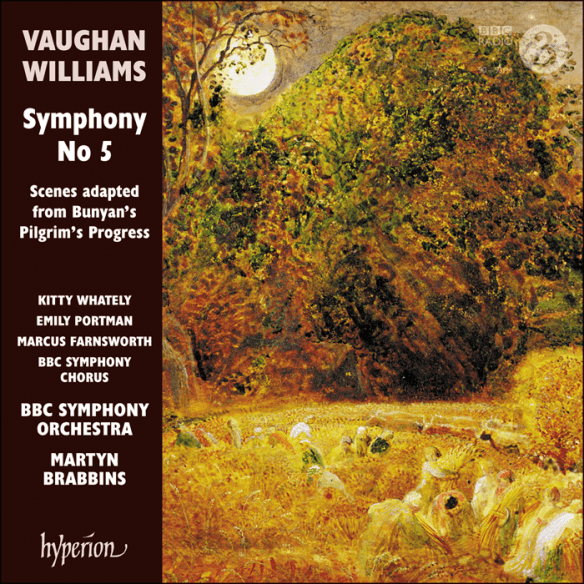
Vaughan Williams
Symphony no.5 in D major (1938-43)
Scenes adapted from Bunyan’s Pilgrim’s Progress (1906)*
Hyperion CDA68325 [66’59”]
English text included Producer Andrew Keener Engineer Simon Eadon
Recorded 2 December 2018* & 4-5 November 2019 (Symphony 5), Watford Colosseum, UK
Reviewed by Richard Whitehouse
What’s the story?
Martyn Brabbins’s traversal of Vaughan Williams symphonies continues with the Fifth, long the most widely regarded of this cycle, alongside music written for a dramatized production which effectively launched the composer’s lifelong obsession with John Bunyan’s ‘allegory’.
What’s the music like?
Premiered in June 1943, the Fifth Symphony poses a challenge or even provocation through that inwardness all too easily regarded as escapism. A ‘less is more’ concept which Brabbins clearly appreciates – not least in a Preludio as builds incrementally, with little overt rapture going into the radiant second theme or a development understatedly accruing energy, toward a reprise whose climactic restatement of the second theme is (purposely?) less arresting than a coda in which any tonal ambiguity feels the more real for happening almost out of earshot. Easy to skate over, the Scherzo emerges with not a little malevolence in the deftness of its cross-rhythms – the chorale-like aspect of its trio questioning rather than affirming, then the return of the opening music exuding a sardonic quality left unresolved by the spectral close.
That the Romanza is the emotional heart of this work only increases a need for its contrast of moods to be (subtly) underlined. Brabbins achieves exactly so through an adroit interplay of the melodic and harmonic components whose cumulative yet unforced evolution accords the central phase of the movement an encroaching anxiety barely pacified at its culmination, before being more wholly transcended by a coda that is luminous in its simplicity and poise. Often thought unsatisfactory as a formal design, the final Passacaglia seems of a piece with what went before; its theme stated simply while purposefully before the variations build to a resolute central climax – after which, those conflicting elements of negation and affirmation are sublimated into a postlude which reaches out as though at once entreaty and benediction.
As a coupling, Scenes adapted from Bunyan’s Pilgrim’s Progress could not be more apposite. Written for a staging at Reigate Priory, the 13 short items unfold well as a continual sequence at the outset of an involvement with Bunyan’s novel that resulted in an evening-length drama 45 years on. Highlights are Emily Portman’s disarming take on the ‘Flower-girl’s song’, ‘The angel’s song’ eloquently rendered by Kitty Whately (her contribution an undoubted highpoint of ENO’s uneven 2012 production), Marcus Farnsworth’s fervour in a setting of Psalm 23 as constitutes the Shepherd’s Song, and lusty response from the BBC Symphony Chorus in The arming of Christian (best known as the hymn To be a Pilgrim) then a rapturous Final scene music which also serves as reminder that VW’s Tallis Fantasia was merely four years hence.
Does it all work?
It does. Brabbins’s Fifth may not be the most fervent or powerful but has the work’s measure as a cohesive and integrated entity. The Pilgrim’s Progress ‘Scenes’ makes for a fascinating comparison with subsequent versions in VW’s decades-long quest for a satisfying realization.
Is it recommended?
Indeed. The sound is on a par with previous instalments in its clarity and realism, and Robert Matthew-Walker’s booklet note expertly clears up any uncertainty over the genesis of VW’s Bunyan-related projects. Those remaining symphonies will hopefully not be long in coming.
For further information on this release, visit the Hyperionwebsite, or theBBC Symphony Orchestra. You can also read Arcana’s interview with the conductor here



 Arcana.fm