On record: BBC Symphony Orchestra / Martyn Brabbins – Vaughan Williams: Symphony no.5 & Scenes adapted from Bunyan’s Pilgrim’s Progress

*Emily Portman (singer); *Kitty Whatley (mezzo-soprano); *Marcus Farnsworth (baritone), *BBC Singers; *BBC Symphony Chorus, BBC Symphony Orchestra / Martyn Brabbins

Vaughan Williams
Symphony no.5 in D major (1938-43)
Scenes adapted from Bunyan’s Pilgrim’s Progress (1906)*

Hyperion CDA68325 [66’59”]
English text included
Producer Andrew Keener
Engineer Simon Eadon

Recorded 2 December 2018* & 4-5 November 2019 (Symphony 5), Watford Colosseum, UK

Reviewed by Richard Whitehouse

What’s the story?

Martyn Brabbins’s traversal of Vaughan Williams symphonies continues with the Fifth, long the most widely regarded of this cycle, alongside music written for a dramatized production which effectively launched the composer’s lifelong obsession with John Bunyan’s ‘allegory’.

What’s the music like?

Premiered in June 1943, the Fifth Symphony poses a challenge or even provocation through that inwardness all too easily regarded as escapism. A ‘less is more’ concept which Brabbins clearly appreciates – not least in a Preludio as builds incrementally, with little overt rapture going into the radiant second theme or a development understatedly accruing energy, toward a reprise whose climactic restatement of the second theme is (purposely?) less arresting than a coda in which any tonal ambiguity feels the more real for happening almost out of earshot. Easy to skate over, the Scherzo emerges with not a little malevolence in the deftness of its cross-rhythms – the chorale-like aspect of its trio questioning rather than affirming, then the return of the opening music exuding a sardonic quality left unresolved by the spectral close.

That the Romanza is the emotional heart of this work only increases a need for its contrast of moods to be (subtly) underlined. Brabbins achieves exactly so through an adroit interplay of the melodic and harmonic components whose cumulative yet unforced evolution accords the central phase of the movement an encroaching anxiety barely pacified at its culmination, before being more wholly transcended by a coda that is luminous in its simplicity and poise. Often thought unsatisfactory as a formal design, the final Passacaglia seems of a piece with what went before; its theme stated simply while purposefully before the variations build to a resolute central climax – after which, those conflicting elements of negation and affirmation are sublimated into a postlude which reaches out as though at once entreaty and benediction.

As a coupling, Scenes adapted from Bunyan’s Pilgrim’s Progress could not be more apposite. Written for a staging at Reigate Priory, the 13 short items unfold well as a continual sequence at the outset of an involvement with Bunyan’s novel that resulted in an evening-length drama 45 years on. Highlights are Emily Portman’s disarming take on the ‘Flower-girl’s song’, ‘The angel’s song’ eloquently rendered by Kitty Whately (her contribution an undoubted highpoint of ENO’s uneven 2012 production), Marcus Farnsworth’s fervour in a setting of Psalm 23 as constitutes the Shepherd’s Song, and lusty response from the BBC Symphony Chorus in The arming of Christian (best known as the hymn To be a Pilgrim) then a rapturous Final scene music which also serves as reminder that VW’s Tallis Fantasia was merely four years hence.

Does it all work?

It does. Brabbins’s Fifth may not be the most fervent or powerful but has the work’s measure as a cohesive and integrated entity. The Pilgrim’s Progress ‘Scenes’ makes for a fascinating comparison with subsequent versions in VW’s decades-long quest for a satisfying realization.

Is it recommended?

Indeed. The sound is on a par with previous instalments in its clarity and realism, and Robert Matthew-Walker’s booklet note expertly clears up any uncertainty over the genesis of VW’s Bunyan-related projects. Those remaining symphonies will hopefully not be long in coming.

For further information on this release, visit the Hyperion website, or the BBC Symphony Orchestra. You can also read Arcana’s interview with the conductor here

Talking Heads: Beethoven through the eyes of Susan Tomes

interview by Ben Hogwood

As part of our celebrations of the 250th anniversary of Beethoven’s birth in 2020, Arcana is talking to leading classical performers to get their perspective on the composer’s music. Pianist and writer Susan Tomes has a rich, four-decade history of Beethoven performance and recording, culminating in a complete set of the Beethoven piano trios made with the Florestan Trio for Hyperion. In this interview she talks of the challenges and rewards in playing the composer’s music – and why he remains the most original of all.

We begin, however, at the start. “I don’t remember the first time I ever played Beethoven’s music,” she says, “but there must have been a number of pieces I learned when I was a child, in Associated Board exams. My music teacher gradually introduced me to the easier sonatas and pieces, so I don’t have a moment where I remember first encountering Beethoven. It has always been an important thread, as it is for all pianists.”

Was there a specific line in the sand with the piano trios? “Not as such, but Britain has always been a great nation of sight readers, and that has always made it possible to read through things when you get to playing chamber music with colleagues. As a teenager, when I attended a Saturday school at the Royal Scottish Academy of Music, I started playing chamber music, and we would sight read some of the easier Beethoven piano trios – not that any of them are very easy! Then I was in a number of different chamber music settings such as Prussia Cove, and over the years I think I’ve played all of them there with all kinds of different people. I must have played all these pieces not just with my professional, long standing groups but with different combinations of people. I really have played them a lot, and it’s amazing how every time you work on them with somebody there is a load of stuff to discuss.”

She tells of the many layers in Beethoven’s writing. “It’s difficult to know where to start, because they are very multifaceted pieces of music, and an awful lot of thought went into them on Beethoven’s part. There is always a lot you have to discuss and work through with whoever you’re playing them with. That’s something that is amazing about his music; you never get to the point where you think, “Well, I’ve cracked that, I know how that needs to be performed!” Sometimes you get that with other composers, where you feel like you’ve ‘got the measure’ of it, and you know how it needs to be put across so the audience can understand it. With Beethoven it’s not like that, it’s like a very deep well you are always having to look into, and every group of three people who play it will have slightly different ingredients to bring to it. It’s always a big task, even if you know them, a huge mountain that you have to climb all over again. I do know how to play the notes, and I know how I feel about lots of things with the pieces, but if you’ve got three very good musicians, each with their own kind of hinterland of musical experience, a lot of ingredients get mixed in and you start having to look at things from other points of view.”

Tomes is passionate about the effect the composer’s music has had on her own life. “It’s always a very enriching experience playing Beethoven trios. Before we had the Florestan Trio we had the quartet, Domus, and we all found that if the group was going to break in a division of opinion it was either two against two or three against one, or four different views. With a trio it is mysteriously different and feels like a more balanced set, as you have one of each type of instrument, so it feels like a tripod with a more stable structure. Everyone has their responsibility within the piece, which is theirs alone and not shared with anybody else.”

It is a natural presumption that a string quartet might be more balanced, but she is not so sure. “There is something interesting about the dynamic of a trio, where you tend to get three different personalities that work well together, perhaps more so than in a string quartet – if they’re all very different then they have perhaps got problems! A string quartet has to sound so blended to be really convincing; somehow with a piano trio you can even get three soloists that will work well as a piano trio, and that’s sometimes how you hear them. However I did come to feel that three well-known soloists working together briefly on a trio is never going to be as satisfying a result as three people who had really put the work in with one another over a long period of time on this music. I believe you can still get further if you’re really committed to doing it with the same group. It’s a difficult thing to explain but there is something about the mental landscape that you get to share, and the experience of playing it together. It’s a satisfying thing to work at a body of pieces like the Beethoven trios.”


Beethoven’s musical autograph for the Piano Trio in D Major Op.70/1, the ‘Ghost’ – an exhibit in the Morgan Library & Museum, New York

Talk turns to each of the trios individually. “My experience of them is that they are all very different in character”, she says. “There are seven of the major trios – the three of Op.1, Op.11, the two of Op.70, then the Archduke and a few miscellaneous pieces. There are seven big ones, and six that are strictly for violin, cello and piano as the Op.11 piece is for clarinet. It’s very sweet and works better with the clarinet I think.”

Each work has its own identity. “I feel these pieces have very distinct personalities of their own, which is a thing I think Beethoven was particularly good at. If you compare them with the piano trios of Mozart, which are perhaps more similar to one another, I always feel that he posed himself different questions with each of the trios, and set out to answer those questions. Because of that the trios have a different artistic personality, which I think is quite an achievement of Beethoven’s.”

Is Beethoven picking up the baton from Mozart rather than Haydn in his writing for the piano trio? “When Beethoven was in his early twenties and studying with Haydn I think Haydn had not yet been to England, and he hadn’t published what we think of as his great piano trios, so probably it was Mozart if anyone that Beethoven was picking up from. It is as though he made a conscious choice to start with trios because it was a format that was perhaps not Mozart’s greatest success. Mozart had mastered the string quartet and the opera, the symphony and the piano concerto, but the piano trios are possibly not one of his really top genres. Perhaps it was a smart idea of Beethoven’s to set out with a type of music where there was room to show that he had something new to offer. He probably intended them for amateur musicians of a rather posh kind or in aristocratic circles, and was probably writing for experienced musicians more than the public concert hall at that point.”

The Florestan Trio made their Hyperion recordings in the Henry Wood Hall in London, and Tomes gives an honest appraisal of them. “Recording sessions I have always found very arduous”, she says. “At no other point do you have to play pieces of music over and over and over, with absolute maximum attention to detail and energy, so I have always found it a very stressful experience. It became obvious very early on that you really didn’t want to leave mistakes on the finished product. I started off saying to our producer that I felt as long as the atmosphere was right and the spirit was right then I didn’t mind about mistakes. Our producer said, ‘Trust me, you will mind if you hear wrong notes and mistakes on the finished product, you will wish that you had taken the time to correct them!’ So we took that attitude the whole way through, and we did make sure that everything was absolutely right at some point during the day. Hopefully we tried to get as many things right as we could on the first take, but that is never possible and the more people you have involved the less possible it is. Even you yourself might hit a lucky streak, but as sure as eggs is eggs somebody else will not play ball, and then you can’t use it. With three people playing exposed parts it multiplies the things that could go wrong simultaneously.”

The demands are clear. “I can’t say I’m a fan of recording, because I’m concentrating so hard on accuracy and at the same time trying to maintain the right kind of mood and spirit, which is really hard. As it goes through the day you find the accuracy rate tends to go down, and sometimes the atmosphere or spirit of the thing can go up. If that happens at a time when you’re making mistakes and getting tired, then that’s not good either. I think most of our recordings ended up being a patchwork of takes from different parts of the day, put together in such a way that they were accurate and had the right feeling behind them. I would not personally have been involved in the editing process, because I just thought I would get so confused by trying to put things together, and would be listening for those takes where I was good or played everything right! I might be tempted to select those rather than one where one of my colleagues was absolutely brilliant. I would happily leave that mainly to Andrew Keener, who as a producer is a brilliant editor. He knew us well enough to know we wouldn’t be happy with just the accurate takes; that he had to find something which had the right feeling about it as well.”
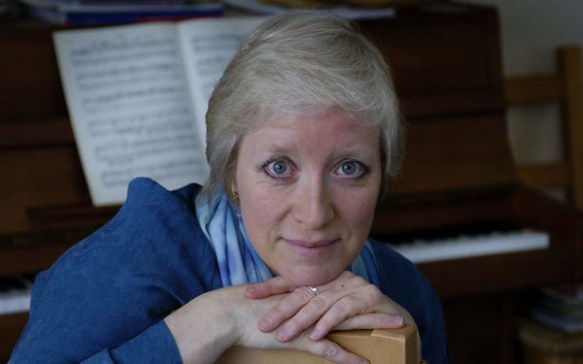
Are there any particular technical challenges about playing Beethoven? “One thing I would like to make clear about the piano trios is that I think the piano parts are as demanding as any of his piano parts, be they solo sonatas, even the concertos. I have played that repertoire as well and honestly think the piano parts in the trios contain as many technical challenges. There is the additional challenge of collaborating with others. Technically they are very challenging, and even from the start. Op.1/2 is extremely difficult for the piano particularly, and it has to sound so effervescent, like a Mozart opera in piano trio form. It’s actually very difficult. At the other end of the spectrum is the Archduke trio, where you need a lot of stamina and a lot of physical strength and energy to play. It keeps going at such a pitch for 40 minutes that you really do need to work up to that.”

As for Beethoven’s originality and invention, Tomes is in no doubt. “Whenever I was working at the trios I always had the feeling that Beethoven could really out-think any composer who came after. Today’s composers know so much about compositional techniques, and modern techniques that he never thought of, but in a way Beethoven has more inventiveness than anyone. Although he was writing in conventional keys, rhythms and notation, the way he constructs from little cells of musical material, and the way he can build enormous structures from small things, and the range of moods and emotions that he can somehow convey; he has such an extraordinary brain and imagination. I always came out feeling that one has to respect Beethoven more than anyone. The power of his thinking is quite amazing really.”

Initially this could be intimidating. “When I was a child I found a lot of Beethoven’s music off-putting almost, I found it over dramatic. You know his typical sudden changes of mood and pace – when I was young I couldn’t understand what he was driving at, I thought it was showing off. It gradually dawned on me, the kind of enormous terrain of feeling and imagination that he was trying to get down on paper. The more I got to know it the more I could see what a giant composer he was, and in a way I think more than anybody else – and I say that as someone whose favourite composer is Mozart – but I think Beethoven is so varied. One can say that even in the six or seven trios, just the number of styles he can write in and the number of things he can suggest to the listener puts him practically in a category of his own.”

You can listen to clips from the Florestan Trio’s recordings of the complete Beethoven Piano Trios at the Hyperion website here For more on Susan Tomes’ writings, head to her own website. Her book Beyond The Notes – which is strongly recommended – includes a chapter on rehearsing Beethoven’s first published trio, which Arcana will be appraising soon.

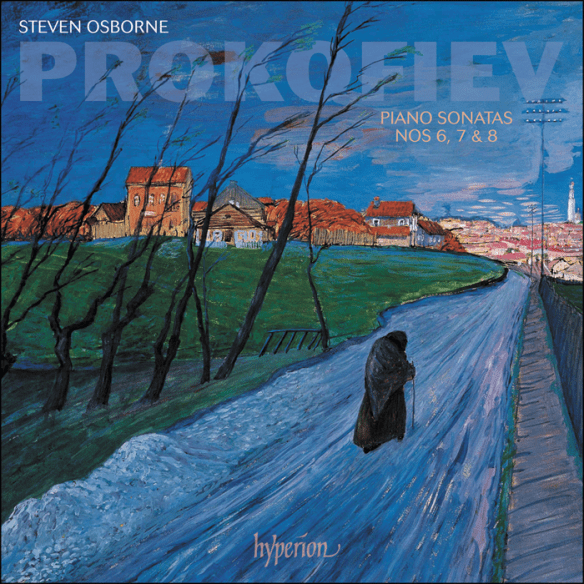
On record – Steven Osborne: Prokofiev: Piano Sonatas nos. 6-8

Steven Osborne (piano)

Prokofiev
Piano Sonatas: no.6 in A minor Op.82 (1940), no.7 in B flat major Op.83 (1942), no.8 in B flat major Op.84 (1944)

Hyperion CDA68298 [74’21”]

Producer Steven Johns
Engineer David Hinitt

Recorded February 2019, St Silas the Martyr, Kentish Town, London

Written by Ben Hogwood

What’s the story?

Steven Osborne has been an advocate of Sergei Prokofiev’s piano music for a number of years now, receiving rave reviews for his performances of the sonatas in particular. This release has therefore been keenly awaited for some time, as Osborne takes on the composer’s so-called ‘war trilogy’.

Prokofiev himself did not label the pieces in this way, but he did work on them simultaneously between 1939 and 1944, as the full horror of the Second World War became apparent. While the composer’s public facing side was preoccupied with writing music of which Stalin could not disapprove, the Piano Sonatas are more private works, the composer left with his real thoughts alone at the piano.

Prokofiev himself gave the premiere of the Sixth Sonata in 1940, after which the following two works were left in the considerable hands of Sviatoslav Richter (1943) and Emil Gilels (1944). Each premiere was given in Moscow.

What’s the music like?

While the Piano Sonata no.7 is found in concert relatively often on account of its virtuosity and dramatic impact, the two around it are lesser spotted companions. They are however two of the composer’s most substantial and meaningful works. The Seventh itself is restless, like a cat on a hot tin roof in the fast outer movements, but pausing for deep and soulful reflection in the second.

The Piano Sonata no.6 has a great depth of feeling. Its first movement presents a caustic but memorable main theme, while the second, a scherzo, is equal parts dry humour and studied, chromatic reflection. A waltz follows, its long and delicate melodies reminding us of Prokofiev as a composer for the stage, before the finale brings forward an extraordinary theme, quick and quiet initially but building to a close of formidable power.

Meanwhile the Piano Sonata no.8, while retaining the key of the seventh, is a very different beast. Prokofiev’s most substantial work for solo piano, it has much longer musical phrases and appears to portray the composer’s innermost thoughts.

Does it all work?

Wholeheartedly. Osborne has the measure of Prokofiev’s music, producing a devastating combination of virtuosity and deep-set feeling.

In the Piano Sonata no.6 there is no doubt of the force of the composer’s emotion, his despair and anger at the unfolding conflict tampered by music of a much softer touch. The abrasive start, major and minor chords clashing, tells you all you need to hear, yet perhaps even more striking are the quieter passages, which Osborne plays with pointed delicacy, the ticking sound in the first movement drawing the listener in, and the ripples of lyricism in the third presenting a compelling scene. Yet there is great resolve here, which comes to the fore in the finale, Osborne driving forward with the main theme but lowering the temperature considerably with a haunting reappearance of the main tune from the first movement.

The Seventh Sonata is terrific, played right on the edge of the cliff but again with keen dramatic instinct. The first movement dances around its central key of B flat major with edgy impatience. Osborne’s dynamic range is hugely impressive, ranging from intimate asides to the clanging percussive passages Prokofiev loves to use. Turning inwards for the slow movement, he goes deep into some of Prokofiev’s most moving music for piano, the lilting contour of the left hand at the start building to a powerful apex in the middle. The third movement Toccata is gone in a flash, driving incessantly forward, grimly determined as though looking to escape its pursuers but trampling on them by the end!

Despite these impressive achievements Osborne’s Eighth Sonata is the crowning glory of this set. He allows the ruminative first movement plenty of time to air its thoughts, Prokofiev in contemplative mood for an unusually concentrated stretch, before the more abrasive thoughts of the previous sonatas bubble to the surface.

The second movement offers a chance for repose, its relatively gentle demeanour helped by a triple time lilt that Osborne paces attractively. The finale brings renewed energy, a valedictory air around both its first theme and the commanding central section, which the pianist takes by the scruff of the neck, leading to a barnstorming closing page.

Hyperion’s sound is ideal, Osborne placed in excellent digital perspective but with plenty of room for Prokofiev’s very biggest sound. There is a huge dynamic range in this music and thankfully we get the best of all worlds.

Is it recommended?

Absolutely. These sonatas have had some fine recordings over the years, and Osborne’s join those right at the top of the digital list. An outstanding achievement from all involved.

Listen and Buy

You can listen to clips from this disc and purchase a copy at the Hyperion website here

On record: Elizabeth Watts, BBC Symphony Orchestra / Martyn Brabbins – Vaughan Williams: A Pastoral Symphony & Symphony no.4

Elizabeth Watts (soprano)*, David Butt Philip (tenor)**, BBC Symphony Chorus & Orchestra / Martyn Brabbins

Vaughan Williams
A Pastoral Symphony (Symphony no.3)* (1921)
Symphony no.4 in F minor** (1931-4)
Saraband, ‘Helen’ (1913-4)

Hyperion CDA68280 [80’57”]
English text included
Producer Andrew Keener
Engineer Simon Eadon

Recorded 26 & 27 November (Symphonies), 2 December 2018 (Helen), Watford Colosseum, UK

Reviewed by Richard Whitehouse

What’s the story?

Martyn Brabbins and the BBC Symphony Orchestra continue their cycle of the symphonies by Vaughan Williams with the Third and Fourth, two ostensibly very different pieces whose equally equivocal reception at their premieres now seems testament to their expressive reach.

What’s the music like?

No longer the relative rarity it once was, A Pastoral Symphony remains the most elusive of this cycle – its arcadian rapture shot-through with imagery of war and transience.

Brabbins sets a well-nigh ideal tempo for the opening movement, its deceptively passive interplay of landscape and evocation informed by eddying agitation made more explicit in its successor – whose distanced solos for horn and (offstage) trumpet afford concrete recollections of VW’s wartime experience, made the more poignant by being sensed on the edge of consciousness. For all its greater physicality, the third movement is no conventional scherzo in its eliding between moods with an agility finely conveyed here through Brabbins’s judicious pacing – not least that eerily flitting coda which forms an unerring transition to the finale. Its remote outer sections enhanced by Elizabeth Watts‘s yearning vocalise, this unfolds as a necessary culmination; the composer bringing to the fore emotions earlier half-glimpsed on the way to a powerfully wrought climax, leaving in its wake a catharsis more potent for its intangibility.

From here to the seismic eruption of the Fourth Symphony is to set forth on a very different journey, one of absolute expression in combat with force of circumstance. Brabbins keeps a firm yet flexible grip on the initial Allegro, its violent opening balanced by the fugitive calm into which it withdraws. He then finds the right ‘walking’ tempo for the Andante, this sombre if never featureless landscape underpinned by angular harmonic progressions that twice break out in ominous outbursts prior to the flute’s lamenting soliloquy towards its close. Perhaps the Scherzo’s outer sections could have evinced greater sardonic humour, though the overbearing pomposity of its trio is as finely judged as is the pulsating transition into the finale. Brabbins duly brings out its martial swagger and if tension during the earlier stages could be even more acute, the ghostly throwback at its centre yields a wan rapture and how persuasively he draws the thematic elements together in the epilogo fugato for a stretto of mounting tension whose denouement is a return to the work’s fateful opening gesture and a four-letter clinching chord.

As makeweight, Saraband ‘Helen’ proves an enticing discovery. Left unfinished towards the outbreak of the First World War, this setting of lines from Marlowe’s Doctor Faustus may be off-balance in its utilizing tenor and chorus for what surely needed to become a larger entity, though both David Butt Philip and the BBC Symphony Chorus acquit themselves ably, while Brabbins secures playing of real elegance and finesse in orchestral writing that inadvertently yields what emerged as the main theme of Serenade to Music almost a quarter-century later.

Does it all work?

Almost entirely. Those who have acquired the earlier releases in this series (A Sea Symphony and A London Symphony) will be aware of the qualities which Brabbins brings to VW, and so it proves here with what is among the finest recent accounts of the Pastoral. Others have evinced a more visceral response in the Fourth, but there is no lack of impact – allied to a methodical sense of purpose that pays dividends in those densely contrapuntal passages over which the composer laboured before ultimately getting them right.

Is it recommended?

Indeed. Sound has the sense of perspective but also immediacy necessary in this music, with Robert Matthew-Walker once again contributing a detailed and informative note. Hopefully the next instalment, featuring the Fifth (and Sixth?) Symphony, will not be long in coming.

For further information on this release, visit the Hyperion website, or the BBC Symphony Orchestra. You can also read Arcana’s interview with the conductor here

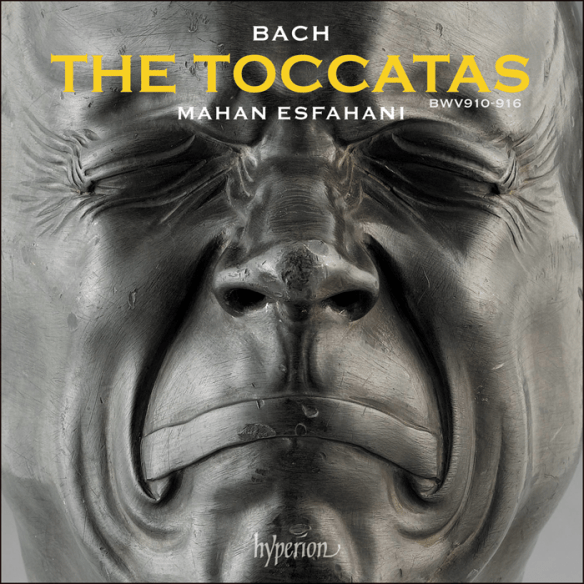
On record – Mahan Esfahani: J.S. Bach – Toccatas (Hyperion)

J.S. Bach
Toccata in F sharp minor BWV910
Toccata in C minor BWV911
Toccata in D major BWV912
Toccata in D minor BWV913
Toccata in E minor BWV914
Toccata in G minor BWV915
Toccata in G major BWV916

Mahan Esfahani (harpsichord)

Hyperion CDA 68244 [76’54”]

Recorded August 2019 at St. John the Baptist, Loughton, Essex

Producer Sébastian Chonion
Engineer David Hinitt

Written by Ben Hogwood

What’s the story?

Mahan Esfahani has been playing a lot of J.S. Bach lately. With a series of the composer’s complete keyboard works ongoing at the Wigmore Hall, and with a well-received account of the Goldberg Variations in the bag from his stint at Deutsche Grammophon, now would seem the ideal time to document his thoughts on some of Bach’s most extrovert and unpredictable works for harpsichord, the Toccatas.

What’s the music like?

Exuberant and even flamboyant. Those are two words you might not readily apply to Bach, certainly in the wrong performance, but this is the sort of recording to remind you that not only was Johann Sebastian a master of the more theoretical processes in music, he could write music of breathtaking originality too.

The Toccatas are the work of a young man looking to experiment and explore, and also to entertain. Esfahani really captures that spirit of freedom from the first to last notes, the Toccata in G major setting us down in a crumpled heap around 76 minutes later.

It helps to have the performer’s accompanying notes on the works, and how difficult it is to arrive at a scholarly direction on how they should be played. What matters as much is the performer’s input, and – as he acknowledges – the producer and engineer, to whom he expresses heartfelt thanks as his own ‘therapists’.

Does it all work?

Emphatically, yes. This feels like just the right stage in Esfahani’s career for him to tackle these works, and his response is stylish and reverent, outgoing too – so that the more overtly display-dominated items are real audience pleasers, and the telling pauses or slow passages are delivered with gravitas and great feeling.

For there is music of great theatre and occasion here. Presented in catalogue order, we begin with the Toccata in F sharp minor BWV910, which begins with a thrilling rush of the right hand, before dance figures take over. A stern central section leads to a rediscovery of its positive stance towards the end.

The Toccata in C minor BWV911 follows, its fugue deliberately paced to start with and then allowed to pick up its natural momentum. Esfahani, so assured in his playing, brings each part in with a firm inevitability as the closing pages approach before signing off emphatically.

The Toccata in D major BWV912 features some really impressive, florid passage work, while the D minor work, BWV813, feels like an answer with its stern, imposing contours. This work really springs forward in Esfahani’s hands around the 3:30 mark, before a superb, authoritative finish, with the pleasure of hearing the keys released at the end.

The instrument’s lower register really sings in the Toccata in E minor BWV914, notable for its bold lines, before an extremely descriptive episode that is so strongly characterised it feels like a scene from a play. When the big rush of counterpoint comes later, Esfahani again exerts close control.

The Toccata in G minor BWV915 starts with a sense of occasion, a cascade in the right hand before a nimble dance and a flourish, before the final Toccata in G major BWV916, a solo concerto in all but name. This has a celebratory air, its descending motif in clumps of chords rather like a peal of bells. Then a slow, thoughtful movement in E minor (the closest relative key of G) provides a reflective episode before a lively return home for an upbeat finale.

Complementing these seven impressive utterances are an ideal harpsichord sound and recording, the church chosen by Hyperion offering just the right amount of depth to the recorded sound, so we hear the clarity of Bach’s writing but also its ambitious scope.

Is it recommended?

Without hesitation. If you tend towards the organ works when listening to Bach played on the keyboard, this is just the disc to show you what you are missing on the harpsichord side of the equation.

Mahan Esfahani plays these works with formidable technique and with passion too, taking every opportunity to bring Bach’s flourishing works to life. What a cover, too!

Buy

For more information on this release and to purchase in multiple file formats, you can visit the Hyperion website