Arcana at the opera: The Bartered Bride @ Garsington Opera

The Bartered Bride (Prodaná nevěsta) (1866)
Comic opera in Three Acts – music by Bedřich Smetana; Libretto by Karel Sabina
Sung in Czech with English surtitles.

Mařenka – Pumeza Matshikiza (soprano), Jeník – Oliver Johnston (tenor), Kecal – David Ireland (bass), Vašek – John Findon (tenor), Ludmila – Yvonne Howard (soprano), Krušina – William Dazeley (baritone), Mícha – John Savournin (bass), Háta – Louise Winter (mezzo-soprano), Ringmaster – Jeffrey Lloyd-Roberts (tenor), Esmeralda – Isabelle Peters (soprano)

Rosie Purdie (director), Kevin Knight (designer), Howard Hudson (lighting), Darren Royston (choreographer)

Circus Troupe, Garsington Opera Chorus, Philharmonia Orchestra / Jac van Steen

Garsington Opera, Wormsley
Friday 30 June 2023

review by Richard Whitehouse Photos by (c) Alice Pennefather

Smetana may have played down its status in the context of his output, but The Bartered Bride remains the foundation of Czech opera and is much the most performed work stemming from that tradition, making this revival of Garsington Opera’s 2019 production the more welcome.

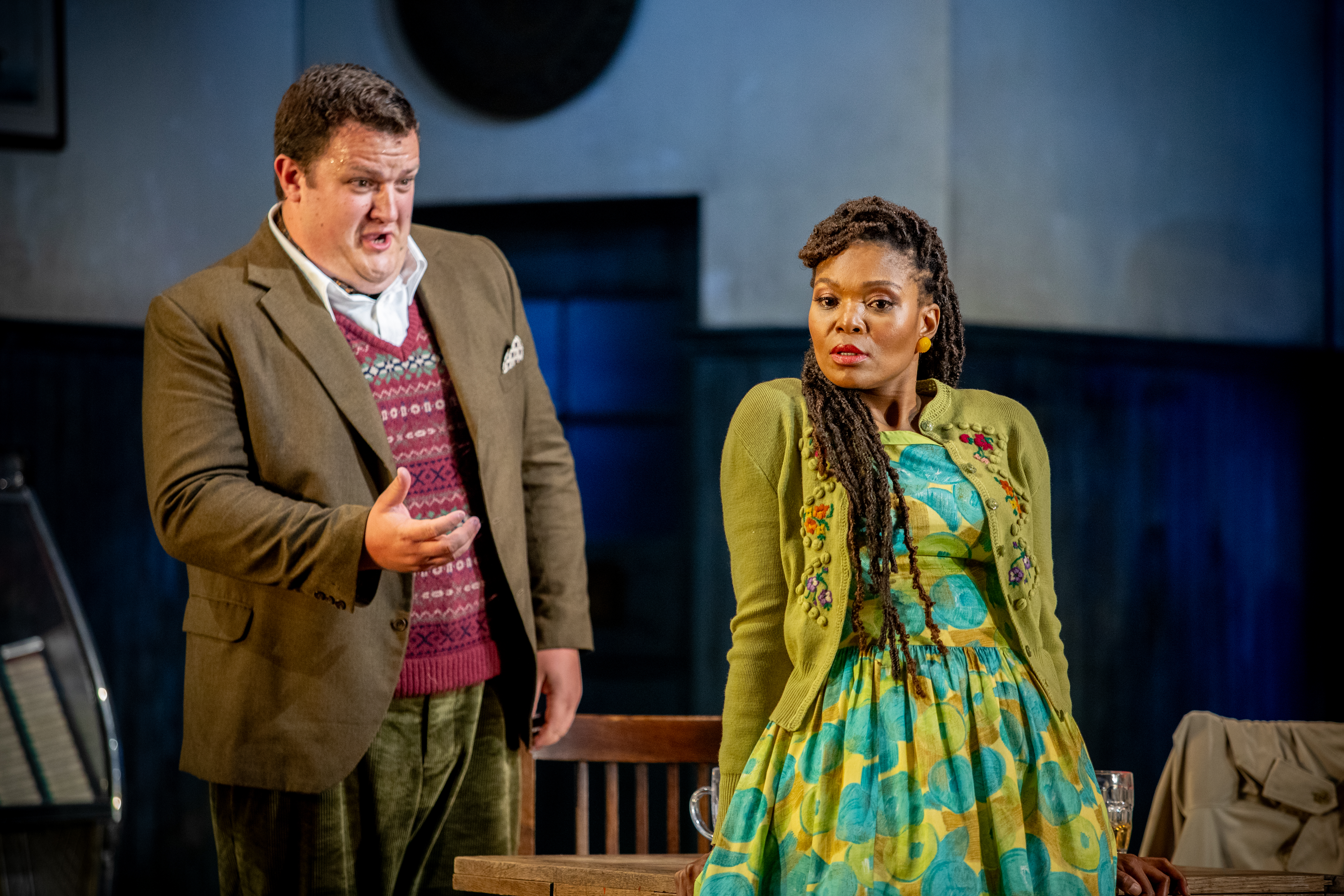
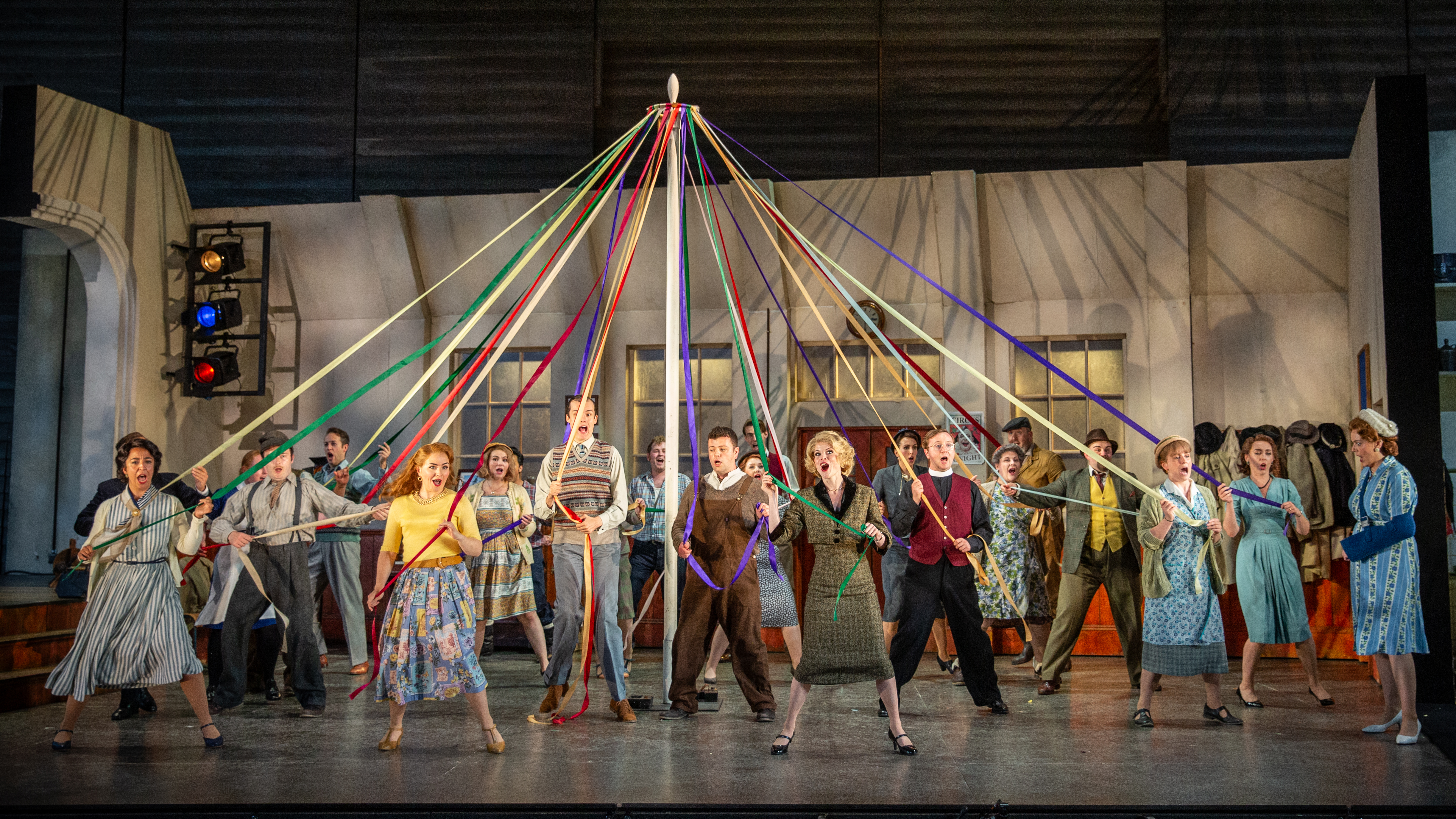
Rosie Purdie’s direction accorded wholly with Paul Curran’s original conception, transferring the scenario to a 1950s Britain where class restrictions and petty-mindedness were as much a given as in Bohemia a century before, yet the socio-political facet seemed as astutely handled as the cultural trappings of that first teenage generation were underlined without detriment to what was played out on stage. Kevin Knight’s designs clarified this setting most effectively, and Howard Hudson’s lighting was vivid without ever being garish. Most especially, Darren Royston’s choreography afforded communal togetherness during the crowd scenes while also ensuring that the circus troupe’s routines at the beginning of the third act came alive without any sense of their being a mere ‘add on’ to this production, and hence of the opera as a whole.

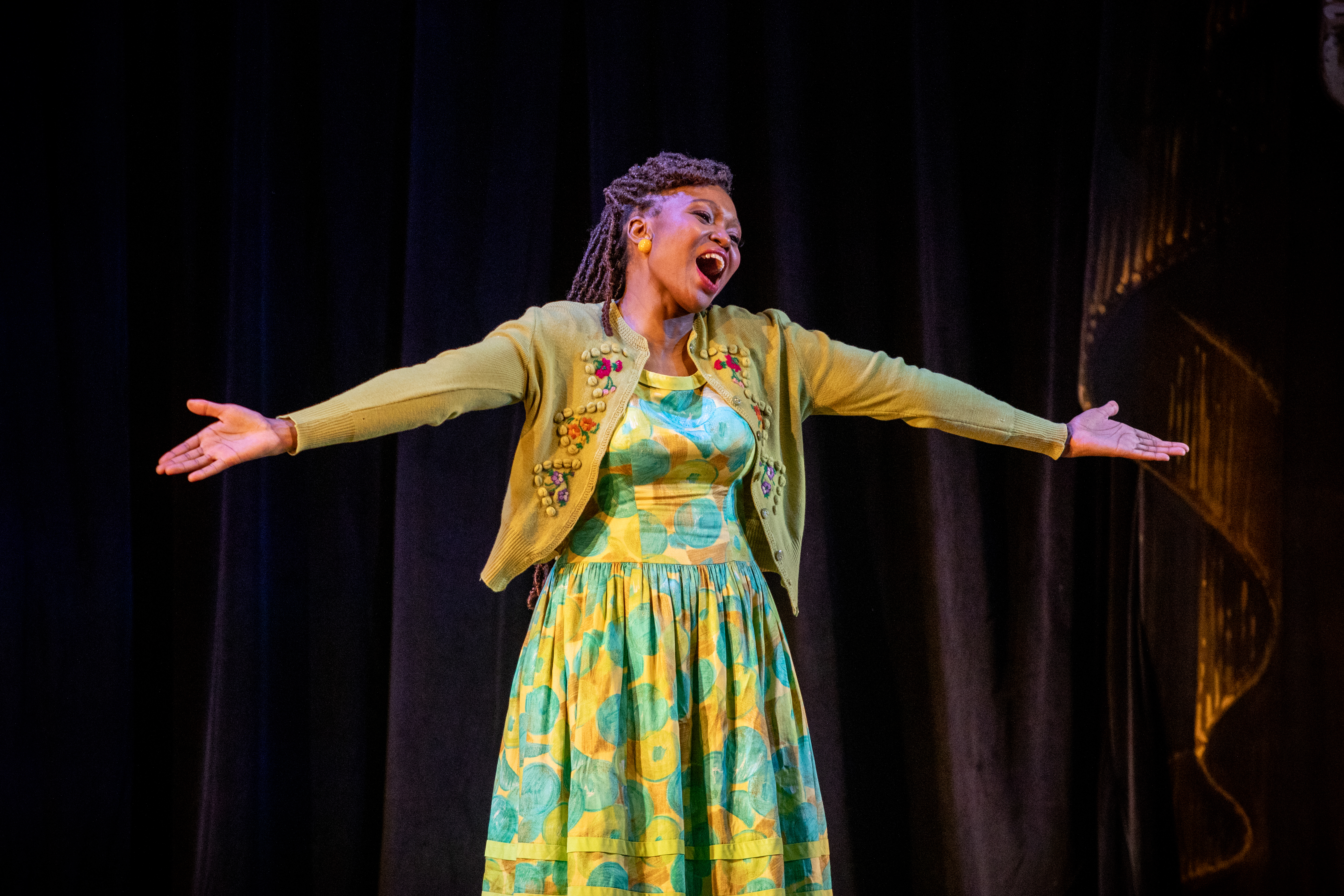
The casting could hardly have been bettered. Among the most wide-ranging role of any 19th-century opera, Mařenka was superbly taken by Pumeza Matshikiza (above) who conveyed pathos and real integrity of character to substantialize those comic capers unfolding on stage in what was an assumption to savour. Not comparable musically, that of Jeník is a notable role that Oliver Johnston rendered with verve and audible eloquence – such that his ostensibly hard-headed decisions could only be the outcome of an essentially sincere as well as selfless motivation.

Notwithstanding that the secondary roles provide relatively little in terms of characterization, John Findon drew a degree of sympathy for the hapless Vašek, William Dazeley and Yvonne Howard were well matched as the warmly uncomprehending Kružina and Lumilla, while the scheming couple of Mícha and Háta saw a suitable response from John Savournin and Louise Winter, abetted in this respect by David Ireland’s roguish Kecal. Jeffrey Lloyd-Roberts was magnetic as the Ringmaster, and Isabelle Peters provided an entrancing cameo as Esmerelda.

The latter characters are part of a Circus Troupe that, fronted by Jennifer Robinson, brought the stage to life just after the dinner interval. Elsewhere, the hard-working Garsington Opera Chorus offered a reminder this is an opera second to none in terms of its choral contribution, while the Philharmonia sounded in its collective element under the assured direction of Jac van Steen, familiar in the UK through his extensive work with the BBC National Orchestra of Wales and Ulster Orchestra. In particular, the overture and set-pieces in each act had the requisite vigour and effervescence as has made them at least as familiar in the concert hall, and it remains a testament both to Smetana’s immersion in and understanding of his native music that only the ‘Furiant’ at the start of the second act derives from a traditional source.

The Bartered Bride has enjoyed numerous UK productions during recent decades – among which, this Garsington revival can rank with the finest in terms of musical immediacy and visual allure. Those not able to see it four years ago should certainly do so this time around.

For information on further performances, visit the Garsington Opera website. Click on the artist names for more information on Pumeza Matshikiza, Oliver Johnston, Jac van Steen, Philharmonia Orchestra and stage director Rosie Purdie

In concert – BBC Philharmonic Orchestra & Jac van Steen – David Matthews Symphony no.10 world premiere, Schubert & Brahms

jac-van-steen

Brahms Piano Concerto no.1 in D minor Op.13 (1854-8)
Schubert
Overture to Rosamunde D797 (1820)
David Matthews
Symphony no.10 Op.157 (2020-21) [World premiere]

Stephen Hough (piano, below), BBC Philharmonic Orchestra / Jac van Steen (above)

MediaCity UK, Salford Quays
Friday 20 May 2022, 3pm

Written by Richard Whitehouse

A substantial programme was the order of the day for this afternoon’s studio concert from the BBC Philharmonic with Jac van Steen, given at the orchestra’s regular base in MediaCityUK and that featured a first performance anywhere for the Tenth Symphony by David Matthews.

Whereas his previous symphony was written for relatively modest dimensions, the Tenth marks a return to larger forces: triple woodwind (with doublings), four horns, three each of trumpets and trombones, tuba and four percussionists alongside timpani, celesta, piano, harp, and strings. It also finds Matthews (above) retackling the one-movement format that dominated his earlier symphonies, allied to a subtle process of developing variation such as ensures unity across a varied and eventful discourse. Not least when that massive opening chord sets out a long-range tonal and harmonic trajectory for this work overall, and to which a pensive (offstage) cor anglais solo then intensifying string fugato provide both continuation and contrast by anticipating the types of expression and motion as variously come to the fore.

Distinctive in themselves yet drawn into a tensile and cohesive entity, the constituent sections take in a wistful intermezzo then an agile scherzo on the way to a central culmination whose increasingly explosive energy likely marks a point of greatest engagement with that opening chord. The music duly heads into a slower episode of sustained emotional raptness, elements heard earlier gradually being recalled through an unforced while never discursive process of reprise towards a coda whose ending seems the more conclusive for its poised equivocation. An absorbing and often gripping exploration of symphonic tenets such as Matthews has long pursued, persuasively realized by the BBCPO and van Steen – whose support of the composer – having already recorded the Second, Sixth and Eighth Symphonies – hardly needs restating.

Before the interval, Stephen Hough (above) was soloist in Brahms’s First Piano Concerto – a piece he has given many times (not least a memorable reading at London’s Royal Festival Hall in the early 1990s, Andrew Davis also giving a seismic account of the Symphony by the late Hugh Wood). There was emotional breadth aplenty in the initial Maestoso, but also latest energy as came to the fore in a combative development and tempestuous coda. Nor was the symphonic aspect underplayed in what is still the most monumental opening movement of any concerto.

If the central Adagio lacked a degree of repose in its orchestral introduction, Hough’s take on its almost confessional solo passages brought the required inwardness, with the course of this movement towards its agitated peak or enfolding serenity at its close never in doubt. Nor was that of the closing rondo, especially a central episode whose string fugato was deftly rendered then the piano’s gentle response enticingly conveyed. After the cadenza, horns and woodwind emerged as if leaving a benediction prior to the triumph that coursed through those final bars.

Throughout this performance, van Steen was an alert and responsive accompanist – then put the BBC Philharmonic through its paces with an animated account of Schubert’s Rosamunde (a.k.a. Die Zauberharfe), which made for an engaging if unlikely entrée into the Matthews.

For more information on David Matthews you can visit his website here. For more on the artists in this concert, click on the names to access the websites of Stephen Hough, Jac van Steen and the BBC Philharmonic Orchestra

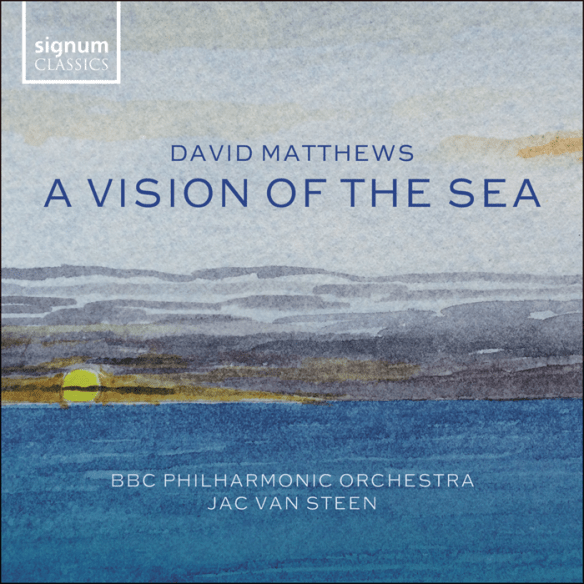
On record: BBC Philharmonic Orchestra / Jac van Steen – David Matthews: A Vision of the Sea (Signum Classics)

BBC Philharmonic Orchestra / Jac van Steen

David Matthews
Toward Sunrise Op.117 (2012)
Symphony no.8 Op.131 (2014)
Sinfonietta Op.67 (1995)
A Vision of the Sea Op.125 (2015)

Signum Classics SIGCD647 [67’42”]
Producer Michael George
Engineer Stephen Rinker

Recorded 7 November & 6 December 2017, BBC Studios, Mediacity, Salford, UK

Reviewed by Ben Hogwood

What’s the story?

This album is billed as an approachable route in to the music of David Matthews, one of the most prominent living British symphonic composers. Matthews has nine symphonies under his belt already, and we hear the Eighth as part of this programme, but he has a wealth of orchestral music alongside, from which Jac van Steen and the BBC Philharmonic Orchestra draw three works.

What’s the music like?

Matthews’ Symphony no.8 forms the centrepiece of the program, a substantial three-movement work completed in 2014. Its taut musical arguments suggest the influence of Sibelius, the harmonic language appears to build on late Vaughan Williams, and there are references to Debussy and Stravinsky in the orchestral colours used by the composer.

Yet this is by no means a derivative work. Matthews writes in the booklet note that he no longer feels the need to defend writing tonal music, and this argument gets the strongest possible endorsement from the music itself. From the opening chord, rich in woodwind, the musical exchanges are compelling, the harmonies often bewitching, and the form instinctive, written as it is by a hand of symphonic experience.

Too many newer symphonies are let down by their faster music, but not in this case. The first movement unfolds with powerful statements from brass and strings, their energetic arguments punctuated by rolling timpani. The bracing energy is complemented by a reflective Adagio, whose soft chords achieve contemplation in the context of a surrounding, uneasy mood. The music builds, reaching an impressive apex with full-bodied string sound before returning to its original state.

Matthews finishes with an uplifting set of four dances, inspired in part by vapour trails on the Kent coast. The bright colours and persuasive triple time rhythms add a lightness of touch to the full orchestra passages, resembling the profile of the second movement Sibelius’ Fifth Symphony…in a good way! The lightness of touch Matthews achieves at the final resolution is both unexpected and charming.

After the Eighth Symphony we hear the Sinfonietta from nearly 20 years earlier. A tightly compressed piece, its leaner textures generate a good deal of tension, as does the jousting between instrumental sections of the orchestra. The piece is in effect a short concerto for orchestra, culminating with thunderous timpani and short but probing melodies. It is convincing in its outcome, but less accessible with its more oblique melodies.

The accompanying pieces show Matthews’ ability to paint pictures with an orchestra. His tone poem Toward Sunrise begins the album. It is a response to the sun’s ability to make its own music through magnetic loops coiling away from its outer atmosphere, captured in sound by students at Sheffield University. Matthews takes two notes heard in that recording and transfers the motif to the depths of the lower strings, conveying the passing shadows of the night from which the sun will emerge. As the sunrise itself begins the orchestra tingle with anticipation, a volley of timpani rings out and the first rays poke through as the piece ends. It is the ideal piece with which to start.

The hiss of waves on the beach is immediately audible in A Vision of the Sea, a four-part tone poem completed in 2013. British composers have long written effective pictures of the sea, notably Vaughan Williams, Britten and Bridge, and Matthews can be added to that list. His first-hand account of English Channel vistas, punctuated by herring gulls, gets into the minds’ eye of the listener, painted with the help of ghostly piano and an expert use of the percussion section. The vision ends with another sunrise, and the crash of the waves on the shore.

Does it all work?

It does. The program is ideally judged, each work succeeding on its own terms but working as part of the bigger whole. The clinching factor is these authoritative performances from the BBC Philharmonic Orchestra, who have a very strong relationship with Matthews’ music. They appreciate his credentials as a fine symphonist, and his ability to create pictures in an instant.

Is it recommended?

Yes, with great enthusiasm. So many works premiered in this century are not followed up with second performances or recordings, which can be frustrating for concert goers, so it is wholly satisfying to see Signum and the BBC Philharmonic investing so much in this release. Their efforts are handsomely rewarded.

For further information on this release, visit the Signum Classics website.