Playlist – Sound of Mind 6: Celebrating mothers

Today is a celebration of mothers.

My own mother Coralie passed on five years ago, but this is a chance to celebrate her musical influence (which I did in written form here)

Here is a selection of her own favourite music, from Mozart‘s Clarinet Quintet – which she studied at college – through to Sibelius, Spanish guitar music, which she had a real fondness for, and Sir Peter Maxwell DaviesFarewell to Stromness.

I’m sure you’ll agree there is music here to match the blue skies today brings here in the UK – and it offers a chance to celebrate our mothers, too. Happy listening.

Ben Hogwood

In concert – Kristine Balanas, Royal Philharmonic Orchestra / Andris Poga: Sibelius, Bruch & Rachmaninov

Kristine Balanas (violin), Royal Philharmonic Orchestra / Andris Poga

Cadogan Hall, London
Thursday 5 March 2020

Sibelius Karelia Suite Op.11 (1893)
Bruch Violin Concerto no.1 in G minor Op.26 (1866)
Rachmaninov Symphony no.3 in A minor Op.44 (1936)

Reviewed by Ben Hogwood
Photo credit (Andris Poga) Jean-Philippe Raibaud

This was a nicely balanced and uplifting concert that balanced the relative misery of the early March weather in London. With the rain hammering down outside the Cadogan Hall, the Royal Philharmonic Orchestra and Latvian conductor Andris Poga got on with ensuring there was plenty of warmth inside.

They began with Sibelius’s charming Karelia Suite, a work full of good tunes and typically attractive and imaginative scoring. It is an ideal ‘curtain up’ piece in the right performance, although this one took a little while to move up through the gears. The first movement Intermezzo felt a little stentorian, and could have had a lighter spring in its step, but the succeeding Ballade was nicely measured, the emotional heart of the performance and given affectionately by Poga. By the time the Alla Marcia third movement had arrived, so too had the bounce in the rhythms, and the deceptively simple string theme was given with a smile.

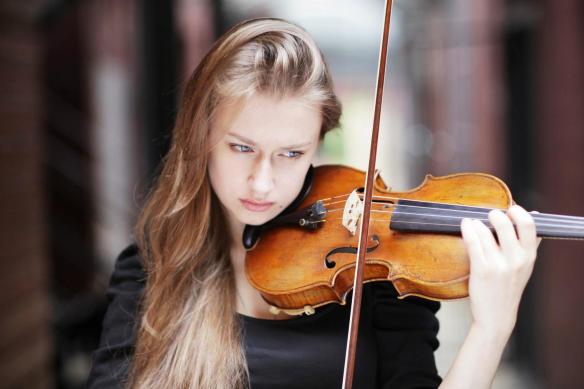
For Bruch’s Violin Concerto no.1 the orchestra were joined by Kristine Balanas (above), who led from the front in an account with passion and flair in strong supply. Yet there was an emotional distance between soloist and orchestra, who rarely interacted, and the opportunity for links through the sharing of Bruch’s wonderful melodies largely overlooked. Balanas played with a strong technical command of her Antonio Gragnani instrument, which made a wonderful sound, and the double stopping with which the finale begins was brilliantly done, the response from the orchestra appropriately breezy. Andris Poga clearly enjoyed the piece, but the distance remained throughout and hampered the work’s emotional impact.

There followed a hugely enjoyable account of Rachmaninov’s Symphony no.3, the first appearance of this work in a Royal Philharmonic Orchestra concert for a good while. Written in Lucerne but premiered by the Philadelphia Orchestra and Leopold Stokowski in 1936, the piece is unique for its successful blend of homesick melancholy and the suggestion of bright lights in America, written at a distance from both. Rachmaninov was effectively taking in the surroundings of both countries, but was ultimately thinking of home.

From the start it was clear the affection Andris Poga holds for the Third, with the carefully shaped and graceful chant theme contrasting with the upward sweep from the orchestra that followed. He was particularly impressive in managing the bracing syncopations in the finale, often tricky for orchestras to nail, and so too for the fugue that Rachmaninov tosses around the different sections towards the end. The slow movement was especially beautiful, with a solo from leader Sulki Yu that melted even the hardest heart. The same could be said for the warmly played slower theme in the first movement, beautifully floated by cellos with subtle prompting from woodwind.

What really impressed in this symphony was the orchestra’s overall sound, richly colourful and depicting vivid pictures of Rachmaninov’s surroundings. Visions of Hollywood could occasionally be discerned, the suitability of the composer’s music for the big screen uncannily made clear, but in the intimate slow movement a softer and more fragile heart was in evidence.

Unfortunately the players of the Royal Philharmonic Orchestra were not named in the programme, a shame as there were several new faces added to the fold this time around. They impressed greatly in a memorable account of a symphony finally getting its due rewards in the concert hall.

Further listening

You can listen to a playlist of the concert programme below – which includes the RPO in previous recordings of the Sibelius and Bruch, plus their conductor-elect Vasily Petrenko leading the Royal Liverpool Philharmonic Orchestra in a fine account of Rachmaninov’s Third Symphony.

Wigmore Mondays – Louise Alder & Joseph Middleton: Lines written during a sleepless night

Louise Alder (soprano), Joseph Middleton (piano)

Wigmore Hall, Monday 6 January 2020 (lunchtime)

You can listen to this concert on the BBC Sounds app here (opens in a new window)

Review and guide by Ben Hogwood

This was a concert with an especially personal link for soprano Louise Alder. The Russian Connection – subtitle of her first album for Chandos – goes much further than the repertoire chosen. It reflects Alder’s Russian ancestry, with generations of her family, up to and including her grandfather in 1914, born in the country.

In addition to that, Alder and regular recital partner Joseph Middleton have created a captivating program linking Grieg, Medtner, Tchaikovksy, Britten, Rachmaninov and Sibelius through their choice of poets and their use of a language outside of their own. Six composers, four languages (at last count!) and some richly descriptive writing all made for a particularly memorable concert, especially when performed with the passion and musicality on show here.

Alder and Middleton judged their program to perfection, bringing in the new year with a spring in its step as Grieg’s Heine setting Gruß (Greeting) tripped into view (2:33 on the broadcast link). This is the first song in a compact but deeply descriptive cycle of six from the composer, setting German poetry with his typical melodic freshness and flair. Alder shows lovely control on the final ‘Gruß’ word, before applying a slight husk to the deeply felt Dereinst, Gedanke mein (One day, my thoughts) (3:40), which made a striking impact here. Lauf der Welt (The Way of the World) (6:23) has heady urgency, singer and pianist working as one, while the evocative Die verschwiegene Nachtigall (The secretive nightingale) (8:01) is a sultry, sensual setting in these hands, the initial picture beautifully painted by Middleton. Zur Rosenzeit (Time of roses) (11:40) is filled with intense longing, while Alder’s tone in Ein traum (A dream) (14:55) is particularly beautiful, working through to a powerful finish.

Nikolai Medtner is a Russian composer known for his piano music rather than his songs, so it was gratifying to have Alder and Middleton (above) include two here. They are fine pieces of work, too, with an impressively fulsome piano part that Middleton tackled with deceptive ease and clarity. Mailied (May song) (18:15) holds an intense vocal line over its catchy piano part, while Meeresstille (Calm sea) (20:10) is really well controlled by Alder here.

Tchaikovsky’s numerous songs contain many treasures, and the two French language examples here were no exception. The Sérénade (23:22) dances in the bright light of dawn, with a slightly furtive piano, while Les Larmes (The tears) (25:02) provides much darker soul searching.

Britten’s Russian-language song cycle The Poet’s Echo is a relative rarity in the concert hall, but as Alder and Middleton showed here it contains music of typically fearsome and compressed intensity. The spirit of Musorgsky is evident not just in the choice of poet (Pushkin) but in the bare piano lines, rumbling in the deep for the first song Echo (29:22). Alder’s line is fearlessly delivered, with songs like My heart… (32:17) and Angel (33:48), with its quasi-orchestral piano part, making a powerful impression. The nightingale and the rose (36:20) take powerful flight, the piano gnawing at the heel of the vocal line, while the strange Epigram (40:13) has a striking reverberation achieved through the open piano lid. The final song, Lines written during a sleepless night (41:07) captures the supreme irritation of insomnia through the ‘monotonous tick of the clocks’, with a chilling piano postlude. This work remains a difficult nut to crack, listening-wise, but this is the sort of performance to do it.

We then heard two songs by Rachmaninov, both again setting Pushkin texts. Sing not to me, beautiful maiden (46:44), an early song from the composer’s late teens, receives a fulsome account here with Alder capturing the devastating beauty of the song. The later How fair this spot (51:56), taking the mood from darkness to relative light, is even better, Alder’s top ‘B’ a note of extraordinary clarity.

The generously packed concert concluded with three Sibelius songs, sung in Swedish. Once again these songs are found to be fiercely intense, often expressed through the bare minimum of means. The tempestuous Säv, säv, susa (Sigh, rushes, sigh) (54:02) is heady stuff, while the dynamic range achieved by both performers in Våren flyktar hastigt (Spring is swiftly flying) (56:27) is hugely impressive. Finally Flickan kom ifrån sin älsklings mote (The girl came from her lover’s tryst) (57:49) has a huge, orchestral scope, a reminder that the Second Symphony is not far away in the composer’s output. The song chills to the bone when turning tragically into the minor key for its third verse and the lover’s treason.

This was a simply outstanding concert from Alder and Middleton, deeply intimate yet including the audience in all of their asides. These qualities extended to the wonderful encore, Rachmaninov’s A Dream, where the rippling piano part and exotic harmonies supported Alder’s heavenly soprano line.

If more of the Wigmore Hall Monday lunchtime concerts are as good as this in 2020, we are in for many treats indeed! It only remains for you to listen on BBC Sounds if you haven’t already…and to keep up with the series as it progresses.

Repertoire

This concert contained the following music (with timings on the BBC Sounds broadcast in brackets):

Grieg 6 Songs Op.48 (1884-8) (2:33)
Medtner Mailied Op.6/2 (1901-5) (18:15), Meeresstille Op.15/7 (1905-7) (20:10)
Tchaikovsky Sérénade Op.69/1 (1888) (23:22), Les Larmes Op.69/5 (1888) (25:02)
Britten The Poet’s Echo Op.76 (1965) (29:22)
Rachmaninov Sing not to me, beautiful maiden Op.4/4 (publ.1893) (46:44), How fair this spot Op.21/7 (1902) (51:56)
Sibelius Säv, säv, susa Op.36/4 (1900) (54:02), Våren flyktar hastigt Op.13/4 (1891) (56:27), Flickan kom ifrån sin älsklings möte Op.37/5 (1901) (57:49)
Encore – Rachmaninov A Dream Op.38/5 (not on the broadcast)

Further listening

Most of the music from this concert is part of Louise Alder and Joseph Middleton’s new disc for Chandos, Lines Written During A Sleepless Night: The Russian Connection, with the exception of the two Rachmaninov songs. The full playlist is here:

If you enjoyed Alder and Middleton in this concert – which I’m sure you did! – their previous outing together is a sumptuous collection of songs by Richard Strauss for Orchid Classics which is bound to appeal, and certainly plays to their strengths:

Meanwhile to enjoy the Rachmaninov song output in its entirety there are few better historical guides than soprano Elisabeth Söderström and pianist Vladimir Ashkenazy:

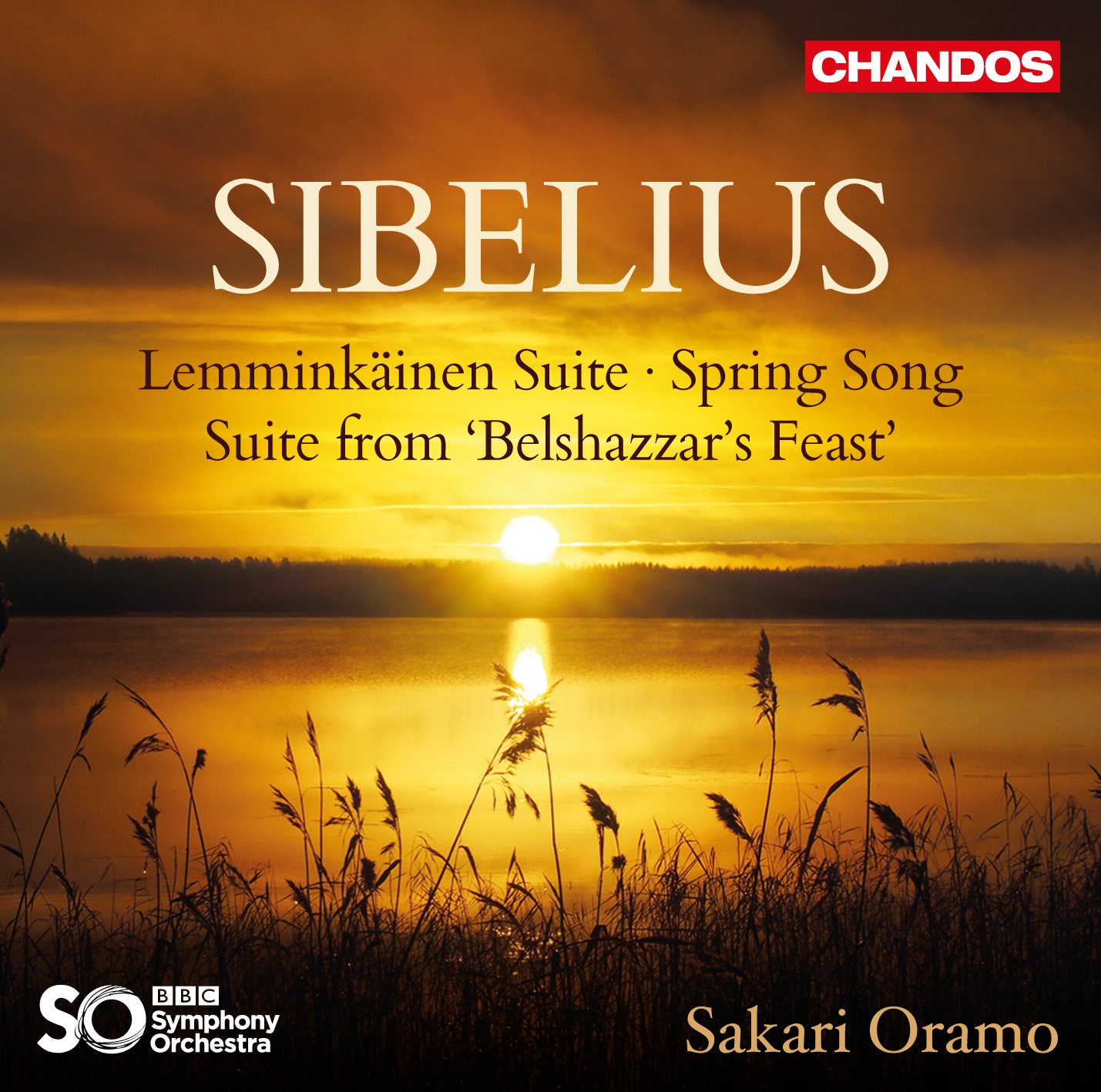
On record – BBC Symphony Orchestra / Sakari Oramo: Sibelius: Lemminkäinen Suite (Chandos)

BBC Symphony Orchestra / Sakari Oramo

Sibelius
Lemminkäinen Suite Op.22 (1893-6, rev. 1897/1900/1939)
Spring Song Op.16 (1894, rev. 1895)
Belshazzar’s Feast: Suite Op.51 (1906-07)

Chandos CHAN20136 [71’34”]

Producer Ann McKay
Engineers Neil Pemberton and Rob Winter

Recorded 22-23 May 2018 at the Colosseum, Watford

Written by Richard Whitehouse

What’s the story?

Sakari Oramo extends his discography with this recording of Sibelius’s Lemminkäinen Suite in partnership with the BBC Symphony Orchestra (whose chief conductor he has been these past five seasons), coupled with two rarities among the composer’s shorter orchestral pieces.

What’s the music like?

Emerging from an abandoned opera, the Lemminkäinen Suite followed Kullervo as Sibelius’s second major symphonic work before his actual First Symphony. It only reached its definitive guise over a decade after the composer’s last notable piece, was unpublished until three years before his death and remains on the edge of the repertoire. Opting for the order of movements at its 1896 premiere, Oramo draws a vibrant response in Lemminkäinen and the Maidens of the Island with its heady alternation between energy and ecstasy – underlining its emotional rhetoric without undue histrionics. Sibelius’s masterpiece from this period, Lemminkäinen in Tuonela is more focussed in form and expression – Oramo pointing up the contrast between its stark depiction of the underworld with the premonitions of the hero’s mother at its centre.

Closing with the two shorter movements risks selling short this suite’s overall trajectory, but Oramo ensures their continuity through his searching take on The Swan of Tuonela (soulful cor anglais playing from Alison Teale) such as forms a potent contrast with Lemminkäinen’s Homeward Journey in which the hero marks his being restored to life with a hectic return to the human world. Others have favoured a more headlong approach, but Oramo’s building of cumulative anticipation makes for tangible excitement on the way to a resolute conclusion.

As to the other pieces here, Spring Song was once among Sibelius’s most performed pieces but long ago fell from grace. As Oramo hears it, what can feel a rather half-hearted re-run of Grieg or Svendsen assumes darker and more equivocal shades prior to its hymnic apotheosis – even if the coda still sounds perfunctory. A suite drawn from incidental music for Hjalmar Procopé’s Belshazzar’s Feast has had advocates (such as the late Gennady Rozhdestvensky) and deserves more frequent revivals. Oramo brings out the ominous undertow of Oriental Procession, as also the musing pathos of Solitude (with its wistful interplay of viola and cello) then the evocative arabesques of Nocturne, before rounding off this sequence with the ingratiating poise of Khadra’s Dance – evidently a direct descendant of that by Anitra.

Does it all work?

Yes. Oramo established himself in the UK through his probing cycle of Sibelius symphonies when music director of the City of Birmingham Symphony Orchestra, and this account of the Lemminkäinen Suite completes his traversal of the larger symphonic works (his 2015 Proms reading of Kullervo can be found as a covermount disc on BBC Music Magazine, Volume 25 no.12) in fine style. The recorded sound has all the requisite depth and perspective necessary for this music, and there are typically informative booklet notes courtesy of Anthony Burton.

Is it recommended?

Indeed. The discography for each of these pieces is now considerable but, for its interpretive insight, committed playing and impressive sound, this release gets a strong recommendation. Hopefully Oramo and the BBCSO will soon follow it up with a disc of Sibelius’s tone poems.

Stream

Buy

You can buy this release directly from the Chandos website

Arcana at the Proms – Prom 25: Sol Gabetta, BBC Symphony Orchestra / Dalia Stasevska – Tchaikovsky, Weinberg & Sibelius

Prom 25: Sol Gabetta (cello), BBC Symphony Orchestra / Dalia Stasevska (above)

Sibelius Karelia Suite Op.11 (1893)
Weinberg Cello Concerto in D minor Op.43 (1948, rev 1956) [Proms premiere]
Tchaikovsky Symphony no.6 in B minor, Op.74 ‘Pathétique’ (1893)

Royal Albert Hall, Tuesday 6 August 2019

Reviewed by Richard Whitehouse
Photo credits Chris Christodoulou

You can listen to this Prom on the BBC iPlayer here

This Prom was notable for its being the BBC Symphony Orchestra’s first public concert with principal guest conductor Dalia Stasevska and the first appearance in this (or any previous) season of music by Polish-born Russian composer Mieczysław Weinberg, whose centenary is later this year.

Conceived as a Concertino then expanded eight year later, the Cello Concerto is not untypical of Weinberg’s earlier works in its discrepancy between completion and premiere (by Mstislav Rostropovich in Moscow during 1957). Even more striking is its absence from the repertoire, given its formal clarity and direct melodic appeal. Myaskovsky’s own concerto is an indirect model, notably in the ruminative opening Adagio with a folk-tinged main theme that returns to heightened effect at the close, but Weinberg’s approach is more oblique and eventful. The first movement leads to a wistful intermezzo with Jewish and even Spanish inflections, then an animated scherzo capped by an extensive cadenza. This segues into a finale whose lively main theme is revealed as a variant of the initial melody during an increasingly inward coda.

The piece clearly has a devoted advocate in Sol Gabetta, whose perceptive account can only enhance its popularity. The BBCSO evinced passing technical fallibilities, likely caused by a slightly amorphous balance between soloist and orchestra in this acoustic; though that did not affect Gabetta as she drew evident soulfulness and intensity from the music. No-one hearing this concerto for the first time was likely to have been left unmoved – nor by Pablo Casals’s arrangement of the Catalan folk-song Song of the Birds, which made for a winsome encore.

Framing the Weinberg were two repertoire items composed during the same year. Sibelius’s Karelia Suite was never less then enjoyable, though Stasevska slightly misjudged the balance between reflection and animation in the Intermezzo, while the speculative modal contrasts of the inward Ballade might have been more firmly integrated. Best was the closing Alla marcia’ – its bracingly populist overtones allowed free rein without ever becoming blatant, though quite what determined that cymbal clash on the very final note is anybody’s guess.

After the interval came Tchaikovsky’s Sixth Symphony – tonight receiving its 124th hearing at these concerts (so equating to one performance per season), and a reading which gained in stature as it unfolded. Stasevska had the measure of the opening movement, though a certain impassiveness was only banished in the development’s driving fugato as it carried over into the fateful denouement. The ensuing Intermezzo was deftly paced with no hint of stolidity in its trio, then the Scherzo had a propulsion as fairly erupted in its latter stages – the premature applause for once sounding spontaneous. There was no undue emoting in the finale as this conductor heard it, with the music’s fraught eloquence maintained through two impassioned climaxes and on to a coda whose enveloping darkness did not preclude fatalistic acceptance.

If not an overly memorable performance, this was certainly an assured one that suggested the rapport between conductor and orchestra is already taking shape. Stasevska has two concerts with the BBCSO in the coming season which, on tonight’s evidence, will be worth attending.