News – the CBSO are Bringing The Light

published by Ben Hogwood from the original press release

This winter, the City of Birmingham Symphony Orchestra will illuminate Birmingham’s Symphony Hall with Bringing the Light – a remarkable celebration of music, culture and community, featuring three brand-new pieces by Roxanna Panufnik, Joan Armatrading and Cassie Kinoshi alongside A.R. Rahman’s Slumdog Millionaire Suite arranged by Matt Dunkley.

Taking place on Sunday 7 December at 5pm, this uplifting afternoon of music and storytelling harnesses the full strength of the CBSO, the CBSO Chorus, CBSO Youth and Children’s Choruses, alongside presenter Satnam Rana, conductor Michael Seal and sitar soloist Akash Parekar. The programme blends orchestral and choral brilliance, contemporary composition and global influences, promising an unforgettable celebration of togetherness and creativity.

Emma Stenning, Chief Executive of the CBSO said: “This concert shines a light on Birmingham’s extraordinary diversity and creativity. ‘Bringing the Light’ will fill Symphony Hall with music that uplifts, connects and inspires – a true celebration of what makes this city so special. After a year that has been characterised by so much division and polarisation, this concert will do a great deal to remind us of what we as people all have in common – and the power of music as a force to unite us all.

“At the CBSO, we’re passionate about creating experiences that feel both rooted in our home city and open to the world. This concert brings together voices from different traditions, faiths and generations to reflect the vibrancy of Birmingham today.”

At the heart of the concert is Aurora a new work by composer Roxanna Panufnik and writer and librettist Jessica Duchen, co-commissioned by the CBSO, Royal Choral Society and the Arktisk Filharmoni. It is a powerful piece that explores the power of light as a universal symbol of hope, connection and unity – drawing inspiration from festivals of light from around the world. Developed in close collaboration with 14 UK faith leaders and devotional musicians, the text of each movement represents a different faith: Christian Christmas; Muslim Milad un Nabi; Sikh, Jain and Hindu Diwali; Jewish Hanukkah; Tibetan Buddhist Gaden Ngamchoe and ending with a beautiful, musical depiction of the Aurora Borealis for those of all faiths and none.

Roxanna Panufnik said: “When we hear about different faiths in the media it’s too often about conflict between them and very rarely about their respective beauty and the common themes we all share. We have planned this work over the past 10 years, and it has been hugely inspirational collaborating with our phenomenal consultants: 14 UK Faith leaders and their respective devotional musicians. The CBSO is perfectly placed, in a city with a fabulous and dynamic diversity of cultures and faiths, to premiere this work. Our 270 singers will be of multiple ages and faiths – so will, we hope, our audience. This is a piece for EVERYONE.”

Jessica Duchen adds: “The overarching image of Aurora: Faith in Harmony is the Northern Lights, a miracle of nature that can inspire the kind of awe in us all that some people find in faith. Embracing the secular community alongside a range of world faiths that have festivals of light in the depths of winter, the piece celebrates the virtually universal human longing for light in darkness, which we hope can help to bring people of all cultures together. It has been an incredible journey for us both – and Roxanna has excelled herself in writing music of extraordinary beauty.”

The performance opens with a world premiere of Homeland by singer-songwriter Joan Armatrading CBE– which she describes as her “love letter” to Birmingham.

Joan Armatrading comments: “Homeland is a piece that highlights the city of Birmingham and its people, reflecting their strong sense of community, resilience and warmth. It is a tribute to a place to which I am bonded, and one I will always hold with affection and pride. Through both words and music, the piece weaves together the sounds, energy, and rhythms of the city while reaching out into its vast surrounding countryside. This is Birmingham not simply as a backdrop, but as a living, breathing presence – an often-underrated landscape where industry and nature exist side by side in quiet beauty.”

The concert also includes a new commission by Mercury Prize-nominated and Ivors Academy Award-winning composer and saxophonist Cassie Kinoshi with lyrics by poet Lydia Luke.

Cassie Kinoshi said: “I was in the state of mind to stay centres on how nature grounds and steadies us within the constant movement of city life. It captures the ways young people find calm and connection in fleeting everyday moments; rain against a bus window; flowers at a market stall; or the scent of trees through an open window; and celebrates the beauty of finding stillness amid the noise. Created with input from the Southwark Playhouse Youth Company, the piece offers a portrait of the city through young people’s eyes: a place where nature and metropolitan life coexist. It is about recognising how these small, tender moments can bring comfort, belonging, and a sense of balance in an increasingly hectic world. Rather than portraying nature as something distant or idealised, the piece treats it as part of daily life: a source of connection to oneself, and a reminder that even in the most built-up places, the natural world remains ever-present.”

The CBSO acknowledges the generous gift from Frances and Barry Kirkham, whose support helped ​make Aurora and i was in the state of mind to stay possible.

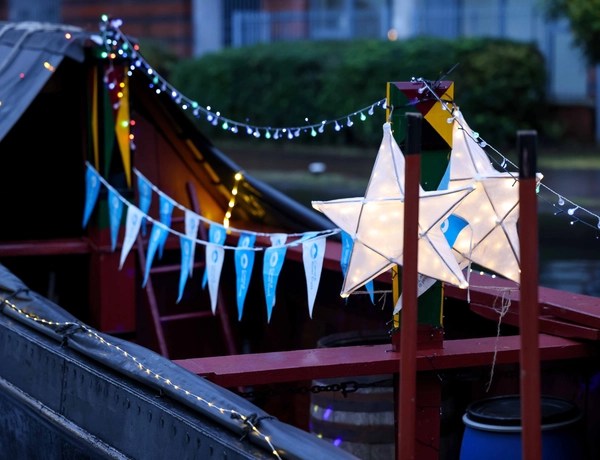
Leading up to the performance, there will be lantern-making workshops in partnership with the Canal and River Trust and Crafting Community. As well as a beautiful lantern walk along Birmingham’s canals, accompanied by narrowboats decorated by light artist Sophie Handy and featuring local musicians, which begins at Roundhouse Birmingham and ends at the ICC with a performance by the CBSO’s community choir SO Vocal.

Audiences are warmly invited to this vibrant celebration of culture and light which unites communities from across the city and beyond to share a moment of joy, hope and reflection.

Full details can be found on the CBSO’s website

Published post no.2,721 – Monday 17 November 2025

Talking Heads: Roxanna Panufnik on her new opera Dalia

Garsington Opera has had a brilliant summer. With stellar reviews for its productions of Orfeo, Così fan tutte, Rusalka and The Turn of the Screw, the festival has further cemented its status as an unmissable part of the British classical music calendar. And yet there is one more ace up the sleeve in the form of Dalia, a community cricket opera from composer Roxanna Panufnik and librettist Jessica Duchen about a Syrian girl who triumphs over adversity to follow her dream. The opera engages local participants of all ages from diverse backgrounds, including choirs from Syria and Palestine.

The parallels between opera and the most English of sports are surprisingly logical. Test cricket, it could be argued, becomes a four act drama – one for each innings – while the relatively recent phenomenon of 20-20 cricket pivots effortlessly to a pacey, two-act thriller. For some reason composers have tended to shy away from the stumps in creating works with bat and ball, but under Panufnik’s guidance Dalia strides confidently out to bat. As the composer arrives at the batting crease to receive an over of questions from Arcana (enough cricketing puns! – Ed) she takes up the story of what is by all accounts an amazing project.

“Thank you”, she says modestly, “and without wanting to sound too egotistical, I agree! It’s grown so much, beyond what we could have imagined with this involvement from with the choirs from Syria and Palestine. It’s just been extraordinary. We never dreamed it would reach the parts that is already has.”

This is not the first time Panufnik and Duchen have worked together on the Garsington stage and pit. “These are always large affairs”, says the composer, “and for the last one we did, Silver Birch, there were 180 people on stage! It was always going to be big, because if you’re going to do something that’s all inclusive, then it’s got to be inclusive for all. That’s the principle behind it.”

The issues at the heart of Dalia (above) could hardly be more relevant to today’s world. “When it was commissioned, and the concept evolved two years ago, there was a refugee crisis but now it has been hugely magnified, with Afghanistan and Ukraine. It just seems even more relevant.”

The collaboration with Jessica Duchen was a natural fit. “Jess and I are old, old friends, possibly reaching 30 years!” she says warmly. “We’ve done lots together. She’s not just my opera librettist, I can count on her for translations of poetic text too. She is very much my writing partner, although she has done other operas for Garsington. This is only my second but she has a fourth on the way I think. That’s another thing that’s mushroomed!”

Rehearsing with the choirs began on Zoom. “I wasn’t involved with the early rehearsals, they were led by our director Karen Gillingham”, she explains. “I haven’t been directly involved in rehearsing them, but the initial contact with the Amwaj Choir in Palestine came from a friend of mine who runs the Bethlehem Culture Festival,  which has just had its second season in London. She was saying that I must hear this choir, and was there anything they could do? It couldn’t be more perfect, and I had an arrangement of Dalia’s main song, which I distilled for them. In the opera it is spread out over various parts, but they performed it absolutely beautifully! They were rehearsed by their music directors in Palestine, and they sent me an edit, but other than commenting on balance my input was minimal. It’s really wonderful what they came up with.”

The musical language of Dalia’s Song is striking and moving, an indication of the composer’s aim to bring forward the positive identifying aspects of faith and culture. “The principle behind a lot of the multi-faith and multicultural work that I’ve done over the last 20 years or so has been that whenever we hear about these other cultures or these faiths it’s usually in the context of conflict, especially on the news and in social media. I’ve really been on a mission to show that there are such beautiful aspects of these cultures and faiths and so much that we have in common. I think it’s really, really important to keep reminding people of that.”

As a lighter aside, could this be the first ever opera we about cricket? “Well, as my husband says, and he is a cricket lover – cricket is an opera!” She reveals several first-hand inspirations from the England touring party. “I have had fantastic help and support from a couple of members of the Barmy Army, including Billy the trumpeter. He let me use his mariachi motif in the cricket song and dance number. The pianist Anna Tillbrook is also a Barmy Army member, and she has been brilliant – and another person who has been a key consultant is the BBC cricket commentator Eleanor Oldroyd. She was very involved in the libretto with Jess. She lives near me, and we became great friends a few years ago. She has been very involved in making sure we have all the right terminology and that the cricket action scenes make sense and are all correct.”

Roxanna relished the challenges of writing for the assembled forces. “Every commission that I fulfill, whether it’s for people that are 100% professional and very experienced or if it’s for amateurs, is absolutely tailor made for the people that I’m writing it for. I’ve done an opera for Garsington before, and so I had an idea of the community and youth elements here. Throughout the piece, and I do this with every commission, I send sketches and MIDI files to the people I’m writing for, for constant input and collaboration. That way there are no nasty surprises at the end, and everybody knows that they’re getting something that they are not going to be struggling with.”

Panufnik was not beyond stretching her performers, however. “Having said that, it is a little bit challenging for our community chorus, but when I did that for Silver Birch they rose magnificently to the challenge. We also have these incredible people training them, fantastic coaches who are so talented. It’s a great position to be in. Lea Cornthwaite, who’s coaching the chorus made MIDI files of all the parts, so everybody had stuff to listen to and learn before they actually come to rehearsal.

The effect on the performers is clear from the video. “It is, and it has been emotional for me too. Sometimes I think, “What am I doing with my career; am I doing anything remotely useful? It feels like navel gazing, but when you see the effect on people who are either moved by it or who gain confidence through doing this it’s really gratifying. I’m really grateful to be able to do that. I also hope it will give the performers confidence to try other things they wouldn’t normally do. They might say, “I didn’t know anything about opera, but I went for it and succeeded. So let’s have a go at this!”

It was important for Panufnik to integrate Syrian modes into her musical language. “Dalia’s Song is actually a very well known Syrian folk song, Hal Asmar Ellon. Most of the people in the Palestinian and Syrian choirs knew that tune, and it immediately gave them something to sit between this completely new musical experience and what they know. That mode really influenced the rest of the piece. It was the first song I wrote in the opera, and everything grew out of that.”

Roxanna herself has had a varied musical upbringing, well beyond that handed down to her as daughter of the Polish composer Sir Andrezj Panufnik, who took up British citizenship in the 1950s. “I’ve always loved Middle Eastern music, South Asian music and African music”, she explains. “I did one of those ancestral DNA tests, and discovered that I am actually 1% Egyptian, which explains my love of that kind of music. The test also said I had 1.8% from the Levant region, which is probably through my mother’s Jewish heritage. I also love Balkan music, and I have Balkan DNA as well. I’m a bit of a musical nomad!”

It is gratifying to see her channelling this unique DNA and those influences into a stage work. “The thing about this opera and the people is that I think it’s a good reflection of the cultural mix in the UK today. I think it’s really important that we mirror that.” The opera addresses racism, too. “There is no shying away from that.”

With the current plight of Ukraine, it feels valuable to have such a vivid reminder of the plight of Afghanistan and Syria too. “I am very worried”, she confesses. “It was amazing, the outpouring of sympathy for Afghans fleeing Afghanistan last August, and for Ukraine now, but I worry that people are forgetting that there are still something like 11,500 Afghans here still waiting to be housed, and languishing as one family to one hotel room. I would really want that to be visible still.”

Panufnik is a busy composer. “I’m very excited that having written so much in the last 20 years for Christian worship, I’m just finishing off a commission for the Liberal Jewish synagogue, a piece for their Yom Kippur service in October, so that’s my first Jewish liturgical commission. I’m also writing a piano piece which will take its inspiration from Iraqi Jewish music, for the pianist Margaret Fingerhut. The Jewish stuff is coming up quite a bit. Although I’m a practising Catholic, because my mother is Jewish I am technically Jewish, and feel those roots very strongly. I’m really excited about that.”

How refreshing it is to have a positive discussion about religion. “It’s great to be talking about religion, like you say, in a celebratory way rather than talking about conflicts. I’m sure one of the biggest things about religion is being mindful of other people’s beliefs, isn’t it? It’s just nice to be thinking about that, and also being aware of all the things we have in common. During Lent, I remember some lovely nun friends who suggested taking something up rather than stopping anything. Thanks to their inspiration I took up reading scriptures from other faiths. Last year I read the Quran, and this Lent I’ve read the Hindu scriptures, the Bhagavad Gita. It’s so exciting to see how much there is in common with our faith, in the moral principles especially. I find it incredibly uplifting, and I want other people to be aware of that, which is why I try and put it in my work.”

Panufnik’s eclecticism as a composer is illustrated by her recent projects, including a commission from the City of Birmingham Symphony Orchestra and Youth Chorus. “I took a piece of my father’s, the Five Polish Peasant Songs, for unison upper voices and a few wind instruments, and I orchestrated it with some new translations of the words. They’re funny folk tales, with little twists, all based on Polish folk songs. Then just recently I have had the premiere of a new work (God’s Mirror) in Bath Abbey, which they commissioned for the 25th anniversary of their Girls Choir. Then there is the premiere of the new piece I wrote for Margaret Fingerhut, Babylonia, at Ryedale Festival on 20 July.“ After that, of course, the baton – or should we say, cricket ball – passes to Dalia.

Dalia looks set to be a wonderfully uplifting and thought provoking work for Garsington, not to mention an important milestone in the careers of its performers. More details on the work and its performances, which take place at 7.30pm on 28, 30 and 31 July (which includes a 3pm matinee), can be found at the Garsington Opera website, while to book directly click here

75 years ago today – the first performance of Korngold’s Violin Concerto

Today marks 75 years to the day since the premiere of Korngold’s Violin Concerto. Like much of this composer’s work, the Violin Concerto took a while to gain popularity, but since we have moved into the 21st century it has taken up a much more regular position in the concert hall.

In her excellent biography of the composer, Jessica Duchen tells the story of the concerto, and how it was suggested to Korngold for close on 30 years by his friend Bronislaw Huberman, founder of the Palestine Orchestra (later the Israel Philharmonic). The regular suggestion became something of a running joke until 1945, when Korngold unexpectedly produced a completed score for the concerto. Ultimately the work had its first performance on 15 February 1947, with the incomparable Jascha Heifetz as soloist and the St. Louis Symphony Orchestra conducted by Vladimir Golschmann.

As you will hear from this live performance with violinist Hilary Hahn and the Deutsche Symphonie Orchester under Kent Nagano, the work has an intense, lyrical profile from the start, shot through with the descriptive powers Korngold used to such good effect in his film scores. There is a longing quality to the first movement especially, a nocturnal second and an energetic third which generates impressive momentum to the finish.

Watch and see what you think: