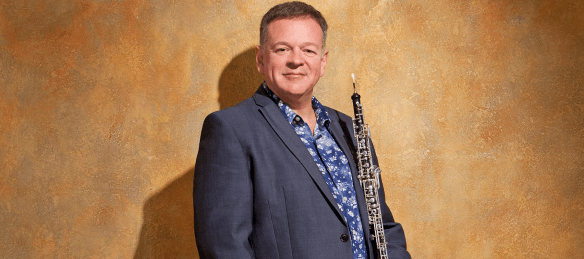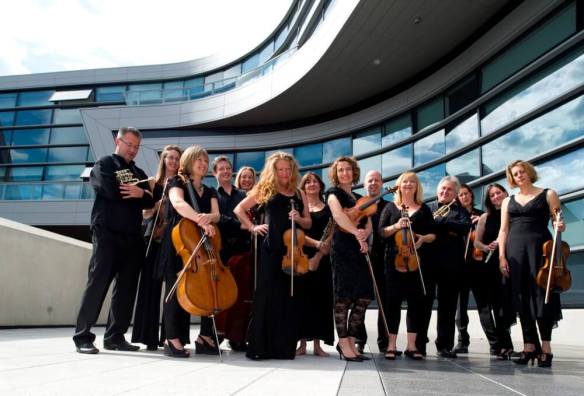
BBC Proms: The Brandenburg Project – Swedish Chamber Orchestra / Thomas Dausgaard

Proms 29 & 30: Soloists, Swedish Chamber Orchestra / Thomas Dausgaard
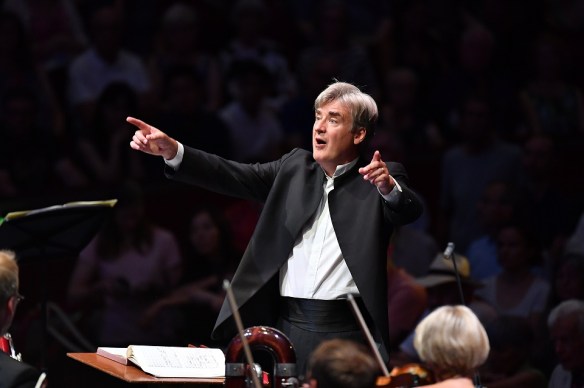
Prom 29
J.S. Bach Brandenburg Concerto no.1 in F major BWV1046
Mark-Anthony Turnage Maya (2014)
J.S. Bach Brandenburg Concerto no.3 in G major BWV1048
Anders Hillborg Bach Materia (2017)
J.S. Bach Brandenburg Concerto no.5 in D major BWV1050
Uri Caine Hamsa (2015)

Prom 30
J.S. Bach Brandenburg Concerto no.4 in G major BWV1049
Olga Neuwirth Aello – ballet mécanomorphe (2017)
Brett Dean Approach – Prelude to a Canon (2017)
J.S. Bach Brandenburg Concerto no.6 in B flat major BWV1051
J.S. Bach Brandenburg Concerto no.2 in F major BWV1047
Steven Mackey Triceros (2015)

Royal Albert Hall, Sunday 5 August 2018

You can watch this Prom by clicking here

Reviewed by Richard Whitehouse. Photos (c) BBC/Chris Christodoulou

If musical authenticity has largely banished J.S. Bach’s Six Brandenburg Concertos (BWV1046-51) from the standard repertoire, then the brace of Proms that constituted The Brandenburg Project enabled near-capacity audiences to experience what was once the foundation of this tradition. This was hardly the large-scale Bach that would once have been a familiar fixture at these concerts, but the playing of the Swedish Chamber Orchestra – by turns incisive and sensitive – and unfailingly astute direction of Thomas Dausgaard served these pieces well.

A quirky collection this is too. Uncertain as to its date (Bach’s promotional autograph to the Margrave of Brandenburg dates from 1721 but the music was likely in existence up to a decade earlier) and hardly constituting a logical or systematic key sequence (being in F, F, G, G, D and B flat respectively), it positively invites juxtaposition with works either akin in genre or inspired by their specific precedent. It was this latter factor which underlies the present project, with six diverse composers commissioned to write a piece inspired by the Brandenburg in question.

The Brandenburg Project – 1

With its relatively expansive four-movement structure and its virtuosic use of a (then) sizable complement of wind and strings, the First Concerto anticipates the Concerto for Orchestra of two centuries hence. Dausgaard secured a suitably forthright response, not least in the diverse ‘quodlibet’ that is the finale; the SCO then providing eloquent support for cellist Maya Beiser in Mark-Anthony Turnage’s Maya. Although the least ‘connected’ to its Brandenburg in terms of concept and follow-through, this was an impressive showing for its soloist’s long -limbed phrasing and mellifluous tone – even if its two halves witnessed relatively little sense of expressive contrast or intensification. The fact that Turnage completed his contribution so far in advance of the project’s taking place suggests his response as being a generalized one.

Long the most famous (rather, immediately recognizable) of the set, the Third Concerto is a blueprint for the Concerto for Strings beloved of the high Baroque era. The SCO relished the robust and incisive contrapuntal interplay of its outer movements; the (deliberately?) absent slow movement being provided on this occasion by Anders Hillborg, who then drew upon its plaintive understatement in the slow section of his Bach Materia. With its prelude of anticipatory tuning, headlong workout between violin and double-bass in its scherzo, then a finale whose interaction of soloist and ensemble was as much vocal as instrumental, it was a showcase for ‘improvising violinist’ Pekka Kuusisto as communicated readily to the audience, even if its attractions (not for the first time in Hillborg) seemed to lie primarily on the surface.

Whether or not the first Concerto for Keyboard, the Fifth Concerto is an intriguing take on that nascent genre; its elaborate harpsichord part scintillating in Mahan Esfahani‘s rendition (not least the headlong ‘cadenza’ passage), with the more circumspect contributions of flute and violin no less appealingly taken by Fiona Kelly and Antje Weithaas. They remained in their respective roles for Uri Caine’s Hamsa, joined by the composer on piano for a piece whose ominous-sounding title is no more than the Arabic for ‘five’. What ensued was an object lesson in composing-out an already elaborate structure and it was hardly Caine’s fault if, at the end of a lengthy programme, this piece outstayed its welcome. Certainly, his attentive pianism and formal finesse would have held one’s attention in any other context.

The Brandenburg Project – 2

With its dextrous and, in the elevated central Andante, plangent interplay of violin and two recorders (the preferred option for those mythical ‘fiauti d’echo’ so designated by Bach), the Fourth Concerto is perhaps the most immediately attractive of these works; despatched with relish and not a little pathos by Kuusisto in partnership with Per Gross and Katarina Widell. As part of her response, Olga Neuwirth pointedly eschewed Double or even Triple Concerto connotations for a single flute as heard against an ensemble with two obligato trumpets and portable typewriter as part of the continuo. This, along with judicious use of tuning systems, gave her ‘ballet mécanomorphe’ which is Aello (2017 – the title that of a retributive Harpy) an insubstantial and capricious aura not without its more ominous and suspenseful qualities.

That the final two instalments segued directly between Brandenburg and commission was not their least fascination. In his Prelude – Approach to a Canon, Brett Dean came up with a methodical extemporisation where he and fellow violist Tabea Zimmermann pursued a fine line in ‘call and response’ with the ensemble; motifs from the Sixth Concerto being variously evoked and denied prior to a rhetorical lead-in to the Bach such as Schnittke might well have relished. With its scoring for low strings and its accordingly dark sonorities, this is the most intriguing of the Brandenburg’s – a Concerto for (or at least predicating) Two Violas whose intricately polyphonic opening movement makes way for winsome elegance in the Adagio then gallant buoyancy in the finale. Qualities to the fore in this most probing of accounts.

The segue was in the opposite direction for the final pairing, with the Second Concerto a putative Sinfonia Concertante whose modest dimensions belie the plethora of timbres and textures derived from its solo quartet. Kelly and Weithaas were partnered by oboist Mårten Larsson and trumpeter Håkan Hardenberger, their overt élan during the outer movements complemented by their wistful poise in the Andante. A sustained note from trumpet duly provided a link into Triceros  Steven Mackey’s typically resourceful response that deploys ‘family’ instruments (piccolo/alto flute, cor anglais and flugelhorn/piccolo trumpet) in music whose ingenious variations on Bach motifs readily evoke the title’s ‘three-horned chameleon’ through to a heady culmination then full-circle resumption of that trumpet note.

Maybe it would have been preferable to hear this latter trilogy in the published order (2-4-6), or at least end with the Sixth Concerto so that Bach’s music could have framed proceedings. Even so this was a fascinating and engrossing project, judiciously conceived and unfailingly well executed, such as confirmed both the intrinsic greatness of the Brandenburg Concertos and their continued relevance three centuries on. Might a similar Proms project be considered utilizing Bach’s Four Orchestral Suites or Handel’s Op. 6 Concerti Grossi? Let us hope so.

City AM: Music While You Work

If you live in London, hopefully you have picked up a copy of City AM this morning. If you have, and read the Office Politics section, you’ll have seen my piece about the benefits of listening to classical music while you work.

I really wanted to share those with you here, so please find below links to a playlist on Spotify that will hopefully float your boat!

If you want some specific advice on music to listen to, or want to share an opinion, please get in touch! Send me an e-mail or get in touch over Twitter

Wigmore Mondays: Aleksandar Madžar plays Beethoven’s ‘Hammerklavier’ Sonata

Aleksander Madžar (piano, above)

Beethoven Piano Sonata no.29 in B flat major Op.106 Hammerklavier (1817-18) (2:35-48:14 on the broadcast link)

Wigmore Hall, London; Monday 26 February 2018

You can listen to the BBC Radio 3 broadcast by clicking here

Written by Ben Hogwood

Is there a more complete work for piano than Beethoven’s Hammerklavier sonata? Few pieces are bigger in scope, and yet at the same time few speak as intimately as this piece does, especially in the slow movement.

It therefore takes a special performance to communicate the strengths of the piece in full to an audience, but Aleksander Madžar went some way to doing that at the Wigmore Hall.

The name Hammerklavier comes from the German word, specifying the piece should be played on the more modern fortepiano and not the harpsichord. It also phonetically describes the opening phrase in the first movement (from 2:35-14:14 on the broadcast, marked Allegro) where it really feels like the piano is being used as a forceful rhythm instrument rather than for its melodic beauty. Madžar took a much more relaxed view of the opening statement, communicating the onset of the drama but bringing it in much more gradually. He did at times have a shrill ring to the top of his range, especially when the right hands were playing in octaves.

That said, it was clear how he wanted this performance to go, and the structure of the movement made sense under his hands, with the repeat of the first part of the first movement (the exposition) included.

The second movement Scherzo (14:15) had a considerable breadth of colour, and subtly pointed out Beethoven’s harmonic deviations, not least in the ‘trio’ passage where Beethoven briefly visits the minor key (15:18). Here the sound was uncommonly hollow, and try as I might I could not dismiss the notion of empty bottles or bones rattling in a cage. Very macabre!

The slow movement (from 18:05, marked Adagio sostenuto) surely holds the key to a successful performance of the Hammerklavier. It is one of those moments in late Beethoven where time seems immaterial, where each phrase has a great meaning and where the right hand, although slow, is purely melodic. It anticipates music that has been written more than a century since – Mahler and Schoenberg, to name just two – but is still recognisably of Beethoven’s time. We were hanging on each of Madžar’s notes here, as he slowly traversed each section to set himself up for the mighty fugue. The unhurried phrases unfurled with natural ease, and the thoughtfulness and deep seated feeling could be sensed just from watching his movements.

The last movement Introduzione (35:32) began with a strong sense of anticipation, leading up to the big fugue (38:14). This took a little while to straighten itself out – to be fair it must be an incredibly difficult switch in the mind to go from a period of such stillness to rapid movement – but once Madžar had settled on a tempo it gathered considerable momentum. The end, when it came, was fulsome and thrilling.

An encore in this context was risky but the choice was ideal – the Allemande from Bach’s Partita no.1 in B flat major (from 49:30-53:02). Carefully chosen in the same key, it shows to some extent the Hammerklavier’s past.

Further listening

You can listen to the music in this concert in a powerhouse of a recording from Emil Gilels, paired below with what is commonly regarded as the first of Beethoven’s ‘late’ sonatas, the A major work published as Op.101.

Wigmore Mondays: Inon Barnatan plays Bach, Franck & Barber

Inon Barnatan (piano, above)

J.S. Bach Toccata in E minor BWV914 (c1710) (6 minutes)
Franck Prelude, Choral et Fugue (1885) (18 minutes)
Barber Piano Sonata in E flat minor Op.26 (1949) (20 minutes)

Wigmore Hall, London; Monday 15 January 2018

Written by Ben Hogwood

The broadcast can be heard on the BBC iPlayer by clicking here

This was a fascinating hour in the company of American-Israeli pianist Inon Barnatan, exploring the role of the fugue in piano music while showing off considerable artistry and technical control of his instrument.

He began with Bach, and one of the lesser heard Toccatas for keyboard. This fell into three parts (starting at 4:06 on the broadcast) and initially took on quite a serious tone before relaxing for the fugue (which begins at 5:04). Barnatan signed off expansively, in a sense preparing for what was to come.

This proved to be Franck’s three-movement Prélude, Choral et Fugue, surely written in homage to organ pieces such as Bach’s Toccata, Adagio and Fugue, but working particularly well on the piano. Barnatan gave a performance of impressive stature, really getting to the nub of the deep and almost religious expression the Belgian composer achieves.

An expansive Prélude (from 12:40) was followed by a reverent statement of the Chorale in hushed tones (at 18:18), before this grew inexorably in stature, leading to a superbly controlled peak at 21:10. The Fugue was confidently delivered, gaining intensity from its initial statement (23:50) until the final peal of bells signalled its triumphant switch from B minor to B major (30:11).

The Barber Sonata was simply superb, and a timely reminder that this is a composer worth so much more than simply the Adagio for Strings. Good though that piece is, the Sonata explores much more aggressive and twisted musical thoughts, perhaps a surprising response to a commission from Irving Berlin and Richard Rodgers, in honour of the League of Composers’ twenty-fifth anniversary. As announcer Clemency Burton-Hill says in the radio introduction it is a formidable work, perhaps not surprisingly given its dedicatee, Vladimir Horowitz.

It is difficult to imagine a better performance than Barnatan gave here, setting the tone immediately with the jagged outlines of the first movement’s main material (marked Allegro energico, from 32:40). There was considerable drama as this tumultuous piece of music unfolded, with bits of occasional lyrical repose but ultimately big outbursts in the form of the inspiration behind the piece, Beethoven’s Hammerklavier Piano Sonata.

All were given with the utmost clarity by Barnatan, who softened the mood for the second movement Scherzo (40:39), then the intimate slow movement (Adagio mesto, from 42:52) which nonetheless reached a hair raising climax some three minutes or so later. Barnatan was totally inside the music, this passage described by Barber’s biographer as ‘the most tragic’ of the composer’s slow movements. Finally a terrific final movement Fuga, brilliantly played and with some complex figurations made to look easy!

The encore (from 54:00) was wholly appropriate, Busoni’s transcription for piano of the J.S. Bach choral prelude Nun Komm der Heiden Heiland, in which a sense of stillness returned.

Further listening

The music from this concert can be heard on the Spotify playlist below. Inon Barnatan has not recorded any of this repertoire to date, so the versions chosen here are by established pianists Glenn Gould, Jorge Bolet and Joanna MacGregor:

You can also see for yourself what the fuss is about by watching Inon Barnatan playing the first movement of Schubert’s C minor Piano Sonata below:

Meanwhile if you want an introduction to the music of Samuel Barber, starting with the Adagio for Strings, look no further!

Distance – Mario Brunello plays Bach, Cage & Weinberg at the National Gallery in London

The Incredulity of Saint Thomas (1502-4), by Giovanni Battista Cima da Conegliano

Mario Brunello (cello, below)

J.S. Bach Solo Cello Suite no.5, BWV1011 (c1720s)
Cage 4’33” (1952)
Weinberg Sonata for Solo Cello no.1, Op.72 (1960)

Room 61, The National Gallery, London; Thursday 7 December 2017

Written by Ben Hogwood

A rare treat indeed – the chance to witness a concert in the very heart of the National Gallery. Given by cellist Mario Brunello, the hour of music was entirely inspired by the Cima work The Incredulity of Saint Thomas, a powerful and colourful depiction of the apostle’s doubting of Christ’s resurrection.

Brunello chose three pieces to bring the work to musical life, the first of which was entirely appropriate. Cellists such as Steven Isserlis have long held a belief that the six suites for solo cello by Johann Sebastian Bach carry a parallel with the story of the crucifixion and resurrection, and in choosing the Fifth Suite Brunello picked the one most closely associated with Christ’s death. The Sarabande in particular is some of Bach’s most extraordinary music, a single line portraying in vivid detail the darkest of moments, dispensing almost entirely with obvious rhythms or harmonic movement. The solemn prelude and faster dance music tends to occupy the lower registers of the instrument, and here it found a perfect match in the rich baritone of Brunello’s 1600 Maggini cello. Meanwhile the wispy lines of the second Gavotte were especially effective, tracing invisible lines around the performing space.

The second piece was a performance of John Cage’s 4’33”, a work that will divide opinions for eternity it seems. Never failing to raise a smile or a more extreme reaction, the three movements of silence – each conducted in by Brunello, as the composer instructs – were here an effective postscript to the Bach. While inevitably there was some extraneous noise from people walking around in the gallery, and a brief solo from a vibrating phone in the middle distance, the period of reflection if anything enhanced the impact of the Bach that had gone before, whilst enabling us to focus afresh on the painting behind Brunello’s left shoulder. I did not time the ‘performance’, though it felt a lot longer than the specified duration – perhaps an indication that, in a busy city, 4’33” can be a surprising length of time.

Coming out of the silence with the Suite no.1 for solo cello by Mieczysław Weinberg was a fascinating move. Only in the last five or so years has the music of this Soviet / Polish composer gained recognition, thanks in part to Brunello’s close associate Gidon Kremer and the Kremerata Baltica. Brunello grew the first movement out of nothing to a powerful apex before dropping back to the low note where it started, while the second movement was a charming yet muted dance, played as though the real drama was being held back. And so it proved, for the final movement started with such ferocity as to knock the listener back in their seat. Three powerful bow strokes of unison ‘C’s – the same tonal centre of the Bach – brought all manner of parallels with the three hours between crucifixion and death, though the violence was also portraying Thomas’s disbelieving prods at Christ’s side.

Either way this was incredibly powerful in its realisation, Brunello making up for the occasional tuning idiosyncrasy with a forceful tone which seemed to grow ever more powerful as the range went higher. Weinberg’s music carries great meaning, given the composer’s responses to the tragedies of his personal life, and its use here with Bach and Cage put it in the best possible context. Even the weather responded in kind – when we entered the gallery it was raining, but we emerged blinking into powerful sunshine. A true darkness to light experience.

Further listening and reading

You can experience the same program from the National Gallery on this Spotify playlist, including Mario Brunello’s recording of the Bach:

Meanwhile if you are interested in more Weinberg, the release below, of chamber symphonies and the Piano Quintet, is a substantial document completed by Gidon Kremer with the ECM label: