Wigmore Mondays – Barnabás Kelemen

barnabas-kelemen
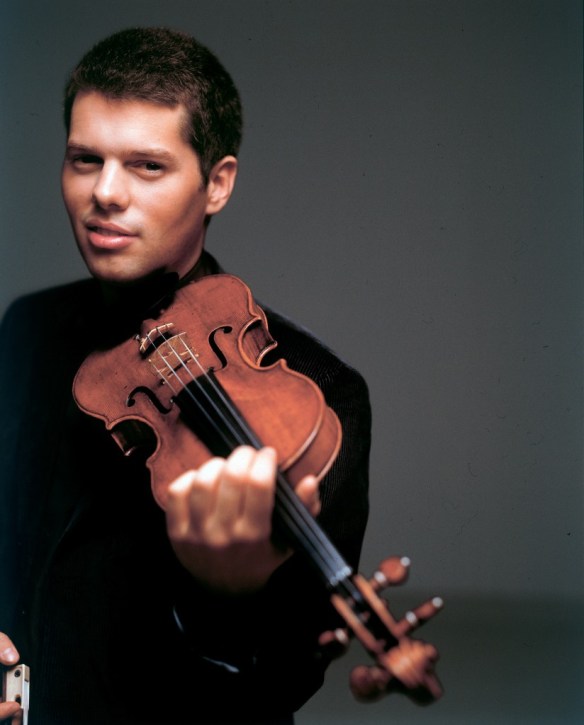
Photo (c) Laszlo Emmer

Barnabás Kelemen (violin) – Wigmore Hall, London, live on BBC Radio 3, 9 November 2015

Listening link (open in a new window):

http://www.bbc.co.uk/programmes/b06nrj16

on the iPlayer until 9 December

Spotify

In case you cannot hear the broadcast, here is a Spotify playlist of the music in this concert, from available versions on Spotify:

https://open.spotify.com/user/arcana.fm/playlist/7hpQWH2e75lnrwx3ibS4LU

What’s the music?

J.S. Bach: Partita No. 2 in D minor (1720) (30 minutes)

Ysaÿe: Violin Sonata No.3, ‘Ballade’ (1923) (6 minutes)

Paganini: 4 Caprices (from the 24 Caprices Op.1) (1802-17) (12 minutes)

Piazzolla: Tango Étude no.1 (1987) (3 minutes)

What about the music?

It’s quite possible to think of the violin as an ancestor of the guitar when you listen to this music. Some of it appears to be purely for show-off, especially when you get to the incredibly testing works by Ysaÿe, Paganini and Piazzolla, but when you look closer they are actually found to be musically proficient as well as technically demanding.

If Paganini was alive today I would imagine him behaving a bit like the guitarist Steve Vai, performing superhuman feats on his instrument but making sure at all times that not a note was wasted. That much is true in each of the famous Caprices, written for solo violin in a way that taxes all kinds of techniques with the performance of the instrument. The four here test the violinist’s ability with rapid string crossing, with playing three or four notes at the same time, and with rapid fingerwork.

Ysaÿe was also a virtuoso violinist, one who enjoyed dedications from Franck (his Violin Sonata) and Debussy (the String Quartet). Not much of his music is heard today, and when it is the Solo Violin Sonatas such as the one in this recital tend to be picked. Ysaÿe also taxes the violin but again ensures it is not just for display purposes. Piazzolla, meanwhile, was not known primarily as a violin composer, and his Tango Studies were originally written for the flute, but they transcribe naturally for the instrument, which can supply the rhythmic ‘snap’, as well as the other nuances that make the tango such an intense method of musical expression.

J.S. Bach’s Partitas for the solo violin come from a very different viewpoint. As in much solo Bach there are moments in these pieces where the listener feels as though they have entered a different time dimension, Bach’s treatment of his musical material so inevitable and so effortlessly calculated that it feels like the passing of time. The Solo Violin Partita no.2 is one of his most famous examples for a solo instrument, partly for the massive Chaconne with which it ends – a series of 64 variations on a small but ever-present loop.

Performance verdict

I wonder how many notes Barnábas Kelemen played in the course of this hour of music? Certainly Paganini ensured there were as many as possible in the selection of Caprices that he played, while Ysaÿe too packed a load into his brief but strikingly intense Solo Sonata.

Brilliantly played though this recital was, it could have done with a little more light and shade in the programming. The shade was to be found in the Bach, which was a really convincing account and was clearly a work close to Kelemen’s heart. He was relatively slow in the Allemande dance, which was an effective tactic as it meant the Gigue carried greater impact – though of course everyone was really waiting to see what he did with the Chaconne. Here Kelemen demonstrated a very firm grasp of the form, making a natural build through the 64 different variations, Bach’s vision growing in power and impact until it carried all before it.

Staying in the same key for the Ysaÿe was a brave but effective move, and this brief piece carried a Romantic intensity. It was good to be reminded of the Belgian composer’s genius, for his is not a voice often heard. Following this with Paganini was perhaps a step too far, like a mixed grill with no vegetables if you’ll pardon the parallel! That said, the Devil’s Laughter was brilliantly evoked in the last of the four caprices. Finally the Piazzolla, while harnessing the rhythms of the tango, was a bit too short to fully appreciate.

Kelemen is clearly a player of great ability – and although this recital might be better experienced in two takes, it demonstrates his technical prowess and keen musicality.

What should I listen out for?

J.S. Bach

1:42 – the Partita begins with a relatively slow dance, the Allemande. Kelemen does not use much vibrato to begin with, and his violin has a penetrating tone. As with much of the best Bach the music appears to unfold in a single, natural phrase.

7:08 – the Courante is much more purposeful, the notes quicker and the tone fuller. Bach drives the music on with a persuasive triple-time rhythm that Kelemen takes quickly. The tone of the instrument is also a bit brighter, the notes in a slightly higher register.

9:49 – the slow dance, the Sarabande­ – where the minor key really comes into its own. Here the violin is asked to do a lot of ‘multiple stopping’, which is playing more than one note at once, effectively making its own chords.

12:28 – the Gigue, another triple time dance that Kelemen takes at quite a lick, but which still has plenty of contrast with the repeats being used in each of the two sections. Bach gathers a lot of energy here, and as often uses the Gigue as the last dance form in his suites, but there is no feeling of finality here because we still have one movement to go…

17:47 – and that final movement is a massive one, the Chaconne, famously performed separately or reinterpreted for other instruments. The violin begins with a grand statement of a chord sequence which it then proceeds to spin out over 64 variations, mostly in the minor key but moving to the major at 24:44. Bach gives an enormous variety of colour, speed, attack, repose and musicality, starting relatively slowly but moving to passages of increasing difficulty and intensity, notably the string-crossing passage from 22:45, but this is also one of his most profound pieces of music when interpreted well. The music turns back to the minor key with impressive dramatic effect at 28:14.

Ysaÿe

33:08 – a slow beginning, acting as an introduction, before the sonata itself begins at 33:27 with a theme that sounds quite oriental. Although set in D minor the music rotates around that centre at quite a distance, and there is a lot of multiple stopping here. Despite the considerable virtuosity required there is a powerful musicality at the heart of this piece, which never uses display for the sake of it.

Paganini

40:37 – the Caprice no.1, almost laughably, is marked Andante (at a walking pace!) It certainly doesn’t begin that way, with a fiendish set of arpeggios facing the violinist. As the bow bounces across the string it is clear however that each of these notes is important, despite the obvious display tactics!

42:07 – the Caprice no.7 is much slower, and presents its theme in octaves – which any string player will know is an invitation for cramp! There is an eerie feel to the presentation of the notes, though soon Paganini can’t resist taking off at a great speed again. At 44:58 the music really goes out the blocks!

45:44 – the Devil’s Laughter of the Caprice no.13 is surely one of the most descriptive things Paganini wrote for the violin, and it crops up at disarming intervals in this piece, in and around the fiendish technical demands of the central section, set in a tempestuous minor key.

48:07 – the famous Caprice no. 24 was the basis of variations written by Rachmaninov and Lutoslawski (not to mention the South Bank Show theme!) but here it is in its original form, for solo violin. This Caprice is in itself a set of variations, and has a wonderful effect of tumbling pizzicato (plucking) at 50:34.

Piazzolla

53:31 – immediately the snappy tango rhythms are evident in the first tango etude, which sounds as though it was written for violin all along. The technical demands are not as extreme as some of the other music on the program, with a grasp of the tango rhythm the most essential part of the performance.

Further listening

https://open.spotify.com/user/arcana.fm/playlist/7hpQWH2e75lnrwx3ibS4LU

Taking Paganini’s Caprice no.24 as a starting point, the Spotify playlist above includes Rachmaninov’s famous Variations on a theme of Paganini for piano and orchestra, as well as Lutoslawski’s Variaions on the same theme for two pianos. Finally, it is a good chance to air one of six substantial concertos that Paganini wrote for violin and orchestra, works that are hardly ever heard in the concert hall these days. The second is one of the best, known as La Campanella because of the tune used in the last movement.
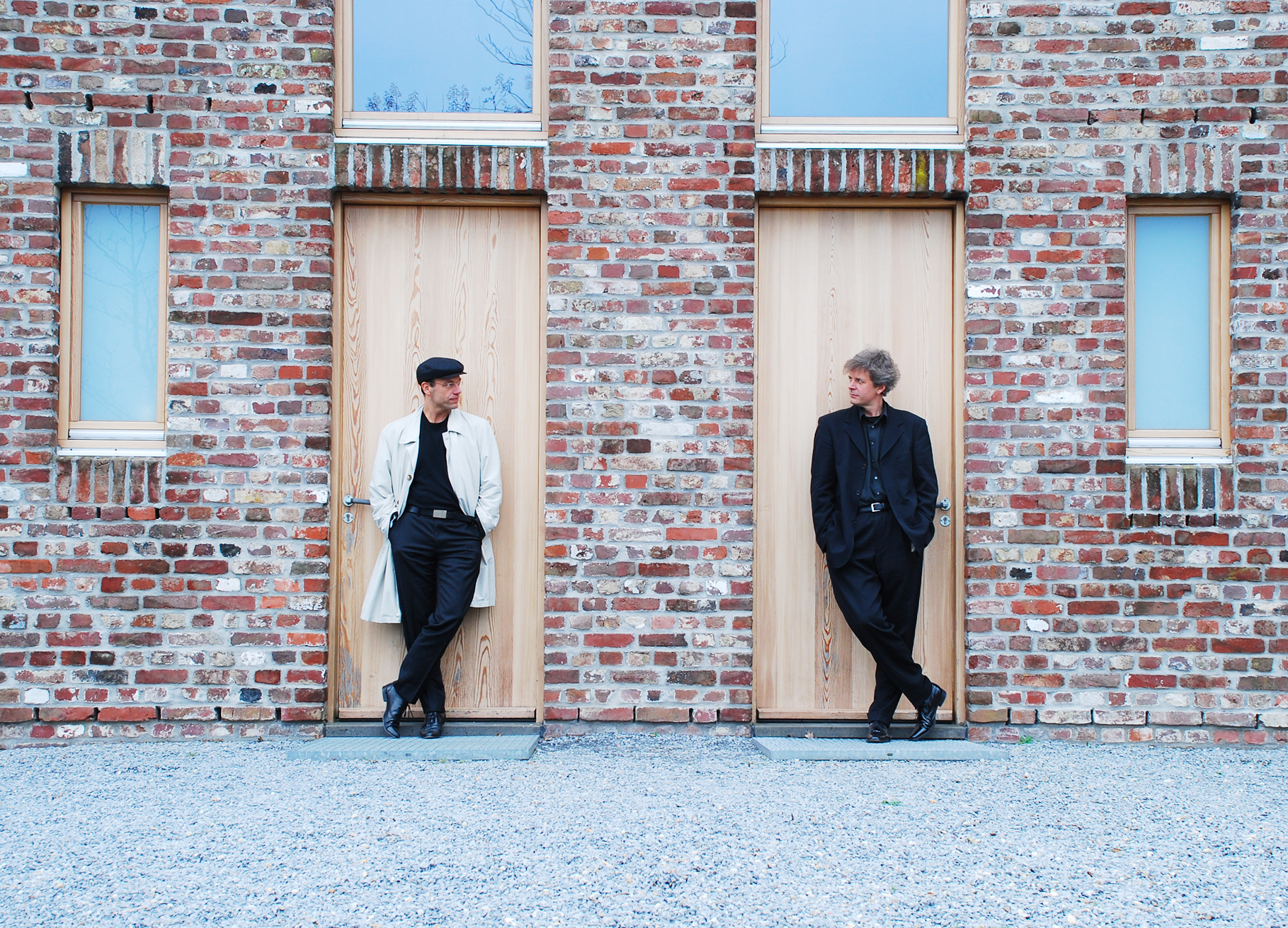


GrauSchumacher Piano Duo at the Wigmore Hall

GrauSchumacherPianoDuo
GrauSchumacher Piano Duo

Richard Whitehouse on the UK premiere of a substantial new work from Philippe Manoury, along with homages to J.S. Bach from Busoni and Kurtág
Wigmore Hall, London Monday 19 October

J.S. Bach (arr. Kurtág): Gottes Zeit ist die allerbeste Zeit, BWV106 – Sonatina; Alle Menschen müssen sterben, BWV643; Aus tiefer Not schrei ich zu dir, BWV687 (various)

Busoni: Fantasia contrappuntistica, BWV256b (1920, arranged for two pianos in 1921)

Manoury: Le Temps, mode d’emploi (2014) [UK premiere]

Andreas Grau and Götz Schumacher (piano duo)

The GrauSchumacher Duo – comprising pianists Andreas Grau and Götz Schumacher – follows in a distinguished lineage of such partnerships (among them Alphons and Aloys Kontarsky, or Bracha Eden and Alexander Tamir), but at least in the UK is known primarily through its substantial discography (notably for the enterprising NEOS label) than for its live performances. All credit, then, to Wigmore Hall for scheduling this recital as part of its focus on contemporary music, and which featured the first British hearing for a major new work.

Now in his early sixties, Philippe Manoury is well established among his peers in Western Europe while enjoying occasional UK performances (his large-scale orchestral and choral piece Zeitlauf caused something of a stir in London three decades ago). Live electronics has been a constant presence in his music, and Le Temps, mode d’emploi is no exception. Lasting around 50 minutes, this falls into eight continuous sections in which the consciously-applied virtuosity of the pianists is underpinned by electronics in terms of spatial diffusion and textural stratification. At the same time, the music audibly evolves in terms of its salient motifs dispersed across the sound spectrum and that merge into an accumulation of activity exceeded only by the plethora of echoes heard towards the close. Cohesive, then, while also overly uniform in sonic profile (is it surprising that electronically treated piano timbre seems to have moved on only incrementally since Stockhausen’s Mantra half a century ago?), with the actual material rather less memorable than those processes to which it is being subjected.

What was undeniable was the alacrity with which GrauSchumacher tackled this epic among piano duos, or the clarity with which those from Experimental Studio of South-West German Radio projected the complex sound transformations throughout the fabled Wigmore acoustic.

Before the interval came a welcome hearing for Busoni’s Fantasia contrappuntistica – a half-hour fantasy on, around and about Bach that began as a completion of his 14th contrapunctus from The Art of Fugue in 1910, soon to assume its definitive guise before being arranged for two pianos in 1921. This account pointed up the interplay of stark declamation and limpid passagework characterizing the initial chorale-variations, the increasing textural intricacy of the initial three fugues, then the tensile unfolding of the intermezzo with its three variations – leading, via a terse cadenza, to a climactic fourth fugue which was slightly underwhelming here, but the performance quickly regained focus for a haunting recollection of the chorale followed by the stretta (a concluding passage played at a faster tempo) that steers this piece through to its brief though magisterial conclusion.

An impressive reading overall, that gained from its having been placed in context with three Bach transcriptions by György Kurtág. Anyone present at one of the latter’s intimate recitals of these pieces with his wife may have found GrauSchumacher a touch too literal in overall execution, yet the sonatina from Bach’s Actus tragicus and the two chorale-preludes which followed evinced no lack of poise or elegance. Easy to overlook given what was to come, perhaps, while at the same time being telling instances of the maxim that ‘less is more’.

Jean-Guihen Queyras – Bach and Britten at the Wigmore Hall

Jean-Guihen Queyras plays works for solo cello by J.S. Bach and Benjamin Britten at the Wigmore Hall

jean-guihen-queyras

Jean-Guihen Queyras (cello) – Wigmore Hall, London, live on BBC Radio 3, 6 July 2015

Listening link (opens in a new window):

http://www.bbc.co.uk/programmes/b060zmjg

on the iPlayer until 5 August

Spotify

In case you cannot hear the broadcast, here is a Spotify playlist of the music in this concert, in recordings made by Queyras for Harmonia Mundi:

What’s the music?

Britten: Solo Cello Suite no.1 (1964) (20 minutes)

J.S. Bach: Solo Cello Suite no.6 (c1724) (30 minutes)

What about the music?

The idea of a cello playing on its own was only fully cultivated in the twentieth century – when Pablo Casals recorded the six Bach suites in the 1930s and they became part of the repertoire once again. Until then, unbelievably, they had lain dormant – but now they stand as arguably the most-played body of works for cello in existence. They are wonderfully flexible pieces, because the easiest parts of the suites can be played by budding amateurs. Generally, the higher the number of the suite, the more technically demanding they are.

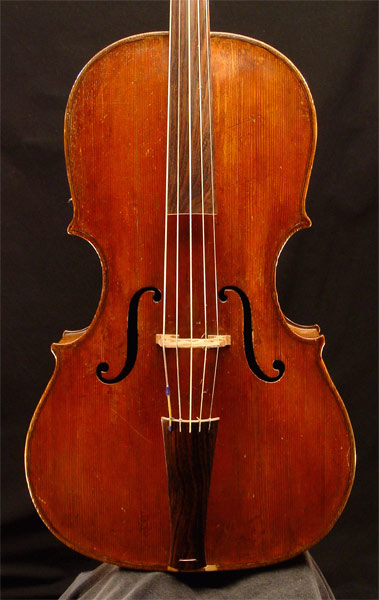
Hence the Sixth and last suite in the set is extremely virtuosic. It is thought to have been written for a five-string instrument known as the violoncello piccolo, like the one in the picture below:

violoncello-piccolo

The Sixth is the longest of the suites, and often features multiple stopping – i.e. more than one note played at once. Because the fifth string of the violoncello piccolo would have been a higher one (an ‘E’ above the highest cello string of ‘A’) the suite is unusual for its treble-rich sound.

Britten stole into the world of the solo cello by way of his dear friend Mstislav Rostropovich, who threw down the gauntlet to him to write a number of compositions for the instrument. In taking on writing for the solo cello he was one of the first since Bach to take it on in a solo capacity – Zoltán Kodály and Max Reger being the others.

Britten made an explicit homage to Bach’s works in the use of different dance forms, and like the elder composer he often wrote out multiple stopping, using the confines of the instrument to somehow write independent parts for it. These can be heard especially as the second movement Fuga takes shape.

Britten was to write another two suites for solo cello, for it was clearly an instrument that pricked his compositional interest.

Performance verdict

If ever proof were needed that Bach can make you happy, Jean-Guihen Queyras supplied it handsomely in this wonderful hour of music. Each of the six movements making up the Sixth Cello Suite danced persuasively, although in the slower Allemande and Sarabande dances Queyras achieved a wonderful, all-encompassing peace. Technically he was superb – this is far from easy music to play in public – with rock solid intonation and an easy way that endeared him to his audience.

The Britten made a good contrast, for this is a very serious piece, with inner strife that Queyras built perceptibly as the final flurry of notes grew closer. Here he was careful to bring out Britten’s part writing for the instrument, so that on occasion it felt as though there were many more instruments than just one in the room. The cello’s probing tone still brought each melody to the front, while the technical effects Britten uses to enhance the impact of the piece were brilliantly executed.

What should I listen out for?

Britten

1:41 – the Canto primo, where the cello proclaims the theme majestically. Immediately you can hear Britten’s use of multiple stopping, which is where the cello plays chords from several strings at once. This moves into…

3:39 – the Fuga begins. It seems very unlikely that a fugue could work on a cello but it somehow does – when at 3:52 the next entry of the tune comes in, meaning several parts can exist simultaneously. The ear is led this way and that, as though two or even three cellos are playing. From hear the mood darkens to…

7:42 – the Lamento, which starts with a broad intonation, like a solo singer. Britten wrote so many of his instrumental pieces as though they are vocal.

10:07 – the Canto Secondo. In response to the Lamento the cello gives a subdued account of the Canto theme, appearing lost in thought.

11:07 – Serenata. Marked Allegretto pizzicato (quite fast but with the strings plucked) this is a more playful homage to the second movement of Debussy’s Cello Sonata, which Britten and Rostropovich recorded together in 1961.

13:33 – a movement marked as Marcia – where Britten achieves ghostly sounds firstly through the use of harmonics, where the left hand rests very lightly on the string, and then through the wood of the bow banging on the string (14:14). The mood is now agitated.

16:40 – from the murky depths of the cello we hear the solemn Canto terzo, another variant of the tune from the start. The music becomes gradually more forceful, moving into…

18:29 – the Bordone begins – an unusually titled movement that features a drone on the note ‘D’ – mostly from the open string. Around it a cluster of notes can be heard, while the left hand plucks the string absently. Again it sounds like there are two or three instruments playing, such is the density of Britten’s music.

21:39 – the final section, marked Moto perpetuo – and now the cello sounds like a group of excited insects, the melody fluttering around restlessly. At 23:02 the main tune returns but sounds breathless in this company, as it does until the end – which is deliberately distorted and angry.

J.S. Bach

27:08 – the expansive Prelude, rooted in D major by frequent sounding of the open ‘D’ string, before gradually opening out. Bach’s main tune returns at a lower pitch (‘G’) at 29:33 – but then the music climbs to a peak at 30:28.

32:16 – the slow Allemande dance begins. This is the longest single movement in all of Bach’s music for solo cello, and it resembles a religious contemplation. Time really does seem to stand still as the cello’s music unwinds with a great inevitability. When he repeats the first section (from 33:57) Queyras plays much quieter.

40:34 – the triple-time Courante dance, a lively affair that finds the cello jumping around its range.

44:31 – the slow, serene Sarabande – which inhabits a similar world to the earlier Allemande. It requires clarity on the part of the cellist, who is playing high chords for much of the sequence, but when played well it is very beautiful, as here.

49:46 – a lightness of touch runs through the two Gavottes. The first of these uses a lot of multiple stopping, while the second (beginning at 51:25) is more purposeful and works its way into a bit of a frenzy over a drone. The first Gavotte is repeated at 52:34.

53:25 – the last of the dances, a Gigue – again in triple time. This has a rustic feel and keeps the wide open sound Bach has used throughout the suite, which reaches a thoroughly uplifting finish at 57:33.

Further listening

If the sound of the cello on its own appeals, the rest of the Bach and Britten suites are wholeheartedly recommended. In the Britten, one of many fine recordings comes from Norwegian cellist Truls Mørk, made for Virgin Classics. It can be heard on Spotify here:

In the Bach works interpretations are many and varied, so it is advisable to try a number of different sources. One of the earlier classic recordings that is always rewarding comes from the French cellist Pierre Fournier, made for Deutsche Grammophon’s side label Archiv Produktion in 1960. Here it is on Spotify:

For more concerts click here

Francesco Tristano – Mixing it up

francesco-tristano
Picture by Marie Staggat

Francesco Tristano has a number of musical specialities. You may know him as a pianist, partner with Alice Sara Ott in recent concerts revealing the percussive power of Stravinsky’s The Rite of Spring. Or you may know him as a pianist who has shown his worth in improvisation, playing alongside Carl Craig – and showing his love of techno in a pioneering arrangement for piano of Rhythim is Rhythim’s Strings of Life.

If you know him for this, you are likely to be aware that Tristano also DJs regularly – and has added his voice to the already illustrious crowd who have mixed an instalment of the Get Physical label’s Body Language series. Tristano’s own brand of body language consists largely of his own work, either through originals, remixes or collaborations, but it is clear from this interview he is far from self-centred. Though of course we had to ask him a few things about himself…

How long have you been DJing, and how did you start?

I got in touch with the DJ world when I was living in New York City in the late nineties. By the end of my NYC stay, in the year 2003, I was DJing in a bar/lounge downtown. But I knew my thing was to play live. So I didn’t really DJ publicly except for one party at the Rex club in Paris and I recorded a DJ set for BBC Radio 1. Body Language isn’t really a DJ mix either – it’s more like a produced session with many live elements such as live synths playing.

I gather you had a shortlist for Body Language of several hundred tracks. How do you go about choosing a selection for commercial release from that list?

It was important for me to find a common thread of melody and harmony throughout the mix. It was mostly about listening to which collection of tracks would make sense harmonically together.

You included the Joe Zawinul track The Harvest, which really stands out early on in the compilation. What made you want to choose it?

Zawinul is arguably my greatest inspiration, and from a very early age. I guess I just had to have one of his tracks on the album. The Harvest is taken from his 1985 solo album Dialects – that’s just after the break-up of Weather Report.

Would you say some of the pieces here – Amnesie with Luciano, for instance – are more about rhythm and atmosphere than out-and-out melody?

We actually made the track for a film, Barbet Schroeder’s Amnesie which, you guessed it, takes place on the island of Ibiza. In accordance with the script I was working with cello samples, and also a vague harmonic relationship to the film’s main theme (which is also played by the cello). The rhythmic programming is Lucien’s, and provided a great drive for the minimalistic cello figures.

Does the mix tap in to your own clubbing experiences?

Sure. I like techno which is not limited to kick drum and high hats. Bring in some vintage synths please.

Why do you think the piano is so important both in club music and in your own music making?

The piano has been my companion since I’m five years old. I can always count on it. It doesn’t even need power. . . As for the piano in club music, I am not entirely sure. Chicago house made ample use of piano samples, but it wasn’t really using live pianos. Maybe piano is present in electronic music symbolically because it is the ancestor of the synthesiser…

Would you say constructing a DJ mix is similar to constructing a larger-scale piece of classical music, in terms of key relationships and development?

Sure. Beat-matching is not enough.

Can you remember your first encounters with classical music?

There was a piano at my house. My mother listened to Bach, Wagner, but also Pink Floyd and Vangelis all day long. It was only a question of time until I touched the keyboard.

How does your work with Alice Sara Ott, playing Bach and Stravinsky, complement the work you do as a DJ?

Since I don’t work as a DJ (live sets only) it’s pretty much the same. Music is like cuisine: you have ingredients, and you can create very different dishes with the same set of ingredients.

Do you think dance / electronic music and classical music have a lot more in common than we realise?

I wish we would loosen up these denominations. Who decides if a given piece is classical? Detroit techno classics are called classics for a reason. Mozart never thought of writing a ‘classical’ sonata. It was the contemporary (‘techno’) music of his time.

What does classical music mean to you?

The same as techno ¬ i.e. nothing. Music is one long, universal continuum of which we are all part.

What are you listening to at the moment, and what piece of classical music would you recommend Arcana readers go out and find?

I am listening to Bach’s St. John Passion and I can only recommend it. But I would also recommend Starlight by Model 500. . .

Francesco Tristano’s contribution to Get Physical’s Body Language series is out now. The series includes mixes by DJ Hell, Modeselektor and Dixon. Meanwhile Scandale, his piano duet album with Alice Sara Ott, includes Stravinsky’s The Rite of Spring and Ravel’s La Valse. For more information click here – it is available now on Deutsche Grammophon

The ever-flexible Bach – Antoine Tamestit at Wigmore Hall

Antoine Tamestit performs two solo Bach suites and a new commission from Olga Neuwirth

antoine-tamestit

Antoine Tamestit (soprano) – Wigmore Hall, London, live on BBC Radio 3, 27 April 2015.

Listening link (opens in a new window):

http://www.bbc.co.uk/programmes/b05s3dhx

on the iPlayer until 28 May

Spotify

In case you cannot hear the broadcast, I have put together a Spotify playlist of the Bach suites played by Tamestit himself. Because the piece by Olga Neuwirth is so new – this was in fact the first performance – it has not been recorded yet. Here is the link to the Bach:


What’s the music?

J.S. Bach – Solo Cello Suite no.1 (arranged for viola) (1724, 15 minutes)

Olga Neuwirth – Weariness heals wounds (2014, 11 minutes)

J.S. Bach – Solo Cello Suite no.3 (arranged for viola) (1724, 19 minutes)

What about the music?

One sign of a great composer is surely the effectiveness of his music when heard on any instrument, not necessarily the one it was written for. J.S. Bach ranks among those whose music is incredibly versatile – Toccata and Fugue, Ave Maria and Sheep May Safely Graze just for starters! – and all have been successful in any number of guises.

So it is to a lesser extent with the solo cello suites, which transcribe for other stringed instruments – guitar and viola – very well.

The Austrian composer Olga Neuwirth has written for Tamestit before, in 2009 – a concerto for viola and orchestra. This much more private utterance, a response to the saturation posed by new media and some thoughts on how we can get away from that, takes a few quotations from the Concerto.

Performance verdict

These are excellent Bach performances, from a performer who is notable both for his technical command and expressive input. Tamestit ensures the Bach suites really dance, by taking pretty fast speeds but also giving plenty of air to the music. It suits the faster movements down to the ground, while the slower Sarabandes take time out for reflection.

The new piece Weariness heals wounds also gets a fine and concentrated performance. Tamestit clearly believes in this composer, and in the course of the ten minutes it is easy to hear the themes of frustration and saturation coming to the surface.

What should I listen out for?

Bach – Cello Suite no.1

1:37 – being up an octave from the cello original replaces the mellow sound of the lower instrument with a brighter viola. It works well as the dancing figures of the Prelude begin to work their magic. Towards the end an obsessive figure breaks out into a sunny finish.

3:42 – an Allemande, the first of the dance music, is relaxed and airy, and Tamestit adds to this feeling by slowing down at times in the more reflective passages. It is an effective technique.

7:50 – the Courante is a bit more lively, suggesting a quicker step in the dancing feet. Tamestit almost loses his way in the first half, with what seems like a memory lapse, but also adds some attractive ornamentation to Bach’s melodies, which is the performer’s prerogative here.

10:14 – the lovely Sarabande, a slower dance. Tamestit doesn’t let the bow rest on the string for too long, so the notes seem a bit shorter, and as a consequence they are lighter.

12:45 – the lively pair of Minuet begins, with a bracing first followed by a solemn second (beginning at 13:54 – and taken pretty fast by Tamestit here). As is customary in these suites, we hear the first Minuet again (14:45)

15:22 – the final movement in these Bach suites is always a Gigue, a dance of French origin in triple time that usually signs off the suite with some gusto. That is definitely the case here!

Neuwirth

18:33 – quite a biting start, with two strings playing pitches very close together that sound like quarter tones. The mood is tense and – as in the title – given with a certain weariness.

The jarring notes return again, suggesting that the new media is grating somewhat? Then a more aggressive section begins, where the bow is positioned near the bridge of the instrument to create a scratchy sound. Discomfort abounds!

At 25:15 a semblance of a tune begins, but it is uneasy. Then at 26:04 the ‘G’ pitch asserts its importance before a series of virtuosic and sweeping runs. Again the use of quarter tones is in evidence, and when the melodies get longer Tamestit makes the viola sound bluesy and mournful. The piece ends with a sharply plucked note.

Bach – Cello Suite no.3

31:19 – there is a nice and slightly mischievous approach in the stop-start Tamestit applies here, with grand gestures followed by quite hurried phrases. It works well as the Prelude progresses through a number of different but utterly logical keys, before going through a quick series of movements over a ‘pedal’ note, after which it works to a big finish.

34:11 – quite a bouncy Allemande this one, genial too.

37:47 – a Courante with plenty of energy, bounding out of the blocks. If you were dancing to this one – the cello suites do after all have dance movements – you’d have to be pretty quick on your feet!

40:24 – a grand Sarabande, which might not be as weighty in the hands of the viola as it is on the cello, but which still makes a strong impression. As so often in the slower dances there is time for intensely concentrated thought.

43:44 – a genial pair of Bourrées comes into view – another dance Bach used for some of his solo instrument works. Bach often writes one in a major key but contrasts it – as here at 45:07 – with a more reserved one in the minor key. Once again the first Bourrée is repeated, coming back at 46:22.

47:06 – the Gigue swings into action with an energetic burst. There is some quite dissonant double stopping too (more than one string played at once)

Encore

Kurtág – Perpetuum mobile, one of the Signs, Games and Messages

51:19 – this piece is little more than a gruff introduction and a few jarring notes lasting little more than a minute! Yet as always with Kurtág, whose pieces are famously brief but incredibly concentrated, it takes longer to write about his music than to listen to it.

Want to hear more?

Not many composers wrote for the viola on its own, but the composer Max Reger – for whom Bach was a hero and inspiration – wrote three suites. They can be heard on Spotify here as part of an album of his chamber music for viola, played by Nobuko Imai, who is accompanied by Ronald Brautigam in the substantial Sonata for viola and piano. The album can be found here

For more concerts click here