
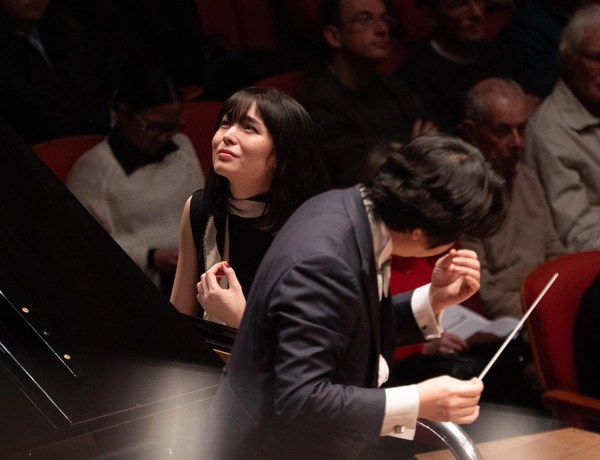
In concert – Alice Sara Ott, CBSO / Kazuki Yamada: Grieg, Bax, Clyne & Debussy

Alice Sara Ott (piano), City of Birmingham Symphony Orchestra / Kazuki Yamada

Bax Tintagel (1917-19)
Grieg Piano Concerto in A minor Op.16 (1868)
Clyne Restless Oceans (2018)
Debussy La mer L109 (1903-05)

Symphony Hall, Birmingham
Tuesday 22 September 2026

Reviewed by Richard Whitehouse Photo (c) Hannah Blake-Fathers

The sea, in various manifestations, was a dominant factor in this evening’s concert by the City of Birmingham Symphony Orchestra. One which began with Tintagel, long the most familiar (if not the only one now being revived) of Bax’s tone poems, where Kazuki Yamada showed a sure grasp of music more a reflection of its composer’s involvement with the pianist Harriet Cohen than of Arthurian times or places. Its ‘love music’ lacked nothing in rapture, yet it was the seascape from which it emerges then to which it returns that made the lasting impression.

Grieg’s Piano Concerto might not convey any overt maritime associations, but its expressive ambience is audibly that of the outdoors (unlike that of the Schumann concerto that provided its model in many particulars) and Alice Sara Ott – CBSO Collaborative Artist these next two seasons – responded with playing as impetuous and soulful as its opening movement requires. Fleeting hesitancies aside, there was no mistaking the rapport between her and Yamada; with its cadenza an emotional culmination in every respect. Soulful while never inert expressively, the central Adagio exuded inward warmth as found ideal contrast in the bracing energy of the finale – its poetic middle section artlessly rendered, and its apotheosis opulent with no undue bathos. Ott’s limpid rendering of John Field’s Ninth Nocturne made for an appealing encore.

The second half got off to a short if by no means sweet start with Restless Oceans, a compact yet eventful celebration of female identity from Anna Clyne – CBSO Composer in Residence for the current season – that lacked little in presence. Rhythmically incisive and harmonically expressive ideas, alternating purposefully on their way to the tersely unequivocal conclusion, were offset by vocal and gestural contributions from the musicians that added a layer of vivid theatricality. Further and more extended instances of Clyne’s music will follow in due course.

Bax can only have been too aware when writing Tintagel of Debussy’s La mer – this latter a game-changer in terms of orchestral composition, whose influence continues to radiate some 120 years on. Right from the opening of From dawn to midday on the sea, it was apparent Yamada had found the balance between the placing of detail within an overall structure that, if not symphonic per se, has a formal integration and expressive sweep as feels nothing if not symphonic – witness the majestic peroration with which this opening movement culminates.

Much the most elusive of these symphonic sketches, Play of the Waves yielded a lightness of touch and deftness of motion that only emphasized its emotional ambivalence. Unerringly phrased, its coda prepared ideally for Dialogue of the Wind and the Sea, a finale where the combative and alluring are brought together for what proved a thrilling culmination (though Yamada might have dispensed with those trumpet entries which Debussy subsequently and unwisely added). Certainly it brought this concert to its unequivocal and impressive close.

Yamada returns to Birmingham just before Christmas and Ott does likewise next May, while the CBSO is back in a week’s time with a programme featuring Elgar’s Enigma Variations as well as a second hearing for the co-commissioned Saxophone Concerto by Gwilym Simcock.

To read more about the CBSO’s 2026/27 season, visit the CBSO website. Click on the names to read more on pianist Alice Sara Ott and conductor Kazuki Yamada, and more on composer Anna Clyne

Published post no.3,027 – Thursday 24 September 2026
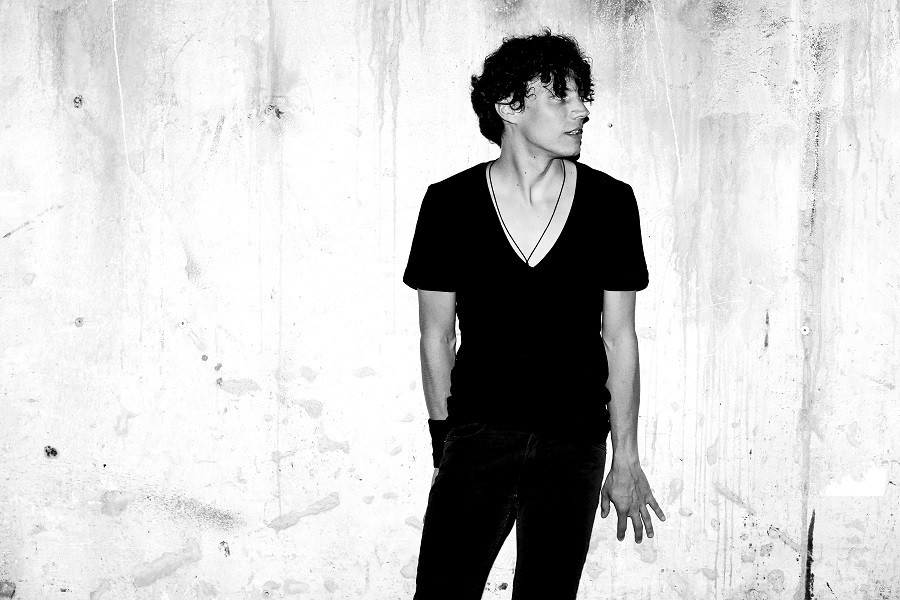
Francesco Tristano – Mixing it up

francesco-tristano
Picture by Marie Staggat

Francesco Tristano has a number of musical specialities. You may know him as a pianist, partner with Alice Sara Ott in recent concerts revealing the percussive power of Stravinsky’s The Rite of Spring. Or you may know him as a pianist who has shown his worth in improvisation, playing alongside Carl Craig – and showing his love of techno in a pioneering arrangement for piano of Rhythim is Rhythim’s Strings of Life.

If you know him for this, you are likely to be aware that Tristano also DJs regularly – and has added his voice to the already illustrious crowd who have mixed an instalment of the Get Physical label’s Body Language series. Tristano’s own brand of body language consists largely of his own work, either through originals, remixes or collaborations, but it is clear from this interview he is far from self-centred. Though of course we had to ask him a few things about himself…

How long have you been DJing, and how did you start?

I got in touch with the DJ world when I was living in New York City in the late nineties. By the end of my NYC stay, in the year 2003, I was DJing in a bar/lounge downtown. But I knew my thing was to play live. So I didn’t really DJ publicly except for one party at the Rex club in Paris and I recorded a DJ set for BBC Radio 1. Body Language isn’t really a DJ mix either – it’s more like a produced session with many live elements such as live synths playing.

I gather you had a shortlist for Body Language of several hundred tracks. How do you go about choosing a selection for commercial release from that list?

It was important for me to find a common thread of melody and harmony throughout the mix. It was mostly about listening to which collection of tracks would make sense harmonically together.

You included the Joe Zawinul track The Harvest, which really stands out early on in the compilation. What made you want to choose it?

Zawinul is arguably my greatest inspiration, and from a very early age. I guess I just had to have one of his tracks on the album. The Harvest is taken from his 1985 solo album Dialects – that’s just after the break-up of Weather Report.

Would you say some of the pieces here – Amnesie with Luciano, for instance – are more about rhythm and atmosphere than out-and-out melody?

We actually made the track for a film, Barbet Schroeder’s Amnesie which, you guessed it, takes place on the island of Ibiza. In accordance with the script I was working with cello samples, and also a vague harmonic relationship to the film’s main theme (which is also played by the cello). The rhythmic programming is Lucien’s, and provided a great drive for the minimalistic cello figures.

Does the mix tap in to your own clubbing experiences?

Sure. I like techno which is not limited to kick drum and high hats. Bring in some vintage synths please.

Why do you think the piano is so important both in club music and in your own music making?

The piano has been my companion since I’m five years old. I can always count on it. It doesn’t even need power. . . As for the piano in club music, I am not entirely sure. Chicago house made ample use of piano samples, but it wasn’t really using live pianos. Maybe piano is present in electronic music symbolically because it is the ancestor of the synthesiser…

Would you say constructing a DJ mix is similar to constructing a larger-scale piece of classical music, in terms of key relationships and development?

Sure. Beat-matching is not enough.

Can you remember your first encounters with classical music?

There was a piano at my house. My mother listened to Bach, Wagner, but also Pink Floyd and Vangelis all day long. It was only a question of time until I touched the keyboard.

How does your work with Alice Sara Ott, playing Bach and Stravinsky, complement the work you do as a DJ?

Since I don’t work as a DJ (live sets only) it’s pretty much the same. Music is like cuisine: you have ingredients, and you can create very different dishes with the same set of ingredients.

Do you think dance / electronic music and classical music have a lot more in common than we realise?

I wish we would loosen up these denominations. Who decides if a given piece is classical? Detroit techno classics are called classics for a reason. Mozart never thought of writing a ‘classical’ sonata. It was the contemporary (‘techno’) music of his time.

What does classical music mean to you?

The same as techno ¬ i.e. nothing. Music is one long, universal continuum of which we are all part.

What are you listening to at the moment, and what piece of classical music would you recommend Arcana readers go out and find?

I am listening to Bach’s St. John Passion and I can only recommend it. But I would also recommend Starlight by Model 500. . .

Francesco Tristano’s contribution to Get Physical’s Body Language series is out now. The series includes mixes by DJ Hell, Modeselektor and Dixon. Meanwhile Scandale, his piano duet album with Alice Sara Ott, includes Stravinsky’s The Rite of Spring and Ravel’s La Valse. For more information click here – it is available now on Deutsche Grammophon

Alice Sara Ott – The Chopin Project

alice-sara-ott
Alice Sara Ott

German-Japanese pianist Alice Sara Ott has recorded Chopin before – but not like this. Signed to Deutsche Grammophon, she has recorded the composer’s complete Waltzes for piano – along with discs of Beethoven, Liszt, Tchaikovsky and Musorgsky. Now she returns to Chopin, but with the Broadchurch composer Ólafur Arnalds for company. The Chopin Project is their collaborative album, featuring recordings made by Ott on a less-than-perfect piano, complemented by pieces for strings from Arnalds.

Ott is enthusiastic about the project as we grab a quick phone call in-between her rehearsal schedule – which has just reached the Barbican, where she has selected a piano for a concert. So, as Arcana begins with every interviewee…

Can you remember your first encounter with classical music?

My mother is a professional pianist, so there is always music in our house. That means the first classical music I heard was probably when I was still in her belly! I think my first concert experience was when three years old, and I had to go with my mum as she couldn’t find a babysitters.

At that age, you’re not able to communicate with adults, but every child still wants to be understood. Everybody wants to find a way of expressing themselves other than with the voice, and I was fascinated by the idea of about 200 people listening to someone in a room, playing piano, without talking.

I think I started playing piano as a simple wish for being understood and getting some attention. It goes beyond spoken communication. The music was not necessarily what moved me, it was the situation, and the language everybody listened to and understood.

Can you remember your first encounter with the music of Chopin?

It was around five years old. I had a cassette tape – I think Deutsche Grammophon had a series for children where they got an actor to tell the story of the composer with different recordings. I think it was a birthday or Christmas present, and that was the first time I experienced it. I couldn’t pronounce it!

Where did you meet Ólafur?

I had never really listened to his music before, but I met him through a producer who used to be my producer at DG. When Ólafur started to talk about the idea he came across the Chopin Waltzes disc I had done, and he contacted me through the producer. In the beginning I couldn’t imagine the idea. I’m very careful with these collaborations, as I see myself as a core classical artist.


What did you think of his music?

When I listened to Ólafur’s music it had taste and style, and I really liked it, so we spoke on Skype and I ended up accepting the offer. I play the Chopin pieces as written, but it was good to get a little bit away from the perfect, stereotypical sound we get in recording these days. Everything is so clean and perfect, but in those days before recording it was not so important and everybody was closer to the artist. You don’t hear the pedals or the hammers in piano recordings any more, you just hear when the sound reaches the acoustic.

Nowadays we have great instruments, and great halls, but with The Chopin Project we wanted to bring people back to really listen and get an intimate experience. It was an all-acoustic thing, and it was great for me. We are planning on a tour with the project. It’s so much fun!

How much input did you have into Ólafur’s compositions?

Almost nothing at all, he wrote them separately. The one track where I’m playing is where I play little ornaments, but this is his part of the album – me joining his project, his idea.

I like the idea he didn’t do rearrangements and came up with original pieces, and I think the pieces with strings complement the ones with solo piano. He felt it was more appropriate for strings and the one track where he uses the solo violin.

You said how important the more natural approach to recording was – do you think modern recording can be too clinical sometimes?

It’s a very different sound experience, the concept is different. We tried to distance ourselves from how recordings are made today.

It’s a great thing the technology is so advanced and everything is possible, but sometimes I wish for more live moments, and I like to record something with a natural flow. You will never get the same as experiencing the music live, but it is a lot closer to that.

Will The Chopin Project bring his music to a new audience?

I hope so, and I want it to bring in not just a new audience but the audience that have heard him one thousand times. I think it sits very well with the times we live in. Things are so perfect in those human moments, experiencing live music – these moments are very precious. The old audience gets a new perspective, and at some points in the recording I can even hear myself breathing. It makes it very human.

You have worked and recorded with Francesco Tristano, who also crosses between classical and other forms of music such as techno. How did your collaboration begin?

With Francesco it started out of friendship; and a passion we share for the music of Bach. I grew up with him aside from our passion for food.

I had the idea to invite him on as a guest for a French Baroque album, and then for a Bach double album that didn’t work out. We decided to base a two-piano album around The Rite of Spring (given the title Scandale) and came across the music for the Ballets Russes company. These are some of the major pieces in classical music, so we chose Stravinsky’s Le Sacre du Printemps (The Rite of Spring) and found a couple that went with it. We have now played 30 concerts together, and we’re at a point where we don’t think about most of the music on the disc originally being written for orchestra.

For me you enter a new world. We never can play without energy, and that’s the fun part. It’s very physical and we wouldn’t do it after an espresso or something! It’s all about dance music. It’s rhythmically very challenging but so fun. When we play it you see the audience react physically, moving their shoulders, and that’s so nice to see, that’s what music does and that’s the common language that goes beyond words, and makes you feel very privileged.

What are your future plans?

I’m in London now for my performance of the Liszt Piano Concerto no.2, and then I move on to Shanghai, South America, the United States and then a couple more times to London. Francesco and I will come to London with Scandale.

The Chopin Project is out now on Mercury Classics. You can find out more about Alice and her recordings by visiting her website