Bach and the viola da gamba – Paolo Pandolfo and Markus Hunninger

Bach and the viola da gamba – Paolo Pandolfo and Markus Hunninger explore two of the sonatas Bach wrote for the instrument, along with music by gamba maestro Carl Friedrich Abel

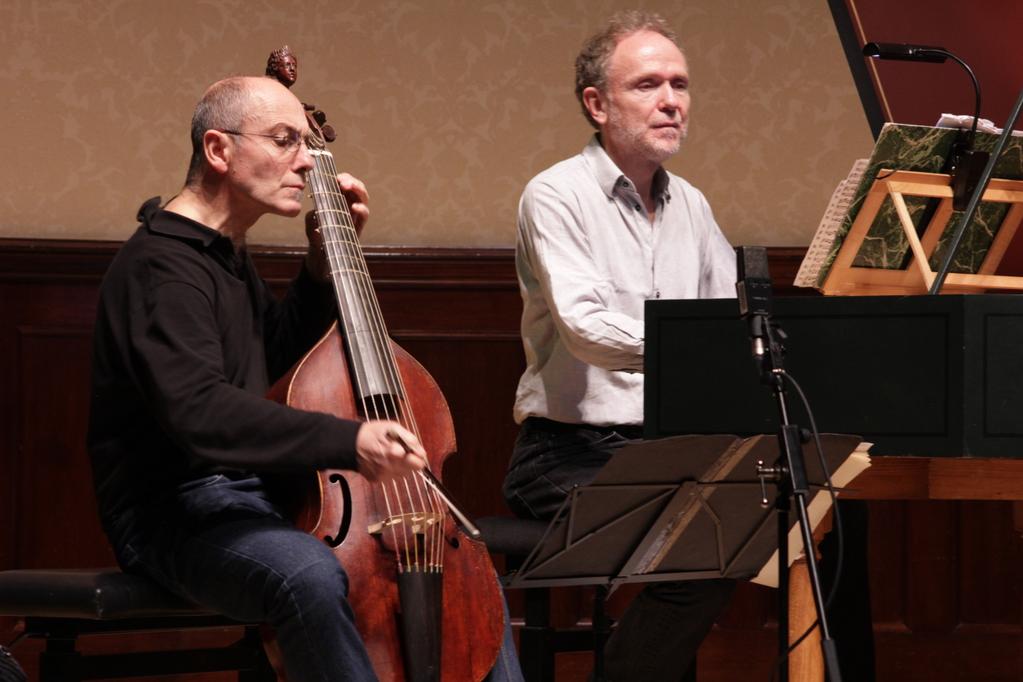
paolo-pandolfoPaolo Pandolfo (viola da gamba) and Markus Hunninger (harpsichord) – Wigmore Hall, live on BBC Radio 3, 16 March 2015. Photo © Ben Collingwood

Listening link (opens in a new window):

http://www.bbc.co.uk/programmes/b052047t

on the iPlayer until 15 April

For non-UK listeners, this Spotify playlist is available:

For those unable to hear the broadcast I have put together a Spotify playlist, containing the Bach sonatas – but not the Abel, which I could not find on the service. Pandolfo and Hunninger have recorded the Bach recently, but their versions are not available – so I have chosen suitable substitutions here

What’s the music?

J.S. BachViola da gamba Sonata no.2 in D major BWV1028 (not later than 1741) (16 minutes) (the ‘BWV’ number gives an indication of the work’s position in the Bach-Werke-Verzeichnis (Bach Works Catalogue)

Abel6 Pieces from the Drexel Manuscript for solo viola da gamba (date not known) (20 minutes)

J.S. BachViola da gamba Sonata no.3 in G minor BWV1029 (not later than 1741) (16 minutes)

What about the music?

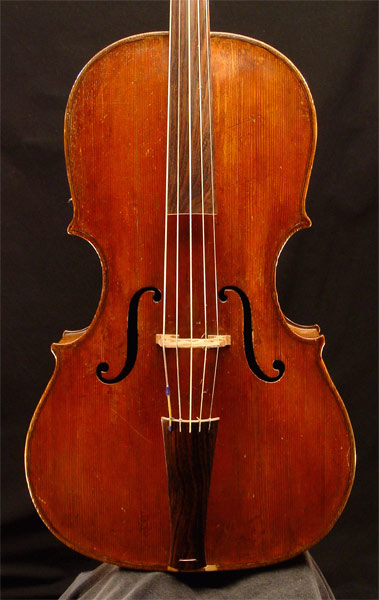
The first question to answer here is ‘what is a viola da gamba’? It is an ancestor of the cello, gripped between the players knees and played with the bow. Although it was used mostly as an ensemble instrument to begin with, Bach, Abel and other composers began to write for it in more of a solo capacity.

The instrument used by Paolo Pandolfo in this concert has seven strings, and dates from around 1700. There is no ‘spike’ on the instrument, so the player has to grip it with their knees.

Bach wrote three accompanied sonatas for the instrument, though exactly when he wrote them is not clear. Abel is described in the BBC Radio 3 introduction as ‘the link between baroque and classical music’, and headed for London with nothing more than ‘six symphonies in his pocket’. He was a virtuoso viola da gamba player, and while in London wrote a lot of music for the instrument. This surfaced in the 19th century through manuscripts belonging to Joseph Drexel. Paolo Pandolfo stated in the introduction that Abel ‘respected the viol as a true lover respects his beloved’

Pandolfo himself came to this music initially from jazz, bringing with it his own talent for improvisation.

Performance verdict

These are engaging and often stylish performances. Paolo Pandolfo and Markus Hunninger have a long-established chemistry in this repertoire, and their experience allows them to tastefully improvise within the confines of the written music – as the composers would wish them to do.

Pandolfo’s quiet playing in particular is sublime, and I found myself instinctively leaning forward on occasion to catch his insights. The freedom he lent the Abel pieces made them sound like brand new improvisations.

On some occasions I did feel this improvising was a little overdone, and that in the Bach especially the slow movements would have benefited from a ‘less is more’ approach, as the pulse was almost lost at times. In the faster movements however the dialogue between the instruments was a constant joy, their enjoyment of the music clear to see.

What should I listen out for?

Bach Sonata no.2

3:45 – the Bach begins with a thoughtful Adagio. Pandolfo is a model of restraint here, and with Hunninger there are some pronounced variations of the tempo

7:29 – the bright, vivacious second movement begins, using the upper register of the viola da gamba’s range. The crisp harpsichord right hand often trades melodic ideas with the gamba.

11:17 – a thoughtful slow movement, now in a ‘lower’ key (B minor) that brings out the resonance of the instrument’s lower strings. Pandolfo plays with great poise here.

16:14 – a burst of sunshine in the form of a move to D major. The gamba and harpsichord play cat and mouse, all the time shadowing each other’s moves. From 17’30” some tasteful trills added by harpsichordist Hunninger, before the instrument plumbs the depths just over a minute later. Some of Bach’s harmonic daring can be heard here, the music veering off to distant areas. Pandolfo occasionally plays two strings rather than one (‘double stopping’)

Abel

23:29 – the first of Abel’s six pieces has a free, improvisatory feel – which I assume to be Pandolfo’s license with the piece rather than an absence of bar lines. The bow flits between strings and the quiet moments are exquisitely found.

25:36 – Pandolfo secures an extraordinary bit of ‘skating’ here (not a technical term!), the bow rushing across the strings but somehow making all the notes coherent.

27:39 – this piece starts with pizzicato (plucking), which sounds unusual on the gamba, before short pieces of double stopping, culminating in the lovely passage at 31’15”. The performance here feels quite mannered, but on saying that Pandolfo does bring the composer’s thoughts off the page, making them feel fresh.

32:18 – again we hear the higher register of the viola da gamba, and Abel writes for it in such a way that it provides the accompaniment as well as the melody, thanks to lots of double stopping. There is an extraordinary passage of music from 34:12, the music rushing almost out of control, but at no point does Pandolfo lose control.

34:40 – this movement reminds me of Bach’s Sixth Suite for Solo Cello, a really lovely and rather moving slow dance.

39:04 – staying in the same key as the previous five – D major – this has a more improvisatory feel as the piece gradually grows in height of pitch. After this introduction there is a spikier stretch of music, with a distinctive theme, before Pandolfo brings the music to a very soft close at 43:40

An extended tuning episode (almost an improvisation!) before…

Bach Sonata no.3

46:51 – the start of this sonata introduces a melody very similar to the one Bach used in his Brandenburg Concerto no.3 – with a subtle difference as this piece is in a minor rather than a major key, and sounds more serious as a result. Pandolfo and Hunninger energetically navigate the contours of a lively first movement.

52:15 – as slow as the second movement was fast, this Adagio is stretched out almost to its limits by the two performers. This is not an overly indulgent performance though, as they are both trying to extract maximum emotion from the music, often by way of ornaments improvised in both parts. This does lose the rhythmic pulse on occasion.

58:54 – the harpsichord picks out the notes of the main theme, a kind of stuttering melody that the viola da gamba takes up. This is the inspiration for the debate of the rest of the movement. There is a false ending at 1:02:08 where the pair deliberately pause on a ‘wrong’ chord – before finishing more emphatically.

Want to hear more?

The ideal complement to this music can be found in Bach’s Sixth Suite for solo cello – which was written for a form of cello with five strings. Anner Bylsma plays it on Spotify here

For more concerts click here

Connecting Bach with Mozart – Giuliano Carmignola and Kristian Bezuidenhout

Connecting Bach with Mozart – Giuliano Carmignola and Kristian Bezuidenhout link J.S. Bach with Mozart by way of three violin sonatas

carmignola-bezuidenhoutGiuliano Carmignola and Kristian Bezuidenhout – Wigmore Hall, live on BBC Radio 3, 16 February 2015. Photo © Ben Collingwood

Listening link (opens in a new window):

http://www.bbc.co.uk/programmes/b051chkl

on the iPlayer until 17 March

For non-UK listeners, this Spotify playlist is available:

For those unable to hear the broadcast I have put together a Spotify playlist, including Giuliano’s recordings of the Bach with harpsichordist Andrea Marcon, and the Mozart – which he has not yet recorded – with Mark Steinberg and pianist Mitsuko Uchida on Decca:

What’s the music?

J.S. BachSonata no.2 in A major for violin and keyboard BWV1015 (thought to be between 1717-1723) (13 minutes) (the ‘BWV’ number gives an indication of the work’s position in the Bach-Werke-Verzeichnis (Bach Works Catalogue)

J.S. BachSonata no.3 in E major for violin and keyboard BWV1016 (thought to be between 1717-1723) (15 minutes)

MozartViolin Sonata in A major K526 (1787) (21 minutes) (the ‘K’ number gives an indication of the work’s position in Mozart’s catalogue. This is no.526 of a total of 626 numbered published works)

What about the music?

This is a ‘period instrument performance’ – that is, played on instruments from or designed to sound like those in Bach and Mozart’s time. The BBC Radio 3 announcer Sara Mohr-Pietsch confirmed Carmignola’s violin is an Italian model dating from 1739, while Bezuidenhout used an early piano developed from an original of 1805.

Mozart wrote dozens of sonatas for violin and keyboard, but the later ones are generally regarded as his finest. This particular example was written around the same time as the opera Don Giovanni, and is dedicated to the memory of Mozart’s friend and fellow-composer Carl Friedrich Abel.

The two Bach works are not as often performed as his works for solo violin, but demonstrate his ease and flair with writing for the instrument. Violin and piano are very closely linked in this music.

The Bach connection comes through the friendship between Bach’s son Johann Christian – whose music is still frequently performed to this day – and Carl Abel. Both met the eight-year old Mozart and stayed in touch with him.

Performance verdict

Carmignola’s bright tone is ideal for the Bach, which could be dry in lesser hands. Here he brings out all the vocal elements in the writing, and is helped by strong support by Bezuidenhout, whose springy rhythms and nicely shaped phrases are a constant pleasure.

The Mozart is an exceptional performance, bringing deep emotion and uncertainty to the slow movement in particular. The grace with which both performers play is unusual in period-instrument playing, and the softness of tone from the fortepiano is beautiful.

The Bach works are a little less obviously expressive, but are extremely well played. What was abundantly clear – an often underestimated point – is just how much the players were listening to each other during performance, not to mention a clear enjoyment of the music!

What should I listen out for?

Bach Sonata no.2

4:49 – at first I actually wondered if the two instruments were tuning up, as they were playing a unison ‘A’! However it turned out to be the easy going start of a graceful slow movement, the first of four.

7:49 – quite a punchy beginning to the first fast music of the sonata, the instruments dovetailing their melodic lines and with several cleverly worked sequences. The music ends quite suddenly.

10:54 – marked ‘Andante’ (at a walking pace), this has purposeful movement despite the slower tempo, and a slightly sorrowful air. Carmignola gives some tasteful ornamentation to the melody.

13:49 – an energetic fourth and final movement. The movement between the violin and piano parts (‘counterpoint’) drives the music forwards.

Bach Sonata no.3

18:47 – a spacious but very expressive slow movement, marked ‘Adagio’. The profile of the violin melody is as if written for a singer, with a common five-note accompaniment for the fortepiano.

22:29 – a lively second movement, with a constant stream of dialogue (‘counterpoint’) between the two instruments, beautifully dovetailed in this performance.

25:29 – this may be a slow movement but there is a soft dance element. Eventually it peters away into almost nothing.

29:44 – a vigorous fourth movement, simply marked Allegro, where both violin and fortepiano work hard together and apart.

Mozart

35:43 – a colourful fast movement to begin with, with both instruments equally involved in the dialogue and sharing the themes. The piano has some particularly tricky runs in the right hand which Bezuidenhout appears to manage easily.

42:19 – a deeply profound piece of contemplation, where Mozart appears to be remembering his friend in music that alternates between hope and deep thought. The passages of ‘hope’) (from the start, for example) tend to be in the ‘major’ key, while the passages of darker introspection (45:28 for example) are rooted in the minor.

49:15 – to start with the violin and piano seem out of sync, with some elaborate rhythms from Mozart. The piano in particular is incredibly busy, with the left hand shadowing the right in melodic profile. The violin becomes more showy in the central section.

Encore

57:49 – A short and nippy encore, the last movement of J.S. Bach‘s Violin Sonata in B minor, BWV1014. This work was published as the first of a group of six – the works above being the second and third in the group.

Want to hear more?

As the link between this music is Johann Christian Bach, here is a link to a disc of ‘Six Favourite Overtures’, played by the Academy of Ancient Music under Christopher Hogwood:

For more concerts click here

Hungarian passion

Hungarian passion – Alisa Weilerstein plays music for solo cello by Bach and Kodály

alisa-weilersteinAlisa Weilerstein (cello) – Wigmore Hall, live on BBC Radio 3, 5 January 2015

Listening link (opens in a new window):

http://www.bbc.co.uk/programmes/b04wmjx6

on the iPlayer until 7 February

For non-UK listeners, this Spotify playlist is available:

What’s the music?

J.S. Bach – Solo Cello Suite no.5 (1724, 26 minutes)

Zoltán Kodály – Solo Cello Sonata (1915, 28 minutes)

What about the music?

Bach wrote six suites for the cello – or an instrument incredibly similar to it – and they have become some of his most popular works, suitable for students or performers alike. They are intensely private pieces but have a nice line in humour as well, especially in the faster sections, set to European dance forms of the time.

The first of Bach’s six suites was used in the film Master and Commander, on which more can be found here. The fifth is a sparse work and quite bleak at times. It is in six movements – with a Prelude, two faster dances (an Allemande (German) and a Courante (French), then a slow French one (Sarabande). Then we have a pair of lively Bourrées (French again) and a Gigue.

The Hungarian composer Kodály has written a much more modern sounding piece; even more so than its 1915 composition date suggests. Before performance the cellist is required to lower the lower of the four from a ‘C’ pitch to a ‘B’, darkening the colour considerably. Kodály uses a lot of dance music – like Bach – but this is much freer and has an improvised feel, the listener practically carried outside into the village by the directness of the writing.

Performance verdict

Despite a couple of lapses of tuning in the Bach, Alisa Weilerstein gives a carefully thought performance. In the Kodály she really comes into her own though, with plenty of fire and brimstone!

What should I listen out for?

Listen especially for these bits:

J.S. Bach

01:08 – the start of the Prelude, where Weilerstein plays very quietly with no vibrato*. The music is bare and at a funeral pace.

16:03 – the ‘Sarabande’ (a slow dance), which Weilerstein takes incredibly slowly. To me this sounded like an evocation of slowly falling tears.

Kodály

26:44 – the arresting start of the Kodály Sonata. A lot of music for just one instrument!

30:00 – the second main theme. More serene and songful.

37:27 – the start of the second movement. A broad low ‘B’ leads through a slow melody to

38:00, where a distant tune brings the strongest use yet of Hungarian folk music. While the right hand is using the bow, the left hand is plucking the open string alongside.

41:36 – a powerful outburst on the cello.

57:55 – the incredibly fraught and powerful run to the finish, ending with an emphatic final double-stopped** chord.

Want to hear more?

Bach – if you enjoyed this performance something equally dramatic can be found in the form of the St John Passion, a vivid telling of the Gospel

Kodály – the Hungarian’s grasp of orchestral colour can be fully appreciated in the Dances of Galanta

Glossary

*Vibrato – a way of adding extra expression to a piece of music, usually used by string players or singers. For string players it is controlled by the non-bowing arm, with a vibration applied to the finger pressed onto the string. For singers it is achieved through control of the voice.

**Double-stopped – playing more than one string at a time on the cello.

Screen Grab: Master & Commander

master-and-commander

Master and Commander-The Far Side of the World poster by Source. Licensed under Fair use via Wikipedia

One of the secrets behind the success of the 2003 Oscar-winning film Master and Commander: The Far Side of the World, apart from the outstanding ensemble acting, was the music – and especially the classical music used.

That’s not to discredit the original score, which is a combination of original music written by Christopher Gordon, Iva Davies and Richard Tognetti, and traditional folk dances. The original score is on a massive scale, carrying a powerful blast of sea spray in its opening number, The Far Side of the World, and it captures the grandeur of the ship as well as the menace of approaching battle.

The use of classical music lifts the film still further, none more so than the use of Vaughan Williams’ Fantasia on a theme of Thomas Tallis. This becomes the stirring motto of the film, with a newly-motivated crew and their strong feelings of brotherhood:

With the film set in 1805, director Peter Weir skilfully incorporates music written in the preceding century. At the other end of the scale from the big-boned soundtrack music is the Prelude for solo cello by J.S. Bach, taken from the Cello Suite no.1 and played by Yo-Yo Ma:

Also used are pieces by Mozart (a brief excerpt from the last movement of his Violin Concerto no.3, leading from a slow introduction to busy strings) and Corelli, whose Adagio from his Christmas Concerto is solemn but rather beautiful.

Finally, for the closing credits, we have a String Quintet by the Baroque composer Luigi Boccherini, for string quintet (two violins, viola and two cellos), which is genial in terms of the communal music making the crew get involved in below decks, but alternates between slow, profound thoughts and vigorous bursts of energy.

The Master & Commander soundtrack can be heard on Spotify here:

Published post no.2 – Sunday 1 February 2015