Wigmore Mondays – Marwood, Power and Crawford-Phillips play Brahms

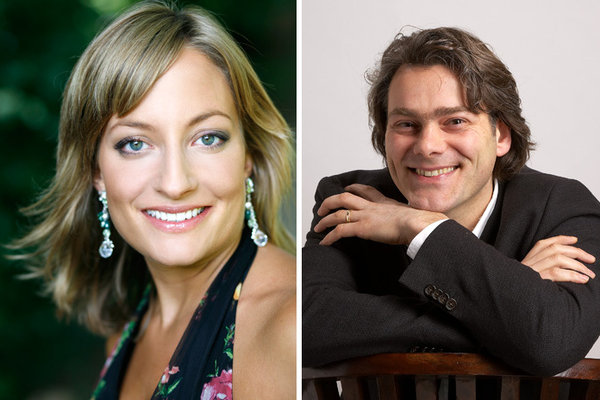
Anthony Marwood (violin), Lawrence Power (viola) and Simon Crawford-Phillips (piano) perform music by Rebecca Clarke, Martinů and Brahms

Wigmore Hall, London, live on BBC Radio 3, 28 September 2015

Listening link (open in a new window):

http://www.bbc.co.uk/programmes/b06dbdk3

on the iPlayer until 27 October

Spotify

In case you cannot hear the broadcast, here is a Spotify playlist of the music in this concert, from available versions on Spotify. The Horn Trio is very rarely heard in the version for violin, viola and piano, but a recent recording from Maxim Rysanov and friends is included:

What’s the music?

Rebecca Clarke: Dumka for Violin, Viola and Piano (1941) (8 minutes)

Martinů: Three Madrigals for Violin and Viola (1947) (16 minutes)

Brahms: Trio for Violin, Viola and Piano (1884) (28 minutes)

What about the music?

rebecca-clarke

The music of Rebecca Clarke has taken a long while to reach our concert halls, but thankfully it is not the rarity it once was. A viola player of some distinction, she wrote a wonderful competition-winning Sonata for viola and piano in 1919. This Dumka comes towards the end of her career as a composer, though she lived for nearly 40 more years without consistent inspiration to compose. The piece alternates slow, melancholic figures with an attractive and dramatic dance.

Like Clarke, Czech composer Bohuslav Martinů had relocated to New York, and his Three Madrigals for violin and viola, essentially a late wartime work, were inspired by hearing the English Singers in concert in Prague. They were written for the brother and sister duo of Joseph and Lilian Fuchs. Though instrumental the pieces are clearly written with voices in mind, and through clever use of double stopping techniques (where the instruments play more than one string at once) it often feels as though more instruments are in the room.

Brahms wrote his Horn Trio, for horn, violin and piano, in memory of his recently-departed mother. A profound work, it contains a passionate and often stormy pair of slow movement, placed first and third, and two faster movements – a triple time Scherzo of more lyrical design and then a finale tailor made for the horn, sending the audience away with a vision of adversity conquered by strength.

Performance verdict

This was a very well-chosen program by the three friends, and it was especially rewarding to hear the music of Rebecca Clarke, a composer who is gradually feeling her way back to the exposure she deserves.

The Dumka performance was deeply felt, the slower music elegiac in tone through Marwood and Power’s closer harmonies.

These two excelled in Martinů’s Three Madrigals, which were surprisingly vigorous in content. The central madrigal was the charmer, its trills like autumn leaves in the breeze, calm but yet strangely restless.

The Brahms is an emotional work that tugs at the heart strings in the third movement Adagio, where the trio found the depth of the composer’s feeling. Yet the horn, for which this piece was ultimately written, was conspicuous by its absence and the viola – nicely played as it was by Lawrence Power – could not hope to fully deputise. Without the horn the fast music felt too polite, with no brassy rasp to enjoy in the Scherzo, nor fullness of tone towards the climax of the first movement. The finale was too fast, and although it is great ‘chase music’ this was a helter-skelter dash, the strings skating swiftly over thin ice rather than ducking and diving.

What should I listen out for?

Rebecca Clarke

2:13 – the stringed instruments are in close unison at the start, with a gentle melancholy running through their musical thoughts.

4:03 – the pace quickens and now the music dances, the stringed parts moving more independently of each other but still in close musical discussion. Their destination is less certain, as though dancing around the room unpredictably, and the mood becomes fractious.

7:58 – after the music reaches an emotional high – though not wholly positive – we return to the relative calm of the opening music, violin and viola back in close harmony.

Martinů

13:10 – the first madrigal is typical of Martinů, bustling into action with busy figurations from both instruments. There is energy aplenty, and it sounds as though both instruments are engaged in deep and earnest conversation. Martinů throws in some unexpected harmonic diversions to keep the listener on their toes. There is no let up, the music rushing towards a bright conclusion at 17:03.

17:27 – a complete change of mood for the second madrigal, a mysterious and enchanting piece that often sounds like the rustle of wind in branches. Martinů uses double stopping and trills here to give a fuller sound. Gradually the music becomes more positive and full in texture, Martinů working around to the same key of the first madrigal. The close harmony mirrors the brother-sister relationship of the dedicatees. The trills return at the end but are now settled.

23:51 – the third and final madrigal, an open-air burst of positivity! Again the music is busy, and here as elsewhere Martinů seems to be thinking of the dances of his home country. The trills return briefly at 27:41, before Martinů launches back into his main idea. In this performance the tempo is quick!

Brahms

32:33 – the first movement begins, marked Andante (at a walking pace). This is a slow walk at the beginning, with serious thoughts at a subdued volume. Soon the music becomes more animated, supported by a characteristically full-bodied and flowing piano part. In this version the violin and viola are close in harmony and dynamic; when the horn is involved it takes a greater lead. At 36:14 the viola introduces a halting second idea.

Around 37:00 the tone darkens, anticipating the sombre mood of the third movement, but this does not last too long – and at 39:02 Brahms can be heard at his most passionate before the movement ends.

40:09 – the second movement, a Scherzo. The restless piano establishes the triple time while the strings pull against the rhythm with syncopations – all typical Brahms qualities. The theme appears again at 41:41, then receives a stern development. At 42:45 Brahms effects a transition into the Trio section, which is slower, darker and reflective – and then at 44:26 the Scherzo returns.

47:29 – the mood darkens considerably for one of Brahms’s most profound utterances. This is the only instance in his music where Brahms uses the term Adagio mesto (slow and sad), and the heavy tread of the piano, and the instance at 49:19 where the stringed instruments are alone, are both instances that tell of the grief felt at losing his mother. It is not all doom and gloom however, for there are shafts of light at 52:08 – before the heavy heart is laid bare again towards the end.

54:26 – in which Brahms swiftly clears away his grief to write a wonderfully positive finale with a spring in its step, the three instruments seemingly chasing each other in flight. Nothing more to be said, except enjoy the wonderful music!

Further listening

There are not many opportunities to hear horn, violin and piano together – and since that combination is the original trio Brahms wrote for, the recommendation is for that version in a recording made for the Swedish record company BIS, by Marie-Luise Neunecker, Antje Weithaas and Silke Avenhaus.

Also on that recording is the trio for the same combination by Ligeti, which makes a vivid and intriguing contrast – titled as it is Hommage a Brahms:

Tasmin Little and Martin Roscoe at the Wigmore Hall – A fitting tribute

Tasmin Little and Martin Roscoe at the Wigmore Hall – A fitting tribute

tasmin-little-martin-roscoe

Tasmin Little (violin), Martin Roscoe (piano) – Wigmore Hall, London, live on BBC Radio 3, 1 June 2015

Listening link (opens in a new window):

http://www.bbc.co.uk/programmes/b05wytj1

on the iPlayer until 30 June

Spotify

In case you cannot hear the broadcast, I have put together a Spotify playlist of most of the music in this concert, including recordings the artists have made where possible. The playlist can be found here

What’s the music?

Brahms: Scherzo from the ‘FAE Sonata’ (1853) (6 minutes)

Dvořák: 4 Romantic Pieces, Op.75 (1887) (13 minutes)

Franck: Violin Sonata (1886) (28 minutes)

What about the music?

A well-chosen program of music for violin and piano, drawn from the period in the late nineteenth century known as ‘Romantic’. Yet as well as being from that period it is Romantic in nature.

Brahms wrote three substantial sonatas for violin and piano, each of them admired, and he also wrote a sonata in collaboration with Robert Schumann and his pupil Albert Dietrich. It was a gift to their friend Joseph Joachim, himself a composer and also a virtuoso violinist who was to inspire many more works from Brahms, Schumann and Dvořák among others.

The 4 Romantic Pieces of Dvořák were not written for Joachim, and are not greatly demanding technically – but are a perfect illustration of just how tuneful the composer’s music can be, and how through great simplicity he could write music of great expression. There is charm and wit in abundance here, music that seems to celebrate the great outdoors.

The Violin Sonata by Belgian-born French citizen César Franck is one of the chamber music masterpieces of the nineteenth century. Treating the two instruments very much as equals, it is memorable firstly for its dreamy first movement theme, which creeps in like a summer breeze, then for the darkly passionate movement that follows it. After the freedom of the third movement Franck plays his trump card, a ‘canon’ – that is, where violin and piano play the same melody but a little distance apart. This one is a beauty.

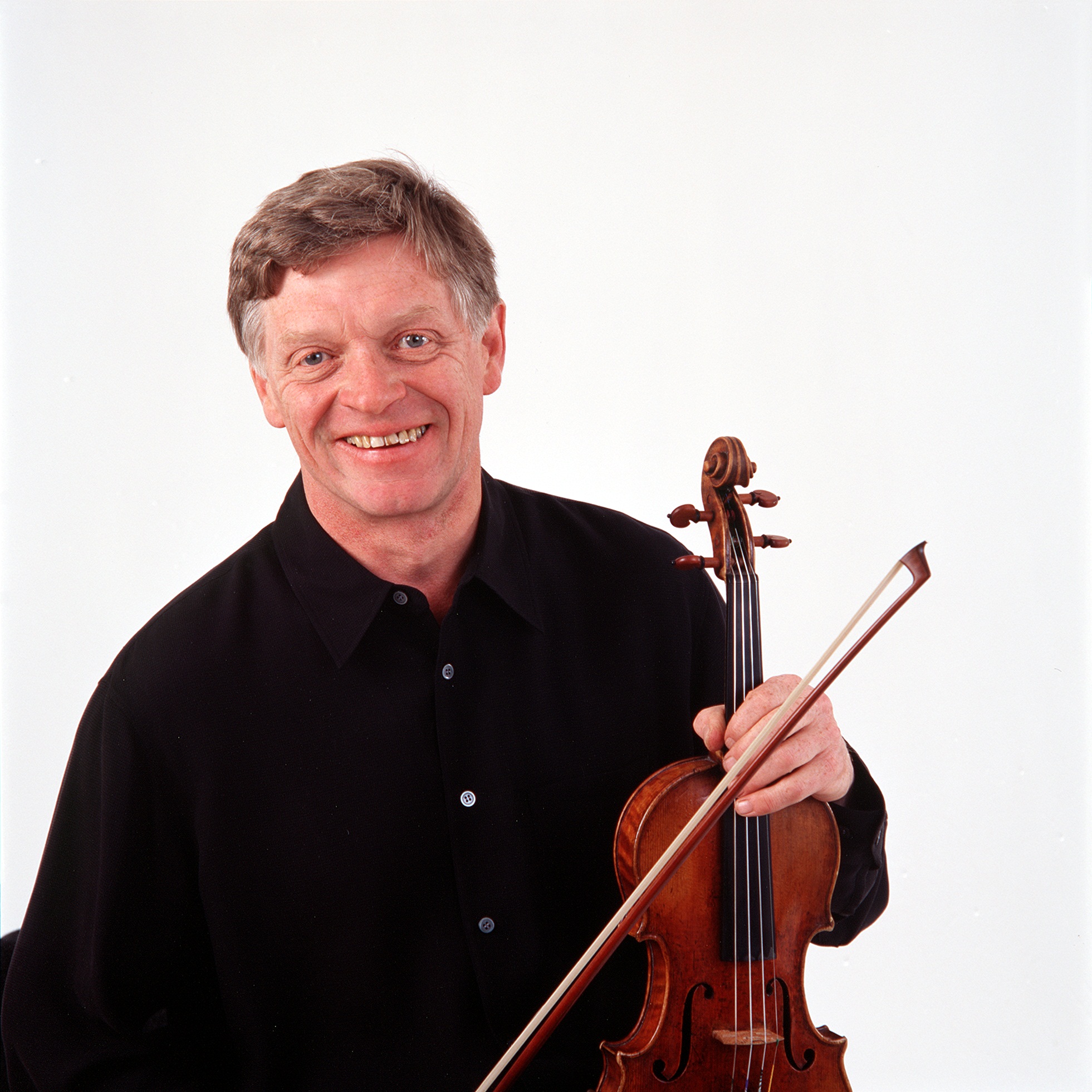
Peter Cropper. Credit: Hanya Chlala/ArenaPAL

Credit: Hanya Chlala/ArenaPAL

Performance verdict

This was a particularly moving concert, given a short while after the announcement of the death of Peter Cropper, first violinist with the Lindsay String Quartet and a close personal friend of Martin Roscoe. Not only was Roscoe intent on going ahead with this concert, he and Tasmin Little chose to dedicate their performance of the Franck Sonata to his memory – and in doing so they paid a deeply meaningful tribute.

The Franck is a lovely work and both Little and Roscoe brought out the deep-seated passion of the second and third movements, dovetailing beautifully with the charm of the outer movements. Roscoe was extremely responsive so that the melodies were passed back and forward with ease and enthusiasm.

The Dvořák Romantic Pieces were also extremely appealing, their apparent simplicity still given plenty of depth in this performance, with an especially poignant last piece. Warmth and wistfulness combined irresistibly in the first and third pieces, while for the second country dance it was as though someone had flung open the windows of the hall!

It was like that too for the Brahms Scherzo, which Little began almost before Roscoe had sat down, such was her eagerness to get on with it. The music surged forward as though intent on devouring everything in its path.

What should I listen out for?

Brahms

1:26 A surge of excitement as the piece begins, the violin using its lowest string and the ‘G’ an octave above it. The swaying motion of the theme is typical of Brahms, who often writes in triplet rhythms, and it creates an appealing syncopation, an ebb and flow between violin and piano.

There is a triumphant coda from 6:30, crowning this piece by the young Brahms with a flourish.

Dvořák

8:32 The first piece is warm and a little wistful, affectionately played.

11:48 The second piece is a grander affair, but also takes on the form of a country dance.

14:34 Marked ‘Allegro appassionato’, the third piece at first sounds remarkably similar to the first, being in the same mood and key, but becomes more passionate with Little playing two strings at once

16:43 A shadow falls over the sunshine created by Dvořák in the first three pieces, with music of introspection and contemplation. There is however still a positive ending.

Franck

23:40 A dreamy introduction from the piano, which hovers on an exotic chord until the violin comes in with the tune, also in a dreamy state. The mood becomes more passionate – amorous perhaps – and Franck manages that expression with very little variation to the tune itself.

30:00 The second movement begins with the turbulent rumblings of the piano, which give way to a passionate violin theme. At 33:35 this reaches a natural climax, before the turbulent theme is heard again. The onward flow of the music is impressive here, a torrent of notes – so much so that there is applause at the end of this movement!

38:05 – A ‘recitative’ forms the third movement – that is a passage of freedom for the violin, after the piano has set the scene. This gives it the opportunity to show off in a semi-improvised way, and after this the violin and piano exchange ideas, leading to a natural climax point at 41:10, the music at its most passionate again. There is a strong reference to the sonata’s opening at 43:30 – an example of Franck’s ‘cyclical’ way of writing, where he brings back themes from earlier in the work.

45:07 The canon, as described above, begun by the piano and followed by the violin. Franck writes it rather sweetly, with an innocence that proves touching throughout, but again it grows in stature. The violin and piano spend much of the movement imitating each other’s melodies in this way, with references to the first movement, before returning to the main music at 49:57 and then an uplifting finish.

Encore

53:00 An encore of Brahms’ Hungarian Dance no.5, probably in the arrangement by Joseph Joachim, as described above. Little plays this with great theatricality, Roscoe very sure-footed (or should that be handed?!) by her side.

Further listening

A rather attractive companion piece to both the FAE Scherzo and the Franck Violin Sonata is BrahmsViolin Sonata no.2, a summery piece that finds the composer in relatively relaxed mode. A nice complement to this is the shorter but quite fiery Légende by the Polish composer Henryk

A rather attractive companion piece to both the FAE Scherzo and the Franck Violin Sonata is Brahms’ Violin Sonata no.2, a summery piece that finds the composer in relatively relaxed mode. A nice complement to this is the shorter but quite fiery Légende by the Polish composer Henryk Wieniawski. Meanwhile a piece that joins everything together nicely is another red blooded piece of chamber music by Franck, his Piano Quintet, which in the right performance offers some high voltage music making! The one on this playlist, by Sviatoslav Richter and the Borodin Quartet, leaves absolutely nothing to chance.

Meanwhile a piece that joins everything together nicely is another red blooded piece of chamber music by Franck, his Piano Quintet, which in the right performance offers some high voltage music making! The one on this playlist, by Sviatoslav Richter and the Borodin Quartet, leaves absolutely nothing to chance.

For more concerts click here

Wigmore Hall Portrait Gallery – Christiane Karg and Gerold Huber

Wigmore Hall Portrait Gallery – Christiane Karg and Gerold Huber perform an intricate sequence of portraits of literary figures by Wolf, Brahms, Richard Strauss, Hahn and Duparc

christiane-karg-gerold-huberChristiane Karg and Gerold Huber – Wigmore Hall, live on BBC Radio 3, 9 February 2015. Photos © Steven Haberland / Albert Lindmeier

Listening link (opens in a new window):

http://www.bbc.co.uk/programmes/b051zyhb

on the iPlayer until 8 April

For non-UK listeners, this Spotify playlist is available:

For those unable to hear the broadcast I have put together a Spotify playlist. Christiane has recorded the Strauss songs but nothing else from the program, so I have chosen suitable available versions:

What’s the music?

Wolf4 Mignon Lieder (1888) (15 minutes)

Brahms and Richard Strauss – Ophelia Lieder (interspersed – the music is Brahms’ 5 Ophelia-Lieder (1873) and Strauss’s 3 Ophelia Lieder Op.67 (1918) followed by Saint-SaënsLa mort d’Ophélie (1857) (14 minutes in total)

Hahn – 3 songs (Lydé (1900), A Chloris (1916) and Séraphine (1896) (8 minutes)

Duparc – 2 songs (Phidylé (1882), Romance de Mignon (1869) (9 minutes)

What about the music?

wigmore-portraits
Ophelia by John Everett Millais (1852) is part of the Tate Gallery collection. His painting influenced the image in Kenneth Branagh’s Hamlet.

This is a really well chosen program from Karg and Huber, justifying the singer’s burning of the midnight oil (in the announcer’s anecdote!) to come up with some vivid character portraits that draw the casual listener in through the links between the songs. This is surely how a song recital should be structured.

Thanks to their enterprise we get an interesting blend of Romantic Lieder – that is, nineteenth century song writing that is much more obviously expressive. German composers are strongly represented, beginning with Wolf’s four settings of Goethe, and his poems on the tragic figure of Mignon.

Then our gaze turns to Ophelia, by way of five early Brahms Lieder and three late, eccentric interpretations by Richard Strauss – before a French alternative from Saint-Saëns.

Finally the heady fragrance of three sublime songs from Hahn and two more substantial, meaty efforts from Duparc clinch a consistently engaging recital.

Performance verdict

On this evidence – listening on the radio rather than in the hall – Karg and Huber are ideally matched. Their delivery is especially emotive during the Wolf, where the soprano inhabits a lot of the distress and strife handed out to Mignon.

It is a great idea to fuse the portraits of Ophelia in this way, and anyone approaching Brahms songs for the first time would be surprised at the brevity and simplicity of them. They contrast nicely with the Richard Strauss examples, where Karg shows a lot of vocal agility without ever losing control.

The French songs are sumptuous, especially the Hahn, throwing open the doors to let in some Spring light.

What should I listen out for?

Wolf

The words for these songs can be found here

1:55 – Heiss mich nicht reden (Bid me not speak) – the first Mignon setting moves in unexpected harmonic directions, never really sure of itself as Mignon seeks peace ‘in the arms of a friend’. Judging by the piano postlude this is not found.

5:04 – Nur wer die Sehnsucht kennt (Only those who know yearning) – a sombre minor-key opening from the piano.

7:25 – So lasst mich scheinen (Let me seem to be an angel) – a cold piano sound and a distracted vocal. Again the harmonies move restlessly, as does the melody, the song in a dream state but not at rest either.

10:47 – Kennst du das Land (Do you know the land)– a rather more positive outlook in this relatively relaxed song until a sudden outburst from the piano, which on its second appearance follows a particularly fraught passage from the soprano.

Brahms / Richard Strauss

The words for the Brahms can be found here, and for the Richard Strauss here

18:57 – the first of five very brief Brahms songs – this one a thoughtful melody with singer and piano together.

19:42 – the second Brahms song, a mere 20 seconds!

20:06 – the first Strauss song inhabits a weird world of a piano part seemingly cut loose from its moorings, and a melody that doesn’t have an obvious resting point. Mysterious but intriguingly so.

22:37 – the third Brahms song, a much brighter affair.

23:12 – the second Strauss song trips along in a state of high agitation but is perhaps too short to make a sustained impact.

24:44 – the fourth Brahms song, another incredibly brief number – but beautifully delivered here.

25:32 – the fifth Brahms song – even though it is a minute long there is still a distinctive melody here.

26:49 – the third Strauss song, and a deeply mysterious one that casts its spell immediately through the piano line, broken momentarily by outbursts in the middle and at the end.

Saint-Saëns

29:58 – an urgent song from the French composer, with the high soprano voice doubled by the left hand of the piano.

Hahn

The words for the Hahn songs are to be found here

35:04 – Lydé – a much more positive outlook is immediately evident in this song, with an open air texture and bright vocal. There is a grand piano postlude, and what sounds like a wrong note.

37:50 – A Chloris – a twinkling piano introduction has a melodic ornamentation that takes its lead from Bach’s AIr on the G string before the soprano arrives in a lower register. A contemplative song, one of Hahn’s very best, this is beautifully sung by Karg. The interaction with the piano is ideal.

40:33 – Séraphine – a calm and radiant atmosphere runs through the third Hahn song.

Duparc

The words for the Duparc songs can be found here

43:28 – Phidylé – Karg sounds imperious in her control of the fuller melody that makes the second part of this song. The exotic musical language is very much in thrall to Wagner, and reaches its peak with high notes and turbulent, stormy piano writing.

48:15 – Romance de Mignon – another perfumed song, but this is an early song suppressed by the composer. Duparc writes so well for the voice.

Encore

54:00 – Schubert’s Gretchen am Spinnrade – going back to the first composer to write about the ‘mad woman’ Mignon, as Karg describes her. Huber shapes the piano part superbly under Karg’s urgent vocal.

Want to hear more?

It is difficult to suggest another step after such an intriguing and well-thought program, but underneath the songs of on the Spotify link above are further possibilities – including Wolf’s remarkable Prometheus, Brahms’s Four Serious Songs, in a legendary recording from Jessye Norman, and to finish some more Duparc.

For more concerts click here

A New World in old clothes

A New World in old clothes – The Orchestra of the Age of Enlightenment, conducted by Adam Fischer, bring new life to Dvořák’s New World symphony, with Brahms’ Violin Concerto from Viktoria Mullova

oae
Viktoria Mullova (violin), Orchestra of the Age of Enlightenment / Adam Fischer – The Anvil, Basingstoke, live on BBC Radio 3, 26 February 2015

Listening link (opens in a new window):

http://www.bbc.co.uk/programmes/b0535tzx

on the iPlayer until 28 March

Spotify

For those unable to hear the broadcast, here is a Spotify link to the same program – with Viktoria Mullova’s recording of the Brahms included.

What’s the music?

Smetana: The Bartered Bride Overture (1865) (7 minutes)

Brahms: Violin Concerto (1878) (39 minutes)

Dvořák: Symphony no.9 (From the New World) (1893) (45 minutes)

What about the music?

dvorakThe composer Antonin Dvořák

This is a ‘period instrument performance’ – that is, played on instruments either from the time the music was written or before – and performed in a style audiences of the day might have witnessed. It is relatively rare for the Orchestra of the Age of Enlightenment to venture this far forward in time, for their instruments tend to be more geared towards the performance of music between 1700 and 1850.

They begin with a popular overture, a crowd pleaser – the curtain raiser for Bedřich Smetana’s comic opera The Bartered Bride. The work is something of a Czech institution, full of Smetana’s interpretations of Czech dances such as the polka and furiant. As BBC Radio 3 presenter Martin Handley says, Smetana became ‘the father of Czech nationalism’ through his patriotic and uplifting set of works for orchestra, Ma vlast (My Country), completed in 1879.

Dvořák was a Czech composer, but the action in the New World symphony takes place far from home. Always one to fill his music with good tunes, the composer turned to American heritage for a lot of his source material, declaring in the New York Herald that “In the negro melodies of America I discover all that is needed for a great and noble school of music“. Dvořák was homesick at the time, and the melancholy tinge to some of his tunes reflects that.

The symphony was commissioned by the New York Philharmonic and given its first performance in Carnegie Hall in 1893, and has been extremely popular ever since. In recent years themes from it have frequently been heard on TV, most famously when the tune of the second movement Largo was used in a Hovis advert.

In between these Bohemian classics is music by Brahms, his Violin Concerto – which, at the time of composition, was one of the biggest such works around. It was written for the Hungarian virtuoso Joseph Joachim, a composer himself – and he had considerable input into the piece, having also commissioned a concerto from Dvořák. When receiving the parts for the first time Joachim remarked on the symphonic design of the concerto, and on how difficult it was to play – even for him!

The first movement is a big unit in itself, lasting longer than the second and third put together but gripping the listener as a closely fought dialogue between violin and orchestra, both seemingly on equal terms. The third movement finale is based on a gypsy tune, and caught the eye of Paul Thomas Anderson, who chose it for the closing credits of his film There Will Be Blood.

Performance verdict

Having emphatically blown away the cobwebs with a vigorous account of the Smetana overture, the Orchestra of the Age of Enlightenment get their teeth into Brahms.

The Violin Concerto benefits from their slightly smaller numbers, and thanks to Fischer’s conducting we can really hear all the inner workings of the orchestral introduction. The pace is relatively slow at this point, but picks up when the violin enters. Mullova’s tone is lovely, though just occasionally in the first movement she is a little ‘under’ the note of the orchestra – which, given the performance is on period instruments, could even be due to the heat in the venue.

The rustic finale has plenty of swagger, enthusiastically led by Mullova, while the slow movement – which seems to go quickly here – is beautifully rendered.

For the Dvořák the lean textures of the orchestra bring out the beauty of his melodies, and also the strong sense of longing the composer felt from New York for his home. The spiritual melodies help him to express this, but Fischer also keeps the spirit of dance to the fore.

What should I listen out for?

Smetana

2:24 – a brisk and breezy introduction from the orchestra. Soon the violins take up a rushing theme, as do the violas (3:08) and then the cellos and basses. As with much of Smetana’s fast music he generates terrific energy.

Later there is a gentler passage for the woodwind, with a more ‘reedy’ sound than a modern symphony orchestra would provide. This is rudely interrupted by the drums.

The music dips and then comes back with a terrific crescendo, where it feels like the players are standing on tiptoe.

Brahms

12:08 – a smooth, ‘legato’ start to the first movement, marked Allegro non troppo (fast but not too fast). This is the beginning of a long orchestral introduction. It is a long time before we hear the violin

14:22 – a sudden injection of power from the strings, a moment of real drama in this music that prepares the way for the entry of the violin 20 seconds later.

20:08 – the violin now takes up the energetic music the strings had earlier, and this is taken up by the full orchestra. There follows a lovely unison melody at 21:27.

24:25 – the culmination of the movement, violin soaring above the orchestra.

27:45 – deep unease in the violin part as Brahms writes some very uncertain double stopping for the instrument, with mysterious lower strings, until the injection of power happens again at 28:02. This leads through to…

29:13 – the start of the cadenza, a showy section for violin alone. This is a pivotal part in any performance of the Brahms, as a large number of cadenzas from different composers are available – or the soloist can perform their own. I suspect this one is by Joseph Joachim. The orchestra return at 32:07 and the mood has changed to one of calm reflection – which builds to an affirmative finish at 33:40 – at over twenty minutes, a first movement of impressive size!

34:50 – the start of the slow second movement, marked Adagio (slow). Soothing horns and woodwind set a scene of calm. If the music ever sounds out of tune, this is because the brass have a ‘temperament’ that can be slightly out of kilter on certain notes. If anything it makes the music more authentic! The violin comes in at 36:49 with a sweetly toned melody.

42:34 – a wonderful gypsy tune to begin the finale, which sounds full of the open air. This performance brings out the dance, and Mullova takes the lead effortlessly. Lovely woodwind trills at 43:11 too. The catchy tune appears on a number of occasions, structured by Brahms as a ‘Rondo’, running through to the end at 50:30.

Dvořák

1:16:19 – a solemn introduction on lower strings, then woodwind, before the full orchestra interrupt suddenly. Gradually the tension builds before a statement of the main theme of this movement from the horn (1:18:08)

1:18:38 – full brass on the theme, then the texture drops to 1:19:09 and a dance-like melody.

1:20:17 – another tune from the flute, slightly mournful this time, but then given more power by the brass (1:20:44), at which point the horn returns to the tune from the opening.

1:25:19 – the recap of the symphony’s themes so far begins with the horn once again, then the introverted flute tune (1:26:01), then moving seamlessly to the slighty mournful flute tune (1:27:01) – again heard with much greater power a few moments later. There is then a tautly argued close.

1:29:26 – the famous second movement Largo begins, with its homesick melody first heard on the cor anglais at 1:30:07. This is wonderfully controlled by the OAE’s Gonzalo X. Ruiz.

1:32:09 – a more involved section starts with the strings gradually moving the music on by way of a variation on the main theme. Beautifully hushed in this performance. Then the cor anglais returns at 1:33:01.

1:34:02 – the music switches key from major to minor and a darker shadow emerges, but at 1:37:10 this is emphatically put to rights by the woodwind – and then we hear a reference to the first movement in the loudest part of the Largo.

1:38:03 – the tune returns, again on the cor anglais – and then we get the solemn music of the brass introduction, now closing a rather special reverie.

1:41:48 – the third movement (a Scherzo) begins, with spiky fragments from flute and clarinet, taken up by the violins at 1:42:17 and debated by the whole orchestra. This section is repeated.

1:43:23 – another winsome melody from Dvorak, begun by the woodwinds, before the music works its way back round to the mood of the opening.

1:44:46 – this symphony has its mysterious moments, and here is another from the cellos and basses – before yet another catchy melody begins in the woodwinds at 1:45:07. This works around to another statement of the main tune (1:47:10). The orchestral sound is still wide open, as though standing on the prairie. We hear all the tunes again, then the horn brings in another reference from the symphony’s first movement at 1:49:08.

1:49:53 – a terrific sense of expectation with the introduction to the final movement here, justified by the theme that appears on the brass at 1:50:10. This is music of great resilience. Then at 1:51:05 an equally thrilling and persuasive dance tune appears. Yet another big and resilient tune appears at 1:52:31.

1:55:31 – at this point Dvorak brings back the main theme from the symphony’s first movement, now in defiant guise, with extra input from the brass. This theme effectively ‘resets’ the symphony, the feeling now of greater resolution – even when Dvorak skilfully combines two themes at 1:58:35 and we hear some pretty discordant music. The music subsides until…

1:59:57 – the coda of the symphony, with a solemn utterance of its first theme, then proclaimed by the orchestra to an ultimately winning finish over rolling timpani, ending at 2:01:10.

Want to hear more?

How about some dances? All three composers wrote dances for orchestra, so here is a playlist combining two other dances from Smetana’s The Bartered Bride, some Hungarian Dances by Brahms and finally some of Dvořák’s winsome Slavonic Dances with Adam Fischer. As another bonus, dropped into the middle is Dvořák’s own Violin Concerto, written for Joachim and played here by Julia Fischer:

For more concerts click here

Songs for Europe – Olena Tokar and Igor Gryshyn

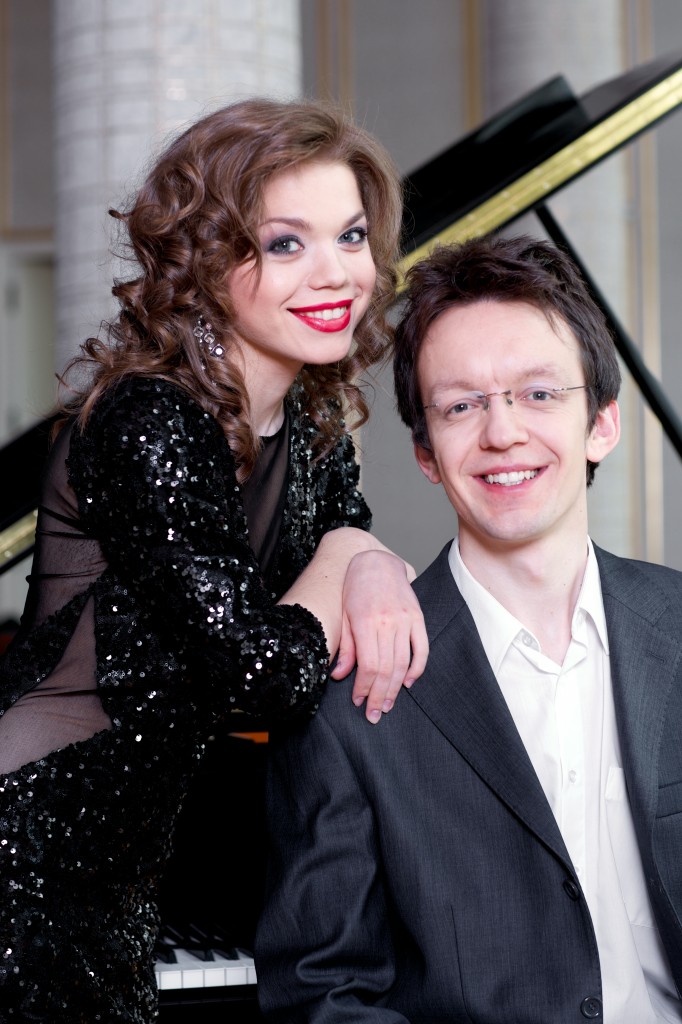
Songs for Europe – Ukrainian duo Olena Tokar and Igor Gryshyn perform a selection of songs by Brahms, Rimsky-Korsakov, Dvořák and Richard Strauss

Olena-Tokar-und-Igor-Gryshyn-©-Jörg-Singer-682x1024Olena Tokar and Igor Gryshyn – Wigmore Hall, live on BBC Radio 3, 9 February 2015. Photo © Jörg Singer

Listening link (opens in a new window):

http://www.bbc.co.uk/programmes/b051chkl

on the iPlayer until 10 March

For non-UK listeners, this Spotify playlist is available:

For those unable to hear the broadcast I have put together a Spotify playlist. Olena and Igor have not recorded this repertoire, so I have chosen suitable available versions:


What’s the music?

Brahms – a selection of four songs (1868-1877) (10 minutes)

Rimsky-Korsakov – a selection of four songs (1897) (7 minutes)

Dvořák – Gipsy Songs (1880) (14 minutes)

Richard Strauss – a selection of four songs (1885-1918) (11 minutes)

What about the music?

This recital was a reminder of the power of music as a universal language – a Ukranian duo performing works from across Europe in the languages in which they were written. The intriguing hour-long recital alighted in some diverse parts of the continent, exploring song writing from the 19th century.

Brahms and Richard Strauss are no strangers to a recital such as this, but Dvořák and especially Rimsky-Korsakov are less commonly heard. It was interesting to hear Rimsky’s brief songs and Dvořák’s equally concise cycle, placed alongside some well-chosen Brahms and some of Richard Strauss’s most popular output, four of some 200 songs he wrote through his career – culminating in Cäcilie, the song that became a wedding present to his wife.

Performance verdict

Olena Tokar has a bright tone, sometimes a little on the shrill side – for Richard Strauss in particular – but singing the notes with commendable security and expression. Her communication with the audience was good, helped by the fact she had memorised the program – no mean feat given its use of three languages.

The Dvořák was especially good, harnessing the dance rhythms with pianist Igor Gryshyn’s springy accompaniment while finding a little melancholy in some of the slower songs. The Brahms was unexpectedly light. He is often cast as a composer who writes music of dense texture but that was not the case here, and Gryshyn gave some nice, light touches to Über die Herde (Over the Heath) as well as a turbulent, frothy seascape for Verzagen.

The Strauss selection had a curious order – and I couldn’t help but feel that Mörgen would have worked better in last position. It was nice to hear a young singer tackle the big songs, though at the same time a more experienced voice can lend the depth this music often thrives on.

The encore – and its massive piano part – was a bit breathless, but this was a spirited and often invigorating recital.

What should I listen out for?

Brahms

4:10 – Über die Herde (Over the Heath) – this song has palpable uncertainty, particularly in the third stanza when ‘Bravende Nebel geisten umher’ (‘Swirling mists ghost about’)

6:25 – Es träumte (I dreamed) – a song full of longing. Tokar’s floated vocal is lovely, while Grysyhn gives the piano part plenty of sustain (maybe a bit much for some tastes!)

Rimsky-Korsakov

13:29 – Of what I dream in the quiet night – a good illustration of the simplicity of Rimsky’s songwriting, with a basic yet effective piano part to support Tokar’s clear singing.

15:32 – Cool and fragrant is thy garland – heady words, but an airy song, from the gentle piano arpeggios to the top ‘G’ from the soprano at the end.

Dvořák

22:12 – My Song of Love Rings Through the Dusk – there is an immediate indication from the piano part that we have changed countries. Tokar’s clear voice and the piano exchange a melancholy motif.

29:25 – Songs my mother taught me – one of Dvořák’s best-loved songs, laced with nostalgia and with a rather beautiful melody.

31:29 – Come and join the dance – an energetic dance song with a distinctive call.

Richard Strauss

37:26 – Mörgen (Morning) – the most serene intro to one of Strauss’s most performed songs. It’s easy to hear how this song works so well in orchestral guise too – though Tokar and Gryshyn are a bit fast here.

41:20 – Schlechtes Wetter (Dreadful weather) – a later song. The tumbling piano part paints a picture of the elements, and it’s easy to imagine an umbrella blown inside-out to this song!

43:25 – Allerseelen (All Souls’ Day) – another of Strauss’s famous songs, the last from his set of eight. Again it has an expansive piano intro.

46:37 – Cäcilie (Cecily) – the rapturous birthday love letter from Strauss to his wife, Pauline de Ahna.

Encore

50:18 – Tchaikovsky’s Whether day dawns – another bold song, with something of a piano concerto as a postlude! Very expansive and romantic.

Want to hear more?

It’s difficult to know what to suggest next after such a varied program – but one disc that comes to mind early on is Bernarda Fink and Roger Vignoles’ relatively recent disc of Dvořák songs, including the Gipsy Songs alongside several other song groups. It can be heard on Spotify here:


Meanwhile one of Brahms’ very best vocal works is also recommended, the Alto Rhapsody available on Spotify here:

For more concerts click here