In concert – English National Opera @ BBC Proms: Shostakovich’s Lady Macbeth of Mtsensk

Lady Macbeth of Mtsensk Op.29 (1932-33)

Opera in Four Acts (Nine Scenes)
Music by Dmitri Shostakovich
Libretto by Alaxander Preys and the composer after the novella by Nikolai Leskov
English translation by David Poutney
Semi-staged performance, sung in English with English surtitles

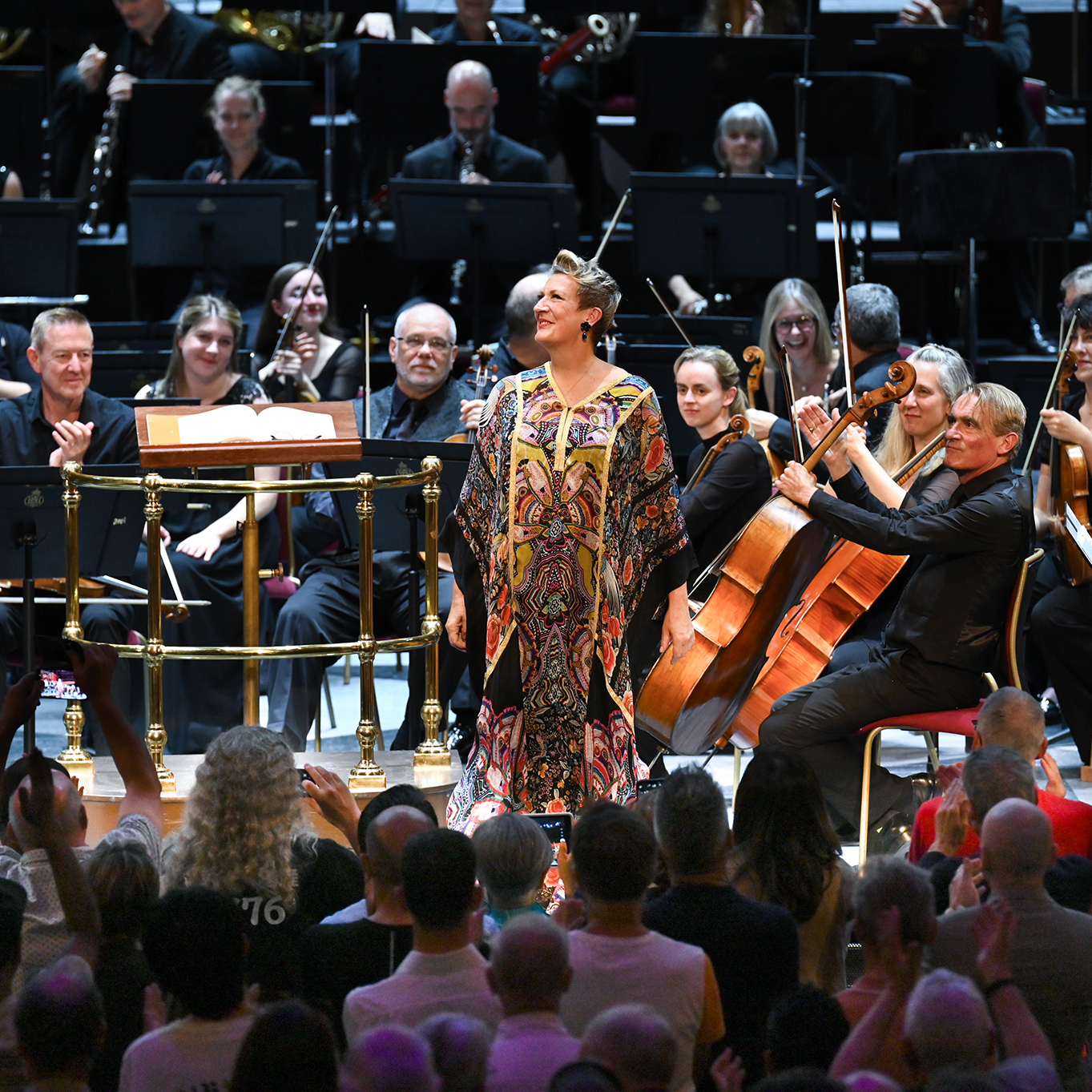
Katerina – Amanda Majeski (soprano); Boris/Ghost of Boris – Brindley Sherratt (bass); Zinovy – John Findon (tenor); Mill-hand/Priest – Thomas Mole (baritone); Sergey – Nicky Spence (tenor); Aksinya/Convict – Ava Dodd (soprano); Shabby Peasant – Ronald Samm (tenor); Steward – Alaric Green (baritone); Police Sergeant – Chuma Sijeqa (baritone); Teacher – William Morgan (tenor); Old Convict – Sir Willard White (bass-baritone); Sonyetka – Niamh O’Sullivan (mezzo-soprano)

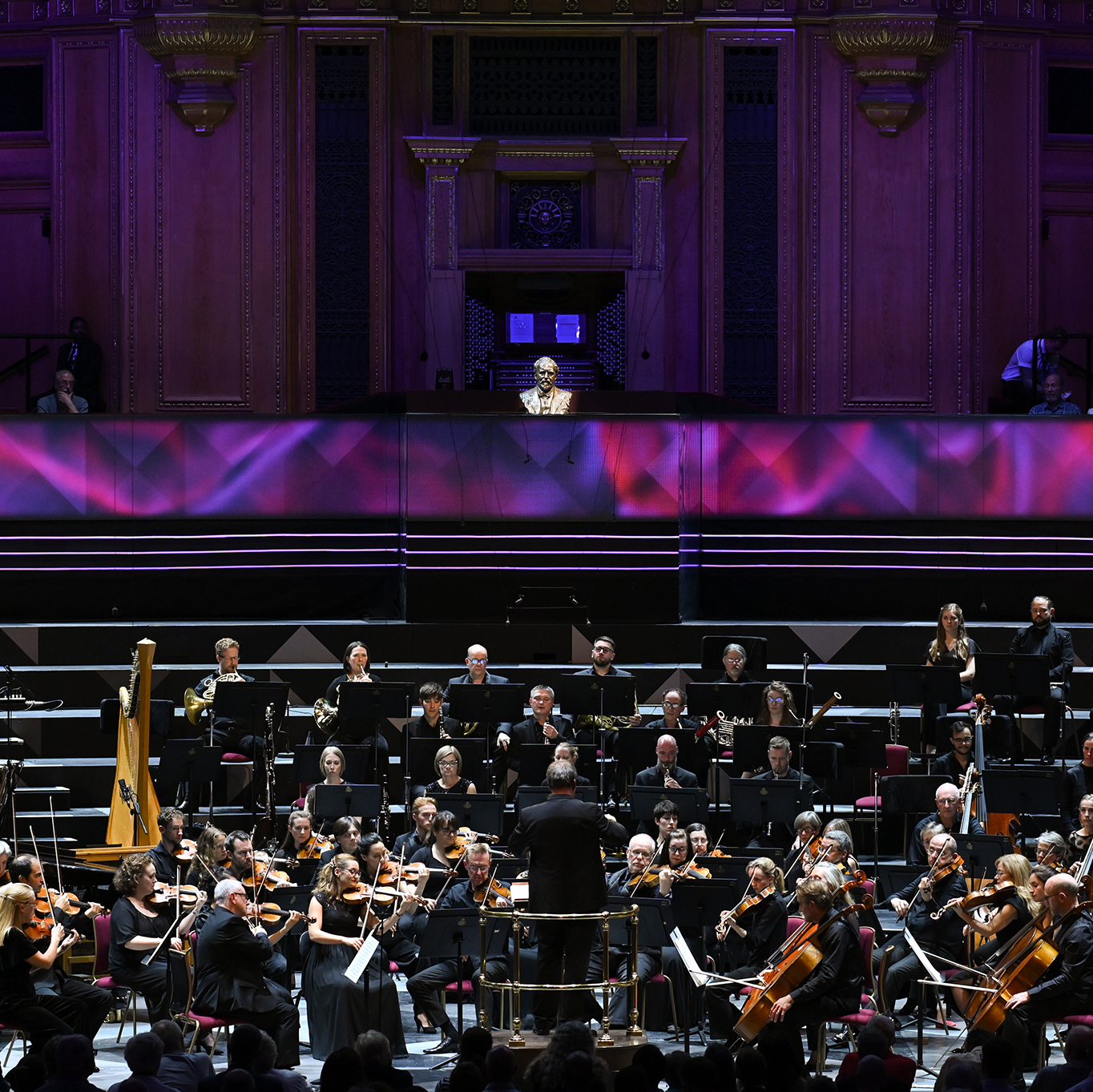
BBC Singers, Chorus of English National Opera, Brass Section of English National Opera, BBC Philharmonic Orchestra / John Storgårds

Ruth Knight (director)

Royal Albert Hall, London
Monday 1 September 2025

Reviewed by Richard Whitehouse Photos (c) BBC / Andy Paradise

In this 50th anniversary year of Shostakovich’s death it made sense for the Proms to schedule Lady Macbeth of Mtsensk, his second and final completed opera, in a performance reminding one of English National Opera’s commitment to this work stretching back almost four decades.

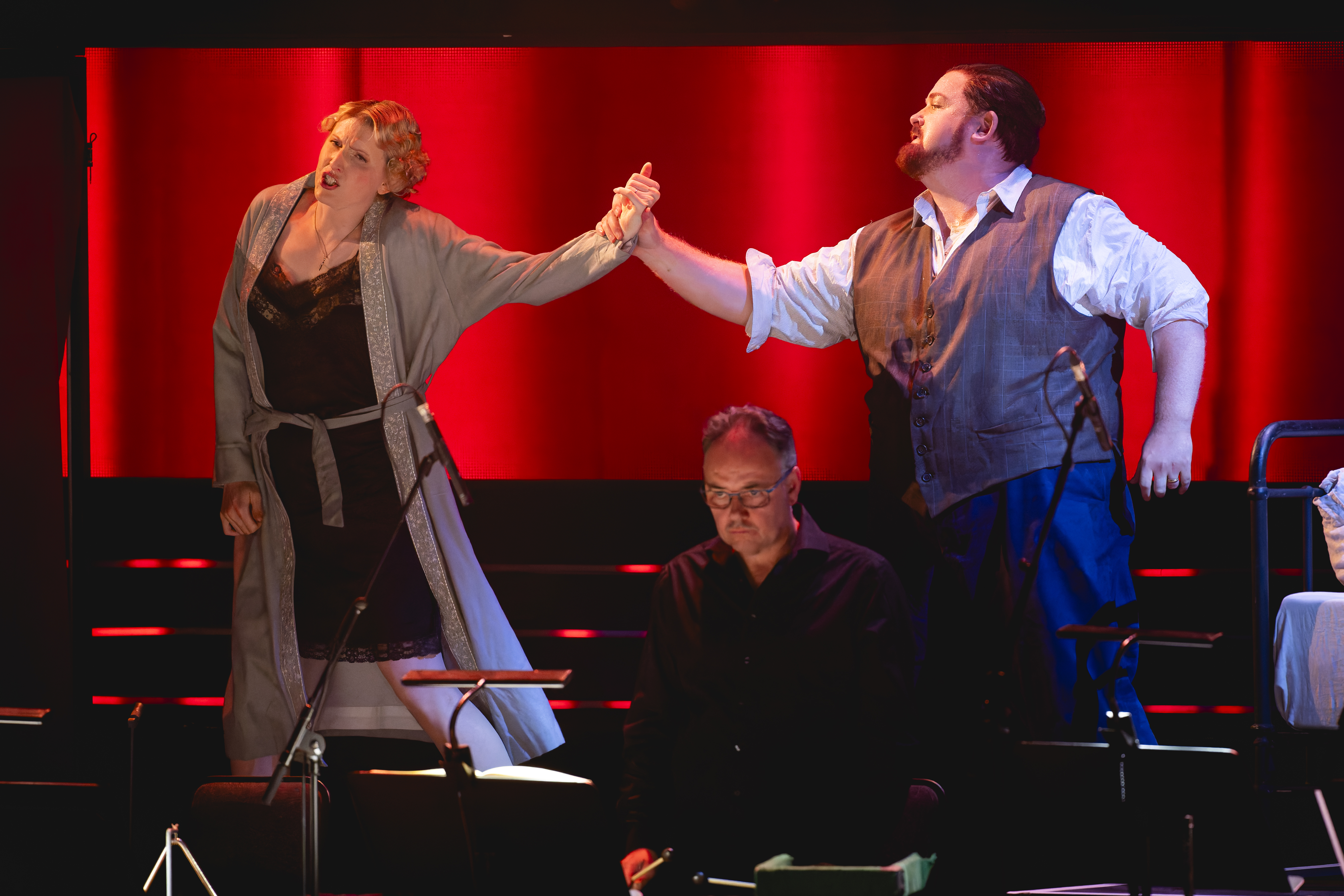
In scenic terms, the semi-staging directed by Ruth Knight was little more than a gloss on what was heard. Its framing device of the heroine in the witness box now seems a tired device that served little purpose, and the emergence of a bed at rear of the platform as a focus for sexual activity had surely passed its sell-by date at the end of the David Poutney era. More effective was the use of lighting to accentuate dramatic highpoints; incidentally reminding one such a procedure had come of age around the time that Shostakovich’s opera first appeared on stage.
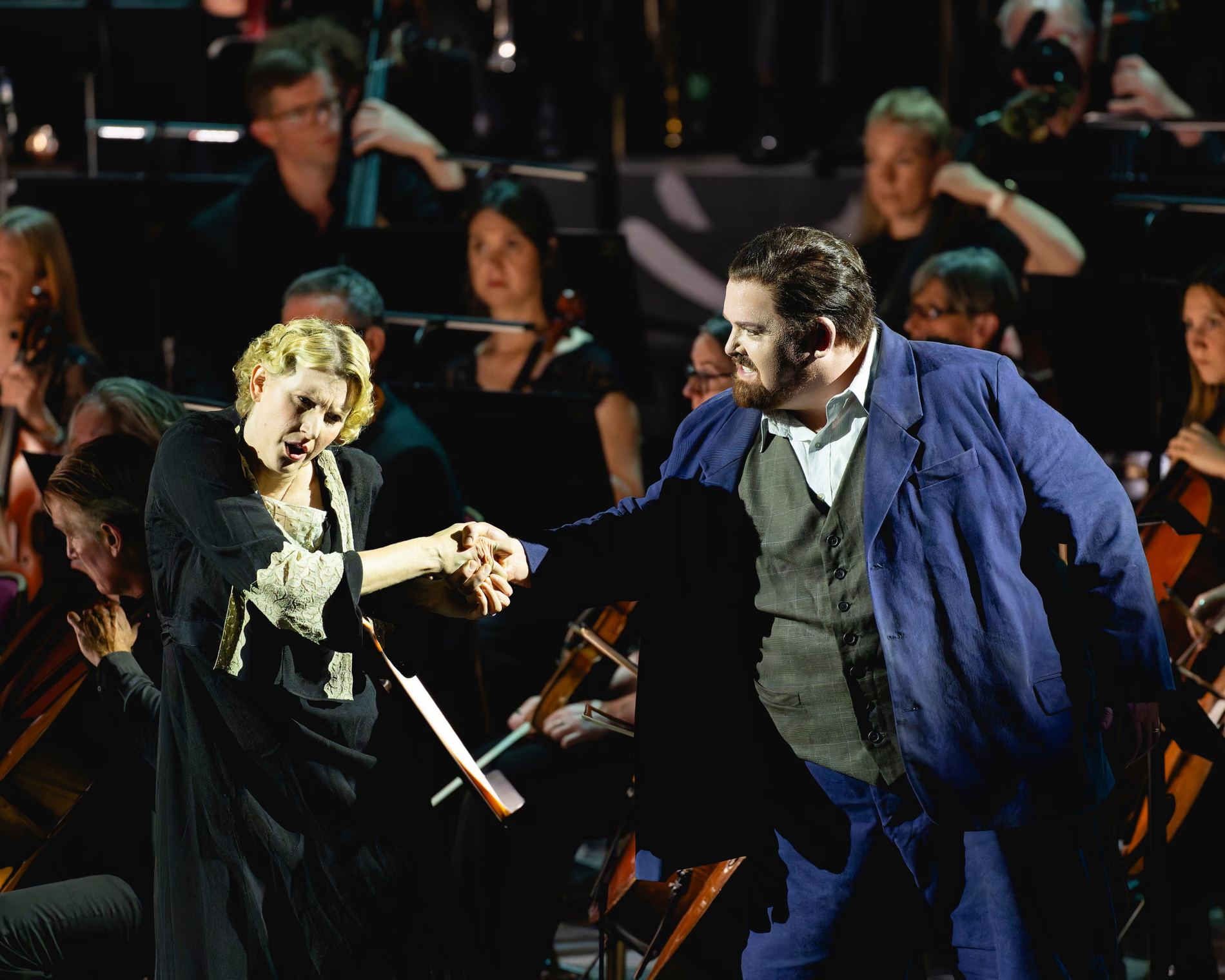
Vocally this was a mixed bag. No-one could accuse Amanda Majeski of lacking presence or, moreover, eloquence in her assumption of the title-role, yet her emotional aloofness made her seem not so much distinct as overly detached from the wretched circumstances all around her. Brindley Sharatt was a shoo-in for Boris, his boorishness yet evincing a cunning intelligence who easily held the stage – not least his latter ‘ghost’ incarnation. Nicky Spence was vocally assured but dramatically two-dimensional as Sergey and, as Zinovy, John Findon resembled more a provincial critic than a merchant, though Thomas Mole made a lively contribution as a dipsomaniac Priest with Chuma Sijeqa uproarious as the Police Sergeant. His cameo as an Old Convict found Sir Willard White in gratifyingly fine voice near the end of his eighth decade.
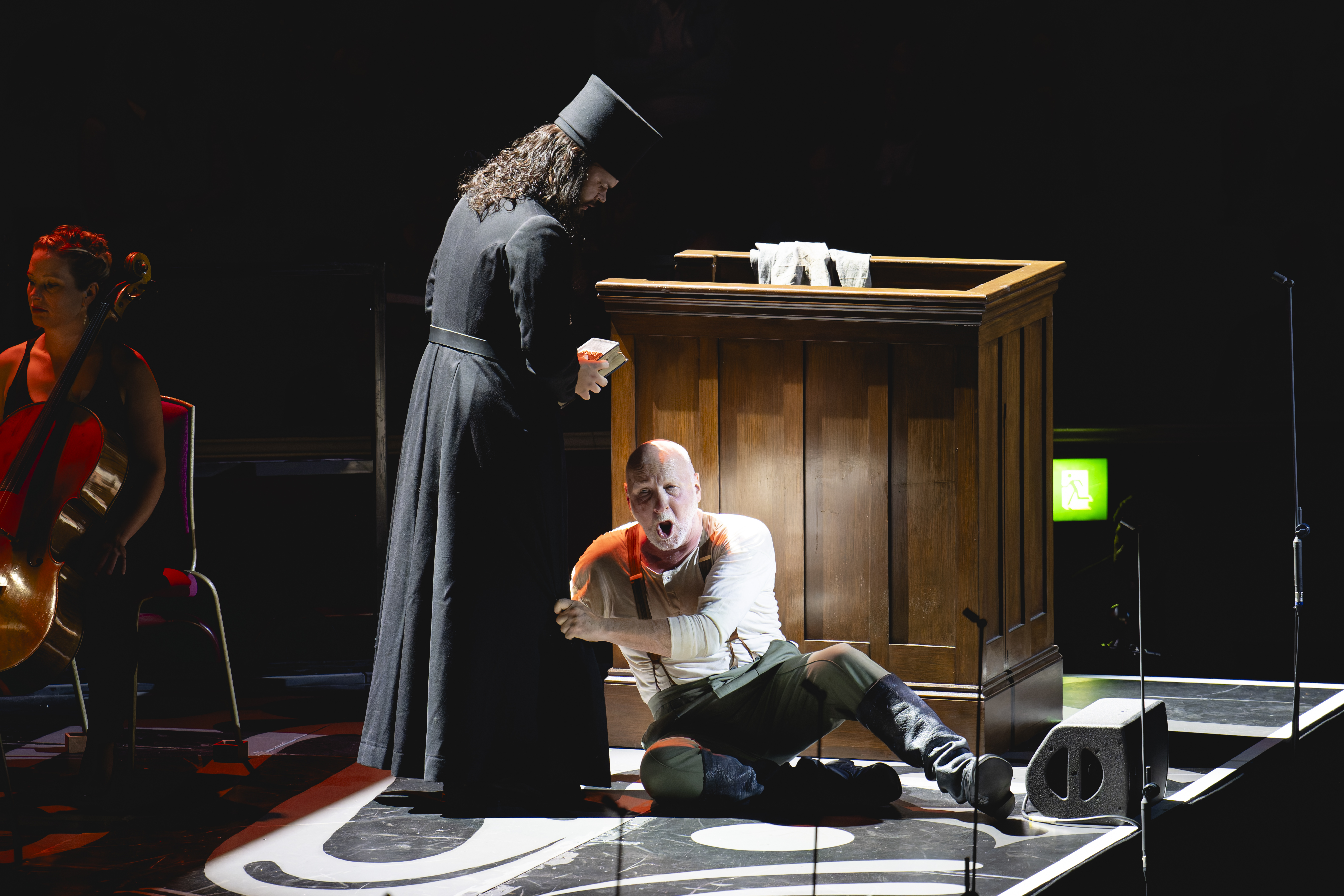
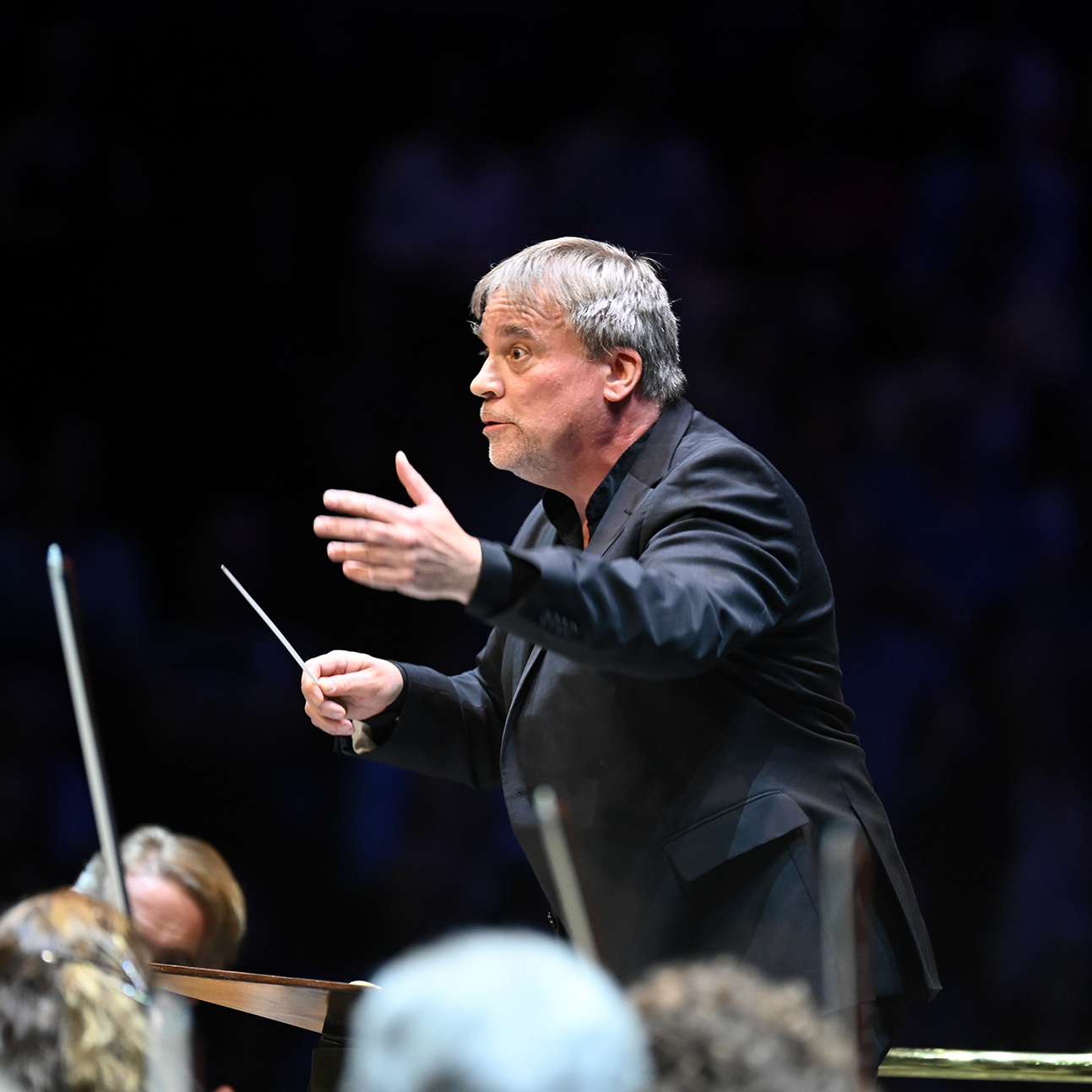
Smaller roles were generally well taken, not least Ava Dodd’s hapless Aksinya and Niamh O’ Sullivan’s scheming Sonyetka, while the ENO Chorus lacked little in forcefulness or clarity of diction, though this latter might have been felt a drawback given the frequent contrivance of Poutney’s translation – which has not aged well. Otherwise, this was very much the BBC Philharmonic Orchestra and John Storgårds’s show. Having impressed with Shostakovich symphonies over recent seasons, the latter had a sure grasp of this opera’s dramatic unfolding and paced it accordingly. No stranger to this composer’s music, his orchestra was as responsive to the seismic climaxes (suitably abetted by ENO brass) as to passages of mesmeric introspection which, in many respects, prefigure the composer Shostakovich was increasingly to become.
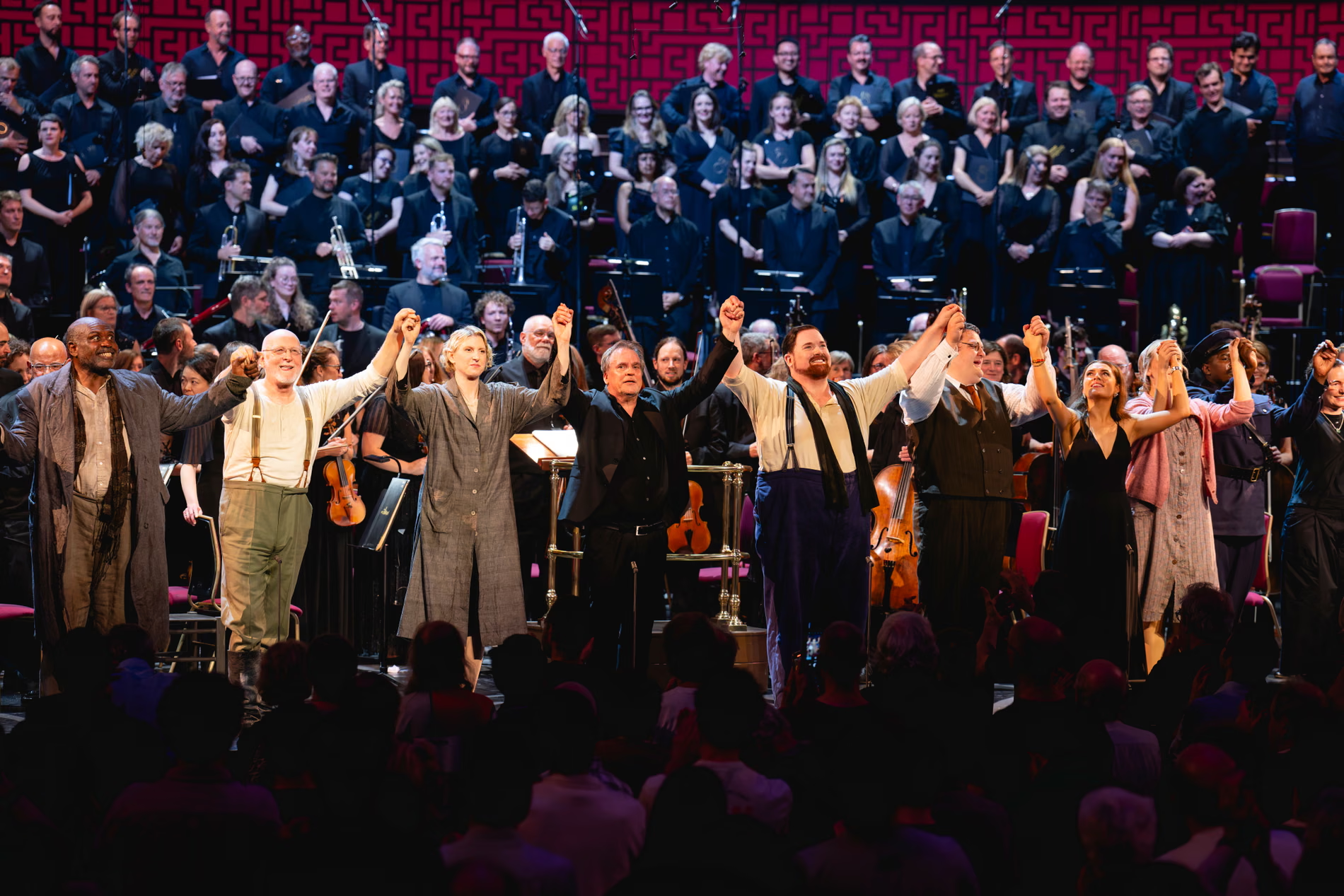
It has often been claimed that, had his fortunes not reversed so dramatically as on that fateful evening of 26th January 1936, Shostakovich would have continued upon his path as an opera composer. Yet there is a nagging sense that, whatever its theatrical potency, Lady Macbeth of Mtsensk is intrinsically no more than the sum of its best parts. Leaving aside the intermittent success of his and Alexander Freys’ remodelling of Nikolai Leskov’s ‘shabby little shocker’, dramatic characterization frequently seems to have been laminated onto its musical context.

If tonight’s performance never entirely banished these thoughts, it certainly gave this opera its head in what was a memorable night for orchestra, conductor and, for the ENO contingent, an impressive bowing-out as it prepares for the next phase of its existence – based in Manchester.

Click on the names to read more about soprano Amanda Majeski, director Ruth Knight, the BBC Philharmonic Orchestra and chief conductor John Storgårds. Click also for more on composer Dmitri Shostakovich, the BBC Proms and English National Opera

Published post no.2,645 – Tuesday 2 September 2025

On Record – Peter Herresthal, Jakob Kullberg, Bergen Philharmonic Orchestra, John Storgårds – Nørgård: Symphony no.8, Three Nocturnal Movements, Lysning (BIS)

Peter Herresthal (violin) and Jakob Kullberg (cello) (Nocturnal Movements), Bergen Philharmonic Orchestra / John Storgårds

Nørgård
Lysning (2006)
Symphony no.8 (2011)
Three Nocturnal Movements (2015)

BIS BIS-2502 [54’20’’]
Producer Hans Kipfer Engineers Matthias Spitzbarth, Håkan Ekman (Nocturnal Movements)
Recorded 29 & 30 August 2019 (Nocturnal Movements), 4 & 5 February 2022 2022 at Grieghallen, Bergen

Reviewed by Richard Whitehouse

What’s the story?

His activities as a composer may effectively have ceased, but Per Nørgård (1932-) remains a defining figure in post-war European music and this latest release from BIS collates three wholly characteristic pieces, including a double concerto which is also his last major work.

What’s the music like?

Playing a little over 25 minutes, the three movements of the Eighth Symphony each pursues its intriguing take on an established form (sonata, ternary then rondo) which emerge with a renewed fluidity and flexibility. The opening movement continually evolves its main ideas   in a gradual if cumulative curve of activity, culminating in the heightened crystallisation of motifs on tuned percussion. The central Adagio emerges across densely luminous waves of sound that recall earlier Nørgårdian practice from an arrestingly new perspective; one whose expression admits an almost confiding intimacy. The finale deftly complements this with its artfully ratcheting percussion and infectious rhythmic gyrations on route to a coda of purest radiance; the fitting close to a symphonic cycle that ranks with the finest of the post-war era.

A crucial factor of Three Nocturnal Movements is its having been a collaboration with cellist Jakob Kullberg and developed from the viola concerto Remembering Child of three decades earlier. The outcome comprises two substantial movements that frame a ‘nocturnal’ cadenza. The opening Allegro finds the solo instruments deeply embedded within an orchestral texture whose clarity enables motivic interconnections to emerge with due precision, underlining the airy momentum which carries this music towards its predictably unexpected close. Whatever its provenance, the central Andante is of a piece with those on either side – its limpid gestures and intonational punning a throwback to this composer’s preoccupations from more than half a century earlier, but now imbued with an aura no less affecting for its valediction. The final (undesignated) movement is the most demonstrative with its frequently percussive outbursts and those abrupt though never jarring changes in course that keep the attentive listener fully attuned to a discourse such as builds incrementally toward its wistfully fulfilled conclusion.

The earliest work here, Lysning makes for an ideal ending. Its title translating as ‘Glade’, this is the last of its composer’s pieces for strings and takes the Nordic miniature as template for a study in discreet yet potent contrasts of sonority and emotion that lingers long in the memory.

Does it all work?

Yes, not least because Peter Herresthal and Jakob Kullberg have premiered earlier concertos by Nørgård for their respective instruments, while John Storgårds had previously recorded the Second, Fourth, Fifth and Sixth Symphonies and gave the premiere of the Eighth of which he is dedicatee. This recording ideally complements that from Sakari Oramo (Dacapo 6.220574), focussing less on its overall symphonic cohesion than on the continual unpredictability of its renewed Classicism, and it is difficult to imagine more persuasive readings of the other works.

Is it recommended?

Very much so, in the hope Storgårds may yet complete his Nørgård cycle with the First, Third and Seventh Symphonies. Sound is up to BIS’s customary standards in clarity or perspective, while Kasper Rofelt’s annotations evince long familiarity with the composer’s unique idiom.

Listen

Buy

You can explore purchase options for this recording at the Presto website. Click on the names for more on the artists – John Storgårds, Peter Herresthal, Jakob Kullberg and the Bergen Philharmonic Orchestra – and for more on the composer Per Nørgård

Published post no.2,166 – Thursday 2 May 2024

BBC Proms 2023 – Dame Sarah Connolly, BBC Philharmonic Orchestra / John Storgårds – Weber, Pejačević, Alma Mahler-Werfel & Rachmaninoff

Prom 33 – Dame Sarah Connolly (mezzo-soprano), BBC Philharmonic Orchestra / John Storgårds

Weber Oberon – Overture (1825-6)
Pejačević Zwei Schmetterlingslieder Op.52 (1920); Verwandlung Op.37b (1915); Liebeslied Op.39 (1915). [Proms premieres]
Mahler-Werfel orch. Colin & David Matthews Die stille Stadt (pub. 1915); Licht in der Nacht (pub. 1915); Bei dir ist es traut (pub. 1910)
Rachmaninoff Symphony no.1 in D minor Op.13 (1895)

Royal Albert Hall, London
Wednesday 9 August 2023

by Richard Whitehouse photos by Chris Christodoulou / BBC

This evening’s Prom brought a welcome appearance by the BBC Philharmonic with its chief conductor John Storgårds, in what was a typically enterprising programme that continued this season’s emphasis on the music of Dora Pejačević in the centenary (last March) of her death.

Among Pejačević’s sizable output of songs are four with orchestra, making a viable sequence in its own right. Dame Sarah Connolly (above) brought out the searching whimsicality from Karl Henckell’s Butterfly Songs, whether the fanciful imaginings of ‘Golden stars, little bluebells’ or the more concrete thoughts of ‘Flutter, o butterfly’ with delicate contributions by flute and glockenspiel. The setting of Kael Kraus’s Transformation taps deeper emotion, not least with those ecstatic violin solos between stanzas (eloquently rendered by Yuri Torchinsky), whereas that of Rainer Maria Rilke’s Love Song is notable less for the gently undulating phrases of its vocal writing than for the soaring ecstasy of its central interlude which only double one’s regret that neither composer nor poet lived long enough to collaborate on an opera project as had been mooted.

Making up this sequence were three songs by Alma Mahler-Werfel, taken from sets published in 1910 and 1915. Neither those contrived sentiments of Richard Dehemel’s The Silent Town or self-conscious emoting of Otto Julius Birbaum’s Light in the Night summons an especially personal response; only the winsome poise of Rilke’s I feel warm and close with you implies any individuality. The orchestrations by Colin and David Matthews are sensitive and apposite, but the latter might reasonably have expected more from the Proms in his 80th birthday-year.

Opening this concert was a beautifully judged reading of the overture to Weber’s final opera Oberon – less often heard now that overtures are no longer the automatic curtain-raisers they once were but which, in its deft interplay of evocative and energetic, still casts a potent spell.

By contrast, Rachmaninoff’s First Symphony has come much more into its own now that the composer’s orchestral output has moved to the centre of the repertoire. Unheard for 48 years after its disastrous premiere in 1897, it remains a testament to the young composer’s ambition – not least in an opening Allegro whose implacable ‘motto’ sets the course for this movement overall. Storgårds had its measure, not least in the mounting fervency of its development, then delivered a probing account of a scherzo the more ingenious for its pervasive understatement.

Although it will never supplant that of its successor in audience affection, the slow movement is a minor miracle of thematic subtlety and emotional restraint as came through via felicitous playing by the BBC Philharmonic woodwind. Launching the finale in suitably visceral fashion, Storgårds (rightly) made the most of its contrasts between the celebratory and the speculative – any remaining ambivalence not so much resolved as forced into submission through a coda which renders the fatalism of Tchaikovsky’s Pathétique from a distinctly personal vantage.

So, an unlikely programme which worked well as a concert – the more so given it proceeded without an interval. Those in the audience surreptitiously eating or drinking between pieces might have preferred otherwise, but for both music and performances it was nothing but gain.

For more on the 2023 BBC Proms, visit the festival’s website at the BBC. Meanwhile click on the names for more information on artists Dame Sarah Connolly, John Storgårds and the BBC Philharmonic Orchestra – and for information on the composers Dora Pejačević and Alma Mahler-Werfel

BBC Proms #25 – Carolina Eyck, BBC Philharmonic Orchestra / John Storgårds: Kalevi Aho Theremin Concerto, Saariaho & Shostakovich

Prom 25 – Carolina Eyck (theremin), BBC Philharmonic Orchestra / John Storgårds

Aho Eight Seasons (Concerto for Theremin & Chamber Orchestra) (2011) (London premiere)
Saariaho Vista (2019) (Proms premiere)
Shostakovich Symphony no.15 in A major Op.141 (1971)

Royal Albert Hall, London
Thursday 4 August 2022

Reviewed by Richard Whitehouse Photo (c) Chris Christodoulou

John Storgårds has given some memorable Proms with the BBC Philharmonic in the decade since he became this orchestra’s guest conductor, and tonight was no exception for featuring a theremin concerto by Finnish composer Kalevi Aho. Its title Eight Seasons should be taken advisedly – the eight continuous sections encompassing a period from autumn to spring, as is reflected in the mostly restrained yet constantly changing textures which define a progression from the richness of Harvest to Midnight Sun with its serenity informed by new potential.

An instrument as fascinating to watch being played as it is to hear, the theremin has become the victim of its own ubiquity as an enhancer of atmosphere in film-scores and for musicians from Brian Wilson to Jonny Greenwood. Carolina Eyck was a dedicated exponent (evident in her encore-demonstration) – not least in the latter stages when her vocalise proved an enticing extension of her instrumental prowess, and the myriad timbral shifts more than compensated for the intermittent blandness of Aho’s acutely fastidious if not consistently involving music.

The layout of this piece (wind quintet and percussion alongside reduced strings) necessitated an early interval to prepare for those relatively lavish forces of Vista, Kaija Saariaho’s latest return to the orchestra and inspired by traversing the Californian coast from Los Angeles to San Diego. This is embodied over two cumulative movements – the expectancy of Horizons duly fulfilled with the mounting activity of Targets which itself subsides into an intensified recollection of the opening, now sounding as expansive as that ‘vista’ envisaged by the title.

Music so complex needs a sure hand to maintain its focus, the BBC Philharmonic responding with alacrity to Storgård’s attentive direction while he steered a convincing trajectory through what is likely Saariaho’s finest large-scale work for years – the intricacy and translucency of her writing having a panache which ensured this was manifestly a showpiece with substance. In particular, the sense of ideas being tentatively anticipated then vividly recalled added much to the evocative quality of music as formally substantial as it sounded expressively involving.

From recent Finnish orchestral works to Shostakovich’s last and most equivocal symphony is a fair step aesthetically, but Storgårds ensured the succession was a meaningful one. If it did not evince the ultimate in ominous irony, those laughs elicited from the opening movement’s stealthy activity and allusive inanity were for real – as, more regrettably, were those hesitant coughs denoting uneasy response to the slow movement’s emotional intensity as heightened by its sparseness of gesture, while not forgetting an eloquent response by cellist Peter Dixon.

Nor was the percussion found wanting in its almost concertante role, to the fore in a scherzo where the whimsical and sardonic found an unlikely accord. From its sombre initial gestures, Storgårds then had the measure of a finale whose central passacaglia built toward a powerful climax, and while tension dropped with the resumption of earlier ideas, the spectral transition into the coda was judiciously handled with the latter mesmeric in its deft profundity. Should the BBC Philharmonic need a new chief conductor, Storgårds might be worth approaching.

For more information, click on the names of composers Kalevi Aho and Kaija Saariaho – and for more on the artists, click on the names of Carolina Eyck, John Storgårds and the BBC Philharmonic Orchestra

Prom 14 – BBC Philharmonic / John Storgårds: Single-movement Sibelius, Zimmermann, Schubert & Wagner

Prom 14: Elizabeth Watts (soprano), Louis Lortie (piano), BBC Philharmonic OrchestraJohn Storgårds

Wagner Die Meistersinger von Nürnberg – Prelude to Act One (c1861)
Schubert (orch. Liszt) Four Songs (1825/1815/1826/1815, orch. 1860)
Zimmermann Symphony in One Movement (1947-51, rev. 1953)
Schubert (arr. Liszt) Fantasy in C, D760, ‘Wanderer’ (1822, arr. c1850)
Sibelius Symphony No. 7 in C, Op. 105 (1924)

Royal Albert Hall, Tuesday 24 July 2018

You can listen to this Prom by clicking here

Reviewed by Richard Whitehouse

John Storgårds has given some enterprising concerts during his tenure as Chief Conductor of the BBC Philharmonic Orchestra, and this evening’s Prom was a further instance with its programme of mainly one-movement pieces and an underlying emphasis on symphonic cohesion, even unity.

The exception was the sequence of four songs by Schubert, arranged for orchestra by Liszt so that a tenuous cohesion is evident – without this being a song-cycle as such. Elizabeth Watts (below) duly had the measure of their predominantly sombre sentiments – ranging from the distanced recollection of Die junge Nonne, via remorseless passing of experiential time in Gretchen am Spinnrade and speculative radiance of Lied der Mignon, to visceral representation of fate in Erlkönig. Storgårds teased many subtleties from Liszt’s judiciously restrained orchestration.

Preceding this came a surprisingly dour account of the Prelude from The Mastersingers of Nuremburg. This grandest of Wagner music-dramas is also the most symphonic, not least its Prelude as it deftly outlines a four-movements-in-one format. While not being oblivious to this, Storgårds might have characterized these episodes more potently, though this may have been in line with his tendency to play down the music’s opulence and majesty. What resulted was a subdued and earnest performance that hardly marked him out as a budding Wagnerian.

Concluding the first half was the Symphony in One Movement by Bernd Alois Zimmermann; a timely hearing in this centenary year of the composer’s birth. Although the more discursive original version (complete with organ histrionics) has recently been revived, this revision is audibly more focussed in form and expression as it traverses a quirky yet combative sonata design – (modified!) exposition repeat included – before emerging full circle in a mood of unbridled ferocity. Storgårds was at his interpretative best here, maintaining a tensile course over an eventful score where influences of mid-century symphonism do not outface pointers to the intricacy or intensity of Zimmermann’s mature music. A notably enthusiastic reception suggested that tonight’s audience ‘got’ what the composer was about in this singular piece.

Time was when Liszt’s concertante realization of Schubert’s Wanderer Fantasy was a staple at these concerts, but this was only the second hearing in nearly six decades. 33 years ago, the soloist was Jorge Bolet at his unpredictable best, but Louis Lortie’s rendition (above) was altogether subtler as he brought out the pathos of the Andante then jocularity of the Presto. If the outer Allegro sections felt reined-in, this was not at the expense of that keen virtuosity informing Lortie’s playing in his solo passages or coruscating interplay with the orchestra at the close.

A century on, Sibelius not only ran movements together in his Seventh Symphony but fused them into a seamless and powerfully cumulative whole. Storgårds was certainly alive to this in what was a purposeful and often insightful reading; a little unsettled in those introductory pages, perhaps, but thereafter gauging the various transitions with a sure sense of where this music was headed while investing the vertiginous trombone entries with implacable majesty. One of this season’s most absorbing concerts thus far was brought to an impressive close.