In concert – St. John’s College Choir Cambridge / Christopher Gray – Christmas Carols @ Wigmore Hall

Choir of St. John’s College Cambridge / Christopher Gray

Beamish In the stillness (2007)
Rutter There is a flower (1986)
Parsons Ave Maria (c1560)
Hassler Verbum caro factum est (1591)
Britten A Hymn to the Virgin (1930, rev. 1934)
Walton All this time (1970)
Trad/German arr. Pearsall In dulci jubilo
Hieronymus Praetorius Magnificat quinti toni (pub. 1622)
Daley Love came down at Christmas (2004)
Poston Jesus Christ the Apple Tree (1967)
Kirbye Vox in Rama (c.1620)
Anon Coventry Carol
Dove The Three Kings (2000)

Wigmore Hall, London
Monday 15 December 2025

Reviewed by Ben Hogwood

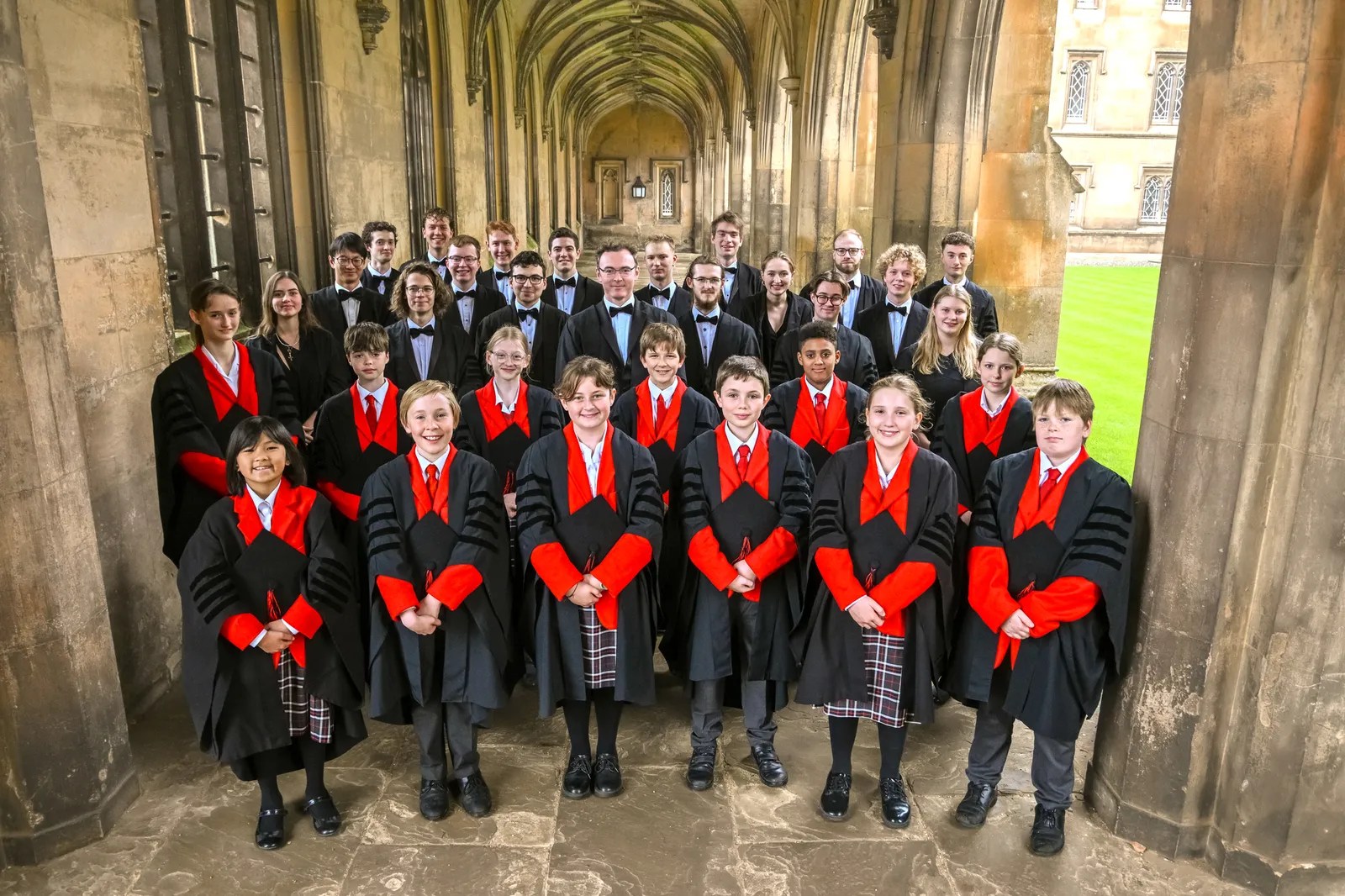
What a lovely idea to bring a concert of Christmas Carols to the last of the BBC Radio 3 Lunchtime Concerts held in the Wigmore Hall in 2025. The Choir of St. John’s College Cambridge, suitably attired, were led in a stirring yet thought-provoking programme by their conductor Christopher Gray, who have just released O Holy Night, an album of Christmas carols, on Signum Classics.

Yet much of the selection here went beyond the album’s component parts, exploring responses old and new to specific parts of the Christmas story. In a curious twist, the oldest music heard proved to be the most adventurous and emotive.

The concert began with an account of Sally Beamish’s In the stillness which was notable for its crystal clear intonation and enunciation, features the choir would display throughout the concert. John Rutter’s There is a flower fared equally well, the anthem he wrote for the choir leading with a touching treble solo, before the complexities of Robert Parsons’ masterful Ave maria were aligned in commendable phrasing. Similar qualities befell the lively exchanges of counterpoint in Hans Leo Hassler’s Verbum caro factum est, before the remarkable invention of the teenage Britten was found in A Hymn to the Virgin, music that looks simultaneously forward and backward.

The choir performed these carols in carefully arranged sequences, ideally programmed for tonality and emotive impact. Walton’s exuberant All this time began the second sequence, the choir enjoying the push-pull rhythms, after which In dulci jubilo switched on its ever-beautiful light in the darkness, casting a spell in spite of a slightly ragged second verse. The clever text setting of Hieronymus Praetorius – not the normally performed Michael! – was especially enjoyable in his Magnificat setting, before the clarity of carols from Canadian composer Eleanor Daley and Brit Elizabeth Poston was beautifully achieved. The latter’s Jesus Christ The Apple Tree was particularly moving in the simplicity with which its paragraphs end.

The mood darkened appreciably for George Kirbye’s lament Vox in Rama, the inconsolable Rachel weeping for the loss of her children in the massacre ordered by King Herod, while the Coventry Carol too sounded sombre in this company. All the more reason to end with a characterful account of Jonathan Dove’s The Three Kings, brilliantly characterised by the trebles especially.

Two encores followed – a breathless and exciting arrangement of Adam lay ybounden by Laura Sheils, then a close-harmony version of We Wish You A Merry Christmas, channelling Cole Porter to show-stopping effect. It was the musical equivalent of a mince pie with extra brandy, the ideal way to send the Wigmore Hall audience humming into the afternoon!

You can listen to the concert on BBC Sounds here, and explore the choir’s recent discography at the Signum Classics website.

Published post no.2,750 – Tuesday 16 December 2025

In concert – Raphael Wallfisch, CBSO / Gergely Madaras: New Worlds – Sibelius, Jonathan Dove & Dvořák

gergely-madaras

Sibelius Finlandia Op.26 (1899)
Dove In Exile (2020) [CBSO Centenary Commission: UK Premiere]
Dvořák Symphony no.9 in E minor Op.95 ‘From the New World’ (1893)

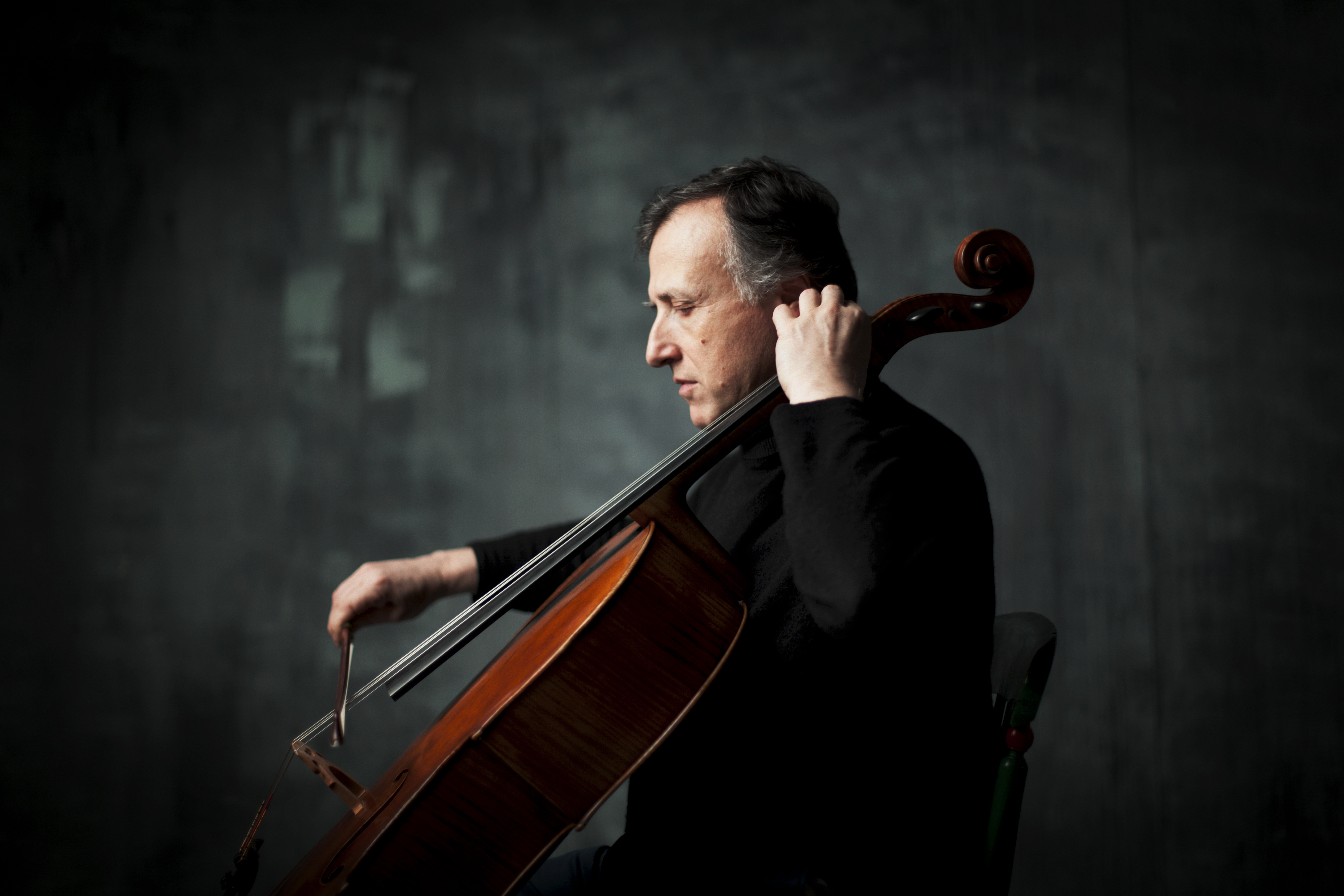
Sir Simon Keenlyside (baritone), Raphael Wallfisch (cello, below), City of Birmingham Symphony Orchestra / Gergely Madaras

Symphony Hall, Birmingham
Thursday 9 December 2021

Written by Richard Whitehouse

Tonight’s concert from the City of Birmingham Symphony Orchestra amounted to a themed programme with late 19th century evergreens by Sibelius and Dvořák framing another of this orchestra’s Centenary Commissions in the first UK performance of a major work from Jonathan Dove.

In his introductory remarks, Dove spoke of In Exile as a hybrid of cantata, operatic scena and concerto; a fusion that has surprisingly few antecedents – one being Concerto on Old English Rounds by William Schuman, with viola and chorus as ‘soloists’. Here the roles were taken by baritone and cello during a half-hour piece whose texts, adapted by Dove’s regular librettist Alasdair Middleton, examine the state of exile from a perspective less about those emotions experienced in the adoptive country than of sensations evoked by what has been left behind.

Drawing on Medieval sources, Dante and Shakespeare then, from the early 20th-century, the Lebanese poet Kahlil Gibran and Irish scholar Douglas Hyde, to the Iranian-American Kaveh Bassiri, In Exile unfolds as a formally continuous and emotionally cumulative sequence whose traversal from the general to the specific is complemented by its undulating texture, enhanced with resourceful writing for strings and tuned percussion, which graphically evokes a journey of the mind as well as body. Simon Keenlyside gave a powerful rendering of the vocal part in all its burnished rhetoric, while Raphael Wallfisch (to whose mother, the cellist Anita Lasker-Wallfisch, this piece is dedicated) was no less searching as his ‘alter ego’ whose role takes in several exacting cadenza-like passages. Certainly, a work that should bear repeated hearings.

Making his debut with the CBSO, Gergely Madaras conducted with a sure sense of where this piece was headed, having opened the concert with a gripping account of Finlandia. Sibelius’s apostrophizing of his homeland can descend into bathos – Madaras ensuring otherwise in this tensile reading whose sombre brass, supplicatory woodwind and strings, then dashing central episode led into a lilting take on what became Finland’s unofficial national anthem, before the peroration urged the music on to a conclusion whose grandeur was shot-through with defiance.

There was equally much to admire in Dvořák’s New World after the interval, even though this was essentially a performance of two halves. Madaras’s listless way with the first movement’s introduction set the tone for a rather terse and short-winded account (made the more so by its lack of exposition repeat) of the Allegro, while Rachael Pankhurst’s eloquent rendering of the Largo’s soulful melody was hardly enhanced by peremptory changes in tempo, notably in the tense middle section. Not so the Scherzo, its coursing outer sections ideally complemented by the whimsical trio at its centre, then the final Allegro brought an impulsive response that kept its histrionics on a firm rein yet without losing sight of an intently growing momentum whose outcome was a powerfully wrought apotheosis – its radiant closing chord judged to perfection.

So, a well-conceived and finely executed concert featuring a conductor who will hopefully be returning in due course. The CBSO has three Choral Christmas concerts coming up later this month, then can be heard on January 9th in a Viennese New Year programme to see in 2022.

For more information on ‘A Choral Christmas’ click here. For more information on the January – July 2022 CBSO season, you can visit the orchestra’s website. Meanwhile click on the links for information on Jonathan Dove, Gergely Madaras, Sir Simon Keenlyside and Raphael Wallfisch.

Wigmore Mondays – Kitty Whately & Simon Lepper: From the Pens of Women

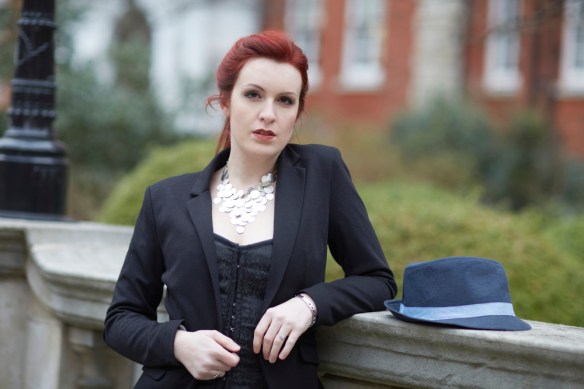
Kitty Whately (mezzo-soprano, above), Simon Lepper (piano, below)

Jonathan Dove All the Future Days (Autobiography; Penelope; The Siren) (2004) (2:11-13:27 on the broadcast link below)
Vaughan Williams 4 Last Songs (1954-8) (13:58-23:27)
Judith Cloud Night Dreams (Variations on the Word Sleep) (2006) (24:58-28:12)
Lori Laitman Orange Afternoon Lover (I Was Reading a Scientific Article) (2006) (28:15-32:24)
Argento From the Diary of Virginia Woolf (Anxiety) (1974) (32:27-34:25)
Rebecca Clarke Lethe (1941) (35:58-39:00)
Juliana Hall Letters from Edna (To Harriet Monroe; To Mother) (1993) (39:05-43:15)
Jonathan Dove Nights Not Spent Alone (2015) (43:34-52:42)

Wigmore Hall, London
Monday 18 February 2019

To hear the BBC broadcast through BBC Sounds, please follow this link

Commentary and Review by Ben Hogwood

What a refreshing hour of music.

With no criticism intended, Mondays at the Wigmore Hall, where BBC Radio 3 hold a lunchtime concert every week, are a reliable way in which to start the week with quality music. They show off some of the very best in chamber, piano and vocal music, often in imaginative programs, but understandably catering for the audience with relatively well-thumbed pieces of music often included.

Not so on this occasion. Mezzo-soprano Kitty Whately always ensures she has an equal balance of male and female composers in her programs, and likes to sing about the stories of both sexes. From the Pens of Women, then, presented an opportunity to sing songs written by women – which in classical music is still not much as a proportion of the whole. She was joined by her regular recital partner Simon Lepper.

Autobiography (2:11 on the broadcast link) was a brave start, Whately straight into the high notes as she flew like the eagle in the text above the rapidly circling figurations of Lepper’s piano. Jonathan Dove’s sound world is fascinating here, clearly on the wing – and then coming down to earth a little for Penelope (4:46), which has a right hand piano figure not dissimilar to Britten, calling out in the right hand before the vocalist brings softer thoughts, then rising to soar with great feeling.

Then, from 8:04, another striking setting – this time The Siren, where Lepper worked overtime to bring a distinctive, treble-rich piano part that dives from the heights as though into a pool of water before cutting off quite suddenly at 13:27 on the broadcast.

Ursula Vaughan Williams‘ text, as set by her husband Ralph, is a very different story. One of her husband’s last works, the Four Last Songs would inevitably invite comparisons with the more famous works of the same name by Richard Strauss, but they are totally different. Vaughan Williams was less obviously heart-on-sleeve with his feelings, but look deeper and they are still there.

The first, Procris (13:58) is a little restless and decides against following the black humour of the story, while Tired (16:32) is a wonderful song, softly rocking its listener as a lullaby. Whately gave an appropriately understated reading here. Hands, Eyes and Heart (18:32) is a short song but then Menelaus (19:42), the most substantial of the four, finishes the brief cycle in a poignant mood.

Three settings of Margaret Attwood follow, with Judith Cloud’s Night Dreams (24:58) a beautifully observed setting of how the author ‘would like to watch you sleeping’. The song is dappled in half light and is shot through with the intimacy of the sleeping hours, while Lori Laitman’s Orange Afternoon Lover (I Was Reading A Scientific Article) (28:15) is similarly personal, set to a flowing accompaniment. Dominick Argento’s setting of Anxiety from From the Diary of Virginia Woolf (32:27) is propelled by the urgent piano part and keeps a high level of agitation throughout.

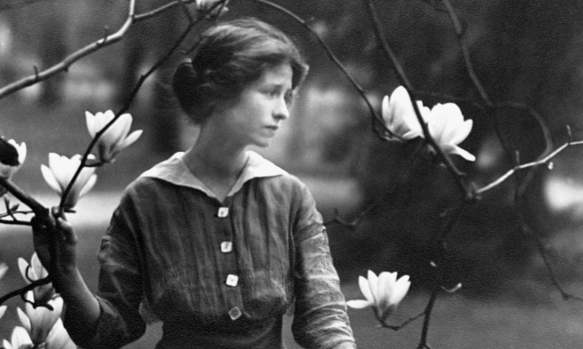
The text of Edna St Vincent Millay (above) provided the inspiration for the last third of the concert, a remarkable group of song settings. Rebecca Clarke’s Lethe is the very definition of bleakness, the underworld river supplying no comfort but only sorrow and menace (35:58), particularly in its ominous piano part at the end.

Juliana Hall’s settings of Letters from Edna provide some much-needed light relief, Millay asking humorously for payment from her publisher (39:05-40:22), declaring herself ‘awfully broke’, before passionately declaring her love and admiration To Mother (40:25).

Three settings make up Jonathan Dove’s mini-cycle Nights Not Spent Alone – the down to earth text of Recuerdo (43:34), with a quasi-orchestral piano part brilliantly managed by Lepper, the heady What lips my lips have kissed (47:41) and the passionate I too beneath your moon (50:18).

As an encore Whately and Lepper gave another Dove song, All These Dismal Looks (54:13-56:00), the fourth of five songs making up his Five Am’rous Sighs. The humourous song put the seal on an outstanding hour of music making, full of new discoveries and surprises and passionately delivered. The music and verse will I’m sure provide a springboard for listeners to the broadcast to look further afield. Talking of which…

Further listening

Kitty Whately has recorded the Jonathan Dove songs as part of a disc devoted to the composer’s music, including All The Future Days in its entirety, as well as Nights Not Spent Alone:

The below playlist contains all the music heard in this concert in available versions:

https://open.spotify.com/user/arcana.fm/playlist/6ctQO8z0d77IAARv24UoCR?si=JMBLzE4GQ9S7_Ay03k3iTg

Meanwhile you can hear all the songs of Rebecca Clarke on this disc from Patricia Wright, Jonathan Rees and Kathron Sturrock: