

Villa-Lobos transcriptions of:
Bach Prelude and Fugue no.8 in E flat minor / D sharp minor BWV853, Prelude no.14 in F sharp minor BWV883; Fugues – no.1 in C major, BWV846; no.5 in D major, BWV874; no.21 in B flat major, BWV866; no. 22 in B flat minor BWV867
Beethoven Adagio cantabile Op.13/2
Chopin Waltz no.7 in C sharp minor Op.64/2
Massenet Élégie Op.10/5
Mendelssohn Lieder ohne Worte in E major Op.30/3
Rachmaninov Prelude in C sharp minor Op.3/2
Schubert Ständchen D957/3
Schumann Träumerei Op.15/7
Villa-Lobos Bachianas Brasileiras no.9 W449
São Paulo Symphony Choir / Valentina Peleggi
Naxos 8.574286 [58’32”] English and Portuguese translations included
Producer Ulrich Schneider
Engineers Marcio Jesus Torres, Camilla Braga Marciano, Fabio Myiahara
Recorded: 5-10 August 2019 at Sala São Paulo, Brazil
Written by Richard Whitehouse
What’s the story?
Naxos’s coverage of the music of Heitor Villa-Lobos (part of this label’s series The Music of Brazil) continues with a selection of mainly transcriptions from the piano repertoire that the composer undertook during the mid-1930s as part of his extensive educational commitments.
What’s the music like?
Almost all these arrangements emerged in the period 1932-5, when Villa-Lobos took on the challenge of overhauling music education in the public school system of Rio de Janeiro. This involved the creation, virtually from scratch, of a choral pedagogy that he drew from across the spectrum of Baroque, Classical and Romantic music. It is a measure of his prowess that such transformation from mostly piano sources was accomplished with unfailing rigour and an idiomatic quality, so the fame of the originals is almost the only clue to their provenance.
From the soulful strains of among the most mellifluous from Mendelssohn’s Songs without Words, the programme then continues with the Eighth Prelude and Fugue from the first book of Bach’s The Well-Tempered Clavier – the former piece summoning a plangently rhetorical response which finds pertinent contrast with the latter piece’s methodical and intricate build-up to a culmination of sombre eloquence. The arrangement of Dreaming from Schumann’s Scenes from Childhood fully conveys its wistful pathos, as does that of the First Fugue from Bach’s WTC the original’s cool elegance. Similarly, the last of Schubert’s Serenade settings loses little of this song’s plaintiveness, and the Twenty-First Fugue from Bach’s WTC takes on unexpected jauntiness in what proves one of Villa-Lobos’s most inspiriting re-creations.
Chopin’s Waltzes might be considered unsuited to the vocal medium, yet the C sharp minor responds ably to such elaboration, as too the ruminative calm of the Twenty-Second Prelude from Bach’s WTC. Rachmaninov might have thought better of his Prelude in C sharp minor had he encountered this uninhibitedly dramatic realization, with basses providing the baleful anchorage, in contrast to the yearning aura drawn from the Fourteenth Prelude of the second book from Bach’s WTC. Massenet’s Elegy exceeds the original song for bittersweet poise, a foil to the serenity of the Fifth Fugue from Bach’s WTC. The indelible main melody from the Adagio of Beethoven’s Pathétique segues ideally into the Ninth Bachianas Brasileiras, with Villa-Lobos’s choral incarnation rather more atmospheric and evocative than that for strings.
Does it all work?
Almost entirely and due in no small part to the excellence of the São Paulo Symphonic Choir with its Italian conductor Valentina Peleggi. Lasting just under 60 minutes, the selection feels varied yet also cohesive enough to be enjoyed as a continuous programme, while enterprising choirs from both sides of the Atlantic ought to find much here to enrich their existing rosters. Inclusion of Villa-Lobos’s own music at the close is a reminder its technical demands should never be taken for granted, but here too the SPSC rises to the challenge with unstinting verve.
Is it recommended?
It is. The acoustic is just a little reverberant at times yet without detriment to the clarity of the choral writing, with informative annotations from Manoel Corrêa do Lago. Listeners should also investigate a recent Naxos release of Villa-Lobos’s first three violin sonatas (8.574310).
Listen
Buy
You can discover more about this release at the Naxos website, and you can also purchase the recording here. You can read more about conductor Valentina Peleggi here
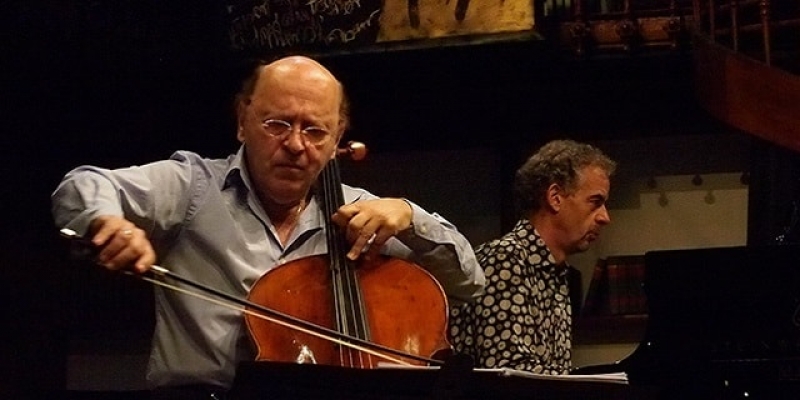

 The finale was also a winner, its tune (memorably upgraded by Keith Emerson and The Nice) leaving an impression long after it had departed, and completing a convincing performance of a substantial work. It would be good to see more Lalo revived to the repertoire, for he is a composer of tuneful appeal with colourful orchestration. Bell (above) gave us a substantial bonus in a gorgeously floated encore of Massenet’s Méditation from his opera Thaïs.
 Manuel de Falla also fulfils those two qualities, though his way with a melody is if anything even more exotic. El Amor Brujo (Love, The Magician) is packed full of memorably scored dance music that played right into the hands of a skilled interpreter such as Charles Dutoit. Under his baton the Royal Philharmonic Orchestra swooned and sighed, though unfortunately the contributions from mezzo-soprano Stéphanie d’Oustrac (above) were not ideally balanced from our vantage point in the Albert Hall, her notes falling short of the back of the Arena. Because of that the dances were easily the high point of what was otherwise a high quality performance.
 Arcana.fm