
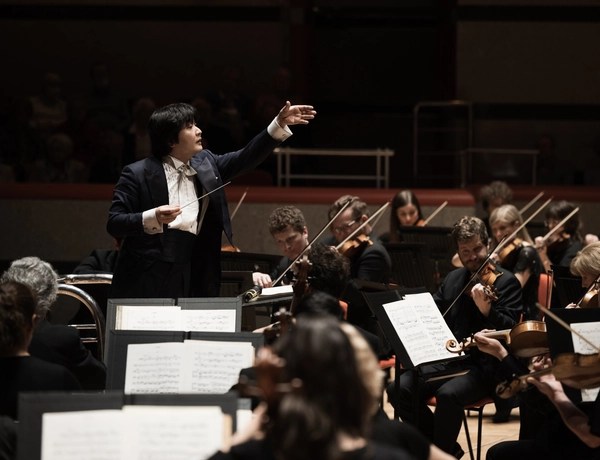
Marie-Christine Zupancic (flute), Sebastian Heindl (organ), City of Birmingham Symphony Orchestra / Kazuki Yamada
Berlioz Le Corsaire Op.21 (1844)
Takemitsu I Hear the Water Dreaming (1987)
Respighi I Fontane di Roma P106 (1916)
Saint-Saëns Symphony no.3 in C minor Op.78 ‘Organ’ (1886)
Symphony Hall, Birmingham
Wednesday 4 June 2025
Reviewed by Richard Whitehouse Picture of Kazuki Yamada (c) Benjamin Ealovega
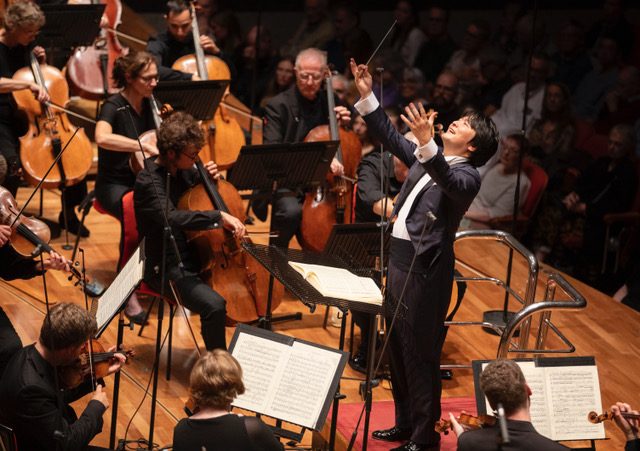
The dashing upsurge at the start of The Corsair launched this evening’s concert by the City of Birmingham Symphony Orchestra under its music director Kazuki Yamada in fine style. Nor was the pathos in this last of Berlioz’s concert overtures downplayed, and if the main portion lacked the pizzazz of illustrious predecessors, Yamada’s handling of the apotheosis proved an object-lesson in controlled spontaneity – setting the seal on a fine account of a piece that long -standing attendees will recall as a favourite of one-time principal conductor Louis Frémaux.
The music of Tōru Takemitsu was often heard in the era of Simon Rattle, but not I Hear the Water Dreaming. Taking its cue (along with other works of this period) from the ‘Dreamtime’ tradition of Aboriginal art, here a painting from the Papunya region of Western Australia, this short though eventful piece typifies its composer’s final creative phase – the formerly radical tendencies from previous years not so much disowned as finding an accommodation with the impressionist leanings of his earliest maturity. A sonic canvas, moreover, against which solo flute pursues its capricious course, with only a hint of something more confrontational either side of the cadenza-like passage towards its close. Certainly, this was music to which Marie-Christine Zupancic (taking time out as the CBSO’s first flute) sounded unerringly attuned.
CBSO regulars will recall Yamada presenting the whole of Respighi’s ‘Roman Triptych’ at a memorable concert four years ago. Tonight, Fountains of Rome rounded off the first half in a performance at its best in the effervescence of Triton at Morning or the dazzling majesty of Trevi at Midday, fading as if suspended in the Symphony Hall ambience. If Valle Giulia at Dawn felt a little passive in its allure, the enfolding serenity of Villa Medici at Sunset was fully sustained – the delicacy and suppleness of its entwining melodic lines accorded full rein.
The CBSO has been identified with Saint-Saëns’s Organ Symphony since Frémaux’s lauded recording of half-a-century ago, and it remains a work in which this orchestra excels. Yamada was (rightly) intent on stressing its symphonic cohesion, drawing ominous expectancy from the first part’s introduction and building no mean momentum in its ensuing Allegro. Sebastian Heindl’s hushed entry duly set the tone for a raptly eloquent slow movement, measured while never sluggish as it headed toward its heartfelt climax then on to a coda of bittersweet repose.
There was no lack of incisiveness or humour in the scherzo which opens the second part – its scintillating passagework for piano duet artfully integrated into the orchestral texture, with an ideally paced link into the finale with its indelible main melody and methodical build-up to a majestic peroration. Those thunderous initial chords aside, Heindl made less of an impact than might have been expected, but his always resourceful choice of registrations underlined the extent to which both he and Yamada continually had the ‘bigger picture’ uppermost in mind.
Overall, then, a concert which manifestly played to this orchestra’s collective strengths. The CBSO is back next week with its former music director Mirga Gražinytė-Tyla for what will be only a second UK performance, 63 years after the first, for Weinberg’s Fifth Symphony.
For details on the 2024-25 season A Season of Joy, head to the City of Birmingham Symphony Orchestra website. Click on the names to read more about soloists Marie-Christine Zupancic and Sebastian Heindl, and conductor Kazuki Yamada
Published post no.2,496 – Sunday 6 April 2025





 Arcana.fm