In concert – Birmingham Contemporary Music Group: Blossoming In Birmingham

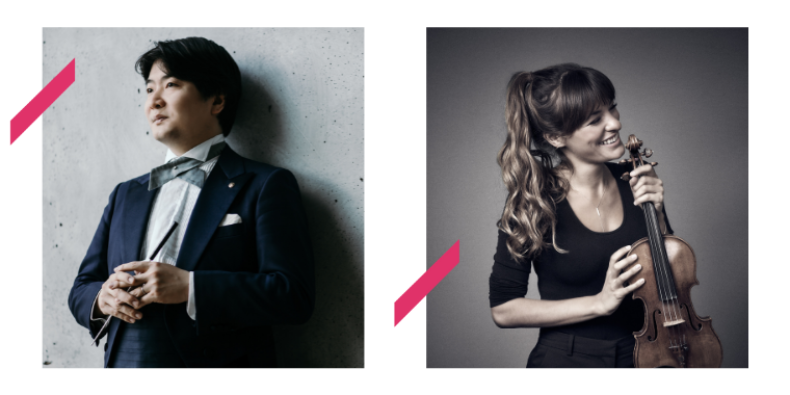
Oliver Janes (clarinet), Philip Brett, Stefano Mengoli (violins), David BaMaung (viola), Arthur Boutillier (cello), Birmingham Contemporary Music Group / Otis Lineham, Kazuki Yamada (conductors)

Illean Januaries (2017)
Fujikura Perpetual Spring (2017)
Ligeti String Quartet no.2 (1968)
Hosokawa Blossoming (2007)
Fujikura Secret Forest (2008)

BCMG NEXT [George Blakesley (clarinet), Anna Vaughan (violin), Alma Orr-Ewing (viola), Finley Spathaky (cello), Rob Hao (piano)

Fujikura Scion Stems (2010)
Illean Février (2019)
Fujikura Halcyon (2011)

CBSO Centre, Birmingham
Saturday 29 April 2023 (7pm and 9pm)

Reviewed by Richard Whitehouse

Spring may have arrived tardily this year, but Birmingham Contemporary Music Group was certainly in full bloom with this judiciously balanced and absorbing programme that featured one post-war classic and two pieces by one of the leading composers from the present time.

First, though, the welcome opportunity to hear a work by Lisa Illean, whose understated and fastidiously realized music conceals more than is evident on initial hearing. Such is true of Januaries, inspired by memories of holidays in Queensland together with descriptions of the Australian landscape. Its innate subtlety finding a direct parallel in this composer’s drawing of often ethereal yet always evocative timbres and textures from her 12-strong ensemble; and throughout which BCMG responded with due commitment to the direction of Otis Lineham.

The first of two pieces this evening by Dai Fujikura, Perpetual Spring drew inspiration from the Japanese Garden in Portland (US), notably the idea of growth as a process both ongoing and inexorable. Heard from this vantage, the clarinet represented a conceptual and expressive focal point; around which the string quartet weaved its dense if never claustrophobic texture with audible dexterity. Here, too, the music implied considerably more than was ever stated – no doubt in accord with the ‘‘power of ‘quiet’ nature’’ its composer took as his starting-point.

Although it now tends to be overshadowed by its predecessor, Ligeti’s Second String Quartet remains one of his most significant works – its five movements a compendium of his musical practice during the late 1960s, but with a formal and expressive focus that amply sustains the 20-minute whole. It was a measure of this account that a cumulative impetus carried through not merely to the explosive fourth movement, but also a finale whose textural mirage took in allusions to what went before: the music not so much ceasing as dispersing beyond earshot.

The string quartet was also Toshio Hosokawa’s chosen medium for Blossoming. Taking the image (and most probably its mythical association) of a lotus as its starting-point, the piece opened out in music typical of this composer for its unforced elegance and felicitous aura.

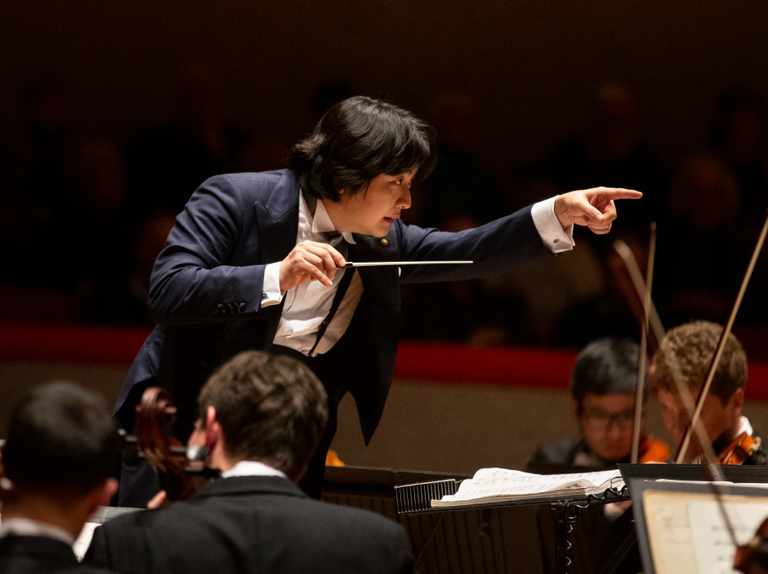
Considerably more engrossing an all-round experience, Fujikura’s Secret Forest is among the most impressive of his ensemble works and not least for its visceral conception. Placed centre-stage, the string nonet was balanced with groups of woodwind and brass either side, and above the auditorium. It was the ensuing interplay between the spatially arrayed sound-sources, strings intense in their eloquence and winds hieratic in their intangibility, that the conductor shaped over its course – not forgetting the solo bassoon, seated in the auditorium, who became a human figure plotting a course through this sonic landscape. The piece was directed with conviction by Kazuki Yamada and promises much for the Fujikura commission Wavering World, which he will premiere with the CBSO in Symphony Hall on January 17th.

A pity not more punters remained for the post-concert performance by musicians of BCMG NEXT, which featured two more works by Fujikura. Scion Stems took string trio as the basis for a wide-ranging discussion of textures made even more immediate by its brevity, whereas Halcyon pursued a more circumspect yet never disengaged interplay between clarinet and string trio. In between, Février found Illean’s writing at its most sensuous in its sequence of exchanges between clarinet, cello and piano to which these players likewise did full justice. The current NEXT line-up performs its final concert on June 11th, while BCMG itself returns to Birmingham Town Hall on May 12th for its TREE Concert featuring a new commission by Christian Mason alongside one of the most impressive compositions by Helmut Lachenmann

For more on future BCMG events, click on the link to visit their website. For more information on the composers featured, click on the names to read about Dai Fujikura, Lisa Illean and Toshio Hosokawa, while you can read about the conductors by clicking on Kazuki Yamada and Otis Lineham

In concert – Alexandre Kantorow, CBSO / Kazuki Yamada: Tchaikovsky Piano Concerto no.2 & Holst The Planets

Alexandre Kantorow (piano), CBSO Youth Chorus, City of Birmingham Symphony Orchestra / Kazuki Yamada

Tchaikovsky Piano Concerto no.2 in G major Op. 44 (1879-80)
Holst The Planets Op. 32 (1914-17)

Symphony Hall, Birmingham
Thursday 2 February 2023

Reviewed by Richard Whitehouse

He may not take up his role as Chief Conductor for a couple of months, but Kazuki Yamada already has acute rapport with the City of Birmingham Symphony Orchestra, as was evident tonight in this unlikely though effective coupling of major works by Tchaikovsky and Holst.

While it has never aspired to the popularity of its predecessor, Tchaikovsky’s Second Piano Concerto lacks none of the melodic appeal or emotional heft synonymous with this composer. Growing conviction that piano and orchestra were best heard separately rather than together can give the first movement a rather stop-start trajectory, but with Alexandre Kantorow (below) alive to its bravura and poetic facets there was never a sense of disjointedness in a first movement – emphasis on whose ‘brillante’ and ‘vivace’ markings avoided any risk of portentousness.

Although those aspects of the edition by Alexander Ziloti that simplify the solo writing have now been consigned to history, truncation of the Andante into an intermezzo akin to that of the First Concerto remains common. To do so, however, misses out on the expansiveness of this movement – notably its eventful trialogue between piano, violin and cello as dominates the latter stages, and which here saw a sustained interaction between Kantorow and the CBSO section leaders (Eugene Tzikindelean and an as yet unidentified cellist. Yamada directed with an unobtrusive rightness, then gave the soloist his head in a finale that makes up for its relative brevity with scintillating wit and agility – not least in the coda when, having resisted any temptation for a grand apotheosis, Tchaikovsky allows soloist and orchestra an effervescent race to the close.

Tchaikovsky was never an influence on Holst, and the conventional scoring of the former’s piece is worlds away from that of The Planets with its extended range of ingenious timbres and textures. Finding the right martial pulse at the outset of Mars, Yamada built this first piece to a pulverizing climax – after which, the enfolding raptness of Venus was the more tangible in its serenity and poise. The deftness and insouciance of Mercury was no less to the fore, and the only reservations came in a Jupiter whose bracing outer sections verged  on the dogged; with a central section whose indelible melody took on a ceremonial turgidity which has nothing to do with this music as Holst conceived it. Happily, the remaining three pieces, which all too often seem anticlimactic, emerged as highlights of this performance.

Undeniably the emotional focal-point, Saturn unfolded from initial remoteness to a climax whose sense of crisis was palpably evident, before withdrawing into a radiant evanescence. Contrast with the sardonic humour of Uranus was pronounced – Yamada making the most of its flights of fancy, then lurchingly triumphant parade, before the heart-stopping dissolve near its close. Neptune capped proceedings superbly – its strangeness and insubstantiality allied to searching introspection which afforded cohesion to this venture into the unknown.

Placed high to the left of the auditorium, the CBSO Youth Chorus added its ethereal tones. The final fadeout began almost too remotely to be sustained yet, as this repeating vocalise moved beyond earshot, there was no doubt as to the totality of what had been experienced.

You can read all about the 2022/23 season and book tickets at the CBSO website. Click on the artist names for more on Kazuki Yamada and Alexandre Kantorow – and for more on Gustav Holst, head to The Holst Society

In concert – Nicola Benedetti, CBSO Chorus and Symphony Orchestra / Kazuki Yamada: Dvořák, Mendelssohn & Grigorjeva

Dvořák Carnival Overture, Op. 92 (1892)
Mendelssohn Violin Concerto in E minor, Op. 64 (1844)
Grigorjeva In Paradisum (2012)
Dvořák Symphony no.9 in E minor Op.95 ‘From the New World’ (1893)

Nicola Benedetti (violin), CBSO Chorus, City of Birmingham Symphony Orchestra / Kazuki Yamada

Symphony Hall, Birmingham
Tuesday 20 September 2022

Reviewed by Richard Whitehouse

It may have been a largely mainstream programme, but tonight’s concert by the City of Birmingham Symphony Orchestra drew a capacity house at the beginning of a season in which Kazuki Yamada takes on the reins for what looks an eventful new era near the start of the orchestra’s second century. The CBSO’s response in Dvořák’s Carnival Overture more than confirmed it was ready for the challenge – Yamada ensuring the nocturnal evocation at its centre worked its evocative spell, then building an irresistible momentum going into the thrilling final bars.

Mendelsohn’s Violin Concerto cannot have been absent from many of the CBSO’s previous 102 seasons and made its appearance this evening, Nicola Benedetti tackling a piece she must herself have played on many occasions. Not that there was anything routine about a reading such as abounded in subtle touches – especially the opening Allegro’s cadenza, which more than usually fulfilled its role as this movement’s structural fulcrum. In the Andante, Benedetti pointed up the expressive contrast between its main themes; the second of which was notable for a tonal astringency that brought out its plangency in full measure. If there was nothing so arresting in the finale, the interplay of soloist and orchestra was astutely judged through to the effervescence of the closing bars. Certainly, a performance to make one enjoy the piece anew.

Introducing the second half, Yamada requested the audience remain silent during the pause between pieces – the first a setting of In Paradisum by Ukrainian-born Galina Grigorjeva (b 1962), its lucid harmonies and heady culmination bringing the best out of the CBSO Chorus.

From here to the New World Symphony was no great step. Once again, a work rarely absent from the CBSO’s schedule seemed largely revitalized. Not that all of Yamada’s interpretative decisions came off – after an introduction of no mean gravitas the opening Allegro unfolded a little fitfully, though so interventionist an approach might have gained from the exposition repeat to place these in greater context. There were similar touches in the Largo, yet here the focus of Yamada’s conception and the raptness of the player’s concentration were their own justification – not least towards the close, with the front desks combining to poignant effect. Without being driven as ruthlessly as is often the case, the Scherzo has the requisite impetus and, throughout its trio, a whimsical elegance which proved as engaging as the charged coda.

Heading into the final Allegro with minimal pause, Yamada brought out its inherent force but also the ruminative eloquence of its second theme; the transition to which, in the reprise, was ideally judged. Nor did the apotheosis lack for drama as those closing bars melted into silence.

Prior to the start of this concert, a minute’s silence was observed then (most of) the audience joined in possibly its first rendering of God Save the King. A more localized farewell was paid later in the evening to Colin Twigg, first violinist for over 31 years and whose retirement will hopefully see more of his own compositions as have featured in Centre Stage recitals over the years. A miscellany is featured on a Toccata Classics release and worth anyone’s investment. The CBSO will be back in action on Saturday with a major new commission from Brett Dean.

You can read all about the 2022/23 season and book tickets at the CBSO website. For further information on the night’s artists, click on the names for composer Galina Grigorjeva, and for artists Nicola Benedetti and Kazuki Yamada

In concert – Daishin Kashimoto, CBSO / Kazuki Yamada: Prokofiev, Bruch & Mendelssohn

kazuki-yamada-2

Prokofiev Symphony no.1 in D major Op.25 ‘Classical’ (1916-17)
Bruch
Violin Concerto no.1 in G minor Op.26 (1866-8)
Mendelssohn
Symphony no.3 in A minor Op.56 ‘Scottish’ (1829-42)

Daishin Kashimoto (violin, below), City of Birmingham Symphony Orchestra / Kazuki Yamada (above)

Symphony Hall, Birmingham
Wednesday 4 May 2022, 2.15pm

Written by Richard Whitehouse

Just under a year before he becomes chief conductor, Kazuki Yamada was back with the City of Birmingham Symphony Orchestra for a programme of well-established favourites, which no doubt accounted for the gratifyingly full house that duly greeted his arrival on the podium.

There was humour aplenty in this account of Prokofiev’s Classical Symphony – not least with Yamada almost acting out the initial Allegro’s whimsical second theme, but the highlight was a Larghetto whose sometimes disjunct episodes came together effortlessly. The outer sections of the ensuing Gavotte seemed a little too mannered to be convincing, but the Finale found conductor and orchestra at one in conveying the scintillating wit but also winsome pathos of its main themes, with a pointing of incidental detail then audible ‘lift off’ to the closing bars.

His decade as first concert-master of the Berlin Philharmonic likely accorded him less profile as a soloist, but his take on Bruch’s First Violin Concerto confirmed Daishin Kashimoto as a force to be reckoned with. Determined not to undersell the Prelude, he and Yamada brought out this music’s sombreness as keenly as its lyricism and, at its climax, a tempestuous energy that found the CBSO at its collective best. Nor was there any lack of emotional gravitas in the Adagio, Kashimoto drawing out its rapturous lyricism without neglecting those more intimate asides which resonate long after the music ceases. Emerging with real anticipation, the final Allegro had no lack of underlying impetus and, in its second theme, a high-flown eloquence that set the seal on this movement, and this piece overall, going into the decisive closing bars.

If the second-half performance of Mendelssohn’s Scottish Symphony was not so consistently satisfying, it reaffirmed just why this work (and this composer) has remained a favourite of Birmingham audiences over the decades. Many latter-day accounts tend toward a decidedly Classical brusqueness, but Yamada chose never to rush the opening movement such that the poignancy of its introduction (rightly) persisted through those agitated contrasts of its main Allegro – the absence of an exposition repeat barely detracting from the music’s emotional weight. Effervescent without being overdriven, the scherzo provided ideal contrast between this and an Adagio whose alternate fervour and rhetoric never skirted that sentimentality as was once all too familiar – with Yamada ensuring clarity through even the densest textures.

As in the Bruch, this performance adhered to the ‘attacca’ indications by which Mendelssohn helps to maintain long-term cohesion. That into the finale launched this movement in bracing fashion and if impetus marginally faltered over the latter stages, the pathos at the outset of its coda made for an ideal transition into the peroration which, uplifting or grandstanding as one hears it, ensures a rousing conclusion that seldom fails to bring the house down. Which it did at the close of a reading that found the burgeoning CBSO/Yamada partnership in fine fettle.

Yamada will be back with this orchestra for the start of the 2022/23 season (details of which have just been announced), while next week brings the season’s last appearances with Mirga Gražinytė-Tyla for a brace of programmes that feature Tchaikovsky, Bruckner and Brahms.

For more information on the CBSO’s 2021/22 season, visit their website, and for details on the newly announced 2022/23 season click here. Meanwhile for more information on the artists, click on the names to access the websites of Kazuki Yamada and Daishin Kashimoto

In concert – Fatma Said, CBSO / Kazuki Yamada – Mozart, Mahler & Richard Strauss

fatma-said

Richard Strauss Don Juan, Op. 20 (1888)
Mozart
Vado, ma dove?, K583 (1789)
Mozart
La Clemenza di Tito, K621 (1791) – Non più di fiori
Mahler
Symphony No. 4 in G major (1899-1900)

Fatma Said (soprano), City of Birmingham Symphony Orchestra / Kazuki Yamada

Symphony Hall, Birmingham
Wednesday 19 January 2022

Written by Richard Whitehouse

It may still be over a year before Kazuki Yamada becomes chief conductor and artistic advisor of the City of Birmingham Symphony Orchestra, but concerts such as tonight’s afford ample indication of just what can be expected from this already engaged and productive partnership.

If there any ongoing theme to this programme, it was one of transcendence – admittedly, one of negation in Richard Strauss’s Don Juan, though Yamada relished those encounters chivalrous and amorous during its course. The ‘carnival’ episode drew some especially incisive playing from woodwind and brass, and while the climactic restatement of the horns’ aspiring theme lacked nothing in grandiloquence, it did not detract from the starkness of a coda whose fatalism was to be encountered within this composer’s tone poems more regularly than might be supposed.

Strauss’s lifelong devotion to Mozart made two of the latter’s arias an appealing complement. Written as a replacement number for a long-forgotten opera by Vicente Martín y Soler, Vado, me dove? enjoys frequent revival as a standalone aria and, when elegantly rendered by Fatma Said, it was not hard to hear why. One of the (relatively few) highpoints from Mozart’s final opera La Clemenza di Tito, Vitellia’s aria makes greater expressive challenges to which Said rose accordingly – the trajectory of its ‘Ecco il punto’ recitative subsiding from anguish into that resignation from where the aria itself proceeds unerringly to the resolve at its close. All of which was eloquently conveyed, and while a further aria – the mellifluous Nehmt meinen Dank? – would have been welcome, there was more to come from this impressive singer.

Namely the finale of Mahler’s Fourth Symphony – hardly the rarity it was when Adrian Boult introduced it to Birmingham audiences 95 years ago, but easy to underestimate in the context of this composer’s overall output. As ‘unhurried’ as its heading indicates, the first movement exuded no little ambiguity – Yamada pointing up those myriad timbral and textural shadings that permeate the development and so make possible the heightened equanimity of the reprise. Sardonic but not unduly malevolent, the scherzo was tangibly evocative (Eugene Tzkindelean switching adeptly from his violin to its retuned doppelganger) – with breath-taking change of tonal perspective at the arcadian vision near its end. Visionary was no less apt to describe the slow movement, its variations alternating between fervour and anguish with seamless accord.

Felicitous playing from CBSO woodwind informed its progress on the way to its climax, with ‘heaven’s door’ briefly yet thunderously ajar prior to the transfigured calm of the closing bars. Stealing in just before, Fatma Said was an appealing guide to the setting of ‘Das himmlische Leben’ with its not always blissful recounting of the joys awaiting those who arrive there. Of particular note was the easefulness that spread across the final pages, when the singing ceases and the orchestra withdraws stealthily while raptly to leave just the harp’s pulsing resonance.

A lucid, often captivating performance of a work whose enticements Yamada realized in full measure. Anyone who can make it along to Symphony Hall for tomorrow afternoon’s repeat should certainly do so, while Kazuki Yamada will be back with the CBSO during this spring.

For more information on this concert visit the CBSO website. Meanwhile click on the links for information on the artists Fatma Said and Kazuki Yamada.