Listening to Beethoven #198 – Trio in E flat major Op.38

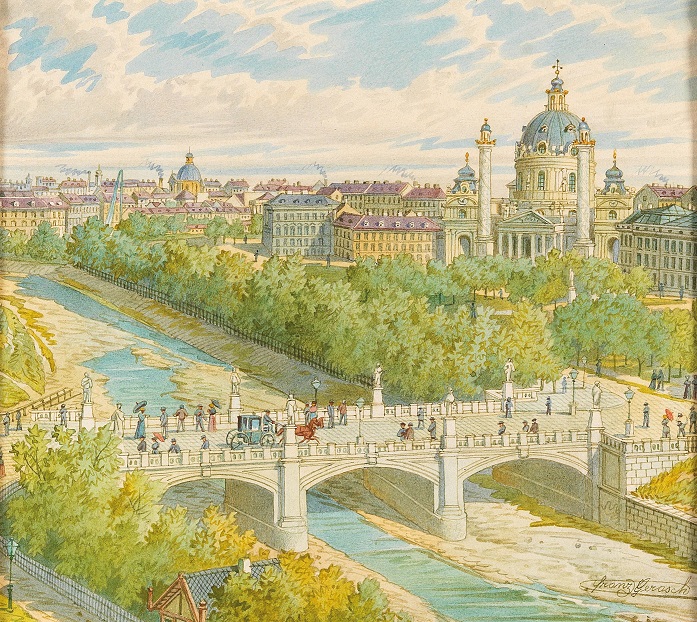
A view over Vienna river and St. Charles’s cathedral by Franz Gerasch (before 1906)

Trio in E flat major Op.38 for clarinet / violin, cello / bassoon and piano (1803, Beethoven aged 32)

  1. Adagio – Allegro con brio
  2. Adagio cantabile
  3. Tempo di menuetto
  4. Tema con variazioni: Andante
  5. Scherzo: Allegro molto e vivace
  6. Andante con moto alla marcia – Presto

written by Ben Hogwood

Background and Critical Reception

Beethoven’s Septet was a considerable success on its appearance in 1799, creating demand for the work to be arranged in a number of other instrumental combinations. Beethoven produced two trio versions, just as he did with the Op.11 Clarinet Trio – one for clarinet, cello and piano, with a substitution for cello with bassoon encouraged, and another for the more conventional piano trio (violin, cello and piano).

Writing for Hyperion Records, bassoonist Laurence Perkins details the specifics of the arrangement. The re-voicing gives (for the most part) the septet’s string parts to the piano, while much of the original clarinet part is preserved. A good deal of the cello line comes from the bassoon part of the septet, with occasional additions from the cello and horn parts. Perkins observes that there were far fewer bassoonists around than cellists in those times, but that offering the different choices of instrumentation would help the selling potential of the music. As he says, there is a strong case for performing this version with bassoon rather than cello, for “it restores that very special link between the clarinet and bassoon which is such a special feature of the original septet.”

He goes on to praise Beethoven’s achievement in the arrangements. “By transcribing the string parts with Beethoven’s characteristic pianistic style, it sounds totally convincing, as if it had been originally conceived in this form. From the spacious elegance of the adagio introduction to the first movement, leading into the energy, expression and momentum of the allegro con brio, we are on a very similar musical journey to the septet itself. The slow movement, adagio cantabile, remains as a wonderfully melodic vehicle for the clarinet’s lyrical qualities, while the minuet and trio is every bit as characterful, the bassoon adding its own brand of wit in the cheeky horn passages of the trio section. The theme and variations is particularly effective with lots of imaginative interplay between the three instruments, and the scherzo retains all the energy and excitement of the original version. The dark introduction to the final movement leads into the vibrant, energetic presto with the famous violin cadenza faithfully reproduced on the piano.”

Thoughts

If I were listening to this work cold, I would think it to be a substantial new piano trio almost in the form of a serenade. However with the knowledge that it is in effect another version of the Septet, it is easy to pine for the colours Beethoven uses in his expert blending of the seven different players. That said, this is an extremely effective arrangement, with or without clarinet and bassoon, and the three parts are ideally balanced. The music never feels too congested, and there is room for the wit and charm of the original to come through at every turn.

The bassoon / cello has an attractive solo to carry the second movement Adagio Cantabile to a higher plane, ably supported by the other two instruments. The cheeky subject of the Tempo di Menuetto isn’t quite as effective without the rhythmic prompting of the double bass, but leaves its witty mark nonetheless.

My personal preference would be for the clarinet / bassoon / piano version, going in line with Perkins’ argument and because the melodic ideas translate really nicely to the wind instruments. The conventional piano trio would not have to wait long for another original piece!

Recordings used and Spotify Links

Martin Roscoe (piano), Sarah Watts (clarinet), Laurence Perkins (bassoon) (Hyperion)
Judith Kent Stillman (piano), Richard Stoltzman (clarinet), Michael Reynolds (cello) (KidsClassics)
Adrian Brendel (piano), Pascal Moraguès (clarinet), Filipe Pinto-Ribeiro (cello) (Paraty)
Beaux Arts Trio [Menahem Pressler (piano), Isidore Cohen (violin), Peter Wiley (cello)] (Philips)

This delightful piece translates well to its smaller medium, and is served by some thoroughly enjoyable performances. Perkins’ own, with clarinettist Sarah Watts and pianist Martin Roscoe, is a treat – while Richard Stoltzmann overseas a bright reading on KidsClassics. The Beaux Arts Trio give a good performance on Philips with the piano trio version, but the clarinet really does help preserve the spirit of Beethoven’s original melodies. You can hear the Roscoe / Watts / Perkins version on the Hyperion website

You can chart the Arcana Beethoven playlist as it grows, with one recommended version of each piece we listen to. Catch up here!

Also written in 1799 Haydn String Quartet in G major Op. 77/1

Next up Sonata for piano and violin no.9 in A major Op.47 ‘Kreutzer’

In concert – Benjamin Grosvenor, CBSO / Marta Gardolińska: Mozart, Beethoven, Fanny Mendelssohn & Felix Mendelssohn

marta-gardolinska

Mozart Die Zauberflöte K620: Overture (1791)
Beethoven
Piano Concerto no.1 in C major Op.15 (1795, rev. 1800)
Fanny Mendelssohn
Overture in C major (1832)
Mendelssohn
Symphony no.4 in A major Op.90 ‘Italian’ (1833)

Benjamin Grosvenor (piano), City of Birmingham Symphony Orchestra / Marta Gardolińska

Symphony Hall, Birmingham
Wednesday 3 November 2021 (2.15pm)

Written by Richard Whitehouse. Picture of Benjamin Grosvenor (c) Andrej Grilc

Those having heard Gustavo Dudamel’s recent Ives cycle will know of Marta Gardolińska’s role in the success of the Fourth Symphony, with her similarly methodical attention to detail being evident in this afternoon’s concert with the City of Birmingham Symphony Orchestra.

An avowedly Classical concert it may have been, but an artfully programmed one. Certainly, it was refreshing these days to hear the introduction of Mozart’s Overture to The Magic Flute given with this degree of gravitas, followed by a purposeful take on the main allegro such as brought out the music’s verve along with an onward striving apposite given its indebtedness to the ideals of the Enlightenment. The CBSO itself sounded wholly enthused in what was as purposeful and as immediate an account of this piece as it can have given in recent seasons.

It also prepared admirably for Beethoven’s First Piano Concerto with Benjamin Grosvenor (above). The latter has often sounded unduly self-effacing in the concerto repertoire, but this work fits his temperament to a tee – not least its initial Allegro, whose alternating of bravura with more equivocal expression included an electrifying transition to the reprise then nonchalant take on what is the second (c1805), shortest and contextually most satisfying of the composer’s three cadenzas. Neither was there any lack of eloquence in a Largo such as ranks among the most affecting of Beethoven’s earlier slow movements, while a headlong if never hectic tempo for the final Rondo enabled Grosvenor to instil his last entry with a poise as made the orchestral payoff the more conclusive. A fine performance which inevitably brought the house down.

Grosvenor returned for an affecting encore of Danza de la Moza Donosa – second of three Danzas Argentinas by Alberto Ginastera (maybe Grosvenor will investigate one or other of his piano concertos one day?). There was further unfamiliar fare after the interval, with an Overture by Fanny Mendelssohn. Her only completed orchestral work, its formal cohesion and technical finesse indicate what might have been possible under different circumstances, not least when Gardolińska drew such committed and characterful playing from the CBSO.

There cannot have been a time when Felix Mendelssohn’s Italian Symphony was unpopular in Birmingham and so it proved here. As has become customary, Gardolińska (rightly) observed the first movement’s exposition repeat, with its substantial lead-in, in what was otherwise an unexceptionally fine account of this opening Allegro. More individuality came through in the Andante, not least with its quirkily understated interplay between pedantry and pathos, while the intermezzo was more than usually arresting for the distinction made between its elegant outer sections and a trenchant, often combative trio. The ensuing Saltarello rounded off this performance in bracing fashion – those rhythmic contrasts between its main and second ‘tarantella’ themes vividly brought out on the way to a conclusion of no-nonsense finality.

This appealing programme was enthusiastically received by the fullest house the CBSO had enjoyed since live music-making resumed. Symphony Hall will hopefully be as well attended this Saturday, when Mirga Gražinytė-Tyla returns for the commemorative A Covid Requiem.

Further information on the CBSO’s current season can be found at the orchestra’s website. For more on Marta Gardolińska, click here – and for more on Benjamin Grosvenor, head to the pianist’s website

CBSO players perform the Allegretto from Fanny Mendelssohn’s String Quartet in E flat here:

In concert – Mischa & Lily Maisky play Beethoven, Britten & Piazzolla @ Wigmore Hall

mischa-maisky-lily-maisky

Beethoven 7 Variations on ‘Bei Männern, welche Liebe fühlen’ from Mozart’s Die Zauberflöte WoO 46 (1796)
Britten Cello Sonata in C major Op.65 (1961)
Piazzolla Le grand tango (1982)

Mischa Maisky (cello), Lily Maisky (piano)

Wigmore Hall, London
Monday 1 November 2021

Written by Ben Hogwood

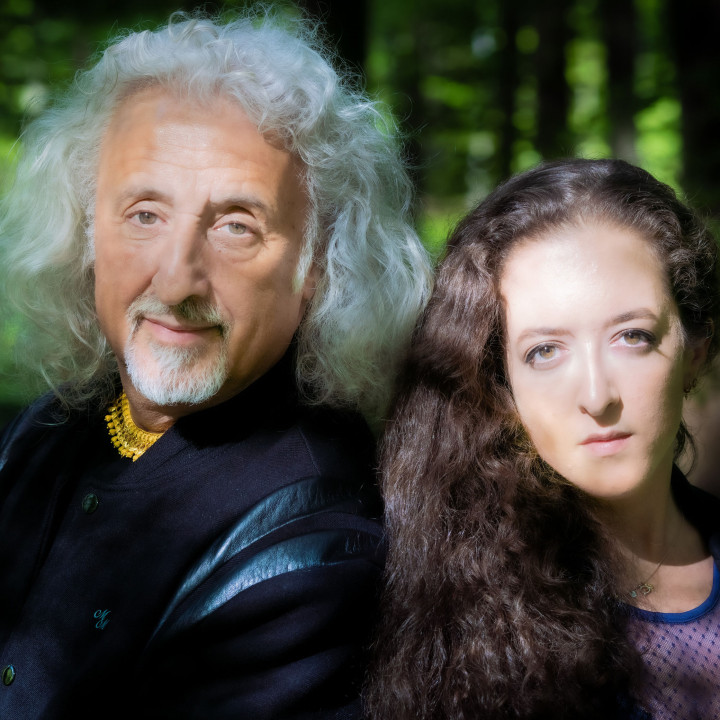
Father and daughter duo Mischa and Lily Maisky presented an imaginative program of works for cello and piano in this BBC Radio 3 Lunchtime Concert, where it was gratifying to note a full attendance at the Wigmore Hall.

They immediately found the light-hearted spirit of Beethoven’s 7 Variations on Bei Männern, welche Liebe fühlen, an aria from Mozart’s Die Zauberflöte. The piano takes the lead for much of this work, and Lily’s phrasing was subtle yet nicely shaped. The burnished tone of Mischa’s cello was a feature in the minor-key fourth variation, while Lily’s sensitive ornamentation at the start of the sixth was especially attractive.

A compelling performance of Britten’s Cello Sonata followed. As a former pupil of Mstislav Rostropovich, Mischa Maisky effectively has a direct line to a work that started the beginning of an extremely fruitful musical friendship between Britten and Rostropovich that lasted up to the composer’s death 15 years later. This performance inhabited the spirit of the work from first note to last, with the feeling in the first movement Dialogo that we were eavesdropping on a private conversation. Britten’s frequent but subtle references to Shostakovich were nicely highlighted here, with a few witty asides.

In the second movement Scherzo the Maiskys were dancing a balletic routine, Mischa’s pizzicato questions finished off by Lily’s featherweight answers. The tempo was slightly slower than is often used here, but in this way the pair effectively pointed out the work’s proximity in Britten’s output to the opera A Midsummer Night’s Dream. The sombre third movement Elegie had a silvery tone from the cello, while the following Marcia dealt in sardonic humour. The finale was a tour de force, featuring low notes from Mischa’s cello capable of rattling the windows, before powering through to an emphatic finish.

Piazzolla’s Le Grand Tango celebrates the dance form with which the Argentinian composer became obsessed, though as he stated the preoccupation was in his mind rather than the dancing feet. This was a passionate performance, the Maiskys in hold throughout as they maintained their close musical chemistry, right from the full bodied notes with which the cello began to a red-blooded dance for the closing pages. In between we had music of great tenderness and affection, not to mention rhythmic persuasion.

The duo gave us two encores, the first of which was a heartfelt tribute to the recent passing of Nelson Freire, clearly a dear friend. Bloch’s Prayer, from the short suite From Jewish Life, was an ideal choice, reverently played and with a searing tone quality to the highest register. It was a moving tribute that could hardly be bettered. There was also an ideal response in the form of Mischa’s own transcription of Brahms’s Lerchengesang Op.70/2, where Lily’s piano took the expressive lead.

You can hear the music played by Mischa and Lily on the Spotify playlist below, compiling Mischa’s recordings for Deutsche Grammophon of all the repertoire:

For more information on Mischa Maisky you can visit his artist page

Listening to Beethoven #197 – Polyphonic Italian Songs WoO 99

Portrait of Antonio Salieri by Joseph Willibrord Mähler, 1815 Polyphonic Italian Songs for largely unaccompanied voices (1801-1803, Beethoven aged 32) 1. Bei labbri che amore (duet) 2. Ma tu tremi, o mio tesoro (trio) 3. E pur fra le tempeste (solo) 4. Sei mio ben (duet) 5. Giura il nocchier: trio (5a), quartet (5b), quartet (5c) 6. Ah rammenta (duet) 7. Chi mai di questo core (trio) 8. Scrivo in te (duet) 9. Per te d’amico aprile (trio) 10. Nei campi e nelle selve: quartet (10a), quartet (10b) 11. Fra tutte le pene: duet (11a), trio (11b), quartet (11c) 12. Salvo tu vuoi lo sposo: solo (12a), duet (12b) 13. Quella cetra ah pur tu sei: trio (13a), quartet (13b), quartet (13c) 14. Già la notte s’avvicina: trio (14a), quartet (14b) 15. Silvio amante disperato (quartet) Dedication not known Duration most songs between 1′ and 1’30” Listen Background and Critical Reception This collection of Italian songs provides us with a fascinating insight into Beethoven’s studies with Antonio Salieri, while also closing this particular chapter in his career. All the settings are of texts by Pietro Metastasio, whose poetry Beethoven was already familiar with. Keith Anderson writes for Naxos that the exercises provide a substantial collection of songs in varied form, in many cases offering Beethoven’s original version, followed by Salieri’s corrected version. They have been brought together under the number WoO 99, with a series of numbering from Beethoven compiler Willy Hess for each item. These settings offer varied insights into Salieri’s teaching methods and Beethoven’s achievements in these years. The unaccompanied Italian settings were written during Beethoven’s early days in Vienna, generally between 1793 and 1797 and those with accompaniment up to 1802. The listings and earlier complete recordings are discussed in full by Mark S. Zimmer in The Unheard Beethoven. Jan Swafford gives valuable insight into Beethoven’s manner as a student. “As with his counterpoint masters, in his dealings with Salieri Beethoven was a wilful student even as he dutifully set his assigned old-fashioned Italian texts in a suitable style. One day Beethoven ran into Salieri in the street after the teacher had thrashed one of rhose efforts. Salieri complained that he hadn’t been able to get the tune out of his head. “Then, Herr von Salieri,” Beethoven grinned, “it can’t have been so utterly bad.” Thoughts These songs give fascinating insights into Beethoven’s development as a composer. The music feels much ‘older’, with the overriding impression that the pupil is diligently aiming for a style coveted by his teacher, rather than breaking particularly new ground – bolstering his abilities and covering perceived weaknesses. The first of these settings, Bei labbri, che amore, is a chaste two-parter for male and female voice in close harmony. Ma tu tremi is initially similar but there is a slightly more awkward top line in the middle section. E pur fra le tempest is a short setting of just under a minute, for solo voice and flowing piano, moving to an unaccompanied and quite serene Sei mio ben for three voices. It is interesting to hear three versions of Giura il nocchier, the second of which is much fuller in texture than the first, while the third shifts the pitch down a tone. The four-part Chi mai di questo core is the fullest song here, and features a nice dialogue between the voices, if still polite and functional. Some of the arrangements are written for full, choral textures, such as the second and third short arrangements of Giura il nocchier. There are no fewer than six versions of Fra tutte le pene availble, each of the three originals with revisions by Salieri to make the part movements a little more logical. Other songs include the pure C major of Scrivo in te, a minute-long setting in three parts, and the fuller choral songs Per te d’amico aprile and Nei campi e nelle selve, in two versions – the second of which has a mournful edge. Also in two versions are Salvo tu vuoi lo sposo, and Gia la notte savvicina, which has a feather light choral setting for its alternative. Meanwhile the choral Quella cetra ah pur ti sei has three – and sounds rather like Haydn in the first. Spotify playlist and Recordings used Soloists, Ensemble Tamanial, Cantus Novus Wien / Thomas Holmes (Naxos)
The Naxos recordings are very well delivered, with the caveat that it is difficult to convey emotion in songs that are so short. The solo items have the necessary intimacy, while the choral numbers have a nice space surrounding the textures in the recording picture. Occasionally the top edges of the soprano lines feel like a bit of a strain, but that could be as much due to the composer’s writing as anything else! You can chart the Arcana Beethoven playlist as it grows, with one recommended version of each piece we listen to. Catch up here!
Also written in 1803 Boieldieu Clarinet Concerto no.1 in E flat major Op.36 Next up Bei labbri, che Amore WoO 99/1

In concert – Sarah Beth Briggs, English Symphony Orchestra / Kenneth Woods: Mozart in Cheltenham

sarah-beth-briggs

Sarah Beth Briggs (piano, above), English Symphony Orchestra / Kenneth Woods

Sawyers The Valley of Vision (2017)
Mozart
Piano Concerto no.22 in E flat major K482 (1785)
Beethoven
Symphony no.6 in F major Op.68 ‘Pastoral’ (1808)

Town Hall, Cheltenham
Monday 25 October 2021

Written by Richard Whitehouse; picture of Sarah Beth Briggs by Carolyn Mendelsohn

Tonight’s concert found the English Symphony Orchestra at the Town Hall in Cheltenham, a building of Victorian opulence with an expansive while (surprisingly?) immediate acoustic to match, in a programme featuring classics of their respective media by Mozart and Beethoven.

First, though, a welcome revival for The Valley of Vision – the tone poem by Philip Sawyers that surveys the environs around Shoreham, Kent as were immortalized in the visionary early landscapes of Samuel Palmer. Although the composer had identified five continuous sections, the probing intensity of this music makes for a seamless unfolding which was to the fore in a superbly focussed account as directed by Kenneth Woods (who recently premiered Sawyers’ Fifth Symphony at the Colorado Mahler Festival). No less tangible was the control over this music’s momentum, extending through to a climactic faster section before soon regaining its initial pensiveness. In its subtly evocative aura and persuasive handling of tonality, moreover, this piece can rank with the most significant British orchestral works of the past two decades.

From the six piano concertos that Mozart wrote for his subscription concerts during the mid-1780s, the Twenty-Second is likely the least often heard. A pity, when its relatively expansive form and unpredictability of content are striking even in the context of this most exploratory phase from the composer’s output. Certainly, it is a piece of which Sarah Beth Briggs had the measure – whether in the forceful impetus of its opening Allegro, winsome interplay between soloist and woodwind in the central Andante (arguably the most eloquent among Mozart’s sets of variations) or blithe unfolding of a final Rondo afforded greater pathos by the ‘harmonien’ episode whose interposing was an inspired departure. Nor were Dennis Matthews’s succinct and artfully integrated cadenzas other than an enhancement of what was a fine performance.

Not that there was there anything routine about Beethoven’s Pastoral following the interval, a worthy successor to those performances of the Fifth and Seventh Symphonies that Woods and the ESO have given in recent concerts. Thus, a purposeful though never inflexible take on the opening movement left sufficient room to characterize its reflective asides, with the ‘Scene by the brook’ even more engrossing through its homogeneity of texture and seamless continuity; the closing bird-calls elegantly phrased and enticingly integrated into the whole.

Too rapid a tempo for the scherzo left Woods with insufficient room to point up contrasts in motion with its trio sections, but the Thunderstorm was finely rendered as an extended introduction into the finale – this Shepherd’s Song emerging as the formal and emotional culmination in all respects. Not the least of these strengths was an inevitability of progress – here maintained right through to a coda of serene poise and, in the process, underlining the degree to which any vestige of self has been sublimated into the enveloping cosmic dance.

An absorbing performance as made one look forward to further Beethoven symphonies from this source. Woods and ESO are in Worcester at the weekend with two concerts as part of the Autumn Elgar Festival, the first featuring the masterly Elegy for Strings by Harold Truscott.

Further information on the ESO’s current season can be found at their website. For more on composer Philip Sawyers, visit his website here, while more on pianist Sarah Beth Briggs can be found at her website