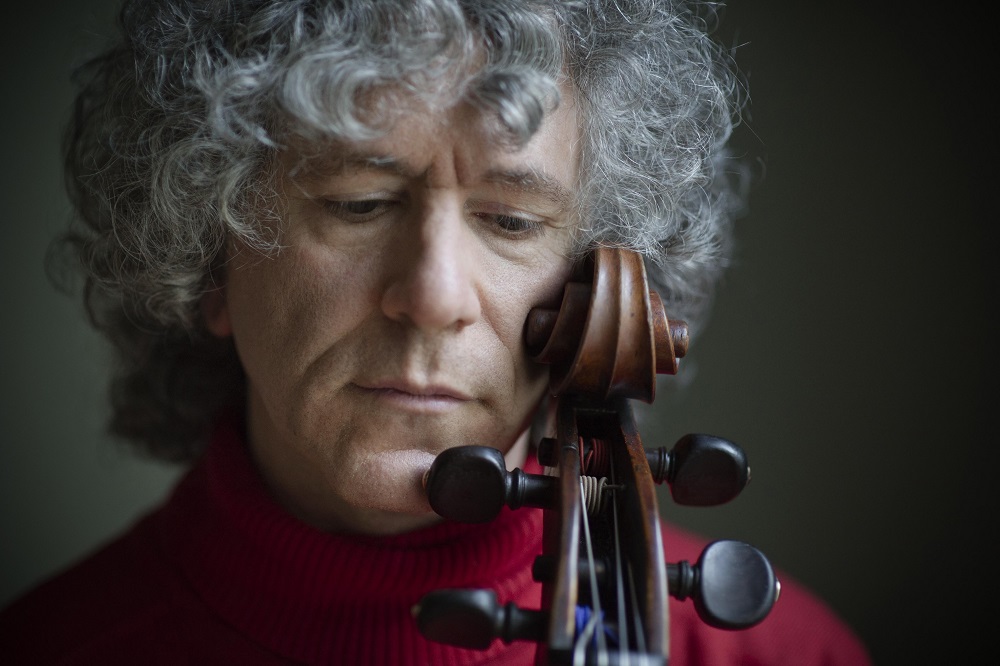
Talking Heads: Steven Isserlis

The cellist talks to The cellist talks to Ben Hogwood about his Wigmore Hall residency, celebrating the music of Fauré, and his new Boccherini album Music of the Angels.

For cellist Steven Isserlis, November 2024 is all about two composers. From the first day of the month he is taking up residence at London’s Wigmore Hall for a five-day exploration of the late chamber music of Gabriel Fauré, who died on 4 November 1924. He has given a valuable insight into his thoughts on the composer in an article just published for the Guardian newspaper, but was generous to spend some time answering specific questions about Fauré’s late music for Arcana.
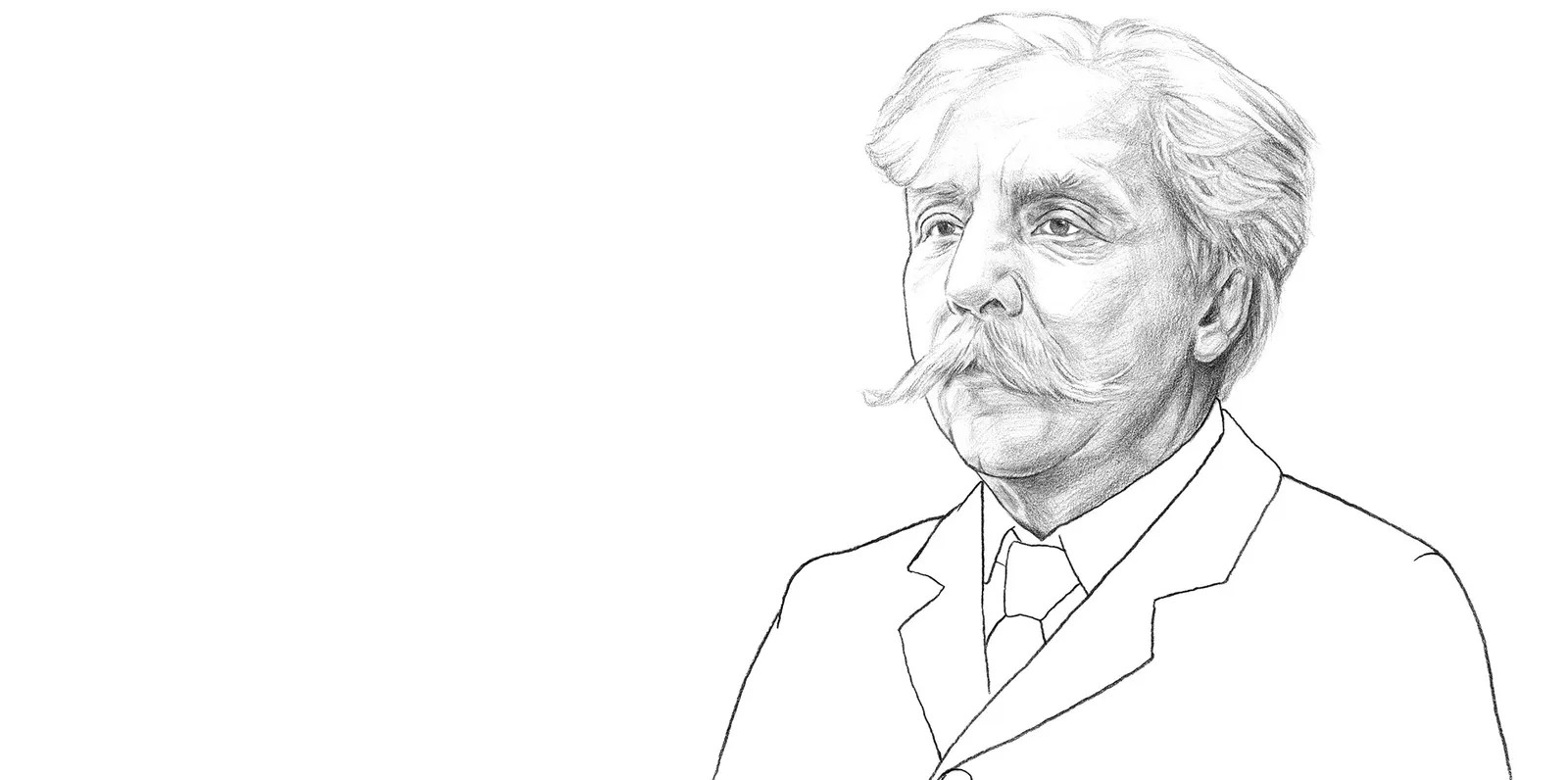

Arcana: The Wigmore Hall concerts put Fauré (above) in context with his contemporaries
– how did you plan them? It’s especially good to see the music of Nadia
Boulanger, Saint-Saëns and Koechlin included.

Steven: Well, first came the idea of doing the complete (major) chamber music of Fauré for the centenary; then everything else had to be worked out around that. It took some time for the programmes to fall into place – and then I was amazed that the Wigmore said yes to all five of them!

How does Fauré’s writing for the cello develop through his works?

I don’t think of his cello writing as such developing – it’s more the musical content. His first work for cello was the Élégie, which is of course wonderful; but if you compare it to the most similar subsequent piece of his, the slow movement of the second sonata, you see how much more profound his music has become. Which is not to put down the Élégie – any more than saying that Beethoven’s last piano sonata in C minor, op 111, is on a higher level than the Pathétique sonata op 13, also in C minor, is a criticism of the Pathétique.

What are the challenges and ‘do nots’ of performing his music in an ensemble such as a piano quartet or quintet?

We just have to agree on our approach – but we do! I call our team – Joshua Bell, Irène Duval, Blythe Teh Engstroem, myself, Jeremy Denk, Connie Shih – Team Fauré. We’re all in love with his music!

Fauré’s late period has some similarities with that of Brahms. Would you say there is anything in common between their approach, late in life?

I suppose, in that there is a ‘new simplicity’; but I think there’s much more in common between late Fauré and late Beethoven. And not just because both men were profoundly deaf!

There is something very special about Fauré’s melodic writing, and the chromatic harmonies he uses. It must be a joy to play!

It is! So long as one understands the chromatic harmonies – one has to be absolutely sensitive to each change of tonal colour.

Would you say Fauré is a composer where repeated listening brings ever
greater rewards?

Well – yes, of course; but I’d say that of any great composer! But perhaps with Fauré’s late works in particular, familiarity with the style is especially helpful.
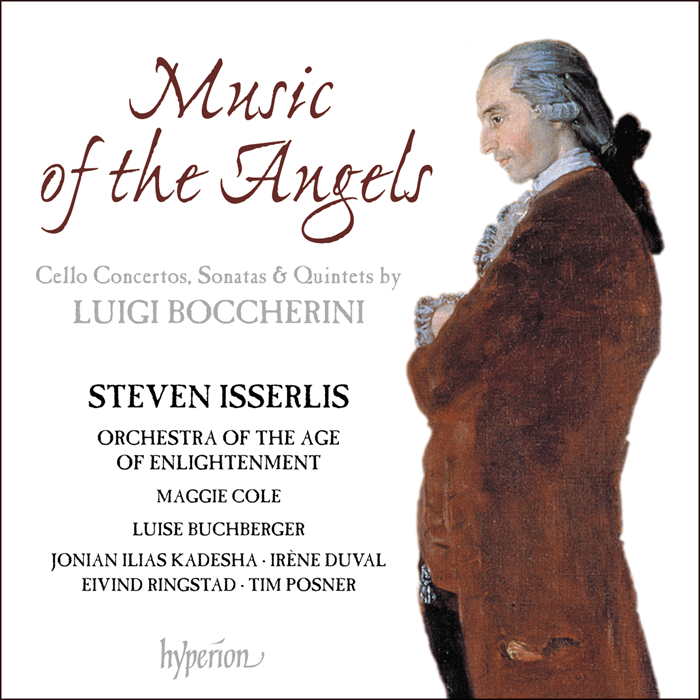

The other composer occupying Steven’s uppermost thoughts in the next month is Luigi Boccherini, with Hyperion releasing Music of the Angels, a generous anthology of the composer’s works for cello with members of the Orchestra of the Age of Enlightenment and harpsichordist Maggie Cole. The album explores the very different forms of Cello Concerto, Cello Sonata and String Quintet – where the composer adds an extra cello to the traditional string quartet line-up. Boccherini is a lesser-known light from the 18th century, and his cause has been close to Steven’s heart right through his recording career.

It’s great to see your Boccherini album. Was it most important for you to present the different types of work – concerto, quintet, sonata – in context?

Thank you! Again, the programme just worked out that way; but yes, I was happy to show different facets of Boccherini’s unique world.

You’ve been playing and recording the music of Boccherini for a good while – what was it that first attracted you to his music?

Well, my teacher Jane Cowan was a great Boccherini fan, which I’m sure influenced me. (She was also a great Fauré fan!) But I’ve always loved his elegance, the otherworldly beauty of his music, his gentle, kind musical soul.

At a guess, I think it might have been the Orchestra of the Age of Enlightenment’s first exposure to Boccherini. Did they enjoy it as much as you?

I think they MIGHT have done some of the symphonies; but I’m not sure. They were certainly lovely to work with – committed, enthusiastic and supportive.

You talk in your notes about the virtuosity Boccherini requires from his soloist – he must have been quite a player. Is it quite intimidating using such a high register of the cello to start with?

Yes! He’s among the most demanding composers for cello, because there’s nowhere one can hide. One can’t just add mounds of vibrato to mask the intonation, for instance. And one has to be able to shape the delicate curves of the music in a way that is naturally graceful; a challenge indeed.

Would you say his music is an ideal ‘next step’ for lovers of Haydn and Mozart?

I think that he’s very different from either Mozart or Haydn – roughly contemporaneous, yes, but another personality entirely. In a way, I think he’s more analogous to Domenico Scarlatti – not because they’re that similar, but because they were both Italians who spent much of their lives in Spain where, relatively cut off from the centre of European musical life, they created their entirely individual compositional worlds.

How does Boccherini’s cello writing contrast with that of Haydn?

Very different! Both can make the cello sing, true; but Haydn uses virtuosity for purposes of excitement, whereas Boccherini uses it much more subtly – usually for lightness and delicacy, frequently evoking birdsong.

With your Boccherini album set for release, are you inclined to record the Fauré trio, quartets and quintets?

Actually, yes; we were originally set to record straight after the festival; but we decided that that would be just too much. So nowthe plan is to record at least the late chamber works (which is the Fauré most in need of advocacy, I feel) next summer in the US. We hope…”

You can book the last remaining tickets for Steven Isserlis and friends’ Fauré residency at the Wigmore Hall website, and explore purchase options for the new Boccherini album Music of the Angels at the Hyperion website. The Wigmore Hall are streaming the Fauré concerts live from their YouTube site

Published post no.2,344 – Sunday 27 October 2024

Online Concert: Steven Isserlis and friends @ Wigmore Hall – Boccherini

Steven Isserlis (cello), Jonian Ilias Kadesha (violin), Irène Duval (violin), Eivind Ringstad (viola), Tim Posner (cello), Lucy Shaw (double bass), Maggie Cole (harpsichord)

Boccherini
String Quintet in D minor Op.13/4 (1772)
Cello Sonata no.2 in C minor (pub. 1772)
Cello Concerto no.7 in G major (pub. 1770)

Wigmore Hall, Monday 20 March 1pm

by Ben Hogwood

Steven Isserlis has been a passionate advocate of the music of Luigi Boccherini for a number of years. One of his very first recordings, made for Virgin Classics, brought together a selection of the prolific composer’s works for cello, two of which were heard in this Wigmore Hall lunchtime concert.

Boccherini was born in Italy in 1743, but made his name and much of his living in Spain, where he lived from 1768 until his death. A prodigious cellist, he joined the string quartet in the court of Don Luis in Madrid and wrote himself into the musical equation, making an unusually weighted quintet with two cellos, a combination that became his calling card with over 100 works. While Mozart would go on to write for a string quintet with two violas in the late 1780s, Boccherini achieved a very different balance. His works may be functional in origin but they show fresh invention, distinctive colours and generous melodic appeal. Unfortunately that appeal has not regularly transferred to the concert hall, at least not in the UK – but on this evidence, where Boccherini’s music brightened a spring lunchtime, they should be available on the NHS!

We heard the String Quintet in D minor Op.13/4 from 1772, from early in the Madrid vocation – but clearly Boccherini was already at home in the two-cello idiom. A rich D minor setting found Tim Posner’s cello initially leading with a sonorous tune, before a genial second section in F major assigned plenty of melodic interest to each of the five players. With a relatively congested texture there was nonetheless a beautiful combination of melodies, though the development clouded over in outlook a little.

The second movement Andante gave first violinist Jonian Ilias Kadesha greater prominence, the other four instruments accompanying at walking pace. Soon the texture thinned to three for an extended cello solo, Isserlis’ wonderful tone rising to a high trill with graceful elegance. Boccherini didn’t leave his second cellist out, either, with Posner also enjoying a rich solo rising to the heights. The finale was a quickly executed fugue, with plenty of counterpoint to enjoy and a distinctive sighing chromatic motif passed between the instruments.

Boccherini wrote frequently and fluently for his principal instrument, including many sonatas with harpsichord. Isserlis and Maggie Cole gave a stylish performance of the Sonata in C minor, a work they have enjoyed since recording it in 1988. The assertive beginning established the home key with a strong theme, leading to more lyrical and ornamented melodic content. Isserlis proved very secure in the upper register, especially with a rising motif towards the end of the first movement. A soulful Largo followed, increasing florid and with a lovely resolution at the end. The economical piece soon cut to a triple time third movement, mixing chirpy motifs with longer, flowing passages with chords from the cello.

It is thought Boccherini wrote 12 concertos, of which the Cello Concerto no.7 in G major is one of the most popular. For this performance the group took an authentic figuration, all seven players on stage with Isserlis in the centre, flanked by first violin (Irène Duval) and viola (Eivind Ringstad). They were his foils in the solo passages, Isserlis revelling in the cello’s free spirit while they enjoyed busy counterpoint of their own. The bright figurations had a spring in their step, like a march Isserlis showing impeccable high register intonation. A grand cadenza sealed the deal in the first movement, while the perky finale had violins bright as a button and both cellos in their high reaches. In between was a radiant Adagio, set in B flat major and featuring some particularly beautiful and longer-phrased, ornamented melodies. This was one of those pieces where music making was a pleasure, pure and simple, with music suited to the rustic outdoors.

Perhaps inevitably – as Isserlis joked to the audience – there was an encore in the form of a popular snippet. Boccherini’s Minuet, itself from a string quintet, is his best-known movement and is often played separately on the radio. This concert proved there is a whole lot more where that came from.

You can listen to recordings of the works in this program on the Spotify playlist below, including Isserlis’ own versions of the sonata and concerto:

For more livestreamed concerts from the Wigmore Hall, click here

Routes to Beethoven – 1770: Music in the year of Beethoven’s birth

by Ben Hogwood

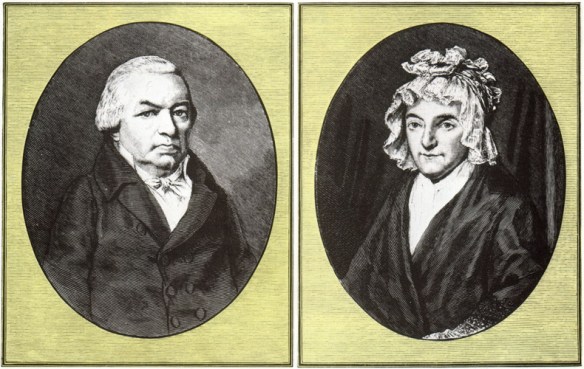
Picture: Beethoven’s parents, Johann van Beethoven and Maria Magdalena Keverich

The last listening exercise before diving into the music of Beethoven is to explore the music being made in the year of his birth, to try and get an idea of the temperature in Western classical music.

For Mozart, opera was key – even at the age of 14. His year began with a trip to Italy, organised by father Leopold with the aim of securing a big stage commission. That was duly achieved in Milan, at the flagship Teatro Regio Ducal (below). In December this prestigious venue became the setting for the premiere of Mozart’s first opera, Mitridate, re di Ponto. An ambitious three-act work, it has some eyecatching arias for the leading cast, virtuoso writing that established Mozart as a composer of real intent and secured a number of standing ovations at the premiere.

With the commission for Mitridate secured in January the Mozarts toured Italy for much of 1770, where Wolfgang found the time to take his symphonic canon into double figures. Don’t forget, he was still barely a teenager!

Haydn, meanwhile, an established composer in his late thirties, was beginning to flex his symphonic muscles. His Sturm und Drang period was just under way, and the innovations he would make in nearly every musical genre were beginning to take shape. 1770 was a relatively quiet year for his output, however. The symphony he completed, no.43 in E flat major, is known as the Mercure for no obvious reason. It is perhaps a more ‘polite’ piece than the minor key examples around it, but that should not be seen as a derogatory observation – it has the typical Haydn poise, guile and wit.

In London, Johann Christian Bach (Bach’s eleventh and youngest son) was impressing with his symphonies and piano concertos, and Hummel published a set of six as Op.6 in 1770. Daniel Heartz writes of how no.5 was a favourite with the public, to judge by the number of reprinting, but that the sixth in the series is impressive, with a ‘fiery middle movement’.

Meanwhile the fifth Bach son, Carl Philipp Emanuel, was adding to his enormous output too. Exact dates are harder to find for his works, though the first version of the Passion According to St Mark can definitely be said to have been completed in 1770.

Meanwhile Gluck, one of the most prominent operatic composers of the day, was occupied with the Viennese premiere of Paride ed Elena. When compared with his stage successes Orfeo ed Euridice or Iphigenie en Tauride, it has not performed well historically. Little is written about its premiere or reception, save for the relative lack of a convincing plot in the opera itself, but listening to it reveals some beautiful writing for soprano and castrato, and a Chaconne that becomes increasingly daring as it proceeds. It has been cited in a number of articles such as this one that Paride ed Elena marks a change in opera from singing to storytelling.

Elsewhere Boccherini was making a name as a prolific composer of works for strings, the most since Vivaldi – and secured for himself a prestigious role as cellist and composer to the royal court in Madrid. He would write more than 15 cello concertos and much chamber music besides.

What of the music of Bonn, where Beethoven was born in 1770? Well not much is known – or at least, not within easy reach in books or on the internet! It would be intriguing to know what was played at his baptism in St. Remigius on 17 December. Listen to the playlist below though and you will get an idea of the music circulating in what appears to have been a transitional year in European music. In many ways it was the calm before the storm.

Listen

The music of 1770 is collected in a Spotify playlist below:


BBC Proms 2017 – Edgar Moreau and Il Pomo d’Oro at the Cadogan Hall

Edgar Moreau (cello), Il Pomo d’Oro / Maxim Emelyanychev (harpsichord)

Hasse Grave and Fugue in G minor (c1735)

Platti Cello Concerto in D major (c1724)

Vivaldi Cello Concerto in A minor, RV419 (c1725)

Telemann Divertimento in B flat major (c1763-6)

Boccherini Cello Concerto in D major, G479 (c1760)

Cadogan Hall, Monday 7 August 2017

Listen to this concert on the BBC iPlayer

Fresh performances of seldom-heard repertoire. That sums up the fourth of the BBC Proms’ weekly visits to Cadogan Hall, downsizing as they do on a Monday lunchtime.

This was an invigorating hour, documenting the emergence of the cello as a solo instrument in the 1700s. Until then it was largely used as part of the ‘continuo’ – that is, the small section of instruments responsible for providing the harmonic base of the music – but thanks to composers such as Platti, Vivaldi and Boccherini the instrument’s own melodic potential began to be fully realised.

The first item in the concert provided some helpful context, a lean performance of the stern Grave by Johann Adolf Hasse, followed immediately by a Fugue rooted in dance forms. The authorship of this remains in doubt – Hasse is a contender, but a more likely composer was Franz Xaver Richter, a fellow Mannheimer. Whatever the outcome, the two pieces dovetailed nicely, setting the scene for the much brighter Cello Concerto in D major by the Italian composer Giovanni Benedetto Platti, employed in the German city of Würzburg.

His bright and breezy work showed off the cello’s new capabilities, if not quite raising it above the level of the surrounding violins. Edgar Moreau brought plenty of energy and pizzazz to the performance, however, with brilliant technique and studious interaction with the finely honed instrumental sextet Il Pomo d’Oro, and their charismatic leader Maxim Emelyanychev. His contribution on the harpsichord was a constant delight, punctuating the music and cajoling his players.

Vivaldi was next, one of the 20+ concertos he completed with the cello centre stage. This one, in A minor, had some tricks up its sleeve in the outer movements that Moreau enjoyed showing off, but the serene and rather beautiful melody in the central Andante stole the show.

Il Pomo d’Oro then took over for some forward looking music by Telemann. The German master’s Divertimento in B flat major contains glimpses of classical practice with its use of five light hearted ‘scherzo’ movements out of the six in total. There was plenty of variety within them however, and the poise and dexterity of the ensemble was a joy to watch.

Finally the cello got its best workout in one of Italian composer Luigi Boccherini’s 12 concerti. This one, the Cello Concerto in D major G479, sparked into life immediately, helped by Moreau’s immaculate control in the higher register, where most of the writing for cello could be found. This was a striking change in comparison to the Platti, the cello now much more dominant, and the duet with Zefira Valova’s violin in the slow movement felt more like a ballet score. Boccherini relocated to Spain, and the last movement betrayed this somewhat in its Fandango flavouring, where Moreau enjoyed the rapid dancing and energetic conclusion.

To bring us back to earth there was an encore of solo Bach, the Sarabande from the Solo Cello Suite no.3 in C. If Boccherini and co raised the cello to the heights in the concerto, then it was Bach who revolutionised the instrument in a solo capacity – and it was a nice touch to include that point here.

Ben Hogwood

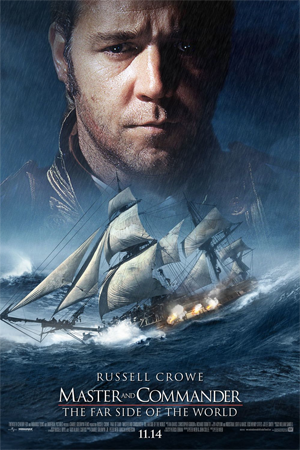
Screen Grab: Master & Commander

master-and-commander

Master and Commander-The Far Side of the World poster by Source. Licensed under Fair use via Wikipedia

One of the secrets behind the success of the 2003 Oscar-winning film Master and Commander: The Far Side of the World, apart from the outstanding ensemble acting, was the music – and especially the classical music used.

That’s not to discredit the original score, which is a combination of original music written by Christopher Gordon, Iva Davies and Richard Tognetti, and traditional folk dances. The original score is on a massive scale, carrying a powerful blast of sea spray in its opening number, The Far Side of the World, and it captures the grandeur of the ship as well as the menace of approaching battle.

The use of classical music lifts the film still further, none more so than the use of Vaughan Williams’ Fantasia on a theme of Thomas Tallis. This becomes the stirring motto of the film, with a newly-motivated crew and their strong feelings of brotherhood:

With the film set in 1805, director Peter Weir skilfully incorporates music written in the preceding century. At the other end of the scale from the big-boned soundtrack music is the Prelude for solo cello by J.S. Bach, taken from the Cello Suite no.1 and played by Yo-Yo Ma:

Also used are pieces by Mozart (a brief excerpt from the last movement of his Violin Concerto no.3, leading from a slow introduction to busy strings) and Corelli, whose Adagio from his Christmas Concerto is solemn but rather beautiful.

Finally, for the closing credits, we have a String Quintet by the Baroque composer Luigi Boccherini, for string quintet (two violins, viola and two cellos), which is genial in terms of the communal music making the crew get involved in below decks, but alternates between slow, profound thoughts and vigorous bursts of energy.

The Master & Commander soundtrack can be heard on Spotify here:

Published post no.2 – Sunday 1 February 2015