As part of Arcana’s 10th birthday celebrations, we invited our readers to contribute with some of their ‘watershed’ musical moments from the last 10 years.
Gary Carey writes:
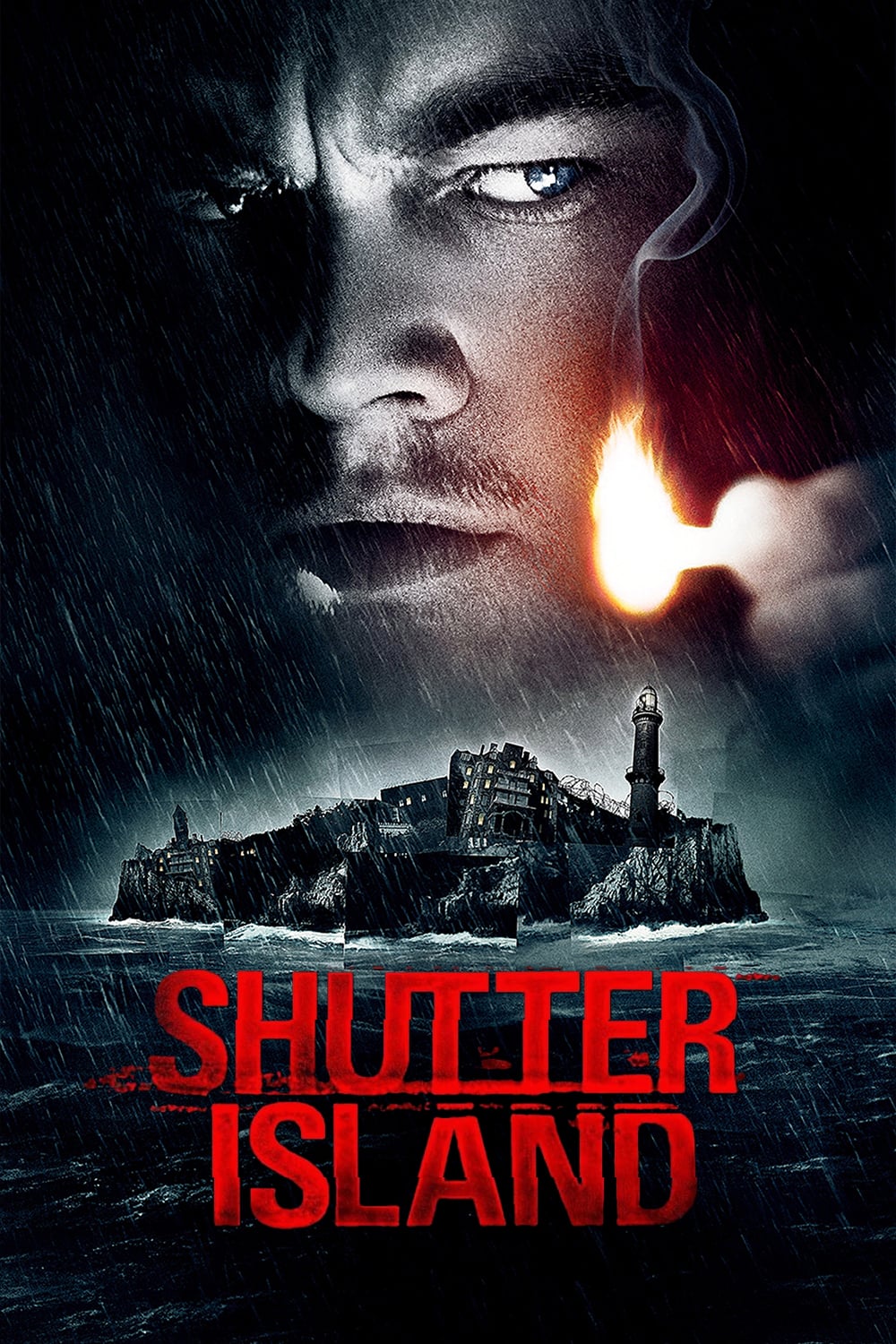
I heard this around the time of the early stages of the Covid pandemic, when I watched the film, Shutter Island, which I would also strongly recommend, though only when you’re in a good place mentally.
The reason I like this piece so much is that it really seems to offer emotional energy, in both Max Richter’s melancholic orchestral composition and the almost desperate, cry-for-help, of Dinah Washington’s vocal accompaniment.
I believe both pieces were originally produced as completely separate works, which were then combined together for the film soundtrack’s finale.
However, this does not seem evident in the finished piece itself, which is a further testament to the production and mixing expertise involved, ultimately producing a compelling new piece of music, collaborating from generically disparate and musically separate sources.
Ben Hogwood adds:
As a postscript to Gary’s memorable moment, I would like a piece of music used earlier in Shutter Island that had a dramatic effect on me – the use of Penderecki‘s Symphony no.3 to highly dramatic effect:
Pekka Kuusisto (violin), Iestyn Davies (countertenor), Sam Swallow (vocalist), Aurora Orchestra / Nicholas Collon
Mozart Symphony no.41 in C major K551 ‘Jupiter’ (1788) Richter Journey (CP1919) (2019) Dowland arr. Muhly Time Stands Still (1603) Adès Violin Concerto ‘Concentric Paths’ (2005) Bowie arr. John Barber Life on Mars? (1971)
Deutsche Grammophon 4838228 [69′]
Recorded 9 June 2019, Maida Vale Studio 1, London
Written by Ben Hogwood
What’s the story?
Only the Aurora Orchestra could put together an album running from Mozart to David Bowie. Yet as we have seen from their previous themed releases such as Insomnia and Road Trip, there are no gimmicks involved in their musical choices and a clear theme runs through the programming.
Music of the Spheres is no exception, beginning with Mozart’s Jupiter symphony before music from Max Richter (Journey), Dowland via Muhly (Time Stands Still) and the Violin Concerto of Thomas Adès, subtitled Concentric Paths. The soloist here is Pekka Kuusisto, while the Aurora play the Jupiter symphony entirely from memory, as they did in the BBC Proms in 2016.
What’s the music like?
There is something for everyone here. Mozart’s Jupiter symphony is his 41st and final essay in the genre, setting a new bar for the form when it was completed. While the first three movements are particularly fine it is the finale that comes in for the greatest acclamation, for its well-nigh perfect fusion of melody and counterpoint.
Richter’s Journey CP1919, is inspired by and named after the discovery of the first Pulsar star. It fits perfectly onto the tail of the Mozart, running at a slow speed and operating in C minor rather than the earlier piece’s key of C major.
By contrast Adès’ Concentric Paths operates in a wider orbit, the violin soaring at great heights over the compelling orchestral writing, which has in its spiralling strong echoes of the music of Benjamin Britten. As soloist Pekka Kuusisto has described, ‘it’s hyper-emotional music for people in an accelerating world’.
Complementing these instrumental pieces are two songs of identical length but very different form – a serene early 17th century song from Dowland and one of the best-known pop songs of the 20th century. Having heard from Jupiter and CP1919, Sam Swallow asks, to effective arranged accompaniment, is there Life On Mars?
Does it all work?
Pretty much! The Jupiter gets an athletic performance from the Aurora Orchestra – no dallying here, or lingering on expressive notes. That does mean a darkening of the slow movement, and maybe some constricted phrases, but by contrast it means an exciting first movement, a mysterious Menuetto and a lithe finale, busy and brilliantly played.
The Richter is haunting and really effective, its simplicity leaving the orchestra plenty of room to create a remote atmosphere. The songs are great too – Iestyn Davies is the perfect choice for the Dowland, with Nico Muhly’s sensitive orchestration, while Sam Swallow puts his own stamp on Life on Mars? without losing the essence of the original, which is an impressive achievement.
Yet the performance I kept coming back to was Pekka Kuusisto’s white-hot rendering of the Adès. This is terrifically difficult music to play, but he makes it sound easy even at the highest points of the violin range, and the moods range from serenity to power and even anger as the music moves relentlessly forwards. On occasion I have to admit I find Thomas Adès music hard to relate to emotionally, but this is a clear exception and the music digs deep.
Is it recommended?
Yes. The Aurora’s albums are great at bringing music of very different origins together, exposing new elements and old qualities, and it does so again here. Freshly minted Mozart and brilliantly played contemporary works, plus a good deal of imagination. What’s not to love?
Listen
Buy
You can purchase this recording from various digital outlets via thePresto website
Tonight will give you another chance to find out, as the complete work will be broadcast once again on BBC Radio 3, starting at 11pm tonight. Richter wrote Sleep in 20xx, confirming it was indeed an extended lullaby, intended at the very least to provide solace in the small hours. See how long you last!
You can experience Sleep on the BBC Radio 3 website here
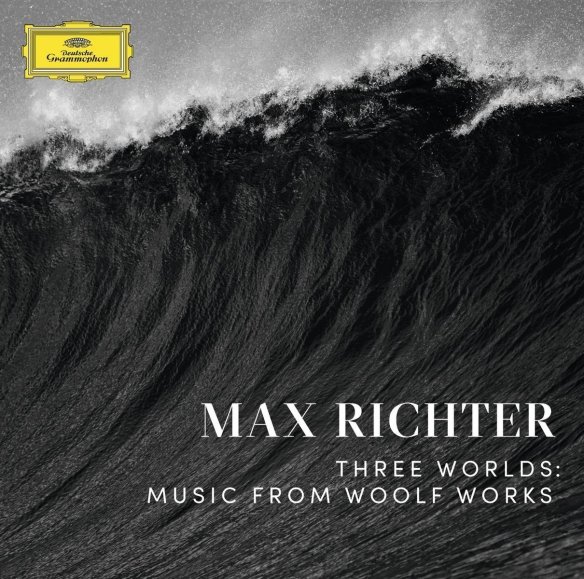
For his follow-up to the extraordinarily successful SLEEP, Max Richter turns his attentions to the works of Virginia Woolf. He has been working on a Royal Ballet production with Wayne McGregor, and this full length album documents his responses to Woolf’s novels.
The resultant soundtrack features Woolf’s own text, read by Sarah Sutcliffe, Gillian Anderson and the author herself, her only surviving recording, where she reads Craftsmanship to the eerie backing of Big Ben. Anderson reads her suicide note, a deeply felt letter to her husband to which Richter responds with the extended meditation Tuesday.
What’s the music like?
Richter shows his versatility as a composer throughout this album, drawing on his legacy as an electronic composer but showing also how he continues to effectively exploit analogue instruments.
The music for Mrs Dalloway is incredibly intimate and has a small-scale setting to go with it. Utterances like Words and In the garden are simplicity itself and are subtly scored, while War anthem features a resonant cello, beautifully played by Hila Karni, that soars in the spirit of John Tavener.
Orlando contains a varied selection of shorter pieces. Morphology has a lovely, open texture, and like a few of the numbers here it would have been nice for the music to have longer to open out and present itself fully. Perhaps because of the constraints of the director, some of Richter’s music adopts more of a sketch form here.
That is emphatically not the case for the final, heartrending Tuesday, Richter’s response to the suicide note that makes up the whole of the Waves section. It is a powerful meditation, deliberately written to connect with Zen Buddhism, and comes close to Hans Zimmer’s music for Interstellar in mood. Richter’s musical development is subtle, the elegiac motif generating a deep and lasting power that leads to a final, exhausted coda.
Mostly, and it presents Richter as a multifaceted composer who can work on the small scale of chamber music but also a larger orchestral stage. Tuesday is a really impressive piece of work, showing how he can command the attention of an audience over a longer structure – which SLEEP did of course, but in a very different way!
The music for Mrs Dalloway is very simple – too much at times – but at its best is also deeply effective. The sensitive use of speech around the music is effective.
Is it recommended?
Yes. Not always the cheeriest album, Three Worlds does nonetheless become both a restful and emotionally powerful piece of meditation, a heartfelt response to the works of one of Britain’s finest 20th century novelists.
First of all, a very happy new year to you all. Hope 2017 has been good to you so far!
Here at Arcana we are dipping our toes back in the water after an extended break, gradually getting back into the swing of the day job – and planning some exciting things for the site in 2017. The idea is to use the enjoyment and power of music to bring some much-needed sunshine to the current climate. Not just us though – if there is anything you want to see after reading this, please get in touch (editor@arcana.fm), so we can be as inclusive as possible!
So far, with the site almost two years old, it is fair to say the focus has been too heavily on classical music. That might seem an odd thing to say, but it’s time Arcana went back to first principles and delivered on its promise of looking at the intersection between pop and classical, and how we can make the latter much more approachable.
With that in mind, we will be looking a lot more at music from composers who work well on both sides. Philip Glass is 80 this year, John Adams 70 – and a lot of artists and composers inspired by them are expected to be busy.
We will once again be taking friends to classical concerts for the first time, an idea trialed with great success at the 2016 BBC Proms, so if you’re interested in that then please let us know! The Wigmore Hall Monday lunchtime concerts will still be covered too – the only website to offer reviews of these hour-long treats.
We plan to honour the music of Emerson, Lake & Palmer, paying tribute to last year’s sadly departed Keith Emerson and Greg Lake as we look at their treatment of classical music.
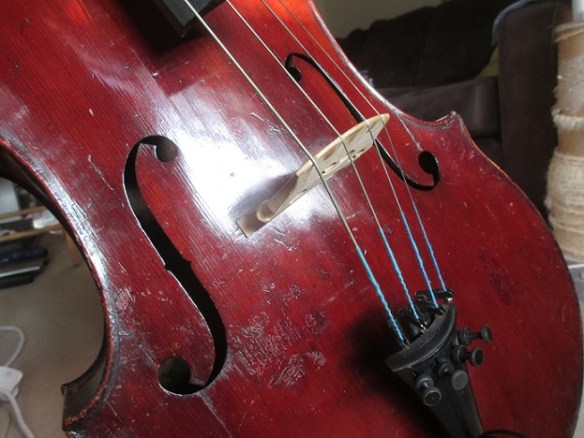
We will also celebrate the unrivalled career of cellist Mstislav Rostropovich, who would have been 90 this year, by taking an extended look at the pieces he commissioned from some of the greatest composers of the twentieth century, and celebrate his instrument, the cello.
Rostropovich singlehandedly changed the reputation of the instrument, and we’ll be looking at how he did that while also enjoying concerts such as the Kings Place cello festival.
As you’ll see then, plenty to get our teeth into as the New Year gets in to gear. Hope you enjoy the ride!


 First of all, a very happy new year to you all. Hope 2017 has been good to you so far!
 Arcana.fm