by Ben Hogwood, with text lifted from the press release
Electronic musician BUNKR, the project under which James Dean operates, has announced new album Signal for release on 24 April 2026. The long player is prefaced by the release of two new tracks, 96 Refraction and Eyes Like Mirrors.
96 Refraction channels a drum and bass beat similar to what you might have heard in that year, with some deeply appealing widescreen musical movement, BUNKR’s music projecting into the distance. Eyes Like Mirrors covers a similarly large space, with washes of ambient sound that drift like spray.
On his Bandcamp page, BUNKR sets the scene for the new album. “It began with a flash of light over the Surrey Hills. A phosphorescent sphere pierced the night sky above Pitch Hill then promptly vanished as quickly as it had appeared, witnessed by a group of friends and later reported in the local papers. Stranger still was its proximity to the Mullard Space Science Laboratory, tucked deep in the woods nearby. Whether cosmic or coincidental, the moment left its mark — a signal from elsewhere, fleeting but unforgettable…”
The new album “is shaped by these formative encounters with space, sound, and the unknown…” while musically it “expands BUNKR’s world of detailed, immersive electronics. Shimmering ambient textures drift against polyrhythmic patterns and breaks; synth lines pulse like coded transmissions; fragments of rave energy flicker and dissolve into wide, cinematic soundscapes.”
As James says, it promises to be “a record rooted in the landscapes of youth, but tuned to the infinite possibilities of the horizon.”
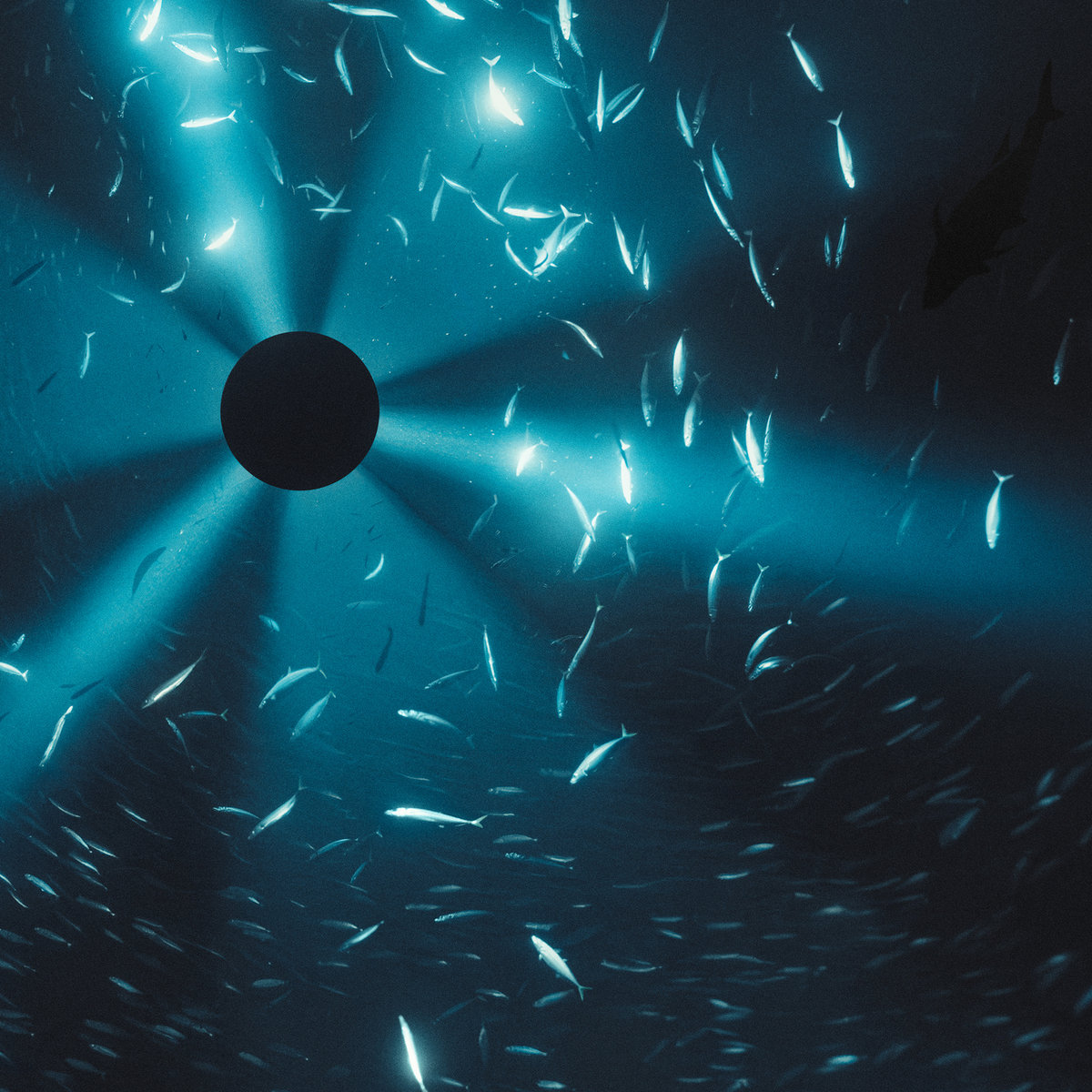
Midnight Zone is a film by visual artist Julian Charrière, and its plot is described in the accompanying text to this release on the Bandcamp site of Californian musician and producer Laurel Halo.
“Following the path of a drifting Fresnel lighthouse lens as it descends through the Clarion-Clipperton Fracture Zone — a remote abyssal plain in the Pacific Ocean, rich in rare metals and increasingly targeted for deep-sea mining — the film traces a descent into one of Earth’s last untouched ecosystems.
Charrière’s film reveals the deep not as void, but as a luminous biome teeming with fragile life: bioluminescent creatures, swirling schools of fish, and elusive predators. The suspended lens becomes an abyssal campfire, attracting species caught in the tides of uncertainty, their futures hanging in the balance.”
Laurel Halo has the unenviable task of representing these remarkable scenes in music, though her previous sonic excursions suggest she would be the right composer for the task! She composed the soundtrack was on a Montage 8 synthesizer and Yamaha TransAcoustic piano at the Yamaha studios in New York City, to which she added stacks of violin and viola da gamba.
What’s the music like?
Very deep – and remarkably evocative of the film itself. This accuracy of description is felt from the outset of its first track, Sunlight Zone, where drones suggest the vast emptiness of the ocean, but where there are glints of light and unexplainable life forms, some with shapes fully revealed but others with hidden depths.
Halo’s compositions suggest an uncertain journey of no fixed destination, the music drifting but through richly coloured waters. The end goal is not clear, but there is nonetheless a contentment in the time and place, in spite of a great deal of surface tension.
Not surprisingly the music travels slowly, with no discernible rhythm, though Sunlight Zone does build with ominous power. Midnight Zone is a mixture of longer form pieces and shorter interludes. The bigger structures have remarkable depth – Oreison hangs in suspension but evokes a vast space, with ambient industrial noises that gradually take hold above the big drones. Twilight Zone exists in a similarly huge space, but the shorter Fracture, Abyss and Polymetallic Nodule show Laurel Halo’s capacity for a wide variety of drone-driven musical pictures.
Hadal – a word relating to the deepest parts of the ocean – is an appropriately formless, dark track, yet one teeming with mysterious activity.
Finally we return to Sunlight Zone, this time in the company of strings, a feeling akin to returning to the surface after a big dive.
Does it all work?
As an accurate description of its subject material, Midnight Zone could not be more appropriate, yet you will have realised that appreciation of the music depends on the listening conditions. Sitting in a stereo picture in a quiet environment brings the most reward – as does accompanying reading about the Clarion-Clipperton Fracture Zone, and its breathtaking natural qualities.
Is it recommended?
It is. Midnight Zone offers deep contemplation, and the overwhelming hope that the riches under the surface of the ocean are maintained and not destroyed. Richly coloured and thickly scored, it has an ambience that is equal parts comforting and awe-inspiring.
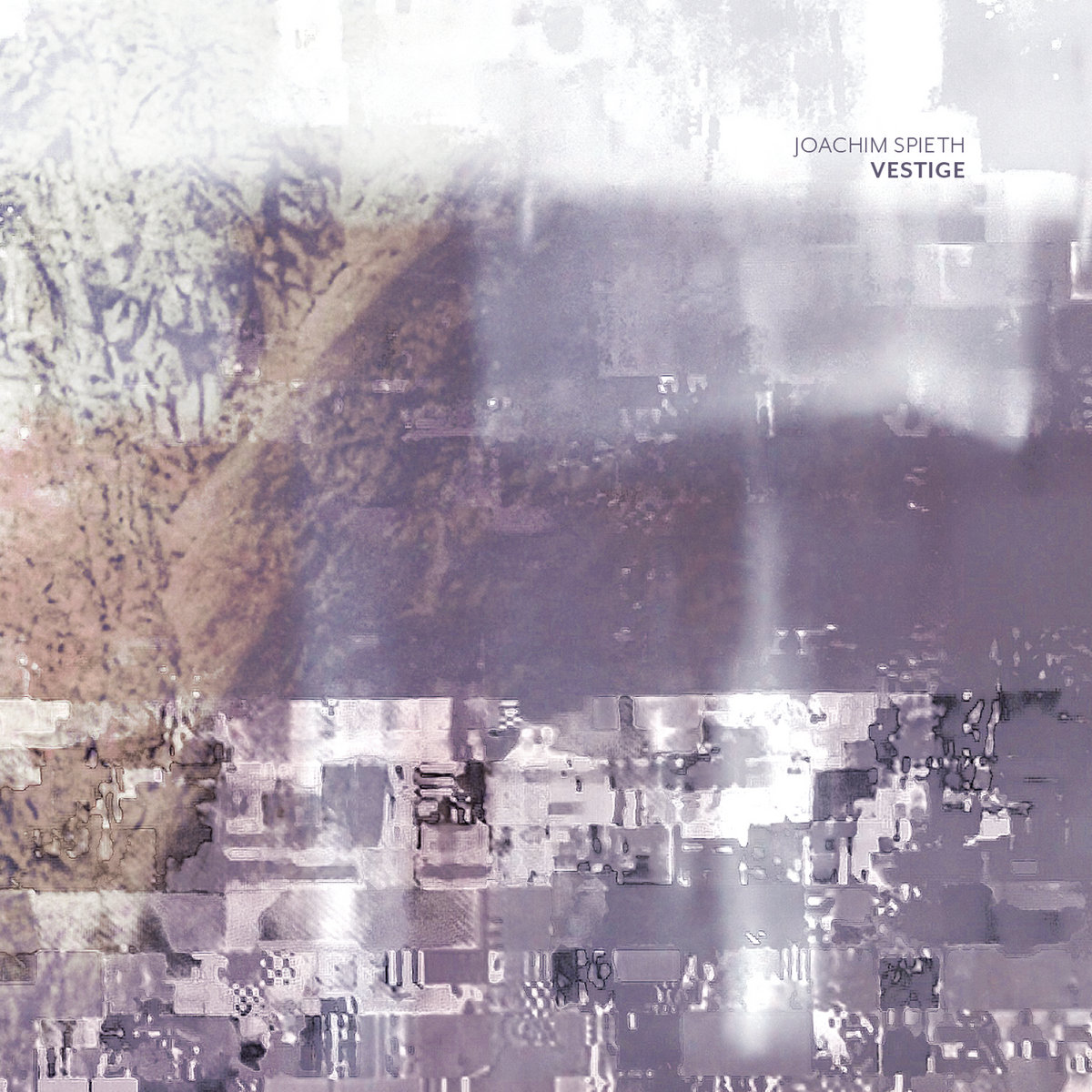
Joachim Spieth is a musician who needs to keep composing, and the benefits of that urge are frequently passed on to his listeners. Vestige is the latest in a line of sonic explorations on his own label Affin Music, this time exploring “the dialogue between ambient atmospheres and dub-infused detail”.
What’s the music like?
As described…but the inference can easily be made by the listener that using dub leads to a relaxed rhythmic profile. Vestige proves that this is not always the case, for some of its tracks have a good deal of forward momentum, their profile supported by a solid and active rhythmic undercarriage.
Operating above this is Spieth’s trademark ambience, thick in texture but with a depth surrounding the listener – both reassuring and subtly inspiring.
A steady pulse runs through the ambient clouds of Residual, setting the pace and tone for the album, before the more immediately immersive Sonomorph. Iterate goes to similar depths, deeply textured and coloured, while Remnant shows off a satisfying rhythm track.
Does it all work?
It does. Spieth gets the combination of ambience and forward movement just right.
Is it recommended?
Yes. Jordan Spieth has a high threshold when it comes to making quality ambient music, and while Vestige is thoughtful in its language, it is a deeply satisfying, immersive experience.
Matt and Rich Cawte’s Octavcat project has yielded some very fine electronic music to date, and with Ailurophobia they deliver their second album for the VLSI label.
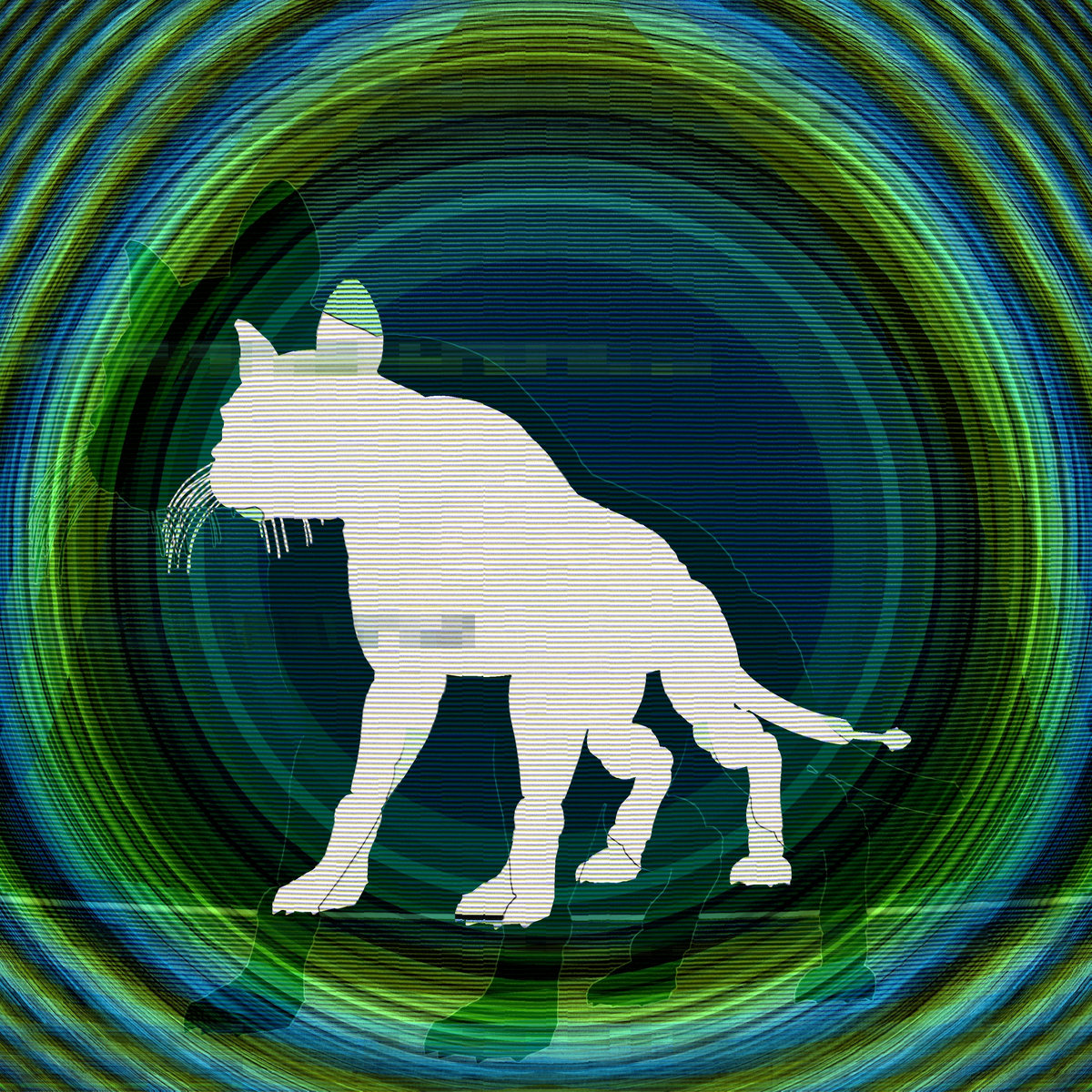
Ailurophobia is ‘an intense, irrational and persistent fear of cats’ – a title that was almost certainly applied to this album in jest. That would fit with the subtle sense of humour that Cawte have brought to their music, and also the feline that graces the cover! Here it is described as “a ten-track selection of woozy, playful electronic music, precision hewn from the finest hardware synthesizers.”
What’s the music like?
What it says on the tin! An entertaining selection of beats and electronic activity from the duo that is consistently engaging and full of good ideas.
Beats ricochet across their steadily evolving pictures, which are often descriptive and carried out on several speed levels. CV Behaviour, for instance, is an amiable collision of early techno percussion and nuggets, with broader thoughts spanning greater distances.
Some of the music has a slightly sinister edge, with the dubby trudge of Skjærgård especially strong. Set 22b is an appealing, easy jam, while the closing Wrong Gravity is really excellent, from the glowering depths of the bass to some seriously big vistas that open out beautifully on headphones.
Arguably the pick of the bunch is the strongly evocative Gibbous, upping the tempo with strong, busy beats and acidic riffs but with a majestic breakdown that seems to represent the night sky itself.
Does it all work?
It does – and repeated listening reveals extra layers within those you’ve already heard.
Is it recommended?
Enthusiastically – an electronic tapestry whose colourful secrets are revealed with imagination and flair. No need to fear Octavcat on this evidence!
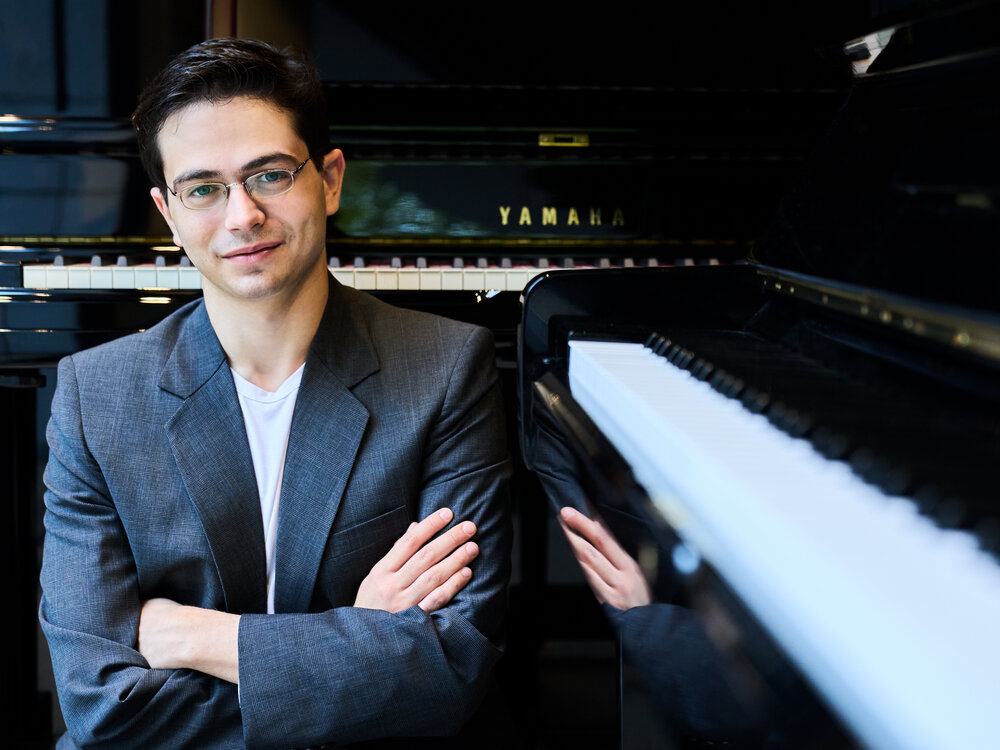
Ariel Lanyi (piano, below), London Firebird Orchestra / George Jackson (above)
Mendelssohn Overture: A Midsummer Night’s Dream Op.21 (1826) Beethoven Piano Concerto no.4 in G major Op.58 (1805-06) Puccini Crisantemi (1890) Haydn Symphony no.96 in D major ‘The Miracle’ (1791)
St John’s Church, Waterloo, London Sunday 8 March 2026 [6pm]
Reviewed by Richard Whitehouse Picture of George Jackson (c) Short Eared Dog Photography; Picture of Ariel Lanyi (c) Kaupo Kikkas
Having appeared at London Chamber Music Society on four previous occasions, the London Firebird Orchestra tonight made its debut at the organization’s new home, St John’s Waterloo, with a programme largely focussing on music from the late Classical and early Romantic eras.
Mendelssohn’s overture A Midsummer Night’s Dream seldom disappoints as a concert-opener, and conductor George Jackson duly ensured a characterful reading at its best in those passages when the composer allows his imaginative response to Shakespeare’s drama free rein – which is not to suggest a lack of animation or impetus elsewhere. Incidentally the prominent part for ophicleide was taken by bass trombone, though the programme listed both instruments while, with the piano lid already raised, it was by no means easy to tell which one was being played.
That piano came to the fore during Beethoven’s Fourth Concerto, and a work clearly playing to the strengths of Israeli pianist (currently residing in London) Ariel Lanyi. Speculative and often capricious in its solo writing, the opening movement had expressive breadth if without losing focus during its intricate development, and Lanyi made a persuasive case for the less often heard of the composer’s own cadenzas – the granitic power of its culmination making the orchestra’s re-entry more poetic. Soloist and orchestra drew the requisite contrasts from the Andante, before such opposition was resolved in a coda of melting pathos, then the final Rondo exuded boisterous good humour without neglecting those more graceful elements as increasingly come to the fore and hence make its hectic closing bars the more exhilarating.
Lanyi acknowledged the (rightly) enthusiastic reception with an unexpected yet appealing encore of a Notturno (fourth from a set of six pieces) that Respighi wrote around 1904. Its raptness made an admirable foil to the more conventional while affecting elegy Crisantemi that Puccini wrote in memory of Amadeo I, his brief tenure as Spanish king pre-dating his final years in Turin where he befriended the Italian composer. Conceived for string quartet, its never cloying sentiment felt even more in evidence heard with a larger group of strings.
The nicknames appended to many Haydn symphonies are often approximate and none more so than with No. 96, the ‘miracle’ of the falling chandelier which caused no injuries almost certainly taking place during the premiere of No. 102. The earlier work is not quite its equal, but Jackson made the most of its attractions with a winning take on a first movement whose imposing Adagio prepares for an agile Allegro in almost constant development. The Andante has a cadenza-like lead in to its coda – leader Calyssa Davidson and violinist Victoria Marsh relishing the spotlight as audibly as did oboist Polly Bartlett her winsome contribution in the Menuetto. The final Vivace finds Haydn at his most laconic, as he nimbly alternates its main themes on route to a coda which brings the whole symphony to a suitably effervescent close.
It also brought to an end a well-planned and thoroughly enjoyable concert that played to the strengths of both orchestra and conductor. LCMS continues on March 22nd with the Sacconi Quartet in what looks to be a no less enticing programme of Haydn, Boccherini and Dvořák.



 Arcana.fm