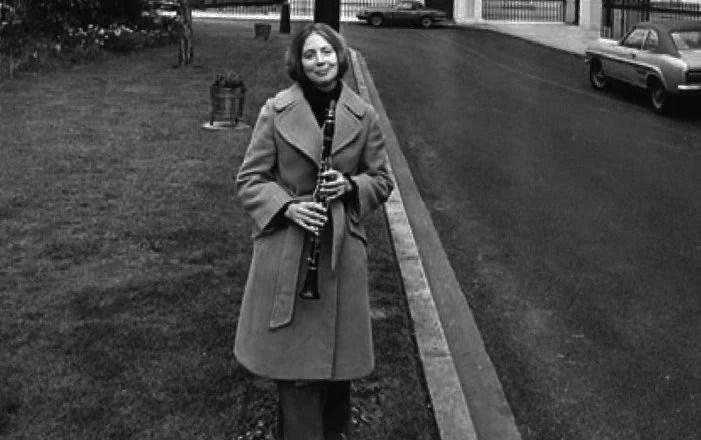
Earlier this week we learned of the sad news of the death of Amelia Freedman. In a post on their website, the Nash Ensemble describe Amelia as their “creator and guiding light”, with “an extraordinary gift for creative programming that was appealing as well as broadening musical horizons”. In their obituary of Amelia, the Daily Telegraph described her as “the most influential British classical music impresario of the late 20th century”.
Her work bore fruit both in the concert hall, through the Nash Ensemble’s long relationship with Wigmore Hall that began in 1967, and a long recording career that is noted for its inventiveness and high performing standards.
The discography below is just a hint of what the Nash Ensemble have achieved on record, including a work by Amelia’s good friend, the late Sir Harrison Birtwistle, as well as the String Trio by David Matthews, which he dedicated to Freedman. Also included are a recent recording of Debussy’s Sonata for Flute, Viola and Harp, a pioneering recording of the attractive Nonet by Sir Arnold Bax, and the vibrant Piano Quartet in B flat major by Saint-Saëns:
This year CRD Records are marking their 50th anniversary as a label with something of a refresh. Whereas the initials once stood for Continental Record Distributors, they are now undergoing a subtle rebrand to stand for Classical ReDefined.
I wanted to take this opportunity to pay tribute to an excellent label, particularly in the fields of chamber, instrumental and choral music, by way of a celebratory playlist which you can find on Tidal by clicking on the link below.
It includes some cornerstones of the repertoire from established CRD artists, such as pianist Paul Crossley in Ravel, Fauré and Takemitsu, Hamish Milne in Weber and Medtner, and an early Nash Ensemble treasure, their recording of Hummel’s ‘Military’ Septet.
Also appearing are L’Ecole D’Orphée, with cellist Susan Sheppard starring in Vivaldi, and some English gems from New College Choir Oxford under Edward Higginbottom. You can listen here:
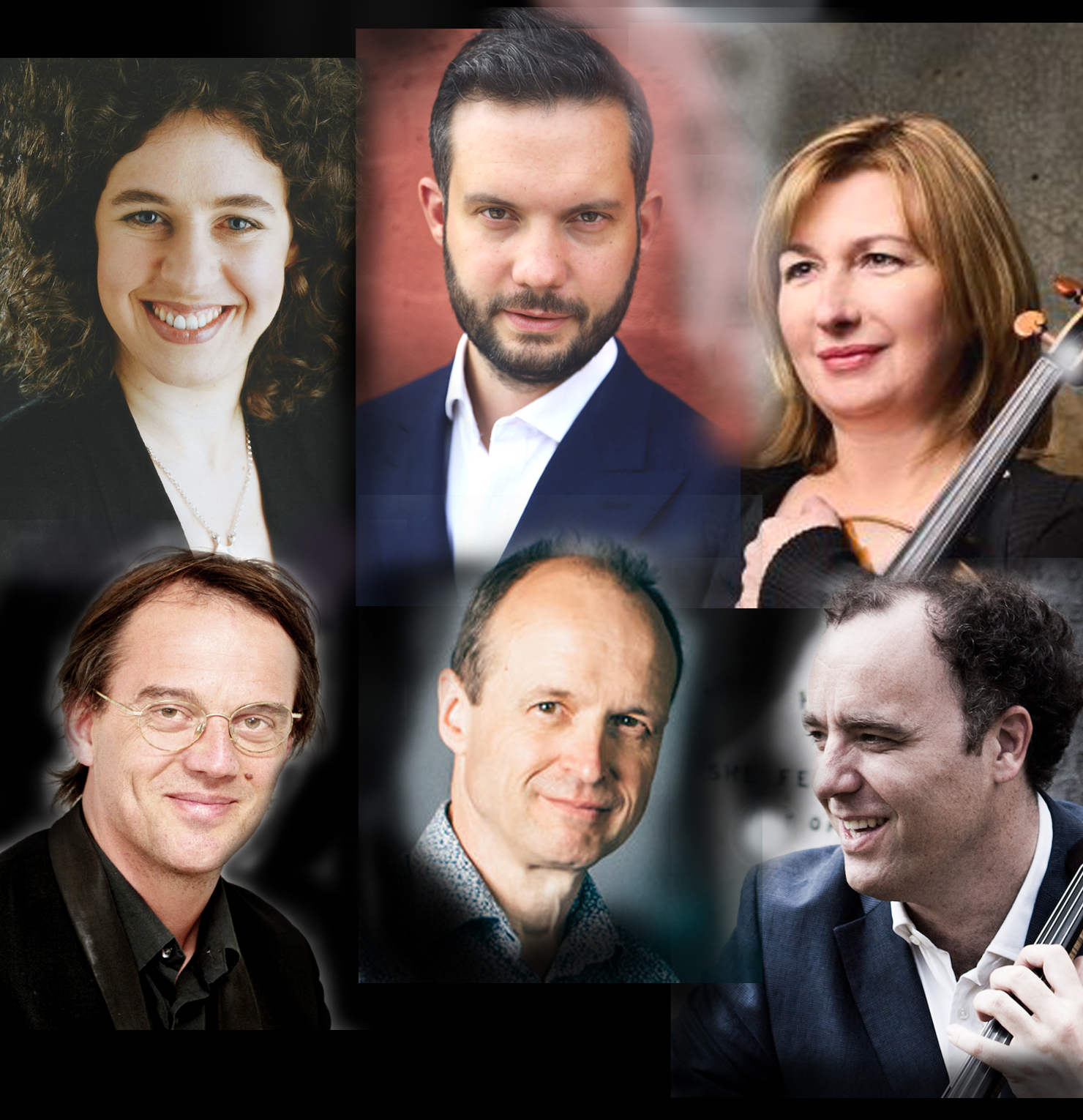
Nash Ensemble [Alasdair Beatson (piano), Corey Cerovsek, Michael Gurevich (violins), Rachel Roberts (viola), Adrian Brendel (cello)]
Mozart Piano Concerto no.14 in E flat major K449 (1784) Fauré Piano Quartet no.1 in C minor Op.15 (1876-9, rev. 1883)
Wigmore Hall, Monday 17 April 2023 1pm
by Ben Hogwood
Mozart and Fauré make a good concert match, and it was a nice touch by the Nash Ensemble to choose one of the piano concertos with which to start this BBC Radio 3 Lunchtime Concert
Although Mozart wrote two piano quartets, in 1785 and 1786, he was in the middle of a white-hot streak of creativity between where he wrote a dozen piano concertos in two years. This remarkable period of musical fluency began with the Piano Concerto no.14 in E flat major, which as it happens is highly suitable for the piano quartet combination of piano, violin, viola and cello. To this combination Mozart added one more violin, securing a highly successful domestic first performance in 1784.
The Nash Ensemble players clearly enjoyed this authentic showing. Alasdair Beatson took the solo role by balancing flair and sensitivity, while the strings ensured this attractive work was off to an airy start. That said, they weren’t afraid to dig in when the music turned towards the darker side, and the key of C minor, but E flat won out with its purely positive energy, especially when Mozart’s trill-like figure was introduced. Beatson’s cadenza was beautifully judged, virtuosic but lyrical too.
A softly rendered second movement brought through the piano’s florid figurations but also enjoyed the sweet, still motion of the strings. The Wigmore Hall seemed sunnier for the group’s approach, as it did in the bright and breezy third movement, with sparkling exchanges and a thoroughly enjoyable triple time section which the players clearly relished. This was a fine performance, fulfilling the first principles of chamber music.
Some of Fauré’s very best music can be found in his chamber works, a remarkably consistent body of work running through his career from the First Violin Sonata of 1876 to the String Quartet of 1924. The two piano quartets sit towards the top of this list, the first an outpouring of feeling in the wake of his broken engagement with Marianna Viardot.
The Nash Ensemble communicated this intensity from the passionate swell of the first melody, but there was resolve and determination too, even in Corey Cerovsek’s bittersweet violin solo during the flowing central section. This was where we felt the unique shafts of sunlight that Fauré throws into even the stormiest fast movements, and the harmonic sleight of hand that would be a standout feature of his music.
The second movement Scherzo showed off another of the composer’s traits, the ability to write light-hearted music with long phrases and unusual syncopations. The sleights of hand here were most enjoyable, with purity of tone from the strings and a dextrous piano part from Beatson.
Yet it was the slow movement that contained the emotional heart of the performance, Beatson listening attentively to the playing of his colleagues, Adrian Brendel‘s yearning cello phrase taken up in unison by the strings. Under the twinkling of Beatson’s right hand those strings spoke deeply and longingly.
Fauré had trouble with the finale, revising it after some less than positive feedback from his friends. This 1884 revision, however, turns its thoughts to the future with music of renewed resolve, another characteristically broad phrase looking outwards from the strings over typically tricky piano figures. Needless to say, the Nash Ensemble harnessed all these qualities, capping a memorable performance.
For more livestreamed concerts from the Wigmore Hall, click here
Royal Academy of Music Students [Christopher Vettraino (oboe), Silvia Bettoli, Johan Stone (horns), Magdalena Riedl (violin), Gordon Cervoni (viola)], Members of the Nash Ensemble – Adrian Brendel (cello), Alasdair Beatson (piano)
Colin Matthews Time Stands Still (2004) Balency-Bearn Entre-Deux (2022) Alberga No-Man’s-Land Lullaby (1996) Keting before we were ocean (2021) Colin Matthews Dual (2021) Abrahamsen Congratulations Greeting (2022)
Nash Inventions
Claire Booth (soprano), Mark Padmore (tenor), Nash Ensemble [(Philippa Davies (flute), Gareth Hulse (oboe), Richard Hosford, Marie Lloyd (clarinets), Richard Watkins (horn), Sally Pryce (harp), Benjamin Nabarro, Michael Gurevich (violins), Lars Anders Tomter, Jennifer Stumm (violas), Adrian Brendel (cello), Graham Mitchell (double bass), Alasdair Beatson (piano)] / Martyn Brabbins
Casken Misted Land (2017) Colin Matthews Seascapes (2021) Anderson Van Gough Blue (2015); Three Songs (2018-22) [World Premiere of THUS] Benjamin Viola, Viola (1997) Turnage A Constant Obsession (2007)
Wigmore Hall, London Tuesday 28 March 2023 (5pm and 7.30pm)
Reviewed by Richard Whitehouse
It has become such a fixture on the London calendar that Nash Inventions, given annually by the Nash Ensemble at Wigmore Hall, could easily be taken for granted. As tonight’s concert proved, however, the range and quality of those works performed is anything but predictable.
His long-time drawing inspiration from the landscape of the North-East might suggest Misted Land as a ready-made title for John Casken. Yet this quintet for clarinet and strings focusses on emotion as much, if not more than evocation by unfolding from the intangible impressions of its initial movement, via impulsive contrasts of its intermezzo, to a finale whose visceral progress is curtailed by a timely return to the initial equivocation. Richard Hosford made the most of his alternately insinuating and forceful writing in a piece that well deserved revival.
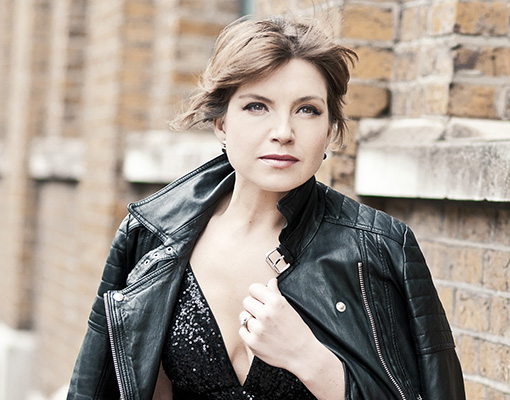
Although settings by Michael Tippett early on confirmed the musicality of his verse, Sidney Keyes (1922-43) has been relatively little set – making this selection by Colin Matthews in Seascapes the more welcome. From the unforced rhetoric of The Island City, it takes in the fleeting sensations of From : North Sea and the tense rumination of Night Estuary; a brief Interlude leading to the heartfelt expression of Seascape – one of Keyes’s greatest poems, in which Claire Booth’s commanding eloquence (above) more than vindicated the cycle as a whole.
Last in an informal trilogy centred on the colour, Van Gough Blue sees Julian Anderson pay tribute to this artist in a sequence traversing dawn to night. A speculative emergence of sound and texture in l’Aube, soleil naissant precedes the heady rhythmic and melodic interplay of Les Vignobles then mounting animation of Les Alpilles. Nothing, though, prepares for the inward rapture of Eygalières or the dance toward destruction of la nuit, peindre les étoiles: pieces wholly characteristic of this composer and as finely realized as anything he has written.
Further music by Anderson followed the interval – three in an ongoing series for soprano and ensemble identical to, but very different in usage from, that of Schoenberg’s Pierrot Lunaire. The viscerally sensual overload of Mallarmé’s Le Tombeau d’Edgar Poe (here made a tribute to Debussy in the centenary of his death) contrasted with the disarming sincerity of le 3 Mai – an email by composer Ahmed Essyad written during the pandemic, then lines by Longfellow in THUS – Claire Booth here enacting what is less a setting than a musical riposte to its text.
Writing what had become a tribute to Takemitsu 18 months after his death, George Benjamin turned what might have reflected the viola’s innate introspection into an intensive exploration by two of these instruments of how they might discover rhythmic then melodic and harmonic accord. Music diverse in content and logical in its unfolding, its technical challenges remain considerable – making this performance by Jennifer Stumm (having replaced Timothy Ridout at short notice) and Lars Anders Tomter the more engaging through its audible conviction.
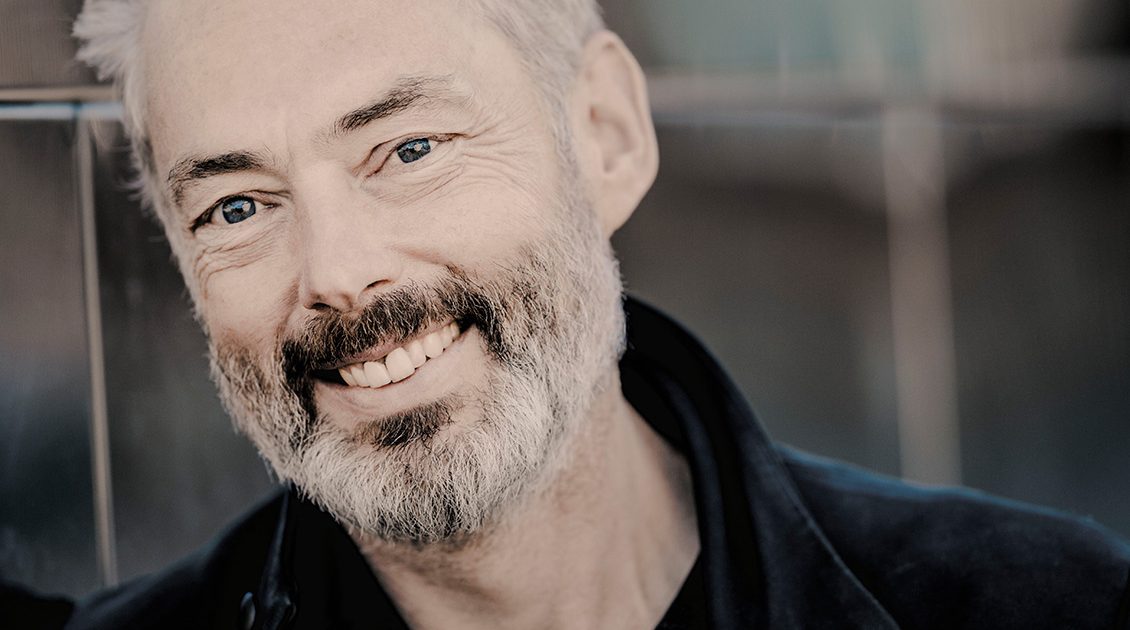
It might come a fair way back in his sizable output, but the song-cycle A Constant Obsession remains among Mark-Anthony Turnage’s finest vocal works. This reflection on ‘love’ – what it might be, what it becomes and what it could have been – is articulated across five settings of Keats, Hardy, Edward Thomas, Graves and Tennyson; its course predicted in a ‘Prologue’ and encapsulated in the bleakly humorous final poem. Mark Padmore (above) conveyed its measure now as 14 years before, as did Martyn Brabbins (below) with his attentive and unobtrusive direction.
The early evening slot brought together players from the Nash and Royal Academy of Music. Entre-Deux saw Andrea Balency-Béarn opening out the timbral and harmonic space between pitches with discreet elegance, and No-Man’s-Land Lullaby found Eleanor Alberga working toward a totemic melody with combative fervency. Sun Keting contributed music laced with nostalgia but also indignation in before we were ocean while, in Congratulations Greeting, Hans Abrahamsen commemorated the RAM’s bicentenary in lively and resourceful terms.
Colin Matthews provided a more quixotic take on that event in the subtle contrasted sections of Dual, with his music also opening and concluding this selection. Time Stands Still marked Simon Rattle’s 50th birthday in (surprisingly?) inward and even inscrutable terms, while 23 Frames marked the 30th anniversary of the Nash through that number of miniatures whose character felt as distinctive as their order was random. The outcome found this composer as his most entertaining, with no complaints if several ‘frames’ exceeded their 30-second remit.
A lengthy evening, then, and an impressive showcase for the Nash in term of marking those achievements past or present. Now is hardly the time for any complacency regarding events such as this, which remains a template for what is possible in matters of artistic excellence.
The Aldeburgh Festival may not be with us in name this year, but its spirit burns brightly in the form of Summer at Snape, a series of safely distanced concerts to be given over every weekend in June.
As with the festival, these concerts feature imaginative programming, with contemporary music to the fore. Composer Colin Matthews has an illustrious history at Snape and Aldeburgh stretching back to his time as assistant to Benjamin Britten late in the composer’s life. He will be close at hand, with two new works receiving their premiere live performances. Firstly, the Nash Ensemble will feature in the first performance with an audience of Seascapes, setting poetry by Sidney Keyes. Conducted by Martyn Brabbins, the verses will be sung by soprano and dedicatee Claire Booth.
The next day will give audiences a chance to enjoy a new arrangement for string orchestra of the Double Concerto by Britten himself, a work completed at the age of 18 when the composer was still a student. Matthews arranged the original for full orchestra but has now reduced his forces, and the Royal Academy of Music Strings under John Wilson will reveal the new version with soloists Thomas Zehetmair (violin) and Ruth Killius (viola).
Matthews is a generous interviewee, taking time to consider questions from Arcana around both works and the return of live music – not to mention the problem of finding inspiration as a composer during the pandemic. First, however, we started by asking him about the poetry of Sidney Keyes, whose verse forms the bedrock of Seascapes.
“As far as I remember I first came across Sidney Keyes through Tippett’s The Heart’s Assurance”, Matthews recalls, “and I wrote a song cycle to Keyes’ words as long ago as 1968, long since withdrawn. Re-reading Keyes’ complete poems a few years back made me want to make a (hopefully better!) attempt to set him, and one of the poems (Night Estuary) was one I set more than 50 years ago – although I can’t recall it at all. The complexity of his thought doesn’t make for easy setting, but the words have a lyricism and power which calls for music.”
The work was first performed at London’s Wigmore Hall on 30 April, part of a Nash Ensemble program including works by Sir Harrison Birtwistle, Mark-Anthony Turnage, Julian Anderson and Simon Holt (which you can watch above).
What was it like seeing the work finally performed live? “Rather remarkable – only my third experience of live music in about 14 months, and an unusual experience to hear a work for the first time more than a year after it was completed.”
Claire Booth is the ideal singer for this work, and Matthews wrote the vocal line especially with her in mind. “Absolutely. I’ve known Claire since she took part in the Aldeburgh Composition Course in (I think) 2000, and this is the third piece that I’ve written for her. I chose a small ensemble whose colours are relatively subdued: a lot of the music is introspective in mood and is designed very much for the soloist to float over it.”
Moving on to the Britten, we consider the Double Concerto for violin, viola and orchestra, written at the age of 18 – and which Matthews has now reduced to the accompaniment of strings only. Does he detect is a lineage back to Mozart’s Sinfonia Concertante, a work for the same instrumental combination? “Obviously he (Britten) knew the Sinfonia Concertante, and he mentions a performance (with Lionel Tertis) in his 1931 diary, a few months before he started on the Concerto. It was one of the last pieces I heard him conduct. But there’s no influence from Mozart other than the soloists: instead, it follows very much the three-movement form of his Sinfonietta Op.1 which he had just completed, but on a larger scale.”
How much work was required between the 1997 version, made from the fully catalogued work (above), and the version we will hear at Snape? “A great deal! Making the 1997 version was comparatively simple, as Britten had made very detailed indications of instrumentation in his short score. Reducing it to strings alone – which was Thomas Zehetmair’s idea – meant a lot of rethinking and reworking. For instance, there is an important timpani part in the finale which took a lot of work to transfer satisfactorily to the double basses.”
We move on to talk about Britten’s writing for strings, and Matthews pinpoints several passages in his writing that have left a lasting admiration. “This work of course predates the most important of his string pieces, the 1936 Variations on a theme of Frank Bridge, whose string writing is a model of flair and virtuosity. The string writing for the original version of the Concerto is rarely as adventurous, so I was to some extent constrained by what was already there, as well of course as having to adapt music that was written for wind and brass. In many respects it had been easier to emulate Britten’s string writing in my orchestration of the Temporal Variations, originally for oboe and piano, and so starting from scratch.
We move on to discuss the last year, and how it has been for Matthews as a composer. Has he had plenty of material for new works or has it been hard to find inspiration at times? “At first there was a sense of freedom in not writing to commission or deadline”, he says, “and I wrote a fairly large-scale orchestral piece in the summer of last year. Subsequently I’ve been finding it a bit difficult to focus on projects other than small or solo pieces, and this is one of several arrangements I’ve made for the smaller forces that are necessary in these difficult times, which has been a good way to keep up momentum.”
The last question requires the simplest of answers to confirm just how valuable Summer at Snape promises to be. What does it mean to Colin to be part of live music making at Snape once again? “Very special.”
Summer at Snape runs from Friday 4 June until Saturday 11 July. For full details on all the live events, visit the Snape Maltings website. For more on Colin Matthews, you can visit the composer’s website here .



 Arcana.fm