In concert – Soloists, BBC Symphony Chorus & Orchestra / Hannu Lintu @ BBC Proms: Mahler Das klagende Lied & Boulez Rituel in memoriam Bruno Maderna

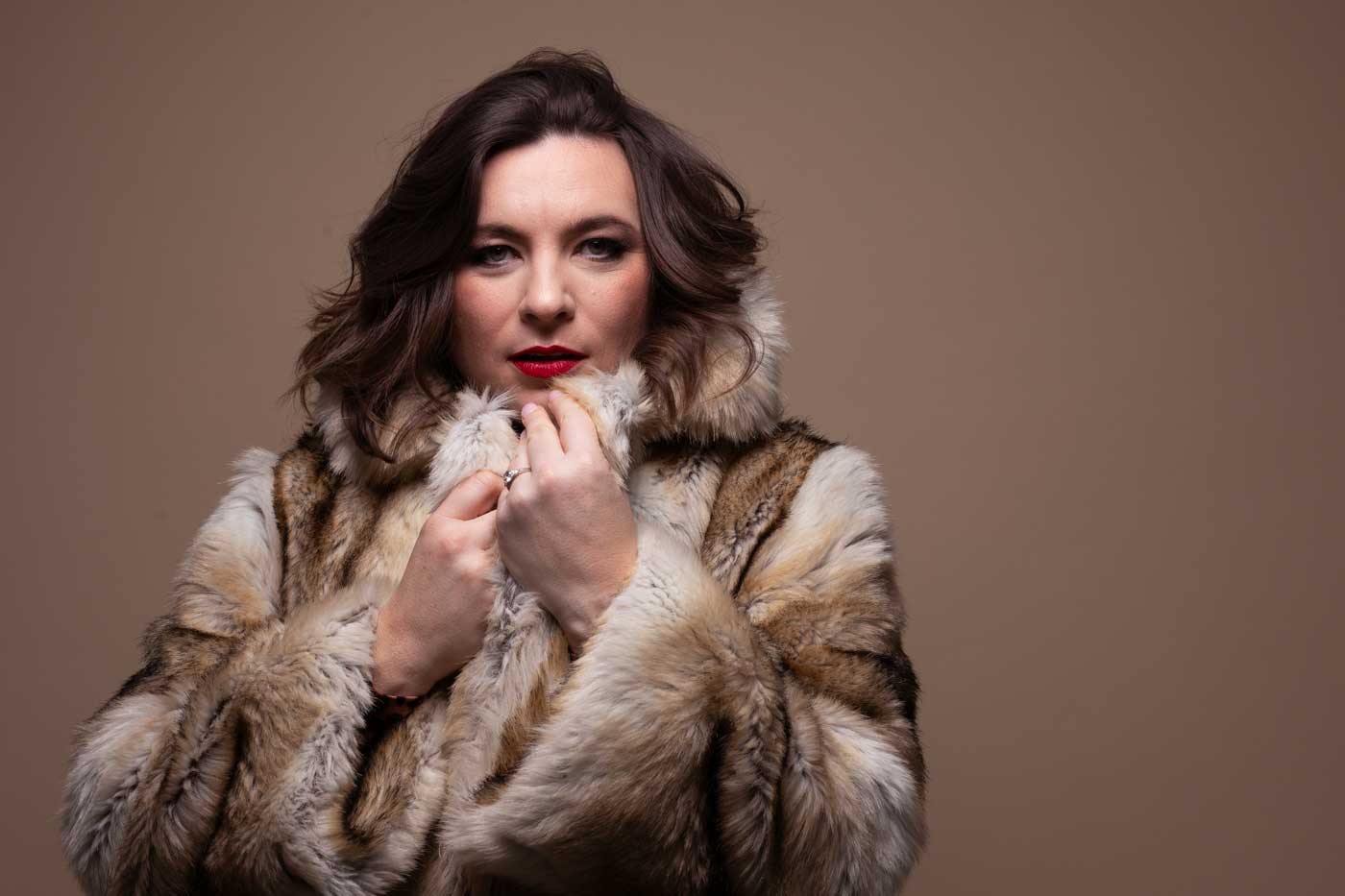
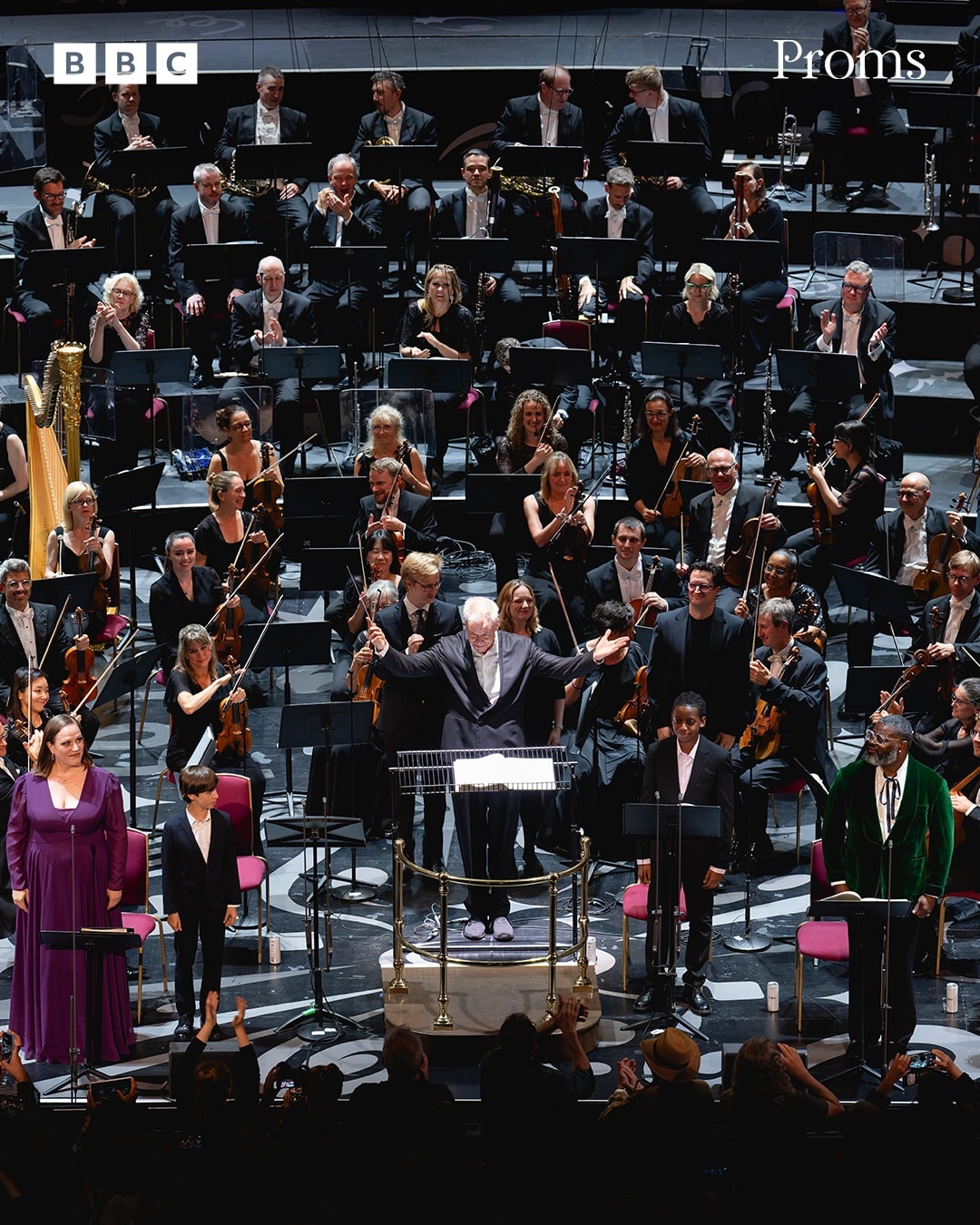
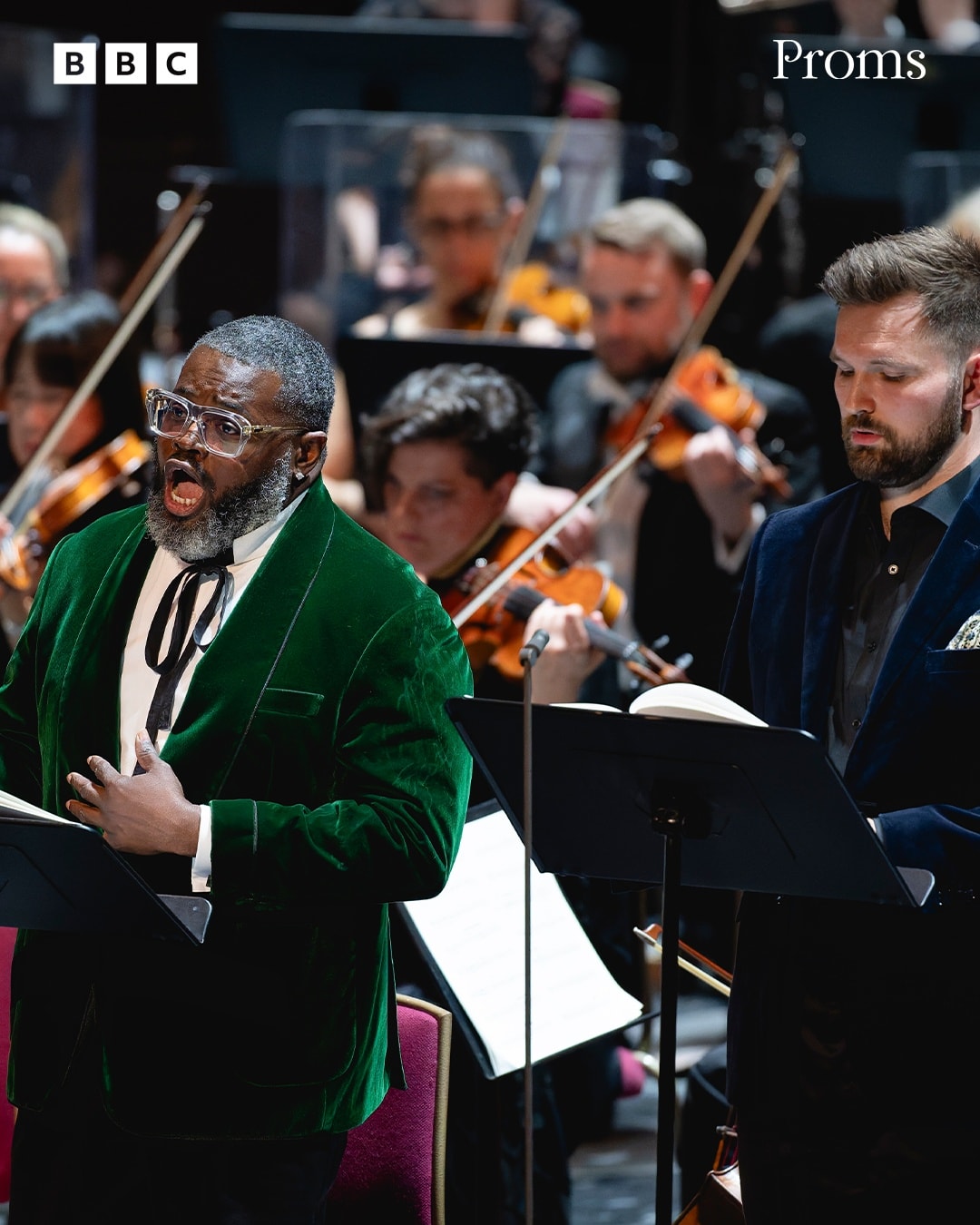
Natalya Romaniw (soprano), Jennifer Johnston (mezzo-soprano), Russell Thomas (tenor), James Newby (baritone) Carlos González Nápoles (treble), Malakai Bayoh (alto), Constanza Chorus, BBC Symphony Chorus, BBC Symphony Orchestra / Hannu Lintu

Boulez Rituel in memoriam Bruno Maderna (1974-75)
Mahler Das klagende Lied (1878-80)

Royal Albert Hall, London
Tuesday 4 August 2025

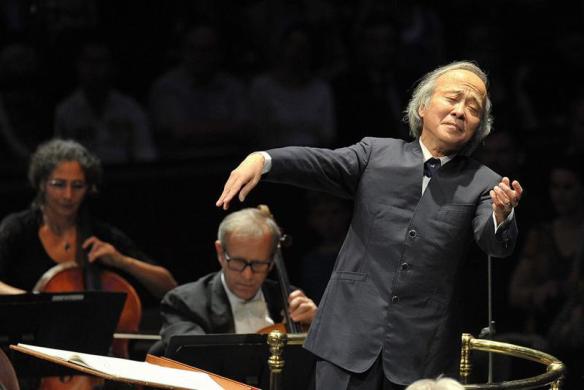
Reviewed by Richard Whitehouse Photos (c) BBC Proms (from the festival’s uncredited Facebook upload)

Boulez and Mahler may not seem an obvious coupling, until one recalls the would have-been centenarian regularly conducted all the latter’s major works including that heard tonight – as well having made the first recording of its original three-part version more than 55 years ago.

When it appeared in 1975, Rituel in memoriam Bruno Maderna was thought something of an anomaly in Boulez’s output – its hieratic aura and structural (if never literal) use of repetition a homage more to his teacher Messiaen than his late colleague who, revealingly perhaps, had grown disenchanted in the avant-garde project of the post-war era. To which this work might seem an envoi – one eschewing any trace of nostalgia as it pursues its inevitable course from the response of the individual to that of the collective then (almost) returning to the singular.

Outwardly Rituel unfolds a series of litanies from one to seven players and refrains for a 14-piece brass ensemble, but such distinctions increasingly merge towards its mid-point so that its latter half is an intricate mesh of overlaid textures, moving around those groups arrayed on stage. Maintaining audible balance is crucial – in which respect, Hannu Lintu succeeded admirably, as in pacing the overall sequence (memory recalls Boulez as opting for a discreet acceleration across the later stages) so its ending conveyed arrival though hardly fulfilment.

What marked a crucial juncture for Boulez was no less evident, almost a century before, for Mahler. The virtual absence of any previous music only makes Das klagende Lied the more remarkable for conveying the essence of what its composer, barely out of his teens, went on to achieve. At this time, he aspired to opera and though this cantata was never envisaged for staging, its scenic evocation and its dramatic immediacy suggest that, had he been awarded the 1881 Beethoven Prize for his entry, his creative priorities could have been very different.

The work has fared well at the Proms, this being its seventh hearing and the third to use the edition of the original version that restores the first of its three parts and enables the latter to be heard as conceived, thereby making musical as well as dramatic sense. A leisurely course through Waldmärchen enabled Lintu to highlight the motivic richness of its prelude, and if the alternation of solo verses with choral refrains felt a little stolid, the latter stages with the discovery of the flower, the fratricide and a desolate postlude were consummately rendered.

With its anticipations of later Mahler (via Wagner and Bruckner), Der Spielmann is the most characteristic part as it pivots deftly yet pointedly between genial whimsy and ominous dread. That this latter gains the upper hand with discovery of the ‘singing bone’ is offset by the blaze of glory with which Hochzeitstück begins; the offstage orchestra – head to advantage in the gallery – underpinning an increasingly desperate course of events as the fratricide is revealed and the wedding descends into mayhem, with deathly stillness pervading those final minutes.

There was some persuasive solo singing, notably Jennifer Johnston who carries the primary narrative thread; Russell Thomas was fervent if slightly strained and James Newby warmly eloquent, with Natalya Romaniw conveying real dramatic acuity. Treble and alto roles were poignantly taken, while Lintu drew an assured response from sizable choral and orchestral forces – the latter’s quartet of harps assuming a concertante role in an orchestration whose encompassing of dramatic impetus and intimate reflection is already that of Mahler alone.

Playing for around 70 minutes, Das klagende Lied seems as rich in incident as any Mahler symphony; not all of which, whatever their greater stylistic assurance or maturity, feature a conclusion as spine-tingling as this – and one which certainly drove its point across tonight.

You can listen back to this Prom concert on BBC Sounds until Sunday 12 October – or listen to recordings of the two works conducted by Pierre Boulez on Tidal here

Click on the artist names to read more about the Constanza Chorus, BBC Symphony Chorus and BBC Symphony Orchestra, conductor Hannu Lintu and soloists Natalya Romaniw, Jennifer Johnston, Russell Thomas and James Newby. Click also for more on the BBC Proms

Published post no.2,617 – Tuesday 5 August 2025

In concert – Natalya Romaniw, CBSO / Vassily Sinaisky: Beethoven and Tchaikovsky

Natalya Romaniw (soprano, above), City of Birmingham Symphony Orchestra / Vassily Sinaisky (below)

Tchaikovsky Romeo and Juliet Fantasy Overture (1869, rev. 1872 & 1880)
Tchaikovsky Eugene Onegin, Op.24 (1877-78) – Letter Scene
Beethoven Ah! Perfido, Op.65 (1796)
Beethoven Symphony no.2 in D major Op.36 (1801-2)

Symphony Hall, Birmingham
Wednesday 14 February 2024

Reviewed by Richard Whitehouse

It might have been billed as a concert for Valentine’s Day and, though there was little about tonight’s programme to reinforce ‘true love reigns supreme’, it did make for a welcome new collaboration between the City of Birmingham Symphony Orchestra and Vassily Sinaisky.

Whether or not there is any more personal significance in Tchaikovsky’s Romeo and Juliet, it remains a potent encapsulation of Shakespeare’s tragedy. The brooding introduction seemed a little inhibited, but Sinaisky brought suitable incisiveness to the warring families and growing ardour to the love music. Nor was there any lack of drama as this ‘fantasy overture’ unfolded to its fateful denouement – after which, the benedictory chorale as Friar Laurence movingly apostrophises these doomed lovers brought an eloquent response from the CBSO woodwind.

Tchaikovsky’s reputation as an opera composer may have altered markedly over the decades, but Eugene Onegin has held the stage since its premiere; the Letter Scene, in which Tatyana knowingly risks all for love of a cynical anti-hero, its highlight. The Welsh-Ukrainian soprano Natalya Romaniw responded with real impulsiveness and, if her projection was too full-on to convey the emotional ambivalence and fragility of its central stages, the joyous abandon of its beginning and reckless determination at its close were duly rendered with unfailing charisma.

Romaniw sounded even more in her element as the jilted lover of Pietro Metastasio’s lyric Ah! Perfido which Beethoven set in his mid-20s. The latter wrote few such concert arias, but the immediacy of his response can hardly be gainsaid and Romaniw gave it her all – whether in its despairing introduction, the more consoling yet hardly untroubled expression that follows, or the steely resolve of those closing pages where the former ‘loved one’ is denounced in no uncertain terms. As in the Tchaikovsky, it was a pity neither text nor surtitles were provided.

Quite how Beethoven’s Second Symphony fitted into tonight’s conception was unclear, other than with its determination to defy fate and live life to the full, but Sinaisky evidently relished putting the CBSO through its paces – not least a first movement whose imposing introduction prepared for an Allegro of driving impetus and emotional fervour ideally intertwined prior to the blazing coda. Easy to underestimate, the Larghetto impressed with its lilting elegance and, in the central development, its teasing modulations – alongside a pay-off of disarming poise.

If, given its textural weight and unabashed rhetoric, this was ostensibly a performance of the ‘old school’, there was nothing portentous about Sinaisky’s take on the Scherzo – as lithe and quizzical as its trio was capricious, then the final Allegro had the character of an opera buffa ensemble refashioned for the post-Classical symphony toward which Beethoven was striving. Not the least attraction of this reading was its differentiation between soft and loud dynamics – crucial to the impact of a lengthy coda which fairly crackled with energy in its closing bars.

A gripping performance of a symphony which, while hardly unknown, is likely the least often played (albeit in the UK) of Beethoven’s nine. Sinaisky has enjoyed a productive relationship with the CBSO across the years, and it is to be hoped that this will continue in future seasons.

Click on the link to read more on the current CBSO concert season, and on the names for more on soprano Natalya Romaniw and conductor Vassily Sinaisky. To read more about the Beethoven works in the program, follow Arcana’s Listening to Beethoven series – which has already included Ah! Perfido and the Symphony no.2

Published post no.2,089 – Friday 16 February 2024

Arcana at the Proms – Prom 28: Tadaaki Otaka conducts the BBC National Orchestra of Wales in Rachmaninov & Huw Watkins

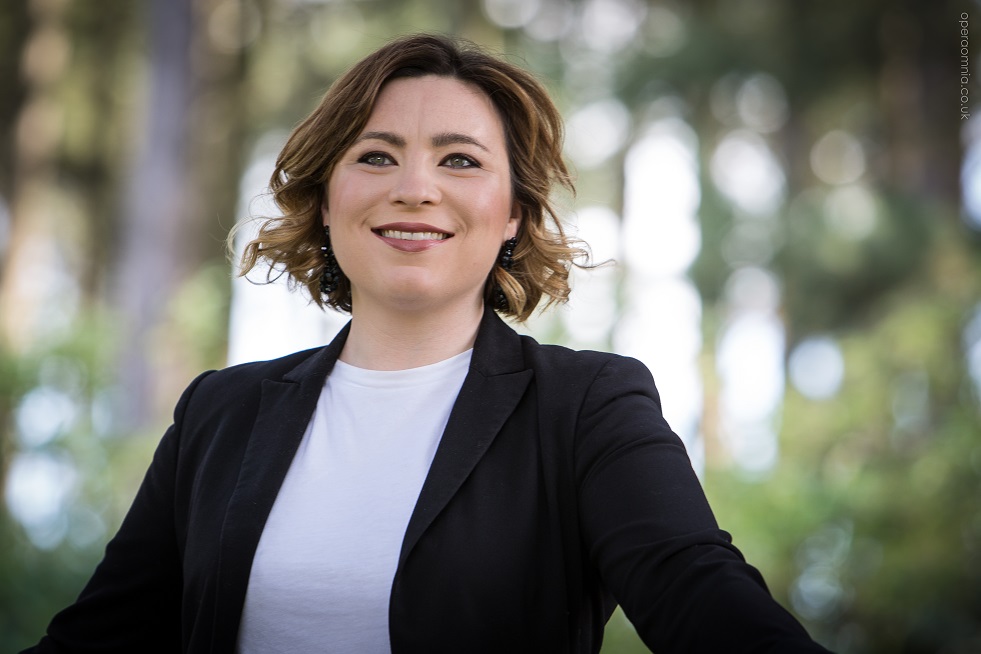
Prom 28: Iurii Samoilov (baritone), Natalya Romaniw (soprano, below), Oleg Dolgov (tenor), BBC National Chorus of Wales, Philharmonia Chorus, BBC National Orchestra of Wales / Tadaaki Otaka (above)

Takemitsu Twill by Twilight (1988)
Huw Watkins The Moon (2018-19) (BBC commission: world premiere)
Rachmaninov The Bells (1912-13)
Borodin Prince Igor – Polovtsian Dances (1869-87)

Royal Albert Hall, Thursday 8 August 2019

Reviewed by Ben Hogwood
Photo credit (Tadaaki Otaka) Chris Christodoulou

You can watch this Prom on the BBC iPlayer here

Given his commission brief, to write a choral piece celebrating the 50th anniversary of the first Moon landing, Huw Watkins must have been tempted to set Neil Armstrong’s immortal ‘one giant leap’ quote to music. Instead however he opted to ‘capture our experience of viewing the moon from Earth’. In doing so he set four intriguing texts pre-dating the first manned visit to our original satellite – two from Percy Bysshe Shelley, and one each from Philip Larkin and Wilfred Owen.

The four were stitched together like phases of the moon in a continuously running 20 minutes, with plenty of opportunity for the orchestra to have their say in between. Watkins has an interesting musical language, always rooted in tonality but using evocative colours and harmonies hinted at in works for chorus and orchestra by Holst, Vaughan Williams or even Hugh Wood.

The Moon had a very satisfactory flow to it, and was passionately delivered by the 130-strong BBC National Chorus of Wales, who clearly enjoyed the experience. Given its length it makes a tricky piece to programme or to appraise on one listen, but it is to be hoped in this anniversary year we get more chances to acquaint ourselves with a composer who writes in a very human voice, and found the ‘definite and bright’ description of Larkin’s verse. That may sound like an obvious statement to make, but surprisingly few composers form a connection with their audience as pronounced as Watkins did here, and even less make the words as clear as he did.

He was of course helped by his ‘home’ orchestra, conducted by a returning prodigal in Conductor Laureate Tadaaki Otaka. Making his first visit to the Proms since 2015. Otaka opened with a piece by his dear friend Toru Takemitsu. Twill By Twilight, in memory of Morton Feldman, was in clear thrall to the Debussy of Nocturnes, creating a dreamy atmosphere. The piece is typical of Takemitsu’s compositions in its dealing with orchestral colour, melody and harmony on equal standing, and it runs slowly if inevitably. In this performance it panned out beautifully, the expansive orchestral sound guided by Otaka’s steady yet relaxed direction.

Otaka has a special place for the works of Rachmaninov, having recorded the symphonies and piano concertos for Nimbus back in the early 1990s. Yet the Russian composer’s choral symphony The Bells was absent from this project, and it was great to hear it in such full-bodied form here. The BBC National Chorus of Wales were boosted still further by the 100-strong Philharmonia Chorus, making a terrific bank of sound that carried all before it – and yet which, thanks to Otaka’s careful balancing, was complemented by the orchestra.


Loud Alarm Bells, the third movement, was suitably terrifying especially at the end, Otaka driving at a quick tempo, and this balanced out the relative joy felt in the first movement, Silver Sleigh Bells, where tenor Oleg Dolgov was a fulsome presence. Soprano Natalya Romaniw sang beautifully in Mellow Wedding Bells, the second movement, her voice effortlessly soaring up to a top B flat without a hint of effort, while baritone Iurii Samoilov offered a darker hue for the depths of Mournful Iron Bells, whose late shift from darkness to light was beautifully done. Rachmaninov’s choral epic has been well served by the Proms in recent years – I remember a terrific outing directed by Vladimir Jurowski – and this was another fine advocacy.

Finishing with Borodin’s Polovtsian Dances was a masterstroke, sending the audience home with several tunes in the locker that simply refused to leave for the rest of the evening! What a gifted melodist Borodin was, and how frustrating that because of his day job – a chemist – he did not leave more for us to enjoy. What he did leave still gives much pleasure, however, and the Polovtsian Dances benefited from such a big choir at their disposal.

The women floated the tune of the Young Girls’ Dance beautifully, while the men – while not quite hitting the passion of Russian voices in this music – were still fulsome and bold. Several orchestral solos stood out, not least from clarinetist Robert Plane, while Otaka’s pacing and linking of the sections was ideal. At 71 the conductor still looks in fine fettle, and his ‘sleep’ gesture at the end was borne more of mischief than genuine fatigue. It seems he, like the rest of us, was fired anew by the passionate Russian music of the concert’s second half.