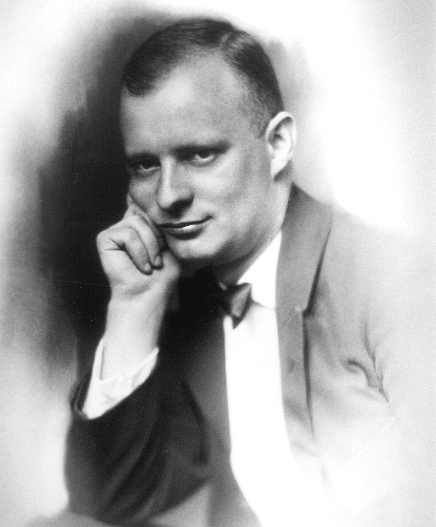
On this day – the birth of Paul Hindemith

published by Ben Hogwood. Photo of Hindemith in 1923 courtesy of the Hindemith-Institut als Rechteinhaber / Wikipedia

Two days ago we marked 90 years since the world premiere of Paul Hindemith‘s three-movement concerto for viola and orchestra, Der Schwanendreher (The Swan Turner). Now Arcana mark 130 years to the day since the birth of the composer himself. Back in 2013 I penned an appreciation of his music for the blog I was running – and would like to recycle it here:

“Hindemith’s absence from the concert hall is frequently baffling, because only a small proportion of his works fulfil the dull, academic caricature that insists on following him around. It is true that there are some pieces that are dry and more difficult to get on with, but doesn’t every composer have their weaker moments? For each of those there is one that sparkles with wit, invention and originality.

With this in mind, I wanted to share why Hindemith is one of my favourite composers, to explore on the surface some new recordings and to suggest some works it would be good to know better.

Hindemith’s orchestral output, for starters, is full of colourful scores. The most played of these tend to be the symphony constructed from his opera Mathis der Maler, the ballet Nobilissima Visione, the Symphonic Metamorphoses on themes of Weber and the Konzertmusik for strings and brass.

Three of these can be heard together on a fine disc from the BBC Scottish Symphony Orchestra and Martyn Brabbins, released on Hyperion. The strings and brass shine on the latter piece, whose bold writing really blows away the cobwebs. In Brabbins’ hands the Mathis der Maler Symphony is shown off as the masterpiece it is, with broad melodies that often have a softer centre, as well as powerful orchestral tuttis that have an enchanted air, thanks to Hindemith’s frequently inventive orchestration. Finally the Symphonic Metamorphoses on themes of Weber are great fun, energetic and witty.

Nobilissima Visione is my personal Hindemith choice. In the suite it has a March and Pastorale of silvery beauty, and a noble Passacaglia that builds to a powerful and blazing conclusion. This is quintessential Hindemith, with a theme that moves in directions often contrary to the listener’s expectations while somehow making complete sense.

By way of contrast I would recommend the Piano Concerto, The Four Temperaments, a theme and four variations for piano and strings that finds Hindemith at his most mischievous but also has revealing and intimate asides. It bursts with melodic content, and its combination of humour and poignancy would make it an ideal concert piece. While that is sadly not likely to happen soon there are a number of good recordings – one of which was recently released by ECM, with Anna Gourari and the Orchestra della Svizzera Italiana conducted by Markus Poschner

Hindemith wrote for such colourful characters as Benny Goodman and Dennis Brain. His Concerto for clarinet and orchestra is a charming piece with a beautifully written solo part, while the Horn Concerto, a challenging work technically, is also extremely rewarding.

Hindemith wrote a lot of music, which is possibly part of the problem in getting it recognised though he showed what an extraordinarily resourceful composer he was by writing sonatas for tuba, trombone and cor anglais among others. My first encounter with him was through three short but surprisingly baleful pieces for cello and piano, the Three Easy Pieces – the first of which was a Grade 3 piece.

In 2013, Hindemith’s anniversary year, Hyperion issued fine discs of the complete Violin Sonatas, ably performed by Tanja Becker-Bender and Péter Nagy, and the Piano Sonatas, impressively deconstructed by Markus Becker. Among the chamber music my choice would have to be the Kleine Kammermusik, a spiky piece for wind quintet with some good tunes, spicy harmonies and fine writing for woodwind.

Finally another aspect of Hindemith’s output that should be noted is his vocal music, and there is an excellent disc from the Hänssler label of his Mass and Six Chansons. The Mass in particular is a substantial piece, difficult to sing but rewarding to listen to in a recording as open as this.

I would urge you, then, to discover the music of a composer whose greatness has often been lauded in the same breath as Stravinsky, Schoenberg and Bartók, but whose music no longer enjoys anything like their profile. I wager you won’t be disappointed!

Published post no.2,720 – Sunday 16 November 2025
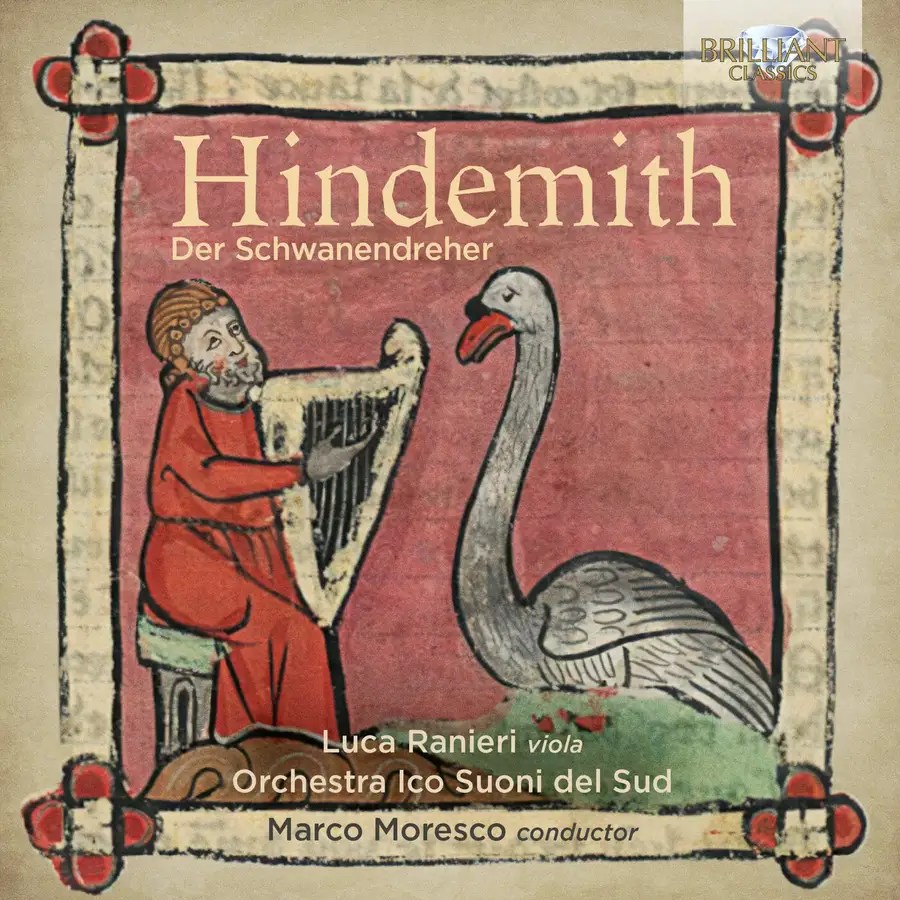
On this day – the first performance of Hindemith’s Der Schwanendreher

published by Ben Hogwood, using text from the Brilliant Classics website

On this day in 1935, Paul Hindemith gave the first performance of his own three-movement concerto for viola and orchestra, Der Schwanendreher (The Swan Turner).

As the website notes, the concerto “is based on medieval German folk songs. While the ‘swan turner’ was literally someone who turned the spit of a roasting swan, metaphorically it referred to an itinerant minstrel whose street organ or hurdy-gurdy was cranked via a swan’s-neck handle. He composed the work between September and October 1935, and it was premiered at the Concertgebouw in Amsterdam, with the composer (a virtuoso violist who did much to elevate the instrument’s status) serving as soloist.”

You can read more about the work – and the new release profiled above – on the Brilliant Classics website, or watch a superb live performance below, with soloist Antoine Tamestit and the Frankfurt Radio Symphony Orchestra, conducted by Paavo Järvi:

Published post no.2,718 – Friday 14 November 2025

Playlist: Herbert Blomstedt at 95

by Ben Hogwood

To mark the 95th birthday of the great Swedish conductor Herbert Blomstedt on Monday just gone, Arcana has put together a playlist including a snapshot of some of his greatest and most enduring recordings.

They include the Fifth Symphony of Nielsen, part of a landmark cycle of the composer’s symphonies with the San Francisco Symphony Orchestra for Decca. Blomstedt’s recordings with that orchestra in the 1990s were notable for their sonic prowess but left some critics cold; however on revisiting his Sibelius cycle, for instance, they stand up very well. The Third Symphony is included here, as is the first Peer Gynt Suite of Grieg.

Also in the 1990s came a trio of fascinating discs lending weight to the cause of Paul Hindemith. A disc of the Mathis der Maler Symphony, the Symphonic Metamorphoses and Trauermusik was to be expected, perhaps, but the follow-ups were even more valuable – a disc of the music for Nobilissima Visione, the Konzertmusik for Brass and Strings and Der Schwanendreher, and a pairing of the Symphonia Serena and symphony from the opera Die Harmonie der Welt, included here.

Blomstedt has more recently recorded a well-received Brahms cycle with the Leipzig Gewandhaus, though prior to that recorded a fine disc of the composer’s choral works in San Francisco. With the Gewandhaus, however, he has completed his most recent release, that of Schubert’s Unfinished and Great symphonies. The former is included here. Enjoy this selection of wonderful recordings!

BBC Proms – Steven Isserlis, LPO / Jurowski: Stravinsky, Bach, Walton & Hindemith

jurowski-proms

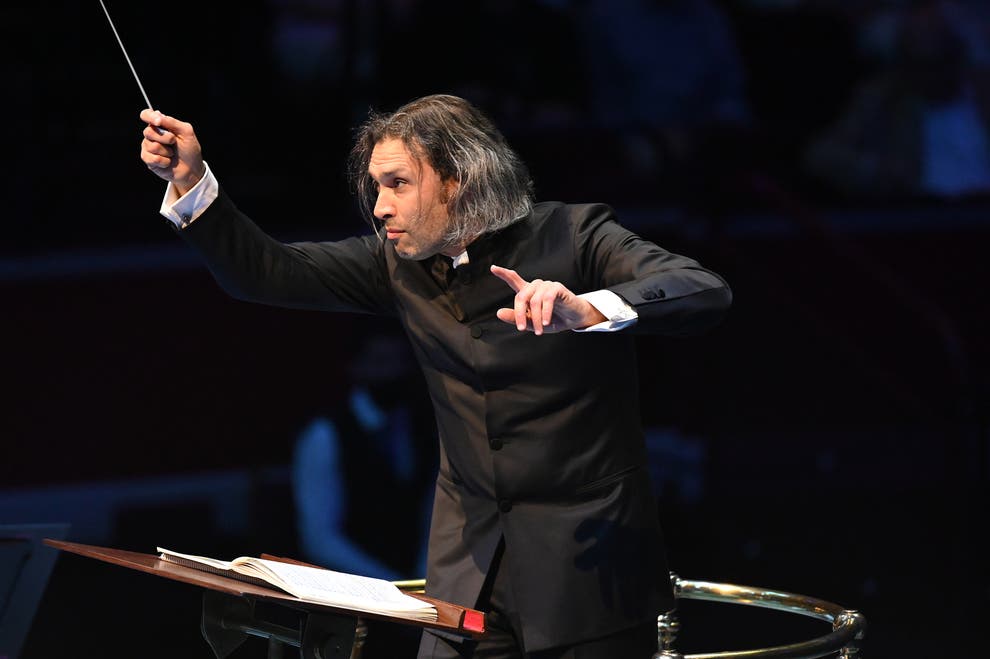
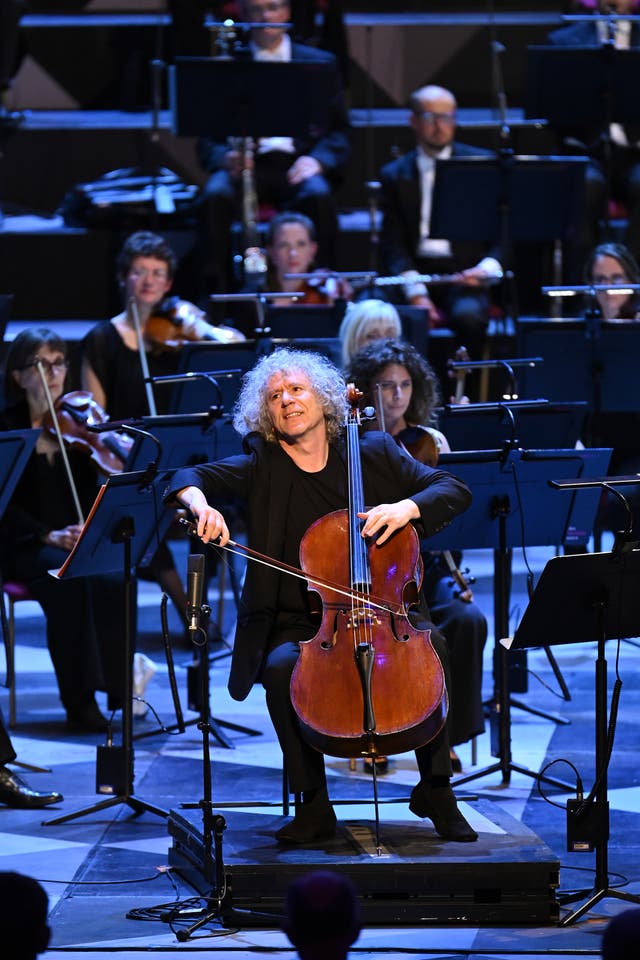
Steven Isserlis (cello, below), London Philharmonic Orchestra / Vladimir Jurowski (above)

Stravinsky Jeu de cartes (1935-6)
Walton
Cello Concerto (1955-6)
Bach (arr. Goldmann)
14 ‘Goldberg’ Canons BWV1087 (1742-4 arr. 1977)
Hindemith
Symphony ‘Mathis der Maler’ (1933-4)

Royal Albert Hall, London
Thursday 12 August 2021

Written by Richard Whitehouse; pictures (c) Chris Christodoulou

Vladimir Jurowski this evening concluded his highly impressive 14-year tenure as Principal Conductor of the London Philharmonic Orchestra with a thoughtfully conceived and well-proportioned programme; one which typically played to this orchestra’s strengths as much as to his own.

Although it can seem something of an ‘also-ran’ in the context of his compositions from the period, Stravinsky’s Jeu de cartes lacks for little in terms of that rhythmic effervescence as was engagingly evident in this performance – Jurowski pointing up the humour and even occasional glimmers of pathos that inform what can easily seem music written on autopilot. The LPO responded with a trenchancy and alacrity as held good throughout this ‘ballet in three deals’, the tonal punning of whose culmination at least ensures a humorous outcome.

Walton’s Cello Concerto used to be regarded with even less favour than Stravinsky’s ballet, but this piece (written by its composer at much the same age) is now seen as more than the enervated recycling of past success. Steven Isserlis (above) has long advocated its cause, and there was little doubting his commitment in a reading of perceptiveness and finesse. At times his spare and even fragile tone tended to recede into even so restrained and transparent as this, Jurowski mindful to rein in those brief climactic moments of the outer movements, but the artful interplay of the central scherzo did not lack for incisiveness or irony. Nor, after the second of the solo variations in the finale, was there any absence of rapture as soloist and orchestra are reconciled in drawing the music through to its close of fatalistic acceptance.

After the interval, a novelty in an arrangement by composer-conductor Friedrich Goldmann (1941-2009) of the 14 canons latterly identified from Bach’s printed copy of his Goldberg Variations. Arranged for a Stravinskian post-classical orchestra, these intricate and arcane studies in canonic dexterity emerge from gentle aridity to luminous elaboration with spare, methodical elegance such as intrigues and disengages in equal measure. Hardly something one expected to hear at such an occasion or this venue, though worth hearing all the same.

In its reiterating the values of Enlightenment humanism, moreover, this prepared admirably for Hindemith’s Symphony ‘Mathis der Maler’; premiered on the cusp of Germany’s descent into barbarous self-destruction, and a plea from the committed – however reluctantly – artist for a rational response as might be worth emulating today. The alternately radiant and tensile unfolding of Concert of Angels was perfectly judged, as too the plaintive resignation of the brief if affecting Entombment. The Temptation of St Anthony then made for an elaborate finale, but Jurowski paced it superbly – the plangent central interlude thrown into relief by the impassioned episodes on either side, then its anguished introduction by an apotheosis whose ultimate wresting of triumph from adversity remains thrilling as a statement of artistic intent.

A performance to savour, then, not least as John Gilhooly presented Jurowski with the Gold Medal of the Royal Philharmonic Society in recognition of services to music – an accolade with an illustrious history, which can rarely have been more deserved than on this occasion.

You can find more information on the BBC Proms at the festival’s homepage

In concert – Christian Tetzlaff, Philharmonia Orchestra / Esa-Pekka Salonen: Weimar Berlin – Angels and Demons

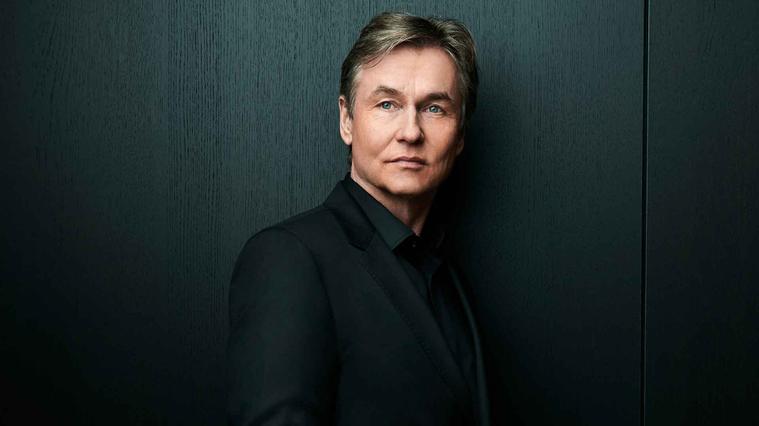
Christian Tetzlaff, Philharmonia Orchestra / Esa-Pekka Salonen (above)

Royal Festival Hall, Southbank Centre, London
Thursday 26 September 2019

Hindemith Rag Time (well-tempered) (1921)
J.S. Bach arr. Schoenberg Two Chorale Preludes: Schmücke dich, o liebe Seele BWV654; Komm, Gott Schöpfer, heiliger Geist BWV667 (1925)
Berg Violin Concerto (1935)
Hindemith Mathis der Maler Symphony (1934)

reviewed by Ben Hogwood

This year the Philharmonia Orchestra have been exploring the music of Weimar Berlin as it was in the 1920s and 1930s, with fascinating results. Their most recent concert, subtitled Dreams and Demons, may have been relatively short, but it gave plenty of food for thought and the musical rewards were considerable.

A rather older composer who worked in Weimar made himself known throughout the concert, for the music of Johann Sebastian Bach was quoted, refracted and alluded to in each of the four pieces on the programme. Firstly we heard the opening notes of the Prelude in C minor from The Well-Tempered Clavier, part of an affectionate and brilliantly ‘worded’ joke by Hindemith, whose Ragtime started the concert with a swagger. Esa-Pekka Salonen clearly enjoyed its gruff humour, but found the touches of elegance beneath the surface too.

The Ragtime’s surge to the close in E flat minor blossomed with a cleverly executed join into the first of two Bach chorale prelude arrangements by Schoenberg. Here we wondered at his audacious orchestration, taking on what he saw as ‘the first twelve tone music’ and sharing it around the orchestra with typically inventive pointing towards the melodies. Timothy Walden’s cello probed elegantly at the inner melodic lines of Schmücke dich, o liebe Seele, while the exuberant close of Komm, Gott Schöpfer, heiliger Geistdrew heralded the Hindemith work we were about to hear.

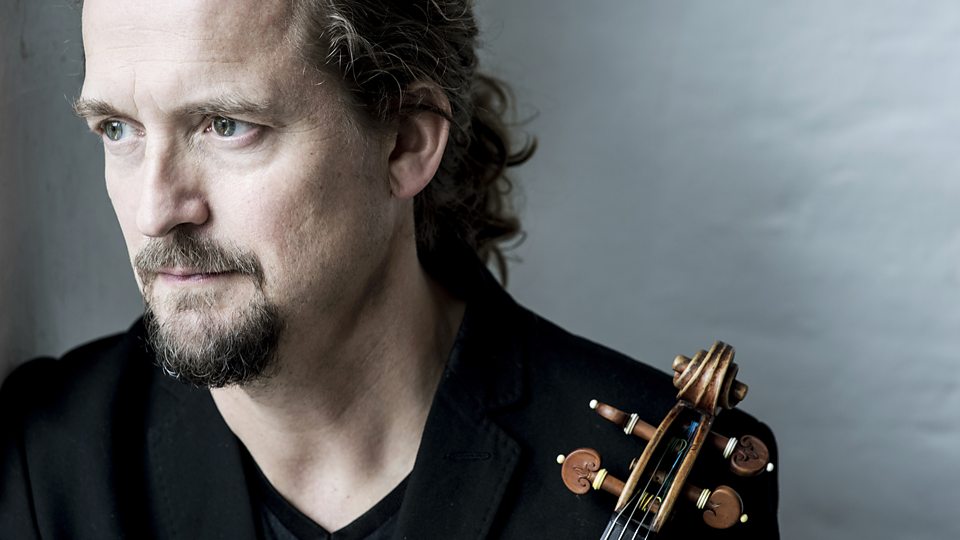
Berg’s Violin Concerto quotes from a Bach chorale, Es ist genug (It is enough) at the height of its remembrance of Manon Gropius, daughter of Alma Mahler. Subtitled To the Memory of An Angel, the work traverses a wide range of emotions in its thought processes, from brief oases of calm to fraught periods of activity. The clarinets of the Philharmonia, in all ranges, were superb, whether in the lighter Ländler theme of the first movement or the solemn chorale itself, their imitation of a pipe organ ghostly and – when the solo violinist’s harmonics were in play – ethereal. This was because soloist Christian Tetzlaff (above) also brought a wide range of sounds to the piece, from the fragility of the opening strings of the start to the surging faster music where he took the music by the scruff of the neck. His was a technically brilliant yet musically sensitive performance, closely joined to Salonen’s deft work with the orchestra.

All the while this wonderful piece was heading for the final bars and the ultimate rest, the sort of chord you would want to go on forever as Berg’s orchestral colours mingle with the highest note the violin reaches in the whole piece. Together Teztlaff and Salonen ensured the pacing was ideal, helped considerably by the light and shade of the Philharmonia’s contribution.

After the interval came a regrettably rare chance to hear some Hindemith in the concert hall in the shape of the Mathis der Maler Symphony, a three-movement work drawn from the opera of the same name. This oft-maligned composer exerts a good deal of influence on the tonal music of the second half of the 20th century, more than he is credited for, and his own works are instantly recognisable. Nor, as Salonen and the Philharmonia illustrated, is there a lack of colour or personality in his orchestral writing.

This was a superb performance of a piece Salonen clearly holds close to his heart, having conducted it at the Proms and recorded it for Sony in 2004. The expectant hush from the strings at the start was magical, the effect like walking into a sacred building, and this was reinforced by a solemn intonation of a chorale from the trombones, those Bach influences coming quickly to the surface. Salonen’s slower tempo here worked well.

The silvery strings enjoyed the moments of confluence in Hindemith’s writing, with the added note chords allowed to breathe, but Salonen was not above letting the grittier parts of the music off the leash, pushing forward through the faster phrases. The Philharmonia woodwind and brass were superb, the bell-like clarity of their playing bolstered by deeper shades. With all these qualities noted, Engelkonzert (Angelic Concert) unfolded beautifully, with a grand sense of ceremony at the end, while in response Grablegung (Entombment) was initially thoughtful, its ruminative woodwind then replaced by a brass-dominated climax which Salonen controlled immaculately.

Most dramatic of all was Versuchung des heiligen Antonius (The Temptation of Saint Anthony), with a ravishing tone from the Philharmonia strings at the outset. As it progressed the movement had a terrific cut and thrust, its tension released with impressive stature in the closing pages. Mathis der Maler is a wonderful score, one of Hindemith’s finest achievements – and by no means the only peak of his orchestral output. Here it put the seal on a fascinating and immensely rewarding concert, with superb musicianship throughout.

Further listening

You can hear the music played in this concert on the Spotify playlist below, including Salonen’s account of the Mathis der Maler symphony:

This playlist offers a broader view of Hindemith’s orchestral output, with the ballet suite Nobilissima Visione, the Concert Music for Strings and Brass and the vastly underrated piece for piano and orchestra The Four Temperaments: