Arcana at the Proms – Prom 43: Paul Lewis, CBSO / Kazuki Yamada – Ravel, Mozart, Holmès & Mussorgsky / Wood

Ravel Ma mère l’Oye – suite (1910-11)
Mozart Piano Concerto No. 27 in B flat, K595 (1790-91)
Holmès La Nuit et de l’Amour (1888)
Mussorgsky arr. Wood Pictures at an Exhibition (1874, orch. 1915)

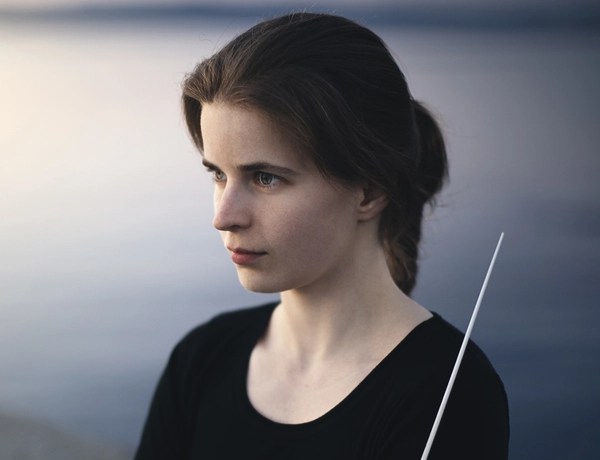
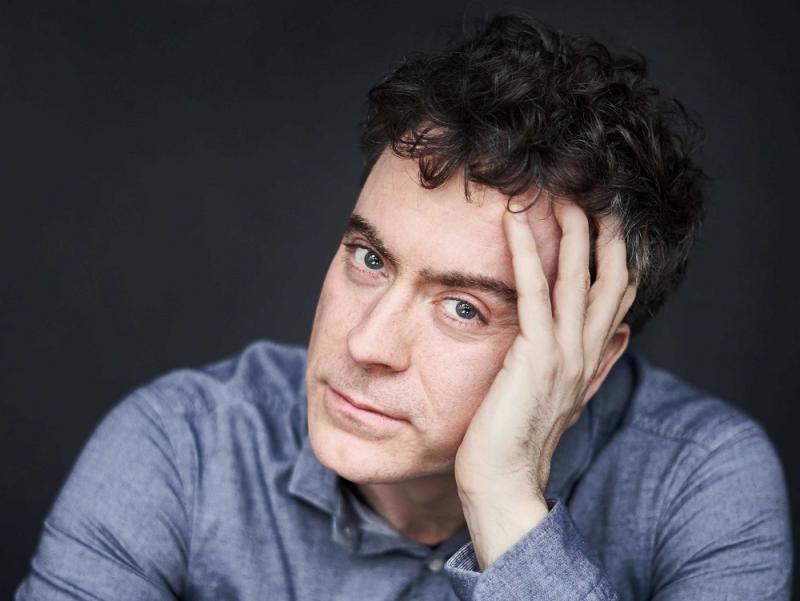
Paul Lewis (piano, above), City of Birmingham Symphony Orchestra / Kazuki Yamada

Royal Albert Hall, London
Thursday 22 August 2024

reviewed by Ben Hogwood Photos (c) Sisi Burn

A colourful Prom from the CBSO this year, reaching a deafening climax with Proms founder Sir Henry Wood’s arrangement of Mussorgsky’s Pictures At An Exhibition. More of that anon, but the orchestra, under principal conductor Kazuki Yamada, began with music by Ravel – whose orchestration of the Mussorgsky we tend to hear.

Mother Goose was cool to the touch but given a winning performance, Ravel’s colours spread across the orchestra as the music came to life. The CBSO strings were elegant and refined, leaving the starry moments to the woodwind, who excelled – particularly the gruff contrabassoon in Conversation of Beauty and the Beast, winningly played by Margaret Cookhorn. The hues of the closing The fairy garden were ideal, too – though Yamada’s decision to bring the music to a near standstill before the final, wondrous tune won’t have been to all tastes, no matter how skilfully it was achieved.

Elegance was the watchword for Paul Lewis’s Mozart, too – a thoughtful and graceful account of the composer’s last piano concerto, published in his final year but thought to have begun three years prior. This is Mozart in relatively subdued form, but still cracking a smile in the attractive first movement. Soloist and orchestra took a little while to align within the Royal Albert Hall acoustic, but once they did the first movement dialogue, complete with Mozart’s own cadenza, was fluent and balletic. The slow movement lullaby was a treat, Lewis with stylish phrasing of the melodies, while the finale enjoyed its lightfooted dance, a theme so simple and yet so memorable; classic Mozart.

Following the interval we heard the brief but romantic La Nuit et de l’Amour by Augusta Holmès, a pupil of César Franck whose music was appearing at the Proms for the first time. It was a charming miniature with a memorable tune, whose presence shone through. It acted as an upbeat to Sir Henry Wood’s arrangement of Mussorgsky’s tour through the gallery, a version predating the celebrated Ravel by seven years.

Unlike the Frenchman, Wood goes for broke on several occasions during Pictures At An Exhibition. His decision to include only the first Promenade, where Mussorgsky describes his observer walking around the exhibition, means the pictures are a little squashed together, but in this performance the dramatic impact was heightened. Gnomus was frankly terrifying, while The Old Castle was headed by a sensitive and touching euphonium solo; Becky Smith projecting beautifully from the gallery.

Wood’s version is brassy on occasion, and the CBSO players excelled – as did the wind and percussion, whose unpredictable interventions had the audience jumping on several occasions! They were a feature of Bydlo, the old carriage rumbling into action with all its bells rattling, the lower strings and brass in deep toil. Nothing quite prepared the throng for the final Great Gate of Kiev, however – not even the sinister outlines of the preceding Baba Yaga. The gate itself came slowly into view, the toll of the nine bells of the Liverpool Philharmonic bells up in the gallery both solemn and unexpectedly chilling. Soon all notions of reserve were brushed aside, however, Wood’s orchestration demanding the nine bells at full volume – delivered in a brilliant peal from the gallery by Graham Johns. However – from the arena at least – they did rather swamp the combined forces of the orchestra and organ, who were barely audible at times.

Excesses like these no doubt helped Emerson Lake and Palmer in their decision to arrange Pictures for rock group in 1971 – and certainly had a positive impact on the Proms audience, who were thrilled by the drama and the sheer volume. So too was Yamada, who had already been dancing on the podium, but as the Gate reached its tremendous conclusion he pivoted to urge the audience into applause, long before the final chord had rung out. How refreshing to see a conductor living in the moment, reading the occasion and the audience, and crowning a memorable Prom with shattering, exhilarating noise.

The playlist below collects the music from this concert, including the only available recording of the arrangement of Pictures At An Exhibition by Sir Henry Wood:

Published post no.2,283 – Saturday 24 August 2024

In concert – Paul Lewis, CBSO / Kazuki Yamada: Ravel, Mozart, Holmès & Mussorgsky / Wood

Paul Lewis (piano, above), City of Birmingham Symphony Orchestra / Kazuki Yamada

Ravel Ma mère l’Oye – suite (1910-11)
Mozart Piano Concerto No. 27 in B flat, K595 (1790-91)
Holmès La Nuit et de l’Amour (1888)
Mussorgsky arr. Wood Pictures at an Exhibition (1874, orch. 1915)

Symphony Hall, Birmingham
Wednesday 21 August 2024

Reviewed by Richard Whitehouse

Although the CBSO has not put on its own Proms season for many years, a concert featuring the programme for its annual Proms appearance has been a regular fixture and this evening’s event proved to be much more than merely a ‘dry run’ for tomorrow’s Royal Albert Hall date.

Despite the timing, this was indeed the suite as orchestrated by Ravel from his Mother Goose piano duets before being expanded into a ballet. It took a while to get going – Pavane of the Sleeping Beauty feeling impassive and Little Tom Thumb enervated, yet Laideronette had the requisite playfulness. Conversations of Beauty and the Beast was ideally poised between whimsy and pathos, before The Enchanted Garden concluded this sequence with an inward rapture made more so thanks to its exquisite contribution from leader EugeneTzikindelean.

Paul Lewis must have played Mozart’s 27th Piano Concerto on innumerable occasions (and several times with the CBSO) but his perspective constantly varies. The opening movement had a spaciousness resulting in an unusually moderate Allegro, albeit never at the expense of a subtly incremental intensity unerringly sustained through to a cadenza of limpid eloquence. Even finer was the Larghetto – dependent, as with much of Mozart’s late music, on what the performer brings to it; here yielding a serenity informed by not a little fatalism. After which the finale provided an ideal complement in its buoyancy and unforced humour, leading into a cadenza (how fortunate Mozart’s own have survived) of pensive understatement, then a coda launched with a guileless interplay of soloist and string that set the seal on this performance.

Opening the second half was Augusta Holmès’s La Nuit et l’Amour – actually, an interlude from Ludus pro Patria, her ‘Ode-Symphonie’ which, even if it might not sustain the present piece’s enfolding passion, should certainly be worth at least a one-off hearing in its entirety.

In Henry Wood’s orchestration, Mussorgsky’s Pictures at an Exhibition proved a highlight of last season. Wood retains only the first appearance of the Promenade but is not unfaithful to the original’s essence. Hence the shock-horror of Gnomus, sombre aura of The Old Castle with its baleful euphonium, playful insistence of The Tuileries or fatalistic tread of Bydlo with its evocative percussion. The whimsical Ballet of the Unhatched Chicks contrasts with the grim realism of Samuel Goldberg and Schmuÿle or the frantic bustle of The Market at Limoges.

Respighi surely took note of this glowering Catacombs with its plangent recollection of the promenade refrain hardly less effective than in Ravel, and while Baba Yaga is unnecessarily curtailed here, its sudden dispersal more than prepares for the crescendo of offstage bells that launches The Great Gate[s] of Kiev. This set the tone for a realization which, if its opulence borders on overkill, could not prevent the CBSO from projecting Wood’s cinematic sonics to the maximum. Those present once again erupted during that echoing resonance at its close.

Quite a way, then, to end an impressive performance and memorable concert. Kazuki Yamada and the orchestra will be doing it all over again tomorrow evening at their Prom, at which this orchestration of the Mussorgsky will be heard in the environs as envisaged by its orchestrator.

The playlist below collects the music from this concert, including the only available recording of the arrangement of Pictures At An Exhibition by Sir Henry Wood:

For details on the 2024-25 season A Season of Joy, head to the City of Birmingham Symphony Orchestra website. Click on the names to read more about pianist Paul Lewis and chief conductor Kazuki Yamada

Published post no.2,279 – Friday 23 August 2024

In concert – Paul Lewis, CBSO / Tabita Berglund: Sibelius, Grieg & Tchaikovsky

Paul Lewis (piano), City of Birmingham Symphony Orchestra / Tabita Berglund

Sibelius Pohjola’s Daughter Op.49 (1906)
Grieg Piano Concerto in A minor Op.16 (1868)
Tchaikovsky Symphony no.5 in E minor Op.64 (1888)

Symphony Hall, Birmingham
Thursday 11th January 2024 [2.15pm]

Reviewed by Richard Whitehouse

Entering 2024 with this attractive programme, the City of Birmingham Symphony Orchestra was conducted by Tabita Berglund – the Norwegian who, though unrelated to the late, great Paavo, seems certain to become one of the most significant conductors from her generation.

It was with Sibelius that the programme commenced, Pohjola’s Daughter lying on the cusp between its composer’s nationalistically inclined Romanticism and the relative Classicism that ensued. Pointedly so given the composer derived his inspiration from the Kalevala, in which its totemic figure Väinämöinen is outwitted by the ‘daughter of the North’, as the basis for a symphonic fantasia which critiques as surely as it remodels its underlying sonata design. Other interpreters have ensured a more seamless cohesion, but the acute characterization that Berglund brought to each episode, then the emotional frisson when those main motifs come together for a powerful apotheosis, compelled admiration – as did the closing pages in which Sibelius cannily fragments form and texture so all that remains is an all-enveloping silence.

Its ubiquity across 150 years should not distract attention from the innovative qualities found in Grieg’s Piano Concerto, and if his was not a consciously recreative approach, Paul Lewis gave a performance as appealing as it was insightful. Not least in an opening Allegro whose melodic directness was always balanced by a tangible sense of where this music was headed, and culminating in a take on the lengthy cadenza that infused its rhetoric with an inevitability worthy of Beethoven. There was expressive light and shade aplenty in the central Adagio, as too an unforced progress to the heartfelt restatement of its main theme. The outer sections of the final Allegro had no lack of impetus, as if to emphasize contrast with its rapt flute melody that closes the work in a thrilling peroration where soloist and conductor were rightly as one.

After the interval, Tchaikovsky’s Fifth Symphony emerged as a forceful and combative piece with its occasional longueurs convincingly held in check. Not least in an opening movement, the simmering expectancy of whose introduction intensified throughout what followed. Any short-windedness of phrasing was absent in the Andante cantabile, its indelible horn melody serenely intoned by Elspeth Dutch then its interplay between slow-burning eloquence and violent interjections of the ‘fate’ theme astutely judged on route to a warmly resigned coda.

Ostensibly an interlude, the Valse has a charm and, in its central trio, insouciance as belies its formal ingenuity that Berglund conveyed in full measure. Nor was there any sense of overkill as the Finale pursued a purposeful but never headlong course – its initial restatement of the main theme exuding an expressive focus matched by that of its climactic reappearance, here without risk of bathos in what brought the performance to a decisive and affirmative close. Certainly, the composer’s doubts as to any ‘insincerity’ proved unfounded on this occasion. It also confirmed a rapport between Berglund and the CBSO which will hopefully continue. Next week, however, brings the return of Kazuki Yamada for a wide-ranging programme of Berlioz, Walton and the world premiere of a newly commissioned work from Dai Fujikura.

Click on the link to read more on the current CBSO concert season, and on the artist names for more on Tabita Berglund and Paul Lewis

Published post no.2,054 – Friday 12 January 2024

In concert – Paul Lewis, CBSO / Christoph König: Mozart & Mahler

Paul Lewis (piano), City of Birmingham Symphony Orchestra / Christoph König

Mozart Piano Concerto No. 27 in B flat major, K595 (1788-91)

Mahler Symphony No. 5 in C sharp minor (1901-02)

Symphony Hall, Birmingham
Wednesday 21 April 2022, 2.15pm

Written by Richard Whitehouse

Back from a first European tour since the pandemic and following the Easter break, the City of Birmingham Symphony Orchestra hit the ground running with a programme of contrasts featuring Mozart’s last piano concerto and what is likely Mahler’s most popular symphony.

It may have been finished early during his final year, but Mozart’s 27th Piano Concerto was drafted several years earlier, while its relative inwardness as compared to those from 1785-6 need not be read as fatalistic; still less be taken for valediction. This was certainly how Paul Lewis approached it with a poised but never flaccid opening Allegro – its subtle contrasts of themes and dynamics creating their own, discreet momentum with an eloquent rendering of the development then a lucid cadenza such as brought the whole movement deftly full circle.

Might it be that this concerto is only as good as the best performances? Thanks to Lewis the central Larghetto never risked seeming plain spun or uniform, piano dovetailing into strings and woodwind to ingratiating effect. In the closing Allegro, Christoph König pointed up the dance-like robustness of its rondo theme with a lilting impetus as never faltered. This is one of Mozart’s few concertos where his own cadenzas survive; Lewis’s probing manner in the finale setting the seal on a reading as thoughtfully conceived as it was insightfully realized.

His recent recordings of Louise Farrenc having gained widespread praise, König is evidently a conductor in demand and his account of Mahler’s Fifth Symphony provided a decisive, no-nonsense take on this much-played piece. Not least an initial Funeral March whose bracing objectivity did not preclude a more visceral response to its frenzied climax or ominous close. Its successor’s competing strands of violence and resignation were purposefully juxtaposed, through to the as-yet provisional emergence of the chorale then a tellingly speculative coda.

Time and again the central Scherzo fails to fulfil its role as this work’s formal or expressive crux, and if König’s approach fell short of the ultimate conviction, it was more than usually cohesive – whether in the discursive unfolding of its ländler-informed sections or the central trio with its rustically evocative overtones. Equally persuasive were those transitions either side, thereby endowing the movement with a cohesive follow-through which paid dividends during a coda whose unalloyed ebullience more than usually indicated what was to follow.

Most conductors now make the famous Adagietto a soulful interlude rather than full-blown slow movement, König going further by making it an extended introduction to the closing Rondo. This evolved almost seamlessly through the gradual intensification of ideas already heard towards the re-emergence of that chorale, here blazing forth with an affirmation that did not pre-empt those final bars in their almost nonchalant affirmation. Mahler might have written deeper finales, but not one whose triumph over adversity was so potently achieved.

An impressive demonstration, too, of the CBSO’s collective prowess (while not neglecting that of trumpeter Matthew Williams) for what is well worth catching in Saturday’s repeat performance; before this orchestra offers ‘something completely different’ next Thursday.

For more information on the CBSO’s 2021-22 season, click here

Meanwhile for more information on the artists, click on the names to access the websites of Paul Lewis and Christoph König

On record – Aurora Trio: Crépuscule (EM Records)

crepuscule

Alwyn Two Folk Tunes (1936). Crépuscule (1955). Naïades (1971)
Bax Elegiac Trio (1916)
Lewis Divertimento (1982)
Lipkin Trio (1982)
Patterson Canonic Lullaby (2016)
Rawsthorne Suite (1968)

Aurora Trio [Emma Halnan (flute), Jordan Sian (viola), Heather Wrighton (harp)]

EM Records EMRCD069 [76’52”]

Producer Tom Hammond
Engineer John Croft

Recorded 15-16 February, 13 August 2020 at St John the Evangelist, Oxford

Written by Richard Whitehouse

What’s the story?

The Aurora Trio makes its debut for EM Records in a collection of British music featuring flute, viola and harp that spans exactly 100 years and encompasses a variety of approaches with regards to the combining of these distinct yet undeniably complementary instruments.

What’s the music like?

If not the most elaborate of his numerous works for ensemble, Arnold Bax’s Elegiac Trio is among his most affecting as an in-memoriam for those friends who died in the course of the Easter Uprising in Ireland. Although the overall mood rarely moves far from that implied by the title, the undulating emotion filtering through the textural ‘weave’ proves as subtle as it is elusive. Scored for just flute and harp, William Alwyn’s Naïades unfolds on a larger scale and inhabits a wider range of expression as it evokes both the eponymous spirits of antiquity and the environs of the Suffolk village of Blythburgh where it was written, while also being    a ‘fantasy sonata’ whose instruments interact with more than a little improvisatory freedom.

By contrast, the Suite that Alan Rawsthorne wrote for the Robles Trio is typical of his later music in its harmonic astringency and oblique while never abstruse tonal follow-through. A highly personal use of serial elements underpins the elegant opening Andantino as surely as it does a graceful, intermezzo-like Allegretto then the more demonstrative Allegro vigoroso. All these other works are here receiving their first recordings. Alwyn’s Crépuscule for harp offers a foretaste of that masterly concerto Lyra Angelica in its ethereal poise, whereas his Two Folk Tunes emerges as an appealingly contrasted duo – viola and harp as ruminatively combined in Meditation as they are animatedly juxtaposed in Who’ll buy my besoms?

The highlight is undoubtedly the Trio by Malcolm Lipkin, a composer yet to receive his due and who, as the present work affirms, was unafraid to elide between tradition and innovation with strikingly personal results – whether in the terse emotional contrasts of its Variations, tense and increasingly soulful inwardness of its Intermezzo or purposeful onward progress of a Finale whose impetus subsides towards the pensively fatalistic coda. Canonic Lullaby has Paul Patterson bring flute and harp into limpid accord, while Paul Lewis’s Divertimento puts all three instruments through their paces in a lively March, before embracing them in the lyrical Love Song then cordially sending them on their way in the nonchalant Waltz.

Does it all work?

Yes, given the relative stylistic range of the music featured and, moreover the quality of these performances. Care has evidently been taken to assemble the eight works into a cohesive and satisfying sequence such as this ensemble might tackle at one of its recitals, and which flows well as an overall programme. The playing leaves nothing to be desired in terms of accuracy, while the relative personality of each composer cannot be gainsaid. Ideally the release would encourage composers from the middle and younger generations to write for this combination.

Is it recommended?

Indeed. The recording is excellent, with the frequently awkward balance between instruments expertly judged, and there are detailed annotations on both the works and their composers. It all adds up to a worthwhile release which deserves to be followed up, hopefully on this label.

Listen & Buy

You can discover more about this release and listen to clips at the EM Records website, where you can also purchase the recording. For more on the Aurora trio, you can visit their website