In concert – Anne Queffélec @ Wigmore Hall: Mozart and a French ‘musical garden’

Anne Queffélec (piano)

Mozart Piano Sonata no.13 in B flat major K333 (1783-4)
Debussy Images Set 1: Reflets dans l’eau (1901-5); Suite Bergamasque: Clair de lune (c1890, rev. 1905)
Dupont Les heures dolentes: Après-midi de Dimanche (1905)
Hahn Le Rossignol éperdu: Hivernale; Le banc songeur (1902-10)
Koechlin Paysages et marines Op.63: Chant de pêcheurs (1915-6)
Schmitt Musiques intimes Book 2 Op.29: Glas (1889-1904)

Wigmore Hall, London
Monday 28 April 2025 (1pm)

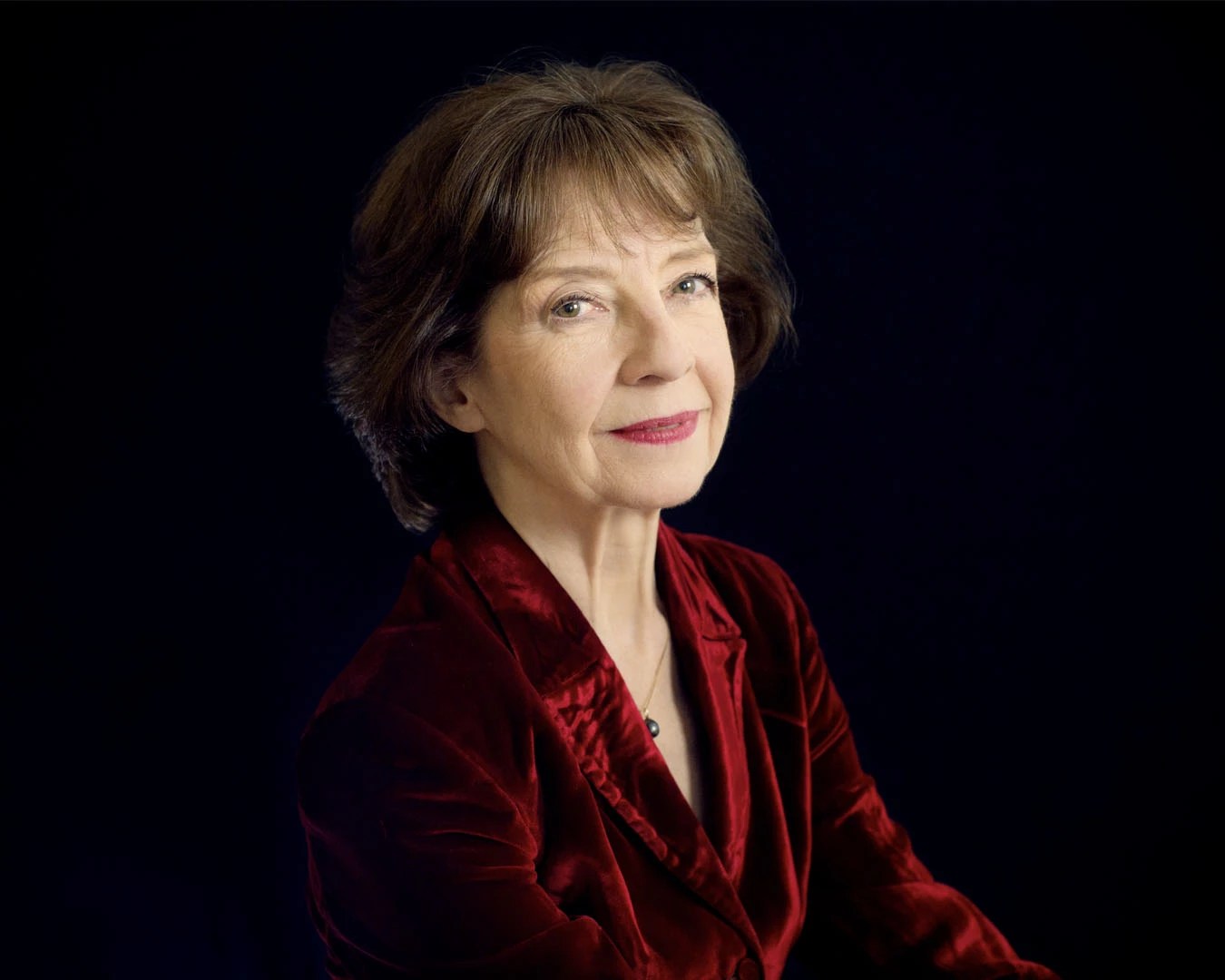
by Ben Hogwood picture of Anne Queffélec (c) Jean-Baptiste Millot

The celebrated French pianist Anne Queffélec is elegantly moving through her eighth decade, and her musical inspiration is as fresh as ever. The temptation for this recital may have been to play anniversary composer Ravel, but instead she chose to look beneath the surface, emerging with a captivating sequence of lesser-known French piano gems from the Belle Époque, successfully debuted on CD in 2013 and described by the pianist herself as “a walk in the musical garden à la Française.”

Before the guided tour, we had Mozart at this most inquisitive and chromatic. The Piano Sonata no.13 in B flat major, K.333, was written in transit between Salzburg and Vienna, and the restlessness of travel runs through its syncopation and wandering melodic lines. Queffélec phrased these stylishly, giving a little more emphasis to the left hand in order to bring out Mozart’s imaginative counterpoint. She enjoyed the ornamental flourishes of the first movement, the singing right hand following Mozart’s Andante cantabile marking for the second movement, and the attractive earworm theme of the finale, developed in virtuosic keystrokes while making perfect sense formally.

The sequence of French piano music began with two of Debussy’s best known evocations. An expansive take on the first of Debussy’s Images Book 1, Reflets dans l’eau led directly into an enchanting account Clair de Lune, magically held in suspense and not played too loud at its climactic point, heightening the emotional impact.

The move to the music of the seldom heard and short lived Gabriel Dupont was surprisingly smooth, his evocative Après-midi de Dimanche given as a reverie punctuated by more urgent bells. Hahn’s Hivernale was a mysterious counterpart, its modal tune evoking memories long past that looked far beyond the hall. Le banc songeur floated softly, its watery profile evident in the outwardly rippling piano lines. The music of Charles Koechlin is all too rarely heard these days, yet the brief Le Chant des Pêcheur left a mark, its folksy melody remarkably similar to that heard in the second (Fêtes) of Debussy’s orchestral Nocturnes.

Yet the most striking of these piano pieces was left until last, Florent Schmitt’s Glas including unusual and rather haunting overtones to the ringing of the bells in the right hand. Queffélec’s playing was descriptive and exquisitely balanced in the quieter passages, so much so that the largely restless Wigmore Hall audience was rapt, fully in the moment. Even the persistent hammering of the neighbouring builders, a threat to concert halls London-wide, at last fell silent.

Queffélec had an encore to add to her expertly curated playlist, a French dance by way of Germany and England. Handel’s Minuet in G minor, arranged by Wilhelm Kempff, was appropriately bittersweet and played with rare beauty, completing a memorable hour of music from one of the finest pianists alive today.

Listen

You can listen to this concert as the first hour of BBC Radio 3’s Classical Live, which can be found on BBC Sounds. The Spotify playlist below has collected Anne Queffélec’s available recordings of the repertoire played:

Published post no.2,517 – Tuesday 29 April 2025
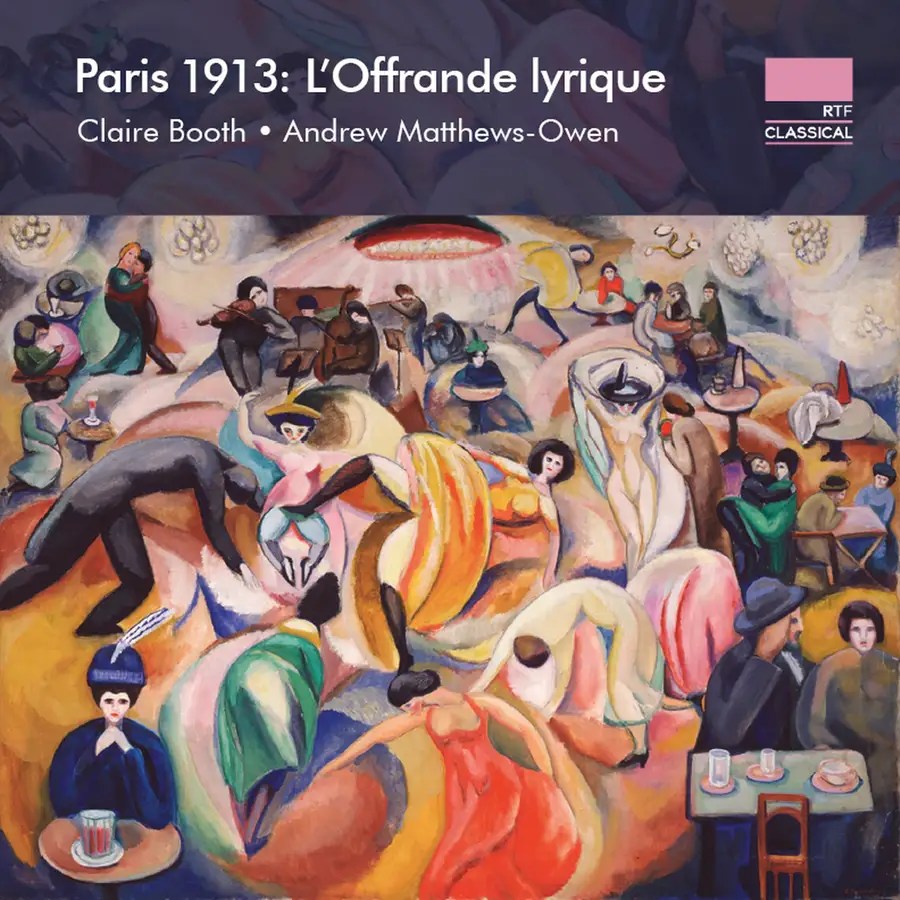
On Record – Claire Booth & Andrew Matthews-Owen: Paris 1913: L’offrande lyrique (Nimbus)

Caplet En regardant ces belles fleurs
Milhaud L’innocence Op. 10/3
Hahn À Chloris
Ravel arr. Stravinsky Trois poèmes de Stéphane Mallarmé M64
Auric Trois Interludes: Le pouf.
Ropartz La Route
Durey L’Offrande lyrique Op. 4
Saint-Saëns Petit main Op.146/9
Fauré Il m’est cher, Amour, le bandeau, Op. 106/7
Chaminade Je voudrais être une fleur
Debussy Trois poèmes de Stéphane Mallarmé L127
Satie ed. Dearden Trois Poèmes d’Amour
Lili Boulanger Clairières dans le Ciel: Vous m’avez regardé avec votre âme
Grovlez Guitares et mandolines

Claire Booth (soprano), Andrew Matthews-Owen (piano)

Nimbus RTF Classical NI6455 [66’23”] French texts included
Producer & Engineer Raphaël Mouterde

Recorded 11/12 March, 4-6 September 2023 at Wyastone Concert Hall, Monmouth

Reviewed by Richard Whitehouse

What’s the story?

Another enterprising song recital from Claire Booth and Andrew Matthews-Owen, this one focussing on songs that were either conceived, composed or premiered in Paris during 1913 and resulting in an absorbing collection best heard as a diverse while unpredictable totality.

What’s the music like?

Interleaving standalone songs and song-cycles, this recital opens with André Caplet’s take on Charles d’Orléans, its limpid modality highly appealing, then continues with an early song by Darius Milhaud as already demonstrates his distinctive and amusing approach to word-setting, while that by Reynaldo Hahn typifies the teasing charm familiar from his vocal music overall. Maurice Ravel’s triptych to texts by Mallarmé is performed in a version by Stravinsky with its accompanying nonet reduced to piano which, in preserving and maybe even accentuating the music’s questing introspection, represents no mean fete of transcription. Still relatively little known, this certainly deserves to be heard as at least an occasional alternative to the original.

Remembered best as a prolific writer of film scores, Georges Auric had shown a precocious talent for song as is evident in his sensuous setting of René Chalupt. A composer who often wrote on a symphonic scale, Guy Ropartz is heard in a setting of his own verse that amounts to a ‘scena’ in its wide expressive ambit. Interest understandably centres on the eponymous cycle by Louis Durey, a member of Les Six whose increasingly far-left conviction tended to marginalize his creativity yet, as these lucid and empathetic settings of Rabindranath Tagore (as translated by André Gide) confirm, had emerged as a protean talent by his mid-twenties. Hopefully these artists will be encouraged to investigate other of his songs from this period. By contrast, a late song by Camille Saint-Saëns exudes a touching poignancy, while that by Gabriel Fauré typifies the elusiveness of those in his last decade. As is evident here, Cécile Chaminade was a songwriter of style and elegance, then the Mallarmé triptych by Debussy (its first two texts identical to those of Ravel) finds this composer probing the inscrutability of these poems while drawing back from any more explicit intervention. The inscrutability conveyed by Erik Satie’s aphoristic settings (edited by Nathan James Dearden) of his own texts is altogether more playful – after which, the recital continues with a pensive offering by Lili Boulanger, with Gabriel Grovlez’s sultrily evocative setting of Saint-Saëns to finish.

Does it all work?

Yes, given the fascination of this collection taken as a whole and, moreover, the quality of these renditions. Booth is not a singer willing to take the easy option in her interpretations, and so it proves here with singing as fastidious as it is refined, while Matthews-Owen duly instils often deceptively spare accompaniments with understated insight. They contribute a succinctly informative note, but the booklet includes only the French texts with the English translations available at https://rtfn.eu/paris1913/: might it have best the other way round?

Is it recommended?

Very much so. There is much to fascinate even those who consider themselves afficionados of the ‘chanson’, and those who are unfamiliar with much of this repertoire could not have a better means of acquainting themselves with certain of its treasures – hidden or otherwise.

Listen & Buy

For purchase options, you can visit the Ulysees Arts website. For information on the performers, click on the names to read more about Claire Booth and Andrew Matthews-Owen

Published post no.2,466 – Friday 7 March 2025

In concert – Steven Isserlis and Friends – Fauré at the Wigmore Hall (2)

Steven Isserlis (cello) – with Joshua Bell, Irène Duval (violins), Blythe Teh Engstroem (viola), Jeremy Denk, Connie Shih (pianos)

Hahn Variations chantantes (1905)
Fauré Piano Quartet No. 2 in G minor, Op. 45 (1885-6)
Fauré Piano Quintet No. 1 in D minor, Op. 89 (1887-1905)

Wigmore Hall, London
Saturday 2 November 2024

Reviewed by Richard Whitehouse

If it did not get off to quite the start intended due to illness, this Wigmore series centred on Fauré’s chamber works certainly hit its stride with two such pieces from crucial junctures in their composer’s output.

Providing a degree of context was music by Reynaldo Hahn – remembered primarily for his operettas and songs, but whose chamber output is considerable. Hardly a defining statement, Variations chantantes sur un air ancien (its full title) draws on the aria ‘Beato chi può’ from Cavalli’s 1655 opera Xerses for what feels less a set of variations than a sequence of variants of unwavering restraint amply reflecting that blithe detachment of its theme. Steven Isserlis conveyed this in full measure, heard alongside some ingratiating pianism from Connie Shih.

Having achieved a successful balance between formal density and expressive eloquence in its predecessor, his Second Piano Quartet has Fauré laying even greater emphasis on the cyclical transformation of motifs which, hitherto associated with Liszt and Frank, is here imbued with a new cohesion. This is evident from an opening movement whose sonata design unfolds in a constant yet methodical state of change, Isserlis and Joshua Bell restlessly trading exchanges with Blythe Teh Engstroem a lyrical counter-balance and Jeremy Denk the deft anchor-point.

This approach served no less well the ensuing scherzo, with its engaging alternation between pizzicato and bowed playing as well as a tangible mordancy that never quite surfaces. Nor is it entirely absent from a slow movement whose vernal eloquence is informed by more than a little equivocation, and which only waylays continued motivic evolution in the finale. Here the music’s striving towards a decisive while hardly affirmative resolution seemed palpably in evidence, confirming this work to be a triumph of human resilience over existential odds.

If this work marks the culmination of Fauré’s earlier creative maturity, his First Piano Quintet effectively straddles its central phase given the near-on two decades between conception and completion. What had started out for four instruments in four movements ended up as five in three, yet there is nothing tentative about an initial movement whose pervasive introspection belies an emotional eddying no less subtle than the motivic intricacy these players uncovered, and in which the expressively effulgent playing of Irène Duval was an undoubted enrichment.

Less formally involved, the central Adagio prefigures the introspection of its composer’s last years – not least through a seamlessness of texture which, as here, never precludes variety of nuance. After this, the finale can seem less remarkable merely by fulfil its function within the overall scheme, but those thematic elements (of which one the songwriter Bart Howard was evidently aware) that evolve from the previous movements are assuredly realized on route to an apotheosis no less affecting for having delayed its resolution almost until the last moment.

Never neglected but rarely received with more than guarded admiration, Fauré’s late chamber works rely on an advocacy central to such music-making as was heard tonight. Hopefully this will prove no less evident throughout the remaining three programmes in this important series.

You can watch the concert below, thanks to the Wigmore Hall YouTube channel:

For more information on the Fauré series, visit the Wigmore Hall website – while you can also read Arcana’s interview with Steven Isserlis about the French composer

Published post no.2,352 – Monday 4 November 2024

Online concert – Steven Isserlis & Connie Shih mark the centenary of Saint-Saëns @ Wigmore Hall

steven-isserlis

Saint-Saëns Cello Sonata no.1 in C minor Op.32 (1872)
Liszt Romance oubliée S132 (1880)
Fauré Romance Op.69 (1894)
Saint-Saëns Romance in F major Op.36 (1874)
Bizet arr. Hollman Carmen fantaisie (not known)
Willaume La noce bretonne Op.14 (pub. 1924)
Holmès arr. Isserlis Noël d’Irlande (1897)
Hahn 2 improvisations sur des airs irlandais (1894 rev. 1911)
Saint-Saëns Cello Sonata no.2 in F major Op.123 (1905)

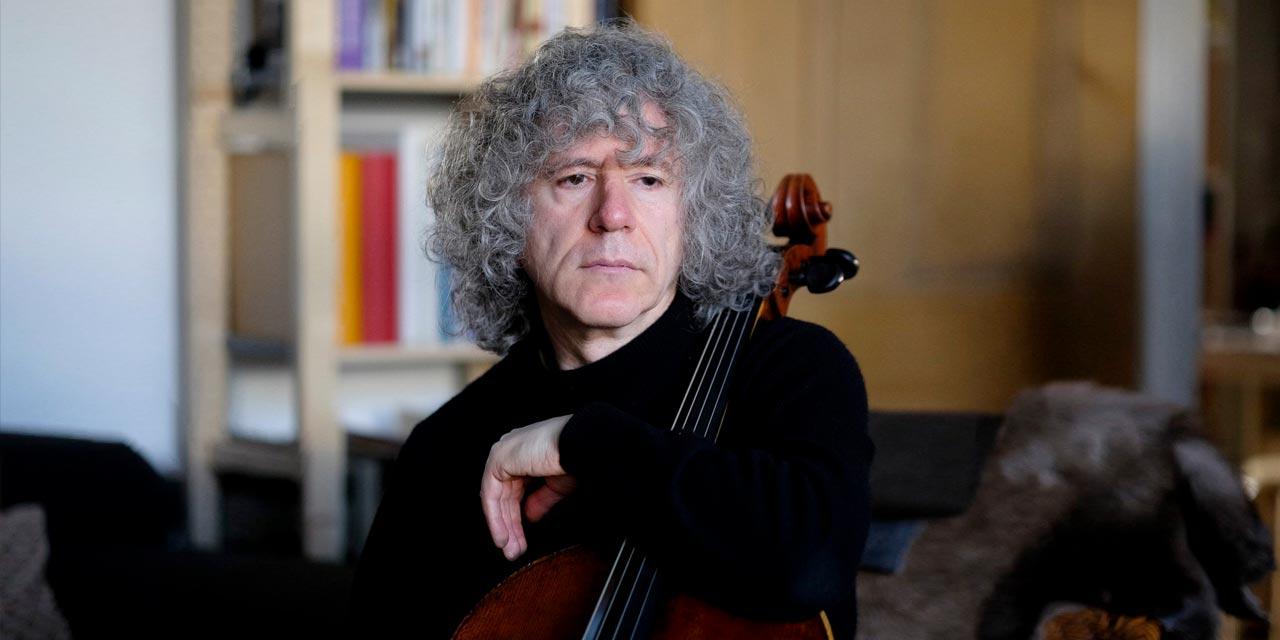
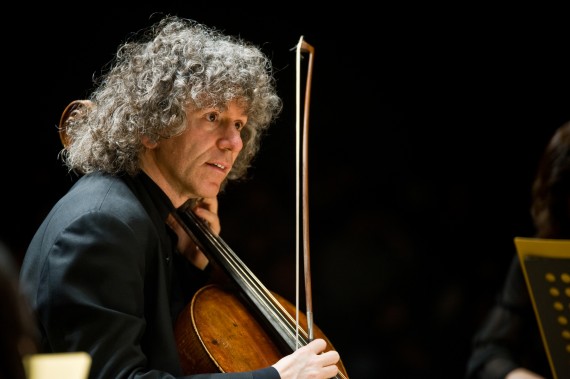
Steven Isserlis (cello, above), Connie Shih (piano, below)

Wigmore Hall, London
Thursday 16 December 2021

Written by Ben Hogwood

This well-devised program to mark the centenary of the death of Saint-Saëns was put together by cellist Steven Isserlis and his regular partner, pianist Connie Shih. They presented the composer’s two cello sonatas, the first of which was recorded by Isserlis back in 1992, in an intriguing historical context.

There is no room for shrinking violets in the first movement of the Cello Sonata no.1 in C minor Op.32, a relatively early work, and both performers threw themselves headlong into the music. Saint-Saëns was a virtuoso pianist, and on occasion his writing for the instrument is as demanding if not more so than the instrument it is ‘accompanying’. Here however the two were on equal terms, with plenty of cut and thrust in a dramatic first movement. The C minor casting and stormy start draw parallels with Beethoven, and these were built upon in the players’ compelling dialogue. The improvisatory slow movement was ideally poised, with an air of mystery in its central section where the cello was in its lowest register, complemented by twinkling figures from the piano. The Allegro moderato third movement returned us to powerful, passionate music, Isserlis’ double stopping passages immaculately delivered and Shih finding the necessary definition and phrasing in a superbly played piano part.

A full 32 years elapsed between the first sonata and its sequel, the Cello Sonata no.2 in F major Op.123. By this time the 70 year-old composer’s style had developed considerably. It is a substantial piece, running over 35 minutes, and is perhaps less-performed on that basis, not to mention the demands made on the performers. Isserlis and Shih showed what a fine work it is, however, in a performance that was gripping from the off, full of passion but also finding the more elusive statements in the quieter music, where Saint-Saëns could be found writing subtle but far-reaching sleights of harmony.

A joyous opening paragraph surged forward with considerable energy, powering an impressive and flowing first movement, Shih harnessing the power of the piano but continuing to hold a sensitive balance. She led off a capricious scherzo, whose variations were brilliantly characterized, from a limpid third variation (marked Tranquille) to a rippling Molto allegro that followed.

The heart of the piece, however, lies in the substantial Romance, a dreamy slow movement with a beautiful melody and a profound middle section turning towards the minor key. Both played with poise and affection, finding the centre of music the audience could fully lose themselves in. The last movement, which the composer promised ‘will wake anyone who’s slept through the rest of the piece’, was terrific, working from its deceptively innocuous opening phrase to throw off the shackles and end in celebratory mood. Isserlis was typically generous with his expression, with Shih deserving credit for her technical command and shapely melodic phrasing. The octaves towards the end were especially well-handled.

While the two sonatas were the main works of the concert, the complementary pieces were no less involving, providing an ideal foil. Firstly we heard from Saint-Saëns’ close friend Liszt, one of his few works for cello and piano. The Romance oubliée began with a recitative, with beautiful tone in the held notes from the cello, setting the (intense) mood. Then another great friend (and pupil), Fauré – whose Romance uses the whole range of the cello, starting in the mysterious depths and ending in the rarefied upper register. Saint-Saens’ own warm-hearted Romance in F major Op.36 was affectionately recounted, before the showstopping Carmen fantasie from Saint-Saëns’ friend and regular recital partner, Joseph Hollman. This was a showstopper, with quickfire dances and a pizzicato Habanera, stylishly done by Isserlis.

Shorter pieces followed from Gabriel Willaume, Reynaldo Hahn and Augusta Holmès, each with fascinating connections to the composer. Willaume’s La noce bretonne (The Breton wedding) was rather moving, its distant drone growing in feeling and power before passing by and disappearing again. Hahn’s 2 improvisations were songlike and affecting in their simplicity, a soulful Willow Tree especially, before an arrangement by Isserlis of Holmès song Noël d’Irlande, its pentatonic language easy to absorb.

This was a very fine concert, with playing of an exceptionally high standard by both artists, but crucially with the involvement that told us how Saint-Saëns, in particular, could combine virtuosity with deep feeling, contrary to some opinion. It is hard to imagine how his centenary could have been better observed – and it ended with a perfectly weighted account of The Swan, one of his most famous shorter pieces – taken as it is from Carnival of the Animals. Isserlis needed only to introduce it with a wave of the hand.

You can watch this concert on the Wigmore Hall website for the next 28 days – and you can hear most of the music played by Isserlis and Shih on the Spotify playlist below, with some of the recordings drawn from their recent album Music from Proust’s Salons. That disc can be heard (and purchased) from the BIS website

Wigmore Mondays: Karina Gauvin & Maciej Pikulski – French song

Karina Gauvin (soprano, above) and Maciej Pikulski (piano, below)

Hahn Quand je fus pris au pavillon (1899) (1:26-2:41); Si mes vers avaient des ailes (1888) (2:45-5:23; A Chloris (1916) (5:26-8:40)
Debussy Nuit d’étoiles (c1880) (9:59-13:04), Mandoline (1882) (13:09-15:06), Beau soir (1891) (15:10-18:00), L’Enfant prodigue – Récitatif et air de Lia (1884) (18:38-23:44)
Poulenc Trois poèmes de Louise Lalanne (1931) (25:21-26:12, 26:15-27:03, 27:07; Métamorphoses (1943) (29:31-; Deux poèmes de Louis Aragon – C (1943) (34:46-38:18)
Bizet Guitare (1866) (39:57-42:20), La coccinelle (1868) (42:27-47:36), Adieux de l’hôtesse arabe (1867) (47:51-52:55), Ouvre ton Coeur (1859-60) (53:05-55:47)

Wigmore Hall, London; Monday 22 October 2018

You can listen to the BBC Radio 3 broadcast by clicking here

Written by Ben Hogwood

An enjoyable tour around the French ‘mélodie’ from Canadian soprano Karina Gauvin and pianist Maciej Pikulski began with the music of Hahn. A celebrated song composer, his melodic gifts were fully evident in this selection of three, although the wide vibrato Gauvin employed did sometimes lessen its impact. A bright account of Quand je fus pris au pavillon (from 1:26 on the broadcast) showed off the breezy, outdoor approach, but the vibrato was too wide in an otherwise gentle Si mes vers avaient des ailes (2:45). The wonderful A Chloris, with its homage to Bach in the serene piano part, found ideal phrasing from Pikulski and rapturous delivery from Gauvin, if again a little too wobbly.

She was on much more secure ground in a selection of early Debussy. The composer’s first published work, Nuit d’étoiles was especially effective in its evocation of the lyre, where Pikulski was superb and Gauvin had a lovely, floated delivery. Mandoline was also a treat in the unison towards the end of the song, while Beau Soir savoured the heady atmosphere of the sunset. There followed an aria from L’Enfant prodigue (18:38), a dramatic tour de force where Gauvin took complete control, singing powerfully of a mother’s loss.

Poulenc’s songs are never less than entertaining in concert, though you have to be quick to appreciate some as they are gone in mere moments! There was a nonsensical air to two of the three poèmes, whose text are attributed to the fictitious Louise Lalanne. The first two sped by in a blur, nicely pointed and characterised, before the slower Hier went much deeper in its emotional impact.

The first of the Métamorphoses was similarly brief (29:31) but the flowing second (30:43) was a slow and thoughtful utterance, beautifully paced. The third (33:29) raced away from sight, but then as a complete contrast we had the down at heel dfgd (34:46), contemplating Paris in the wake of the Second World War.

Gauvin and Pikulski finished with a very varied quartet of Bizet songs, beginning with the bracing Guitare (39:57), with words by Victor Hugo. The piano imitated the strummed chords of the instrument and turning to sunnier climbs as C major replaced C minor (41:32) Gauvin relished the vocal demands here and in La coccinelle, another Hugo text of curious form which she characterised richly. In Adieux de l’hôtesse arabe (47:51) we had the highlight of the whole recital, and surely one of Bizet’s best songs – a profound departure with a deep sense of longing that Gauvin wholly inhabited, right up to the floated final notes. Then Ouvre ton Coeur (53:05) brought flashes of exoticism with the added notes of Pikulski’s thrummed accompaniment and Gauvin’s vibrato, on this occasion perfectly judged, to the sudden cry of the final note.

Gauvin gave us one of Poulenc’s most popular songs, Les Chemins de l’amour, as an encore (57:44-1:02:24) – and though a slow version it found the bittersweet heart of the song.

Further listening

You can track the repertoire used in this concert via the following Spotify playlist:

(Veronique Gens)