Arcana at the Proms – Prom 27: Silja Aalto, Anssi Kartunen, Seong-Jin Cho, BBC Symphony Orchestra / Sakari Oramo – Saariaho, Mozart & Richard Strauss ‘Alpine’ Symphony

Saariaho Mirage (2007) [Proms premiere]
Mozart Piano Concerto no.9 in E flat major K271 ‘Jeunehomme’ (1777)
Richard Strauss Eine Alpensinfonie Op.64 (1911-15)

Silja Aalto (soprano), Anssi Karttunen (cello), Seong-Jin Cho (piano), BBC Symphony Orchestra / Sakari Oramo

Royal Albert Hall, London
Friday 9 August 2024, 6pm

reviewed by Richard Whitehouse Photos (c) Mark Allan

Soon to begin his 12th season as chief conductor of the BBC Symphony Orchestra, Sakari Oramo made his second Proms appearance this season for what proved a typically diverse and resourceful programme whose stretching over 230 years of Western music was the least of its fascinations.

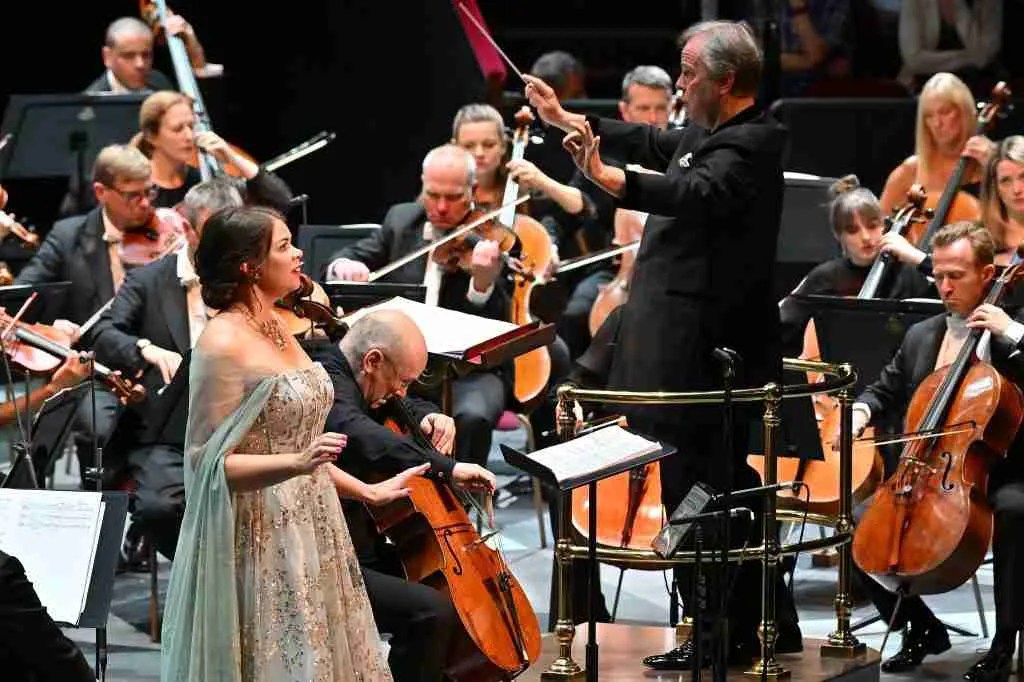
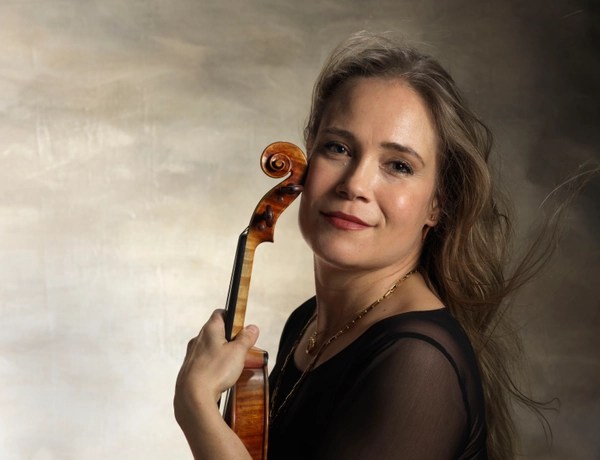
Her untimely death last year made a memorial to Kaija Saariaho more necessary and Mirage was a judicious choice, its setting lines by Mexican shaman María Sabina drawing a suitably theatrical response from Silja Aalto (above) – alongside who, Anssi Karttunen (long-time collaborator with this composer) weaved between the vocal and orchestral writing almost as an ‘alter-ego’ of subdued if beneficent presence. Musically the piece is typical of Saariaho from this period in aligning intricate texture with a mounting fervour at times ecstatic and ultimately fulfilled.

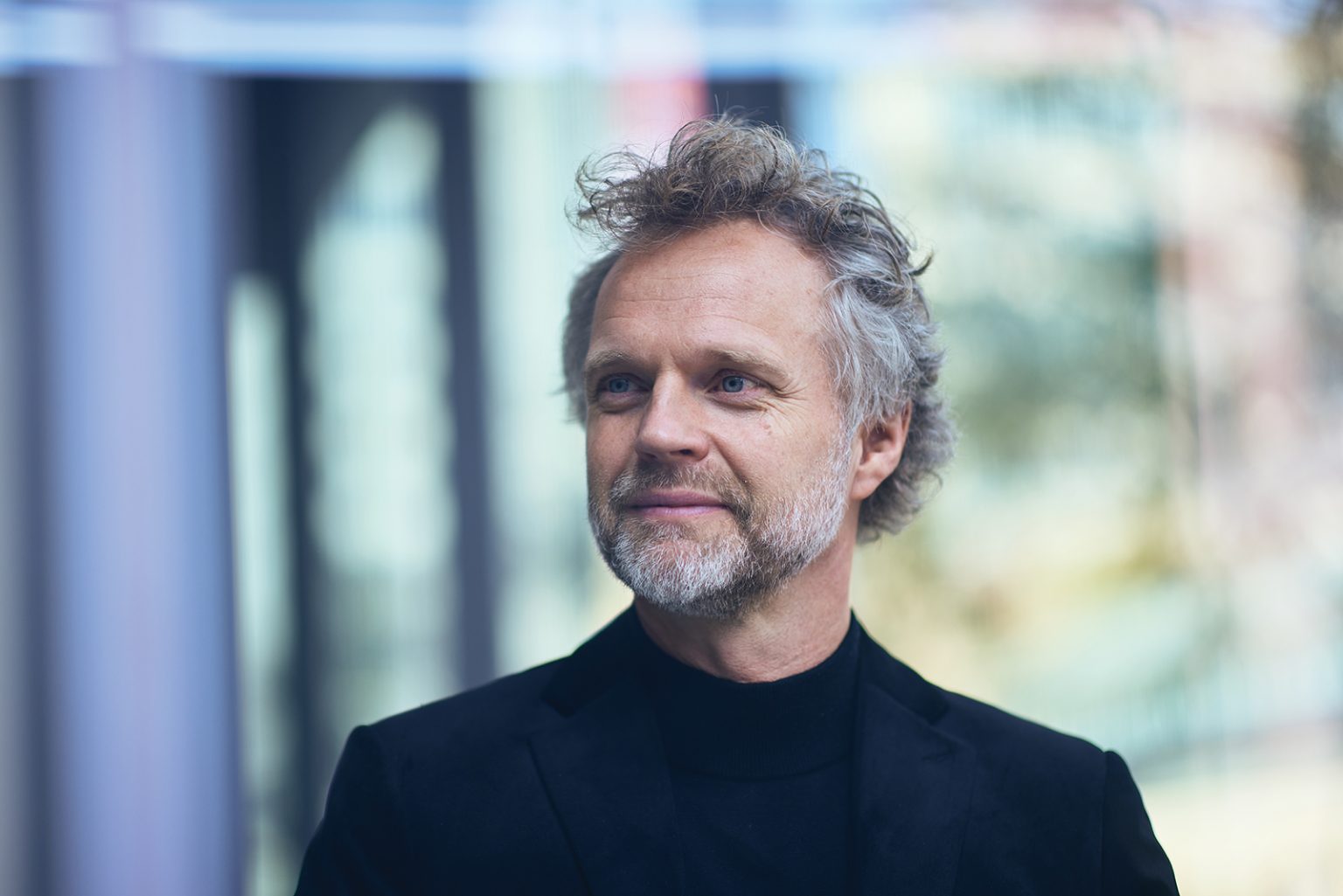
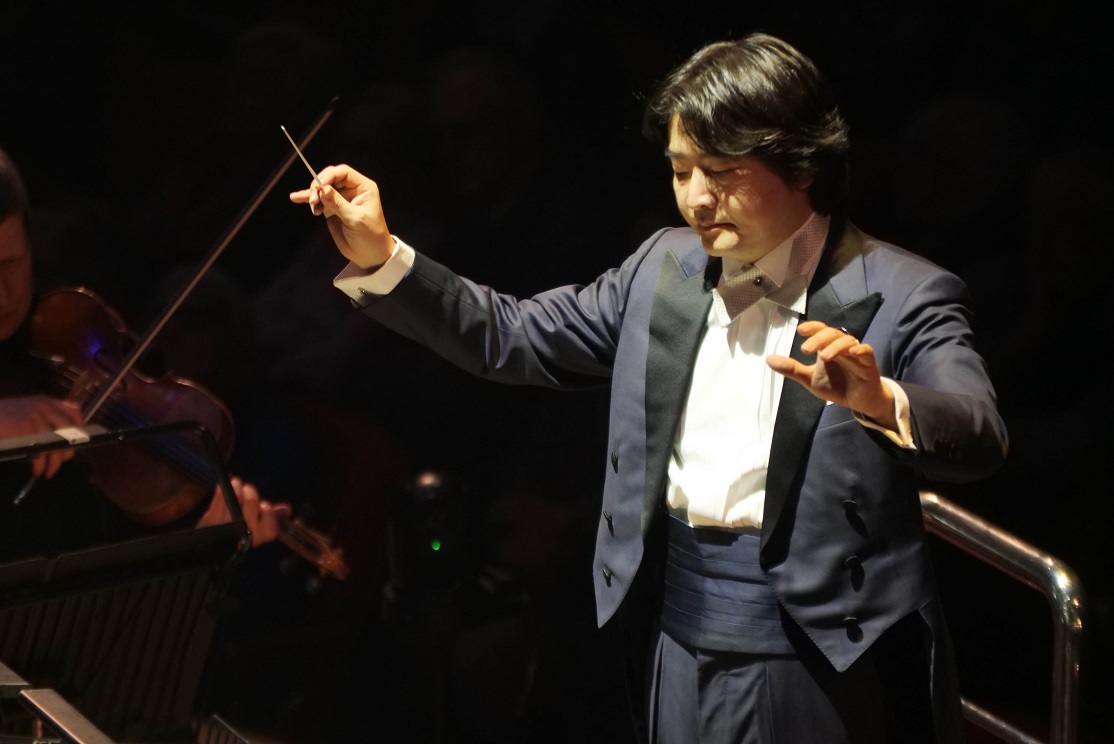
It may have been a ‘jeunefemme’ for whom Mozart actually wrote his Ninth Piano Concerto, but this remains its composer’s earliest unequivocal masterpiece and one with which Seong-Jin Cho (below) evidently feels real affinity. Not least in an opening Allegro whose arresting repartee at the start set the tone for an incisive traversal whose pianistic agility, not least in the first of Mozart’s cadenzas, was never without its inward asides. Such introspection came to the fore in the Andantino, its interplay of archaic and ‘modern’ harmonies yielding a plangency which found soloist and conductor as one. Nor was the finale’s central Menuetto without ruminative poise, set in relief by the buoyant Presto sections either side. Impressive music-making, then, that Cho continued with his deftly eloquent take on the second movement of Ravel’s Sonatine.

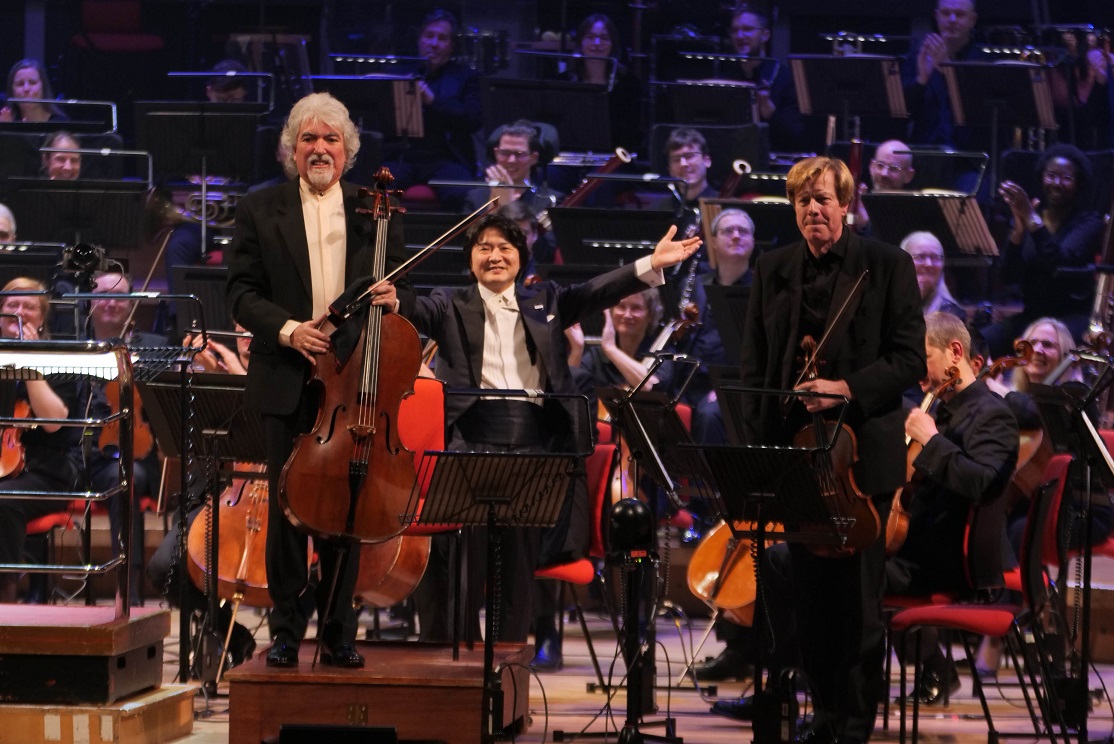
The last and most inclusive of Richard Strauss’s tone poems, An Alpine Symphony has received more than its share of tendentious reviews (and perfunctory programme notes), so credit to Oramo for emphasizing those purely musical qualities which, much more than its being a ‘bourgeois travelogue’ or even existential statement, duly determine this most formally and expressively integrated of its composer’s such works. As was evident at the outset: Alpine vistas emerged via a preludial crescendo that headed seamlessly into the ascent with its assembly of offstage horns, placed to advantage on the right of the gallery, then frequently arduous traversal above the treeline and on to the glacier prior to the summit. Its attendant ‘Vision’ drew an affecting soliloquy from oboist Tom Blomfield, then resplendent response from a 125-strong BBCSO.

What goes up tending to come down makes the following portion most difficult to sustain in terms of its ongoing momentum. The present account marginally lost focus here, but not in a mesmeric evocation of that eerie calm before the thunderstorm; organ and percussion adding to the overall mayhem before the relative calm of encroaching sunset. Ausklang is no mere epilogue – here, it afforded transcendence in the amalgam between those human and natural domains, while ensuring an overall fulfilment in the face of night with its inevitable closure.

The piece has come into its own since first appearing at these concerts 42 years ago and, if tonight’s reading did not quite touch all relevant bases, it conveyed the work’s measure like few others in tribute to the continuing creative partnership of this conductor and orchestra.

For more on this year’s festival, visit the BBC Proms website – and to read more on the artists involved, click on the names: Seong-Jin Cho, Silja Aalto, Anssi Karttunen, the BBC Symphony Orchestra and their chief conductor Sakari Oramo, and the official website of Kaija Saariaho and her works

Published post no.2,268 – Monday 9 August 2024

In concert – Eduardo Vassallo, Chris Yates, CBSO / Kazuki Yamada: Richard Strauss – Don Quixote; Beethoven ‘Eroica’ Symphony

Eduardo Vassallo (cello), Chris Yates (viola), City of Birmingham Symphony Orchestra / Kazuki Yamada

Richard Strauss Don Quixote Op.35 (1897)
Beethoven Symphony no.3 in E flat major Op.55 ‘Eroica’ (1803-4)

Kazuki Yamada and Tom Morris (concept), Rod Maclachlan (video design), Zeynep Kepekli, lighting design), Gustave Doré (illustrations)

Symphony Hall, Birmingham
Wednesday 13 December 2023

Reviewed by Richard Whitehouse. Photos (c) Hannah Fathers

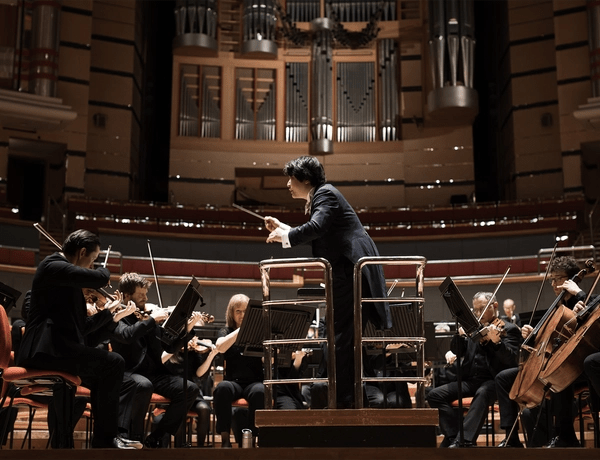
Tonight’s concert from the City of Birmingham Symphony Orchestra was not only the orchestra’s final concert before its Christmas season, but also the first to feature a new concept of presentation with a view to reimagining just what the concertgoing experience might be like in the future.

Not that this concept was uniformly applied to the pair of works in question. In the first half, Richard Strauss’s Don Quixote was accompanied by rehearsal and live footage relayed via screens as placed to the left, above and to the right of the platform. They gave passing insight into cellist Eduardo Vassallo’s preparing to take the stage, then kept a close watch on his interaction with violist Chris Yates – their musical repartee informing much of what follows. Less convincing was the selection from Gustave Doré who, while he died over a decade before Strauss’s work, still anticipated its concerns in his illustrations for an 1863 edition of Cervantes. These were rather generally applied over the work’s course with few references to Dulcinea who, while she does not appear in the novel, is yet a pervasive influence on the latter stages of the score.

The performance was a notable one in terms of Kazuki Yamada’s surveying this piece as a cumulatively unfolding whole – its 10 variations, each keenly characterized, framed by an increasingly ominous introduction and warmly resigned epilogue. Vassallo had the measure of what, for all its virtuosity, is essentially a concertante rather than solo part and, for which reason, tends to come off best when taken by a section-leader. Not all those frequently dense textures emerged with ideal clarity and motivic unity, which ensures formal and expressive focus as the work proceeds, could have been clearer in its climactic stages, but an essential humanity was always to the fore as Yamada perceived it. Those hearing it for the first time could hardly have failed to be impressed with Strauss’s ambition or moved by his response.

Less so, perhaps, by Beethoven’s Eroica Symphony after the interval. Here the visual element centred largely on the musicians as the account took place – except during the first movement, when a photographic roll-call of the CBSO’s ‘heroes’ (musical and otherwise) was laminated onto the music – thus robbing it of the means to transcend time and place as surely as had the composer those of revolution or Bonaparte. Elsewhere, the standing-up of individual players and sections to highlight salient aspects of the piece was rather inconsistently applied – why, for instance, did the horns not do so with their unison statement of the ‘Prometheus’ theme in the finale (Thomas Beecham did this decades ago) – while the emerging photos of orchestral members mid-way through that movement risked seeming an awkwardly sentimental gesture.

All of this might have mattered less had the reading carried consistent conviction. As it was, the opening Allegro stuck doggedly to a tempo that felt more than a little stolid – its climactic moments undermined by pauses that impeded the musical flow, though the coda yielded the right emotional frisson. The highlight was a Funeral March whose fatalism was leavened by acute pathos at its climax, with a coda whose disintegration audibly left its mark. If the outer sections of the Scherzo seemed just a little deadpan, its trio was rousingly despatched by the three horns, and the initial stages of the finale had a welcome spontaneity as the ‘Prometheus’ theme is put through its paces. A pity Yamada slowed right down for its restatement midway through, resulting in a serious loss of momentum that not even an incisive coda could regain.

Tonight’s concert was a concerted and not unsuccessful attempt to confront the issue of how to attract a younger and more inclusive audience to classical music. Where it foundered was on a misguided premise that bombarding those present with images somehow makes them listen more intently. For this to come about, they need to be encouraged to focus collective attention aurally rather than just visually – a challenge such as Symphony Hall, with its all-round excellence and its many acoustical resources, would seem ideally equipped to fulfil.

This is evidently an experimental phase for the CBSO, as various possibilities are tried out, but an emphasis on sonic enhancement, allied to the subtle if pervasive presence of lighting, is arguably one way forward and could ultimately blaze a trail for the concert of the future.

You can read all about the 2023/24 season and book tickets at the CBSO website. Click on the names for more information on conductor Kazuki Yamada, cellist Eduardo Vassallo, violist Chris Yates – and also on the names for more on Tom Morris, Rod Maclachlan, Zeynep Kepekli and Gustave Doré

Published post no.2,044 – Tuesday 19 December 2023

BBC Proms 2023 – Soloists, London Philharmonic Choir and Orchestra / Gardner – Ligeti & Richard Strauss

Prom 36 – Jennifer France (soprano), Clare Presland (mezzo-soprano), Edvard Grieg Kor, London Philharmonic Choir, Royal Northern College of Music Chamber Choir, London Philharmonic Orchestra / Edward Gardner

Ligeti Requiem (1963-5); Lux aeterna (1966)
Richard Strauss Also sprach Zarathustra Op.30 (1896)

Royal Albert Hall, London
Friday 11 August 2023

by Richard Whitehouse photos by Mark Allan / BBC

There did not seem any more concrete reason to build a Prom around the music from Stanley Kubrick’s film 2001: A Space Odyssey other than this being the 55th anniversary of its release, but it at least offered an opportunity to revive one of the last century’s defining choral works.

Much has been made of a then avant-garde composer writing a piece based on a seminal text from the Christian liturgy, but centenary composer György Ligeti’s Requiem is anything but beholden to tradition. Focussing on what would normally constitute the first half of the Requiem Mass itself skews the textual imagery away from any hope of attaining ‘eternal rest’ – the four movements duly proceeding from a sombre Introitus in which the music’s conceptual vastness along with its expressive extremes are laid bare. The Kyrie is the most (in)famous part – emerging in two successive and cumulative waves of micropolyphony both overwhelming and disorientating, not least when rendered with the poise and precision that the combined choirs summoned in the Albert Hall’s expanse. Inevitably, the terror of the infinite gives way to that of the absurd.

Hence the Dies irae sequence, designated On the Day of Judgement and a veritable tour de force of choral outbursts with vocal interjections; Clare Presland’s ominous intoning tellingly offset by Jennifer France’s stentorian pronouncements, with the wind and brass of the London Philharmonic Orchestra visceral in their contribution under the attentive guidance of Edward Gardner. Neither did the Lacrimosa lack gravitas, the soloists musing eloquently if wearily against a stark instrumental backdrop whose essential emptiness carries through to the close.

While not intended as a continuation of the larger work, Lux aeterna still makes for a viable resolution in its undulating yet never static textures such as conjure the presence of ‘eternal light’ without any concomitant spiritual aspect. Set high-up in the gallery, to the right of the platform, the Edvard Grieg Kor evinced a faultless intonation along with a tangible sense of the music’s timelessness – though this piece would maybe have been better placed after the Ligeti instead of before the Strauss, not least as there was no segue between the latter works.

Also sprach Zarathustra was, of course, elevated to a new level of public recognition after its Introduction had been utilized as fanfare in Kubrick’s film, and a less than thrilling rendition here at least ensured this Sunrise could not pre-empt the remainder in Strauss’s free-ranging overview of Friedrich Nietzsche’s influential tract. On fine form overall, the various sections of the LPO relished their passages in the spotlight, reminding one that this piece is as much a ‘concerto for orchestra’ before its own time as the musical embodiment of human aspiration. Pieter Schoemann audibly enjoyed setting The Dance Song in motion and while others have made its climax more intoxicating, Gardner brought a rapt serenity to the Night Wanderer’s Song such as made the tonal equivocation of those final bars the more acute and intriguing.

Numerous recent Proms have followed the second-half work with an ‘official’ encore and, while this practice is not always justified, the inclusion tonight of a certain waltz by another Strauss would have extended the 2001 concept still further and effected a more definite close.

For more on the 2023 BBC Proms, visit the festival’s website at the BBC. Meanwhile click on the names for more information on artists Jennifer France, Clare Presland, the London Philharmonic Orchestra and conductor Ed Gardner. For more on Ligeti, head to this dedicated website

In concert – London Symphony Orchestra / Sir Antonio Pappano: Richard Strauss, Coleridge-Taylor & Liszt

Roman Simovic (violin), London Symphony Orchestra / Sir Antonio Pappano

Coleridge-Taylor Ballade in A minor Op.33 (1898)
Liszt Die Ideale S106 (1856-7)
Richard Strauss Ein Heldenleben Op. 40 (1898)

Barbican Hall, London
Sunday 12 February 2023

Reviewed by Richard Whitehouse

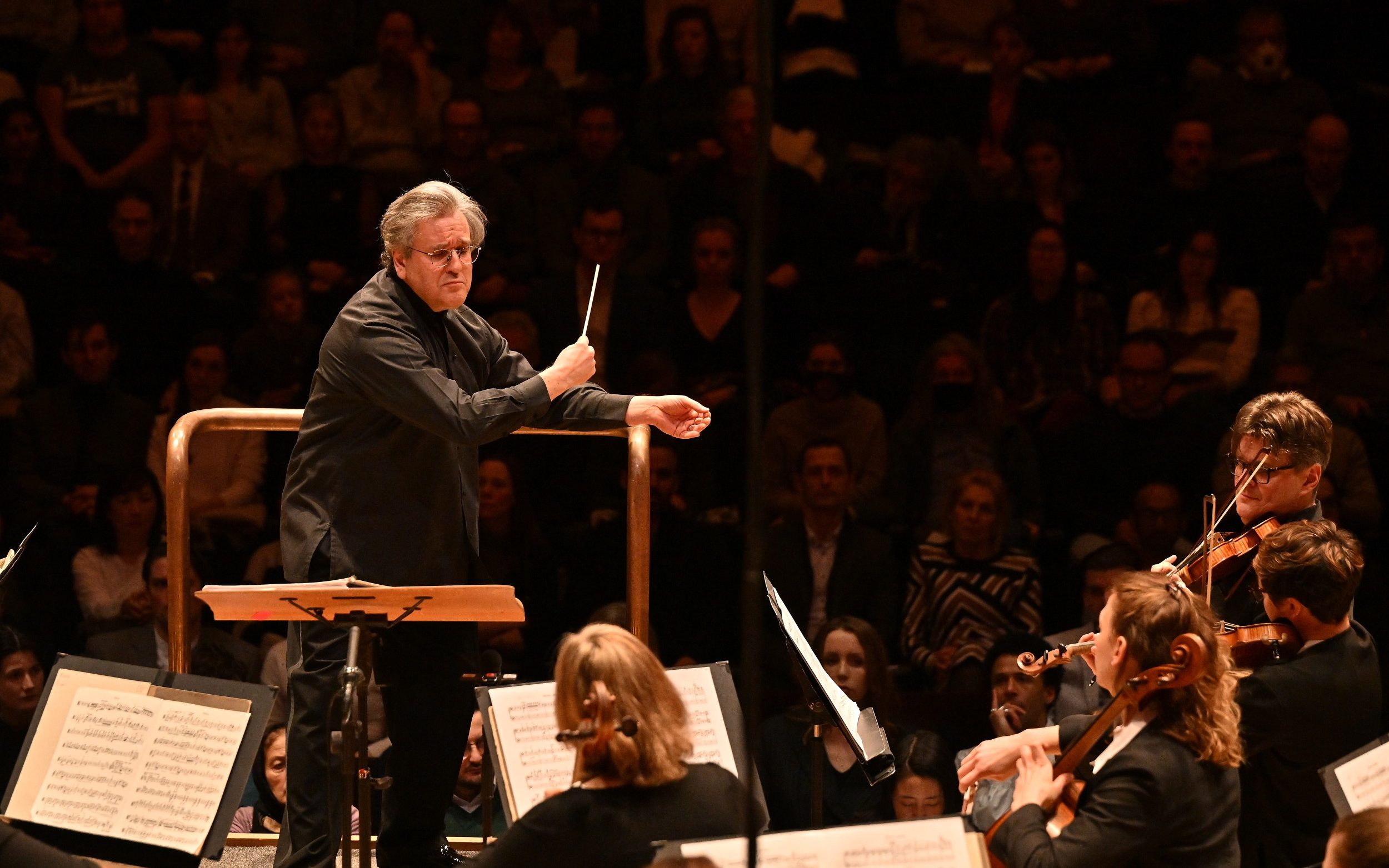
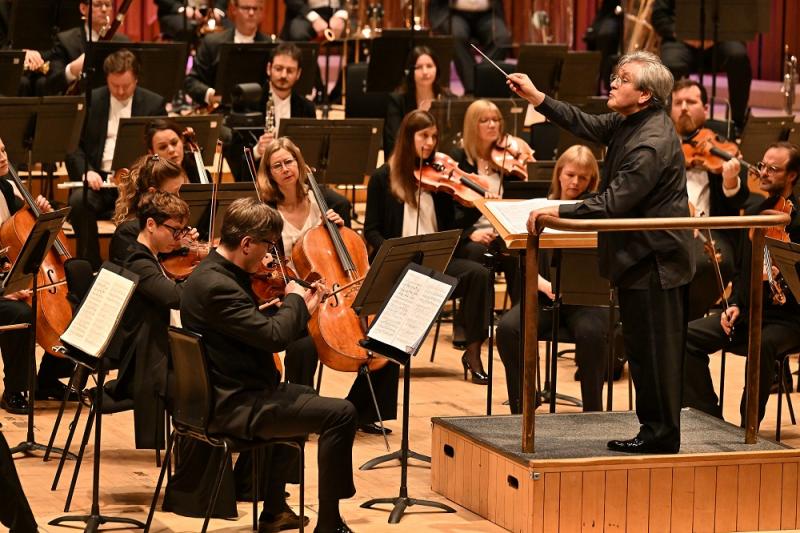
It may have been his only concert this season with the orchestra of which he becomes Chief Conductor next year, but the rapport between Sir Antonio Pappano and the London Symphony Orchestra was audibly sustained through the whole of what proved a judiciously programmed concert.

Whether or not his Ballade (as commissioned for and premiered at a Three Choirs Festival in Gloucester) was inspired by music from a nearby street organist, Samuel Coleridge-Taylor’s work confirms the melodic fecundity and orchestral panache of his maturity. Its languorous slower episodes, framed by swifter sections of mounting energy, might not generate a more cumulative momentum, but the emotional immediacy of this piece overall is never less than appealing – certainly in a performance as vividly and precisely executed as that given tonight.

Pappano gave a memorable account of Liszt’s Eine Faust Symphonie four seasons ago, and it is good to see him exploring the mostly neglected orchestral output of this still misunderstood figure. The 12th of his symphonic poems, Die Ideale was written for the unveiling of a statue of Goethe and Schiller – a poem by the latter furnishing the conceptual basis of a piece which avoids programmatic or psychological excess for mostly lyrical and understated material; one whose deftly modified sonata design may well have been in Wagner’s mind when envisaging the symphony of the future. Pappano steered a cohesive course, building assuredly towards a triumphal if never bombastic apotheosis whose chordal writing for timpani (picked up on by Bruckner in his First Symphony nine years later) is merely its most striking musical attribute.

This conductor has made a fine recording of Richard Strauss’s Ein Heldenleben with Orchestra dell’ Accademia Nazionale di Santa Cecilia, and a similar combination of formal clarity alongside expressive intensity was evident here. Surging forward without indulgence, The Hero found due contrast in the sniping pettiness of The Hero’s Adversaries – consummately rendered by the LSO woodwind – then leader Roman Simovic took centre-stage for an unusually focussed take on The Hero’s Companion as culminated in rapturous euphony. Pappano’s underlying tempo for The Hero at Battle was a little too headlong, though never to the detriment of its textural density in what emerged as a purposeful development of the work’s myriad motifs; heading into a powerfully wrought climax at the beginning of The Hero’s Works of Peace.

It is in this penultimate section that the work’s pivoting between tone poem and symphony is most finely drawn, and Pappano duly underlined the numerous allusions to Strauss’s earlier pieces with due awareness of their place within the intricately conceived whole. Nor was the fateful transition into The Hero’s Resignation and Fulfilment uncharacterized, making this finale a culmination of the overall design and consummation of its intrinsic content. Whether or not the evocation of domestic bliss, there could be little doubt as to the music’s sincerity.

Contrary to latter-day presumptions, moreover, there was no evidence of the work’s revised ending as somehow tacked-on to what went before – Pappano drawing a Nietzschean ‘oneness’ from those closing bars which set the seal on a persuasive reading, and a memorable concert.

You can find out more about the 2022/23 season and book tickets at the London Symphony Orchestra website. Click on the artist names for more on Sir Antonio Pappano and Roman Simovic, while you can also read more about the Samuel Coleridge-Taylor Foundation

Preview – Oxford Lieder Festival 2022

by Ben Hogwood

In three weeks’ time, the 21st Oxford Lieder Festival will be underway – and this is a short piece to show you why it’s worth going!

Arcana first attended this festival in 2018, and were really taken with its layout, friendly atmosphere, and intimate (or breathtaking!) venues. This is before we even get to the music, which is imaginatively chosen and programmed, and performed by some of the best singers and pianists available. Not only that, but festival director Sholto Kynoch and his team place the music in the context of interesting talks and features to place the songs in the context of the wider arts climate.

This year’s festival is Friendship In Song: An Intimate Art, and its aim is to ‘explore friendships between composers, poets and performers, recreate the intimate atmosphere of the salon, and generally enjoy a festive spirit of conviviality and shared experience. World-renowned artists mingle with the best of the new generation, and the great works of the song repertoire are complemented by new music and new discoveries’.

You are encouraged to head to the festival website to explore the concerts and artists, but Arcana would like to point you to a couple. On Saturday 15 October the songs of Richard Strauss come under the microscope. Until recently this aspect of the composer’s output was not greatly considered, lying in the shadow of his orchestral works and operas, but more recent explorations have shown just how inventive he could be as a songwriter.

On Sunday 16 October Claire Booth & Christopher Glynn perform songs and piano works by Mussorgsky and Rimsky-Korsakov, and later that evening Patricia Petibon & Susan Manoff make their festival debut in a typically imaginative programme. If you have not seen these two live before, they are a brilliant double act, bringing their songs to life, as Arcana discovered at the Wigmore Hall back in 2015.

Tuesday 18 October sees the beginning of a mini-series devoted to this year’s most prominent festival composer. Vaughan Williams: Perspectives will examine some of RVW’s most memorable songs and cycles, including Songs of Travel (William Thomas & Anna Tilbrook) and Four Last Songs (Ailish Tynan and Libby Burgess). As a considerable bonus Alessandro Fisher, William Vann & the Navarra Quartet will perform On Wenlock Edge together with a complementary work, Portraits of a Mind by British composer Ian Venables.

Wednesday 19 October finds soprano Lotte Betts-Dean and pianist Natalie Burch performing Ukrainian composer Valentin Silvestrov, a late night slot for his Quiet Songs – and then on Sunday 23 October a day devoted to Schubert will revel in concerts from Birgid Steinberger & Julius Drake (Schubert and the Sounds of Vienna), then Werner Güra and Christoph Berner (Schubert ballads)

The Swedish Nightingale is a recital themed on the legendary Swedish soprano Jenny Lind, whose life and musical contacts will be explored by soprano Camilla Tilling and pianist Paul Rivinius on Tuesday 25 October. The next day, father and son duo – Christoph Prégardien and Julian Prégardien – will give a concert with Michael Gees, which promises to be a memorable encounter. Finally, regular festival guest Carolyn Sampson will give Music For A While on Friday 28 October, with her regular partner Joseph Middleton, while the festival will close with Dame Sarah Connolly singing music by Brahms, Schumann, Strauss and Mahler, alongside pianist Eugene Asti.

What a memorable three weeks it promises to be!