Easter-themed music part 1 – Wagner: ‘Good Friday Music’ from Parsifal
Reply


Wagner Lohengrin – Prelude to Act One (1846)
Beethoven Piano Concerto no.5 in E flat major Op. 73 ‘Emperor’ (1809)
Prokofiev Symphony no.5 in B flat major Op. 100 (1944)
Cédric Tiberghien (piano), City of Birmingham Symphony Orchestra / Eduardo Strausser
Symphony Hall, Birmingham
Wednesday 25 January 2023 2.15pm
Reviewed by Richard Whitehouse Picture of Eduardo Strausser (c) Peter Wallis
Is there a more evocative way to begin a concert than the Prelude to Wagner’s Lohengrin? The opera itself may fail (for the most part) to live up to the precedent set, but the quality of this piece has never been in doubt – with composers as distinct as Berlioz and Verdi having been captivated by its almost tangible atmosphere and counterpoint redolent of Palestrina in its supple inevitability. Under the assured direction of Eduardo Strausser, it made a fitting curtain-raiser to this afternoon’s concert by the City of Birmingham Symphony Orchestra.
It also provided a telling foil to Beethoven’s Fifth Piano Concerto that followed in the first half. Still the most popular of its composer’s such pieces, it is also nowadays the hardest to bring off – particularly the initial Allegro with its unabashed emotional rhetoric and overtly symphonic conception. Playing down the former aspect and rationalizing the latter, Cédric Tiberghien opted for a tensile and unaffected traversal which emphasized cohesion at the expense of grandeur – underlining just why Beethoven never again completed a concerto.
There was little to fault in Tiberghien’s take on the Adagio (save for a few errors to remind one that Beethoven’s slower music is by no means easier to play), and if the transition into the finale was less than spellbinding, that latter movement for the most part brought out the best in the rapport between pianist and conductor. The CBSO responded with the necessary rhythmic agility, and Tiberghien responded to the applause with excerpts from the Eroica Variations he has recently recorded as part of an edition of Beethoven’s works in this genre.

The engaging director of last year’s Viennese New Year concert, Strausser (above) clearly enjoys a rapport with this orchestra as was a hallmark of Prokofiev’s Fifth Symphony following the interval. Itself the most often heard of a diverse and often diffuse cycle (the ‘Classical’ more often encountered on recording than in concert), it presents notable difficulties of balance and pacing – notably the initial Andante, whose accumulating momentum needs careful handling so as not to congeal. Strausser duly had its measure, maintaining focus through to a seismic peroration – the impact from which carried over into a scherzo whose outer sections seemed more than unusually acerbic. Nor did this preclude a more genial response in the trio, its main theme held over from Romeo and Juliet and as captivating a melody as any by this composer.
That the Adagio is the emotional heart of this work only increases the need to prevent it from dragging, and Strausser’s sense of proportion ensured that the sense of dread made explicit at its climax was balanced by the serene eloquence towards its close. Heading (rightly) straight into finale, he steered a secure course through a movement whose poise is constantly being undercut by disruptive elements as take control in the coda – the composer’s perspective on imminent Soviet victory in the ‘Great Patriotic War’ remaining ambivalent even at the close.
A fine reading of a work whose stature is still questioned (and a reminder that Prokofiev’s Second Symphony still awaits its CBSO debut). Chief Conductor-designate Kazuki Yamada returns next week for an unlikely though appealing double-bill of Tchaikovsky and Holst.
You can read all about the 2022/23 season and book tickets at the CBSO website – and head to this page for the Tchaikovsky and Holst programme. Click on the artist names for more on Eduardo Strausser and Cédric Tiberghien
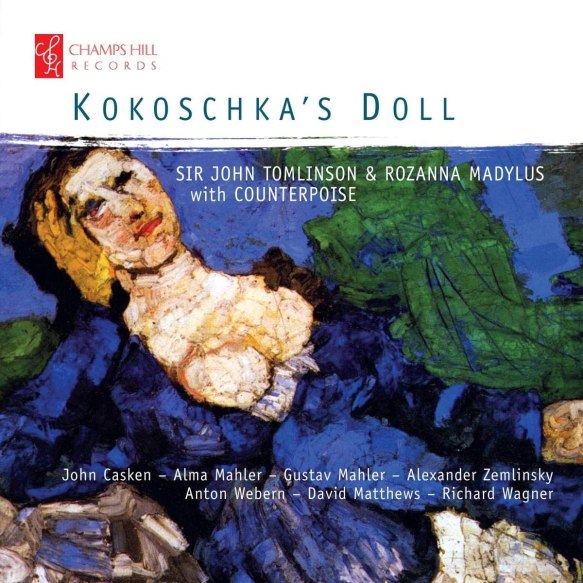
Rozanna Madylus (mezzo-soprano), Sir John Tomlinson (bass), Counterpoise [Kyle Horch (saxophone/clarinet), Deborah Calland (trumpet), Fenella Humphreys (violin), Iain Farrington (piano)]
Music by John Casken, Alma Mahler, Gustav Mahler, David Matthews, Richard Wagner, Anton Webern and Alexander Zemlinsky
Champs Hill Records CHRCD150 [81’54”]
Producer Matthew Bennett
Engineer Dave Rowell
Recorded 21-22 May 2018 & 17 January 2019, Music Room, Champs Hill, Sussex
Written by Richard Whitehouse
What’s the story?
The enterprising ensemble Counterpoise returns with its second release – an ambitious and wide-ranging selection centred upon that redoubtable femme fatale who was Alma Mahler and with a major new piece of music-theatre featuring Sir John Tomlinson from John Casken.
What’s the music like?
The generous programme effectively divides into two parts. The Art of Love opens with four songs by Alma – her setting of Julius Bierbaum’s Mild Summer Night and A Nocturnal Light followed by that of Gustav Falke’s Harvest Song, all of them accorded a fresh perspective in resourceful arrangements by David Matthews. Much the finest is the recently located setting of Leo Greiner’s Lonely Walk, but even this must yield to the radiance of Paul Wertheimer’s Blissful Hour by Zemlinsky, Alma’s lover before Mahler and an underrated Lieder composer.
Matthews’s subtle arrangement of Mahler’s rapturous Rückert setting If You Love for Beauty, followed by his ominous Wunderhorn setting Where the Splendid Trumpet Sounds, proceed Iain Farrington’s violin-and-piano transcription of the start of the Adagietto from Mahler’s Fifth Symphony (it would be worth hearing the rest). Webern’s glinting Trio Movement for clarinet, trumpet and piano is intriguingly countered by Matthews’s hardly longer yet more equable Transformation (with addition of piano); after which, his arrangement of Wagner’s Dreams (last of five settings after Mathilde Wesendonck) underlines its rapt introspection. Rounding off this first part with Liszt’s take on Isolde’s Liebestod might almost be thought rather predictable, but Farrington’s pointedly unshowy rendering is an undoubted pleasure.
The second half of this programme is devoted to Kokoschka’s Doll – a melodrama for bass-baritone and ensemble by John Casken, who has also devised the text in collaboration with Barry Millington. Drawing on the artist’s letters and autobiography, this almost 40-minute piece focusses on Kokoschka’s fractious liaison with a recently widowed Alma Mahler, his near-death experience as a soldier on the Eastern front, then his ill-fated attempt to recreate Alma as a doll to his idealized specifications. Unfolding between past and present, the text provides plenty of leeway for Sir John Tomlinson to convey the tortured while not a little self-seeking protagonist through an adept interplay of speech and parlando – dispatched with his inimitable blend of fiery rhetoric and soulful rumination. Instrumentally the music is rich in timbral and textural nuance, following the emotional ebb and flow of Kokoschka’s musings as they spill over into the irrational. An engrossing concept, skilfully realized, which would certainly be worth presenting in a scenic version at some of the UK’s many studio-theatres.
Does it all work?
As an overall sequence, certainly. Counterpoise is an object-lesson of unity within diversity, whether in the range of music this ensemble brings together or in the arresting nature of the arrangements it favours. Added to which, the singing of Rozanna Madylus is a treat in store.
Is it recommended?
Indeed. Performances and recording leave nothing to be desired, while the booklet features a succinct introduction by Millington along with reproductions from Kokoschka’s drawings of his ‘Alma Doll’ – more appealing visually than it becomes at the denouement of the scenario!
Listen and Buy
You can read more about this release, listen to clips and purchase from the Champs Hill website
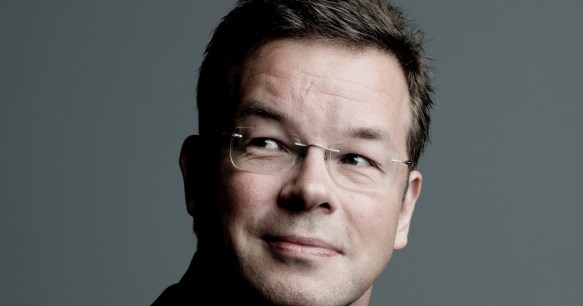
Sara Hershkowitz (coloratura soprano, below), BBC Scottish Symphony Orchestra / Antony Hermus (above)
City Halls, Glasgow
Thursday 28 November 2019
Haydn Symphony no.22 in E flat major ‘Philosopher’ (1764)
Ligeti Mysteries of the Macabre (1974-77; 1992)
Wagner arr. Henk de Vlieger The Ring: An Orchestral Adventure (1991)
Written by Ben Hogwood
An evening of musical philosophy through three very different viewpoints, held together by superb orchestral performances and the artistry and energy of Antony Hermus, making his conducting debut with the BBC Scottish Symphony Orchestra.
On this evidence it has the makings of a fruitful musical relationship. Certainly Haydn‘s Symphony no.22 in E flat major, known as the ‘Philosopher’, was carefully prepared and ideally executed. With just 26 players on the platform, and with most of them strings, the spotlight fell on the pair of horns and cor anglais players. They added unique colours and a doleful atmosphere to the profound opening Adagio, which had a steady accompanying tread. The harpsichord of Andrew Forbes was perfectly judged, complementing Haydn’s harmonic thoughts.
Orchestra leader Laura Samuel helped propel a second movement of earthy substance, which gave way to a charming Menuetto before a lively Presto wrapped things up, Haydn’s wit and inspiration in abundance once again. This was the second Haydn symphony in successive days for Arcana, after the CBSO and Riccardo Minasi’s persuasive reading the previous night. From experience a Haydn symphony a day really can go a long way – and indeed if you did two a week you would have enough for a whole year! Something definitely worth considering.
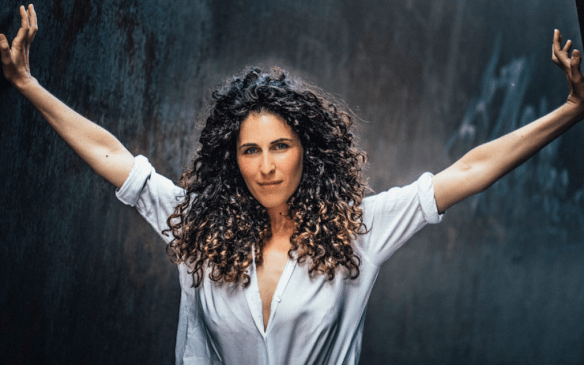
Back to the concert, and a complete change of tack for Ligeti’s uproarious and outrageous Mysteries of the Macabre, a concert piece lifted from his only opera Le Grand Macabre. And what a show it was from Sara Herskowitz, who has lived with this music some time, even on occasion dressing as Donald Trump to deliver it! Here – no doubt with the presence of BBC recording and streaming in mind – she gave Ligeti’s lines in the most sparkling of silver dresses. To say she owned the platform would be an understatement, for hers was a magnetic presence, often hilarious but frequently dazzling in its utter command of Ligeti’s demands. Using a large bottle of Irn Bru as a prop, she fair brought the house down in a performance that has to be seen to be properly appreciated. The virtuosi of the BBC Scottish Symphony Orchestra were her equal.
Another radical change of subject and perspective saw us experience the whole of Wagner’s Ring Cycle in just over an hour after the interval. The man responsible for this orchestra-only compression is Dutch composer Henk de Vlieger, who has made a remarkable piece of music containing not just the best orchestral excerpts from the four operas but the vocal and thematic music of substance too. With some tasteful composing of his own to complement Wagner’s epic he has created a near-continuous piece of music that, while never expecting to eclipse the impact of the operas, is a wholly effective concert piece.
It helps when given the sort of commanding performance The Ring received here. The brass were simply superb – trumpets, trombones, Wagner tubas, tubas and horns responding to the considerable demands with relish, creating some wonderful sonorities while they did so. The Ride of the Valkyries was an early highlight, the theme given an appropriately majestic profile, while Alberto Menéndez Escibano‘s horn solo for Siegfrieds Heldentat, given from out the back of the hall, was brilliantly done.
The BBC Scottish strings and wind were on the same exalted level, and the Feuerzauber (Magic Fire Music) and Waldweben (Forest Murmurs) were wholly evocative and enchanting. Hermus brought a keen dramatic instinct to his conducting, including rubato where appropriate but also making the silences really tell. Even before the first note sounded he secured complete stillness in the hall, setting the tone for the performance that followed – and when other silences occurred they were impeccably observed by the audience. There was a terrific, ballsy account of Siegfried und Brunnhilde, brass again to the fore, while the violins shone in their unison passages throughout.
Antony Hermus paced the whole ‘adventure’ perfectly, meaning this ‘bite size’ Ring cycle clocked in at around 65 minutes. Do catch this concert online if you can over the next few weeks, for it was a really well constructed programme of very differing but inspiring musical works. From the elegant and sometimes earthy Haydn, through the compressed but outrageous Ligeti to the grand and spectacular Wagner, there was something for everyone.
You can hear this concert on BBC Radio 3 from the evening of Tuesday 3 December by clicking here
Further listening
You can listen to the music from this concert on the Spotify playlist below, made up of some leading recordings of the works played.

Jeremy Denk (piano, below), City of Birmingham Symphony Orchestra / Gustavo Gimeno (above)
Symphony Hall, Birmingham
Wednesday 20 November 2019 (2.15pm)
Beethoven
Egmont Op.84 – Overture (1810)
Piano Concerto no.3 in C minor Op.37 (1800, rev. 1803)
Stravinsky
Petrushka (1911, rev. 1947)
Written by Richard Whitehouse
Beethoven and Stravinsky might not be felt natural bedfellows (whatever the latter claimed in later life), but this afternoon’s concert with the City of Birmingham Symphony Orchestra and fast-rising conductor Gustavo Gimeno was evidently intent on demonstrating otherwise. The overture from Beethoven‘s music for Goethe’s play Egmont duly launched the programme in imposing fashion, Gimeno securing a trenchant while slightly inflexible response across the main Allegro, with no lack of rhythmic definition as held good during an incisive peroration.
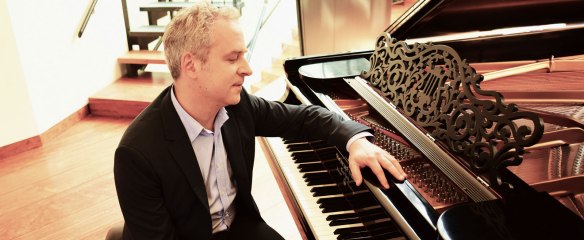
If his Third Piano Concerto finds Beethoven more overtly indebted to Classical precedent, its palpable emotional breadth is a clear pointer to what lay ahead. As soloist, Jeremy Denk had the measure of the opening movement’s often abrupt alternation between imperiousness and intimacy – not least a probing take on the development with those eloquent woodwind contributions. If the cadenza was a shade too volatile in its later stages, the fateful emergence of the coda (timpani and strings) was suitably rapt in its intensity. Raptness was equally the watchword of the central Largo, Denk pointing up the stark contrast of his E flat entry then duetting blissfully with bassoon and flute in its transition to the main theme, but as the coda (seemingly) evanesces into silence a greater dynamic subtlety would have been welcome.
Interestingly, Denk supplied this in abundance at that mesmeric point in the finale when the rondo theme ventures into the major as if to goad the music back to the prevailing C minor. Elsewhere, this was an impetuous and assured account which reached its culmination with a heady solo transition into a coda that dispersed preceding tensions through its unchecked ebullience. Denk returned for an unlikely yet appealing encore – a paraphrase (his own?) on the Pilgrims’ Chorus from Wagner‘s Tannhauser as rapidly evolved into a full-blown rag.
Few British orchestras can have performed Stravinsky‘s early ballets with the frequency and consistency of the CBSO, which is not to suggest Gimeno was other than his own man in this reading of Petrushka – heard in its streamlined 1947 revision rather than the texturally more imaginative 1911 original (which this past nine decades the orchestra has only played under Pierre Boulez). Certainly the revision’s tendency to encourage a headlong and even ruthless approach was evident in an overly regimented take on the Russian Dance, the scene-setting that precedes it audibly lacking atmosphere, but thankfully not the central tableaux depicting Petrushka and the Blackamoor – the former as nervous and agitated as the latter was moody and, not least following the arrival of the Ballerina, ominous in its smouldering sexuality.
No less impressive were the surrounding evocations of the Shrovetide Fair – the latter with its various set-pieces vividly and tellingly characterized, on route to the sudden reappearance of the main protagonists then Petrushka’s death and ghostly apparition for what remain some of the composer’s most affecting pages. The stentorian trumpet writing was fearlessly delivered, and if those concluding pizzicato chords might have been more unanimous, it only marginally detracted from the conviction of what was a well conceived and finely executed performance.
This performance will be repeated at Symphony Hall, Birmingham, on Saturday 23 November at 7pm. For more details head to the CBSO website

