

Jeremy Denk (piano)
J.S. Bach Partita no.5 in G major BWV829 (1726-1730) (1:35 – 16:37)
Schubert 4 Impromptus D935 (1827) (19:16 – 54:07)
Wigmore Hall, London
Monday 18 March 2019
To hear the BBC broadcast through BBC Sounds, please follow this link
Commentary and Review by Ben Hogwood
If you know anybody who is sceptical of the music of J.S. Bach, point them in the direction of the link above, and Jeremy Denk’s account of his Partita no.5. This sparkling display of virtuosity showed beyond doubt the composer’s ability to write instinctively with humour, a playful Partita where the only regret was the pianist’s decision not to use all the written repeats applied to the dance-based movements.
The reason for this would almost certainly have been time constraints, with Denk’s wish to combine the Bach with the Four Impromptus Schubert completed in 1827, his last full year. The two made a very satisfying coupling, giving listeners in the Wigmore Hall and to BBC Radio 3’s Lunchtime Concert an hour of fluidly written and brilliantly played pieces.
The Bach first, beginning at 1:35 on the broadcast link with a lively Praeambulum, then moving almost without a break into the traditional sequence of dance movements the composer reserved for pieces such as this. With the mood defined Bach presents an elegant Allemande (3:54), a light footed Corrente (7:35) and then a slower Sarabande (8:52), which features attractive doubling of the melody.
These slower dances always present a pause for thought within Bach, an intake of breath before more dancing – which here includes a Minuetta (11:34) where Bach puts a delightful ‘two against three’ set of rhythms together, the dance stumbling attractively. It’s over all too soon unfortunately, but the straight faced Passepied (12:38) has a stately feel, before the triple-time Gigue (13:48), with its centrepiece, a fugue that Denk masters most impressively, building the momentum to a thrilling conclusion.
Angela Hewitt has spoken of how the key of G major ‘always seems to inspire Bach to write music of great radiance, joy, gentleness and technical display’ – and that is on view throughout Denk’s spring-like account. He delighted in asides to the audience throughout, letting them in on his enjoyment of the music.
The Schubert presented a very different range of emotions. Published as a set of four pieces in 1839, twelve years after composition, the Impromptus work in isolation and also as a quartet, their themes crossing over but not as rigidly as a sonata might demand. This spirit of relative freedom runs through the four pieces.
The first Impromptu, in F minor (19:16 on the link) is a substantial piece that immediately brings Beethoven to mind with its call to arms – Schubert’s contemporary having not long died. The second theme of this impromptu (20:51) is soft and hymn-like, reflective yet with strength in depth when repeated and magnified, in development. This intense passage is cleverly worked, coming back around to the relatively stern main theme at 24:25, though Denk enjoys the more optimistic strains of the major key as it soon takes over. The ‘hymn’ recurs in this key at 26:08 – but as befits the uncertainty of this music, Schubert can’t resist more harmonic movement right through to the turbulent end.
The second Impromptu (29:43) is in F minor’s ‘relative’ key, A flat major, and starts in wonderful stillness. This main theme is restated on a number of occasions, resisting any of the louder interventions trying to derail it. A central section (from 33:05) is faster and flowing, but once again takes a turn for darker waters as Schubert alternates between major and minor key. This only heightens the soft contentment of the main music when it returns at 35:17, wonderfully handled by Denk.
The third Impromptu is similarly light and shade, but this time much more in favour of brighter thoughts. From its opening (37:27) it sets out a theme very similar to a famous melody from Schubert’s Rosamunde stage music, which the composer proceeds to take as a base for several variations – just as he did in an earlier String Quartet in A minor. This unfolds beautifully – with impeccable technique from Denk, and impressive depth in the minor key fourth variation (41:44). The twinkling figure of the final variation (45:30) looks to finish the piece in high spirits, but a final statement returns us to quiet thought.
Finally the fourth Impromptu (47:49) returns us to the F minor world of the first, though here Schubert is in the mood for a dance, evoking the Hungarian cimbalom with spicy harmonies and some daring passagework for the right hand. This finishes the piece acrobatically in the run up to 54:07, a feat superbly realised by Denk here.
As a completely irreverent encore, breaking Schubert’s spell but proving a superbly entertaining sign-off, we had the Pilgrims’ Chorus from Wagner’s Tannhäuser well and truly sent through the boogie-woogie and blues wringer by Donald Lambert (from 55:55 – 58:21)
Further reading and listening
If you enjoyed Jeremy Denk’s Bach playing, there is a disc of Partitas he released back in 2011 for Azica Records. You can hear it on Spotify here:
Denk’s latest release is an intriguing exploration of music from 1300 to the present day. You can hear it here:
Meanwhile to explore more Schubert Impromptus and pieces, the peerless Alfred Brendel is strongly recommended. This album includes all the Impromptus for solo piano as well as some attractive German Dances, the elusive but compelling 6 Moments Musicaux and the darkly tinged 3 Klavierstücke:


 Prom 14: Elizabeth Watts (soprano), Louis Lortie (piano), BBC Philharmonic Orchestra / John Storgårds
 Preceding this came a surprisingly dour account of the Prelude from The Mastersingers of Nuremburg. This grandest of Wagner music-dramas is also the most symphonic, not least its Prelude as it deftly outlines a four-movements-in-one format. While not being oblivious to this, Storgårds might have characterized these episodes more potently, though this may have been in line with his tendency to play down the music’s opulence and majesty. What resulted was a subdued and earnest performance that hardly marked him out as a budding Wagnerian.
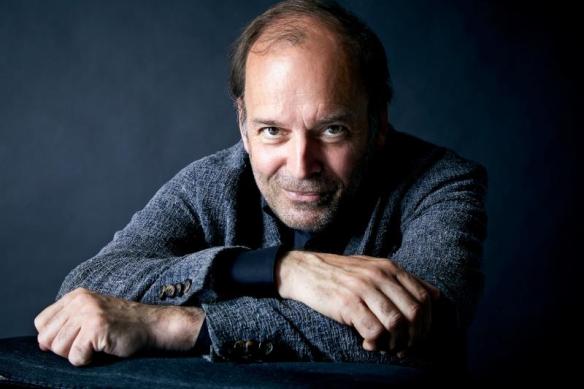 Time was when Liszt’s concertante realization of Schubert’s Wanderer Fantasy was a staple at these concerts, but this was only the second hearing in nearly six decades. 33 years ago, the soloist was Jorge Bolet at his unpredictable best, but Louis Lortie’s rendition (above) was altogether subtler as he brought out the pathos of the Andante then jocularity of the Presto. If the outer Allegro sections felt reined-in, this was not at the expense of that keen virtuosity informing Lortie’s playing in his solo passages or coruscating interplay with the orchestra at the close.
