
Wigmore Mondays – Alec Frank-Gemmill & Alasdair Beatson: John Casken world premiere

Horn player Alec-Frank Gemill and pianist Alasdair Beatson give the world premiere of a new work by John Casken at the Wigmore Hall
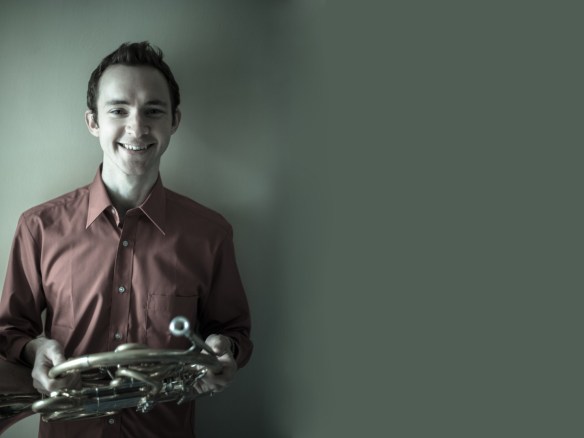
alec-frank-gemmillWigmore Hall, London, 1 February 2016

written by Ben Hogwood

Audio (open in a new window) – available until 3 March

http://www.bbc.co.uk/programmes/b06yrgk5

What’s the music?

James MacMillan – Motet V from ‘Since it was the day of Preparation’ (for solo horn) (2010-11) (8 minutes)

Beethoven – Horn Sonata in F major Op. 17 (1800) (16 minutes)

John Casken – Serpents of Wisdom (world première, 2015) (12 minutes)

Schumann – Adagio and Allegro in A flat major Op. 70 (1849) (9 minutes)

Spotify

Unfortunately neither the MacMillan nor the Casken pieces are available to stream at present. However you can hear the Beethoven and Schumann on the link here:

About the music

There is a pleasing amount of recent music written for the solo horn – and Alec-Frank Gemmill begins this concert with an extract from a much larger work by Sir James MacMillan. Since it was the day of Preparation… is a large, 70-minute piece using texts from St John’s Gospel – but within it are sections for solo instruments from the ensemble, using the sort of structure a composer like Benjamin Britten would have employed. A substantial one of these, for solo horn, is heard here.

John Casken wrote Serpents of Wisdom for this concert and these players, and was inspired by the imagery of a serpent primarily through the poem Celtic Cross by Norman MacCaig. As he wrote he was taken through the idea of a musical representation of the coils of brass that make up the horn. Through the piece he uses some unusual effects such as natural harmonics, which make the horn sound out of tune but are intended.

Beethoven wrote one of the very first sonatas for horn and piano, a three-movement construction that he started – and finished – the day before giving it in concert with the horn player known as Giovanni Punto. Meanwhile Schumann’s only work for horn and piano, the Adagio and Allegro, was written for a member of the Dresden Court Orchestra. It has been a little unfairly taken on by viola and cello players, and is more commonly heard in that version. Reverting to horn and piano enables us to hear why the theme for the Allegro works so well in its original form.

Performance verdict

A pleasant change for a Monday lunchtime from the Wigmore Hall – the first horn recital they have programmed at such a time for years. It was made all the better by the choice of a world premiere, and by the artistry of Alec Frank-Gemmill and Alasdair Beatson, an exciting duo fully justifying their billing as young musicians well worth experiencing live.

Frank-Gemmill is a really excellent player, and took on the Casken with impressive belief and skill. While clearly not an easy piece to play it made a powerful impression – equally so in the piano part, where Beatson had to work hard with some tricky passage work. Although inspired by the coils of brass, Casken’s piece often felt to me as though it was craggy in outline, and while its impression was largely gruff and unforgiving, there were some surprisingly tender asides.

The MacMillan was a striking piece, clearly in homage to Britten – and reminiscent of some of his writing for Dennis Brain – but also showing how it is possible to write quietly for the horn without losing any expression. Frank-Gemmill managed the low notes brilliantly here.

The Beethoven and Schumann were much more conventional but equally enjoyable. Beethoven writes for the horn without any inhibitions and there was plenty of gusto in the outer movements of this performance. The Schumann is a glorious piece, a true musical evocation of happiness, though this account did not completely lift itself off the printed page. No matter, for the new pieces had already left a lasting imprint – and an encore, Glazunov’s Rêverie, made for a lovely finish.

What should I listen out for?

MacMillan

1:41 – MacMillan’s piece has a soft and reverential opening which gives the piece a tonality and also a very low main note, which makes a lovely sound on the horn.

The melody has the appearance of plainchant, and gradually it grows in breadth and confidence. Then around 7:20 the music takes a confrontational approach, whooping excitedly and going all the way up to a remarkably high note at 8:04 – before its relatively calm finish.

Beethoven

11:58 – a brief yet quite understated fanfare from the horn begins the work – and it receives ample support from the more graceful piano theme behind it. A thoughtful second theme is heard at 12:55 before the first section of the first movement is repeated at 14’29. After a short development we hear the main tune once again at 18:15, and the second theme – now in the same key as the main one – at 18:59.

21:04 – a slower movement that begins with a soft and slightly sad air – but it doesn’t last long, as essentially it serves as a long introduction to the final movement, beginning at…

22:30 – quite an angular main tune for this movement, which proceeds in high spirits. The main theme comes back again, signs off brilliantly around 27:27

Casken

29:39 – a brisk start, energetic too. The first of the ‘natural’ notes is heard at 30:13 – you can hear it is out of tune but it is meant to be. The slower music at 30:44 is brooding and paints a relatively austere picture. As the music gets quieter the horn turns to the mute.

There is then an extended piece of writing with impressive energy and stature from the horn, which is required to perform a number of very difficult tasks, usually in cahoots with the piano, which itself has a jagged outline to its music. A slower section runs around 38:30, but then the piece gathers itself for a big finish at 40:15.

Schumann

42:42 – a slow and romantic Adagio, led by the horn, which is largely graceful but has some tricky high notes. This leads into the exuberant Allegro at 46:59. This has a tricky theme with a wide range.

Encore

53:19 – as a soft-hearted encore the pair play the Rêverie in D flat major by Glazunov, which is a warm piece, even when it reaches the depths at 54:55. (4 minutes)

Further listening

This very fine disc from Richard Watkins, on the NMC label, brings together writing for horn from a number of highly respected modern composers, among them Gerald Barry, Peter Maxwell Davies, Robin Holloway, Colin Matthews, David Matthews, Mark Anthony Turnage and Huw Watkins. You can listen here:
Wigmore Mondays – Dejan Lazić plays Haydn, Shostakovich, Schumann and his own work

dejan-lazic

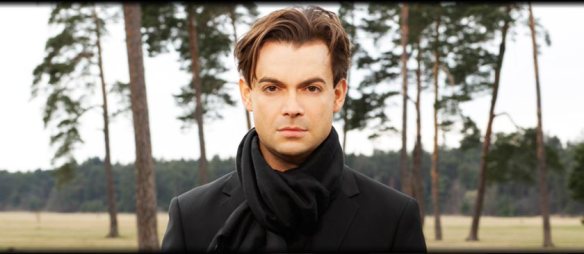
Dejan Lazić (piano) plays a concert of Haydn, Shostakovich, Schumann and his own Istrian Dances

Wigmore Hall, London; Monday, 18 January 2016

written by Ben Hogwood

Audio (open in a new window)

http://www.bbc.co.uk/programmes/b06vrk8d

Available until 17 February

What’s the music?

Haydn – Piano Sonata in E flat major, Hob.XVI:52 (1794) (20 minutes)

Shostakovich – 3 Fantastic Dances Op.5 (1922) (4 minutes)

Schumann – Waldszenen Op.82 (1849) (23 minutes)

Lazić – 3 Istrian Dances Op.15a (2008) (4 minutes)

Spotify

If you cannot hear the broadcast then this attached playlist covers almost all of the repertoire. Dejan Lazić has already recorded the Haydn and Schumann, while the Shostakovich is included in a recording by Vladimir Ashkenazy:

About the music

Haydn’s late Piano Sonata in E flat (given no.52 in the catalogue by the compiler Hoboken) is one of his grandest statements for the keyboard, an imposing piece that is often regarded as having a scope well beyond the solo instrument. It has Haydn’s characteristic wit but also an impressive stature.

By complete contrast the young Shostakovich – just fourteen at the time of writing the 3 Fantastic Dances – was just striking out, and you can sense him champing at the bit in these pieces. All three last under five minutes but are great fun.

Schumann was a great writer of character pieces for the piano, and Waldszenen (Forest Scenes) is one of the finest examples of his ability to paint portraits in relatively short periods of time. A group of nine pieces, these are often played with very little in the way of a break between them, and are often understated but without losing any intensity. Originally they were headed by poetic quotations, but the shadowy set of pieces was instead published without these and were given headings instead.

Finally Lazić himself gets in on the act, his 3 Istrian Dances rather similar to the solo piano works of Bartók in their reworking of national themes. Istria is a peninsula in the Adriatic Sea, shared by Croatia, Italy and Slovenia.

Performance verdict

Arcana was not present at the Wigmore Hall on this occasion, so this appraisal was done via the BBC iPlayer. Even from that it is quite clear not just what an accomplished pianist Lazić is, but that he has a strong sense of national identity in his compositions. In the lively Istrian Dances this takes him close to the sound world of Bartók, and this energetic performance proved an invigorating final number in the concert.

Lazić clearly has affection for the works of Haydn, and although some of his phrasing was quite mannered – nothing wrong with that, but not necessarily to everyone’s taste! – his technical control was superb, and some of the rapid passagework Haydn assigns to the right hand was thrown off with aplomb. Meanwhile the slow movement of the E flat sonata had a real depth of feeling.

His Schumann was excellent, very strongly characterised and recognising the intimacy found in a lot of these short pieces, the comfort of the forest sometimes spilling over into claustrophobia. Meanwhile the impudent Shostakovich was pure fun, the sound of a young composer flexing his muscles.

What should I listen out for?

Haydn

01:54 – a grand theme to start, anticipating Beethoven in its big scale. This is one of Haydn’s most substantial sonata themes. After an elaborate development, the first half of the movement is repeated from 4:06. Then from 6:22 Haydn takes the two main themes for a walk, running through some unexpectedly far-off keys until reaching home at 8:08.

10:12 – the slow movement starts in E major, the last key you would expect Haydn to use. But then this is Haydn, who likes to throw in a surprise or two to what ought to be conventional works! It is a thoughtful, intimate theme, too, one of his more profound slow movements for piano. Then at 13:09 Haydn moves the music into the minor key, and an unpredictable section based on the main tune, but before long we return to the opening material (14:16)

16:14 – a cheeky, stop-start last movement with repeated notes in the main tune. They sound like an over eager woodpecker or something similar! With typical wit Haydn develops these, making great use of silence in between some of his phrases and introducing some really difficult runs in the right hand. Again Haydn is adventurous in the rapid development section (from 18:46) until the witty theme makes a comeback (20:13)

Shostakovich

23:42 March – Allegretto – a thoughtful but quite carefree notion to this piece, and to the right hand especially, which becomes quite frivolous.

25:08 Waltz – Andantino – a relatively gentle start is misleading, as this piece turns out to be reckless and quite impetuous at times, making the listener jump!

26:32 – Polka – Allegretto – Shostakovich shows an early mastery of the piano, and despite pronounced influences from Chopin and Scriabin there is plenty of individuality to his style here too. Cheeky but meaningful.

Schumann

27:39 – Eintritt (Entry) – an endearing privacy immediately descends on Schumann’s music, beautifully written. The harmonies are open, and the melodies subtly restless, wandering for a while.

29:45 – Jäger auf der Lauer (Hunters on the lookout) – a furtive piece, hiding in the shadows initially, then becoming a lot bolder.

31:07 – Einsame Blumen (Lonely Flowers) – quite sparse, bring a melody and relatively economical accompaniment. It is a beautiful melody though, and has a strong yearning.

33:42 – Verrufene Stelle (Haunted Place) – the quietness of the piano is laced with tension, the scene far from comfortable. The music gets more animated but quickly retreats into its shell again, scarred by what it might have seen. There is a happier ending, mind, as the music moves to a major key and peace of mind.

37:51 – Freundliche Landschaft (Friendly Landscape) – a quickfire piece, happy go-lucky in these hands, relieved after the haunting has passed.

38:55 – Herberge (Wayside Inn) – the welcoming inn is a lively place in Schumann’s description, with a warm welcome, carrying on from the happy place above.

40:54 – Vogel als Prophet (Bird as Prophet) – a fascinating, mysterious piece that leaves a mark through its distinctive melodic profile. Its foreboding message hangs on the air.

43:58 – Jagdlied (Hunting Song) – an open air call to arms. Schumann wrote a lot of hunting songs for voice and piano and piano alone, but this one is reminiscent of Beethoven in its profile and the choice of E-flat major.

46:24 – Abschied (Farewell) – initially confident but immediately thoughtful, and the rest of the piece is relatively sombre and quietly moving.

Lazić

51:52 – an arresting call to arms in the first dance, with the notes in the right hand close together, creating crunchy dissonances.

The second dance is underway at 52:40 and is equally spiky, with quickfire shots from the right hand and powerful double notes in the left. At 53:39 a languid dance makes itself known and turns in on itself softly.

The third dance gets underway at 54:39 with highly distinctive rhythms, detached and tumbling down the keyboard at times before finishing suddenly at 55:24.

Encore

56:43 – the encore is the finale of one of Haydn’s best-loved Piano Sonatas, in C major (published as HXVI:50). You can sense the composer thumbing his nose at the audience in his witty asides and false approaches to the ending, which finally arrives at 58:53.

Further listening

Having mentioned Bartók earlier it would be churlish not to include something of his for solo piano, so attached to the bottom of the concert playlist you will find the 3 Rondos, played by Zoltan Kocsis. Alternatively you could try a whole set of Mazurkas by the Polish composer Karel Szymanowski, on the album below:

Wigmore Mondays – Benjamin Appl & Graham Johnson

benjamin-appl-graham-johnson

Benjamin Appl (baritone) and Graham Johnson (piano) perform settings of the poetry of Joseph von Eichendorff

Wigmore Hall, London

Monday, 4 January 2016

Audio (open in a new window)

http://www.bbc.co.uk/programmes/b06tkp3w

Available until 3 February

What’s the music?

Schumann (1810-1856): Frühlingsfahrt Op.45/2 (1840); Der Einsiedler Op.83/3 (1850; Der frohe Wandersmann Op.77/1 (1840)

Mendelssohn (1809-1847): Pagenlied (1832); Nachtlied Op.71/6 (1847); Wanderlied Op.57/6 (1841)

Brahms (1833-1897): In der Fremde Op.3/5; Mondnacht; Parole Op.7/2; Anklänge Op.7/3 (all 1852-1853)

Pfitzner (1869-1949): In Danzig Op.22/1 (1907); Der Gärtner Op.9/1 (1888-9); Zum Abschied meiner Tochter Op.10/3 (1901)

Wolf (1860-1903): Nachruf (1880); Das Ständchen; Der Musikant; Der Scholar; Der Freund (all 1888)

Spotify

Benjamin Appl has not yet recorded any of this repertoire, but a reproduction of his program using available versions can be accessed below, for listeners who cannot hear the BBC broadcast. Where possible I have used recordings made by Appl’s mentor, Dietrich Fischer-Dieskau:

About the music

Joseph_Eichendorff

Joseph von Eichendorff (picture used courtesy of Wikipedia)

With around 5,000 song settings of Joseph von Eichendorff’s poetry from the 19th century alone – with thanks to BBC Radio 3 announcer Sara Mohr-Pietsch for the info! – Benjamin Appl and Graham Johnson had no trouble making up a concert of 18 ‘lieder’ for the first Wigmore Hall lunchtime concert of the year.

Their choice gives an intriguing insight into different approaches to the poet. Broadly speaking, Schumann ranges from love-laden to thoughtful and a little morose (though his selection comprises three prayers), Mendelssohn is either forthright or reflective in his three songs; the youthful Brahms is surprisingly relaxed, while Pfitzner emerges as an inventive painter. Perhaps the most striking examples here come from Hugo Wolf, who wanted to focus on the ‘comparatively unknown humourously and robustly sensual side’ of von Eichendorff’s poetry.

Performance verdict

A slightly downbeat return for the WIgmore Hall in 2016, but a concert that was beautifully performed. The pairing of an incredibly experienced pair of hands in Graham Johnson and a singer starting out on his artistic voyage in Benjamin Appl was a good match and yielded many rewards.

Several songs left lasting impressions from the program, among them two from Brahms, with Appl’s control throughout Mondnacht and the picture painting from Johnson in Parole especially notable.

It was good to hear some rarely-sung lieder of Hans Pfitzner, whose use of the piano’s lowest end brought a wholly new texture to In Danzig, while the Wolf selection reminded us how original he could be in his song settings, the piano cast in a prominent role of scene setting, one that Johnson relished and used to his great advantage.

What should I listen out for?

Schumann

2:06 – Frühlingsfahrt (A spring journey) – the initial optimism of this march is quite bracing, but it soon subsides as the poet thinks of old age.

5:31 – Der Einsiedler (The hermit) – quite a sad song, solemn and lost in thought. Again old age is a preoccupation, the piano supporting the vocal melody as a walking stick might support the physical frame.

9:02 – Der frohe Wandersmann (The happy wanderer) – a much more positive, open-air march that talks of streams ‘rushing down the mountains’ and larks that ‘soar heavenwards’. More spring than winter!

Mendelssohn

11:03 – Pagenlied (Page’s song) – a tentative detached figure in the piano part adds to the tension of this song, which is relatively subdued and distracted.

13:11 – Nachtlied (Night song) – there is a withdrawn feel to this song also, until the Nightingale is encouraged to sing out at 14:39.

16:12 – Wanderlied (Song of travel) – a typically busy piano part from Mendelssohn gives the impression of rapid movement, the traveller set on his way with the minimum of fuss – and happily so!

Brahms

20:49 – In der Fremde (In a foreign land) – a rather downcast setting in a minor key, the poet in reflective mood. The piano hints at a major key near the end but such thoughts are quickly forgotten.

22:12 – Mondnacht (Moonlight) – dappled piano lines suggest moonlight in the branches, and there is a more romantic mood, with yearning vocal lines.

25:03 – Parole (Password) – again Brahms thinks privately, using vivid picture painting from the piano that depicts the huntsman through distant calls but also the ‘one last shot’ (26:44), where Johnson adds extra emphasis.

28:02 – Anklänge (Echoes) – a short but evocative song of two halves, the first depicting a lonely house in a forest, the second greeting the maiden inside.

Pfitzner

30:07 – In Danzig – the mood changes dramatically in this darkly coloured song exploiting the lower range of both piano and singer. The mysterious and faintly menacing mood is aided by elusive harmonic movements.

34:38 – Der Gärtner (The Gardener)­ – this song is more conventional in its language, looking back to Schumann and Brahms. The mood is positive and quite dreamy, but reaches a very impressive climax at the end with the words ‘Viel schöne, hohe Fraue, Grüss ich dich tausendmal’ (‘I, lovely gracious lady, greet you a thousand times’)

38:08 – Zum Abschied meiner Tochter (Farewell to my daughter) – a positive farewell, and an expansive setting that reaches another impressive climax at 40:07.

Wolf

42:58 – Nachruf (In memoriam) – the piano imitates the lute in this song as Appl sings a gentle lament

47:06 Das Ständchen (The serenade) – a watery piano introduces an adventurous setting that contains the tune of a serenade but some unconventional dissonances between voice and piano. There is a great deal of sadness in this song.

50:27 – Der Musikant (The minstrel) – the choice of music over marriage is made here by the singer! As if to emphasise his decision there is a rather lovely piano introduction that proves to be the bedrock of the song.

52:14 – Der Scholar (The scholar) – there are a number of examples of picture painting in the piano part for this song, depicting the ‘little birds’ and the rain that ‘rattles on the leaves’. Again the singer extols the virtues of making music but occasionally with a few too many wines! (53:40)

54:55 – Der Freund (The friend) – The joy of friendship is celebrated here, though not without travelling through a storm or two (55:30) where the crushing piano and loud voice descend into brief turmoil before emerging triumphant.

Encore (not heard on the broadcast)

Verschwiegene Liebe (Silent Love) The twinkling piano introduction was followed here by a sensitive and grateful rendition from Appl.

Further listening

As a complement to the concert, how about a recital based on poems by Heinrich Heine? Anothre great influence on 19th century vocal music, Heine’s music was set by a number of composers – and here the great tenor Christoph Prégardien and fortepianist Andreas Staier look at songs by Schubert, Schumann and Mendelssohn:

Wigmore Mondays – Narek Hakhnazaryan and Pavel Kolesnikov

narek-hakhnazaryan

Narek Hakhnazaryan (cello), Pavel Kolesnikov (piano)Wigmore Hall, London, live on BBC Radio 3, 23 November 2015

Listening link (open in a new window):

http://www.bbc.co.uk/programmes/b06pxdz7

on the iPlayer until 23 December

Spotify

In case you cannot hear the broadcast, here is a Spotify playlist of some the music in this concert. Narek Hakhnazaryan has not yet committed any of these works to disc, though the Khudoyan solo sonata is available to watch on YouTube below:

Alternative versions of the Schumann and Mendelssohn can be heard below:

What’s the music?

Schumann: Five Pieces in folk style, Op.102 (1849) (16 minutes)

Adam Khudoyan: Solo Cello Sonata no.1 (1961) (8 minutes)

Mendelssohn: Cello Sonata No.2 (1843) (27 minutes)

What about the music?

Schumann found in the cello an instrument with which he could express his music naturally, and his music for the instrument ranges from a late Cello Concerto to various ‘fantasy pieces’ for cello and piano. Five of these, the Funf Stücke im Volkston (Five Pieces in Folk Style) are vignettes for the combination where Schumann is clearly enjoying himself, music that ranges from the playful first and fourth pieces to the warm of the lyrical lullaby.

I have to confess this was my first encounter with the music of Adam Khudoyan (1921-2000), though, as the Wigmore Hall booklet writer Brian David discussed, he was one of Armenia’s most highly-regarded twentieth-century composers. He completed his Solo Cello Sonata no.1 in 1961, the first of a number of works for the instrument. It is a relatively short but intense work, David writing that ‘it has at its heart a deep, extended lament that moves between extremes of sorrow and anguish’.

Mendelssohn’s middle period of composition saw him writing with incredible spontaneity, and it is into this part of his career that both his major works for cello fall. Both of his cello sonatas are rich in expressive melodies and positive feeling, and the outpouring of good spirits at the start of the Second is difficult to shake off through the work. It does have a profound side too though, found in the slow movement where Mendelssohn works a prayerful chorale in a manner often interpreted as a contemplation of his dual Jewish/Christian heritage.

Performance verdict

From this evidence the partnership of Armenian cellist Narek Hakhnazaryan and Russian pianist Pavel Kolesnikov is most definitely one to keep an eye on. The duo clearly enjoy the music they make together, and while the perception is that Narek is the one to wear his heart on his sleeve more obviously, Pavel provides some wry humour as a counterpart.

That was most evident in the second movement of the Mendelssohn, where the piano phrases were beautifully shaped and strung out just a bit longer to enhance the witty theme. This performance was excellent, maybe a bit over-wrought in the first and last movements but reaching a degree of stillness in the slow movement that was very moving.

Their Schumann was also very enjoyable, played with a very fresh approach and again with a nice dash of humour. This music is rich in melody and the two clearly enjoyed each new tune and turn of phrase.

It was also very satisfying to hear the Khudoyan sonata for the first time, extending this Armenian’s credentials as an extremely proficient writer for cello. The use of folk melodies gets us close to the heart of Armenia quickly, and it was clear from his expression that Hakhnazaryan felt the same way. A technically superb and emotionally charged performance of music that has real concentrated expression.

What should I listen out for?

Schumann

1:32 – a bright and slightly mischievous first piece, marked ‘Vanitas vanitatum’, where the spiky cello and detached piano embark on a breezy march. The middle section from 2:50 is by contrast heavier and assertive.

4:49 – a rather gorgeous lullaby, led by the cello with dreamy accompaniment from the piano.

8:46 – a graceful dance that is a little within itself, the cello elusive and the piano quiet as though in thought. Perhaps a sign of shadow that suggests this to be a later composition – though the warmer middle passage, where the cello plays chords, is a much more positive complement.

12:49 – the exuberant fourth piece, led by the cello in breezy fashion – with a nice, more lyrical theme to boot from 13:15.

14:47 – the last piece is quite a frenetic affair that sounds almost as though it could have been written by Brahms. Here the cello and piano are in much more obvious dialogue with the syncopated rhythms.

Khudoyan

19:36 – the solo sonata starts with a bold statement, with chords on the cello. The forceful and heady mood. It brings to mind a little the rather bigger sonata by Kodály, especially at 20:45 when a slower tune is heard, one that seems to be inspired by folk music.

There are some quite jarring moments where Khudoyan puts two pitches very close together but overall the sonata is full of powerful and moving melodic lines, the composer using the cello chords as more of a rhythmic prompt.

25:45 – from here the cello has a brief but thoughtful section of ‘pizzicato’ (plucking) before the material from the beginning returns with even greater force. The piece ends with powerful chords.

Mendelssohn

29:33 – right from the beginning it is clear this is going to be a positive piece. Cello and piano open together with a sweeping melody, and the piano part is typically busy for Mendelssohn. The cello retains a song-like delivery to its melodies, and the music continues to surge forward strongly, suggesting the composer’s inspiration was very instinctive at this point in his life. The main theme returns at 34:00.

37:33 – this is a lovely example of Mendelssohn’s lightness of touch, a piece of music that has subtle humour and a memorable tune to go with it. This is introduced by the piano and repeated by the pizzicato (plucked) cello. A contrasting and flowing theme crops up at 39:22, before the main ‘scherzo’ material comes back at 40:49. A strong coda section begins at 41:58, with a more obviously romantic mood in the cello line.

44:04 – the slow movement begins with a set of chords from the piano that sound rather like a hymn (or ‘chorale’). The top note of each of these chords forms the melody which the cello eventually takes up, reaching an impressive intensity at 47:02. Then a meditative passage takes place over a long held note on the cello. The whole movement is almost certainly under the influence of Bach in the stepwise manner in which it moves and is beautifully simple.

49:44 – the finale returns us to the brisk manner of the first movement, cello and piano ducking and diving as they move towards the main theme at 50:09 on the cello. The music proceeds at a bustling pace, often with little opportunity for breath, as though Mendelssohn were writing music as fast as he possibly could!

Encore

57:54 – an encore in the form of an arrangement for piano of Rachmaninov’s Vocalise. A lovely, romantic, slow moving piece of music where time slows down a little – for nearly seven minutes, in this case!

Further listening

If you enjoyed the Mendelssohn and Schumann in this concert then there is more to explore in the cello and piano repertory from both composers. A very attractive account of Mendelssohn’s complete music for the combination can be found here, played by Antonio Meneses and Gérard Wyss:

The same combination released an album of Schubert and Schumann works for cello and piano in 2006, on which the Schumann pieces all make a lasting impression – as does Schubert’s substantial Arpeggione Sonata:

Christoph Prégardien – The Darker Side of Love

The Darker Side of Love – Christoph Prégardien and Daniel Heide at the Wigmore Hall

christoph-pregardien

Christoph Prégardien (tenor), Daniel Heide (piano) – Wigmore Hall, London, live on BBC Radio 3, 18 May 2015

Listening link (opens in a new window):

http://www.bbc.co.uk/programmes/b05tpryp

on the iPlayer until 17 June

Spotify

In case you cannot hear the broadcast, I have put together a Spotify playlist of most of the music in this concert, including recordings the artists have made where possible. The playlist can be found here

What’s the music?

Schubert: An den Mond, D259; Schäfers Klagelied, D121

Schubert: Erster Verlust, D226

Schubert: Rastlose Liebe, D138

Schubert: Wandrers Nachtlied II, D768

Schubert: Willkommen und Abschied, D767 (17 minutes)

Schumann: Dichterliebe, Op.48 (30 minutes)

What about the music?

The relationship between Schubert and the poetry of Goethe was long-standing, beginning in October 1814 and yielding tens of songs. Many of them are darker utterances, and the collection here enjoys the composer’s ability to cast a nocturnal scene for voice and piano seemingly at will. It also celebrates his faster, galloping songs, the singer in the saddle for an action-packed horse ride, while the sheer simplicity of shorter songs such as Erster Verlust is pure and touching.

Schumann’s famous year of song reached its creative peak in May 1840, when he wrote the Liederkreis, published as Op.39, and Dichterliebe, where he sought inspiration once again from the poetry of Heinrich Heine. The quote in the Wigmore Hall program sums it up perfectly, Schumann describing the verses as ‘short, maliciously sentimental, and written in the folk style’. They evoke outdoor scenes but also inward and often crippling emotions, the singer – and possibly the listener! – an emotional liability by the end. Schumann rescues Dichterliebe, however, through the piano postludes he provides to Am leuchtenden Sommermorgen (One bright summer morning) and the closing song Die altern, bösen Lieder (The bad old songs), attempting and largely succeeding to restore stability.

Performance verdict

Christoph Prégardien has been singing these songs (or ‘Lieder’, as we should really call them!) for a long time – he recorded most of them a while back – but he still brings keen emotion to the stage.

The silence of Wigmore Hall during a song as tense as Schumann’s Ich hab’ im Traum geweinet (I wept in my dream), the ninth of Dichterliebe’s dozen, said it all. Here was a performer creating vivid pictures from Heine’s barbed text and Schumann’s equally frosty responses to the dark side.

In Schubert, too, the steely edge of even the most youthful Goethe setting could be glimpsed, brought out in an early song like An den Mond (To the Moon) by pianist Daniel Heide, stressing the notes Schubert brings in to challenge the happier times of the song.

Schubert’s horse-riding songs, Rastlose Liebe and Wilkommen und Abschied, were adrenalin-fuelled dashes into the country, while Schäfers Klaglied brilliantly evoked both the tempest and its subsequent rainbow.

Prégardien is an unfussy singer who communicates with his audience through subtle but meaningful expression, both visually and with the use of his hands. This somehow carries over to the listener too, either in the hall or at home, part of a masterclass in how to sing these songs.

What should I listen out for?

Schubert

1:50 – An den Mond (To the Moon) A calm and seemingly contented song to begin the selection – though there are some warning signs, chiefly in the piano part, to suggest all is not well.

5:27 – Schäfers Klagelied (Shepherd’s lament) A downcast and solemn song, with a vivid depiction of a storm in its central section from the piano (from 6:55), which also somehow describes the resultant rainbow (7:13) before a return to sadness.

8:58 – Erster Verlust (First loss) A song of striking simplicity and sadness, with an aching melody where the purity of Prégardien’s tone really comes through

11:22 – Rastlose Liebe (Restless love) A song that gallops out of the blocks with its rapid movement on the piano, and the breathless voice almost struggles to keep up. Meine signs off beautifully at 12:30.

12:47 – Wandrers Nachtlied II (Wanderer’s Nightsong II) Here we can feel the stillness of a summer evening, the conditions in which Goethe scribbled the verses for this poem as he stood outside in a garden. Prégardien’s higher notes are beautifully tailored.

15:18 – Willkommen und Abschied (Greeting and farewell) Another of Schubert’s quick dashes through the text, though at the end of each verse we have a pregnant pause. Prégardien cries out ‘ihr Götter’ (‘O gods!’) at 17:17. The text at the end translates as ‘what a joy to be loved’

Schumann

The words for Dichterliebe can be found here

21:12 – Im wunderschönen Monat Mai (In the wondrous month of May) A graceful song to begin the cycle, with some beautiful top notes (the translated words ‘blossom’ and ‘desire’) that Prégardien very subtly stresses through a pause.

22:54 – Aus meinen Tränen sprießen (From my tears will spring) The spring-like openness continues, in the same key.

23:51 – Die Rose, die Lilie, die Taube, die Sonne (Rose, lily, dove) A playful song, over in a flash!

24:23 – Wenn ich in deine Augen seh (When I look into your eyes) A tender love song, that tellingly moves to the purity C major to tell of how ‘when I kiss your lips, then I am wholly healed’. There is a yearning postlude on the piano.

26:12 – Ich will meine Seele tauchen (Let me bathe my soul) Another short love song, this time with a flowing, watery piano accompaniment.

27:08 – Im Rhein, im heiligen Strome (In the Rhine, the holy river) The singer adopts a much more imposing tone to evoke the grandeur of the Rhine and the great cathedral of Cologne, where hangs an image of ‘Our beloved Lady’ – which the singer equates to that of his own love. The piano postlude is reminiscent of a Baroque aria.

29:16 – Ich grolle nicht (I bear no grudge) The text turns darker, though the musical language is still generally positive. The tenor has a heavier tone here, the voice more of a baritone in its richness.

30:49 – Und wüßten’s die Blumen, die kleinen (If the little flowers only knew) The piano matches the tenor in this flowing, limpid song – spring like in its subject matter but ultimately sad and regretful at a broken heart. This leads straight into…

32:05 – Das ist ein Flöten und Geigen (What a fluting and fiddling) A proud song but once again with a darker centre.

33:29 – Hör’ ich das Liedchen klingen (When I hear the little song) This is Heine’s poetry at its coldest, and in this brief song it gets a suitably bare response from Schumann, who then attempts some consolation in the extended piano postlude, which in reality says just as much as the song does.

35:47 – Ein Jüngling liebt ein Mädchen (A boy loves a girl) A more positive mood now – but soon the poetry turns dark as well. Schumann keeps his tongue firmly in his cheek, allowing the tenor a bit of sardonic humour and the piano a grand finish

36:47 – Am leuchtenden Sommermorgen (One bright summer morning) A beautifully simple song – though now the mood of sadness is taking hold with greater certainty. Again we have a longer piano postlude, the pianist reflecting the text through music and trying to console.

39:38 – Ich hab’ im Traum geweinet (I wept in my dream) Schumann’s use of silence here is striking and altogether ominous. Prégardien gathers the power of the final verse, the texture sparse as can be, until the music stops abruptly.

42:25 – Allnächtlich im Traume (Nightly in my dreams) An elusive song – another dream but one the poet cannot really remember – which possibly explains why Schumann leaves the music sounding half-finished at the end.

43:54 – Aus alten Märchen winkt es (A white hand beckons) There is greater optimism in this song, using the upper register of the piano for the first time in a while, but once again Heine insists on an ending that takes away the potential for happiness. Schumann’s music rescues this in the postlude however!

46:39 – Die alten, bösen Lieder (The bad old songs) A bit of nostalgia to finish – though this is a purge, the poet casting all his ‘bad and bitter dreams’ away in a heavy coffin. Schumann responds with gallows humour, a song that is bold and defiant in its execution but which fades away to reflection. Once again we have a piano postlude, this one even more meaningful as it tries to draw the cycle to a soft conclusion. In the right performance however, like this one, a level of bitterness remains.

Encore

53:05 – SchumannMit Myrthen und Rosen (With myrtle and roses) (the last song from Liederkreis, Op.24) This has an effortless, upward curve to the melody. Prégardien’s gestures to the audience here were beautifully observed.

Further listening

With Christoph Prégardien demonstrating his almost unparalleled abilities in Schubert, here is a Spotify link to a recent recording of him singing the great Schubert song cycle Winterreise. Again this is music on the dark side, but is greatly inspired at that. Texts can be found http://www.recmusic.org/lieder/assemble_texts.html?SongCycleId=47″>here and the playlist is here

For more concerts click here