In concert – Fazil Say, CBSO / Kazuki Yamada: Prokofiev, Saint-Saëns & Rachmaninoff

Fazil Say (piano), City of Birmingham Symphony Orchestra / Kazuki Yamada

Prokofiev Symphony no.1 in D major Op.25 ‘Classical’ (1916-17)
Saint-Saëns Piano Concerto no.2 in G minor Op.22 (1868)
Rachmaninoff Symphonic Dances Op.45 (1940)

Symphony Hall, Birmingham
Wednesday 4 October 2023

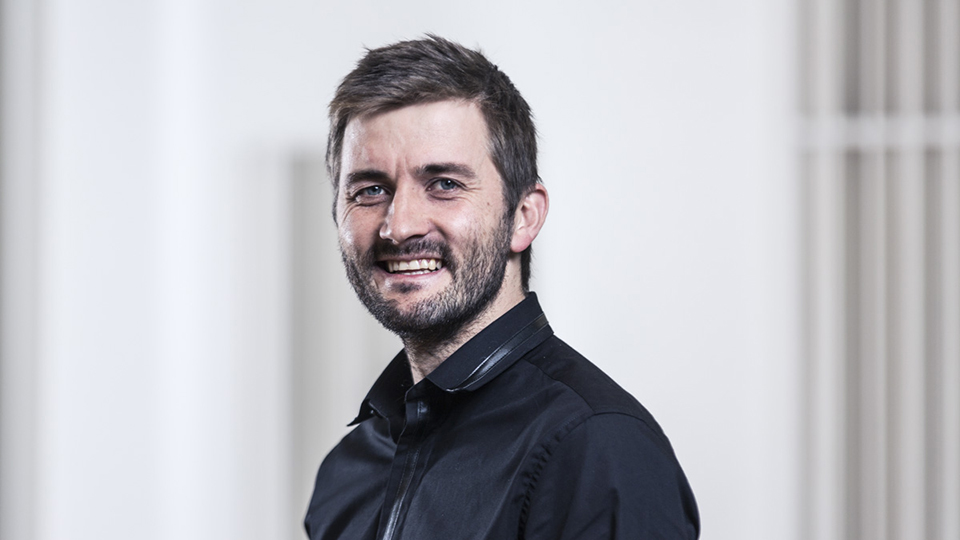
Reviewed by Richard Whitehouse. Picture (c) Fethi Karaduman

French and Russian music has dominated the start of this season by the City of Birmingham Symphony Orchestra, this afternoon’s programme continuing the trend with early pieces by Prokofiev and Saint-Saëns heard alongside Rachmaninoff’s last and arguably greatest orchestral work.

Prokofiev consigned two earlier such pieces as juvenilia prior to his Classical Symphony, an infectious refit of Haydn in the early 20th century and calling-card for a career that beckoned in the West. If Kazuki Yamada slightly over-egged the humour in the opening Allegro, as too a rather self-conscious take on the Gavotte, the limpid phrasing of the intervening Larghetto was as disarming as was the interplay of wind and strings in the Finale – a reminder, here as throughout, that such musical directness should not be mistaken for mere technical facility.

This could be said of the Second Piano Concerto that Saint-Saëns unleashed on an evidently nonplussed Parisian audience half-a-century earlier. True, the conflation of Bach – given a makeover worthy of Alexander Siloti – with Liszt affords the opening movement an almost makeshift design, but Fazil Say took it firmly in hand from a surging ‘chorale-prelude’ to a tersely decisive coda. A pity his pianism was not applied a little more deftly in the ensuing intermezzo, its ingratiating poise smothered by an almost hectoring insistence, but the final Presto suited this most demonstrative of present-day virtuosi to a tee – its perpetuum mobile undertow maintained with unflagging resolve through to those almost brutal closing chords. Credit to Yamada for enhancing the total effect with his astute and precise accompaniment.

Say, as much composer as pianist, responded to the applause with his Black Earth – a study in sonority alluding to the golden-age of Turkish balladry as well as the Saz (a Turkish lute) in a mood of sombre fatalism which, unlike his orchestral epics, did not outstay its welcome.

The CBSO has given frequent performances over the decades of Rachmaninoff’s Symphonic Dances, but none so incendiary. Not that there was anything overly powerhouse in Yamada’s conception of an initial piece whose outer sections felt trenchant in their energy, with the alto saxophone melody at its centre eloquently given by Kyle Horch and the coda rendered with melting grace. Nor was any lack of suavity in the central piece, its underlying waltz motion poised on a knife-edge of sardonic humour rightly given its head in the hectic closing pages.

Yamada had the measure, too, of the last piece with its dramatic introduction and impulsive continuation, but it was in the lengthy central episode this reading really came into its own – the composer creating music of an intoxicating expression via subtleties of harmonic nuance or textural shading rather than any defining melodic line. From here, impetus was seamlessly restored to a climactic emergence of the Dies irae plainchant then surged on to the explosive closing gesture that might have resounded longer had the audience not unreasonably erupted.

Yamada responded with Lezginka from Khachaturian’s ballet Gayane. An exhilarating close to an afternoon as began for early arrivals with what sounded like a medley from a mid-1970s children’s TV show on the first-floor performance space: it could only be here in Birmingham.

You can read all about the 2023/24 season and book tickets at the CBSO website. Click on the artist names for more information on pianist Fazil Say and conductor Kazuki Yamada

In concert – Isata Kanneh-Mason, CBSO / Ilan Volkov: Sibelius, Prokofiev & Freya Waley-Cohen

Isata Kanneh-Mason (piano), City of Birmingham Symphony Orchestra / Ilan Volkov

Sibelius The Oceanides, Op. 73 (1914)
Prokofiev Piano Concerto No. 3 in C, Op. 26 (1921)
Waley-Cohen Demon (2022) [CBSO Centenary Commission: World Premiere]
Sibelius Symphony No. 5 in E flat, Op. 82 (1915-19)

Symphony Hall, Birmingham
Wednesday 22 February 2023

Reviewed by Richard Whitehouse

A frequent visitor during the past quarter-century, Ilan Volkov’s concerts with the City of Birmingham Symphony Orchestra are always to be anticipated, and so it proved with this evening’s programme which brought together the familiar and the new to engaging effect.

Sibelius provided a potent framework, The Oceanides (of which the CBSO made a fine recording with Simon Rattle now almost four decades ago) heard in a reading of unusual breadth and deliberation. Not that this ever impeded the progress of music whose almost impressionistic eddying goes hand in hand with inexorability of motion; the outcome a double climax whose spiralling intensity – visceral even in the context of Sibelius’s later music – makes way for a coda whose understated fatalism was affectingly conveyed here.

Along with her brother Sheku, Isata Kanneh-Mason has had a major impact on the UK music scene – her skill and insight evident throughout this performance of Prokofiev’s Third Piano Concerto. There was no lack of élan in passagework where the composer sought to confirm his own pianistic credentials as he built a career in the West, but also a tendency to brittleness as arguably sold the music short. It was in more reflective sections that Kanneh-Mason came fully into her own – the limpid musing on its main theme at the centre of the first movement, the spectral half-lights of its successor’s third variation, or the warmly expressive melody at the heart of the finale in which her rapport with Volkov was tangible. If the electrifying close brought less than the ultimate frisson, it still set the seal on a reading of impressive potential.

After the interval, another in the CBSO’s Centenary Commissions – the well-regarded Freya Waley-Cohen (above) duly responding with Demon. Its scenario evoking the more ominous of folk stories, this piece packed a considerable amount of incident into its 11 minutes – a Ligetian playfulness offsetting its frequently intricate polyphony to diverting and, throughout the final stages, impulsive effect. Drawing an incisive and precise response, Volkov seemed intent on presenting this colourful curtain-raiser as well worthy of further and repeated performance.

Volkov’s accounts of Sibelius’s Third and Fourth Symphonies were highlights of a complete cycle at the 2015 Proms, and this account of the Fifth found his advocacy undimmed. Others have found greater atmosphere in the first movement’s earlier stages, but the purposefulness with which he built to its defining climax was undoubted; as too a corresponding build-up of momentum in its ‘scherzo’ – Matthew Hardy’s volleys of timpani spearheading the propulsive coda. More intermezzo than slow movement, the Andante had an appealingly winsome aura for all its darker undertones (with some delectable woodwind playing), while the finale made the most of its contrasts in motion – the ‘swan melody’ eloquently rendered – on the way to an apotheosis whose surging affirmation was driven home by those indelible closing chords.

An impressive performance, then, such as brought this concert to a suitably inspiring close. Volkov is on the podium again this Sunday – directing the CBSO Youth Orchestra in a new piece by Bergrun Snaebjörnsdottir, heard alongside music by Grażyna Bacewicz and Berlioz.

You can read all about the 2022/23 season and book tickets at the CBSO website. Click on the artist and composer names for more on Ilan Volkov, Isata Kanneh-Mason and Freya Waley-Cohen

Online Concert: Christian Poltéra & Kathryn Stott @ Wigmore Hall – Prokofiev & Chopin

Christian Poltéra (cello, above), Kathryn Stott (piano, below)

Prokofiev Cello Sonata in C major Op.119 (1949)
Chopin Cello Sonata in G minor Op.65 (1845-6)

Wigmore Hall, Monday 13 February 1pm

by Ben Hogwood

Christian Poltéra and Kathryn Stott are a long-established duo who have provided us with a richly rewarding discography including works by Fauré, Saint-Saëns, Barber and Schumann. Their encounters with Russian music appear to have been less frequent to date, and it was good to hear their poised account of one of the form’s most popular works. Ukrainian-born Prokofiev wrote his sonata, a late work, for Mstislav Rostropovich, who had impressed him with his larger than life playing. It is the first of a late burst of works for the instrument, including the Sinfonia Concertante, Solo Cello Sonata and Concertino.

Poltéra began the sonata with a solemn intonation on the lowest register of the cello, emphasising the ‘grave’ aspect of Prokofiev’s tempo marking rather than going for an epic sound. This thoughtful approach bore fruit in the slower sections, and with Stott an attentive partner there was plenty to enjoy in Prokofiev’s baleful writing, and impressive clarity in the more expansive passages.

The second movement danced attractively, tapping into Prokofiev’s ballet credentials, with some enjoyable exchanges between the two, if not always making the most of the composer’s frequently humourous asides. The third movement sang out more, Poltéra projecting further without losing any of his admirable control or intonation, and Stott getting to the heart of Prokofiev’s combination of percussive cut and thrust and soft-centred lyricism.

Chopin’s Cello Sonata came as something of a surprise to his fellow composers in the mid-1840s. Written for the French cellist Auguste Franchomme, it is a substantial work, which unsurprisingly asks a great deal of the pianist in a full-bodied, almost orchestral role.

Poltéra it was who led the first movement most impressively, with a consistently attractive sound singing subtly but meaningfully. Technically he is a superb cellist, with tone unflinching, but praise should be levelled at Stott’s ability to bring beautiful phrasing to even the most congested piano writing. The searching legato theme in the second movement was a case in point for the cellist, beautifully played with flowing piano figures. The lovelorn third movement was tinged with sadness, finishing lost in thought. The last movement showed determination to break from this soul searching, looking outward as it powered through to a major key finish.

This was an excellent performance, ideally balanced and capturing the right balance of regret and resolve – and was balanced by the encore, Saint-SaënsRomance in F major Op.42. A Monday lunchtime treat.

For more livestreamed concerts from the Wigmore Hall, click here

In concert – Cédric Tiberghien, CBSO / Eduardo Strausser: Beethoven ‘Emperor’ Concerto & Prokofiev Symphony no.5

Wagner Lohengrin – Prelude to Act One (1846)
Beethoven Piano Concerto no.5 in E flat major Op. 73 ‘Emperor’ (1809)
Prokofiev Symphony no.5 in B flat major Op. 100 (1944)

Cédric Tiberghien (piano), City of Birmingham Symphony Orchestra / Eduardo Strausser

Symphony Hall, Birmingham
Wednesday 25 January 2023 2.15pm

Reviewed by Richard Whitehouse Picture of Eduardo Strausser (c) Peter Wallis

Is there a more evocative way to begin a concert than the Prelude to Wagner’s Lohengrin? The opera itself may fail (for the most part) to live up to the precedent set, but the quality of this piece has never been in doubt – with composers as distinct as Berlioz and Verdi having been captivated by its almost tangible atmosphere and counterpoint redolent of Palestrina in its supple inevitability. Under the assured direction of Eduardo Strausser, it made a fitting curtain-raiser to this afternoon’s concert by the City of Birmingham Symphony Orchestra.

It also provided a telling foil to Beethoven’s Fifth Piano Concerto that followed in the first half. Still the most popular of its composer’s such pieces, it is also nowadays the hardest to bring off – particularly the initial Allegro with its unabashed emotional rhetoric and overtly symphonic conception. Playing down the former aspect and rationalizing the latter, Cédric Tiberghien opted for a tensile and unaffected traversal which emphasized cohesion at the expense of grandeur – underlining just why Beethoven never again completed a concerto.

There was little to fault in Tiberghien’s take on the Adagio (save for a few errors to remind one that Beethoven’s slower music is by no means easier to play), and if the transition into the finale was less than spellbinding, that latter movement for the most part brought out the best in the rapport between pianist and conductor. The CBSO responded with the necessary rhythmic agility, and Tiberghien responded to the applause with excerpts from the Eroica Variations he has recently recorded as part of an edition of Beethoven’s works in this genre.

The engaging director of last year’s Viennese New Year concert, Strausser (above) clearly enjoys a rapport with this orchestra as was a hallmark of Prokofiev’s Fifth Symphony following the interval. Itself the most often heard of a diverse and often diffuse cycle (the ‘Classical’ more often encountered on recording than in concert), it presents notable difficulties of balance and pacing – notably the initial Andante, whose accumulating momentum needs careful handling so as not to congeal. Strausser duly had its measure, maintaining focus through to a seismic peroration – the impact from which carried over into a scherzo whose outer sections seemed more than unusually acerbic. Nor did this preclude a more genial response in the trio, its main theme held over from Romeo and Juliet and as captivating a melody as any by this composer.

That the Adagio is the emotional heart of this work only increases the need to prevent it from dragging, and Strausser’s sense of proportion ensured that the sense of dread made explicit at its climax was balanced by the serene eloquence towards its close. Heading (rightly) straight into finale, he steered a secure course through a movement whose poise is constantly being undercut by disruptive elements as take control in the coda – the composer’s perspective on imminent Soviet victory in the ‘Great Patriotic War’ remaining ambivalent even at the close.

A fine reading of a work whose stature is still questioned (and a reminder that Prokofiev’s Second Symphony still awaits its CBSO debut). Chief Conductor-designate Kazuki Yamada returns next week for an unlikely though appealing double-bill of Tchaikovsky and Holst.

You can read all about the 2022/23 season and book tickets at the CBSO website – and head to this page for the Tchaikovsky and Holst programme. Click on the artist names for more on Eduardo Strausser and Cédric Tiberghien

In Concert – Pavel Haas Quartet @ Wigmore Hall: Haydn, Prokofiev & Haas

Pavel Haas Quartet [Veronika Jarůšková, Marek Zwiebel (violins), Karel Untermüller (viola), Peter Jarůšek (cello)

Haydn String Quartet in G major Op.76/1 (1979)
Prokofiev String Quartet no.2 in F major Op.92 (1941)
Haas String Quartet no.2 Op.7 ‘From The Monkey Mountains’ (1925)

Wigmore Hall, London
Thursday 24 November 2022

Reviewed by Ben Hogwood

The Pavel Haas Quartet often cause a stir on their visits to the Wigmore Hall, and this concert was no exception for the Czech ensemble.

Many of Haydn’s mature string quartets begin with a trio of chords effectively designed to hush the audience and guide their ears towards the performance getting underway. The first in his crowning set of six quartets published as Op.76 is no exception, though in this red blooded account the Pavel Haas Quartet pinned the audience back in their seats, such was the vigour with which this performance began.

There were some ragged edges to their interpretation, and less evidence of the genial Haydn that makes himself known with the conversational melody of the first movement. We did however get more exposure to his experimental side, through an interpretation pointing the music forward towards middle period Beethoven. The quickstep third movement, very much a scherzo rather than a minuet, pointed up Haydn’s daring harmonic excursions and dalliances, as did the finale, based mostly in the minor key and featuring a number of brisk about-turns. Stemming the tide was the second movement Adagio, a reverent account with a solemn air to its central section in particular.

There followed a superbly played account of Prokofiev’s String Quartet no.2. This attractive work is not often heard in concert, which is a shame for it has a good deal of spice and charm through its investment in folk tunes from the Northern Caucausian region, where the composer was evacuated in 1941. Encouraged by his new neighbours, Prokofiev achieved a very satisfying blend of the original tunes with spiky good humour and scrunched up harmonic dissonances, always in thrall to the highly melodic content.

The first movement revelled in the abundance of good tunes, bringing the Pavel Haas Quartet’s Slavonic instincts into play. The mood softened for a heartfelt cello solo from Peter Jarůšek, setting a thoughtful and delicately nostalgic tone for the Adagio. Here more time was taken for reflection, with a noticeable chill running through Prokofiev’s writing.

Within the folk references it is possible to discern the worrisome mood of the time, with World War Two underway. The third movement however felt like a show of resolution in the face of this threat, laced with humour that in this performance could have been exploited to greater effect. It was however a fine performance, with terrific ensemble playing.

The main event of the concert was undoubtedly a performance of music from the quartet’s namesake. Pavel Haas, born in Moravia, studied with Janáček between 1920 and 1922, completing his String Quartet no.2 three years later. Tragically in 1941 he was deported to the Theresienstadt concentration camp, and died in Auschwitz three years later. Much of his work lay in neglect but has in the last thirty years enjoyed an extremely welcome renaissance, led by a number of enterprising recordings made in the 1990s, not least that of this work for Decca’s Entartete Musik imprint in the 1990s by the Hawthorne String Quartet. Since then the second quartet has gone on to gain a welcome foothold in the concert hall.

It would be difficult to contemplate a better performance than this one from the Pavel Haas Quartet. Led assertively by Veronika Jarůšková, they showed what an assured and imaginative piece it is, a travelogue giving the listener a tour of the sights and sounds of the famous Monkey Mountain range in Moravia.

The musical language is a curious but highly engaging hybrid of influences, drawing on the music of Dvořák and Smetana but in compressed melodic pockets of heightened intensity. Janáček, too, is an influential voice, but Haas’s unusual phrasing and distinctive rhythms make for a unique and enjoyable style.

The Pavel Haas Quartet enjoyed it greatly, the first two movements (Landscape and Coach, Coachman and Horse) enjoying the rarefied outdoor air and some crisply secured dance rhythms. The third movement, subtitled The Moon and I, was much colder to the touch, the muted strings taking time for introspection and creating some striking colours along the way. Their beautifully poised playing set up a riotous Wild Night finale where they were joined by percussionist Owen Gunnell (above), whose battery of instruments were expertly marshalled to bring the sounds of 1920s jazz into the fray.

The riotous closing pages brought the swaying Moravian dances and jazz rhythms to the foundations of the Wigmore Hall, brilliantly played and ideally balanced. So good was this section that the five performers gave us a quick reprisal as an encore, reminding us in the process of the fiercely original writing from a composer whose resurgence is to be greatly welcomed.