
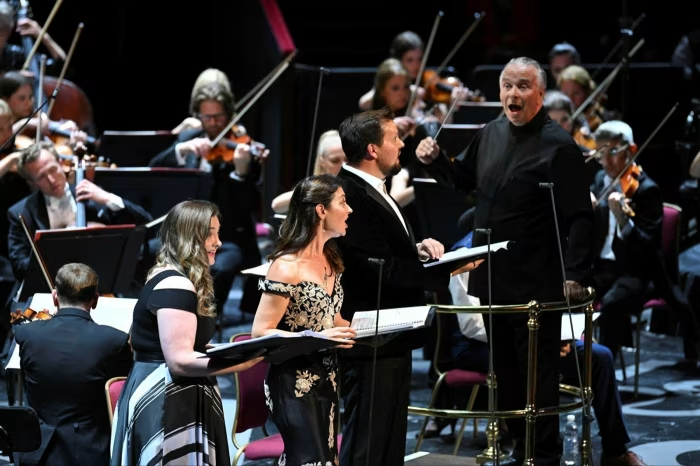
In concert – Soloists, London Philharmonic Choir, BBC Symphony Chorus & Orchestra / Sir Mark Elder @ BBC Proms: Delius: A Mass of Life

Jennifer Davis (soprano), Claudia Huckle (mezzo-soprano), David Butt Philip (tenor), Roderick Williams (baritone), BBC Symphony Chorus, London Philharmonic Choir, BBC Symphony Orchestra / Sir Mark Elder

Delius Eine Messe des Lebens (A Mass of Life) (1898; 1904-05)

Royal Albert Hall, London
Monday 18 August 2025

Reviewed by Richard Whitehouse Photos (c) BBC / Chris Christodoulou

There could be few venues better suited to Delius’s A Mass of Life, in its conceptual ambition and emotional opulence, than the Royal Albert Hall and this evening’s performance, only the third at these concerts and the first in 37 years, undoubtedly made the most of these qualities.

Despite the tragedy of his ultimate breakdown and ensuing incapacitation, Friedrich Nietzsche was considered a liberator in terms of a guiding philosophy with its emphasis on free will and rejection of conventional mores. Such appeal could hardly have been greater than on Frederick Delius, his largest concert work setting substantial extracts from Also sprach Zarathustra in a way that feels never judgemental and is only rarely overreaching. Much of the time its music has a detached and meditative aura whose inward intensity needs to be sustained accordingly.

That this account did so was owing to Sir Mark Elder, his advocacy already manifest in the finest modern recording (LAWO) as came across just as strongly and often more so here. Certainly, the longest sections were effortlessly paced – whether that beguiling interplay of longing and anticipation in In dein Auge which becomes the still (while never static) centre of Part One, or that extended sequence of Part Two taking in the scenic evocation as is Lasst vom Tanzen ab then the pantheist contemplation of Heisser Mittag schläft which is surely the expressive highpoint. Not that the dramatic openings of each part were under-characterized – the driving energy of O du mein Wille! setting the course for one as vividly as did the rousing Herauf! Nun herauf, with its orchestral prelude Auf den Bergen meltingly rendered, for the other.
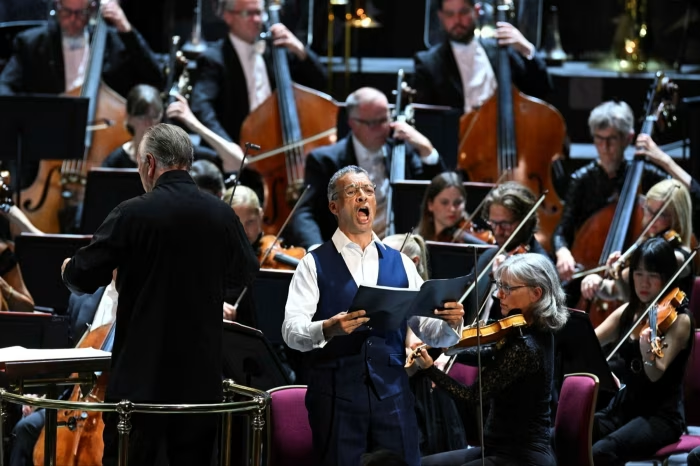
This may be regarded mainly as a choral work, but the importance of its vocal parts is never to be gainsaid. Above all, that of the baritone who assumes the role of Zarathustra in his gradual incline to enlightenment and in which Roderick Williams (above) was consistently at his best – hence the infectious Erhebt eure Herzen and assertive Wehe mir! then, subsequently, the alluring eloquence of Süsse Leier! and will to action of Gottes Weh ist tiefer. If this is the solo role as brings focus or unity to the whole, the others afford textural and expressive enhancements aplenty – Jennifer Davis as capricious and Claudia Huckle as confiding as David Butt Philip was assertive in their respective contributions. All three singers brought out the youthfulness or naivety which are crucial to this work’s underlying journey from innocence to experience.
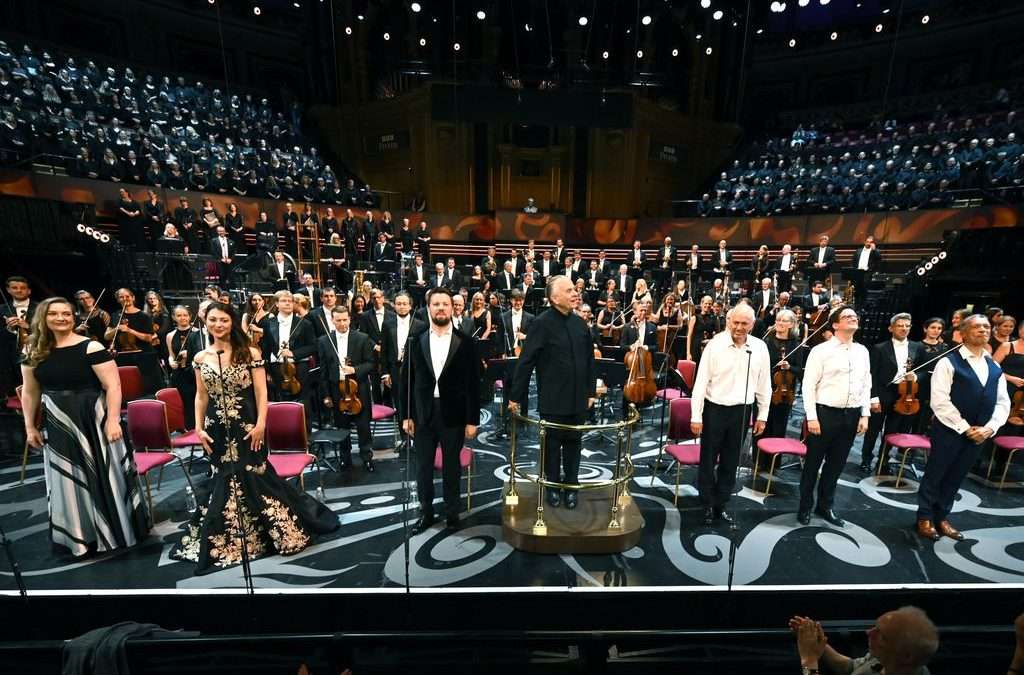
Any doubt a relative disparity in numbers of female and male singers would be detrimental to choral balance was groundless – Elder drawing a vividness but also delicacy of response from those combined BBC Symphony and London Philharmonic forces, while the BBC Symphony Orchestra was rarely less than galvanized whether in complex tuttis or the artless writing for solo woodwind that informs the latter stages. Delius’s orchestration rarely ‘plays itself’ but it conveys a lustre and translucency which could not be mistaken for that of another composer.

A near-capacity audience seemed as attentive to this as it was affected by the final Kommt! Lasst uns jetzt wandeln!, with its build-up to an ecstatic apotheosis then swift dispersal into silence: setting the seal on a memorable interpretation of this all-encompassing masterpiece.

You can listen back to this Prom concert on BBC Sounds until Sunday 12 October – or listen to the recent recording from Sir Mark Elder, with soloists, the Collegium Musicum Choir, Edvard Grieg Kor, Bergen Philharmonic Choir and Orchestra on Tidal below:

Click on the artist names to read more about soloists Jennifer Davis, Claude Huckle, David Butt Philip and Roderick Williams, the London Philharmonic Choir, BBC Symphony Chorus and BBC Symphony Orchestra, and conductor Sir Mark Elder. Click also for more on the Delius Society and the BBC Proms

Published post no.2,632 – Wednesday 20 August 2025
Proms Interview: Tansy Davies – Re-greening

tansy-davies
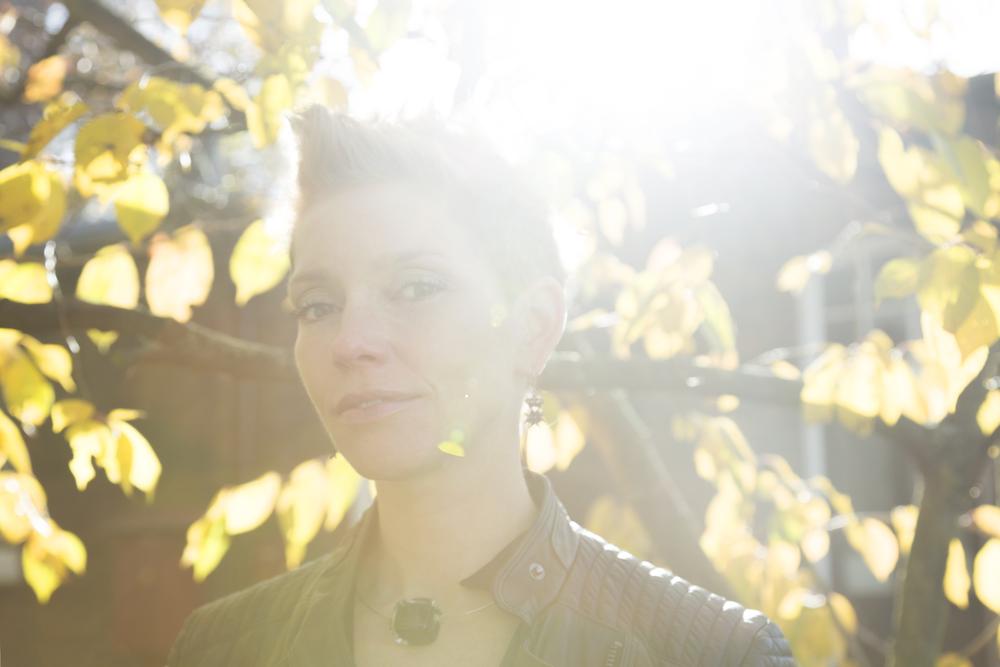
Tansy Davies Photography by Rikard Österlund

For the annual appearance of the National Youth Orchestra of Great Britain at the BBC Proms, listeners will be treated to a performance of Mahler’s farewell to life, the Symphony no.9.

Prior to this, however, they will hear a new piece of music all about bringing new life to proceedings. Re-greening was written by composer Tansy Davies as a complementary piece to the Mahler, and in a short notice and generously arranged interview with Arcana the composer gave a guide to her new work and her Proms history:

Do you remember your first encounter with the Proms?

I must have been aged around 15. I just turned up with a couple of friends, not having planned or looked at what was on. We prommed of course, and I know that the programme included Debussy’s Prélude à l’après-midi d’un faune. The atmosphere was palpable, and I loved every second.

What was your first Prom as a composer?

In 2010, when I wrote Wild Card for the BBC Symphony Orchestra.

Have you written for the National Youth Orchestra before?

No.

Where did the idea for Re-Greening come from?

The concept emerged out of a collaboration between the NYO, Sir Mark Elder and myself. It’s a celebration of youthful exuberance and Spring. The commission brief, which was flexible, included the following ideals: references to old English melodies, singing in the orchestra, no conductor, and the orchestra would consist of upwards of 165 musicians. And it should create a feeling of freedom within the orchestra, before Mark Elder enters the stage as the voice of experience, to lead them through Mahler 9.

Did you have a particular location in mind when writing it?

I see the piece as being rather like a journey around a forest. The place I was thinking of is Earth (Re-greening the Earth…); and an old English forest.

What is it about an old English forest that you have represented in the piece, or were you looking to capture the overall atmosphere more?

That was really just part of my inspiration; drawing on ideas about reaching back to our roots as humans with a deep connection with nature (the structure is loosely based on a shamanic wheel of the year). But I think the way the music is layered to me suggests a forest like quality; interweaving arpeggio-type figures bubbling or erupting up from the cold earth in winter, and scales or lines reaching up to the light.

As you are writing a piece to complement Mahler’s Ninth Symphony, was it important to write a piece with a lot of opposite elements?

It was important to find something unique, performable and right for the group and the occasion, within the given constraints.

What do you like about Mahler as a composer?

The epic film-like quality of his vision.

How do you portray the colour ‘green’ in classical music?

That’s not something I’ve tried to do, although green is the colour of the heart-chakra, and my music mostly comes out of this part of me.

Neon for chamber ensemble of 7 players

Is it fair to say that through your career as a published composer you have tended to work with smaller ensembles, working gradually up to orchestral composition?

No – I think it has been more haphazard than that! It’s true that I wrote for smaller groups in most of my early music, but I’ve actually written quite a lot of orchestral music over the years. You can include chamber orchestra music in that, and my Requiem As with Voices and with Tears, which is for chorus, string orchestra and electronics.

Were you pleased with the production of your opera Between Worlds, and the reception it got?

Over the moon!

Tansy Davies and Deborah Warner talk about their operatic collaboration, Between Worlds, staged at the Barbican Centre recently

What else are you working on at the moment?

My next piece is for symphony orchestra, I’m very excited about it, but I can’t say any more just yet. I’m thrilled to have had so many opportunities to write for orchestra; I never planned it that way, but I absolutely love getting a feel for how to work with the medium.

If you could see one other Prom this season, which one would it be?

There are many and some wonderful things that I sadly can’t get to. But I hope to attend the BBC Scottish Symphony playing Sibelius and Michael Finnissy (16 Aug), and then Esa-Pekka Salonen and the Philharmonia in Bartók and Shostakovich (24 Aug). After that I am also attending the next two Proms – the BBC Symphony Orchestra and Edward Gardner (Prom 54, Nielsen Flute Concerto and Janáček Sinfonietta) and the SWR Symphony Orchestra with François-Xavier Roth (Prom 55, Bartók Concerto for Orchestra and Boulez …explosante fixe…

Tansy DaviesRe-greening will be performed at the Proms by the National Youth Orchestra of Great Britain under their conductor Sir Mark Elder, on 8 August 2015. For more information about the composer head to her website, where you can hear http://www.tansydavies.com/works/ excerpts from her catalogue of works.