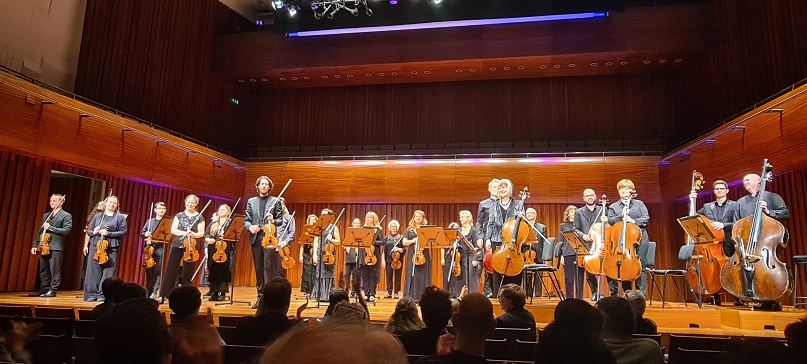
In concert – Eugene Tzikindelean, CBSO / Kazuki Yamada: Dai Fujikura, Walton & Berlioz

Eugene Tzikindelean (violin), City of Birmingham Symphony Orchestra / Kazuki Yamada

Fujikura Wavering World (2022) [CBSO co-commission: UK premiere]
Walton Violin Concerto in B minor (1938-9, rev. 1943)
Berlioz Symphonie Fantastique, Op. 14 (1830)

Symphony Hall, Birmingham
Wednesday 17th January 2024

Reviewed by Richard Whitehouse. Photos (c) Beki Smith

Tonight’s concert by the City of Birmingham Symphony Orchestra brought a varied trilogy of works, one which started with a first UK hearing (following its premiere in Seattle almost two years ago) of Wavering World by the Japanese-born and British-based composer Dai Fujikura.

In his programme note, Fujikura remarks on how little he knew of his traditional culture until having left Japan, and this piece draws upon the myth surrounding creation for an eventful if always cohesive journey through the emergence of the heavenly world, the human world and the underworld. This is achieved by separating the orchestra into stratified layers that do not succeed each other as merge into diverse and intricate textures where these sizable forces are imaginatively deployed; the music gradually moving away from its earlier austerity toward a luxuriance whose salient motifs are recognizable despite their transformation. Directing with unerring focus, Kazuki Yamada secured a vivid rendition which also served as a reminder that Fujikura is less often heard than might be in his country of residence these past three decades.
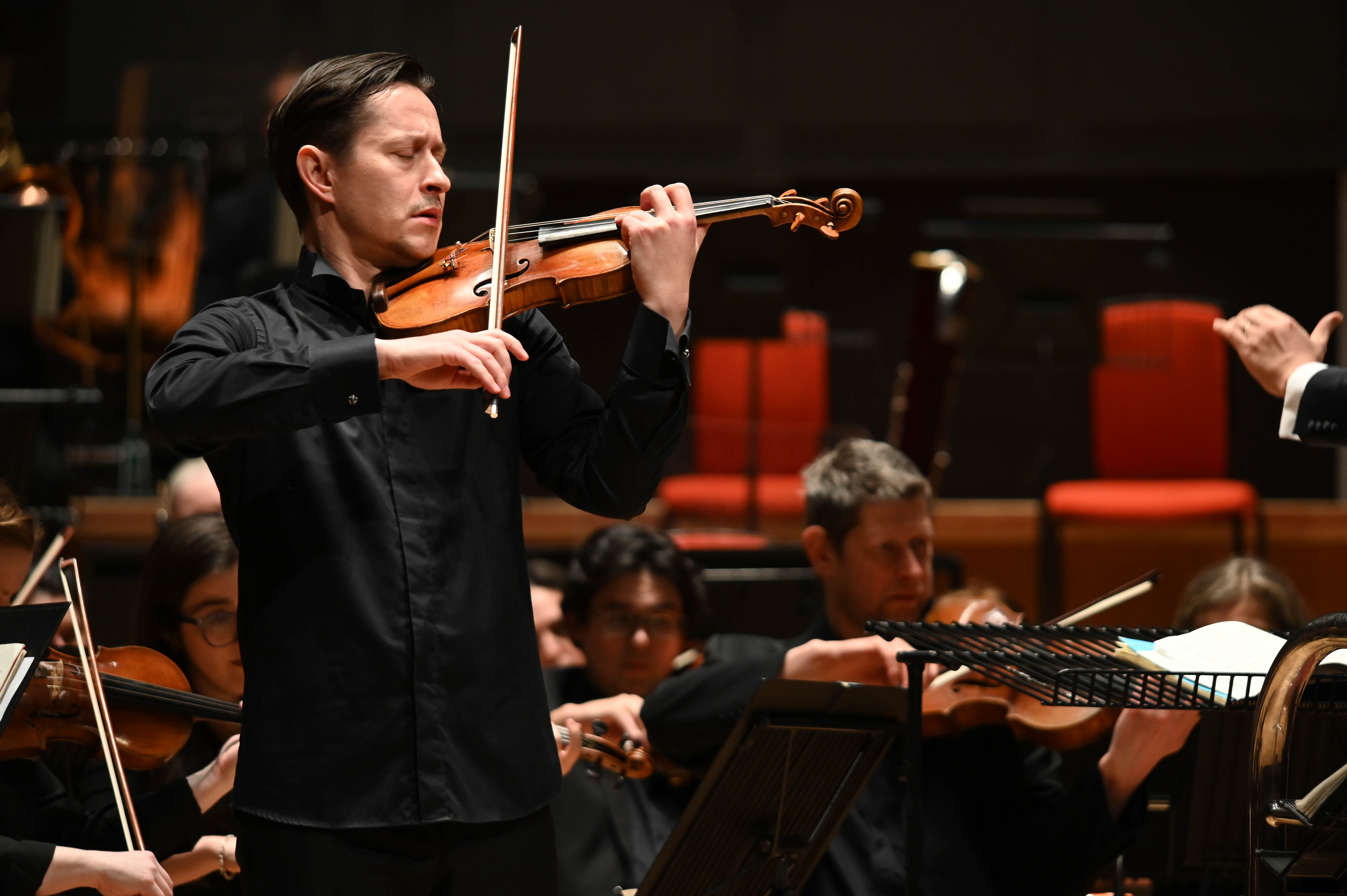
The fortunes of Walton’s Violin Concerto have lessened this past quarter-century, so Eugene Tzikindelean’s advocacy was its own justification. He had the measure of the initial Andante’s alternation between languor and agitation, ingenuity of thematic transformation offsetting any lack of originality in its themes, then gave of his best during a central Presto whose technical fireworks are tellingly balanced by yearning lyricism. If the final Vivace was less convincing, this might have reflected on the actual music – Walton putting his ideas through their audibly Prokofievian paces before evoking Elgar in a lengthy accompanied cadenza then gratuitously affirmative coda. The CBSO gave stalwart support, just over 50 years since it accompanied Yehudi Menuhin and the composer in a performance commemorating Walton’s 70th birthday.
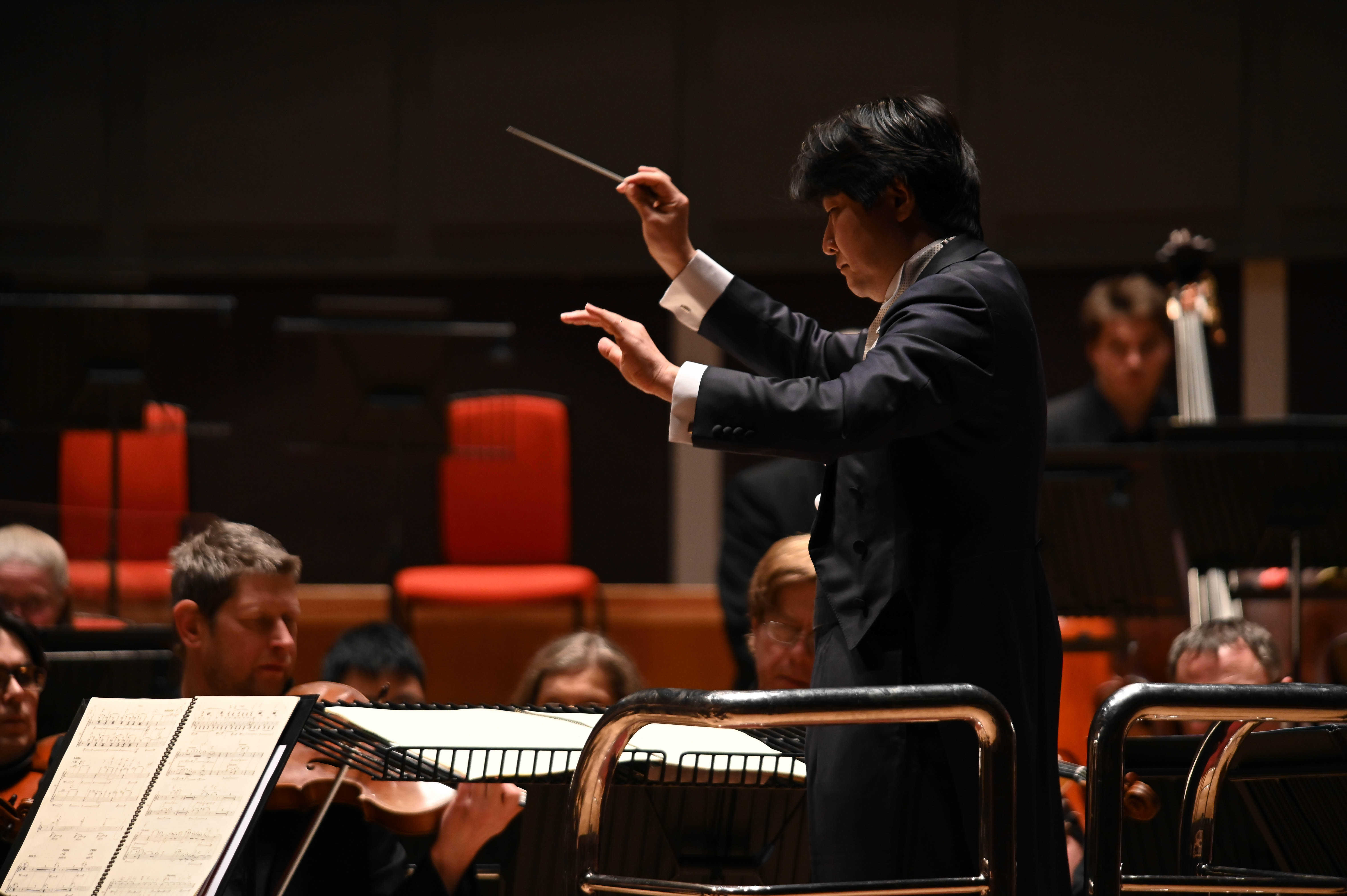
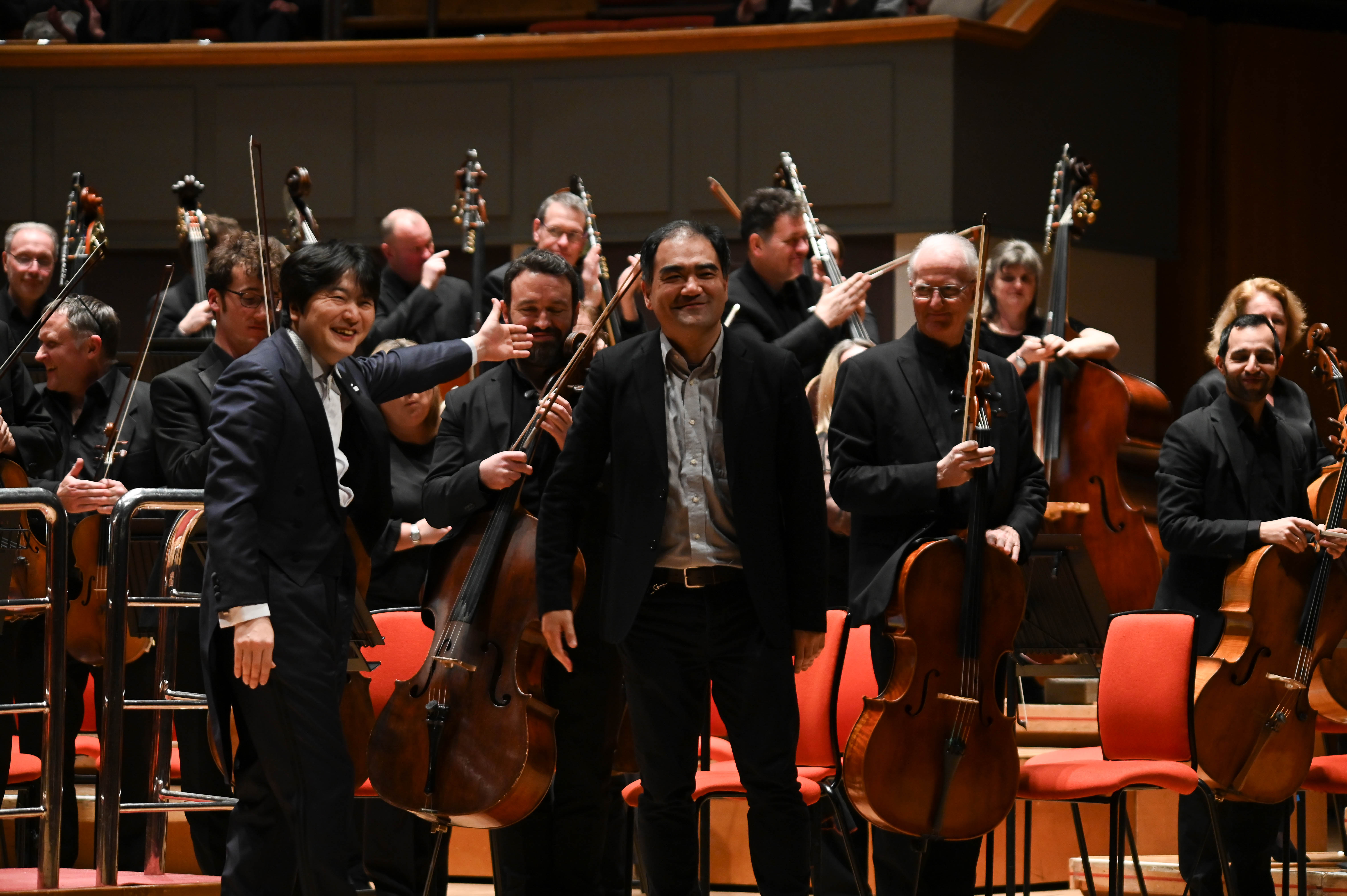
After the interval, Yamada (above) presided over a ‘no holds barred’ reading of Berlioz’s Fantastic Symphony. The latter-day tendency is to stress its symphonic cogency, but there was little of this in a Daydreams and Passions veering impulsively, even recklessly, between despondency and elation. The waltz element of A Ball was nudged out of shape, but its darker undertones were well judged, with the lengthy build-up then lingering subsidence of Scene in the Fields enhanced by Rachael Pankhurst’s plangent cor anglais and ominous timpani toward the close.

This was hardly the first performance to head off seemingly at a tangent, but March to the Scaffold (shorn of its first-half repeat, as had been the opening movement) quickly became   a parade-ground romp in which the fateful fall of the guillotine went for relatively little. Nor was Dream of a Witches’ Sabbath without its Disney-like element of overkill, though here Yamada ensured a stealthy accumulation through its reiterations of the Dies irae plainchant and fugal episode to a peroration whose thunderous power seemed nothing if not conclusive.

An Episode in the life of an Artist, indeed, as demonstrably left its mark on the enthusiastic audience. Yamada and the CBSO will be doing it all again on April 10th, but next week sees the more Classical appeal of Mozart and Beethoven in the company of Maxim Emelyanychev.

Click on the link to read more on the current CBSO concert season, and on the names for more on violinist Eugene Tzikindelean, conductor Kazuki Yamada and composer Dai Fujikara

Published post no.2,063 – Sunday 21 January 2024
In concert – Sheku Kanneh-Mason, CBSO / Kazuki Yamada: Beethoven, Shostakovich, Walton

Sheku Kanneh-Mason (cello), City of Birmingham Symphony Orchestra / Kazuki Yamada

Beethoven Leonore Overture no.1 Op. 138 (1807)
Shostakovich Cello Concerto no.1 in E flat major Op.107 (1959)
Walton Symphony no.1 in B flat minor (1932-5)

Symphony Hall, Birmingham
Saturday 16 September 2023

Reviewed by Richard Whitehouse

Having opened the City of Birmingham Symphony Orchestra’s season two days earlier with Verdi’s Requiem, Kazuki Yamada returned for a judicious programme comprising three ‘No. 1’s’ – two mid-20th century masterpieces and an overlooked gem from the previous century.

Beethoven’s First Leonore Overture is in fact the third such piece written in conjunction with his eponymous opera, being intended for a Prague production that never materialized. Shorter in duration and simpler in design than its two ‘successors’, it sets the scene without attempting an overview of Leonore’s dramatic essence. Yamada duly made the most of an introduction as speculative as it was searching, then steered a lively course over the main Allegro – not least a surging crescendo into the coda such as Rossini had taken to heart before the decade was out.

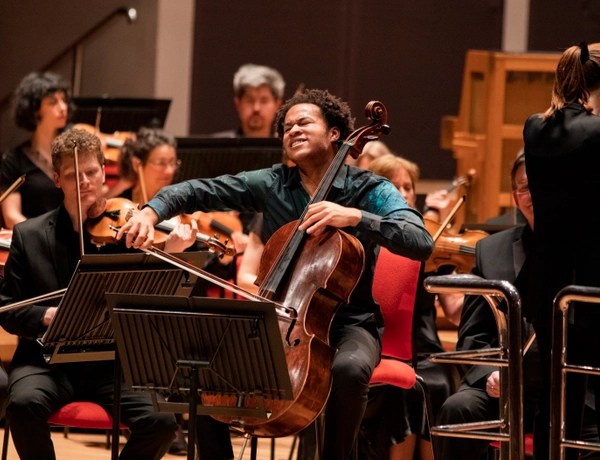
It was with Shostakovich’s First Cello Concerto that Sheku Kanneh-Mason won BBC Young Musician of the Year in 2016 and thus launched a career that shows no signs of stalling. In the meantime, his take on this piece has deepened and at times darkened – the opening Allegretto exuding keen irony abetted by the incisive response from an orchestra whose single horn and double woodwind are thrown into sharp relief against modest strings. If the ensuing Moderato seemed a little measured, its stark intimacy was eloquently sustained to a yearning climax then mesmeric interplay of cello harmonics with celesta in the coda. The third-movement Cadenza emerged with real cumulative impetus, and not even the hiatus while Kanneh-Mason replaced a broken string could stem the final Allegro’s sardonic course to its decisive closing flourish.

A work that has latterly regained (at least in the UK) the reputation it enjoyed decades earlier, Walton’s First Symphony has had regular performances from the CBSO (and a recording with Simon Rattle), and this reading did not lack for commitment. Not least an opening movement such as built methodically and remorsefully from initial expectancy, through a central span of brooding stasis, to a pulverizing culmination; the only proviso being the frequent inaudibility of its underlying pulse in lower strings during the climactic stages. The scherzo seemed even finer in its tense amalgam of spite and barbed humour, its treacherous syncopation dextrously handled, while the slow movement unfolded from a wistful flute melody (affectingly rendered by Marie-Christine Zupancic) to its climax of baleful intensity subsiding into numbed regret.

The finale still tends to be seen as surrender to well-tried symphonic precedent yet, as Yamada presented it, did not eschew formal or emotional obligations. The resolute introduction, agile fugal writing and irresistible build-up to the timely appearance of extra percussion all became part of a conception vindicated by the elegiac trumpet theme (ably conveyed by Jason Lewis); leading to a peroration in which Yamada’s urging his players onward briefly risked unanimity of response while still resulting in the sheer affirmation of those thunderous closing chords.

Overall, an engrossing performance which augurs well for the CBSO’s first full season with Yamada. Next week places the spotlight on Thomas Trotter who, having done forty years as City Organist in Birmingham, takes the loft for repertoire staples by Poulenc and Saint-Saëns.

You can read all about the 2023/24 season and book tickets at the CBSO website. Click on the artist names for more information on cellist Sheku Kanneh-Mason and conductor Kazuki Yamada

In concert – Britten Sinfonia / Thomas Gould & Agata Zając @ Milton Court: Musical Everests – The Year 1953

Thomas Gould (violin/director), Miranda Dale (violin), Caroline Dearnley (cello), Britten Sinfonia / Agata Zając (Maconchy)

Corelli Concerto Grosso in F major Op.6/2 (publ. 1714)
Tippett Fantasia Concertante on a theme of Corelli (1953)
Maconchy Symphony for Double String Orchestra (1953)
Phibbs Flame and Shadow (2023)
Walton Finale from Variations on an Elizabethan Theme (1953)

Milton Court, London
Wednesday 24 May 2023

Reviewed by Ben Hogwood Pictures (c) Ben Hogwood

This typically imaginative concert devised by the Britten Sinfonia took as its starting point the events of 1953, where the United Kingdom shifted on its axis. It was of course the year in which Britain witnessed a Coronation, and in which Everest was scaled, but other than Walton’s jubilant finale to the collaborative composer project Variations on an Elizabethan Theme, no explicit musical links were made.

Instead, the Britten Sinfonia concentrated on two major works written for string orchestra in that year – one now well-known and one barely performed. The underdog, Elizabeth Maconchy’s Symphony for Double String Orchestra, made a very strong impression in this performance, brilliantly played by string players using a handwritten manuscript from 1953. The difficulty of this task necessitated a conductor, with Agata Zając joining at short notice. Hers was a dynamic presence, helping emphasise the rhythmic flair and dramatic impetus of the piece.

Maconchy’s music has often been critically coveted but is rarely heard in the concert hall – sadly an all-too familiar plight for a female composer innovating in the 20th century. Where many British composers wrote to include the countryside around them she wrote in a continental style, her music powered by fertile melodic imagination and rhythmic vitality. At times there are elements of Stravinsky and Bartók in her music but the closest parallel is Frank Bridge, with whom she shared an ability to explore the outer reaches of tonality without selling listeners short on melody.

The first movement of the Symphony grips the listener immediately, its powerful forward momentum complemented by soaring violin solos, which Thomas Gould played to perfection here. The febrile main motif bore close resemblance to Stravinsky’s Symphony in Three Movements, and Maconchy’s treatment of it was economical and engaging. Emotionally, however, the heart of the piece lay in the second movement Lento, where an eerie figure crept slowly upwards from cellos and basses, refusing to give way to the sweeter intimate melodies above. A rustic Scherzo, laden with syncopation, was followed by an equally captivating finale, initially pensive but with gathering intensity and drive. Just before the end the music broke out into a joyous country dance before returning to its more angular outlines.

The Britten Sinfonia were at the top of their game, subtly and superbly drilled by leader Gould. Each player was fully engaged, with smiles and nods of encouragement frequently passing between the team. When these qualities are natural, as they were here, a performance is elevated for the audience – and that was certainly the case for Corelli’s Concerto Grosso in F major, second in his set of twelve published as Op.6 in 1714. This opened the concert, dovetailing neatly into the work of Sir Michael Tippett, which it inspired.

Elegance and style were to the fore in the Corelli, with clean melodic lines given just a hint of vibrato for expression, and the interplay and balance between the three soloists and orchestra ideally judged. The work’s sunny countenance spilled over into the Tippett, though here the sun’s rays took on a more ecstatic quality.

The Fantasia Concertante on a theme of Corelli, also dating from 1953, is a compelling study in time travel. Tippett presents the original 18th century material unadorned, but adds his own unique musical language incrementally, so the piece becomes awash with bright colour and reaches a feverish intensity. Gould led a performance to savour, with fulsome support from fellow soloists Miranda Dale (violin) and Caroline Dearnley (cello). Together with the enhanced Sinfonia they rendered the golden textures beautifully, enhancing the elegance of the original material.

With the Tippett and Maconchy works a formidable pair either side of the interval, it says much for the London premiere of Joseph Phibbs’ new work that it was not in any way overshadowed. Though Flame and Shadow looked beyond events of 1953 for its stimulus it nonetheless bore a resemblance to the new coronation, its fresh take on music for strings revealing a busy contemporary approach.

Phibbs has an original and imaginative way with writing for strings, using audience-friendly melodic figurations but allowing them to roam harmonically, changing their perspective. The punchy rhythms of the Dance section here were a thrill, as were the combination of rapid fire and sustained open string pizzicato heard throughout the Interlude. Flame and Shadow, taking its title from a collection of verse by Sara Teasdale, was an edge of the seat piece, even to its closing Vocalise section, where a melody closely related to that found at the opening of Sibelius Symphony no.4 had a sobering effect. The contrasts of darkness and light were vivid and left a lasting impression – as indeed did the whole concert.

In twenty years of covering Britten Sinfonia concerts, and marvelling at their programming and technical prowess, this Milton Court evening confirmed their musical health to be stronger than ever. If only the same could be said for their long-term financial prospects, thrown into doubt by the withdrawal of funding in the latest Arts Council England cuts. Without the immediate publicity of similar actions levelled at English National Opera and the BBC Singers, the Britten Sinfonia have just launched their Play On fundraising campaign. The initial response has been encouraging, but it needs to raise more to secure the organisation’s future. Please do consider giving – I certainly will. This is the only way their imaginative concerts and a wealth of community-based outreach across East Anglia – where they are the only full time orchestra – can continue.

You can read all about future concerts from the ensemble at the Britten Sinfonia website. Click on the composer names to read more about Joseph Phibbs, Elizabeth Maconchy and Sir Michael Tippett – and for more details on concerts at the venue, visit the Milton Court website

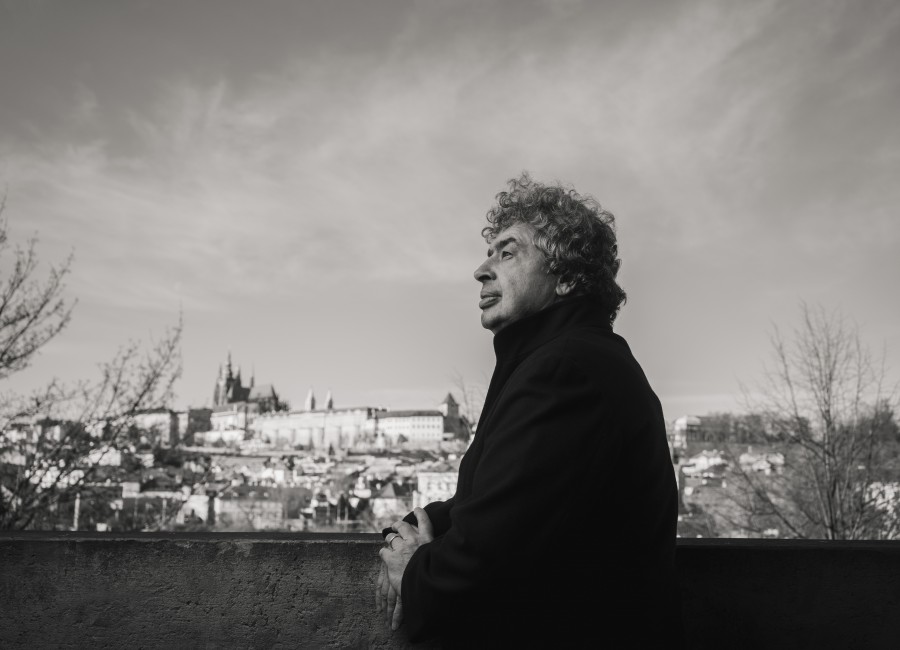
Playlist – Semyon Bychkov

by Ben Hogwood (photo (c) Marco Borggreve)

Semyon Bychkov turns 70 today…and in recognition of one of our finest living conductors, here is a link to watch this most erudite musician conducting the WDR-Sinfonieorchester Köln in William Walton’s First Symphony:

Here too is a playlist gathering together some of his finest recordings, from the early days with Philips to his most recent release, an account of Mahler’s Symphony no.5 with the Czech Philharmonic Orchestra for Pentatone. Along the way we hear excerpts or complete works by Tchaikovsky, Prokofiev, Mendelssohn, Dutilleux and Rachmaninoff. It is a wonderful listen, I’m sure you’ll agree!