On Record – Tippett Quartet – Noah Max: String Quartets (Toccata Classics)

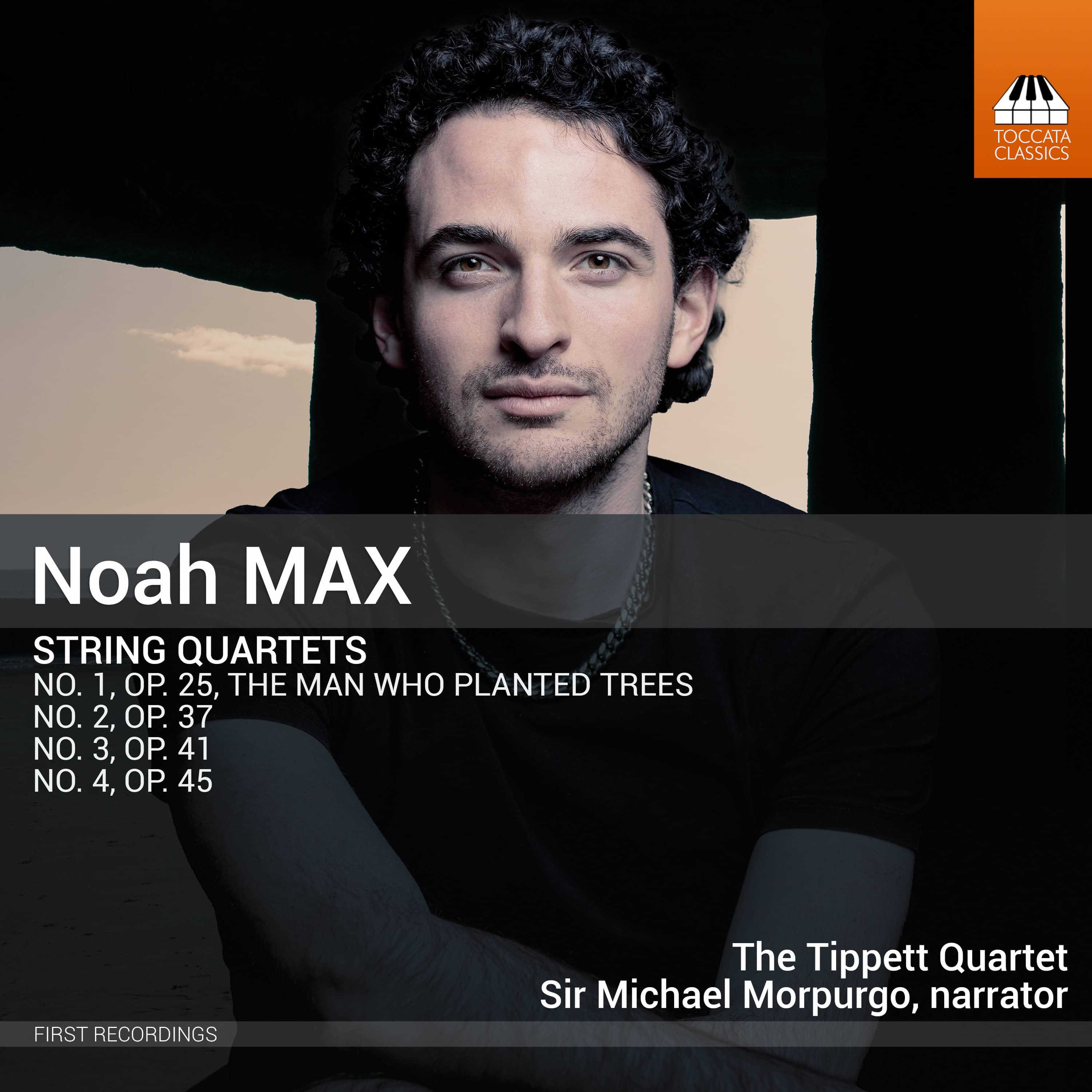
Tippett Quartet [John Mills, Jeremy Isaac (violins), Lydia Lowndes-Northcott (viola), Božidar Vukotić (cello)], Michael Morpurgo, narrator (‘The Man Who Planted Trees)

Noah Max
String Quartet no.1 Op.25 ‘The Man Who Planted Trees’ (2020)
String Quartet no.2 Op.37 (2021-22)
String Quartet no.3 Op.41 (2022)
String Quartet no.4 Op. 45 (2022-23)

Toccata Classics TOCC0749 [68’46”]
Producer Andrew Keener Engineer Oscar Torres

Recorded 16 August 2023 at St Silas Church, Kentish Town, London (‘The Man Who Planyed Trees’), 29-31 January 2024 at SJE Arts, Oxford

Reviewed by Richard Whitehouse

What’s the story?

Toccata Classics issues a second volume of music by Noah Max – devoted to his four string quartets which emerged at pace during the early years of this decade, and rendered here with conviction by the Tippett Quartet as part of its ongoing commitment to contemporary music.

What’s the music like?

As is emphasized in Martin Anderson’s introductory note, Max is nothing if not versatile for a creative figure still in his late twenties. Other than composition, he has been equally active as a cellist and conductor while also being a poet, film-maker and visual artist. Listeners are most likely to have encountered his music via the chamber opera A Child in Striped Pyjamas, after the novel by John Boyne, which premiered to considerable acclaim in London just over three years back and is an acknowledged influence on what he has composed subsequently.

Not just inspired by Jean Giono’s fable The Man Who Planted Trees, Max’s First Quartet also incorporates this text – eloquently narrated by Michael Morpurgo – across its three movements that chart a course from speculative uncertainty, via rapt inwardness, to dynamic resolution. It may also have three movements, but the Second Quartet is otherwise its antithesis. The initial subtitle, ‘The Ladder of Escape’ (after Joan Miró), affords real insight into its unfolding from fractured and sometimes fractious indecision, via an impulsiveness which ultimately turns in on itself, to a gradual accumulation of sound that yet leaves its overall formal and expressive trajectory in abeyance. One reason, perhaps, why this piece has been placed out of sequence at the close of the programme, as if in anticipation of a response which has yet to be written.

As the composer himself notes, the Third Quartet is designed around the number ‘three’ that imparts instability to almost every aspect; not least a volatile interplay between its harmonic density and a clearly defined chorale as comes into focus in a visceral if (almost inevitably) self-destructive climax – made the more plangent by down-tuning the lowest string on each instrument such that darkness overcomes the ensemble. Likewise cast in a single movement, the Fourth Quartet draws on aspects of Max’s aforementioned opera – but this is only made concrete by the emergence of Jewish liturgical chant during its anguished final stages. Max further draws attention to a conclusion whose demonstrably provisional manner makes the writing of a ‘fifth quartet’ to conclude this putative trilogy a likely and intriguing prospect.

Does it all work?

Pretty much throughout. What becomes evident, above all, is the ease with which Max moves between differing styles and aesthetics so as to result in an approach beholden to none. While this may seem relevant to the work at hand rather than establishing consistency across these quartets as a whole, it should not be taken as failure of intent but rather as an indication that he is still in the formative stages of a composing career which will doubtless throw up more than its fair share of surprises and circuities before one can speak of a definable ‘Max idiom’.

Is it recommended?

Yes it is – not least as these readings have a conviction expected from the always enterprising Tippett Quartet, along with an almost ideal ‘quartet sound’. Those who have Toccata’s earlier anthology of Max’s chamber music (TOCC0638) need not hesitate to acquire this follow-up.

Listen / Buy

You can hear excerpts from the album and explore purchase options at the Toccata Classics website. Click on the names to read more about the Tippett Quartet, Michael Morpurgo and composer Noah Max

Published post no.2,825 – Friday 13 March 2026

On Record – Robert Simpson: Chamber Music, Volume One (Toccata Classics)

bEva-Maria Hartmann (soprano); cEmma Johnson, dPeter Cigleris (clarinets); dDerek Hannigan (bass clarinet); cRaphael Wallfisch (cello); dWill Duerden, dLevi Andreassen, dDaniil Margulis (double basses); cJohn Lenehan, bCornelis Witthoefft (pianos); aTippett Quartet (John Mills, Jeremy Isaac, violins; Lydia Lowndes-Northcott, viola; Božidar Vukotić, cello)

Robert Simpson
String Quartet in D major (1945)a
Songs – Trocknet nicht!b; The Cherry Tree (both c1942)b
Clarinet Trio (1967)c
Quintet for Clarinet, Bass Clarinet and Three Double Basses (1981)d

Toccata Classics TOCC0701 [70’59’’]
English/German texts & English translation included
Producer / Engineer Michael Ponder

Recorded c3 June 2021 & d20 November 2023 at St George’s, Pinner View, London; a7 February 2023 at Studio TQHQ, Ruislip; b12 August 2024 at Lehmann Studios, Stuttgart

Released in January 2025

Reviewed by Richard Whitehouse

What’s the story?

Toccata Classics issues the first of two releases intended to ‘plug the gaps’ in the survey of Robert Simpson’s chamber music recorded by Hyperion in the 1980s and 1990s, featuring mainly younger musicians who demonstrate keen understanding of this composer’s idiom.

What’s the music like?

Although hardly a cohesive collection as such, this album provides an alternative overview across the greater part of Simpson’s output. Nothing here could be considered inessential, while one of these pieces most likely ranks among his finest compositions from any period.

Composed (and duly accepted) as an examination exercise for Simpson’s Batchelor degree at Durham, the String Quartet in D thereafter remained unpublished and unheard until this recording. At just over 20 minutes, the modest dimensions belie its formal deftness and its expressive subtlety – a trenchant initial Allegro followed by an Adagio where Haydnesque wit makes way for Beethovenian profundity, an ingratiating Allegretto closer to intermezzo than scherzo then a final Presto of an exhilaration effortlessly sustained through to its close.

Simpson was always uneasy with the setting of texts (his two published choral works solve this issue in different though equally ingenious way), but these early settings of Goethe and Housman suggest a distinctive and, moreover, convincing approach which could well have become more so had he persevered. Interestingly, both have an almost confessional quality that the composer, still in his early twenties, might have felt better conveyed in instrumental terms. Something that can never be known for sure, but the attraction of these songs remains.

The late 1960s found Simpson writing two major chamber works with clarinet. The Clarinet Quintet has long been regarded among his finest works, but the slightly earlier Clarinet Trio has seldom been heard and is something of a revelation. From its spellbinding introduction, the initial Allegro makes a virtue of abrupt contrast between impulsiveness and remoteness, with the slow movement a fugitive if searching interlude making the final Allegro the more unequivocal as this builds to a powerful apotheosis offset by the otherness of its closing bars.

Simpson afficionados will be familiar with the Quintet for Clarinet, Bass Clarinet and String Trio (Hyperion CDA66626), though maybe not the original incarnation with its three double basses. In fact the musical content sounds, for the most part, better suited to those arresting sonorities – not least the ethereal chorale-like texture of an opening Adagio which, after the mounting energy of a central Allegro, is infused with appreciably greater eloquence on its return and sees the whole work to an ending the more inevitable for its deep-seated repose.

Does it all work?

Pretty much throughout. The present accounts lack little in overall conviction, nor does the sound lack anything in clarity or perspective, while the annotations by Matthew Taylor are as informative as might be expected from one for whom Simpson was a significant mentor.

Is it recommended?

Yes, with the follow-up (Sonata for Two Pianos and Brass Quintet) duly awaited. Incidentally, Taylor recorded the Flute Concerto (with Susan Milan) and Variations and Fugue on a Theme of Bach for the Simpson centenary in 2021 but which is yet to be released. Maybe this year?

Listen / Buy

You can hear excerpts from the album and explore purchase options at the Toccata Classics website

Published post no.2,768 – Thursday 15 January 2026

On Record: The Tippett Quartet – Steve Elcock: Chamber Music Volume Two: String Quartets

Steve Elcock
String Quartets – The Girl from Marseille, Op. 17 (2010); The Cage of Opprobrium, Op. 22 (2014); Night after Night, Op. 27 (2017); The Aftermath of Longing, Op. 36 (2021)

Tippett Quartet [John Mills & Jeremy Isaac (violins), Lydia Lowndes-Northcott (viola), Božidar Vukotić (cello)]

Toccata Classics TOCC0688 [80’31”]

Producer Michael Ponder Engineer Adaq Khan

Recorded 6-8 October 2022, Studio TQHQ, Ruislip, London

Reviewed by Richard Whitehouse

What’s the story?

Toccata Classics continues its survey of Steve Elcock (b1957) – arguably its most important ongoing project – with this collection of his four (to date) string quartets, performed by the enterprising Tippett Quartet and reaffirming his stature among composers of his generation.

What’s the music like?

Elcock is not the first composer to eschew numbering his quartets (Daniel Jones, for instance, differentiated his eight by date), with The Girl from Marseille preceded by at least four such works (one of these refashioned into his Eighth Symphony). Coming after weighty pieces as the Second and Third Symphonies (the latter on TOCC0400), these eight diverse variations in search of a theme – its identity in the title – find his music at its most playful and entertaining, though the fractious final variation pointedly invokes the brutal origins of its source material.

It was the location of this work’s first performance that provided ‘inspiration’ for The Cage of Opprobrium, namely a 16th-century metal pillory used to incarcerate women found walking unaccompanied after dark. Its five continuous sections graphically evoke the imagined victim through alternate slow and fast sections – building towards a violent culmination (its alluding to a famous quartet less striking than the way in which this music is transformed into Elcock’s own), before subsiding into a postlude where mourning is informed by emotional exhaustion.

Emerging in a relatively long gap between Elcock’s Fifth and Sixth Symphonies (TOCC0445 and TOCC0616), Night after Night takes its cue from the poem in Robert Louis Stevenson’s Songs of Travel. The first of its six continuous sections, entitled ‘Somniloquy’, evokes those unbidden thoughts of a chronic insomniac then returns between episodes of a more volatile nature. Its climax comes in the aggressive final ‘Incubus’ (later extended into an autonomous orchestral piece), which elides between sleep and wakefulness without hope of reconciliation.

Elcock’s most recent quartet, The Aftermath of Longing is likewise in six continuous sections but is very different in mood. It is also the most inherently abstract of these works, moving fitfully between varying degrees of emotional ambivalence to a penultimate episode whose releasing of the pent-up intensity results only in a desolate recollection of the initial music. Something of its character can be sensed in the composer’s subsequent symphonies, notably the Ninth that is his largest such work to date and may well prove to be his most impressive.

Does it all work?

Indeed, it does and not least because Elcock has put his formative years of playing the violin to profitable use with his idiomatic and resourceful writing for strings. For all their technical demands, nothing is left to chance in these quartets which are evidently building into a cycle scarcely less involving than that of the symphonies. Suffice to add the Tippett Quartet, which premiered Night after Night, proves an assured and persuasive exponent while the running order, of 2-1-4-3, makes for a programme well worth experiencing as a continuous sequence.

Is it recommended?

Very much so. Sound is vivid and detailed, if a little confined in more tumultuous passages, while the composer’s notes are informative without prejudicing the response of each listener. Hopefully these quartets will be taken up by other suitably equipped and inquiring ensembles.

Listen & Buy

For buying options, and to listen to clips from the album, visit the Toccata Classics website. Click on the names for more on composer Steve Elcock and the Tippett Quartet

Arcana’s best of 2022

by Ben Hogwood

How has 2022 been for you? It has been a difficult year for so many, and I don’t know about you, but I find music takes on an even more important part of our lives when the going gets tough. This year we have been able to rely on a consistently strong line of releases, giving us extra resolve and relief from the day-to-day.

Arcana has reviewed a lot of music this year. What we tend to do on these pages is concentrate on music and artists that we know are likely to be good – and we assemble our thoughts on them so you can then make your own investigations. Classical music is usually our starting point, but from there we travel afar to the outer reaches of electronica, dance and contemporary music.

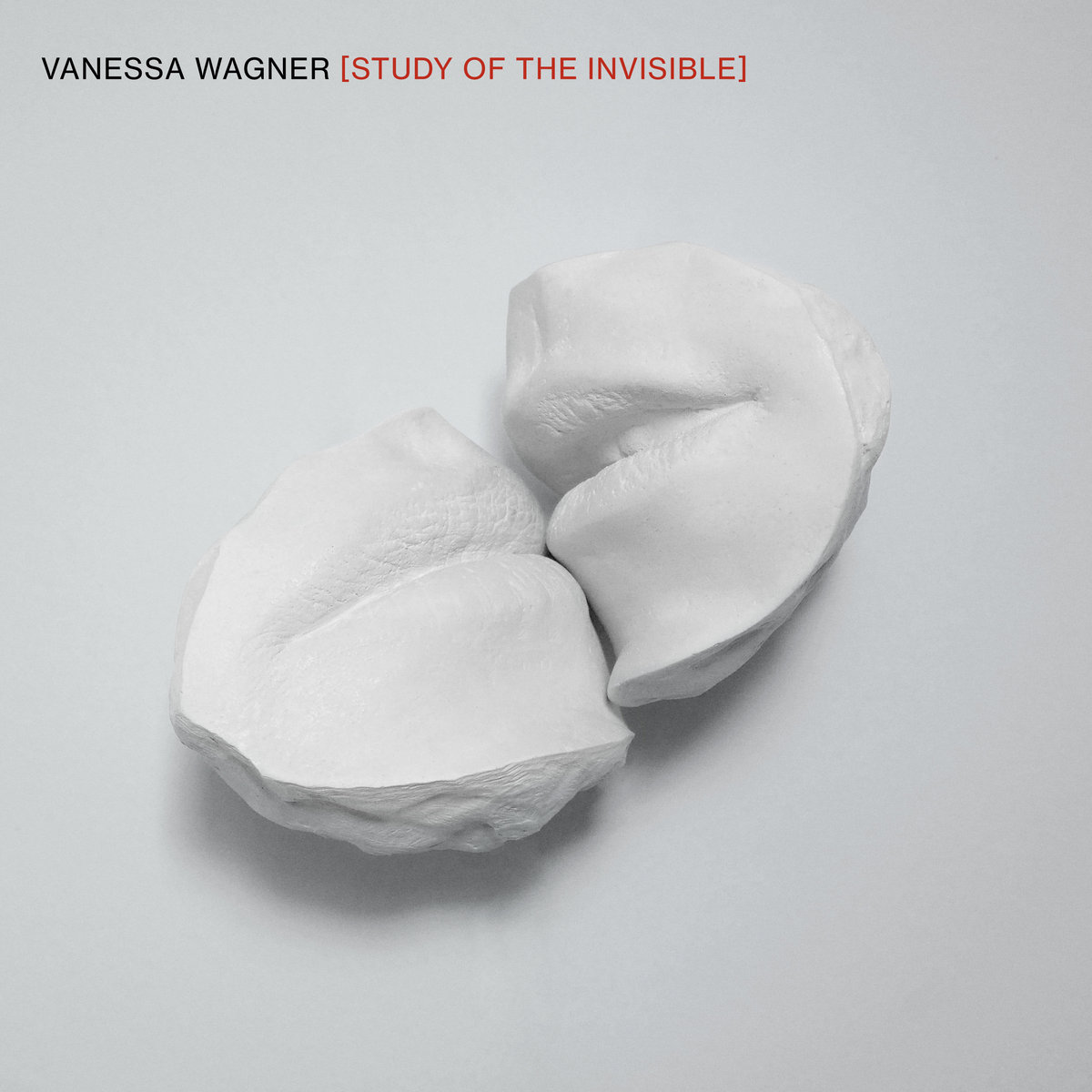
It was another strong year for electronic music of an ambient dimension. Switched On is the area of Arcana concentrating on new music in this area, and without putting too many musical names on these albums, we really enjoyed a good deal of slower stuff. Starting with a single instrument, Vanessa Wagner’s Study of the Invisible (above) made an understated but lasting impression, particularly with Caroline Shaw’s Gustave Le Grey at its heart. Vanessa plays with poise and expression, and this wonderfully curated selection worked so well.

Meanwhile long term favourite Erland Cooper charmed with his pure, still music written to soundtrack the Superbloom installation at the Tower Of London, Music For Growing Flowers (above). Speaking of earthy sounds, Sonic Cathedral gave us twilight wonders from Pye Corner Audio and, with a little more country in the mix, Sunset Dreams from Mark Peters.

At the hottest part of summer, Arthur King’s music was extremely evocative in Changing Landscapes – as was that of Deepchord, making a return to the long player from Detroit with Functional Designs. Steve Davis, meanwhile (yes, that Steve Davis!) was busy enhancing his reputation as part of the electronic trio Utopia Strong and their excellent album International Treasure

More studied electronica gems should also be shouted from the rooftops – we are lucky to have British artists of the calibre of Bibio, Gold Panda and Plaid, each returning with excellent new albums. Meanwhile Clarice Jensen took her cello as a starting point on new album Esthesis, making music of great colour and descriptive power to counter the onset of lockdown. Also facing the elements head-on was Daniel Avery, whose new album Ultra Truth was a powerful statement indeed:

There were some very strong releases on the classical side of things, as record companies dusted themselves down and started to include orchestral recordings again on their release schedules post-pandemic. Leading the way were the Sinfonia of London under John Wilson, a throwback to the golden age of orchestral recording in their challenging schedules for Chandos. With Hollywood, British and French music all covered, one in particular stood out, with the orchestral music of John Ireland given its rightful place in the spotlight:

Speaking of French music, a charmer from the Orchestre National des Pays de la Loire and Pascal Rophé proved the ideal hot weather soundtrack as it explored orchestral versions of Debussy keyboard works. Their accounts of the Petite Suite, La boîte à joujoux and Children’s Corner were full of colour and character.

This year saw the 150th anniversary of the birth of Ralph Vaughan Williams, one of the finest British composers of the 20th century. Somm Recordings made a memorable tribute by way of the undervalued string quartets, these lovely autumnal works given vibrant performances from the Tippett Quartet.

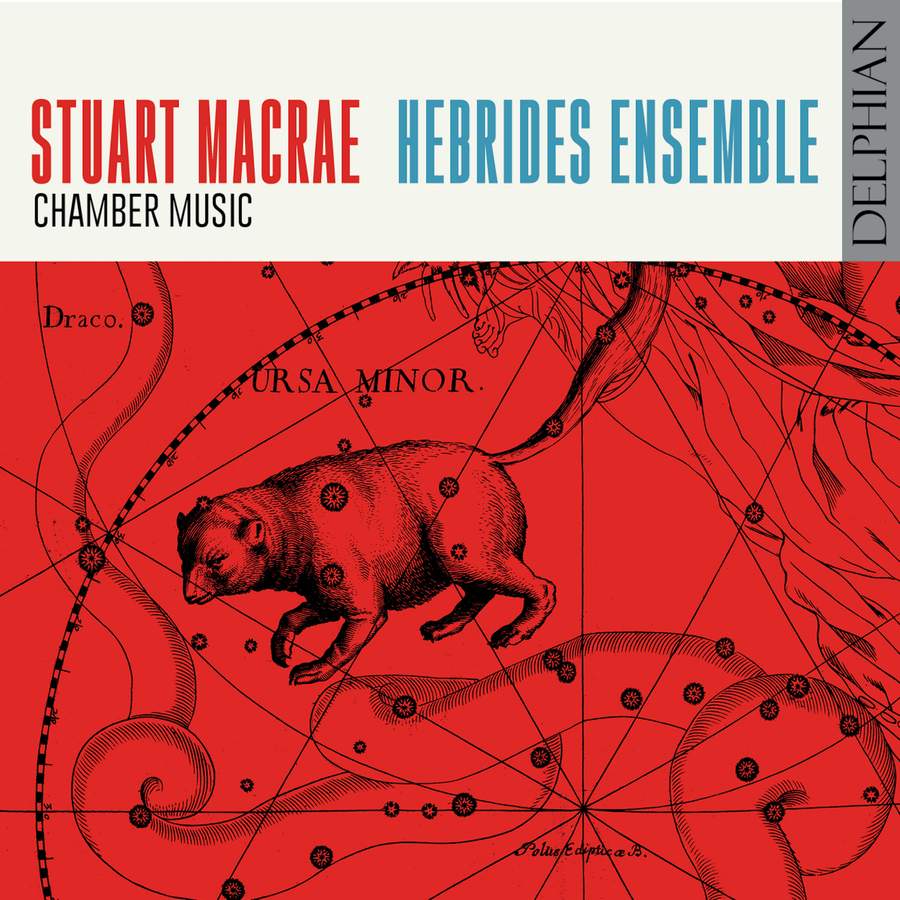
Contemporary classical music put in some very strong appearances this year, and few more than Stuart Macrae, showing off the quality of his chamber music on an album from the Hebrides Ensemble on the excellent Delphian label. We enjoyed a number of online and in-person concerts from the English Symphony Orchestra and Kenneth Woods, which were capped by an outstanding recording of Adrian Williams’ Symphony no.1, a commendable raising of the flag for new British music

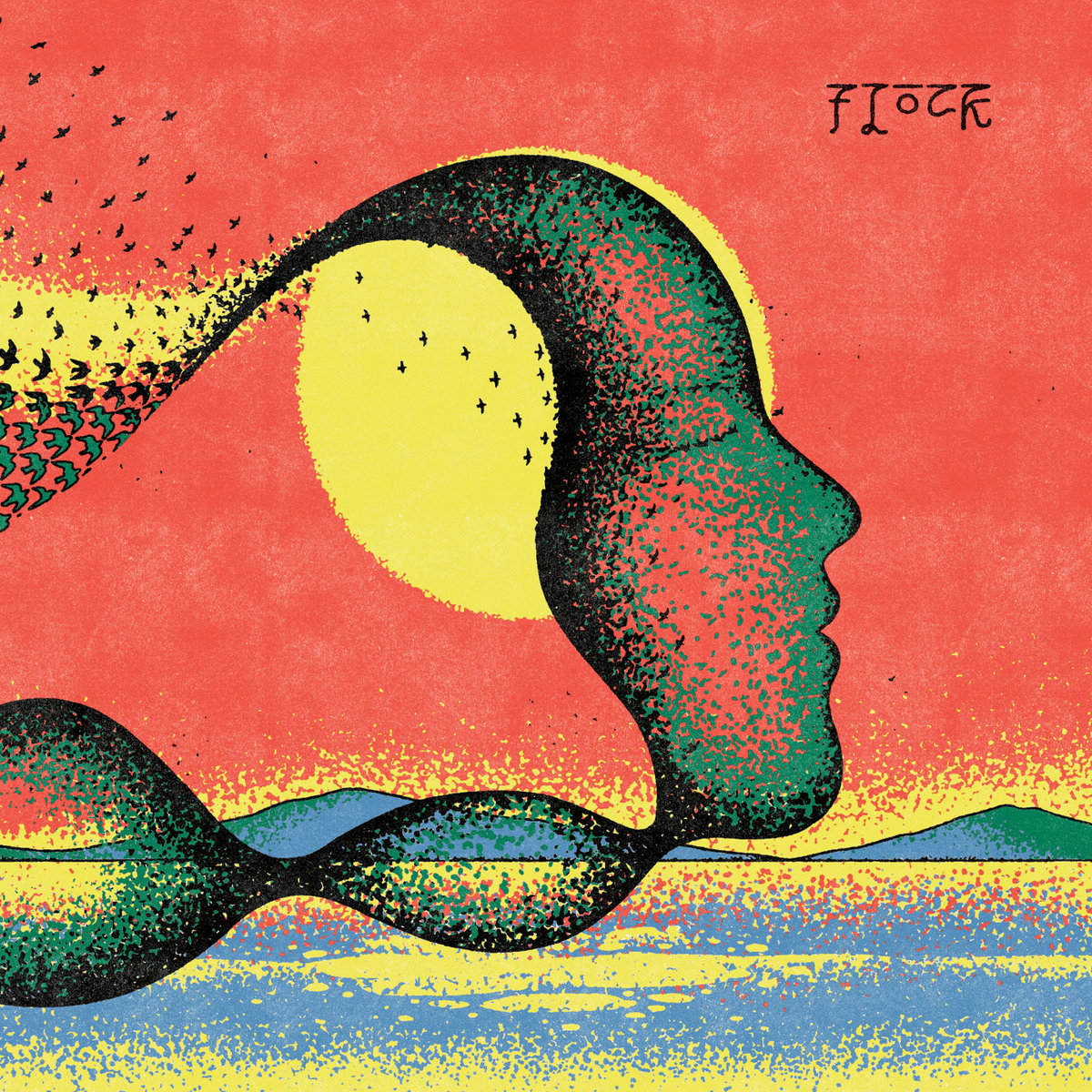
During 2022 we made a couple of visits to the outskirts of jazz, in the company of super group Flocktheir excellent self titled debut – and a triumphant and experimental return from Szun Waves.

On the dancier side of things, Heavenly Recordings excelled themselves this year with no fewer than six collections of remixes! We loved the first two instalments, which acted as a prelude to the utterly essential third and fourth volumes which brought together remixes from the much missed Andrew Weatherall.

The Haçienda celebrated 40 years since its inception with a handsome package from Cherry Red, while the best DJ mix honour goes to Cinthie – her contribution to !K7’s DJ Kicks mix series really was a thing of pure dancefloor enjoyment. So, too, was a John Morales-edited compilation devoted to the art of Teddy Pendergrass, vocalist for Harold Melvin & The Blue Notes.

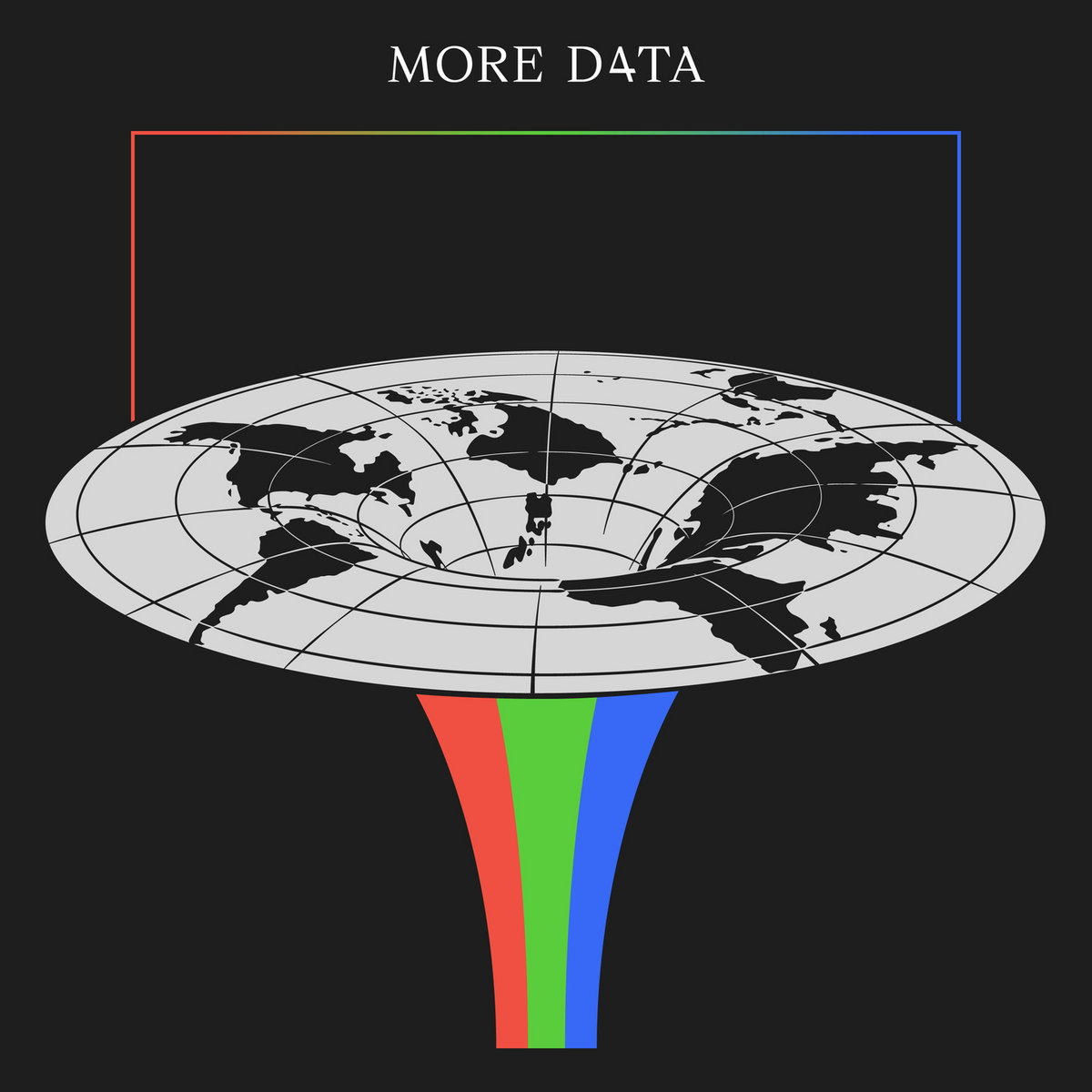
Cultured music for the discerning dancefloor came our way from Au Suisse, a welcome reunion for Morgan Geist and Kelley Polar, and also from Hot Chip, who further explored their emotions with an excellent and heartfelt eighth album. Moderat, returning after a long absence, went more for the jugular with the thrilling More D4ta

With all that said and done, what would an Arcana album of the year look like? Something like this…the most listened to long player of the year in these parts, Fleeting Future – a vibrant offering from Akusmi which channelled all sorts of intriguing influences into something wonderfully original:

We will have a few more reviews to come over this week – but for now, we thank all our readers for your visits and wish you a happy, peaceful and regenerative Christmas holiday season. Oh, and a Happy New Year for 2023!

On Record – Tippett Quartet – Vaughan Williams: String Quartets; Holst: Phantasy Quartet (Somm Recordings)

Tippett Quartet [John Mills, Jeremy Isaac (violins), Lydia Lowndes-Northcott (viola), Bozidar Vukotic (cello)]

Vaughan Williams String Quartet no.2 in A minor (1942-43)
Holst ed. Swanston Phantasy Quartet (1916)
Vaughan Williams String Quartet no.1 in G minor (1909)

Somm Recordings SOMMCD 0656
Producer Siva Oke Engineer Adaq Khan
Recorded 7-8 February 2022, St. Nicholas Parish Church, Thames Ditton

Reviewed by Ben Hogwood

What’s the story?

In case you have missed it, 2022 marks 150 years since the birth of Ralph Vaughan Williams. A great deal has been made of his symphonic and choral output, and rightly so, but an added benefit of such an anniversary is the chance to look at other relatively neglected corners of a composer’s work. Chamber music is one such area that is infrequently explored, and there are some fine works ready for reappraisal.

The two published string quartets sit as principal examples. The String Quartet no.1 in G minor was written in Paris, during a period of study with Ravel, and reflects new influences at work in 1909. A great deal of water had past under the bridge by the arrival of the String Quartet no.2 in A minor in 1942-43. Written for the composer’s friend Jean Stewart, who played viola in the Menges Quartet, it gives great deal of prominence to her instrument.

Complementing the quartets is the Phantasy Quartet by Gustav Holst, a close friend and confidante of Vaughan Williams for many years. Their mutual love of folksong is perhaps their strongest musical link, though as the quartet shows Holst had a different way of expressing his sources. Claiming the work was ‘insufficient’, the composer withdrew it some years after its first performance in 1917, though his daughter Imogen saw its worth and published a version for string orchestra. On this recording the Tippett Quartet use an edition made by Roderick Swanston.

What’s the music like?

The Vaughan Williams quartets are a complementary pairing, and although starting with the later work may seem a curious decision it makes good musical sense in the context of this recording.

As described above, the viola takes an assertive lead in the first movement of the String Quartet no.2, pushing the source material forward with silvery tones that nonetheless have a strong autumnal shade. The harmonic writing is shot through with an anxiety reminding us of this work’s position in the Second World War and its proximity to the Sixth Symphony, a powerful yet haunted work.  The solemn second movement is deepened further by an almost complete lack of vibrato, while the viola takes charge again in the ghostly third movement, with the other instruments muted. The prayerful finale offers some solace, referring to the reverent calm of the recently completed Fifth Symphony, but the end is still shrouded in uncertainty.

The String Quartet no.1 is often talked about in the same breath as Ravel, but Debussy and Borodin are notable influences here. After a tautly argued first movement, the Scherzo is particularly successful, its motif recurring with just the right degree of playfulness. The third movement Romance is lovingly rendered, while the finale has a great deal of positive energy, Vaughan Williams showing great agility in his writing for four instruments that often sound like a small string orchestra.

Holst’s Phantasy Quartet is beautifully judged, celebrating its folk sources but also throwing context of light and shade that reflect another time of uncertainty during the First World War. The work has more than a little in common with the celebrated St Paul’s Suite for string orchestra, moving between energetic tunes and more thoughtful episodes, where a shadow passes over the face of the music.

Does it all work?

It does. These are fine performances from the Tippett Quartet, who understand the emotional and often anxious pull of the second quartet. Its urgency is compelling, and the harmonic tensions are finely judged here. Meanwhile the compositional promise of the first quartet is clearly shown, with its rich melodic content and the vigorous exchanges of the outer movements, which are extremely well played. The Holst is affectionately given, the quartet revelling in the folk melodies but also the composer’s imaginative harmonies. Swanston’s version works extremely well.

Is it recommended?

Enthusiastically. There are already some fine recordings of the Vaughan Williams string quartets, but the Tippett Quartet join the very best with performances of spirit and deep feeling. The Holst is the ideal complement, and with excellent booklet notes (Robert Matthew-Walker) and a cover picture to match (Simon Palmer) this is one of the finest releases so far in the Vaughan Williams 150 celebrations.

Listen

Buy

You can listen to clips from the recordings and explore purchase options at the Somm Recordings website