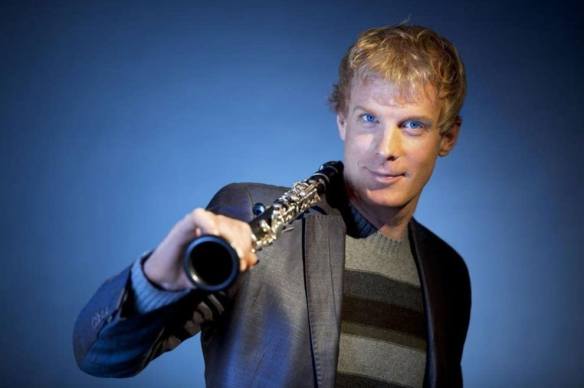
In concert – Martin Fröst & Roland Pöntinen at Wigmore Hall

Martin Fröst (clarinet), Roland Pöntinen (piano)

Wigmore Hall, Monday 16 December 2019

Review and guide by Ben Hogwood

A concert that was relatively short on music but extremely high on musicianship and virtuosity. Martin Fröst is one of the finest clarinettists at work today, and fellow-Swede Roland Pöntinen, with whom he has enjoyed a musical partnership for 25 years, is an extremely highly respected pianist either in a solo capacity or here as a chamber music ally. Both delighted their young Wigmore Hall audience – yes, that can be a thing at this venue’s concerts! – who were on their feet at the end.

The two gave us ‘French Beauties and Swedish Beasts’, a concert based on their first disc for BIS made 25 years ago. The beauties were first, in the shape of Debussy and Poulenc. The former’s Première rapsodie was written as a competition piece for the Paris Conservatoire, and later orchestrated in a form revealing its stylistic parallels with the composer’s ballet Jeux. There was a balletic feel to this interpretation too, Fröst’s languorous tone complemented by the stop-start rhythms of Pöntinen’s piano part. Initially the music was happy to indulge in its warm, lush surroundings but gradually it grew more agitated until Fröst’s final, bluesy solo.

Poulenc’s Clarinet Sonata, a late work, is dedicated to the composer Arthur Honegger and received its first performance in the hands of no less a duo than Benny Goodman and Leonard Bernstein. It is difficult to imagine a better account than here, with Fröst’s tone in the quieter and reflective passages simply sublime, layered with emotion. This was complemented by a sparky finale, where the music flew out of the gate like a horse let into an open field. The performers finished each other’s musical sentences in a performance of wit, charm and sensitivity.

The first of the ‘Swedish Beasts’ followed, a piece from Anders Hillborg written for the partnership before his breakthrough work, the Clarinet Concerto which Fröst recorded some seven years later. This was a piece of two extremes, flitting between reflective slow phrases and sharp retorts where the clarinet used the outer limits of its register. It was effective and a concentrated piece showing off Fröst’s technical prowess.

The second Swedish Beast was much more benign, but Roland Pöntinen’s own Mercury Dream showed an affinity with the blues. Nocturnal New York seemed to be its focus, especially in the easily paced piano introduction and postlude, but when Fröst joined the music became more animated.

Prior to that the pianist (above) gave us two substantial chunks from Ravel’s Miroirs. His account of Une barque sur l’océan was highly pictorial, and his Alborada del gracioso had swagger, even if some of the initial phrases were clipped. Pöntinen has not yet recorded Ravel and it would be interesting to set alongside his many BIS recordings of earlier music.

The partnership finished with Chausson’s Andante and Allegro, a discovery from the composer’s Bayreuth period in his mid-twenties, before Wagner’s spell exerted itself on his music. This was an enjoyable piece, full of melodic grace in the flowing Andante before turning slightly darker for the passionate Allegro.

We had two superb encores from the duo, playing pieces Fröst has previously given with orchestra. BrahmsHungarian Dance no.1 in G minor surged forward passionately, while Göran Fröst, the clarinettist’s brother, contributed the hugely entertaining Klezmer Dance no.2, full of good tunes and musical banter between clarinet and piano. Given the technical expertise on show, the standing ovation that followed was inevitable.

Repertoire

This concert contained the following music:

Debussy Première rapsodie (1909-10)
Poulenc Clarinet Sonata (1962)
Hillborg Tampere Raw (1991)
Ravel Miroirs: Une barque sur l’océan; Alborada del gracioso (1904-5)
Pöntinen Mercury Dream (1994)
Chausson Andante and Allegro (1881)

Encores
Brahms Hungarian Dance no.1 in G minor ()
Göran Fröst Klezmer Dance no.2

Further listening

You can hear the music from this concert on the Spotify playlist below:

You can hear the album French Beauties and Swedish Beasts in its entirety on Spotify below. Alongside the items from this concert it includes the rather wonderful Saint-Saëns Clarinet Sonata:

Meanwhile Anders Hillborg’s Clarinet Concerto Peacock Tales’ written for Fröst, can be heard in its premiere recording here:
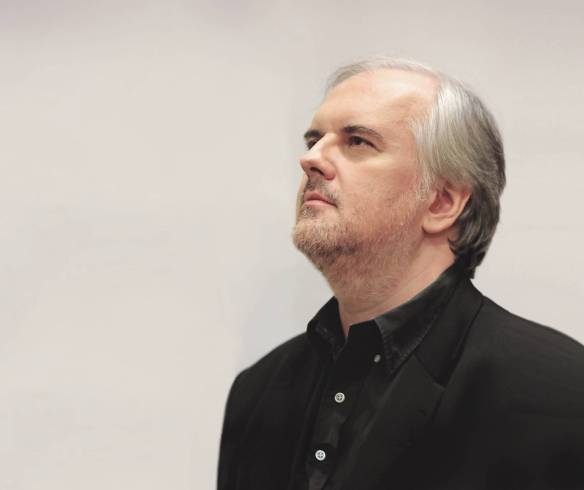
Wigmore Mondays – Nicolas Angelich plays Bach / Busoni, Brahms & Beethoven

Nicolas Angelich (piano)

Wigmore Hall, Monday 9 December 2019 (lunchtime)

You can listen to this concert on the BBC Sounds app here (opens in a new window)

Review and guide by Ben Hogwood

A concert of the three ‘B’s, all of them greats of keyboard literature – with a fourth, Busoni, added for good measure.

J.S. Bach and Busoni make a winning combination, the Italian 20th century composer having discovered a strong affinity with his ‘ancestor’s’ work in transcribing his organ and harpsichord works for piano. These were always done in a reverent way, and the famous Advent chorale prelude Nun komm, der Heiden Heiland (Now come, Saviour of the heathens) is no exception. Nicolas Angelich ensured all was still before beginning this account, and once started he left plenty of room for musical thought and variation of tempo and phrasing. Although at times it was a little too mannered, it was a nicely gauged start to the concert.

Angelich continued without a break into Brahms 7 Fantasien, hailed by Clara Schumann as ‘a true source of enjoyment, everything, poetry, passion, rapture, intimacy, full of the most marvellous effects’. The seven pieces work well as a whole, with three Capriccios placed 1, 3 and 7 in the group, interspersed with four Intermezzi. The relatively ambiguous labels mean Brahms has plenty of freedom for expression, and beyond the Capriccios being faster and stormy, and the Intermezzi slower, intimate and experimental, there is little to confine his work.

The performances here were well-informed, Angelich having recorded these works for Virgin Classics back in 2006. The first Capriccio in D minor (9:51) exhibits power and authority, with the composer’s beloved triplet rhythms in evidence, and is complemented by the first Intermezzo in A minor (12:11), one of several moments where Brahms’ thoughts turn wholly inwards – apart from the slightly sunnier middle section. The third piece, a Capriccio in G minor (16:23) has arpeggios tumbling downwards, and has a central section anticipating the tonal area (E) of the three Intermezzi to come. These are the fourth piece in E major (19:23), full of subtle but noticeable questioning in its melody, and the longest piece of the set. It is followed by the thoughtful fifth piece in E minor (23:59) and a sixth, mostly chordal piece back in E major (26:56) which quickly moves away from its harmonic base. Finally the power and passion returns for the seventh piece, a Capriccio in D minor (30:21). Brahms again is in his favourite two-against-three rhythmic figuration, and this signs off the set in the major key with some aplomb in Angelich’s performance.

Fantasy is also a theme for Beethoven’s most famous piano work, his Moonlight Sonata. In truth this piece sits between a fantasy and a sonata (hence the composer’s subtitle, Sonata quasi fantasia), and the first movement, though static in the profile of its arpeggios, is pure and magical imagery, Beethoven intentionally or not evoking moonlight over Lake Lucerne as perceived by his friend, the poet Ludwig Rellstab.

Angelich brought the stillness of the moment to the Wigmore Hall (35:30), reflective and deep in a reverie, only rousing slightly for a Scherzo of relatively downbeat thoughts (41:35). Those sentiments were well and truly blown away by the Finale (44:12), the only one of the three movements written in true ‘sonata form’ by Beethoven. This was a terrifically played account, carefully thought through and played with feeling rather than a need for technical prowess – though that was present too.

Angelich returned to late Brahms for his encore, the Intermezzo in E flat major Op.117/1 (54:02) Another late work, this one is based on an old Scottish ballad, Lady Anne Bothwell’s Lament – and brought the mood and chronology of the concert full circle.

Repertoire

This concert contained the following music (with timings on the BBC Sounds broadcast in brackets):

J.S. Bach arr. Busoni Nun komm, der Heiden Heiland BWV 659 (c1748, arr.1898) (4:36)
Brahms 7 Fantasien Op.116 (1892) (9:51)
Beethoven Piano Sonata no.14 in C sharp minor Op.27/2 ‘Moonlight’ (1802) (35:30)
Encore: Brahms Intermezzo in E flat major Op.117/1 (1892) (54:02)

Further listening

The music from this concert can be heard in leading available versions on Spotify below. These include Angelich’s recording of the Brahms pieces, with Murray Perahia playing the Bach / Busoni and Beethoven:

Angelich can be heard in a double album of late Brahms that includes the composer’s piano pieces published as Op.117-119. They hold a unique place in the piano repertoire, written by Brahms in the knowledge that his compositional career was nearly over and looking forward to innovations by composers such as Mahler, Berg and Schoenberg:

Busoni’s transcriptions of Bach organ works repay further exploration, especially at this time of year. This album from Kun-Woo Paik brings together some of the more famous examples, including the Toccata, Adagio and Fugue:

Beethoven’s 32 Piano Sonatas remain one of the wonders of his output, but even a listen to the four published after the Moonlight sonata reveal a composer striking out for new shores. The Piano Sonata no.15 in D major Op.28, known as the Pastoral, is similarly magical – before the group of three works published as Op.31 reveal humour in the first, stormy Romanticism in the second (nicknamed The Tempest) and an openness of expression in the beautiful third. The playlist below brings together leading recordings from Emil Gilels:

Wigmore Mondays – Pavel Kolesnikov & Samson Tsoy, Colin Currie & Sam Walton: Music for pianos and percussion

Pavel Kolesnikov and Samson Tsoy (pianos), Colin Currie and Sam Walton (percussion) (pictured above in rehearsal, credit unknown)

Wigmore Hall, Monday 2 December 2019 (lunchtime)

You can listen to this concert on the BBC Sounds app here (opens in a new window)

Review and guide by Ben Hogwood

A truly memorable concert with many more instruments than performers! The Wigmore Hall stage was straining at the seams for this concert, with a daunting battery of percussion positioned behind two lidless Steinway pianos.

As BBC Radio 3 presenter Fiona Talkington confirmed, the two pianists and their percussion counterparts had only met the previous week. This is where music making can be so thrilling, for chemistry had been established and all four performers clearly enjoyed the concert experience.

That much was clear from the first, atmospheric notes of Ravel’s Rapsodie espagnole, given in an arrangement that seems to have been the composer’s own, retaining percussion parts from the orchestral original. The Prélude à la nuit (1:49 on the broadcast link below) immediately evokes the heady Mediterranean scene, laced with a background tension that was occasionally released in faster music, thrumming like an ensemble of guitars. Ravel’s orchestral concepts are easily discerned here, with the players very closely attuned. The Malagueña (6:02) is suitably enchanting, while the Habanera (8:05), with lovely detail on castanets and xylophone, wears its Carmen influences on its sleeve. Finally the dazzling Feria (10:52), brilliantly performed, wraps up our colourful Spanish sojourn with a flourish.

The percussionists then had a break while Pavel Kolesnikov and Samson Tsoy gave us a rarity in the form of Britten’s Two Lullabies. Written for a concert with South African pianist Adolph Hallis, they are barely known – but carry a number of the 22-year old composer’s musical trademarks. The first lullaby is as you would expect, gently rocking like a boat as the listener’s head nods towards sleep (19:07) but the second, Lullaby for a retired colonel (23:20), is an ‘anti-lullaby’, seemingly written to annoy its subject into wakefulness with renditions of The British Grenadiers, Men of Harlech, the Marseillaise and the Last Post. This performance caught the gracefulness and cheek respectively.

The main act, if you like, was an extraordinary performance of an extraordinary piece. Even now, 82 years on from its Swiss premiere, there are few pieces as original as Bartók’s Sonata for two pianos and percussion, one of the standout pieces of 20th century repertoire but one of the least performed in that class, due to its unusual scoring.

This performance gave us the chance to appreciate Bartók’s unique sound world, from unhinged Allegros to daringly slow night music where nobody dare move a sinew. It begins in the depths (28:10) with the ominous rumbling of timpani and cold piano octaves. This is the small cell from which the piece grows, angular lines on the piano complemented by strident timpani. As always in Bartók the music is incredibly atmospheric, and when it breaks out into the faster music (from 31:30) an almost primal energy is released. Terrific playing from all four, who had only started playing this music together the previous week – with a stunning ending in pure C major.

The second music (42:13) is a classic example of Bartók’s night music. The brushes on the snare drum bring the cooler evening air into sharp focus, with an even colder unison on piano in response. This performance brings out these incredibly descriptive aspects of the writing, each detail carefully observed and pointed until – as in many slow movements from the Hungarian composer – the ground suddenly falls away and the music tears off at a pace. Soon enough a peace of sorts is restored, though again there is an eye left open just in case.

The third and final movement is the sound of unbridled joy, heralded by a rapid shift to C major and a terrific burst of energy. The xylophone (Sam Walton in this performance) has terrific clarity in its theme, which has sardonic overtones Shostakovich would have enjoyed, while the interplay between the pianos is superbly balanced. The percussion includes a driving part for both bass drum and timpani, where Bartók uses glissando to create an evocative twang, often in quieter passages. These were superbly judged by Colin Currie. The piece ends in unexpected quiet, the purity of C major ensuring it has the ideal place to rest after considerable exertions.

A truly great performance, this, one borne of musical instinct and chemistry that found all four performers going hell for leather in the quick music but exercising the utmost restraint to bring Bartók’s vivid colours through when all was quiet. Make sure you listen to it!

Repertoire

This concert contained the following music (with timings on the BBC Sounds broadcast in brackets):

Ravel Rapsodie espagnole (1907-8) (1:49)
Britten Two Lullabies (1936) (19:07)
Bartók Sonata for two pianos and percussion (1937)

Further listening

The music from this concert can be heard in leading available versions on Spotify below:

Colin Currie and Sam Walton have recorded the Bartók previously, with pianists Cédric Tiberghien and François-Frédéric Guy. Details on that recording can be found together with soundbites at the Hyperion website:

Bartók wrote three pieces for Paul Sacher while in Switzerland – the Sonata as heard here, the remarkable Music for Strings Percussion and Celesta and the more rustic, folksy Divertimento for string orchestra. Both those pieces can be heard below as part of an album from Ádám Fischer and the Hungarian State Symphony Orchestra, which also includes the ballet suite from The Wooden Prince:

Wigmore Mondays – Joanna MacGregor: Birds, Grounds, Chaconnes

Joanna MacGregor (above)

Wigmore Hall, Monday 11 November 2019 (lunchtime)

You can listen to this concert on the BBC Sounds app here (opens in a new window)

Review and guide by Ben Hogwood

Joanna MacGregor is a remarkably versatile pianist – and from this evidence at the Wigmore Hall, she is an artist who enjoys her music making as much as ever.

It would seem she was given free rein for this hour of music – and was certainly free as a bird in the opening selection of wing-themed pieces. Returning to earth for ‘Grounds’ – pieces of music with set, short structures in the bass – she was equally effusive, as well as ‘Chaconnes’, which are similar to ‘Grounds’ but based more on chord sequences than explicit basslines.

The 400 years or so of music started with a flourish. Rameau had a great ability to portray nature in music, and his Le rappel des oiseaux (The call of the birds) was a delight in its interaction between the hands. His contemporary, François Couperin, was represented by a strongly characterised Les fauvétes plaintives (The plaintive warblers), where MacGregor enjoyed the ornamentation of the right hand. That led to an arrangement of fellow countryman Messiaen’s Le merle noir (The black robin), originally for flute and piano but responding well here to its reduction, with quick fire block chords. Rameau’s portrait of La poule (The Hen) was brilliant, the clucking and strutting of the bird all too enjoyably evident.

Janáček’s piano music has an otherworldly quality of stark intimacy, and it does not get anywhere near the amount of recognition it deserves in the concert hall these days. Joanna MacGregor started her next segment of bird-themed pieces with the evocative piece The barn owl has not flown away. Taken from the first book of the Czech composer’s collection On an Overgrown Path, its haunting motifs fixed the listener in a gaze rather like the owl itself.

Birtwistle’s brief Oockooing Bird was next, a slightly mysterious creature in this performance, before a piano arrangement of Hossein Alizadeh’s Call of the Birds, normally heard in its original version for the duduk (an Armenian woodwind instrument) and the shurangiz (an Iranian member of the lute family). MacGregor is so good at inhabiting the authentic language of these pieces, and she did so here in concentrated fasion.

For the ‘Grounds’ section, who better to start with than Purcell? He was a natural with supposedly constricted forms like this, and the Ground in C minor teemed with activity in MacGregor’s hands, the right hand figures dancing attractively, The piece prepared the way nicely for Philip Glass’s repetitive but meditative Prophecies, arranged from his music to Koyaanisqatsi. This film soundtrack contains some of the composer’s finest music, and MacGregor showed how well it transcribes for piano, building to a bold and emphatic finish.

For the final section we moved onto ‘Chaconnes’, and looked back to the 16th century for the earliest piece in the program. Yet Byrd’s First Pavane still sounds modern in piano guise – Glenn Gould certainly thought so – and Joanna MacGregor gave an extremely spirited and buoyant account. Glass appeared once more – this time the interlude Knee Play no.4 from his opera Einstein on the Beach – before the substantial Chaconne in F minor from Pachelbel, heard here on the piano instead of its ‘home’ instrument, the organ.

How refreshing not to hear the composer’s Canon, much-loved as it is – for Pachelbel is much more than merely a composer of that particular piece. MacGregor found the profound emotional centre, darkly coloured in the minor key – and with that came an impressive inner resolve.

For an encore we were introduced to the eleventh composer of the day through a spirited account of the Passacaglia from Handel’s Harpsichord Suite no.7 in G minor. It contained all the enthusiasm and melodic definition that made this hour in the company of Joanna MacGregor such a joy.

Repertoire

This concert contained the following music (with timings on the BBC Sounds broadcast in brackets):

Rameau Le rappel des osieaux (pub. 1724) (2:21)
François Couperin Les fauvétes plaintives (pub. 1722) (5:27)
Messiaen Le merle noir (1951/1985) (9:05)
Rameau La poule (pub. 1729) (11:02)
Janáček The barn owl has not flown away (from On an Overgrown Path, Book 1) (1900-11) (15:36)
Birtwistle Oockooing Bird (2000) (19:39)
Hossein Alizadeh Call of the Birds (2003) (22:08)
Purcell (1659-1695) Ground in C minor Z221 (unknown) (27:31)
Glass Prophecies (from Koyaanisqatsi) (1982) (30:34)
Byrd First Pavane (from My Ladye Nevells Booke) (pub. 1591) (36:25)
Glass arr. Paul Barnes Knee Play No 4 (from Einstein on the Beach, from Trilogy Sonata) (1976) (40:44)
Pachelbel (1653-1706) Chaconne in F minor (unknown) (44:19)
Encore
Handel Passacaglia from Harpsichord Suite no.7 in G minor (52:33)

Further listening

Joanna MacGregor has yet to record most of the music in this concert, but the following playlist contains most of the music listed above:

Portrayals of birds in classical music are far reaching, but few managed them better than Haydn in the 18th century. His Symphony no.83 in G minor, La Poule (The Hen) begins this playlist containing 100 minutes of bird-themed music. It includes Respighi’s exotic suite The Birds, Stravinsky’s The Nightingale and – perhaps inevitably – Vaughan Williams’ timeless The Lark Ascending:

For the most recommendable version of Janáček’s complete piano music, here is Rudolf Firkušný in both books of the evocative pieces On An Overgrown Path, ideal listening for this time of year:

For a good onward example of Joanna MacGregor’s art on the solo piano, her 2003 album Play is highly recommended, taking an open approach similar to this concert:

Wigmore Mondays – The Cardinall’s Musick / Andrew Carwood: The Gunpowder plot

The Cardinall’s Musick (above) / Andrew Carwood (below)

Wigmore Hall, Monday 4 November 2019 (lunchtime)

You can listen to this concert on the BBC Sounds app here (opens in a new window)

Review and guide by Ben Hogwood

The year is 2420. London’s concert hall in the City is celebrating its 200th anniversary with a concert of music devoted to Brexit. There are songs and instrumental pieces looking to recreate the chaos of the time.

Sound fanciful? Not entirely – especially when you cast an eye over this fascinating concert from the Cardinall’s Musick and Andrew Carwood, which was all about the attempt to end the reign of King James I by Guy Fawkes and his associates in 1605.

Carwood assembled an intriguing programme of music from well-known composers of the day – Gibbons, Byrd, Tomkins and Weelkes – and those not so well known in Thomas Greaves, John Hilton, Michael East and Richard Allison. The ensemble performed groups of sacred and secular music from the time by the composers, ranging from big eight-part masterpieces by Byrd and Gibbons to miniature odes to tobacco from Michael East.

There were some unexpectedly poignant moments as the concert progressed, and funny ones too, but the group began with one of the best-known anthems from the era in Orlando GibbonsO clap your hands (2:20). The interweaving parts were beautifully realised under Carwood’s clear direction.

The conductor (above) then gave the first of several informative and entertaining guides to both the historical period and the repertoire. Thomas Greaves’ five-part welcome song in honour of James, England receive the rightful king (9:55) led to Thomas Tomkins’ thoughtful O God, the proud are risen against me (11:59). Written in eight parts, this was a barely concealed railing against the leaders of the plot to overthrow the king and government, with some spicy dissonances clearly inflected by the sopranos.
John Hilton’s As there be three blue beans (15:39) was unexpectedly mischievous, a three-part round brilliantly sung by altos Patrick Craig and David Gould, and tenor Benjamin Durrant. It finished by marking the existence of three universities in England – Cambridge, Oxford and James.

Also in this group was William Byrd’s majestic The eagle’s force (17:44), which benefited from the clarity of the altos’ singing, and Michael East’s ode O metaphysical tobacco (20:07). King James I hated tobacco – and eventually had its ambassador Sir Walter Raleigh executed to appease Spain – but many in society loved this new discovery (as they do 415 years on!) There was no evidence of gravelly voices in this performance!

A piece of really impressive heft followed, Byrd’s anthem Deus venerunt gentes (24:03), described by Carwood as ‘symphonic’. A setting of Psalm 78, it is said to be the psalm martyrs would say on their approach to death, to receive forgiveness – and was used by the composer here as a lament for his fellow composer Thomas Campion. By nature it is a serious piece, and its stately progression was ideally paced by the group here, offering time for reflection during its 13 minutes. The lower registers of Byrd’s writing, especially around the 30:25 mark, were immaculately observed and set the downbeat mood, which followed the text impeccably.


King James I

The next selection of music looked at England in the aftermath of the Guy Fawkes plot. After another helpful introduction from Carwood we heard a prayer for the posterity of the king, Richard Allison’s O Lord bow down, a reverential number (39:37), followed by Thomas Tomkins’ request to the Lord for protection, The hills stand about Jerusalem (43:43), where the two sopranos and tenor dovetailed exquisitely. Following the same theme, Thomas Weelkes’ sobering O Lord God Almighty had explicit mentions for the royal family and their security (46:08), once again showing how little has changed in the preceding 400 years.

Finally another great Byrd piece in the shape of the eight-part wonder Ad Dominum cum tribularer (50:36), one with a stark message not just for the country post-gunpowder plot but for the world today: “I speak peace to them and they clamour for war”. A setting of Psalm 120, it is unsurprisingly a work of sombre beginnings, with a couple of spicy dissonances, but it grew in strength and conviction in this performance, which was ideally paced and realised.

Repertoire

The Cardinall’s Musick are the following singers, conducted by Andrew Carwood:

Laura Oldfield, Cecilia Osmond (sopranos), Patrick Craig, David Gould (altos), Benjamin Durrant, Nicholas Todd (tenors), Robert Evans, James Birchall (basses)

This concert contained the following music (with timings on the BBC Sounds broadcast in brackets):

Gibbons O clap your hands (2:20)
Greaves England receive the rightful king (9:55)
Tomkins O God, the proud are risen against me (11:59)
Hilton As there be three blue beans (15:39)
Byrd The eagle’s force (17:44)
East O metaphysical tobacco (20:07)
Byrd Deus venerunt gentes (24:03)
Allison O Lord bow down (39:37)
Tomkins The hills stand about Jerusalem (43:43)
Weelkes O Lord God Almighty (46:08)
Byrd Ad Dominum cum tribularer (50:36)

Further listening

Unfortunately some of the music heard in this concert is not available on Spotify, but the below playlist contains the music that could be found in available versions:

The Cardinall’s Musick have made a number of highly acclaimed recordings of the music of William Byrd. Two are available to hear on Spotify, recorded in the 1990s for the ASV label and featuring the eight part works heard in the concert. They are the Cantiones Sacrae

…and the Propers for the Nativity

On a completely different tip is this playlist of music suitable for fireworks! It includes works by Stravinsky and Debussy, but begins with the perennial Handel favourite Music for the Royal Fireworks, conducted by the recently departed Raymond Leppard: