Wigmore Mondays: Javier Perianes plays Chopin, Debussy & Falla

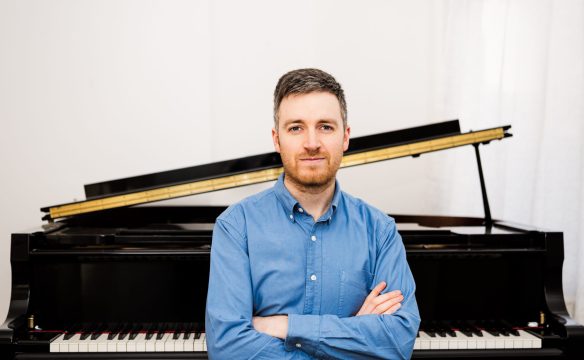
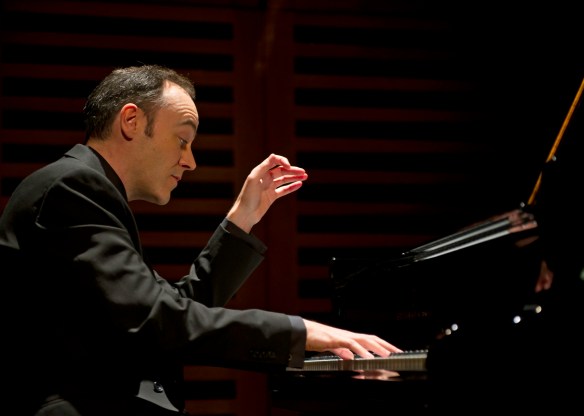
Javier Perianes (piano, above)

Chopin Prelude in C Op.28/1 (1839) (1:44-2:25 on the broadcast link below)
Debussy Danseuses de Delphes (Préludes Book 1) (1909) (2:30-5:45)
Chopin Berceuse (1843-4) (5:50-10:38)
Debussy Clair de lune (Suite Bergamasque) (1890) (10:39-15:44)
Debussy Les sons et les parfums tournent dans l’air du soir (Préludes, Book 1) (1910) (15:57-19:36)
Chopin Ballade No 4 (1842-3) (19:44-30:51)
Debussy La puerta del vino (Préludes Book 2) (1913) (32:47-36:15); La sérénade interrompue (Préludes Book 1) (1910) (36:18-39:02)
Falla Fantasia baetica (1919) 39:05-51:16

Wigmore Hall, London; Monday 9 April 2018

You can listen to the BBC Radio 3 broadcast by clicking here

Written by Ben Hogwood

The Debussy centenary has brought out some imaginative programmes from performers, and the inspiration for this BBC Radio 3 Lunchtime Concert from the Wigmore Hall lay in one of Javier Perianes‘ earlier recital discs. He played much of the music in an unbroken stream, giving a lovely continuity to the music making while linking the composers too.

Debussy loved Chopin, describing him as ‘the greatest of us all, for through the piano alone he discovered everything’. Comparing the first published preludes by the composers was intriguing, the urgency of the Chopin (1:44 on the broadcast link above) countered by the sultry, easily paced Danseuses de Delphes (2:30). Chopin’s Berceuse (5:50) and the famous Clair de Lune from Debussy’s Suite Bergamasque (10:39) share the same key of D flat major, and here the join between the two was exquisitely close. In the Berceuse the boat, having initially started out on a millpond, ran into some pretty gusty weather, while the dance of the moonlight on the water in the Debussy was allowed to take its time to ripple.

The following Les sons et les parfums tournent dans l’air du soir (15:57) was deeply atmospheric, shot through with mystery – but then Perianes turned to a powerful and very fluid account of the Ballade no.4, (19:44) passionately played and emphatically signing off the concert’s first sequence.

The second sequence was more noticeably modern, its musical language shifting forwards. La puerta del vino (32:47) crackled with tension, an insistent Habanera rhythm becoming the lynchpin for a rich vein of improvisatory work up top, while the humour of La sérénade interrompue (36:18) was brilliantly caught, with its stop-start gait and Spanish flair.

The latter quality was fully in evidence for an assertive and exciting Fantasia baetica (39:05), Manuel de Falla‘s biggest work for solo piano. This was packed with big dance crossrhythms, powerful musical statements and substantial added note harmonies. There were some very striking moments such as the big, bell-like melody from 49:13, which seems to be an attempt on the part of the piano to imitate the guitar, and Perianes swept all before him to an all-encompassing finish.

For the encore Perianes turned our glances sideways to another of Debussy’s close if less likely influences, the composer Edvard Grieg, whose piano music is still massively underrated. The Notturno (52:21) chosen by today’s pianist was beautifully judged and vividly pictorial.

Further listening

You can listen to the music played in this concert on the Spotify playlist below:

Wigmore Mondays: Danny Driver plays Dreamscapes by Messiaen, Saariaho, Ligeti & Schumann

Danny Driver (piano, above – photo credit Richard Haughton)

Messiaen Prélude No 5 (Les sons impalpables du reve) (1928-9) (2:36-8:15 on the broadcast link below)

Saaraiaho Ballade (2005) (8:30-15:06)

Ligeti Étude No 6 (Automne à Varsovie) (1985) (15:29-20:37)

Schumann Kreisleriana Op.16 (1838) (23:17-59:32)

Wigmore Hall, London; Monday 26 March 2018

You can listen to the BBC Radio 3 broadcast by clicking here

Written by Ben Hogwood

A fascinating program from Danny Driver on the theme of ‘Dreamscapes’, an hour away from reality in the company of composers intent on using the piano to express new harmonies and colours.

Few 20th century composers had a greater sense of colour than Olivier Messiaen, and the vivid shades of his Prélude No.5 began the recital. Titled Les sons impalpables du reve (The Impalpable Sounds of a Dream), it was described by its composer as ‘polymodal, consisting of a blue-orange mode with a chordal ostinato and cascades of chords, and a violet-purple mode having a copper timbre. Note the pianistic writing, composed of triple notes, rapid passages in chords, canon in contrary motion, hand crossing, various staccatos, brassy louré, gem effects’. All elements to enjoy in Driver’s richly textured performance, from 2:36 on the broadcast link above – with a questioning feel to some of the harmonic phrases.

Then a relative rarity, a piano work by Kaija Saariaho, the Finnish composer whose output until now has largely concentrated on the orchestra and works for the stage. This time the composer ‘wanted to write music with a melody that grows out of the texture before descending into it again; a work that constantly shifts from a complex, multi-layered texture to concentrated single lines and back again’. From 8:30 on the broadcast you will hear the Ballade under the assured control of Driver, in a performance of great intensity that plummets back to earth at the end.

For the third of this group Driver intriguingly chose Ligeti’s Étude no.6 (15:29) – with the immediately recognisable, rarefied sound world of the composer. The fingers of the right hand worked largely in octaves here, with richly layered music supporting the descending melodies – until absolutely everything descended at the end in Driver’s powerhouse performance.

Schumann’s Kreisleriana is a group of eight pieces inspired by E.T.A. Hoffmann’s fantasy on the imaginary musician Johannes Kreisler. Each of the sections is in direct contrast to its neighbour, reflecting the character’s manic depression – with which Schumann may have felt an affinity given his own extremely variable state of mind. Certainly inspiration was at hand for this substantial work, which he completed in the space of just four days in 1838, before revisiting slightly in 1850.

Inevitably the muse of Clara Schumann, Robert’s soon-to-be-wife, is close at hand – and explains the outpouring of feeling in each of the works. The pieces vary between between dramatic, tempestuous fantasies such as the first, third and seventh numbers, and deeply personal thoughts expressed in beautiful surroundings, as in the second piece, the longest in the cycle by far.

Schumann sets up a tonal conflict, too – the fast pieces are in the minor key, and most rooted on G – nos. 3, 5, 7 & 8 fall into this category – while the slower, tender pieces (2, 4 & 6) are conceived around B flat major, G minor’s closest relative. The tension between the two, as well as an abundance of melodic material, lay at the heart of Danny Driver’s interpretation.

Driver clearly loves this music, and gave a passionate performance, enjoying the unbroken stream of inspiration in the first piece (23:17), then the repose and reflection in the second (26:14), the pianist allowing plenty of room for thought and contrast between the faster episodes in this much longer piece.

The third piece set up an excitable drama (36:36) with a commanding left hand, while the fourth responded once more with calm introspection (41:45). The fifth piece was detached in this performance, quite an edgy main idea (45:30) giving way to a more graceful centre. Appropriately the sun appeared during the sixth piece (49:18), giving a promise of the spring we are all hoping will arrive soon – and then Driver tore into the seventh piece with relish (53:32).

Any performance of Kreisleriana lives or dies by the last piece, a playful but rather haunting finale (55:56) that rises and falls like a bird on the wing. Driver caught its essence superbly here, with plenty of give and take in the tempo to give the melody its natural rise and fall. Schumann’s music is at its most exquisite here.

For an encore Driver turned full circle, bringing us back to Messiaen for another Prélude – his first, La colombe (The Dove) – a sign that birds would be his principal subject matter when writing music!

Further listening

You can listen to the music played in this concert on the Spotify playlist below – which in the absence of a version from Driver includes Alfred Brendel’s recording of Kreisleriana:

Danny Driver’s discography includes a recent landmark recording of piano concertos by women composers for Hyperion, bringing the works of Dorothy Howell, Amy Beach and Cécile Chaminade:

YCAT at the Wigmore Hall: Savitri Grier & Richard Uttley play Poulenc, Messiaen & Beethoven

Savitri Grier (violin, above), Richard Uttley (piano, below – photo credit Cathy Pyle)

Poulenc Violin Sonata (1942-3)

Messiaen Theme and Variations (1932)

Beethoven Sonata for Violin and Piano in C minor Op.30/2 (1803)

Wigmore Hall, London; Tuesday 6 March 2018

Written by Ben Hogwood

I cannot recommend the YCAT Lunchtime Concert series at the Wigmore Hall highly enough. It gives us a chance to see the professional classical performers of tomorrow, and allows appreciation of just how much young talent there still is, waiting to be discovered. The YCAT (Young Classical Artists Trust) scheme gives an incredibly valuable service to classical music, giving young artists selected through a rigorous audition process the security of career guidance, a dedicated artist manager and a concert platform including appearances such as this at the Wigmore Hall.

This particular recital brought a current member of the scheme, violinist Savitri Grier, and an ‘alumni’, pianist Richard Uttley, who is building an impressive portfolio headed by contemporary music. This well chosen program showed the two have an extremely sound musical chemistry, and also showed Grier to be a formidable violinist of full tone and strong personality.

She immediately took command of the Poulenc Violin Sonata, so much so that even at the back of the hall it was easy to appreciate the depth and breadth of her phrasing. On occasion the artists were even a touch too loud, but that could hardly be considered a massive problem, especially with the virtuosity and crisp ensemble on display in the outer movements. The slightly resentful Adagio slow movement, written in the midst of the Second World War, showed the pair at their most sensitive, reigning in the volume to give some softly voiced thoughts that were truly touching.

Messiaen’s Theme and Variations occupy a rather singular place in the composer’s output, but show what he was to become – and convinced a young Pierre Boulez when he heard them that he had to study with the composer. The theme itself is mysterious, and both performers enjoyed this and the already expansive harmonic language adopted by the composer. Gradually the variations grew in intensity, reaching an impressive apex.

Mozart and Beethoven were the two composers to advance the Violin Sonata into the 19th century, writing as they were for the violin and piano as equal instruments. If anything Beethoven’s C minor example, the second of his game changing Op.30 trio of works, makes greater demands on the piano – but it is arguably the most ambitious work of its time for the combination.

The second Beethoven ‘C minor’ work in consecutive days at the Wigmore Hall (see Monday’s Leon McCawley recital for more), it exploded into life through an incredibly energetic and virtuosic performance. Both Grier and Uttley took a punchy approach to the first movement’s trade-offs, their ensemble particularly secure, but as the work progressed there was also room for humour (in the third movement Scherzo) and a greater elegance (the second movement Adagio cantabile, sensitively played).

Beethoven’s gruff exterior won out though, and in the finale, where Uttley rose to the demands of some fiendish scales demanded by the composer, there was a great tête-à-tête between the two players, an engaging game of cat and mouse where both were ultimately crowned the winners.

Further listening

You can listen to the music played in this concert on the Spotify playlist below:

Wigmore Mondays: Leon McCawley plays Haydn, Chopin, Beethoven & Hans Gál

Leon McCawley (piano, above – photo credit Clive Barta)

Haydn Piano Sonata in C minor, HXVI:20 (1771) (1:41 on the broadcast link – 18:08)

Hans Gál Three Preludes, Op 65 (1944) (19:34 – 28:12)

Chopin 2 Nocturnes, Op 37 (1838-9) (29:32-42:07)

Beethoven 32 Variations on an Original Theme in C minor, WoO 80 (1806) (44:07 – 53:49)

Wigmore Hall, London; Monday 5 March 2018

You can listen to the BBC Radio 3 broadcast by clicking here

Written by Ben Hogwood

Leon McCawley is an enterprising pianist who looks to play both the familiar and the unfamiliar, as his intriguing discography for the Somm and Avie labels shows. This concert, carefully planned, distilled this approach into an engrossing hour’s music of darkness and light.

The darkness was present in the works of the program inhabiting minor keys, especially those by Haydn, the first by Chopin, and the towering Variations of Beethoven.

Haydn first (from 1:41 on the broadcast) – one of his many Sonatas for piano that helped revolutionise the instrument’s reach and capacity. This particular example had a first movement (from 1:41, marked Moderato) that was surprisingly reserved and doleful for its composer, as though he had something on his mind.

McCawley moved into an equally serious Andante con moto (from 8:53), but as this settled a more lyrical approach took hold, rather like an aria. Brightening as the movement progressed, its elegance was countered by the finale (marked Allegro, from 13:46), which was detached in its delivery from McCawley, becoming more worked up as the themes were developed before a darker end at 18:08.

The Hans Gál pieces were undoubtedly the curiosity of the program. Gál’s renaissance of recent years has unearthed some very interesting music. A Jewish composer, he had to flee the Nazi regiment in the 1930s for the UK. Tragedy took hold there also, in the form of his elder sister and one of his sons taking their own lives, before the family were able to settle more in Edinburgh, where he worked for Donald Tovey at the university.

Due to the prominence of tonal writing in his music, and the unfashionable stance of this approach at the time, his music was more or less forgotten – until recently, where the conductor Kenneth Woods has revived the four symphonies, Matthew Sharp the music for cello and McCawley the piano music.

This was essentially a taster of freeform pieces, the Three Preludes beginning with something of a whirlwind at 19:34. They descended into a mid-range cluster of notes before the busy-ness returned. The second prelude (22:13) had more private thoughts, and was more romantic, while the third (26:10) was playful and elusive.

McCawley then moved on to thoughtful Chopin, the first of the 2 Nocturnes Op.37 (29:32) darkly shaded and very sombre. It was a nice touch moving from G minor to G major (36:30) for a more carefree, triple time piece, subtly charming.

These served as the ideal lead-up to some tempestuous Beethoven. When the composer is operating in the key of C minor you can usually expect fireworks – the Symphony no.5, the Pathétique piano sonata and the Piano Concerto no.3 are just three examples of the brimstone we hear in this key. The 32 Variations (from 44:07) are close in date to the Fifth, and have similar qualities – though here Beethoven takes a small chord progression cell and works his magic with it.

From the start McCawley powered through some impressive pianistic feats, using a really strong sense of phrasing to give the music space when needed. From 47:01 the music effectively moved into a slow ‘movement’ in C major, but it soon returned with extra vigour to the home key.

This was a brilliant performance, capped by an inspired encore of the same composer’s Bagatelle in C major Op.33/2 (54:47) – McCawley careful to choose an appropriate key. This was enjoyably mischievous, Beethoven playing around with both pianist and listener.

Further listening

You can listen to the music played in this concert on the Spotify playlist below – which includes McCawley’s own recordings of the Haydn and Gál:

McCawley is the only pianist to date who has recorded the complete piano works of Hans Gál, and the album is also on Spotify:

Wigmore Mondays: Aleksandar Madžar plays Beethoven’s ‘Hammerklavier’ Sonata

Aleksander Madžar (piano, above)

Beethoven Piano Sonata no.29 in B flat major Op.106 Hammerklavier (1817-18) (2:35-48:14 on the broadcast link)

Wigmore Hall, London; Monday 26 February 2018

You can listen to the BBC Radio 3 broadcast by clicking here

Written by Ben Hogwood

Is there a more complete work for piano than Beethoven’s Hammerklavier sonata? Few pieces are bigger in scope, and yet at the same time few speak as intimately as this piece does, especially in the slow movement.

It therefore takes a special performance to communicate the strengths of the piece in full to an audience, but Aleksander Madžar went some way to doing that at the Wigmore Hall.

The name Hammerklavier comes from the German word, specifying the piece should be played on the more modern fortepiano and not the harpsichord. It also phonetically describes the opening phrase in the first movement (from 2:35-14:14 on the broadcast, marked Allegro) where it really feels like the piano is being used as a forceful rhythm instrument rather than for its melodic beauty. Madžar took a much more relaxed view of the opening statement, communicating the onset of the drama but bringing it in much more gradually. He did at times have a shrill ring to the top of his range, especially when the right hands were playing in octaves.

That said, it was clear how he wanted this performance to go, and the structure of the movement made sense under his hands, with the repeat of the first part of the first movement (the exposition) included.

The second movement Scherzo (14:15) had a considerable breadth of colour, and subtly pointed out Beethoven’s harmonic deviations, not least in the ‘trio’ passage where Beethoven briefly visits the minor key (15:18). Here the sound was uncommonly hollow, and try as I might I could not dismiss the notion of empty bottles or bones rattling in a cage. Very macabre!

The slow movement (from 18:05, marked Adagio sostenuto) surely holds the key to a successful performance of the Hammerklavier. It is one of those moments in late Beethoven where time seems immaterial, where each phrase has a great meaning and where the right hand, although slow, is purely melodic. It anticipates music that has been written more than a century since – Mahler and Schoenberg, to name just two – but is still recognisably of Beethoven’s time. We were hanging on each of Madžar’s notes here, as he slowly traversed each section to set himself up for the mighty fugue. The unhurried phrases unfurled with natural ease, and the thoughtfulness and deep seated feeling could be sensed just from watching his movements.

The last movement Introduzione (35:32) began with a strong sense of anticipation, leading up to the big fugue (38:14). This took a little while to straighten itself out – to be fair it must be an incredibly difficult switch in the mind to go from a period of such stillness to rapid movement – but once Madžar had settled on a tempo it gathered considerable momentum. The end, when it came, was fulsome and thrilling.

An encore in this context was risky but the choice was ideal – the Allemande from Bach’s Partita no.1 in B flat major (from 49:30-53:02). Carefully chosen in the same key, it shows to some extent the Hammerklavier’s past.

Further listening

You can listen to the music in this concert in a powerhouse of a recording from Emil Gilels, paired below with what is commonly regarded as the first of Beethoven’s ‘late’ sonatas, the A major work published as Op.101.