Wigmore Mondays – Beatrice Rana: Bach Goldberg Variations

beatrice-rana

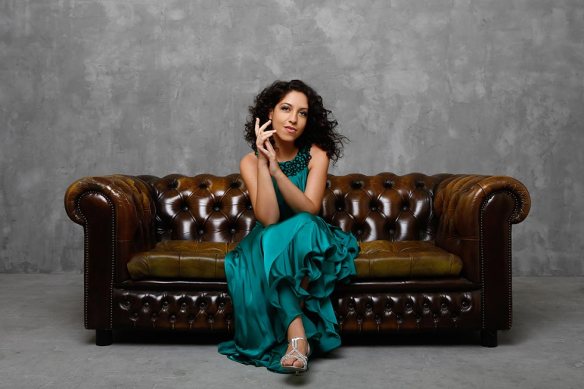
Beatrice Rana (photo Marie Staggat)

J.S. Bach Goldberg Variations, BWV988
johann_sebastian_bach
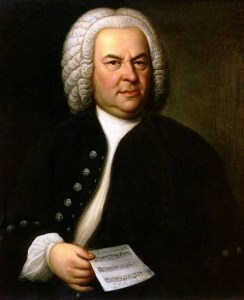
J.S. Bach (1658-1750)

Listen to the BBC broadcast here

Written by Ben Hogwood

The famous Canadian pianist Glenn Gould made his first, famed recording of J.S. Bach’s Goldberg Variations at the age of 23. Beatrice Rana has just completed hers at the very same age, as BBC Radio 3 presenter Sara Mohr-Pietsch informed us just before this Wigmore Hall lunchtime concert began. Of course the interpretations would be wildly different, but there was plenty here to suggest Rana is going to be a wonderful pianist for many years to come.

She decided to use Bach’s marked repeats, a move that stretched the piece to 75 minutes and caused the BBC to extend their traditional hour – a move in favour of their Radio 3 New Generation Artists that suggests they too know exactly what she’s about.

Rana took her time with the opening Aria, setting the scene perfectly (from 1:49 on the broadcast link above). Bach’s timeless writing made the greatest possible impact because of this, in music of great, profound meaning, and whenever textures filled up later on there was always the knowledge this sublime music would return to wrap things up at the end.

Not that Rana gave us anything other than clarity, definition and musicality. Only once was her rhythmic profile noticeably challenged, as she took a while to get a definitive pulse for the seventh variation, a gigue, but elsewhere she was white hot, fingers skating over the keyboard in the toccata variations. In the slow variations she gave the music plenty of time to breathe, investing deep emotion into the minor-key sarabande (from 32:57) and similarly pained variation 25 (from 55:07) She also used helpful silences to signpost the music and give both her and the audience chance to take a breath and digest the music a bit, wondering at this great music.

On this evidence, her forthcoming disc of the Goldberg Variations for Warner Classics should be snapped up, and future concerts followed closely. She certainly did Bach full justice here.

Further listening

You can watch Beatrice in the opening bars of the Goldberg Variations, recorded last year:

…or you can take in Gould’s 1955 recording of the Goldbergs below:

Meanwhile if it’s more Bach that you fancy, this Glenn Gould album gives you access to the amazing world of the Italian Concerto, the Chromatic Fantasy and Fugue in D minor and the Partitas for keyboard:


Wigmore Mondays – Richard Egarr: Keyboard music of the Tudors and Stuarts

Richard Egarr

Richard Egarr (photo Marco Borggreve)

Byrd Fantasia in A minor; Pavan and Galliard; The Bells

Purcell Suite in G major; Ground in C minor

Blow Chaconne in FaUt

Purcell Suite in G minor; Suite in D major; Ground in D minor

L-R William Byrd (c.1540-1623);   Henry Purcell (c.1659-1695); John Blow (1648-1708)

Listen to the BBC broadcast here

Written by Ben Hogwood

The harpsichord enjoys a rather chequered reputation in concert, and from personal experience at least among friends I can say it is one of those ‘marmite’ instruments.

Certainly it is unusual for it to have a place alone in a BBC Radio 3 Lunchtime Concert, yet here it was, with Richard Egarr beginning the 2017 part of the Wigmore Hall Monday lunchtime concert season.

In the event the BBC had chosen well, Egarr compiling a fascinating program of keyboard music from the Tudors (Byrd) and Stuarts (Purcell and Blow).

The music of Byrd, a composer for Queen Elizabeth, flows with obvious inspiration. Egarr’s selection here began with the free and at times elaborate Prelude and Fantasia (from 1:43 in the broadcast), moved on to a more stately Pavan and Galliard (from 10:54 and 14:39) from the impressive collection My Lady Neville’s Book and concluded with the descriptive The Bells (16:19), a remarkable piece of writing beginning with a single toll and working its way intricately through thrilling peals of bells.

Purcell, even now one of the greatest composers England has ever produced, appears to have written his harpsichord suites as a tuition aid, yet they are all characterised with dances fast and slow. Egarr played three suites here, the G major work (from 23:55 on the broadcast) the simplest and the G minor (from 37:07), with its brisk Corant dance, seemingly the most challenging. Most engaging, however, was the three-part D major suite (from 45:45), with its thoughtful Prelude and brief but vigorous Hornpipe.

Egarr also included two brief Grounds (pieces with a short, recurring bass line) by Purcell (27:24 and 49:31), with a third, A New Ground, as an encore (52:50). We also heard a Chaconne by Purcell’s teacher John Blow (30:18), a chirpy piece that became increasingly busy and eventful, leading to a series of grand, block chords near the end.

Egarr’s performance manner was conversational. He turned his own pages, and even gave the harpsichord itself a clap at the end, as though thanking it for staying well-tuned! His demeanour encouraged the audience to feel part of an intimate concert, and lightened some of the heavy cloud around London for the first Monday proper of 2017.

Further listening

You can listen to the music in this concert on Spotify below, with recordings from Egarr himself:

Wigmore Mondays – Marie-Elisabeth Hecker & Martin Helmchen

hecker-helmchen

Marie-Elisabeth Hecker (cello) & Martin Helmchen (piano)

J.S. Bach Viola da gamba Sonata no.3 in G minor, BWV1029 (late 1730s-early 1740s) (14 minutes)

Stravinsky Suite Italienne (arr. Piatigorsky) (1932/33) (20 minutes)

Brahms Cello Sonata no.1 in E minor Op.38 (1862-5) (23 minutes)

Listen to the BBC Radio 3 broadcast here, until 23 November

Arcana’s commentary

Pairing Bach with Brahms was a smart move for this concert.

When Bach was writing for the viola da gamba – essentially an early form of cello with no spike and sometimes five strings! – he was one of the first to recognise its potential as a treble instrument as well as a bass.

To that end the three sonatas he published for viola da gamba and ‘continuo’ – which in this case would normally mean a harpsichord. The pieces transcribe well for modern cello and piano though, as can be heard from 1:35 on the broadcast. It took a little while for Marie-Elisabeth Hecker to settle her tone and intonation in this performance, but once evened out the performance is notable for its clarity and expression at the higher end of the cello. This becomes especially obvious in the Adagio slow movement (from 7:00), which takes the form of an aria. The last movement (12:22) is like a fugue, with its question and answer phrases.

Stravinsky’s Suite Italienne comes from a period in his compositional life where he was looking back to the music of classical and baroque times, taking that music as inspiration, and remoulding it into something that sounded much more modern. For his ballet Pulcinella he took the music of Pergolesi (1710-1736) – or a contemporary, as was recently suggested – and gave it new musical clothes, with spiced-up harmonies and colourful orchestration. Several movements from Pulcinella were reworked for violin and piano to become the Suite Italienne, after which point the cellist Gregor Piatigorsky realised with a few more tweaks he could expand the repertoire of his own instrument.

This was done with Stravinsky’s approval, and the results – as you can hear from this concert – are invigorating and humourous. The nip and tuck between cello and piano is brilliantly caught in the Tarantella (29:49) but in truth all the movements carry the same levels of excitement – running through a sprightly Introduzione (17:33), Hecker’s graceful Serenata (20:00), a surprisingly vigorous Aria (23:45), a sombre and slow Minuetto that grows in stature (32:30) before leading into the vivacious Finale (34:48)

The Brahms (beginning at 39:25) is a piece that also looks back for its inspiration – to Bach, who inspires the finale (55:29) and perhaps to classical composers for the second movement minuet (50:00)

Marie-Elisabeth Hecker and Martin Helmchen give a superb and very fluent performance of this work, getting the balance between cello and the active piano part just right. The similarities between Brahms and Bach are clearest in the two composers’ use of counterpoint – that is a number of different melodies being played simultaneously or in complement to each other.

The flow of melodies in the first movement is unbroken and rather beautiful, especially when the piano briefly switches to a major key (42:13) Elsewhere the mood is darkly passionate and powerfully played.

The Minuet has an attractive poise, enjoying the relative mystery of its central section (from 51:43) while the finale has a steely sound to its theme from the piano (55:29) and the cello’s response (55:37) – all set out as a fugue, developing considerable momentum through to the end, which is straight faced but roundly optimistic at the same time.

This was a brilliantly played account of the Brahms, ideally balanced and communicating the composer’s rich abundance of melodies.

Further listening

The Spotify playlist below – Looking back to move forward – examines more of Brahms and Stravinsky’s use of techniques of the past to shape their own music of the future. You can also hear Marie-Elisabeth Hecker and Martin Helmchen in their new disc of the Brahms Cello Sonatas.

by Ben Hogwood

Wigmore Mondays – Nelson Goerner plays Debussy & Chopin

nelson-goerner

Nelson Goerner (piano) © Jean-Baptiste Millot

Chopin Polonaise in F# minor Op.44 (1841) (11 minutes)

2 Nocturnes Op.62 (1846) (12 minutes)

Polonaise in A flat major Op.53 (1842-3) (7 minutes)

Listen to the BBC Radio 3 broadcast here, until 23 November

Arcana’s commentary

For both Chopin and Debussy the piano became arguably their primary means of musical expression. Both used relatively traditional forms – studies, preludes for instance – but stretched them from conventional structures to suit their own means.

Here we heard seven of the twelve Préludes Debussy wrote as a book, the first of two, published in 1909 and 1910. These are character pieces where he was painting a picture or an impression, without always specifying his exact stimulus. Some were more obvious; others were left to the player for interpretation.

Nelson Goerner made each of these his own. The languid, humid atmosphere of Danseuses de Delphes (1:32 on the broadcast), with control and shading, set the scene and led to an enjoyable and mysterious La serenade interrompue (4:35). This was playful but wary too – dancing but not wanting to fully let itself go.

The ‘underwater rolling of pebbles’ from Verlaine’s poem could be sensed in Le vent dans la plaine (7:00), while the simplicity of La fille aux cheveux de lin (9:09) was rather moving. La danse de Puck (11:24) could have found the Midsummer Night’s Dream character in a more playful mood perhaps, while the thick atmospherics of Les sons et les parfums tournent dans l’air du soir (14:02) hung heavy on the air. Finally Les collines d’Anacapri (17:58) danced and shimmered, controlled but letting itself run wild too. The last four high notes were hammered out convincingly (20:37)

Goerner’s Chopin was rather different. The first of the Polonaises (22:14) was Chopin’s most ambitious work to use the dance form, using a Polonaise in its outer sections but a Mazurka in the middle (from 26:56). This central section had more charm but the outer sections were stern, almost obsessive – and brilliantly played. Their return after the Mazurka (30:05) was like two bolts of lightning, the mood almost that of a Tango from Goerner’s native Argentina.

The Nocturnes (33:40) and (40:12) could have done with a bit more air and relaxation; Goerner seemed rather anxious to push on with them. That said the trills of the first (from 37:55) were expertly managed, while the second was really nicely pointed.

The Polonaise (45:53) was heroic indeed, strutting its stuff but frequently dazzling, especially in Goerner’s white hot ostinato (49:02)

There was an encore to finish, an Impromptu of poise and grace (53:48), more of a Nocturne than the other two arguably.

Further listening

There is something rather special about Polish piano music – and to continue from the Chopin the Spotify playlist below offers up some lesser-heard treats in the form of piano concertos by Paderewski and Moszkowski, prefaced by a sprinkling of exotic Mazurkas from Szymanowski.

by Ben Hogwood

Wigmore Mondays – Vilde Frang & Aleksandar Madžar play Bartók and Schubert

vilde-frang-aleksandar-madzar

Vilde Frang (left, violin), Aleksandar Madžar (right, piano)

Bartók Violin Sonata no.1 (1921) (33 minutes)

Schubert Fantasy in C major D934 (1827) (21 minutes)

Listen to the BBC Radio 3 broadcast here, until 16 November

Arcana’s commentary

It is easy to see why Vilde Frang is held in such high regard. This contrasting program of Bartók and Schubert showed a steely side to her playing in the former, but also a purity of tone that could be easily appreciated throughout.

These qualities served her well in a powerful rendition of Bartók’s massive Violin Sonata no.1, but she could not have made this impact without Aleksandar Madžar’s superb piano playing, notable for its clarity and rhythmic precision.

Bartók and rhythm are inseparable, and the hold that folk music has on his compositions was all too clear in the syncopations and cross rhythms that Frang and Madžar exploited here. The angular tunes of the first movement (first heard at 2:07) had an assertive mood, brilliantly played.

Richard Bratby’s excellent program note reminded us how modern the music must have sounded in 1922, when Bartók himself played piano with violinist Jelly d’Aranyi, who became an important creative muse. Frang and Madžar powered through the first movement, making light of its technical difficulties, but in the second movement time stood still. Frang’s sweet but thoughtful tune, initially heard alone (from 14:26), was complemented by a solemn and mysterious chorale from Madžar (16:00), the two forces gradually aligning but still lost in a distant world.

The finale arrived with a flourish (25:15), both performers tackling it with some relish and achieving a remarkable unity of ensemble at the end (from 32:30), finishing with a terrifically spicy, bluesy chord.

Schubert’s Fantasy in C major can seem like a long piece in the wrong hands, but here it came alive. Completed in the last year of his life, it is conceived in a single span of four distinct sections, and is a very original piece of writing. Balance between the violin and piano is key, and this was spot on for the moving opening statement, where Madžar had a lot of work to do but was always responsive to Frang’s soft intonation (from 37:09)

A bracing Allegretto section (from 40:23) led to the centrepiece, a Theme & Variations (45:44) The origin of the theme, a Schubert song, was abundantly clear in this lyrical performance, while there was some sparkling playing from Madžar as the variations took hold (try 48:57) This flair and musicality continued to the return of the soft first movement theme, now shaping up in the finale (52:36), an emotional reunion in these hands before a convincing finish (from 57:40).

This was a superb concert, affirming Vilde Frang as one of the best violinists of her generation on the concert circuit, but also illustrating just what a fine pianist Aleksandar Madžar is too. Hear this if you can!

Further listening

You can hear more of Vilde Frang in an early album recorded for Warner Classics with Michail Lifits. Here she brings a sunny tone to violin sonatas by Grieg (no.1) and Richard Strauss, full of youthful exuberance, while there is more Bartók in the form of his Sonata for solo violin, a tour de force:

by Ben Hogwood