In concert – Quatuor Danel: Shostakovich & Weinberg #6 @ Wigmore Hall

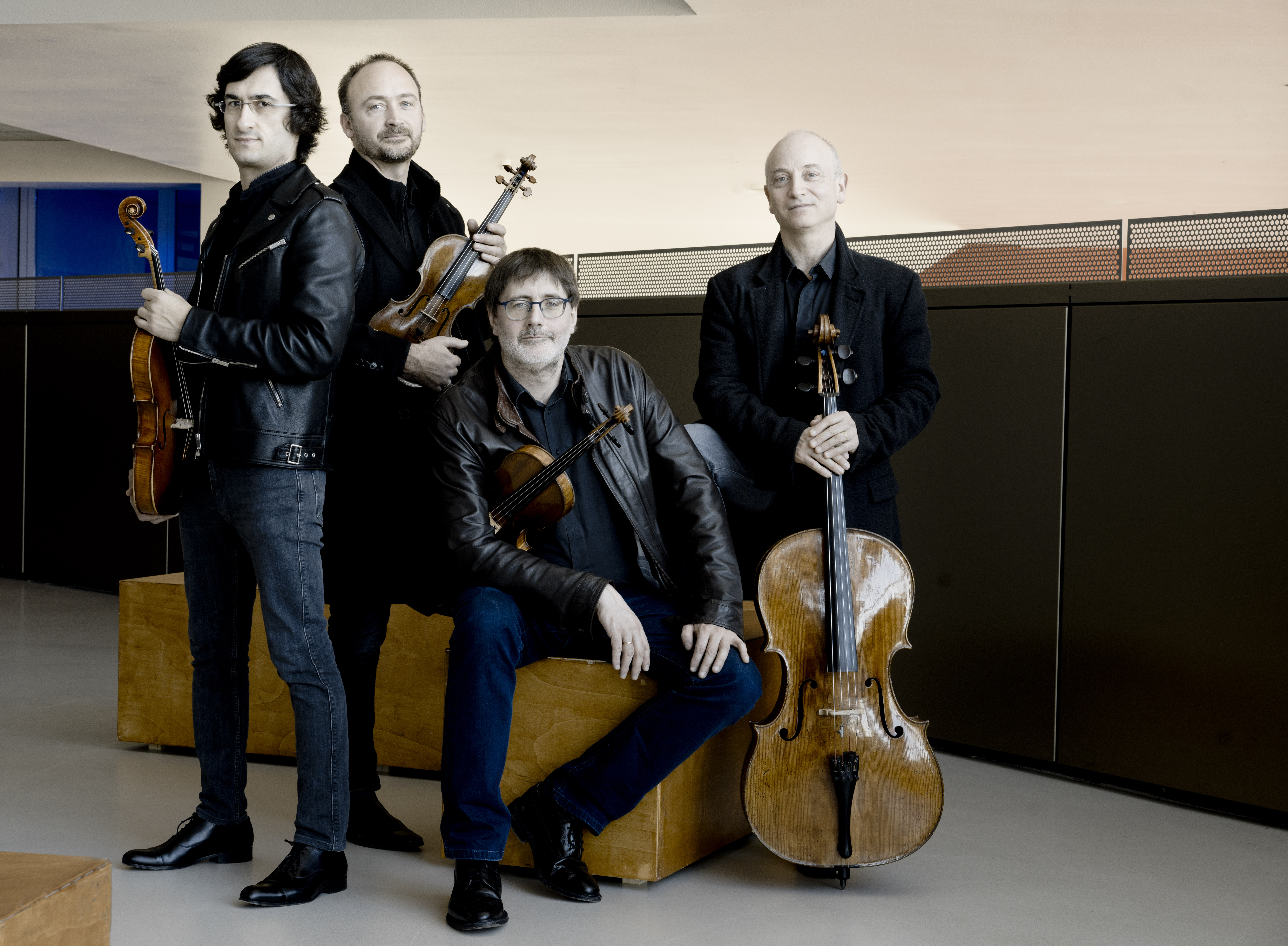
Quatuor Danel [Marc Danel & Gilles Millet (violins), Vlad Bogdanas (viola), Yovan Markovitch (cello)]

Weinberg String Quartet no.9 in F# minor Op.80 (1963)
Weinberg String Quartet no.10 in A minor Op.85 (1964)
Shostakovich String Quartet no.9 in E flat major Op.117 (1964)

Wigmore Hall, London
Wednesday 16 October 2024

by Richard Whitehouse Photo (c) Marco Borggreve

Quatuor Danel reached the effective mid-point of its Shostakovich and Weinberg cycle with this programme featuring two of the latter composer’s lesser if still absorbing string quartets alongside one from the former that has come belatedly to be held among his most revealing.

Coming soon after his Fifth Symphony (arguably the finest of this cycle), the Ninth Quartet finds Weinberg at something of a stylistic crossroads with those essentials of his subsequent phase almost within reach. It opens with an Allegro which is among his most visceral in any medium – the Danel (rightly) giving full rein to a seething energy, barely held in check, then to which the Allegretto functions as a shock absorber given its intermezzo-like speculations. The ensuing Andante ventures further towards that secretive and often confessional intimacy central to its composer’s thinking henceforth, though here its introspection is mitigated by a finale which unfolds almost as a synthesis of what went before – the Danel duly mindful of a gradual momentum that does not bring resolution as evade the issue with a nonchalant shrug.

Barely a year on, the Tenth Quartet has the same four-movement and 25-minute dimensions but is otherwise a very different proposition. Here the initial movement is an Adagio whose rhetorical fervency has turned in on itself well before the end, leaving an Allegro to provide oblique continuity with its simmering intensity that never quite risks outright confrontation. If the Adagio that follows promises such, its gestures prove too brittle and short-winded to sustain a more expansive movement – the intensity soon making way for a final Allegretto that sounds intent on avoiding closure with its succession of fugitive interactions, elegantly articulated here, whose lilting gait ultimately alights on the tardiest of cadences. As with its predecessor, any bringing of the work emotionally full circle is conspicuous by its absence.

Now that a first movement has been realized and performed, it is clear what Shostakovich had intended as his Ninth Quartet would have been very different from what emerged – the trenchant while slightly foursquare manner of that earlier effort replaced by the undulating lyricism of a Moderato as methodically sets out all those salient motifs for what follows. Its equivocation was ideally conveyed here – no less than the elegiac character of its successor, then a central movement of a liveliness increasingly waylaid by questioning and self-doubt.

From here, a second Adagio veers between inward musing and explosive pizzicato outbursts as provoked impassioned responses. The emotional ante duly upped, the final Allegro surges forth with new-found energy and purpose – taking in a truculent, folk-tinged episode before breaking off for a return to those pizzicato exchanges. Performances of this work often lose focus at this juncture, but the Danel brooked no compromise as the movement fairly hurtled to a close of manic defiance in what was a notable instance of music ‘playing’ its musicians.

Quite a performance with which to end this latest instalment of the Danel’s dual odyssey but, as has become usual, an encore was forthcoming: the Polka from the ballet The Golden Age affording a sardonic postlude with the insouciance of an earlier, not necessarily ‘golden’ age.

You can hear the music from the concert below, in recordings made by Quatuor Danel -including their most recent cycle of the Shostakovich quartets on Accentus:

For more information on the next concert in the series, visit the Wigmore Hall website. You can click on the names for more on composer Mieczysław Weinberg and Quatuor Danel themselves.

Published post no.2,236 – Saturday 19 October 2024

In Concert – Alina Ibragimova & Cédric Tiberghien @ Wigmore Hall: Janáček, Enescu, Barry & Beethoven

Alina Ibragimova (violin), Cédric Tiberghien (piano)

Janáček Violin Sonata in G sharp minor JW VII/7 (1913-15, rev. 1916-22)
Enescu Violin Sonata no.3 in A minor Op.25 ‘Dans le caractère populaire roumain’ (1926)
Barry Triorchic Blues (1990, rev. 1992)
Beethoven Violin Sonata no.9 in A major Op.47 ‘Kreutzer’ (1802-03)

Wigmore Hall, London
Saturday 28 September 2024

Reviewed by Richard Whitehouse

The duo of Alina Ibragimova and Cédric Tiberghien has offered some memorable recitals at Wigmore Hall during the past few seasons, with this evening’s typically diverse programme ranging over almost two centuries of compositions for the combination of violin and piano.

A first half of complementary opposites began with the Violin Sonata by Janáček. Ensuring cohesion across its four highly contrasted movements is no easy task, but the present artists succeeded admirably in this respect. Thus, the opening Con moto had an edgy ambivalence which was allayed in the Ballada – its relative repose and expressive warmth infused with a nostalgia as likely reflects the composer’s youth (and may indeed derive from one of those long-lost sonatas written while studying in Leipzig and Vienna 35 years earlier). Despite its marking, the Allegretto is a tensile scherzo whose frequently combative interplay was much in evidence here; the final Adagio then pivoting between stark plangency and a heightened eloquence which subsided into an ending whose muted regret was unmistakably to the fore.

Whatever the conceptual or aesthetic gulf between them, Enescu’s Third Sonata followed on with some inevitability. This was inspired by and recreates without quoting traditional music, as its subtitle duly indicates, and Ibragimova was alive to the musing inwardness of an initial Moderato whose ‘malinconico’ consistently undercuts any formal or expressive resolution up to a close where the songful and dance-like themes disperse into silence. The highlight was a central Andante of sustained though unforced intensity, its improvisatory aspect a stern test of coordination violinist and pianist met head-on. Almost as compelling, the final Allegro lacked a degree of inevitability in its unfolding – Tiberghien’s superbly articulated pianism less than implacable at the close, for all that Ibragimova conveyed its ominous ecstasy in full measure.

Beginning life as a test-piece for solo piano and adapted for numerous media, Triorchic Blues is Gerald Barry at his most uninhibited and would have made an ideal encore in this context – but its ever more scintillating opposition of instruments was not out of place after the interval.

This second half ended with the grandest of Beethoven’s violin sonatas, its ‘Kreutzer’ subtitle misleading yet indicative of this music’s inherent virtuosity. Ibragimova and Tiberghien made an impressive cycle of these works for the Wigmore’s own label, so it was surprising to find them at slightly below their best here. Not in the central Andante con variazioni, its judicious fusion of slow movement and scherzo rendered with unfailing poise and an acute sense of the profundity drawn out of so unassuming a theme. Yet, after its suitably arresting introduction, the first movement lacked drama – the duo playing down its rhetoric not least in a less than impulsive coda. The relentless tarantella-rhythm that underpins the finale felt similarly reined in with, again, too little of an emotional frisson as this music vividly reinforces the home-key.

What was never in doubt was their quality of playing individually and collectively, making one anticipate future recitals by these artists which will hopefully find them exploring more of that extraordinary corpus of music for violin and piano of the early and mid-20th century.

For more on the Autumn season visit the Wigmore Hall website. For more on the artists, click on the names Alina Ibragimova (violin), Cédric Tiberghien (piano), and click here for more on composer Gerald Barry

Published post no.2,316 – Sunday 22 September 2024

In Concert – Leila Josefowicz & John Novacek @ Wigmore Hall: Debussy, Szymanowski, Bray & Stravinsky

Leila Josefowicz (violin, above), John Novacek (piano, below)

Debussy Violin Sonata in G minor L140 (1916-17)
Szymanowski 3 Myths Op.30 (1915)
Bray Mriya (2023) [Wigmore Hall commission: World premiere]
Stravinsky Divertimento from Le Baiser de la fée (1928, arr. 1934, rev. 1949)

Wigmore Hall, London
Saturday 21 September 2024

Reviewed by Richard Whitehouse

Long among the more adventurous violinists from her generation, this latest Wigmore recital found Leila Josefowicz focussing on music traversing the boundary between Impressionism and neo-Classicism, together with a recent piece such as conveyed a meaningful relevance.

It might not be such a good idea to launch a recital with Debussy’s Violin Sonata, as this last and conceptually most fluid of its composer’s late chamber works is essentially a culmination rather than starting-point. Having rather harried its opening Allegro, Josefowicz brought keen imagination to its Intermède which none the less lacked that fantasy and lightness intended. Most convincing was its finale, the headlong succession of ideas deftly propelled to a payoff not merely decisive but of all-round conclusiveness – whatever Debussy may have intended.

Whereas this piece was admired but initially found relatively few exponents, Szymanowski’s Myths was early recognized as a milestone in its medium and has latterly regained that initial eminence. Josefowicz duly recognized these innovative qualities with an impulsive yet never wayward take on La fontaine d’Arethuse, its capriciousness finding an ideal complement in the simmering emotion and alluring poise of Narcisse – self-aware rather self-regarding as to expression – or increasingly recalcitrant playfulness of Dryades et Pan with its teasingly delayed – even almost avoided – close. Just occasionally, Josefowicz’s snatching at a rhythmic gesture denied the music its high-flown eloquence but, overall, this proved a perceptive and involving account where her interaction with John Novacek’s attentive pianism was absolute.

Those who hear the Szymanowski as a ‘sonata malgré-lui’ might feel likewise about Mriya by Charlotte Bray, which tonight had its first hearing. Its Ukrainian title variously implying ‘dream, vision, ambition and vow’, this four-movement work charted a course of terror but also resolve. The first of these infused its disparate while distinctive ideas with a momentum as merged directly into the feline capering of its successor; after which, a slower movement offered a measure of sustained if hardly serene calm, before the finale once again marshalled its disjunct gestures towards a culmination which was pointedly withheld. A symbol, perhaps, of the Ukrainian people’s struggle as is far from reaching closure let alone victory? Whatever the case, this is absorbing and deeply felt music that received a suitably committed response.

From here to Stravinsky’s Divertimento from The Fairy’s Kiss was some conceptual leap. One of several such adaptations its composer made during its career as a duo-recitalist with Samuel Dushkin, this takes in most of the ballet’s initial two-thirds – the Sinfonia by turns pensive and restive, while the rumbustious Danses suisses was irresistibly despatched. The Scherzo exuded a capering charm and the Pas de Deux moved effortlessly from its soulful Adagio, via nimble Variation, to an initially dextrous then increasingly uproarious Coda.

This recital ended in a wholly different aesthetic world from which it began, but Josefowicz’s acuity could not be gainsaid. ‘Uproarious’ was also the watchword of the encore – Novacek’s Intoxication Rag, arranged by Itzhak Perlman no less and rendered with appropriate abandon.

For more on the Autumn season visit the Wigmore Hall website – and for more on the artists, click on the names Leila Josefowicz and John Novacek

Published post no.2,309 – Sunday 22 September 2024

Wigmore Hall news – A season-long celebration of Fauré begins this September

Véronique Gens (soprano), Fleur Barron (mezzo-soprano), Laurence Kilsby (tenor), Stéphane Degout (baritone), Susan Manoff (piano), Julius Drake (piano) – all performing on Friday 13 September 2024 at the Wigmore Hall

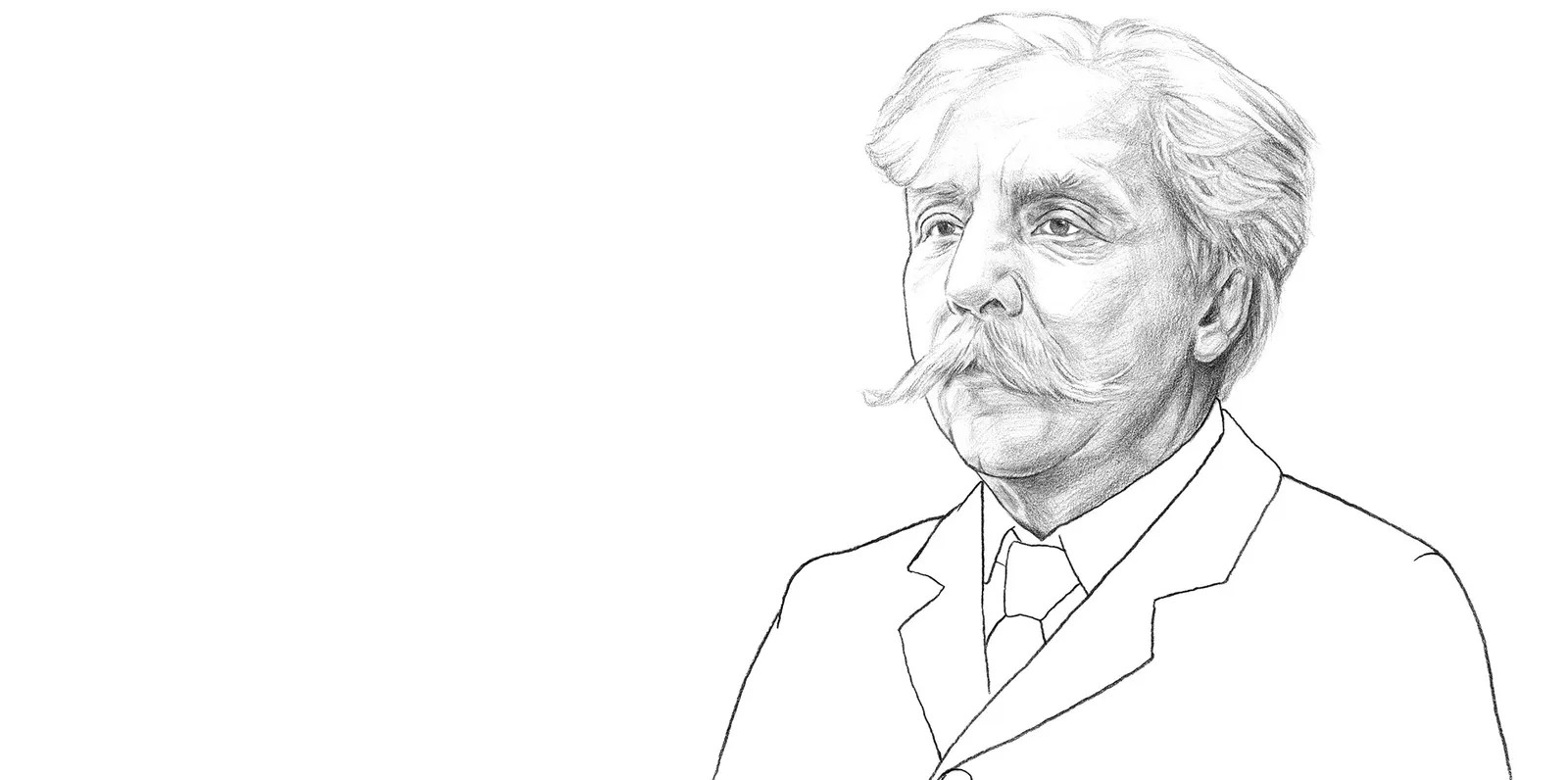
The Gabriel Fauré Centenary Celebrations open with a song gala involving some of Fauré’s finest contemporary interpreters, who explore the composer’s output at various stages, and all of whom share in the performance of his cycle La bonne chanson.

The concert will take place on Friday 13 Sep 2024, 7.30pm (click here for tickets) – and marks the start of a celebration which will cover the French composer’s celebrated chamber music.

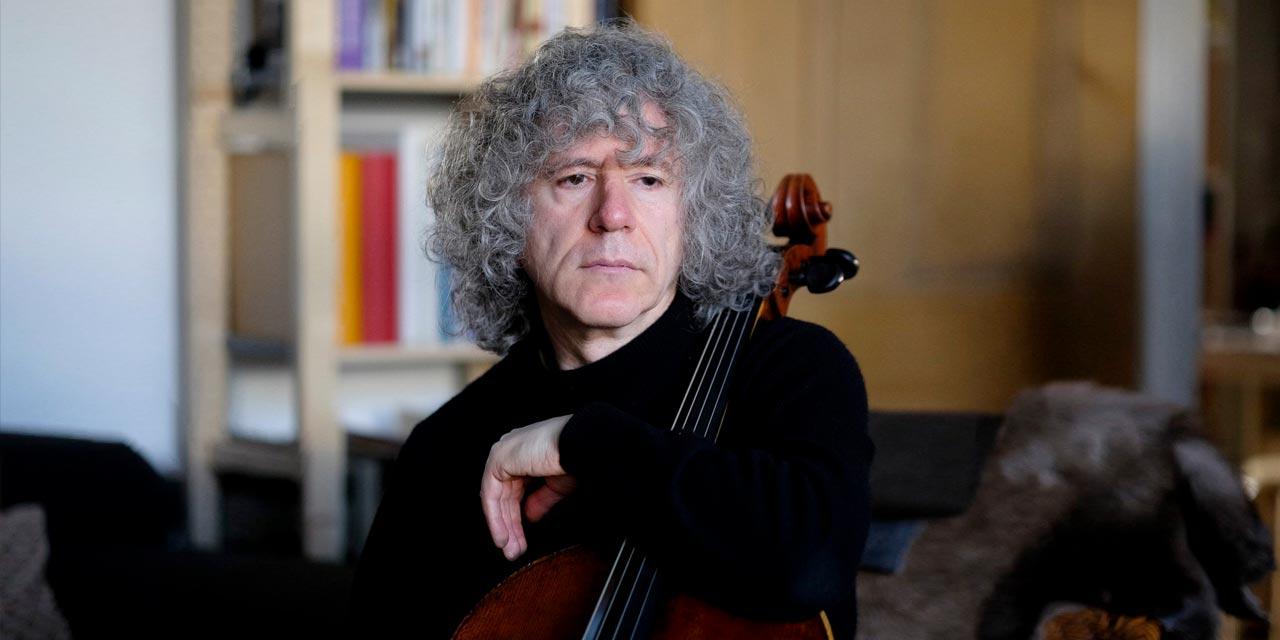
You can read about the celebrations at the Wigmore Hall website, where you will find details of the five-day festival planned and curated by Steven Isserlis and friends, running from Friday 1 November to Tuesday 5 November. The programme will include all of Fauré’s chamber music, put in context of his friends and contemporaries. It will also give us the rare opportunity to hear both of the piano trios by his good friend Saint-Saëns.

Published post no.2,288 – Thursday 29 August 2024

Talking Heads: Paul Wee

by Ben Hogwood

Paul Wee is a true one-off. An in-demand commercial barrister by day, he is also an extraordinary pianist, capable of taking on some of the most demanding pieces in the repertoire. The combination of a passion for his art and thirst for a challenge has led to award-winning recordings of the music of Thalberg and of Beethoven arranged by Liszt, both for the BIS label.

Yet arguably his greatest recording achievement to date concerns the music of Charles-Valentin Alkan, the 19th-century French composer who was one of the great virtuosos of his day. Wee has mastered two massive works by the composer – his Symphony for Solo Piano and the Concerto for Solo Piano. The latter will form an entire lunchtime concert with which he will make his eagerly anticipated Wigmore Hall debut, on Saturday 15 June. A tempestuous hour of music lies ahead – so while he flexes his muscles in preparation, Arcana managed to get some time with him to explore not just Alkan but a number of other irons he has in the fire.

Firstly, Paul recalls vividly his first encounter with Alkan’s music. “It was when I was in high school, in New York City”, he says. “I heard a live recording of Marc-André Hamelin playing the Symphony for Solo Piano, and I was awestruck immediately!”

His decision to take on the concerto was inspired by similar feelings. “I was immediately taken by the Concerto for Solo Piano when hearing it for the first time: it’s an astonishing musical construction, which makes an extraordinary and unforgettable impact. I didn’t know of any other work like it in the repertoire and knew that I had to give it a go myself.”

The piece is notorious for the demands Alkan makes on the performer, but as Wee confirms the rewards are greater still. “The technical challenges are reasonably self-evident; in the numerous passages where Alkan is displaying the ‘virtuosity’ of the (virtual) ‘soloist’, the writing – whilst always remaining very idiomatic and practical, characteristically for Alkan – can sometimes approach the limits of conventional pianism”, he says. “The emotional (or musical) challenges are mainly twofold: first, bringing to life the (extraordinarily theatrical) drama and rhetoric in the second movement Adagio; and second, maintaining the intensity of the Concerto’s narrative arc across its 50-minute wingspan. But when these challenges are met, it makes for one of the most incredible experiences that the piano repertoire has to offer.”

Wee has recorded the concerto for BIS, an album released in 2019. Has his view of the piece changed since then? “Yes – in relation to both the Concerto’s sound world, and also its pacing, especially in the Allegro assai. As ever it’s difficult to explain this in words, so the best thing for anybody interested is to come and hear it live!”

Alkan is a composer who inspires great dedication among his fans, and Wee considers the elements of his music that lead to these feverish reactions. “I think it is the sheer power and quality of his finest works, which offer extraordinary experiences quite unlike anything else that the 19th century has to offer. The fact that Alkan and these works are not as widely known as they should be can often lead to fans of Alkan’s music to (rightly!) encourage others to discover this music for themselves. That’s exactly what I hope to be doing myself when bringing the Concerto to Wigmore Hall.”

Anyone approaching Alkan’s music for the first time is in for a treat. “It depends on what work they are hearing. If the Concerto, they should prepare themselves for an epic, but nevertheless very accessible, musical narrative; a very wide variety of pianistic experiences, from some of the greatest heights of 19th-century virtuoso piano writing, through to tender intimacy and lyricism, with much quasi-operatic dramatic intensity and rhetoric along the way. Overall, the listener should prepare themselves for the extraordinary cumulative impact of the work, which builds across all three movements and which in a good performance can be utterly overwhelming.”

Presenting this work in the Wigmore Hall is something of a dream for Wee, who recalls his most memorable musical experiences in the venue. “Wigmore Hall is probably my most visited concert venue, and my own personal highlights reel would be too long to list in full! But some illustrative examples would have to include recitals by Marc-André Hamelin playing Haydn, Mozart, Liszt, Fauré, and Alkan in November 2009; Benjamin Grosvenor playing Mendelssohn, Chopin, Ravel, and Liszt in June 2016; and Mark Padmore and Paul Lewis in Schubert’s Winterreise in June 2022.”

Expanding from Alkan, Wee has somehow found time to discover and record concertos by two names unfamiliar to many devotees of classical music – Adolph von Henselt and Hans von Bronsart (above). It is another addition to his small but formidably constructed discography for BIS – and not a recent discovery, either. “I discovered the Henselt in my teens,”, he says, “after reading about it in books by Harold Schonberg and David Dubal, and seeking out recordings by Raymond Lewenthal and Marc-André Hamelin. I came to the Bronsart later, after being captivated by Michael Ponti’s recording of the slow movement.”

The recordings Wee mentions were made with a symphony orchestra, but for the new album he is paired with the Swedish Chamber Orchestra, under Michael Collins. “One of the greatest difficulties of the Henselt lies in making the piano part, with all of its detailing and intricacies, audible over the sound of the orchestra”, he explains. “In nearly all cases, large swathes of the passagework (especially in the finale) are simply swallowed and inaudible beneath the weight of a modern symphony orchestra. In teaming up with the Swedish Chamber Orchestra for this recording, I think we have been able to present a different view of the Henselt in particular, which presents Henselt’s (quasi-Mendelssohnian) piano writing with a new immediacy and clarity, whilst maintaining power and heft where needed. Of course, the Swedish Chamber Orchestra is not just any old chamber orchestra; it has a particular reputation for being “the chamber orchestra that can sound like a symphony orchestra”, and I think that anybody hearing (say) the opening tutti of the Bronsart Concerto will be astounded by the vigour and intensity that the Swedish Chamber Orchestra brings to the proceedings. I think they have been the perfect partner for this recording.”

He continues to move forward with recording plans…“but as there are still a few moving pieces here and there, all I will say for now is to watch this space. But my future recording plans with BIS are very exciting, and I’m looking forward to sharing them when I can say more…”

Looking further afield, what other music would he like to explore? “The list is far too long: the piano literature is so wide and so rich, and I find many things to love in nearly every one of its corners. In addition to that, the music that I might want to play and enjoy for myself will not necessarily be the same as the music that might be thought to sell well if I were to record it. So there are many dimensions to this question, which do not necessarily interrelate. Again, I think that all I can say is that there are some very interesting projects in the pipeline, so watch this space!”

In the meantime he will continue with his two complementary disciplines. “Absolutely: I have no desire to give up my legal career and become a full-time musician. I enjoy my work as a commercial barrister; it’s challenging, constantly stimulating, and ultimately very satisfying. On the musical side, I wouldn’t be averse to playing a few more concerts here and there, but probably nothing more than that. I wouldn’t ever want for the piano to become my day-to-day life. I am much happier with the piano being my escape from everyday life, which (for me) is my career at the Bar.”

He expands on how the two very different elements of his life are complementary. “The most important factor is that each presents an escape from the other. When my legal practice is especially demanding (which, as any lawyer will tell you, can frequently be the case), I can take a quick 5- or 10-minute time-out at the piano, and for that window, I am completely disconnected from the strains and stresses of the law: I return to my desk refreshed. In the other direction, my legal career has helped me hugely as a pianist by (perhaps paradoxically) ensuring that the piano is not my day-to-day life, as I mentioned above. Whenever I sit down at the piano, it’s never out of obligation, but out of joy. These days I have a completely different relationship with the instrument than what I used to have when I thought (as a teenager) that I wanted to be a concert pianist. I think the freedom that underpins my relationship with the piano these days has been essential in making me the pianist that I have become.”

Finally, he considers the music he anticipates seeing as a concertgoer this year – when time allows. “As it happens, this year I am going to far fewer concerts than usual, given the demands of family life (our second daughter was born in December and is just six months old). So I’m often going to concerts at shorter notice than usual. That said, I’m hoping to see Benjamin Grosvenor in the Busoni Concerto at the Proms, and I have Igor Levit’s September 2024 recital in my diary, where he’ll be playing the Liszt transcription of Beethoven’s Seventh Symphony: these are fabulous transcriptions that should be played in concert far more frequently, so I’m delighted to see him bringing this to London. I’m also planning to see Nikolai Lugansky at Wigmore Hall in December 2024, where he’ll be playing (among other things) his own stunning transcription of scenes from Götterdämmerung. I’m sure there will be many other concerts along the way!”

For information on Paul’s Wigmore Hall debut, on Saturday 15 June at 1pm, click on this link. You can read more about Paul at his website, and explore his discography at the Presto website

Published post no.2,207 – Wednesday 12 June 2024