Bach and the viola da gamba – Paolo Pandolfo and Markus Hunninger

Bach and the viola da gamba – Paolo Pandolfo and Markus Hunninger explore two of the sonatas Bach wrote for the instrument, along with music by gamba maestro Carl Friedrich Abel
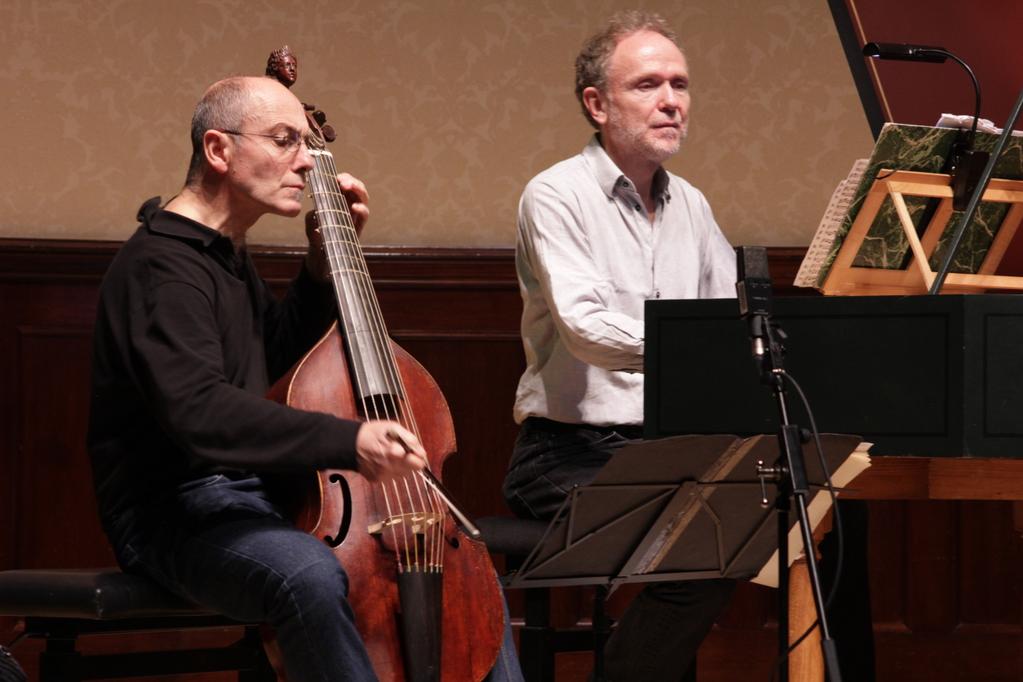
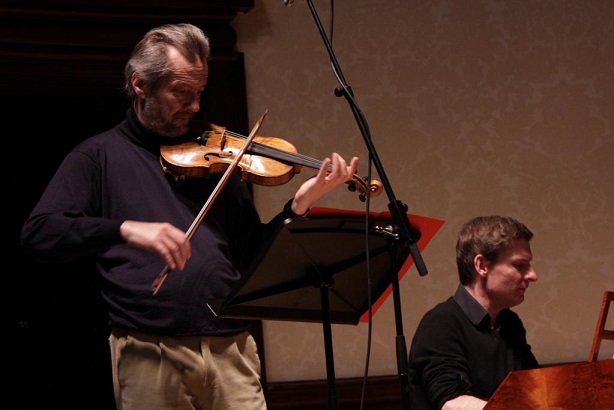
paolo-pandolfoPaolo Pandolfo (viola da gamba) and Markus Hunninger (harpsichord) – Wigmore Hall, live on BBC Radio 3, 16 March 2015. Photo © Ben Collingwood

Listening link (opens in a new window):

http://www.bbc.co.uk/programmes/b052047t

on the iPlayer until 15 April

For non-UK listeners, this Spotify playlist is available:

For those unable to hear the broadcast I have put together a Spotify playlist, containing the Bach sonatas – but not the Abel, which I could not find on the service. Pandolfo and Hunninger have recorded the Bach recently, but their versions are not available – so I have chosen suitable substitutions here

What’s the music?

J.S. BachViola da gamba Sonata no.2 in D major BWV1028 (not later than 1741) (16 minutes) (the ‘BWV’ number gives an indication of the work’s position in the Bach-Werke-Verzeichnis (Bach Works Catalogue)

Abel6 Pieces from the Drexel Manuscript for solo viola da gamba (date not known) (20 minutes)

J.S. BachViola da gamba Sonata no.3 in G minor BWV1029 (not later than 1741) (16 minutes)

What about the music?

The first question to answer here is ‘what is a viola da gamba’? It is an ancestor of the cello, gripped between the players knees and played with the bow. Although it was used mostly as an ensemble instrument to begin with, Bach, Abel and other composers began to write for it in more of a solo capacity.

The instrument used by Paolo Pandolfo in this concert has seven strings, and dates from around 1700. There is no ‘spike’ on the instrument, so the player has to grip it with their knees.

Bach wrote three accompanied sonatas for the instrument, though exactly when he wrote them is not clear. Abel is described in the BBC Radio 3 introduction as ‘the link between baroque and classical music’, and headed for London with nothing more than ‘six symphonies in his pocket’. He was a virtuoso viola da gamba player, and while in London wrote a lot of music for the instrument. This surfaced in the 19th century through manuscripts belonging to Joseph Drexel. Paolo Pandolfo stated in the introduction that Abel ‘respected the viol as a true lover respects his beloved’

Pandolfo himself came to this music initially from jazz, bringing with it his own talent for improvisation.

Performance verdict

These are engaging and often stylish performances. Paolo Pandolfo and Markus Hunninger have a long-established chemistry in this repertoire, and their experience allows them to tastefully improvise within the confines of the written music – as the composers would wish them to do.

Pandolfo’s quiet playing in particular is sublime, and I found myself instinctively leaning forward on occasion to catch his insights. The freedom he lent the Abel pieces made them sound like brand new improvisations.

On some occasions I did feel this improvising was a little overdone, and that in the Bach especially the slow movements would have benefited from a ‘less is more’ approach, as the pulse was almost lost at times. In the faster movements however the dialogue between the instruments was a constant joy, their enjoyment of the music clear to see.

What should I listen out for?

Bach Sonata no.2

3:45 – the Bach begins with a thoughtful Adagio. Pandolfo is a model of restraint here, and with Hunninger there are some pronounced variations of the tempo

7:29 – the bright, vivacious second movement begins, using the upper register of the viola da gamba’s range. The crisp harpsichord right hand often trades melodic ideas with the gamba.

11:17 – a thoughtful slow movement, now in a ‘lower’ key (B minor) that brings out the resonance of the instrument’s lower strings. Pandolfo plays with great poise here.

16:14 – a burst of sunshine in the form of a move to D major. The gamba and harpsichord play cat and mouse, all the time shadowing each other’s moves. From 17’30” some tasteful trills added by harpsichordist Hunninger, before the instrument plumbs the depths just over a minute later. Some of Bach’s harmonic daring can be heard here, the music veering off to distant areas. Pandolfo occasionally plays two strings rather than one (‘double stopping’)

Abel

23:29 – the first of Abel’s six pieces has a free, improvisatory feel – which I assume to be Pandolfo’s license with the piece rather than an absence of bar lines. The bow flits between strings and the quiet moments are exquisitely found.

25:36 – Pandolfo secures an extraordinary bit of ‘skating’ here (not a technical term!), the bow rushing across the strings but somehow making all the notes coherent.

27:39 – this piece starts with pizzicato (plucking), which sounds unusual on the gamba, before short pieces of double stopping, culminating in the lovely passage at 31’15”. The performance here feels quite mannered, but on saying that Pandolfo does bring the composer’s thoughts off the page, making them feel fresh.

32:18 – again we hear the higher register of the viola da gamba, and Abel writes for it in such a way that it provides the accompaniment as well as the melody, thanks to lots of double stopping. There is an extraordinary passage of music from 34:12, the music rushing almost out of control, but at no point does Pandolfo lose control.

34:40 – this movement reminds me of Bach’s Sixth Suite for Solo Cello, a really lovely and rather moving slow dance.

39:04 – staying in the same key as the previous five – D major – this has a more improvisatory feel as the piece gradually grows in height of pitch. After this introduction there is a spikier stretch of music, with a distinctive theme, before Pandolfo brings the music to a very soft close at 43:40

An extended tuning episode (almost an improvisation!) before…

Bach Sonata no.3

46:51 – the start of this sonata introduces a melody very similar to the one Bach used in his Brandenburg Concerto no.3 – with a subtle difference as this piece is in a minor rather than a major key, and sounds more serious as a result. Pandolfo and Hunninger energetically navigate the contours of a lively first movement.

52:15 – as slow as the second movement was fast, this Adagio is stretched out almost to its limits by the two performers. This is not an overly indulgent performance though, as they are both trying to extract maximum emotion from the music, often by way of ornaments improvised in both parts. This does lose the rhythmic pulse on occasion.

58:54 – the harpsichord picks out the notes of the main theme, a kind of stuttering melody that the viola da gamba takes up. This is the inspiration for the debate of the rest of the movement. There is a false ending at 1:02:08 where the pair deliberately pause on a ‘wrong’ chord – before finishing more emphatically.

Want to hear more?

The ideal complement to this music can be found in Bach’s Sixth Suite for solo cello – which was written for a form of cello with five strings. Anner Bylsma plays it on Spotify here

For more concerts click here
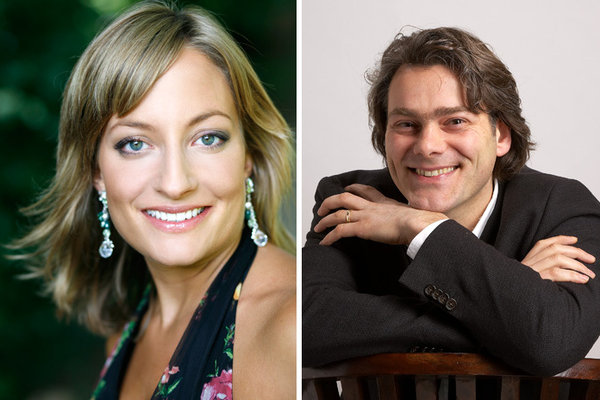
Wigmore Hall Portrait Gallery – Christiane Karg and Gerold Huber

Wigmore Hall Portrait Gallery – Christiane Karg and Gerold Huber perform an intricate sequence of portraits of literary figures by Wolf, Brahms, Richard Strauss, Hahn and Duparc

christiane-karg-gerold-huberChristiane Karg and Gerold Huber – Wigmore Hall, live on BBC Radio 3, 9 February 2015. Photos © Steven Haberland / Albert Lindmeier

Listening link (opens in a new window):

http://www.bbc.co.uk/programmes/b051zyhb

on the iPlayer until 8 April

For non-UK listeners, this Spotify playlist is available:

For those unable to hear the broadcast I have put together a Spotify playlist. Christiane has recorded the Strauss songs but nothing else from the program, so I have chosen suitable available versions:

What’s the music?

Wolf4 Mignon Lieder (1888) (15 minutes)

Brahms and Richard Strauss – Ophelia Lieder (interspersed – the music is Brahms’ 5 Ophelia-Lieder (1873) and Strauss’s 3 Ophelia Lieder Op.67 (1918) followed by Saint-SaënsLa mort d’Ophélie (1857) (14 minutes in total)

Hahn – 3 songs (Lydé (1900), A Chloris (1916) and Séraphine (1896) (8 minutes)

Duparc – 2 songs (Phidylé (1882), Romance de Mignon (1869) (9 minutes)

What about the music?

wigmore-portraits
Ophelia by John Everett Millais (1852) is part of the Tate Gallery collection. His painting influenced the image in Kenneth Branagh’s Hamlet.

This is a really well chosen program from Karg and Huber, justifying the singer’s burning of the midnight oil (in the announcer’s anecdote!) to come up with some vivid character portraits that draw the casual listener in through the links between the songs. This is surely how a song recital should be structured.

Thanks to their enterprise we get an interesting blend of Romantic Lieder – that is, nineteenth century song writing that is much more obviously expressive. German composers are strongly represented, beginning with Wolf’s four settings of Goethe, and his poems on the tragic figure of Mignon.

Then our gaze turns to Ophelia, by way of five early Brahms Lieder and three late, eccentric interpretations by Richard Strauss – before a French alternative from Saint-Saëns.

Finally the heady fragrance of three sublime songs from Hahn and two more substantial, meaty efforts from Duparc clinch a consistently engaging recital.

Performance verdict

On this evidence – listening on the radio rather than in the hall – Karg and Huber are ideally matched. Their delivery is especially emotive during the Wolf, where the soprano inhabits a lot of the distress and strife handed out to Mignon.

It is a great idea to fuse the portraits of Ophelia in this way, and anyone approaching Brahms songs for the first time would be surprised at the brevity and simplicity of them. They contrast nicely with the Richard Strauss examples, where Karg shows a lot of vocal agility without ever losing control.

The French songs are sumptuous, especially the Hahn, throwing open the doors to let in some Spring light.

What should I listen out for?

Wolf

The words for these songs can be found here

1:55 – Heiss mich nicht reden (Bid me not speak) – the first Mignon setting moves in unexpected harmonic directions, never really sure of itself as Mignon seeks peace ‘in the arms of a friend’. Judging by the piano postlude this is not found.

5:04 – Nur wer die Sehnsucht kennt (Only those who know yearning) – a sombre minor-key opening from the piano.

7:25 – So lasst mich scheinen (Let me seem to be an angel) – a cold piano sound and a distracted vocal. Again the harmonies move restlessly, as does the melody, the song in a dream state but not at rest either.

10:47 – Kennst du das Land (Do you know the land)– a rather more positive outlook in this relatively relaxed song until a sudden outburst from the piano, which on its second appearance follows a particularly fraught passage from the soprano.

Brahms / Richard Strauss

The words for the Brahms can be found here, and for the Richard Strauss here

18:57 – the first of five very brief Brahms songs – this one a thoughtful melody with singer and piano together.

19:42 – the second Brahms song, a mere 20 seconds!

20:06 – the first Strauss song inhabits a weird world of a piano part seemingly cut loose from its moorings, and a melody that doesn’t have an obvious resting point. Mysterious but intriguingly so.

22:37 – the third Brahms song, a much brighter affair.

23:12 – the second Strauss song trips along in a state of high agitation but is perhaps too short to make a sustained impact.

24:44 – the fourth Brahms song, another incredibly brief number – but beautifully delivered here.

25:32 – the fifth Brahms song – even though it is a minute long there is still a distinctive melody here.

26:49 – the third Strauss song, and a deeply mysterious one that casts its spell immediately through the piano line, broken momentarily by outbursts in the middle and at the end.

Saint-Saëns

29:58 – an urgent song from the French composer, with the high soprano voice doubled by the left hand of the piano.

Hahn

The words for the Hahn songs are to be found here

35:04 – Lydé – a much more positive outlook is immediately evident in this song, with an open air texture and bright vocal. There is a grand piano postlude, and what sounds like a wrong note.

37:50 – A Chloris – a twinkling piano introduction has a melodic ornamentation that takes its lead from Bach’s AIr on the G string before the soprano arrives in a lower register. A contemplative song, one of Hahn’s very best, this is beautifully sung by Karg. The interaction with the piano is ideal.

40:33 – Séraphine – a calm and radiant atmosphere runs through the third Hahn song.

Duparc

The words for the Duparc songs can be found here

43:28 – Phidylé – Karg sounds imperious in her control of the fuller melody that makes the second part of this song. The exotic musical language is very much in thrall to Wagner, and reaches its peak with high notes and turbulent, stormy piano writing.

48:15 – Romance de Mignon – another perfumed song, but this is an early song suppressed by the composer. Duparc writes so well for the voice.

Encore

54:00 – Schubert’s Gretchen am Spinnrade – going back to the first composer to write about the ‘mad woman’ Mignon, as Karg describes her. Huber shapes the piano part superbly under Karg’s urgent vocal.

Want to hear more?

It is difficult to suggest another step after such an intriguing and well-thought program, but underneath the songs of on the Spotify link above are further possibilities – including Wolf’s remarkable Prometheus, Brahms’s Four Serious Songs, in a legendary recording from Jessye Norman, and to finish some more Duparc.

For more concerts click here

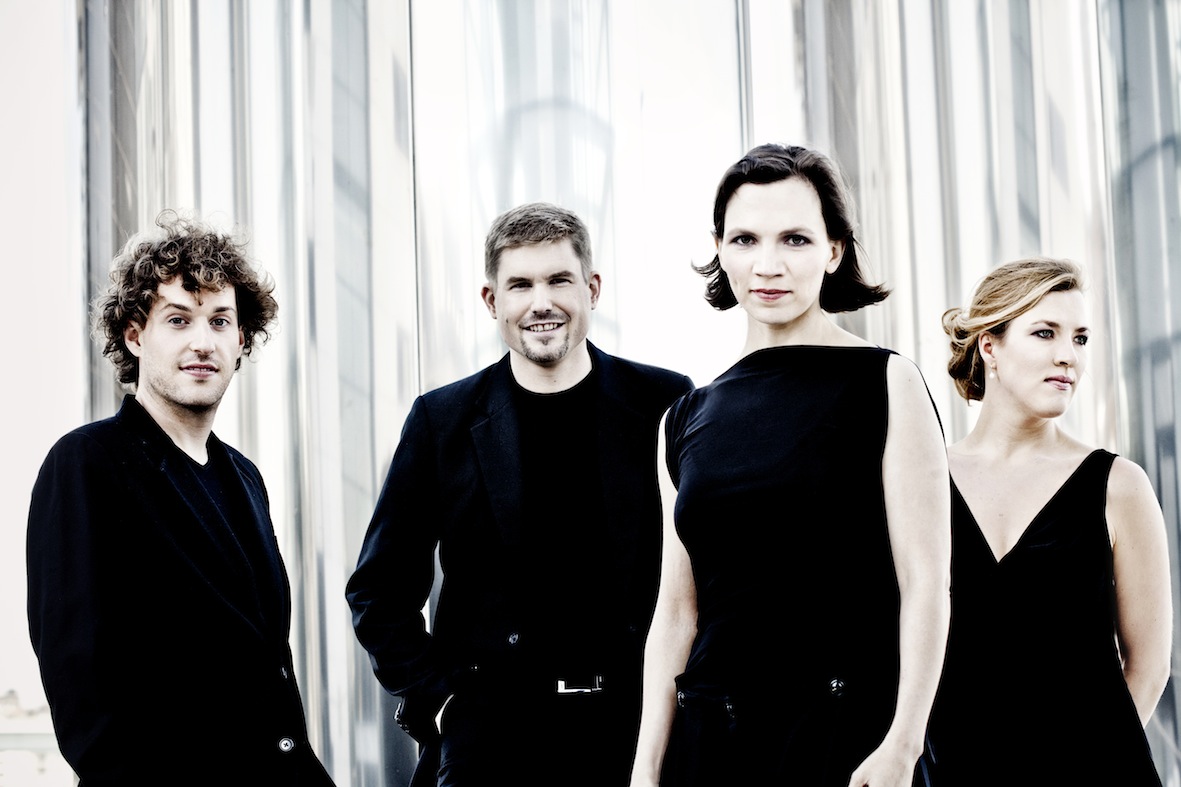
Signum Quartet – Late Beethoven

The Signum Quartet take on Beethoven’s massive B flat major string quartet Op.130, complete with Grosse Fuge

signum-quartet

Louis Schwizgebel – Wigmore Hall, live on BBC Radio 3, 23 February 2015

Listening link (opens in a new window):

http://www.bbc.co.uk/programmes/b053zy7y

on the iPlayer until 31 March

Spotify:

For those unable to hear the broadcast I have put together a Spotify playlist. The Signum Quartet have not recorded this repertoire, so I have chosen an alternative version by the Artemis Quartet:

What’s the music?

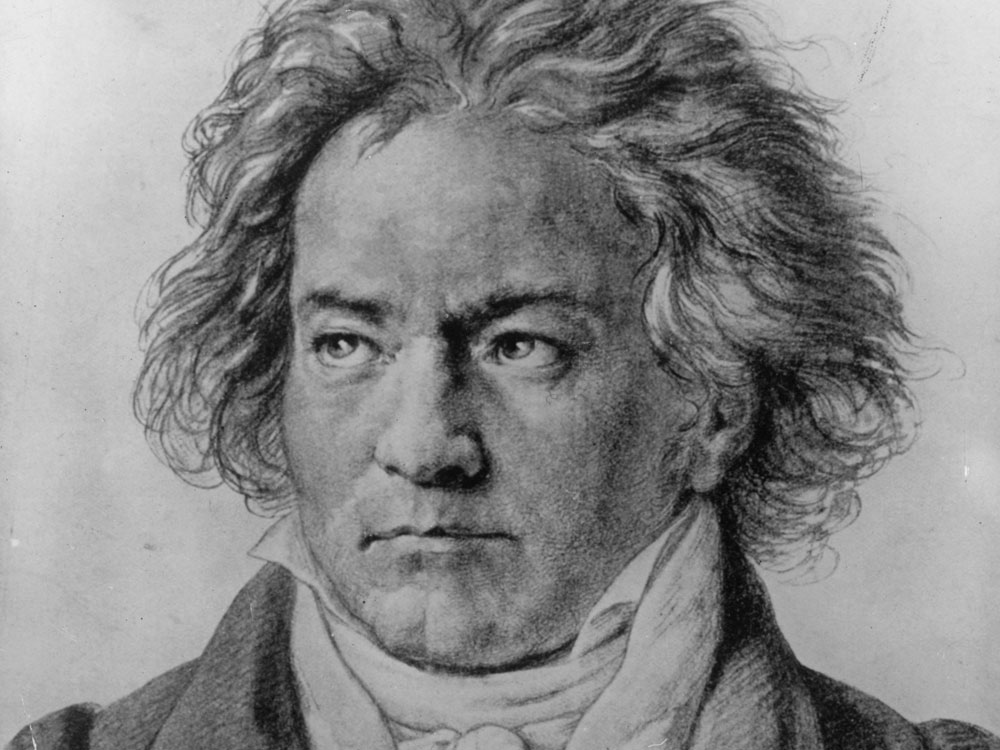
beethoven
Beethoven – String Quartet in B flat major, Op.130 – including Grosse Fuge (1825) (47 minutes)

What about the music?

If this is your first venture into listening to a Beethoven string quartet, then prepare to be overwhelmed! I mean that in the best possible way, because this is one of Beethoven’s very biggest works, especially when performed with the massive final movement Grosse Fuge at the end.

Even now, nearly 200 years on from when he wrote them, Beethoven’s late string quartets are forward-looking works of wonder. This B flat quartet, one of five such works published towards the end of the composer’s life, is a remarkable work that still gets musicologists hot under the collar with debate, especially when the Grosse Fuge is taken into account.

Beethoven wrote the quartet in 1825 for Prince Nikolai Galitzin of Russia, an amateur cellist. His publisher suggested a slighter finish than the Grosse Fuge, and Beethoven obliged with a shorter and more amicable substitute. This was because the great finale was so substantial and so unusual in its musical language that it inflated the work to a daunting 50 minutes, out of the range of audiences and players alike, and presented them with an incredibly challenging finish. Today’s audiences are different, of course (not necessarily better!) and often warm to the thrill of a work that has not just this at the end, but also the tiny second movement Presto, a helter-skelter piece of music that is done in just over two minutes, and the heart-melting Cavatina, the fifth movement.

This part of string quartet has been sent into space, a recording from the Budapest String Quartet part of a record loaded onto both Voyager space probes. So any alien that happens to possess a record player will be able to hear the Cavatina, presumably as their first experience of Beethoven!

Performance verdict

The Signum Quartet give a keenly thought performance here, though I did wonder on occasion if they could have played a little closer to the edge, sacrificing a little control for out-and-out roughness, so as to catch Beethoven’s invention and daring.

That said there are many fine things here – the Cavatina especially, lovingly played as though it is the slow movement of an early 20th century symphony. The third movement is lovely too, given an affectionate reading. The Grosse Fuge is very clearly played, but arguably needs more rough-hewn passion. That said, nobody attending the Wigmore Hall on this occasion would have been disappointed with the standard of performance!

What should I listen out for?

First movement (marked Adagio, ma non troppo – Allegro (Slow but not too much – fast))

3:24 – a softly voiced slow introduction leads to a stop-start fast movement from 4:24, with some excitable faster passages contrasted by pauses for thought. The music is often busy, Beethoven passing ideas between instruments. The first section is repeated at 7:16.

9:40 – the music alights in the remote key of D flat major, led by the chromatic line of the cello. This is not what is supposed to happen, but Beethoven was never one to follow rules. It sounds so inevitable here!

Second movement (marked Presto (very quick))

16:41 – this is one of Beethoven’s ultra-quick, no-nonsense pieces. A bit too much ‘forward and back’ in this performance, the movement doesn’t quite feel fully formed. There is a remarkable series of motifs from the first violin (beginning at 17:54) which could easily have been written by a composer one hundred years later, so striking is its musical language.

Third movement (Andante con moto, ma non troppo. Poco scherzoso) (At a walking pace, not too fast, with humour)

18:58 – a calmer atmosphere for this movement, with a steadier foundation.

Fourth movement (Alla danza tedesca. Allegro assai)(German dance. Faster)

25:56 – music of grace and poise for the fourth movement, its triple time used by Beethoven as a stately Minuet.

Fifth movement (Cavatina)(a short and simple song)

29:28 – the Cavatina, Beethoven said, moved him more than any other single piece of his own music. It is played here with a reverential hush, and as the concert note from Paul Griffiths says, the music approaches the Romanticism of Mahler in the depth and richness of its harmonic workings. It is beautifully and tenderly played here.

33:04 – the Cavatina moves into a more thoughtful section, the first violin seemingly talking to itself while the other three chug sympathetically in accompaniment. Beethoven quickly moves back from this to the home key, however.

Sixth movement (Grosse Fuge)(Grand fugue)

35:58 – music of remarkable tension and bite to begin the massive Grosse fuge, which starts with an angular introduction from the whole quartet before we hear the music for the fugue itself (36:47). After the serenity of the Cavatina the sheer drama of this music is remarkable.

What is also remarkable is that Beethoven is executing all manner of clever musical tricks, all relating to the main theme and different variants / transcriptions of it – but as a listener you don’t necessarily need to note that, and can appreciate the unfolding drama with the string players pushed to the limit, both technically and emotionally. Towards the end it really feels as though the music is breaking up under its own weight and strain, before Beethoven brings it together to force an ending of togetherness and ultimately conviction.

Want to hear more?

How about some more Beethoven…that isn’t quite so much of an intense experience for the brain?

It can be possible…so here are the Artemis Quartet again in three more Beethoven String Quartets – two early and one very late. The early ones, two of the set of six that were published as the composer’s Op.18, are full of good natured humour and energy, while Beethoven’s last published quartet, Op.135, is also a lighter piece of work. Here they are:

For more concerts click here

Louis Schwizgebel

BBC Radio 3’s New Generation artist Louis Schwizgebel gives a live recital of piano works by Haydn, Chopin and Liszt

Louis SchwitzgebelPhoto © Caroline Doutre

Louis Schwizgebel – Wigmore Hall, live on BBC Radio 3, 23 February 2015

Listening link (opens in a new window):

http://www.bbc.co.uk/programmes/b05302mn

on the iPlayer until 24 March

For non-UK listeners, this Spotify playlist is available:

For those unable to hear the broadcast I have put together a Spotify playlist. Louis has not recorded this repertoire, so I have chosen suitable available versions:

What’s the music?

HaydnPiano Sonata in E flat major (1789-90) (19 minutes)

ChopinBallade no.3 in A flat major (1841) (7 minutes)

ChopinÉtude in C# minor (1836) (5 minutes)

ChopinWaltz in C# minor (1847) (4 minutes)

ChopinFantaisie-impromptu in C# minor (c1834) (4 minutes)

LisztConsolation no.3 in D flat major (1849-50) (4 minutes)

LisztHungarian Rhapsody No. 6 in D flat major (c1863) (6 minutes)

What about the music?

This is a cleverly structured recital taking in three giants of the piano.

Schwizgebel begins with Haydn, godfather of so many musical forms – and one of the first composers to start writing what became known as the mature piano sonata, in three movements. His examples in the form – many written like this one for the palace of Esterházy in Hungary – show good humour and a delicate touch. This work, not often heard in concert, fits the bill nicely as an opening piece.

Schwizgebel’s Chopin selection is carefully structured so that the keys fit – moving from A flat major for the Ballade into C# minor for the three other works. The Ballade is a form in which Chopin made very personal expressions but which also allowed him the chance to experiment formally. The three works following are an unusually profound Etude (Study) – which sounds technical but is far from dry, shot through with characteristic Chopin melancholy. The Waltz is more playful, coming back to the same theme again and again, while the freeform Fantaisie-Impromptu makes the most of its freedom.

Liszt was a barnstorming virtuoso – the piano equivalent of Jimi Hendrix, you could say! – but he had his sensitive side too, as the Consolations show – and this one selected is a tribute to Chopin himself. It is a thoughtful example, leading to the fire and brimstone of the Hungarian Rhapsody no.6, given the natural inflections of the music of Liszt’s own country before a helter-skelter coda.

Performance verdict

Schwizgebel is a thoughtful Haydn pianist, and gives a rather touching performance of the slow movement in particular. He is commendably modest in performance, preferring not to go for the demonstrative approach, but instead letting his playing do the talking. The Chopin selection is excellent, very well played, losing a little rhythmic definition in the climax of the Étude but trumping that with a dazzling Fantaisie-impromptu.

The Liszt could perhaps have done with more of the reckless bravura you get in the Hungarian Rhapsodies, a sense of living right on the edge. That said, the closing pages are brilliantly played, the octaves written for the right hand immaculately delivered.

What should I listen out for?

Haydn

4:19 – a matter-of-fact start to the first movement, with a slightly gruff accompaniment to the tune. Yet Haydn’s easy charm is soon in evidence, despite the left hand having to work pretty hard in accompaniment!

11:14 – the second movement begins, headed by a graceful melody, as if assigned to a singer. Then, later on, it nearly stops as the right hand melody gets lost in thought before ambling to an easy close.

19:46 – a typically perky Haydn finale, nicely proportioned and sensitively played here.

Chopin

24:36 – the Ballade no.3 – beginning with an attractive introductory theme before the music assumes the profile of a waltz (from 26:27). Schwizgebel takes this slower than a lot of pianists, with a delicate approach – allowing greater contrast for then the music appears again, much more forcefully, at 27:20. At 29:35 a shadow falls over the music and it becomes more fraught as it moves into a minor key – C sharp minor, which is the key for the next three works in the recital. The Ballade’s main theme comes back at 30:57 before the closing passage.

31:52 – the Étude in C# minor, numbered 7 in the second book of studies Chopin published as his Op.25. The left hand takes the lead with a rising theme, and sets the melody throughout in what is a deeply intense piece, the longest of Chopin’s Études.

37:25 – the more playful Waltz in C# minor, published as Op.64/2, characterised by a sparkling theme high up in the piano’s register. This returns frequently to trump the underlying melancholy in the music, and the player has the chance to play around with the speed to give the music more ebb and flow. A contrasting section (38:28) brings a ray of light in the middle.

40:35 – the Fantaisie-Impromptu, a freeform piece where the floodgates just open! A torrent of notes form the main theme, wheeling up and down the keyboard, before taking the foot off the gas for a sweetly toned second theme (41:31)…which segues neatly back to the river of notes again (43:24)

Liszt

46:02 – the Consolation in D flat major, one of a set of six. Intimate and romantic, especially in this performance.

50:07 – the Hungarian Rhapsody no.6 begins with a drone and a rustic tune, very controlled in this performance, which takes some nice liberties with the tempo, holding back where necessary. There is some dazzling virtuosity as the piano then unfurls a variation on that melody before a solemn second theme (51:50) makes itself known. At 54:01 the final section starts with a melody played in octaves, which soon works to a thunderous climax (55:33).

Encore

57:36 – Moszkowski’s Étincelles (1886) – a showpiece from the Polish composer, with some brilliant runs up and down the keyboard as well as some sharply pointed notes. Schwizgebel dispatches it very impressively, with a wonderful throw-away finish!

Want to hear more?

Haydn’s humour makes for lovely music to work to – and a personal favourite is his C major sonata.
Chopin’s Ballades reward repeated listening – so after the intimate Third I would recommend the stormier Fourth – with the calm of an A minor Waltz and the famous Raindrop prelude completing a very attractive selection.

For Liszt with real depth the Vallée d’Obermann can be strongly recommended as a powerful utterance.

All these are collected on a Spotify playlist, below the repertoire played by Schwizgebel:

For more concerts click here

Connecting Bach with Mozart – Giuliano Carmignola and Kristian Bezuidenhout

Connecting Bach with Mozart – Giuliano Carmignola and Kristian Bezuidenhout link J.S. Bach with Mozart by way of three violin sonatas

carmignola-bezuidenhoutGiuliano Carmignola and Kristian Bezuidenhout – Wigmore Hall, live on BBC Radio 3, 16 February 2015. Photo © Ben Collingwood

Listening link (opens in a new window):

http://www.bbc.co.uk/programmes/b051chkl

on the iPlayer until 17 March

For non-UK listeners, this Spotify playlist is available:

For those unable to hear the broadcast I have put together a Spotify playlist, including Giuliano’s recordings of the Bach with harpsichordist Andrea Marcon, and the Mozart – which he has not yet recorded – with Mark Steinberg and pianist Mitsuko Uchida on Decca:

What’s the music?

J.S. BachSonata no.2 in A major for violin and keyboard BWV1015 (thought to be between 1717-1723) (13 minutes) (the ‘BWV’ number gives an indication of the work’s position in the Bach-Werke-Verzeichnis (Bach Works Catalogue)

J.S. BachSonata no.3 in E major for violin and keyboard BWV1016 (thought to be between 1717-1723) (15 minutes)

MozartViolin Sonata in A major K526 (1787) (21 minutes) (the ‘K’ number gives an indication of the work’s position in Mozart’s catalogue. This is no.526 of a total of 626 numbered published works)

What about the music?

This is a ‘period instrument performance’ – that is, played on instruments from or designed to sound like those in Bach and Mozart’s time. The BBC Radio 3 announcer Sara Mohr-Pietsch confirmed Carmignola’s violin is an Italian model dating from 1739, while Bezuidenhout used an early piano developed from an original of 1805.

Mozart wrote dozens of sonatas for violin and keyboard, but the later ones are generally regarded as his finest. This particular example was written around the same time as the opera Don Giovanni, and is dedicated to the memory of Mozart’s friend and fellow-composer Carl Friedrich Abel.

The two Bach works are not as often performed as his works for solo violin, but demonstrate his ease and flair with writing for the instrument. Violin and piano are very closely linked in this music.

The Bach connection comes through the friendship between Bach’s son Johann Christian – whose music is still frequently performed to this day – and Carl Abel. Both met the eight-year old Mozart and stayed in touch with him.

Performance verdict

Carmignola’s bright tone is ideal for the Bach, which could be dry in lesser hands. Here he brings out all the vocal elements in the writing, and is helped by strong support by Bezuidenhout, whose springy rhythms and nicely shaped phrases are a constant pleasure.

The Mozart is an exceptional performance, bringing deep emotion and uncertainty to the slow movement in particular. The grace with which both performers play is unusual in period-instrument playing, and the softness of tone from the fortepiano is beautiful.

The Bach works are a little less obviously expressive, but are extremely well played. What was abundantly clear – an often underestimated point – is just how much the players were listening to each other during performance, not to mention a clear enjoyment of the music!

What should I listen out for?

Bach Sonata no.2

4:49 – at first I actually wondered if the two instruments were tuning up, as they were playing a unison ‘A’! However it turned out to be the easy going start of a graceful slow movement, the first of four.

7:49 – quite a punchy beginning to the first fast music of the sonata, the instruments dovetailing their melodic lines and with several cleverly worked sequences. The music ends quite suddenly.

10:54 – marked ‘Andante’ (at a walking pace), this has purposeful movement despite the slower tempo, and a slightly sorrowful air. Carmignola gives some tasteful ornamentation to the melody.

13:49 – an energetic fourth and final movement. The movement between the violin and piano parts (‘counterpoint’) drives the music forwards.

Bach Sonata no.3

18:47 – a spacious but very expressive slow movement, marked ‘Adagio’. The profile of the violin melody is as if written for a singer, with a common five-note accompaniment for the fortepiano.

22:29 – a lively second movement, with a constant stream of dialogue (‘counterpoint’) between the two instruments, beautifully dovetailed in this performance.

25:29 – this may be a slow movement but there is a soft dance element. Eventually it peters away into almost nothing.

29:44 – a vigorous fourth movement, simply marked Allegro, where both violin and fortepiano work hard together and apart.

Mozart

35:43 – a colourful fast movement to begin with, with both instruments equally involved in the dialogue and sharing the themes. The piano has some particularly tricky runs in the right hand which Bezuidenhout appears to manage easily.

42:19 – a deeply profound piece of contemplation, where Mozart appears to be remembering his friend in music that alternates between hope and deep thought. The passages of ‘hope’) (from the start, for example) tend to be in the ‘major’ key, while the passages of darker introspection (45:28 for example) are rooted in the minor.

49:15 – to start with the violin and piano seem out of sync, with some elaborate rhythms from Mozart. The piano in particular is incredibly busy, with the left hand shadowing the right in melodic profile. The violin becomes more showy in the central section.

Encore

57:49 – A short and nippy encore, the last movement of J.S. Bach‘s Violin Sonata in B minor, BWV1014. This work was published as the first of a group of six – the works above being the second and third in the group.

Want to hear more?

As the link between this music is Johann Christian Bach, here is a link to a disc of ‘Six Favourite Overtures’, played by the Academy of Ancient Music under Christopher Hogwood:

For more concerts click here