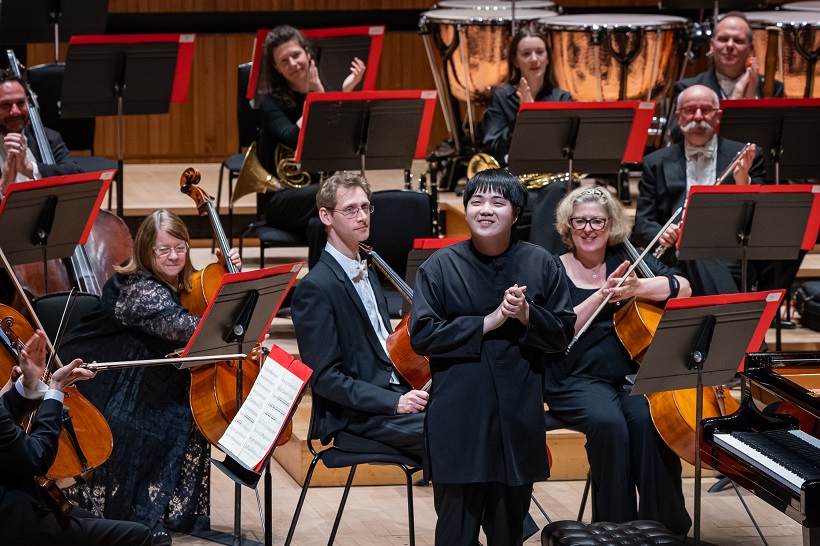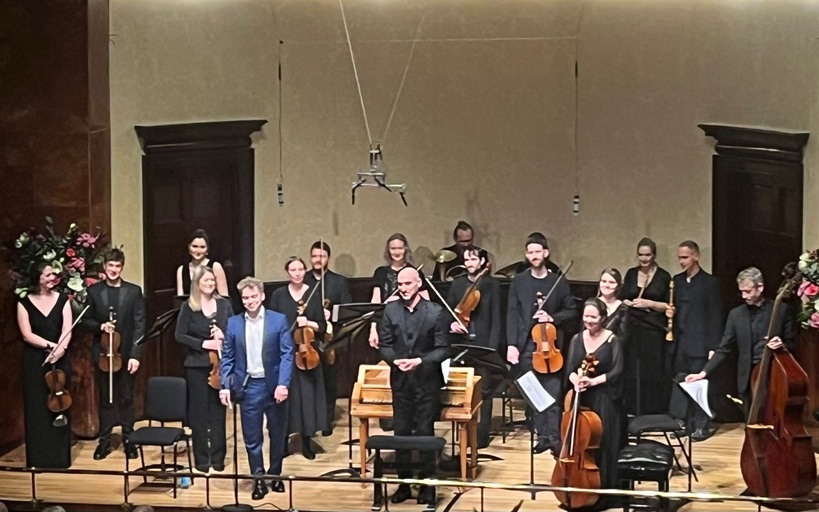
In concert – Vienna Philharmonic Orchestra / Franz Welser-Möst @ BBC Proms: Mozart & Tchaikovsky

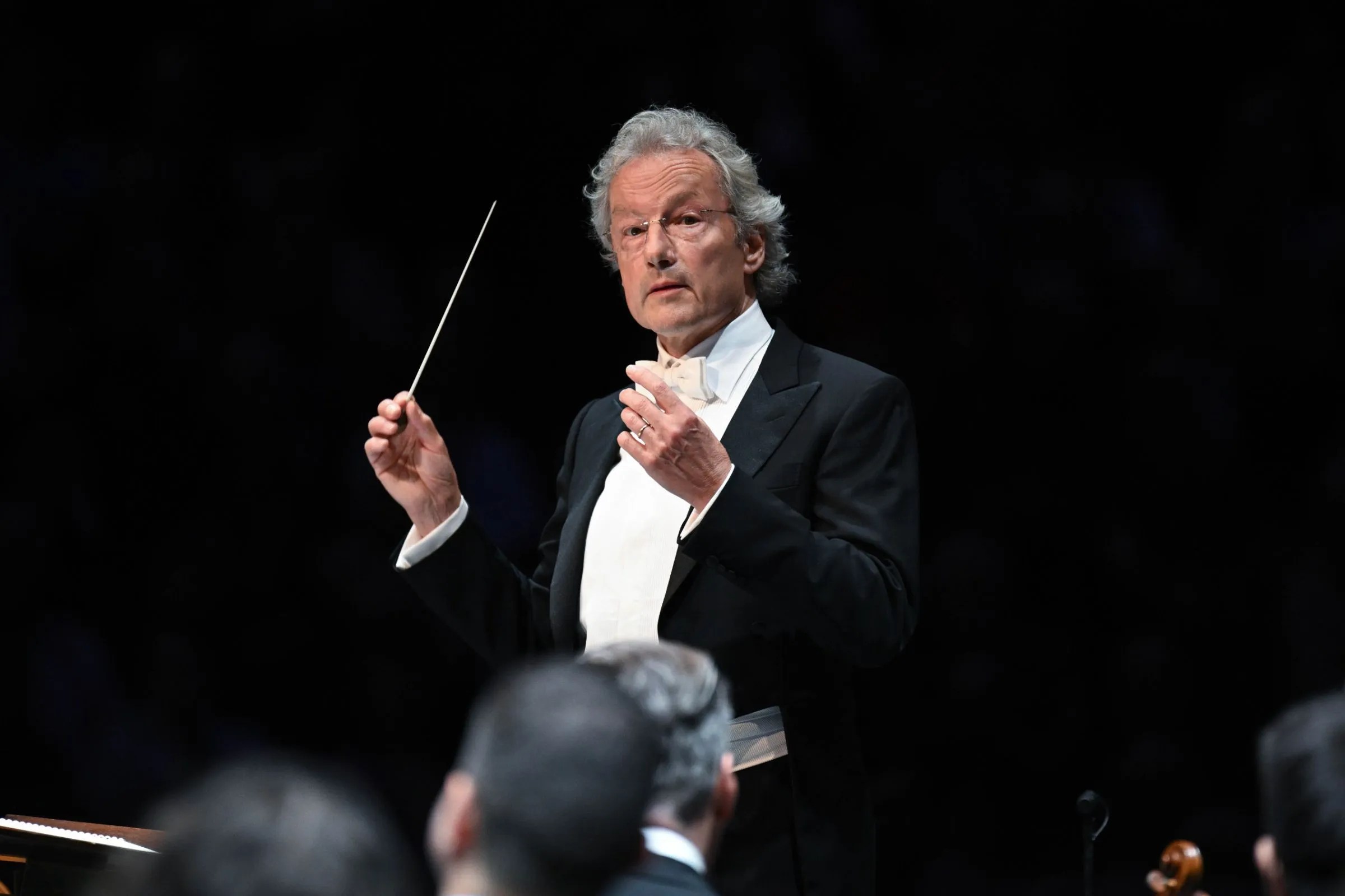
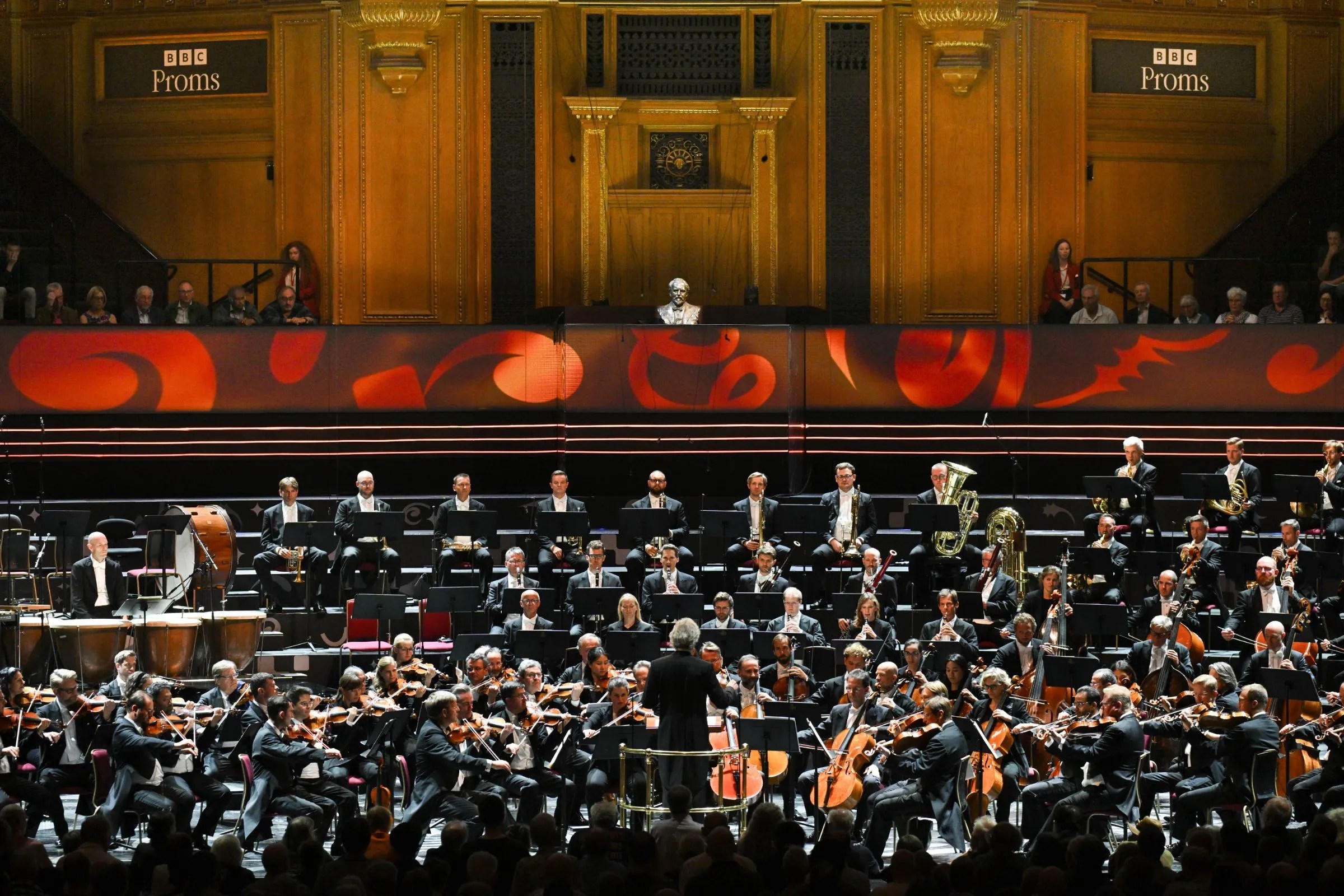
Vienna Philharmonic Orchestra / Franz Welser-Möst (above)

Mozart Symphony no.38 in D major K504 ‘Prague’ (1786)
Tchaikovsky Symphony no.6 in B minor Op.74 ‘Pathétique’ (1893)

Royal Albert Hall, London
Tuesday 9 September 2025

Reviewed by Ben Hogwood Photos (c) BBC / Chris Christodoulou

The music of Mozart is the lifeblood of the Vienna Philharmonic Orchestra, so to describe their performance of the composer’s Prague symphony as routine is to say that everything was present and completely idiomatic.

Completed in Vienna, the Prague deserves to be mentioned with the last three symphonies as among Mozart’s greatest. In the hands of guest conductor Franz Welser-Möst, its phrases were stylishly turned, violins silky-smooth but keeping clear of full fat over-indulgence. This performance drew the audience in, with a chamber orchestra sound that acquired more beef when needed in the first movement, which had appropriate drama, or the boisterous passages of the finale. The woodwind were superb throughout.

Most intriguing was the Andante, a thoughtful repose whose chromatic melodies were lovingly shaped, while the central section was notable for its autumnal frissons whenever the music headed for a minor key. Meanwhile the faster music was imbued with the spirit of the dance, a performance carefully considered but let off the leash when appropriate.

Tchaikovsky’s Pathétique symphony took a while to get going, revealing the composer’s own Mozartian influence in the process. Initially the first movement felt underpowered, its sense of dread kept to a minimum and the second theme kept within itself – though that did mean a particularly beautiful clarinet solo from Matthias Schorn. This turned out to be an effective interpretative ploy on the part of Welser-Möst, for the impact of the stormy section was heightened, the orchestra suddenly playing hell for leather.

The 5/4 metre of the second movement was persuasively realised, the lilt of its dance compromised by unexpected syncopations, alternating between charming and disturbing. By this point the Proms audience notably rapt in their attention, and still between movements.

The scherzo felt Viennese yet acquired a manic need to please more in keeping with Mahler – not encouraged as much by Welser-Möst as previous Vienna Philharmonic incumbents (Herbert von Karajan, for example) but effective, nonetheless. It all set up the devastating pathos of the finale, taken relatively smooth and never lingering, but still uncommonly moving. Double basses were appropriately knotty, while the effect of the stopped horns, playing low and loud, was genuinely chilling. The fabled gong stroke, on the light side, was still a telling moment in the hall, as was the silence following the last note, Welser-Möst giving us over a minute to consider the masterpiece we had just heard. After that, there could be no encore.

Franz Welser-Möst is a subtle conductor who over the years has developed a close relationship with his charges in Cleveland and Vienna particularly. His poised approach brings optimum virtuosity and watertight ensemble, to which can be added artistic approaches with a great deal to commend them. In this case both Mozart and Tchaikovsky were the beneficiaries.

You can listen back to this Prom concert on BBC Sounds until Sunday 12 October.

Click to read more about the BBC Proms

Published post no.2,653 – Wednesday 10 September 2025

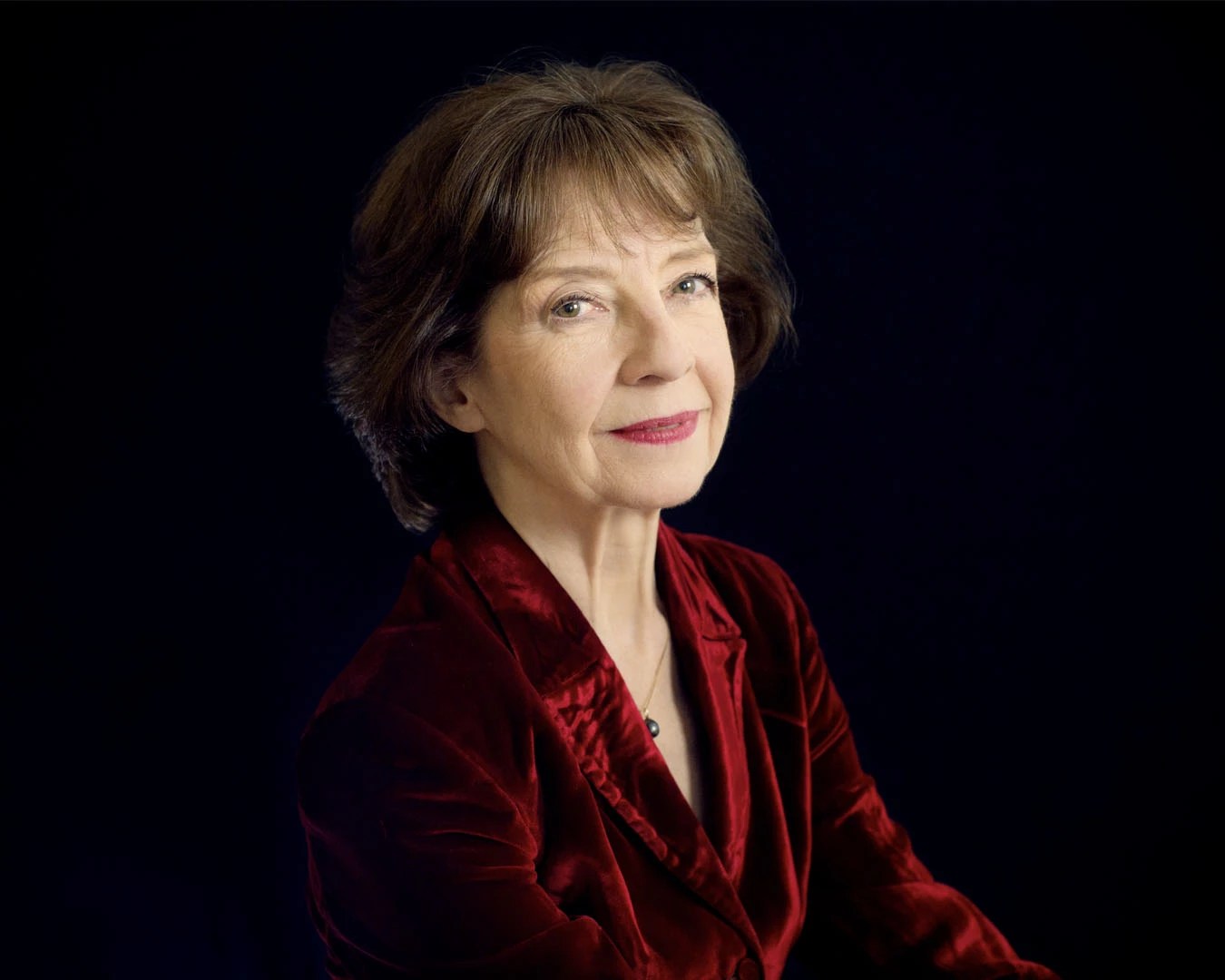
In concert – Anne Queffélec @ Wigmore Hall: Mozart and a French ‘musical garden’

Anne Queffélec (piano)

Mozart Piano Sonata no.13 in B flat major K333 (1783-4)
Debussy Images Set 1: Reflets dans l’eau (1901-5); Suite Bergamasque: Clair de lune (c1890, rev. 1905)
Dupont Les heures dolentes: Après-midi de Dimanche (1905)
Hahn Le Rossignol éperdu: Hivernale; Le banc songeur (1902-10)
Koechlin Paysages et marines Op.63: Chant de pêcheurs (1915-6)
Schmitt Musiques intimes Book 2 Op.29: Glas (1889-1904)

Wigmore Hall, London
Monday 28 April 2025 (1pm)

by Ben Hogwood picture of Anne Queffélec (c) Jean-Baptiste Millot

The celebrated French pianist Anne Queffélec is elegantly moving through her eighth decade, and her musical inspiration is as fresh as ever. The temptation for this recital may have been to play anniversary composer Ravel, but instead she chose to look beneath the surface, emerging with a captivating sequence of lesser-known French piano gems from the Belle Époque, successfully debuted on CD in 2013 and described by the pianist herself as “a walk in the musical garden à la Française.”

Before the guided tour, we had Mozart at this most inquisitive and chromatic. The Piano Sonata no.13 in B flat major, K.333, was written in transit between Salzburg and Vienna, and the restlessness of travel runs through its syncopation and wandering melodic lines. Queffélec phrased these stylishly, giving a little more emphasis to the left hand in order to bring out Mozart’s imaginative counterpoint. She enjoyed the ornamental flourishes of the first movement, the singing right hand following Mozart’s Andante cantabile marking for the second movement, and the attractive earworm theme of the finale, developed in virtuosic keystrokes while making perfect sense formally.

The sequence of French piano music began with two of Debussy’s best known evocations. An expansive take on the first of Debussy’s Images Book 1, Reflets dans l’eau led directly into an enchanting account Clair de Lune, magically held in suspense and not played too loud at its climactic point, heightening the emotional impact.

The move to the music of the seldom heard and short lived Gabriel Dupont was surprisingly smooth, his evocative Après-midi de Dimanche given as a reverie punctuated by more urgent bells. Hahn’s Hivernale was a mysterious counterpart, its modal tune evoking memories long past that looked far beyond the hall. Le banc songeur floated softly, its watery profile evident in the outwardly rippling piano lines. The music of Charles Koechlin is all too rarely heard these days, yet the brief Le Chant des Pêcheur left a mark, its folksy melody remarkably similar to that heard in the second (Fêtes) of Debussy’s orchestral Nocturnes.

Yet the most striking of these piano pieces was left until last, Florent Schmitt’s Glas including unusual and rather haunting overtones to the ringing of the bells in the right hand. Queffélec’s playing was descriptive and exquisitely balanced in the quieter passages, so much so that the largely restless Wigmore Hall audience was rapt, fully in the moment. Even the persistent hammering of the neighbouring builders, a threat to concert halls London-wide, at last fell silent.

Queffélec had an encore to add to her expertly curated playlist, a French dance by way of Germany and England. Handel’s Minuet in G minor, arranged by Wilhelm Kempff, was appropriately bittersweet and played with rare beauty, completing a memorable hour of music from one of the finest pianists alive today.

Listen

You can listen to this concert as the first hour of BBC Radio 3’s Classical Live, which can be found on BBC Sounds. The Spotify playlist below has collected Anne Queffélec’s available recordings of the repertoire played:

Published post no.2,517 – Tuesday 29 April 2025

In concert – Mao Fujita, Philharmonia Orchestra / Osmo Vänskä: Missy Mazoli, Mozart & Mendelssohn

Mao Fujita (piano), Philharmonia Orchestra / Osmo Vänskä

Missy Mazzoli These Worlds In Us (2006)
Mozart Piano Concerto no.25 in C major K503 (1786)
Mendelssohn Symphony no.5 in D minor Op.107, ‘Reformation’ (1830)

Royal Festival Hall, London
Thursday 20 March 2025

Reviewed by Ben Hogwood Picture (c) Marc Gascoigne

Japanese pianist Mao Fujita has shown his impressive Mozart credentials in highly praised recordings of the composer’s complete piano sonatas. More recently his focus has shifted to the piano concertos.

Here he was partnered by the Philharmonia Orchestra and the visiting Osmo Vänskä in the substantial Piano Concerto no.25 in C major K503, a ceremonial work with fulsome orchestral accompaniment. Yet less is often more in Mozart performance, and that was certainly the case with Fujita as his fingers spun a magical web of notes. The piano’s magical first entry, after the pomp and circumstance of the introduction, was notable for its lightness of touch, Fujita listening closely to the Philharmonia wind players.

With so much to enjoy in this performance, Fujita exuded technical brilliance but also commendable restraint, always with affectionate shaping of the melodic line. That is, until the unattributed first movement cadenza. Here the rulebook was torn asunder, and a flow of unpredictable counterpoint broke loose, revealing links back to Bach but notably forward towards Beethoven.

Back under control, Fujita made the piano sing in the operatic slow movement, aided again by the quality of the wind section under Vänskä, who secured typically detailed, transparent clarity. The first violins began the finale with their touch as light as a feather, after which Fujita put the pedal to the metal once again, taking great pleasure in Mozart’s sparky dialogue with the orchestra. His encore, the first movement of Mozart’s Piano Sonata in C major K545, featured a delightful ‘wrong’ chord near the end, affectionately given and rounding off a truly memorable performance.

Prior to this we heard Missy Mazzoli’s These Worlds In Us, dedicated to her father, who was a soldier in the Vietnam War. Her imaginative orchestration extended to the use of wheezy melodicas in the outer section, adding a dreaminess and heightening the link with the music of Bali. The sighing violin theme was profound, but most telling of all was the soft rat-a-tat of the snare drum, a quiet but ominous reminder of war amidst the otherwise bright scoring. Mazzoli’s music has deeply human qualities that came alive in this performance.

For the second half, Vänskä led a dramatic account of Mendelssohn’s Symphony no.5, the Reformation. Second in order of composition, it was the last of his symphonies to be properly published, on account of its troublesome reception in 1832. In more recent years however the work has enjoyed greater exposure, rewarding its portrayal of triumph in turbulent times.

The magical hush from the strings of the Dresden Amen, quoted by the composer in the first movement, drew the audience in before Vänskä powered through a turbulent Allegro. The second movement danced like a late Haydn minuet, brisk and with a charming trio, while the Andante looked inwards, initially beyond comfort but ultimately softening to the touch. Mendelssohn’s quotation of the Lutheran chorale Ein feste Burg came to the rescue, sweetly intoned by flautist Samuel Coles, before the orchestra enjoyed Mendelssohn’s exuberant finale, and its parallels to Handel’s Messiah. As is his wont, Vänskä revealed previously hidden orchestral detail, giving a fully convincing account of a symphony whose cumulative power is all the more remarkable given Mendelssohn was 21 at the time of composition. Youth and experience were ideal foils here.

For details on the their 2024-25 season, head to the Philharmonia Orchestra website

Published post no.2,481 – Saturday 22 March 2025

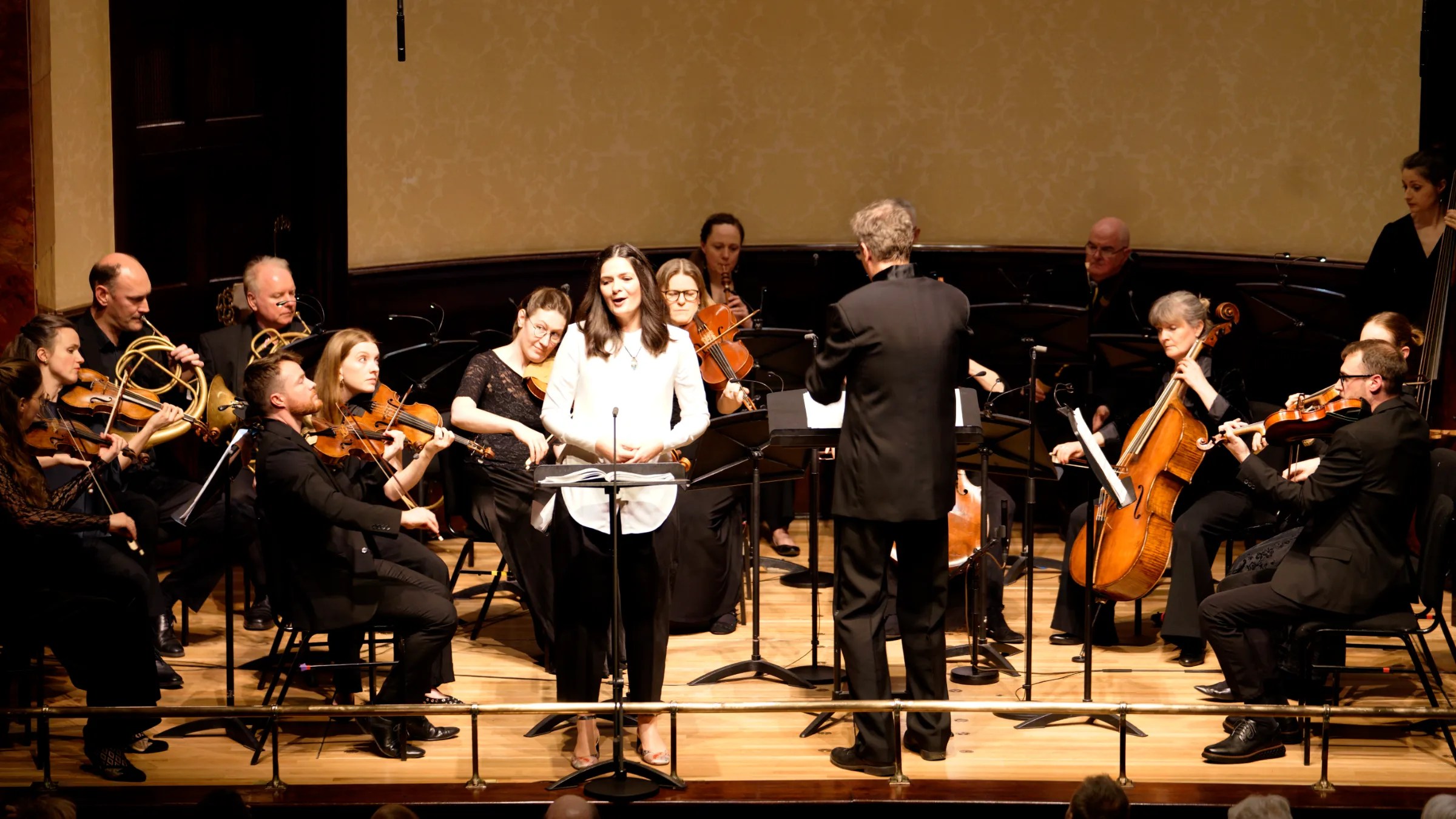
In concert – CBSO Winds / Nicholas Daniel: Anna Clyne ‘Overflow’ & Mozart ‘Gran Partita’

CBSO Winds / Nicholas Daniel (oboe, above)

Clyne Overflow (2020)
Mozart Serenade no.10 in B flat major K361 ‘Gran Partita’ (1781)

Town Hall, Birmingham
Sunday 26 January 2025 (3pm)

Reviewed by Richard Whitehouse

An interesting and worthwhile strand in the City of Birmingham Symphony Orchestra’s current season is the series of Sunday afternoon programmes focussing on each of the orchestra’s sections. Last November brought the strings for a perceptive account of Bach’s Goldberg Variations, as arranged by Dmitry Sitkovetsky and the present recital duly centred upon the woodwind in what was dominated – not unreasonably so – by a performance of Mozart’s epic Gran Partita.

Still the finest and probably longest work ever composed for wind ensemble, it also remains the canniest example of ‘functional’ music raised to a level such as transcends its immediate purpose. Not the least of its virtues is the way in which its orchestration – comprising pairs of oboes, clarinets, basset horns and bassoons along with four horns and double-bass – suggests timbral and textural possibilities as profound as they are far-reaching. Put another way, this is ‘Harmoniemusik’ which makes of a localized and even provincial genre something universal.

Such a quality was rarely less than present in this performance. Right from its trenchant yet never portentous introduction, the opening Allegro found an enticing balance between poise and impulsiveness matched by that between tutti and ensemble passages. The first Menuetto was notable for the winsome elegance of its second trio, then the ensuing Adagio yielded no mean pathos without risk of sentimentality at a flowing tempo abetted by that effortlessness of dialogue which proved a hallmark of this movement as of the performance taken overall.

Although less overtly characterful than its predecessor, the second Menuetto did not lack for personality and while the Romanze feels the least essential part of the overall conception, it still made for a pertinent entrée into the Tema con variazioni. This longest and most varied movement also encapsulates the work overall in its expressive contrasts which were to the fore here – the last variation preparing unerringly for a final Allegro whose relative brevity was belied by a drive, even forcefulness that propelled the whole work to its decisive close.

It was a testament to the excellence of these musicians that one never suspected the absence of any guiding hand, for all that guest first oboist Nicholas Daniel could be seen encouraging the players whenever his part permitted. Neither was there any sense of the latter being other than integral to the overall ensemble, such was the underlying felicity and finesse with which it conveyed the depths of what must surely rank among its composer’s greatest achievements. Not a bad way, moreover, for the CBSO’s woodwind to savour its occasion ‘in the spotlight’.

The programme had commenced just over an hour earlier with Overflow, a short but eventful piece where Anna Clyne draws inspiration from Emily Dickinson’s poetry (and, in turn, that by Jelaluddin Rumi) in music which treads an audibly viable balance between the ruminative and capricious. It made an understated showcase for the CBSO woodwind, whose brass and percussion colleagues are heard in the next of these recitals when Alpesh Chauhan directs a varied programme climaxing in Pictures at an Exhibition arranged by the late Elgar Howarth.

List of players: Marie-Christine Zupancic and Veronika Klirova (flutes), Nicholas Daniel and Emmet Byrne (oboes), Oliver Janes and Joanna Paton (clarinets), Anthony Pike and Steve Morris (basset horns), Nikolaj Henriques and Tony Liu (bassoons), Elspeth Dutch and Neil Shewan (horns), Julian Atkinson (double bass)

For details on the upcoming CBSO Brass & Percussion concert, heard to the City of Birmingham Symphony Orchestra website. Click on the names for more on Nicholas Daniel and composer Anna Clyne

Published post no.2,426 – Wednesday 29 January 2025

In concert – Benjamin Grosvenor, CBSO / Robert Treviño: Mozart ‘Prague’ Symphony, Mendelssohn Piano Concerto no.1 & Brahms Symphony no.1

Benjamin Grosvenor (piano, below), City of Birmingham Symphony Orchestra / Robert Treviño (above)

Mozart Symphony no.38 in D major K504 ‘Prague’ (1786)
Mendelssohn Piano Concerto no.1 in G minor Op.25 (1830-31)
Brahms Symphony no.1 in C minor Op.68 (1868-76)

Symphony Hall, Birmingham
Thursday 23 January 2025 (2.15pm)

Reviewed by Richard Whitehouse Picture of Benjamin Grosvenor (c) Jenny Bestwick

Having worked with the City of Birmingham Symphony Orchestra on numerous occasions, Robert Treviño was well placed to take on a programme which was pretty demanding for all that its constituents were hardly unfamiliar – its two symphonies repertoire works to the core.

His cycle of Beethoven symphonies (Ondine) among the best of recent years, it was perhaps surprising to find Treviño boxing himself in interpretively with Mozart’s Prague symphony. If the first movement’s Adagio introduction was imposingly wrought, the main Allegro was taken at too consistently headlong a tempo for its intricacy of textures and its range of expression fully to register, though the CBSO admirably stayed the course. Nor was the central Andante wholly successful, the pervasiveness of its five-note motif not matched by the diversity of emotional responses to which this is put, with the development sounding harried rather than impetuous. Best was a final Presto that was a sizable-enough counterpart (first- and second-half repeats taken) to what went before, and its élan maintained through to the effervescent closing bars.

Fresh from having taken on Busoni’s epic Piano Concerto (most notably at last year’s Proms), Benjamin Grosvenor (above) met the very different challenge of Mendelssohn’s First Piano Concerto with comparable conviction. Written quickly but with nothing left to chance, this takes up the precedent of Weber’s Konzertstück (which, completed barely a decade earlier, had featured at Mendelssohn’s public debut) by eliding its individual movements into a succinct and cohesive whole. Vividly as Grosvenor projected its opening Molto allegro – no lack of ‘con fuoco’ – he came into his own with an Andante whose dialogue of piano and lower strings was meltingly rendered, then a final Presto both dextrous and exhilarating. The CBSO made a fine recording with Stephen Hough a quarter-century ago (Hyperion) and this was at the very least its equal.

Even so, it was Brahms’s First Symphony as proved the highlight of this afternoon’s concert. Whereas his Mozart had felt unduly beholden to ‘authentic’ concepts, Treviño was entirely his own man here – not least the opening movement whose implacable introduction linked effortlessly into an Allegro trenchantly characterized and with a cumulative impetus such as carried over into the fatalistic coda. Its eloquence never laboured, the Andante featured some felicitous woodwind and a poised contribution from guest leader Nathaniel Anderson-Frank.

Having had the measure of what feels more intermezzo than scherzo, pensive and playful by turns, Treviño steered a secure and always purposeful course through the lengthy finale. Its introductory Adagio preparing stealthily for a fervent if not over-bearing take on its majestic ‘alpine’ melody, the main Allegro was unerringly paced so that its formal elaboration never risked being discursive. Nor was the CBSO found wanting in a peroration that endowed the main motivic ideas with a resolution the more powerful for having been so acutely gauged.

There can be few seasons when Brahms’s First Symphony does not feature in this orchestra’s schedule, but Treviño’s was surely among the most impressive in recent memory; confirming demonstrable rapport between him and the CBSO one hopes will be renewed before too long.

For details on the 2024-25 season A Season of Joy, head to the City of Birmingham Symphony Orchestra website. Click on the names to read more about pianist Benjamin Grosvenor and conductor Robert Treviño

Published post no.2,423 – Sunday 26 January 2025