Having celebrated a quarter of a century of top-level electronic music, Kompakt look to the next phase with another annual round-up. With sixteen tracks primed for fans, they include reassuringly familiar names who the label followers will immediately lap up.
As the Cologne label say in their humourous press release, “It’s as sure as night follows day, one of the last truly reliable things in these uncertain times, a rock in the storm of information overload, and still one of the best things you can make from PVC.”
What’s the music like?
Typically varied and occupying slots both inside and outside of the box. Kompakt always bring fresh inventions to their compilation, which never feels like a cast-off of nearly or forgotten tracks, and is sequenced to ensure the biggest benefits are felt from listening start to finish.
To which end, DJ H0TLINE gets us off to a strong, four to the floor-based start, picked up by Orlando Voorn who brings more of a breakbeat edge to the remix of So Deep. What then works is a very satisfying variation of speeds, from the wondrous dub-heavy sounds of Jürgen Paape, with Fenja Ludwig guesting on Unter dem Himmel, to the sparse but driven techno of Robag Wruhme. Sabrah Desha is one of the collection’s biggest thrills, its bassline deserving of the biggest possible subwoofer.
The smoky Burn Attitude of Michael Mayer leaves its mark, as does an extended version of Rex The Dog’s Far Out! and an introduction to Jörg Burger’s Team 85E project courtesy of Komm Schlaf Bei Mir. Add productions from Reinhard Voigt, Sog (aka cofounder Wolfgang Voigt) and Frankey & Sandrino and you have a very strong line-up.
Does it all work?
Yes, it does – and any idea that this might be a routine exercise is dismissed very early on. Listen several times and this will become your electronic playlist of choice to round off the summer.
Is it recommended?
Fans will need no persuasion of course, but in the unlikely event that you haven’t yet dabbled in anything Kompakt, the Pop Ambient and Total compilations always act as the ideal springboard from which to plan your discoveries. This is no exception!
Listen / Buy
Published post no.3,032 – Tuesday 29 September 2026
As James Dean, aka BUNKR, writes: “Signs is a companion piece created from the same sessions as my recent album Signals, but looking in a different direction.
Where Signals explored the mysteries, memories and hidden histories of the Surrey Hills, Signs follows those signals towards the distant glow of the city beyond.
The EP captures the pull of the metropolis: the lights, movement and endless energy of urban life viewed from afar. Built around hypnotic loops, shifting rhythms and immersive electronic textures, Signs continues the story begun with Signals: a journey through memory, place and the unseen connections between the natural and human worlds.”
What’s the music like?
If you know BUNKR, you know Dean has a high quality threshold for what he releases, and this EP is no different, presenting typically atmospheric and evocative music, with a hint of mystery and bags of widescreen colour.
From the outset Construct Collapse grips the listener with its widescreen panorama, reaching a thrilling high when the four to the floor beat drops. Cruisen presents a cooler but equally rewarding picture, before the reassuring thick drone backing Eternal Cities comes to the fore. When it cuts loose, the beat and busy synths on this track are a killer combination – and are complemented by The Distance Ate Itself, bringing us back to earth.
Does it all work?
It does – time and space are a given in BUNKR’s music, but so are melody and imagination. All are present here.
Is it recommended?
Absolutely – the ideal companion piece to the excellent LP. If you don’t have either yet, get both!
Listen / Buy
Published post no.3,031 – Monday 28 September 2026
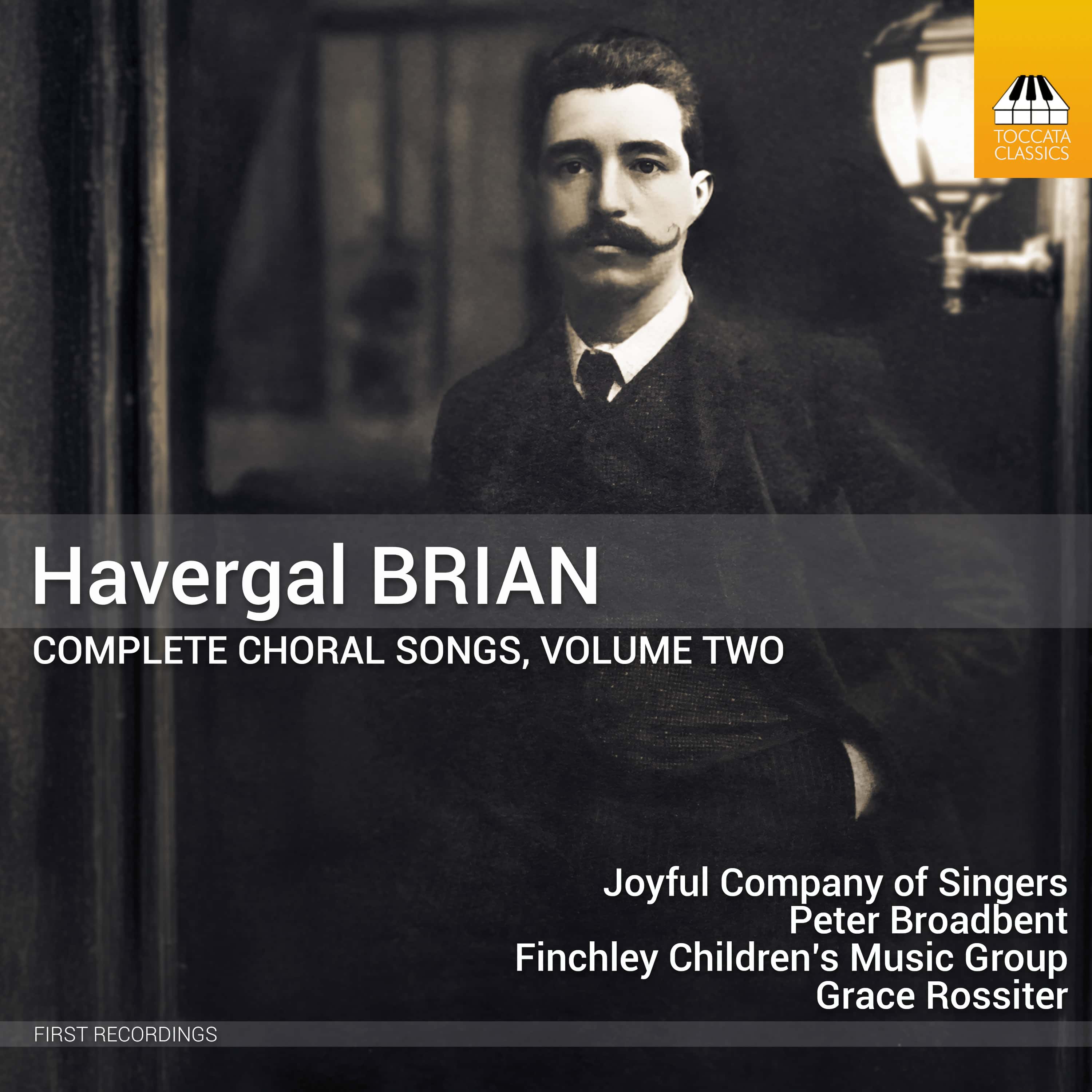
aJoyful Company of Singers / Peter Broadbent; bFinchley Children’s Music Group / Grace Rossiter with cGavin Roberts, dJohn Evanson (pianos)
Havergal Brian Stars of the Summer Night (1905)a Tell me, thou soul of her I love (1906)a Rondel: In a Fairy Boat (1906)a Fairies’ Song (1908)a Daybreak (1910)a A Child’s Prayer (1914)bd If I had but two little wings (1914)bd Little White Lily (1914)bd Pastoral: The Shepherd (1914)a Infant Joy (1914)a The Lamb (1914)ac Laughing Song (1914)ac The Lost Doll (1914)bd The Dream (1914)ac The Echoing Green (1914)ac The Moon (1914)bd The River (1914)bd The Mountain and the Squirrel (1914)bd What does little birdie say? (1914)bd He was a rat (1914)a The Fairy Palace (1915)ac The Phantom Wooer (1918)a Tell me, where is fancy bred (1919)a It was a lover and his lass (1919)a Absence (1919)ac Pack clouds away (1919)ac Spring, the sweet Spring (1919)ac Introit (1924)a Vital Spark of Heavenly Flame (1924)a Shall I then be spared? (1924)a O Happiness, celestial fair (1924)a Sweet Solitude (1924)a
Toccata Classics TOCC0680 [66’43’’] English texts included Producer Michael Ponder Engineer Adaq Khan Recorded a11 & 12 December 2021, c12 &13 March 2022 at St Jude on the Hill, Hampstead Garden Suburb, London; b26 November 2022 at St Silas, Kentish Town, London
Reviewed by Richard Whitehouse
What’s the story?
Toccata Classics rounds off coverage of Havergal Brian’s choral songs (aka part-songs) with a second volume that, as with its predecessor [TOCC0395], underlines the composer’s sheer versatility in a genre which occupied his thinking through almost two decades of his output.
What’s the music like?
It was with choral songs that Brian first attracted attention, settings of Henry Longfellow and James Thomson [tracks 1-3] testifying to his assurance in SATB or double-choir media when combining harmonic richness with a melodic eloquence and a rhythmic subtlety equalled by few of his contemporaries. His settings of fairy-themed verse by Bernard Weller and Gerald Cumberland [4/12], never coy in their whimsicality, show comparable ease writing for upper voices with a streamlined texture that prefigures his choral songs from the following decade.
Those months either side of the beginning of the First World War were to bring by far Brian’s largest number of choral songs – ostensibly as his means of accruing income while financially adrift in London, though the technical finesse of almost all those that survive are indicative of stylistic changes in his idiom also taking place. Much the most frequently encountered poet is William Blake [15-18, 22/23], with several settings from Songs of Innocence and Experience no less insightful or idiomatic than more familiar ones by later composers. By the same token, settings of Shakespeare and Thomas Nashe [10/11, 20] provide a distinctive take on often-set texts, whereas unison settings of Charles Kingsley, Ralph Emerson or Alfred, Lord Tennyson [21, 26/27] have a disarming if never ‘knowing’ naivety that transcends their respective texts.
Two enchanting Cumberland settings were most likely derived from an operetta for children duly abandoned, while those from such diverse authors as Matilda Betham-Edwards, Samuel Coleridge, George MacDonald, Robert Burns or Thomas Heywood [7-9, 13/14] between them tread a convincing path in terms of their suitability for amateur or professional singers. Most fascinating is a group composed during that interim between the first and second parts of the Gothic Symphony: settings of Hannah More [28-30] of a canonic and textural intricacy soon heard on a far more expansive scale, as was the fervency of totemic lines by Alexander Pope [6] and methodical treatment accorded the ‘Amen’ [5]. Settings of Thomas Lovell Beddoes [31] or Laura Richards [32], respectively lurid and sardonic, vividly round off this selection.
Does it all work?
It does, not least with the responsiveness to each song of the two choirs – Joyful Company of Singers resolutely unfazed by Brian’s demands in the ‘adult’ songs, as is Finchley Children’s Music Group in those by no means child-like songs for younger voices. Peter Broadbent and Grace Rossiter have marshalled their forces ably, while Gavin Roberts and John Evanson are not found wanting in piano parts which are often much more than accompaniments. Full texts are included, while John Pickard’s booklet note sets forth a wealth of pertinent observations.
Is it recommended?
It is, notwithstanding that the first volume is the more recommendable to those having yet to encounter this significant aspect of Brian’s output. Those who have done so should certainly acquire its follow-up album (which was recorded at the same sessions) without further delay.
Chiara Skerath (soprano), The Mozartists / Ian Page
Kraus Symphony in C minor VB142 Gluck Dieux puissants que j’atteste…Jupiter, lance la foundre (from Iphigénie en Aulide) Jammelli Ombre che tacite qui sede (from Fetante) Mozart Vorrei punirti, indegno (from La finta giardiniera K196) Traetta Ombra cara, amorosa…li resti sempre a piangere (from Antigona) Haydn Amore nel moi petto (from Lo Speziale) Haydn Symphony no.45 in F# minor ‘Farewell’
Wigmore Hall, London Thursday 24 September 7:30pm
Reviewed by Ben Hogwood Picture of Chiara Skerath (c) Capucine de Chocqueuse
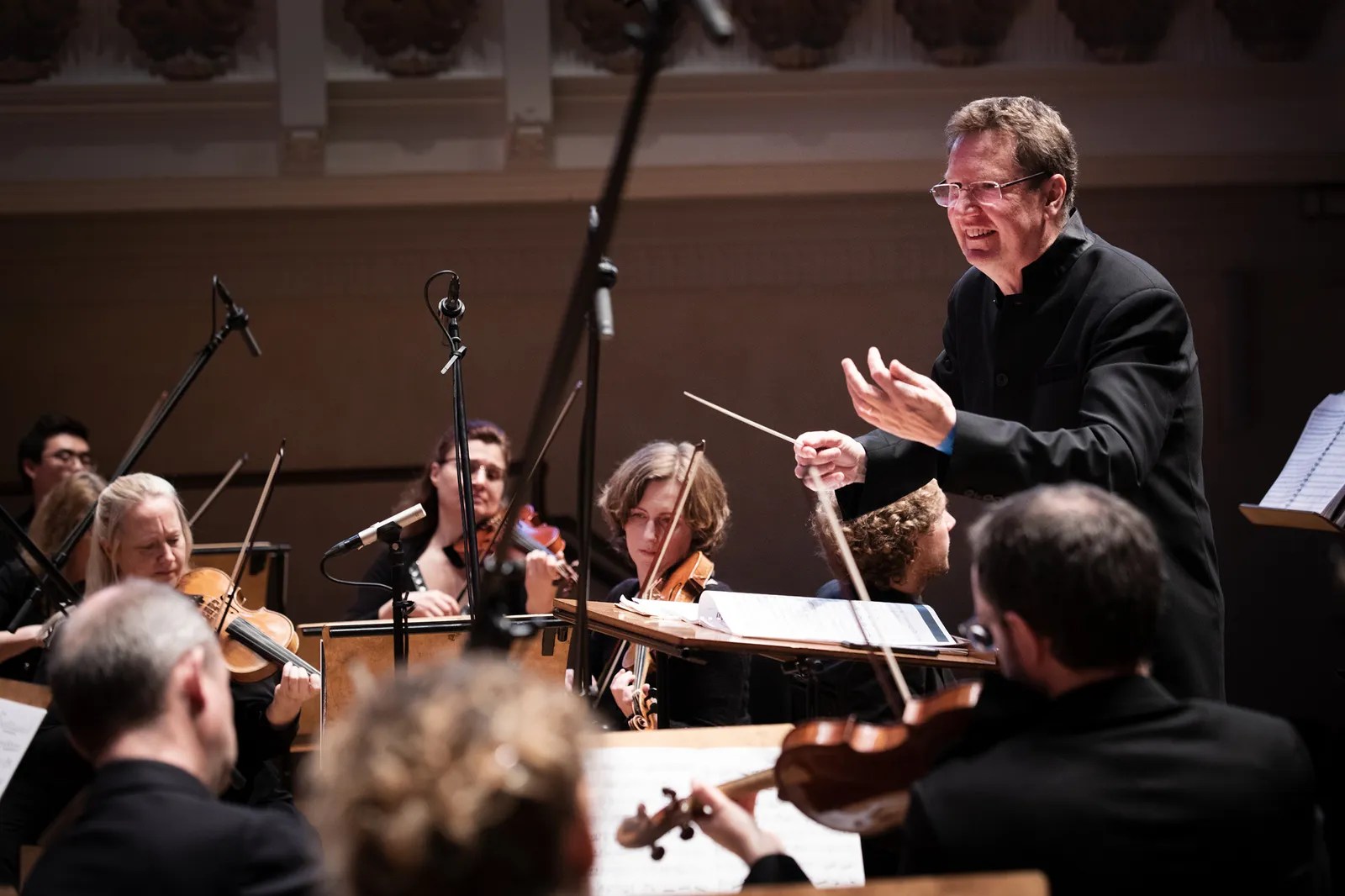
Ian Page and The Mozartists continued their remarkable and revealing turning over of scores from the 18th century at the Wigmore Hall. Their exploration of Sturm and Drang marked 250 years’ use of the phrase, since title of a play by the German Friedrich Maximilian von Klinger – and also the Mozartists’ fourth album exploring music written in this feverish mood.
Three of the composers here are virtually unknown today, while Haydn – whose Farewell symphony closed the program – is the one most associated with the phrase. More of him later, for the early part of the concert belonged to Joseph Martin Kraus. The Frankfurt-born composer, who relocated to Sweden in 1778, wrote a Symphony in C minor of some stature five years later, its power sufficient for me to check there were only 20 players on the Wigmore Hall platform. Page marshalled a performance with poise and drama, the lean tones of the Mozartists’ strings complemented by wonderfully grainy woodwind and a fulsome horn quartet who stood to play, two either side of the stage. The solemn counterpoint of the introduction harked back unexpectedly towards the slow movements of Bach’s Brandenburg Concertos, before the urgent Allegro raced ahead in dramatic fashion. The striking Adagio was initially pared-back but blossomed in the wind section, before the sharply defined third movement returned to the cut and thrust of the first. With lively dialogue and fierce energy, this was a performance to savour.
So, too, was the Haydn with which the concert ended, though at times Page appeared to be pressing too hard on the accelerator, with some phrases in the first movement of the Farewell needing more time to breathe. There was considerable tension here though, as there was in the second movement, albeit expressed through austere colours and stretched phrases. The Minuet was lightly defined but offered little relief, while the finale, surely one of the first examples of instrumental protest music, was brilliantly done. The players left the stage incrementally as Haydn requested of his Esterházy musicians, so at the end we were left with just violinists Matthew Truscott and Daniel Edgar. Typically Haydn’s humour was retained, but this time with a darker edge.
Between the symphonies lay five well-chosen arias, themselves a history lesson – in excellent performances from soprano Chiara Skerath (above), standing in for the indisposed Alexandra Lowe. She immediately seized the audience’s attention with Clytemnestre’s aria from Gluck‘s Iphigenie et Aulide, her horrific realisation that her husband Agamemnon was thinking of sacrificing his own daughter. This was a dramatic a, a dramatic affair, with appropriately sharp interjections from the orchestra. The aria Ombre che tacite qui sede, from Niccolò Jammelli’s Fetante, breathed much cooler air, the soprano low in her range at times, before the concert’s only fleeting reference to Mozart himself. Here we returned to the minor key for an aria from composer’s first mature opera, La finta giardiniera. Skerath’s communication with both orchestra and audience was captivating, revealing the extent of Arminda’s anger at the arrival of her fiancée’s former lover.
The next composer to prove his worth as a dramatic scene setter was Gluck’s Italian contemporary Tomasso Traetta, the cold introduction to Ombra cara balanced by beautiful control from Skerath. We then had a rare outing for the stage music of Haydn himself, keeping the theme of G minor tonality. The humour on show in Amore nel moi petto may not have been as immediate as his wit in the symphonies, but Skerath’s expression gave it the best chance.
As ever, Ian Page deserves enormous credit for an imaginative and entertaining program, balancing education and entertainment. By bringing fresh insight to the familiar repertoire and a chance to shine for the lesser-known names, he has made the ensemble’s Wigmore Hall series an unmissable date in the calendar. The players clearly enjoy it, too, as their encore – a palette cleansing major key slow movement from English composer Carl Friedrich Abel – was wreathed in smiles.
Published post no.3,029 – Saturday 26 September 2026
Schubert arr. Liszt Der Müller und der Bach from Die schöne Müllerin S565/2 (1846); Liebesbotschaft from Schwanengesang S560 (1839) Schubert Piano Sonata no.19 in C minor D958 (1828) Liszt Les jeux d’eaux à la Villa d’Este (from Années de pèlerinage, troisième année S163) (1877-82) ; Tarantella (from Venezia e Napoli S162) (1859)
Wigmore Hall, London Thursday 24 September (lunchtime)
Reviewed by Ben Hogwood
Facing the end of his life at the age of just 31, Schubert dug deep to deliver a series of remarkable late works, with a speed of composition whose quality and quantity was truly remarkable. Among the celebrated works delivered were three large scale piano sonatas, the first of which – the Piano Sonata no.19 in C minor D958 – formed the centrepiece of this lunchtime recital.
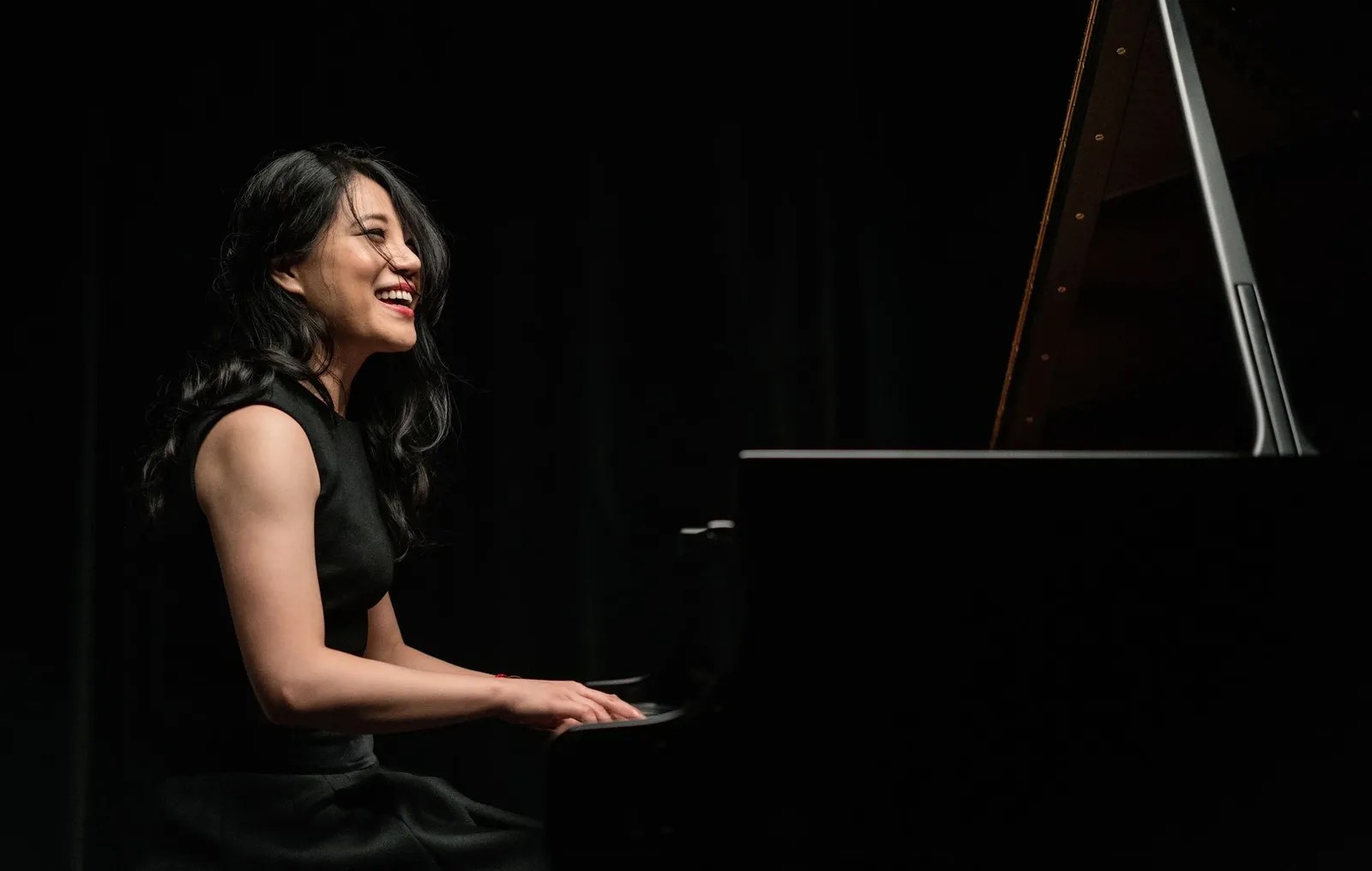
Zee Zee (the stage name for Chinese-American pianist Zhang Zuo) delivered a commanding performance, stern in expression but always allowing room for the dance that is never far from the surface of Schubert’s music. Even before the sonata began she established the atmosphere, taking a minute for performer and audience to fully settle before the first notes were delivered. It was a highly effective tactic, typical of a deeply felt and carefully planned account that has matured over time since Arcana last reviewed her interpretation in 2015. Zee’s left hand was notable for its melodic clarity, the right delivering the second theme of the first movement with attractive, balletic phrasing. The turbulent development section often chased the restless right hand but Zee Zee was sure in her direction, contrasting the warmth of the second theme when in C major with the chill wind as things turned sour in the minor key.
The Adagio was intimate, yearning for the lighter moments that appeared like shafts of light in Schubert’s unexpected switches of tonality, though these were ultimately snuffed out and earthbound by the ideally paced closing pages. The serious Menuetto – its trio dancing in spite of the musical weight upon it – was fluently played, leading without a break into the finale. Here Zee Zee’s definition of the repeated notes was crystal clear, the agile left hand ably supporting the Tarantella theme at every turn, before an emphatic signing off to seal a most impressive account.
The Schubert was framed by four watery Liszt pieces – beginning with well-studied accounts of two of his many Schubert song transcriptions. The temptation with Liszt is often to show virtuosity at the expense of musicality, but here the blend between the two was perfect. Zee Zee told the story through the wordless singer’s lines, dressed with exquisite accompaniment.
The first of the two Liszt originals brought the Fountains of the Villa d’Este to life, the rush of water evident in the brilliant right-hand figurations, adding colour but leaving room to define the left-hand melody through the spray. Again the technique was impeccable, with well-chosen ‘rubato’ ensuring the music breathed as it should. The sparkling Tarantella was a study in pace, poise and power, delivered with the minimum of fuss but with no mean virtuosity. Zee Zee’s octave work – so critical in Liszt – was without blemish; equally her quiet playing was also beautifully rendered.
This was a superb recital, with one more feather in its cap in the shape of a beautifully flowing encore, the Intermezzo from Schumann’s Faschingsschwank aus Wien. Zee Zee will hopefully return to the Wigmore Hall before long, for as this healthy lunchtime audience appreciated, pianist and venue are a great match.
Published post no.3,028 – Friday 25 September 2026