
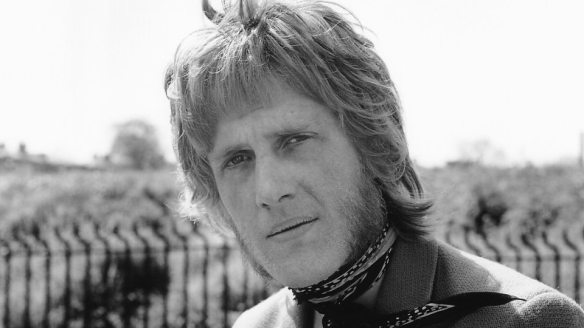
Keith Tippett Octet [Keith Tippett (piano/composition, above); Fulvio Sigurta (trumpet/flugelhorn), Jim Gold (alto and soprano saxophones), Paul Booth (alto saxophone/flute), Kieran McLeod and Rob Harvey, trombones; Tom McCredie, double bass; Peter Fairclough, drums/percussion]
Guests: Matthew Bourne (piano), Julie Tippetts (voice/lyrics)
Hall One, Kings Place, London; Friday 10 November 2017
Reviewed by Richard Whitehouse
This year’s London Jazz Festival got off to an auspicious start with tonight’s contrasted sets featuring Keith Tippett, whose inimitable and always resourceful piano playing has graced many solo and collaborative projects over the course of nearly half a century’s active service.
 Before the interval, Tippett was joined by Matthew Bourne (above) – himself a pianist who has built up a formidable reputation for essaying the unexpected – for a half-set in which these pianists engaged in what might passably be described as a ‘call and response’ session of far-reaching possibilities. The past century has seen a rich legacy of music for two pianos, and it was hard not to discern echoes of such seminal works – ‘classical’ in designation while not necessarily conception – as Debussy’s En blanc et noir and Bernd Alois Zimmermann’s Monologe in the alternately stealthy and quixotic interplay of these musicians.
Frequent recourse was made to the piano strings, whether directly or through ‘prepared’ means, and Tippett at one point took up a solitary maraca to set in motion a vibrant cross-rhythm in what was often complex and sometimes ominous music-making. Just whether this set had reached its intended conclusion seemed in doubt, to judge from Tippett’s regretful leave-taking of the keys, but there was no question as to the tensile power and momentum generated by these two consummate players.
After the interval, the Keith Tippett Octet assembled for a complete rendering of The Nine Dances of Patrick O’Gonogon – Tippett’s 2014 project made possible by crowdfunding and recorded at Real World Studios. Music this intricate and involving is as much the outcome of compositional planning as the real-time responsiveness of those realizing it, so the means in which the two aspects came together across these nine pieces was itself rewarding. Nor was there a loose or informal succession as the first three, then the subsequent two pieces played continuously; leaving those final four pieces to unfold as a natural and extended culmination where earlier elements were developed accordingly. The sequence amounted to a conspectus of invention and virtuosity such as might be expected from an opus with Tippett at the helm.
 All the instrumentalists were allotted solos or at the very least spotlights, during which their different personalities (irrespective of instrument) came to the fore. Then followed what was billed as a ‘coda’, in which the penultimate The Dance Of Her Returning was reprised but with lyrics by Julie Tippetts (above) and sung with her customary understated eloquence. The octet played out with Tippett’s arrangement of the Irish traditional tune The Last Rose Of Summer – by turns pensive and plangent, and bringing to an end this memorable and affecting recital.
Further information can be found at Tippett’s website and at that of Discus Music

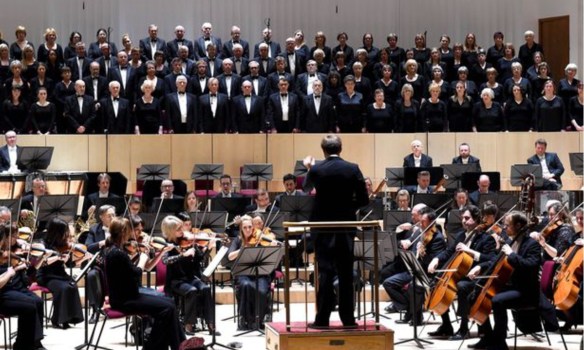 The Royal Liverpool Philharmonic Choir – over 100–strong in this performance – were on superb form, sharply rehearsed and clear in diction, meaning there was no need for the accompanying words. They found the swell of the waves with unerring confidence and passion. Manze clearly loves this music, and brought the Scherzo to a half with shattering precision before grasping the last movement’s ebb and flow to great satisfaction, making good sense of what can be a long movement in the wrong hands.
 Perhaps this was because it followed a rapt and incredibly restful performance of Vaughan Williams’ A Lark Ascending, his famous response to the George Meredith poem of the same name. Under the spell of James Ehnes‘ violin, we climbed effortlessly into the sky, ending the ascent in barely audible song as the bird disappeared from earshot. It was proof that despite the ubiquity of the ‘Lark’, Vaughan Williams still holds the ability to stop the listener in their tracks.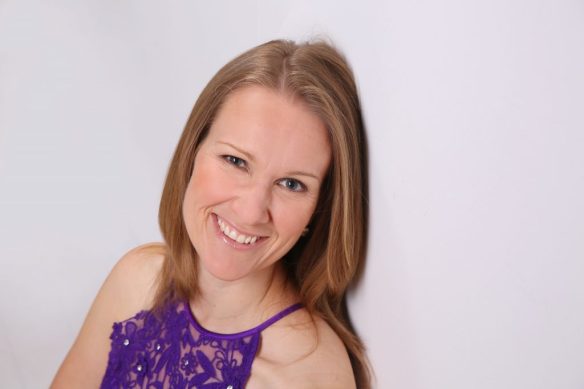
 This was followed by an extremely tasteful reading of Mozart’s Symphony no.34. This is a work that doesn’t get to poke its head above the parapet as much as its neighbouring ‘named’ symphonies in the composer’s output such as the Haffner and Linz. Wigglesworth chose his speeds well, so that the lovely Viennese textures were just the right density for Mozart’s lighter (but not lightweight) melodies. The energetic Hallé strings went well with the more graceful woodwind, particularly in the joyful finale, while the serene slow movement was also a highlight.
 Mahler’s Symphony no.4 is, on face value, his most ‘classical’, following traditions established by Schubert and the like, innovatively adding a soprano for the final movement, a child’s vision of heaven. Wigglesworth’s interpretation was carefully thought out and extremely well played, the woodwind of the Hallé rising to the considerable challenges posed by this deceptively difficult symphony.
 Providing a rather lovely contrast was the Violin Concerto in G major from Michael Haydn, Franz Joseph’s older brother. Often the poor musical relation of the family, he nonetheless wrote some fine works himself, particularly in the choral field, with memory recalling a fine Requiem performed relatively recently by the King’s Consort at the BBC Proms.
 Arcana.fm